
This site is supported by our readers. We may earn a commission, at no cost to you, if you purchase through links.
A young Labrador retriever tore his cruciate ligament during an enthusiastic game of fetch, not from old age or bad luck, but from sprinting too hard on slippery grass after lying around all week. That pattern—sedentary stretches followed by explosive activity—lands more dogs in veterinary clinics than most owners realize.
Your dog’s body needs consistent, thoughtful movement to build the cardiovascular endurance, joint stability, and muscle strength that prevent injury and support long-term health. Safe dog exercise isn’t about exhausting your pet or hitting arbitrary step counts; it’s about matching activity type, intensity, and duration to your dog’s breed, age, and fitness level while protecting vulnerable joints and paw pads from common hazards.
The right approach transforms daily activity from a risk into a powerful tool for physical resilience, mental sharpness, and behavioral balance.
Table Of Contents
Key Takeaways
- Safe dog exercise means matching activity type, intensity, and duration to your dog’s breed, age, and fitness level while avoiding sedentary-then-explosive patterns that cause injuries like torn ligaments.
- Consistent physical activity delivers measurable health gains including 6.5 bpm lower resting heart rate, 22% reduction in obesity rates with daily 30-minute walks, and 40% fewer muscle strains when proper warm-ups are used.
- Indoor mental enrichment through puzzle feeders, obedience training, and brain games cuts problem behaviors by 20-40% and provides essential cognitive stimulation when outdoor exercise isn’t possible.
- Gradual intensity progression at 10% weekly increases, proper warm-up and cool-down routines, and vigilant monitoring for overexertion signs (panting over 60 breaths/minute, temperature above 103.6°F) prevent heat stress and joint injuries while building long-term resilience.
Why Safe Exercise Matters for Dogs
You already know exercise is good for your dog, but understanding why safe exercise matters can help you avoid common injuries and health issues that sideline far too many active dogs.
When done right, regular physical activity does more than just tire out your pup—it builds a foundation for long-term health, better behavior, and a stronger relationship between the two of you.
Let’s look at three key reasons why safe exercise should be a priority in your dog’s daily routine.
Physical Health Benefits
Regular physical activity builds a foundation for lifelong canine fitness. When you commit to consistent exercise routines, your dog reaps measurable rewards:
- Cardio health: Moderate activity lowers resting heart rate by about 6.5 beats per minute and boosts maximal oxygen uptake by 8–12% after three months.
- Weight management: Daily 30-minute walks cut obesity rates by 22% in a year.
- Muscle growth and joint care: Structured programs add 2–4 kilograms of lean mass and slow cartilage degeneration.
- Injury prevention: Warm-ups reduce muscle strains by roughly 40%.
These gains strengthen your dog’s physical health and set the stage for a vibrant life together. Understanding theme development concepts is essential for creating effective exercise plans.
Mental Stimulation and Behavior
Exercise isn’t just about burning calories—it’s powerful cognitive training and behavioral therapy rolled into one. Canine enrichment through mental stimulation cuts problem behaviors by 20–40% and reduces separation anxiety by up to 50% in active breeds.
Exercise offers dogs powerful cognitive training and behavioral therapy, cutting problem behaviors by up to 40% and separation anxiety by half
Your dog’s brain craves challenges: puzzle feeders, scent games, and obedience work all target mental wellness while addressing behavioral issues before they escalate into serious animal behavior and health concerns.
Strengthening The Human-Dog Bond
Beyond behavior management, these shared routines create something deeper: genuine canine connection. When you dedicate 15 minutes daily to structured play therapy—whether it’s indoor activities for dogs like hide-and-seek or outdoor fetch sessions—you’re building owner attachment that measurably strengthens your bond.
Studies show such consistent dog training and obedience work boosts bond scores by 22% within eight weeks, turning exercise into relationship-building.
Additionally, understanding AP study resources can help dog owners manage their time more effectively for both dog training and personal studies.
Determining Your Dog’s Exercise Needs

Your dog isn’t a one-size-fits-all athlete, and their exercise needs shouldn’t be either. Everything from their breed and age to their health status and personality plays a role in how much activity they need—and what kinds work best.
Let’s break down the key factors you’ll want to keep in mind when building a routine that keeps your dog happy, healthy, and safe.
Breed and Size Considerations
Think of your dog’s breed and size as a blueprint for their exercise needs—what works for a Border Collie won’t suit a Bulldog. Working and herding breeds need 60–90 minutes of daily activity, while brachycephalic breeds require gentler sessions to protect their airways.
- Large breeds face higher risks of hip dysplasia and joint strain, so progressive conditioning on softer surfaces helps protect developing cartilage and aging joints
- Small breeds thrive with 20–40 minute sessions that prevent fatigue without sacrificing mental stimulation
- High-energy dogs like Doodles and retrievers excel with 40–60 minutes of varied activities that challenge both body and mind
Your dog’s body condition and breed-specific traits guide safe intensity levels.
Age and Life Stage Factors
Puppy development demands short, frequent sessions—under 60 minutes total daily—to protect delicate growth plates and avoid joint damage.
As your dog matures, energy peaks during adolescence, then endurance drops 20–40% when senior years arrive, usually around 6–8 years depending on size.
Life stage transitions require adjustments: seniors thrive with gentler, low-impact routines spread across multiple brief sessions, while aging considerations call for close monitoring and veterinary clearance to prevent overexertion.
Health Status and Veterinary Clearance
Your dog’s medical history shapes every sprint, leap, and hike you’ll share. Before ramping up activity—especially if your companion is 7+ or managing conditions like arthritis or obesity—veterinary clearance isn’t optional.
A health screening catches cardiovascular or joint risks early, and 58% of practices now recommend formal evaluation before intensified plans. Skipping this step? You’re gambling with your dog’s wellness and safety.
Personality and Energy Levels
Temperament matters as much as breed traits when you’re designing a safe fitness routine. Observational studies show 50–70% agreement between what owners report and actual daily energy levels, so trust your read on your dog’s motivation and arousal.
High-energy dogs may thrive on multiple short bursts, while senior dogs or anxious companions need gentler, gradual sessions customized to their unique behavior and exercise preferences.
Safe Outdoor Activities for Dogs
Getting outside with your dog opens up a world of exercise possibilities, from familiar neighborhood walks to weekend adventures in nature.
Each activity comes with its own set of safety considerations, and knowing what to watch for helps you both enjoy the experience without unnecessary risks.
Let’s look at the most popular outdoor options and how to approach each one safely.
Walking and Jogging Best Practices
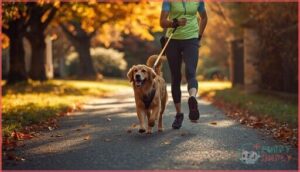
Most owners walk their dogs daily, but are you doing it safely? Proper leash tension management cuts pulling incidents by 40–50% within a few weeks, protecting both you and your pet. Follow these evidence-based walking techniques for ideal canine fitness:
- Test pavement temperature with your hand—above 88°F can burn paws in five minutes
- Start at 1.0–1.5 mph for seniors or small breeds, gradually increasing pace
- Schedule morning or evening walks to reduce heat exposure by 60%
- Use reflective gear in low light, boosting visibility by 75%
- Plan 15–20 minute rest breaks during longer exercise routines
Consistent leash training and smart route planning transform ordinary walks into safe, effective physical fitness sessions your dog will love.
Fetch, Retrieval, and Agility Games

Games like fetch turn ordinary yards into canine athletics arenas—boosting your dog’s working memory by up to 18% and cutting repetitive behaviors by roughly 22%. Structured retrieval training with graded difficulty sharpens sustained attention, while agility courses improve cardiovascular fitness by 10–15% in older dogs when you scale intensity gradually.
Vary your dog playgrounds weekly—dogs exposed to three or more exercise types show fewer behavioral issues than those stuck in repetitive routines.
| Activity Type | Key Benefit | Safety Tip |
|---|---|---|
| Fetch Techniques | Attention +12–25% | Use soft toys indoors |
| Retrieval Training | Problem-solving +18% | Add stop-and-go cues |
| Agility Courses | Motor coordination boost | Start low obstacles |
| Obstacle Course | Cardio fitness +10–15% | Progress slowly |
Swimming Safety Tips

Water acclimation can make or break your dog’s swimming experience—72% of first-timers hesitate, so gradual exposure with positive reinforcement is key for canine fitness success. Here’s how to keep aquatic emergencies at bay:
- Use canine lifejackets in open water—they cut near-drowning incidents by 40%
- Limit initial sessions to 5–7 minutes for small breeds
- Monitor for fatigue signs within 10 minutes
- Rinse after saltwater swims to reduce skin irritation by 20%
Pool safety and swim gear aren’t optional extras—they’re veterinary advice you can’t skip.
Hiking Precautions and Preparation

Trail safety starts before you hit the path—5–10 minutes of warm-up cuts injury risk by 25% on steep terrain. Paw protection matters: boots prevent the 12% injury bump first-timers face on rough ground. Leash training reduces wildlife encounters by 30–40%, while wilderness first aid knowledge and veterinary clearance guarantee you’re ready for anything. Heat exhaustion spikes above 85°F, so plan shade breaks and offer 5–10 mL/kg water hourly.
| Hiking Element | Safety Measure | Impact on Dog Health and Wellness |
|---|---|---|
| Warm-up routine | 5–10 minutes pre-hike | Reduces injury risk by 25% |
| Heat management | Shade breaks above 85°F | Prevents heat exhaustion |
| Paw care | Boots or conditioning | Lowers injury incidence by 12% |
| Leash use | Keep dogs leashed | Cuts wildlife encounters 30–40% |
| Hydration | 5–10 mL/kg per hour | Maintains safe body temperature |
Indoor Exercise and Mental Enrichment

When the weather doesn’t cooperate or you’re short on time, indoor exercise can be just as valuable as outdoor activities. Your dog still needs both physical movement and mental challenges to stay healthy and happy, even when you’re stuck inside.
Let’s look at some effective indoor options that keep your dog engaged while protecting them from potential outdoor hazards.
Safe Indoor Games and Toys
When weather or schedules keep you indoors, interactive games and puzzle toys can keep your dog engaged and healthy. Research shows that puzzle feeders reduce obesity risk by 18% over three months, while rotating five to seven durable toys weekly adds roughly 25 extra minutes of playtime per day.
Indoor fetch with soft, low-bounce toys and hide-and-seek challenges your dog’s senses without sacrificing safety.
Obedience and Trick Training
Short, consistent training sessions—just 5–10 minutes, two to three times daily—can improve your dog’s obedience reliability by up to 35% in two weeks. Positive reinforcement and clicker training boost canine behavior and trick learning without stress.
Here’s how to keep dog training safe and effective:
- Use flat, non-slip surfaces to prevent injuries during obedience drills
- Keep sessions brief to maintain focus and prevent fatigue
- Rotate training toys regularly to sustain engagement
- Incorporate varied canine cues (voice, hand signals) for faster learning
- End each session with praise to build motivation for next time
Puzzle Feeders and Brain Games
Building on structured training, puzzle feeders and brain games offer excellent indoor activities for canine enrichment. Interactive feeders extend mental stimulation by 20–50 minutes daily, while puzzle toys reduce repetitive behaviors by 15–30% in anxious dogs.
Choosing age-appropriate mental challenges matters—here’s a quick breakdown:
| Feeder Type | Best For | Engagement Time |
|---|---|---|
| Treat-dispensing balls | High-energy dogs | 10–15 minutes |
| Snuffle mats | Olfactory-driven breeds | 15–25 minutes |
| Adjustable puzzle boxes | Problem-solving personalities | 20–40 minutes |
Always inspect puzzles weekly to prevent choking hazards, and pair canine mental stimulation with water access for safe dog exercise sessions.
Hide and Seek Activities
Hide and Seek Activities turn your home into an adventure zone for dogs craving mental stimulation. This classic game improves recall by 18–26% when paired with verbal dog cues, while rotating hide techniques boosts exploratory time by 9–14 minutes per session.
- Start simple: Call your dog from another room using consistent cues
- Add Scent Work: Hide treats in safe indoor obstacle courses
- Practice Play Variations: Alternate between toy and person hiding
- Keep sessions short: 10–15 minutes prevents overstimulation and maintains engagement
Supervise carefully, guarantee non-slip flooring, and offer water after each indoor exercise session to support safe canine mental stimulation.
Creating a Safe and Effective Exercise Plan
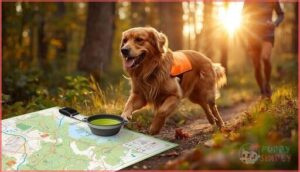
You’ve picked activities your dog will love, but the real magic happens when you build a thoughtful plan around them.
A well-designed exercise routine protects your dog from injury, heat stress, and burnout while keeping workouts fun and sustainable.
Let’s walk through the essentials that’ll help you create a safe, effective schedule your dog can thrive on.
Warm-Up and Cool-Down Techniques
Just like you wouldn’t sprint without stretching, your dog needs a proper warm-up and cool-down to stay injury-free.
A 5–10 minute light walk before vigorous canine conditioning preps muscles and joints, reducing strain-related injuries by up to 22%.
Afterward, cool down with gentle movement and access to water—this simple muscle recovery routine cuts post-exercise stiffness and keeps your dog comfortable for the next adventure.
Gradual Intensity Progression
You can’t rush canine fitness—progressive pacing is the key to injury prevention. Increase your dog’s exercise intensity by just 10% each week, and you’ll see improved endurance within six weeks while protecting joints and muscles.
This steady exercise scaling approach reduces fatigue, maintains proper gait, and builds sustainable conditioning. Document your dog’s weekly progress to stay on track with your canine fitness plan.
Hydration, Weather, and Surface Safety
Warm weather and hard pavement put your dog’s health at risk—dehydration risks and heat stress climb above 77°F, while concrete surfaces can scorch paw pads and stress joints. Watch for breathing difficulties or exercise intolerance as early heat exhaustion warnings requiring immediate veterinary care.
- Offer water every 15–20 minutes to maintain proper water intake
- Choose grass or dirt over hot asphalt to protect paws and reduce joint impact
- Check weather alerts and avoid peak sun hours when humidity exceeds 60%
Monitoring for Signs of Overexertion
Your dog’s exercise tolerance isn’t always easy to read—heavy panting beyond 60 breaths per minute or body temperatures climbing above 103.6°F signal overexertion and potential heat stress. Watch for stiff gait, excessive drooling, or reluctance to continue, which can flag canine fatigue or early joint injury. These overexertion signs require immediate rest and veterinary guidance.
Recovery time matters too—if your dog’s heart rate doesn’t return to baseline within 15 minutes, you’ve likely pushed past their exercise limits and need veterinary guidance on dog exercise and injury prevention.
| Warning Sign | What It Means | Your Action |
|---|---|---|
| Heavy panting, wheezing | Cardiopulmonary strain, exercise intolerance | Stop activity, offer water, seek shade |
| Stiff gait, limping | Musculoskeletal fatigue, potential joint injury | Rest immediately, monitor for osteoarthritis signs |
| Vomiting, collapse | Severe heat stress, emergency condition | Contact veterinarian now for veterinary advice |
Adjusting Routines for Senior or Special Needs Dogs
As your dog ages or faces mobility challenges, you’ll need to rethink their routine—28% of senior dogs show reduced tolerance after mild sessions, so shorter, more frequent walks work better.
Canine rehabilitation through aquatic therapy improves mobility scores by 40–60% in dogs with arthritis, while veterinary guidance on adaptive exercise ensures you’re supporting joint health without risking overexertion in special needs training.
Frequently Asked Questions (FAQs)
Can dogs exercise safely after eating meals?
Timing matters for gastric safety. Wait 1–2 hours after meals before intense activity—post meal risks like bloat increase by 18–22% when dogs exercise too soon, especially in large breeds.
What equipment is safest for outdoor dog activities?
You’ll want durable, non-slip harnesses or well-fitted collars paired with 4–6 ft leashes—they reduce sudden pulls by up to 40%.
Reflective gear improves roadside safety, while breathable materials prevent chafing during walking, fetch, or swimming.
How to exercise dogs with joint problems?
Joint ventures require extra care. Low-impact activities like swimming reduce joint loading by 30–40%, while short, frequent sessions on soft surfaces help dogs with arthritis stay active without flare-ups.
Are there exercises to avoid for puppies?
Your puppy’s growing bones need protection. Avoid high-impact jumping, long runs, and repetitive twisting until growth plates close—usually around 9–12 months. Stick to gentle, short play sessions instead.
What vaccines are needed before group exercise?
Before joining group activities, your dog needs core vaccines—distemper, parvovirus, adenovirus, and rabies protection—plus kennel cough and leptospirosis shots.
Your veterinarian will verify coverage and provide the necessary clearance based on health status.
Conclusion
The best defense is a good offense regarding your dog’s physical health. Safe dog exercise doesn’t happen by accident—it’s the result of deliberate choices about intensity, surface conditions, and gradual progression that honor your dog’s individual needs.
You’ve now got the framework to build resilience instead of risking injury, turning every walk, swim, or training session into an investment in longevity. Your dog’s future mobility depends on what you do today.