This site is supported by our readers. We may earn a commission, at no cost to you, if you purchase through links.

A Rottweiler standing at your front door sends a clear message to strangers: this home is protected. Yet that same dog will sprawl across your lap like an oversized puppy, demanding belly rubs with the insistence of a toddler.
This contrast defines the Rottweiler breed—a working dog descended from Roman cattle drivers, bred for centuries to guard and serve with unwavering loyalty. These powerful, intelligent dogs carry a reputation that often overshadows their true nature.
Understanding what makes Rottweilers tick, from their protective instincts to their specific health vulnerabilities, helps you decide if this devoted breed matches your lifestyle and equips you to meet their considerable physical and mental needs.
Table Of Contents
- Key Takeaways
- Rottweiler Breed Overview and Origins
- Physical Traits and Temperament
- Health, Nutrition, and Common Conditions
- Exercise, Training, and Socialization
- Top 6 Essential Products for Rottweilers
- Frequently Asked Questions (FAQs)
- How do I know if a Rottweiler is the right breed for me and my lifestyle?
- Can Rottweilers live in apartments or small spaces?
- How do Rottweilers behave around other pets?
- What is the average cost of a Rottweiler?
- Are Rottweilers good for first-time dog owners?
- Do Rottweilers drool or have other hygiene issues?
- Conclusion
Key Takeaways
- Rottweilers need 1.5–2 hours of daily exercise and consistent, reward-based training starting in the critical 3–14 week socialization window to prevent their protective instincts from becoming aggression problems.
- This breed faces serious health risks including 22% hip dysplasia rates, 39% elbow dysplasia, and five times the average rate of osteosarcoma, with a median lifespan of only 9 years.
- German Rottweilers are stockier with natural tails and stricter breeding standards, while American lines tend toward leaner builds, docked tails, and more family-oriented temperaments.
- First-time owners can succeed with Rottweilers only if they commit to intensive training and socialization—without proper guidance, their 95–135 pound frames and guarding instincts quickly become unmanageable.
Rottweiler Breed Overview and Origins
Rottweilers carry centuries of working heritage in their genes, tracing back to the Roman Empire’s cattle-driving dogs. Understanding where this breed comes from helps you appreciate what makes them tick today.
Let’s look at their historical background, regional differences, and what defines a proper Rottweiler according to breed standards.
Historical Roots and Development
For over 2,000 years, your Rottweiler’s ancestors drove cattle alongside Roman legions across Europe. Medieval butchers in Rottweil refined these dogs for strength and guarding until rail transport nearly erased the breed by the late 1800s. Early clubs like the Rottweiler Club of Germany revived them, and by 1910, they served as police dogs. The breed’s development began with mastiffs in the Roman Empire.
Key milestones in Rottweiler history:
- Roman Ancestry: Mastiff-type drover dogs accompanied legions into southern Germany during the first and second centuries CE
- Medieval Butchers: Rottweil’s meat traders used these dogs to drive herds and guard money pouches through the Middle Ages
- Breed Decline: Rail transport in the 1800s eliminated cattle-droving work, nearly causing extinction
- Early Clubs: The Deutsche Rottweiler-Klub (1907) and ADRK (1921) established breeding standards and records
- Police Dogs: Official recognition as law-enforcement dogs in 1910 renewed interest and expanded the population
German Vs. American Rottweilers
As the breed spread worldwide, two distinct lines emerged. German Rottweilers show stockier builds, broader heads, and natural tails—tail docking is banned in Germany. American Rottweilers tend toward leaner frames and docked tails.
Physical differences extend to temperament traits: German lines emphasize calm, controlled protection for working abilities, while American Rottweilers often display warmer, more playful family bonds. Health comparisons favor German breeding standards’ stricter genetic screening. Both breeds are known for their working dog loyalty.
Breed Standards and Appearance
Official Rottweiler breed standards define precise physical characteristics you’ll want to recognize. The ideal proportions follow a 9:10 height-to-length ratio, creating a slightly longer-than-tall outline.
Head conformation requires a medium-length skull with almond-shaped dark brown eyes.
Coat characteristics include a straight, dense black outer layer with rust-to-mahogany markings on cheeks, chest, and legs.
Tail carriage varies—natural tails are standard in Europe, while American Rottweilers traditionally show docked tails.
Physical Traits and Temperament
Rottweilers are powerful, medium-large dogs with a striking black coat marked by rust-colored accents. Their muscular build and alert expression reflect a breed that’s both protective and deeply loyal to their families.
Understanding their physical traits and temperament will help you decide if a Rottweiler fits your lifestyle and home environment.
Size, Weight, and Coat Colors

Understanding Rottweiler characteristics starts with their impressive size. Males generally stand 24–27 inches tall and weigh 95–135 pounds, while females measure 22–25 inches and weigh 80–100 pounds. Your puppy will grow rapidly—by four months, expect around 18–23 kg in males.
The breed features a dense, medium-length black coat with rich tan markings on the cheeks, chest, and legs. Other coat colors are nonstandard.
Personality and Protective Instincts

When you think “guard dog,” picture a Rottweiler’s steady gaze—confident, not frantic. Their calm Rottweiler temperament and personality shine through strong guarding tendencies matched with high trainability. Early socialization needs reduce aggression risk by teaching bite inhibition and helping your working dog distinguish real threats from everyday encounters.
A Rottweiler’s confident, steady temperament makes them trainable guardians—early socialization teaches them to distinguish real threats from everyday life
- Reserve around strangers: Rottweilers evaluate before reacting, not impulsive alarm-barkers.
- Territorial on home turf: They’re naturally protective of your property and family.
- Physical deterrent: That muscular build and imposing presence often prevent confrontation outright.
Family Compatibility and Social Behavior

In multi-pet households, your Rottweiler’s temperament hinges on early socialization. Puppies raised alongside cats or other dogs generally adapt well, while adult introductions require careful management. Guarding instincts mean child interactions demand supervision; even affectionate family dogs can accidentally knock over toddlers. Training plays a crucial role in shaping whether protective traits improve or complicate your Rottweiler’s family suitability.
| Context | Rottweiler Behavior |
|---|---|
| With children | Affectionate but supervision essential due to size |
| Other dogs | Selective; early socialization reduces same-sex aggression |
| Small pets | Best introduced as puppies under controlled conditions |
| Strangers at home | May guard family members from perceived threats |
| Training role | Channels protective instincts into appropriate alerting |
Health, Nutrition, and Common Conditions

Like all large breeds, Rottweilers face certain health challenges that every owner should understand. Feeding your dog the right food in the right amounts can prevent many problems down the road.
Let’s look at the most common health concerns, what to feed your Rottweiler, and how to keep them healthy for as long as possible.
Typical Health Issues in Rottweilers
Your Rottweiler’s genetic blueprint carries a few red flags you’ll want to watch closely. Joint dysplasia ranks high—hip and elbow problems affect 22% and 39% of the breed, respectively. Cancer risks are sobering: Rottweilers face roughly five times the average osteosarcoma rate.
Other Rottweiler health issues include:
- Cardiac conditions like subaortic stenosis
- Obesity concerns (affecting 7% of dogs)
- Lifespan factors averaging 9 years
Diet and Feeding Guidelines
Your Rottweiler’s caloric needs vary sharply by life stage. Puppies demand 3–4 meals daily with a 22.5% protein minimum for skeletal growth, while adults thrive on two measured feedings providing 1,600–2,100 kilocalories.
Choose AAFCO-approved large-breed dog food with controlled calcium (2.0–4.5 grams per 1,000 kcal) to dodge obesity risk and joint problems. Skip extra supplements—complete Rottweiler diet and nutrition formulas already cover growth requirements.
Preventative Care and Lifespan
Median Rottweiler health and care spans about 9 years, though females outlive males by nearly a year. Cancer predisposition—especially osteosarcoma affecting 5–12% of the breed—remains the leading mortality threat, driven by genetic factors.
Your best defense includes:
- Annual wellness testing (blood work, urinalysis) starting at age one
- Strict weight management to prevent obesity’s 7% prevalence
- Monitoring reproductive impact, since intact dogs gain 1–1.5 extra years
Proactive Rottweiler dog care catches kidney disease and joint issues early, extending active lifespan.
Exercise, Training, and Socialization
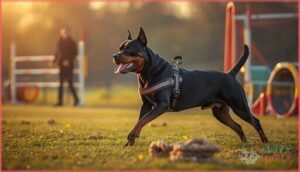
Your Rottweiler’s well-being depends on more than good food and regular vet visits. These powerful, intelligent dogs need structured activity, consistent guidance, and early exposure to different environments to become confident companions.
Let’s look at the specific ways you can meet your Rottweiler’s physical and behavioral needs.
Daily Activity and Mental Stimulation Needs
Your Rottweiler’s daily exercise and mental stimulation needs shift dramatically from puppyhood to senior years. Puppy exercise follows the 5-minute-per-month rule—a 4-month-old gets 20 minutes twice daily—while adult activity demands 1.5 to 2 hours.
Mental enrichment through puzzle toys and training prevents destructive behaviors. These behavioral benefits include reduced anxiety and improved focus, essential for proper socialization and long-term health.
Effective Training Techniques
Reward-based methods work best for your Rottweiler. Positive reinforcement through treats and praise builds command training success faster than physical discipline, which studies link to fear and confusion. About 12.5% of owners use purely reward-based approaches, seeing better behavioral outcomes.
Start with basic commands like “sit” and “stay,” then progress to higher-level training once your dog masters the fundamentals—consistency prevents common training challenges.
Early Socialization Best Practices
Your Rottweiler puppy socialization window closes fast—between 3 and 14 weeks, brain plasticity peaks for learning social skills. Diverse exposure practices mean introducing your pup to different people, environments, sounds, and animals through positive reinforcement.
This early Rottweiler puppy socialization shapes behavioral outcomes for life, reducing aggression and anxiety. Continue socialization maintenance beyond puppyhood through regular outings to prevent regression.
Top 6 Essential Products for Rottweilers
Caring for your Rottweiler means having the right tools on hand to meet their grooming, health, and behavioral needs. From managing that dense double coat to supporting their dental health and mental stimulation, quality products make routine care easier and more effective.
Here are six essential items that address the specific requirements of this sturdy working breed.
1. Hertzko Self Cleaning Slicker Pet Brush

A quality brush transforms coat care from a chore into an opportunity for bonding. The Hertzko Self Cleaning Slicker Brush features fine, bent stainless-steel bristles that penetrate your Rottweiler’s dense double coat without scratching sensitive skin.
Bristle effectiveness is enhanced by the 5.8-by-3-inch head, which covers broad body areas efficiently during grooming sessions. The one-button retraction mechanism simplifies cleaning ease, while the comfort design handle reduces wrist strain.
This tool suits breed-specific needs for shedding control and skin health when used with proper technique and pressure.
Best For: Rottweiler owners looking for an efficient, easy-to-clean brush that tackles heavy shedding and tangles in medium to long coats without causing skin irritation.
- Self-cleaning button retracts bristles so you can remove all the hair in one clump—no more picking fur out by hand between strokes.
- Large 5.8-inch head covers more area per stroke, making it faster to groom big dogs like Rottweilers compared to smaller brushes.
- Bent stainless-steel bristles reach deep into dense double coats to pull out loose fur and undercoat while staying gentle on skin when used correctly.
- Some users report the bristles feel scratchy on very short-haired or thin-skinned dogs, so technique and pressure matter.
- Not as effective on extremely thick double coats or heavy matting—works best for regular maintenance rather than severe tangles.
- Plastic housing can crack at stress points with heavy use over time, so it may not last as long as all-metal brushes.
2. OUAI Fur Bébé Dog Shampoo
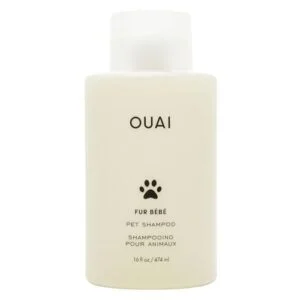
Keeping your Rottweiler’s coat clean goes beyond routine brushing. OUAI Fur Bébé Dog Shampoo delivers coat benefits through aloe vera and panthenol, which hydrate skin and strengthen fur. Ingredient analysis confirms it’s free from sulfates and parabens, meeting grooming standards for sensitive skin.
The Mercer Street scent profile—Italian lemon, Turkish rose, jasmine—lasts days after bathing. Usage guidance recommends massaging from ears to tail, avoiding eyes. Its market position as a premium option reflects salon-grade formulation.
This aids your dog’s health and care through effective, gentle cleansing during regular dog grooming sessions.
Best For: Rottweiler owners who want a sulfate-free, moisturizing shampoo with a long-lasting fragrance and are willing to invest in a premium grooming product.
- Hydrates and strengthens coats with aloe vera, panthenol, and hydrolyzed vegetable protein while being free from sulfates, parabens, and phthalates
- Features the signature Mercer Street scent with Italian lemon, Turkish rose, and jasmine that stays noticeable for several days after bathing
- Suitable for sensitive skin and creates a rich lather that cleanses thoroughly without stripping natural oils from your Rottweiler’s dense double coat
- Priced at $25.60 for 16 oz, making it significantly more expensive than most standard dog shampoos on the market
- The strong floral-citrus fragrance may not appeal to owners who prefer unscented or lightly scented products for their dogs
- Requires careful application to avoid eye irritation, and some breeds or individual dogs may need patch testing before full use
3. Coastal Pet Safari Dog Nail Trimmer

Rottweiler nails demand equipment that addresses thick, strong growth without compromise. The Coastal Pet Safari Dog Nail Trimmer offers stainless-steel blades engineered for durability across large-breed dog grooming sessions.
Its adjustable safety features prevent over-cutting into the quick—a common concern during Rottweiler grooming and care. Ergonomics matter here: non-slip handles accommodate various hand sizes during dog care routines.
Professional trimmers favor the large size for Rottweiler nails specifically, as blade leverage cuts dense keratin cleanly. This tool aids your grooming protocol when precision and control outweigh budget considerations.
Best For: Rottweiler owners who need a durable, professional-grade trimmer that can handle thick nails with precision and built-in safety features to prevent accidents.
- Stainless-steel blades stay sharp through repeated use and cut cleanly through dense Rottweiler nails without requiring excessive hand pressure.
- Adjustable safety stop helps prevent cutting into the quick, which is especially useful for dogs with black nails where the quick is harder to see.
- Non-slip ergonomic handles work well for both left- and right-handed users, including those with reduced hand strength or arthritis.
- The safety guard can shift during use and may need frequent repositioning to maintain proper protection.
- Typical service life of 1–2 years means you’ll need to replace the entire trimmer once blades dull, since they’re not designed to be sharpened.
- Some users with larger hands find the grip size awkward or uncomfortable, particularly during extended grooming sessions.
4. Zymox Bio-Active Enzyme Ear Cleanser

You’ll find Zymox Bio-Active Enzyme Ear Cleanser targets Rottweiler ear care through lactoperoxidase, lactoferrin, and lysozyme—enzymes that address bacterial growth without harsh irritants. Usage guidelines recommend flushing the canal one to two times weekly for maintenance grooming, particularly in breeds prone to moisture-related debris.
The safety profile excludes alcohol and chlorhexidine, reducing sting risk during routine health protocols. Clinical evidence validates enzymatic systems against biofilm formation, a contributor to recurrent ear health problems.
This cleanser fits preventive Rottweiler care when gentle, enzyme-based solutions align with your grooming philosophy.
Best For: Rottweiler owners looking for a gentle, enzyme-based ear cleaner to maintain healthy ears and prevent buildup, especially if their dog is prone to moisture or wax accumulation.
- Uses three natural milk-derived enzymes (lactoperoxidase, lactoferrin, lysozyme) that target bacteria, yeast, and biofilms without harsh chemicals or alcohol
- Non-irritating formula makes it safe for routine weekly maintenance and won’t sting sensitive ears like alcohol-based cleaners
- Compatible with other Zymox otic treatments, so you can use it alongside therapeutic products if your Rottweiler develops an ear infection
- Some dogs may experience irritation or allergic reactions to the enzymes, with reports of increased scratching or redness in sensitive pets
- Not intended to treat active infections on its own—you’ll still need veterinary care and prescription treatments for serious ear problems
- Mid-range pricing compared to basic cleaners, and occasional shipping leaks have been reported by customers
5. Greenies Dental Dog Treats Original Flavor
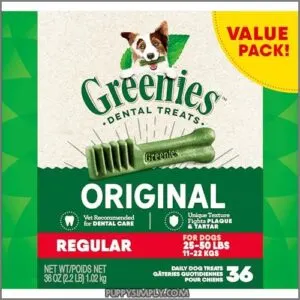
Daily oral hygiene is deeply important for Rottweiler health and nutrition. Greenies Dental Dog Treats Original Flavor address plaque through mechanical action. Studies document 47% less tartar accumulation and 40% reduced plaque within 28 days of consistent use.
Treat ingredients include wheat protein isolate, glycerin, and calcium carbonate—components that support dog health without harsh additives.
Customer reviews frequently note improved dental care outcomes and breath freshness. Treat safety aligns with VOHC acceptance, offering veterinary-recommended support for your dog’s dental health routine between professional cleanings.
Best For: Dog owners looking for a vet-recommended dental treat that reduces plaque and tartar while freshening breath between professional cleanings.
- Clinically proven to reduce tartar by 47% and plaque by 40% in just 28 days with daily use
- Made with natural ingredients plus added vitamins and minerals that support overall oral and whole-body health
- VOHC-accepted and veterinarian-recommended, giving you confidence in the product’s safety and effectiveness
- Can be pricey for regular use, especially if you have multiple dogs or larger breeds
- Not a replacement for brushing or professional cleanings—just a helpful supplement to your dental routine
- May not hold up well for heavy chewers or very large dogs who need more durable options
6. The Intelligence of Dogs Book

Understanding your Rottweiler’s cognitive abilities starts with knowing how breeds are measured. Stanley Coren’s The Intelligence of Dogs ranks Rottweilers 9th among 138 breeds, using obedience emphasis and data from trial judges. This ranking methodology highlights your dog’s ability to learn commands in under five repetitions and obey 95% of the time.
While public perception often fixates on breed stereotypes, the book clarifies Rottweiler temperament and intelligence through structured dog training analysis. Recognizing these cognitive abilities helps you tailor Rottweiler behavior programs and dog behavior expectations effectively.
Best For: Dog owners, trainers, and Rottweiler enthusiasts who want to understand breed-specific intelligence rankings and apply obedience-based insights to their training programs.
- Places Rottweilers in the top 10 for working and obedience intelligence, showing they can learn new commands in under 5 repetitions with a 95% first-command success rate.
- Provides practical guidance on evaluating dog body language, understanding barks, and testing intelligence across over 100 breeds.
- Offers a structured framework that helps owners tailor training programs to match their dog’s cognitive strengths and special needs.
- Focuses heavily on obedience-trial performance, which may undervalue other forms of intelligence like problem-solving, independence, or emotional awareness.
- Some readers find the writing dry and overly technical, with lengthy chapters that include unnecessary information instead of engaging stories.
- Rankings rely on judge surveys that can be influenced by breed stereotypes and cultural biases, raising questions about objectivity and broader applicability.
Frequently Asked Questions (FAQs)
How do I know if a Rottweiler is the right breed for me and my lifestyle?
Consider your home size, daily schedule, and experience with large dogs—this breed demands 5–2 hours of exercise, confident handling, and significant socialization to match their protective temperament.
Can Rottweilers live in apartments or small spaces?
Many owners successfully raise Rottweilers in apartments by meeting their 1–2 hour daily exercise requirements, managing noise through training, minimizing stair climbing for joint health, and establishing predictable routines that reduce anxiety-driven behaviors in confined spaces.
How do Rottweilers behave around other pets?
Rottweilers can thrive in multi-pet homes with early socialization and management strategies. Same-sex aggression occurs more often, so supervised introductions help.
Cat coexistence requires leash control initially, plus escape routes for smaller animals.
What is the average cost of a Rottweiler?
Bringing home a Rottweiler puppy can feel like winning the lottery—until you see the price tag. You’ll pay $1,000 to $3,500 from breeders, though dog adoption through rescues costs less and includes essential first-year expenses.
Are Rottweilers good for first-time dog owners?
First-time owners can succeed with Rottweilers if they commit to rigorous training demands and strength management. However, their protective temperament requires experience—alternative breeds might suit novices better unless you’re prepared for intensive socialization.
Do Rottweilers drool or have other hygiene issues?
Some slobbering definitely happens—males with loose lips drool more.
Oral hygiene matters, too: dental disease, ear infections, and skin conditions can crop up without regular grooming practices and vet checkups.
Conclusion
Rottweilers don’t just need owners—they demand partners willing to invest serious time, energy, and consistency. Without proper training and socialization, their protective drive can quickly spiral into liability.
Yet when raised correctly, the Rottweiler dog breed transforms into one of the most loyal companions you’ll ever know. Your commitment directly determines whether you’ll share your life with a balanced guardian or struggle with an unmanageable force.
Choose wisely, train diligently, reap rewards accordingly.
- https://en.wikipedia.org/wiki/Rottweiler
- https://www.wetpawsdoggrooming.com/9-dog-breeds-with-the-highest-cancer-rate-2/
- https://paworigins.com/blogs/vet-blogs/rottweiler-life-expectancy-and-common-health-concerns
- https://www.imprimedicine.com/blog/rottweiler
- https://texasdogbitelawyer.law/blog/are-rottweilers-dangerous/