
This site is supported by our readers. We may earn a commission, at no cost to you, if you purchase through links.
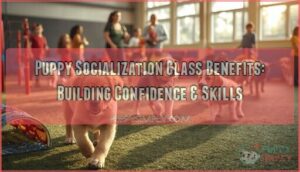
Your puppy’s first sixteen weeks shape their entire life—and most owners miss the window. Between 7 and 16 weeks old, puppies experience a critical socialization period where positive experiences literally rewire their developing brains, building neural pathways that determine how they’ll respond to people, dogs, and new situations for years to come. Miss this narrow timeframe, and you’re fighting an uphill battle against fear-based behaviors and reactivity that could’ve been prevented.
Puppy socialization class benefits extend far beyond basic obedience—these structured sessions create confident, well-adjusted dogs who handle veterinary exams without panic, greet other dogs calmly at the park, and navigate busy environments without stress.
The difference between a puppy who attended socialization classes and one who didn’t becomes crystal clear around six months old, when behavior patterns solidify.
Table Of Contents
- Key Takeaways
- What Are Puppy Socialization Classes?
- Why Socialization Matters for Puppies
- Emotional Benefits of Socialization Classes
- Preventing Behavioral Problems Early
- Improving Dog-to-Dog Social Skills
- Enhancing Human Interaction and Handling
- Strengthening The Owner–Puppy Bond
- Boosting Learning and Training Success
- Choosing The Right Socialization Class
- Measuring Success After Socialization Classes
- Frequently Asked Questions (FAQs)
- Conclusion
Key Takeaways
- Puppies experience a critical socialization window between 7 and 16 weeks old where positive experiences literally rewire their developing brains, and missing this narrow timeframe creates lifelong struggles with fear-based behaviors and reactivity that could’ve been prevented.
- Early socialization through structured classes cuts adult anxiety by up to 40% and reduces dog-directed aggression by 20–30%, while poorly socialized puppies show significantly higher rates of excessive barking, destructive chewing, and stress during routine veterinary or grooming visits.
- Socialization classes teach puppies essential canine communication skills like reading body language and practicing safe play boundaries, which directly translates to better dog-to-dog interactions and fewer behavioral problems throughout their lives.
- The investment in puppy socialization classes pays off immediately through faster obedience training, stronger owner-puppy bonds, and daily behavioral improvements at home that you’ll see in calmer responses to household noises, easier handling during grooming, and reduced separation anxiety.
What Are Puppy Socialization Classes?
Puppy socialization classes are structured group sessions where young puppies learn to navigate the world around them through play, training, and safe exposure to new experiences. These classes bring together puppies and their owners in a controlled setting, guided by a trained instructor who focuses on positive, confidence-building methods.
To understand what makes these classes so effective, let’s look at who they’re designed for, what happens during a typical session, and how often you’ll attend.
Age Range and Timing
Most puppy socialization classes welcome puppies between 7 and 16 weeks old—right in the middle of their critical socialization period. This timing window aligns with vaccine timing and developmental stages when your puppy’s brain is primed for learning.
Some programs accept puppies up to six months, though you’ll see the best results when you start during those sensitive periods. Early enrollment maximizes positive reinforcement training success and sets the foundation for confident puppy development stages ahead.
Understanding the importance of methodological rigor is essential for evaluating the effectiveness of such programs.
Class Structure and Activities
Once you’re in, you’ll see a blend of playtime activities and structured puppy training. Classes combine social learning through supervised puppy interactions with hands-on training exercises like sit, stay, and come.
Your instructor will also introduce sensory experiences—different sounds, textures, and surfaces—during this critical socialization period.
The class environment is designed to build confidence while teaching essential puppy socialization techniques through positive reinforcement methods.
Typical Class Duration and Frequency
Most puppy socialization classes run 30 to 60 minutes per session, meeting once or twice a week. You’ll usually commit to a 4- to 6-week course during your puppy’s critical socialization period—ideally starting around 7 to 9 weeks of age.
This consistent training frequency helps reinforce puppy socialization techniques while fitting into your schedule, and session length stays predictable so your pup learns to anticipate the routine.
Why Socialization Matters for Puppies

Your puppy’s brain is wired to soak up new experiences during specific windows of development, and missing these moments can have lasting effects.
The first few months of life shape how your dog will respond to people, animals, and situations for years to come. Understanding why this early period matters so much helps you make the most of every socialization opportunity.
Critical Developmental Windows
Between 3 and 14 weeks, your puppy’s brain is most open to new experiences—this Sensitive Periods window is when early social learning shapes lifelong behavior. Well-timed Puppy Socialization during these Critical Developmental Windows helps manage Stress Reactivity and Fear Responses through Positive Reinforcement. Missing key Developmental Milestones can lead to anxiety and avoidance later.
Why the Socialization Period matters for Puppy Development:
- Exposure to diverse people and dogs builds confidence
- Positive handling reduces veterinary exam stress
- Gradual introductions prevent overwhelming fear triggers
- Structured experiences enhance behavioral outcomes
- Early investment creates adaptable, secure adult dogs
Impact on Adult Behavior
The long-term payoff is clear: Puppy Socialization using Positive Reinforcement cuts Adult Anxiety and fear-driven behavior by up to 40%, according to Longitudinal Effects research. Early exposure lowers dog-directed aggression by 20–30% and builds a stable Social Temperament that lasts for life.
Early puppy socialization with positive reinforcement cuts adult anxiety by 40% and reduces aggression by up to 30% for life
These Behavioral Outcomes prove that investing in Puppy Development today shapes confident, cooperative Canine Behavior tomorrow—and Fear Reduction starts in the classroom.
Emotional Benefits of Socialization Classes

Beyond learning basic obedience and doggy manners, socialization classes shape how your puppy feels about the world around them. These early experiences build the emotional foundation that determines whether your dog approaches new situations with curiosity or retreats in fear.
Let’s look at two key ways these classes support your puppy’s emotional well-being.
Building Confidence in New Environments
When your puppy confidently walks into a bustling pet store or calmly explores a new park, you’re seeing the payoff of solid environmental adaptation during the socialization period. Puppy socialization classes use novelty exposure and exploration techniques to build that assurance step by step.
Here’s how confidence building unfolds through social learning and positive reinforcement:
- Gradual introductions to unfamiliar surfaces, sounds, and settings lower stress responses
- Structured exposure during puppy socialization classes teaches puppies that new places aren’t threatening
- Observing calm instructors and other puppies models brave behavior your pup can copy
- Consistent routines across different environments help your puppy predict what comes next
Research shows puppies attending just two to three sessions in varied contexts retain their confidence when facing novel situations later. That means the curiosity and calm your puppy develops in class transfers to real-world moments—vet visits, grooming appointments, even family gatherings.
Reducing Fear and Anxiety
Structured exposure in socialization classes rewires your puppy’s fear response to everyday anxiety triggers like strangers, traffic, or unfamiliar objects. Through calming techniques and positive reinforcement, instructors teach stress management that prevents separation anxiety and other behavioral issues.
Early confidence building during puppy socialization lowers cortisol during vet visits and helps your dog face dog anxiety and fear with resilience instead of panic.
Preventing Behavioral Problems Early

The best way to tackle behavioral problems is to stop them before they start. Puppy socialization classes give you a head start by teaching your dog healthy habits during those critical early weeks.
Let’s look at two major issues that proper socialization helps prevent.
Lowering Risk of Aggression
One of the most valuable outcomes of puppy socialization is aggression prevention—early exposure to diverse people, dogs, and environments greatly lowers fear-based triggers that lead to defensive behavior.
Through positive reinforcement and controlled introductions, your puppy learns social skills and conflict resolution, reducing the likelihood of resource guarding, fear reduction challenges, and other behavioral issues that can emerge without proper early training.
Minimizing Excessive Barking and Destructive Behavior
Early socialization can reduce fear-based barking by 40–60% and cut destructive chewing incidents by 25–50% in those first critical months. You’re not just teaching commands—you’re building calm training habits that help your puppy feel secure instead of anxious.
Consistent puppy training paired with enrichment activities creates a foundation for lifelong impulse control.
- Bark reduction through gradual desensitization to common triggers like doorbells and vacuum cleaners
- Destructive prevention with structured chew options and rotating toys that keep boredom at bay
- Positive reinforcement during puppy socialization that rewards quiet, settled behavior
- Environmental setup using baby gates and designated safe zones to limit access to temptation
- Behavioral training logs that track progress and help you spot patterns in dog behavior
Improving Dog-to-Dog Social Skills
One of the most valuable things your puppy will learn in socialization class is how to “speak dog” with other pups. Dogs communicate through subtle body signals, play bows, and careful boundary-setting—skills that don’t come naturally to every puppy.
Let’s look at two key areas where socialization classes make the biggest difference in your dog’s social development.
Learning Canine Body Language

Reading canine body language transforms your puppy’s socialization experience. Ear positioning shifts from forward (curious) to back (uncertain), while tail language reveals confidence through height and stiffness.
Watch for canine facial expressions like lip tension or eye shape changes—they’re stress signals during puppy training. Body posture tells the story: relaxed movement means comfort, rigid stance suggests anxiety.
Positive reinforcement helps your pup interpret these dog behavior cues naturally.
Safe Play and Interaction Techniques

Once your puppy understands body language, you’ll guide safe, playful interaction with clear boundaries. Limit sessions so every pup can step away voluntarily, and watch for stiff posture or pinned ears—your cue to pause.
Use positive reinforcement to reward gentle handling and calm environments, redirecting rough play without punishment. Safe spaces with chewable toys reduce bite intensity, making puppy training smoother and building confidence through canine behavior modification.
Enhancing Human Interaction and Handling

Getting your puppy comfortable with human touch isn’t just about cuddles—it’s about preparing them for real-world situations where they’ll need to stay calm and cooperative.
Socialization classes include structured handling exercises that teach your puppy to accept touching, lifting, and examination without fear or resistance.
Let’s look at how this training translates into practical benefits you’ll see throughout your dog’s life.
Becoming Comfortable With Touch and Examination
Socialization classes introduce touch desensitization through gentle handling exercises that prepare your puppy for real-world examination prep. Instructors guide you through calm counterconditioning techniques, pairing each touch with positive reinforcement like treats or praise.
This puppy acclimation process builds tolerance for paw handling, ear checks, and mouth inspections—essential canine behavior modification that prevents dog behavior problems during necessary care routines.
Better Cooperation at Vet and Groomer
When your puppy masters handling routines through socialization, vet visit prep and grooming techniques become far less stressful. Positive reinforcement during these sessions builds fear reduction skills that carry over to calm environments like clinics and salons.
You’ll notice smoother cooperation during nail trims and exam table holds—that’s the power of consistent puppy parenting paired with early socialization training.
Strengthening The Owner–Puppy Bond

Socialization classes aren’t just about your puppy learning from other dogs—they’re also about you learning how to connect with your puppy in meaningful ways.
When you attend these sessions together, you’ll pick up the skills to read your dog’s signals, respond consistently, and build mutual trust. This shared learning experience strengthens your relationship in two key areas.
Improving Communication and Understanding
You’ll learn to read your puppy’s world more clearly when you understand canine body language and emotional intelligence. Socialization classes teach you to recognize canine cues—like ear position and tail wags—while positive reinforcement and social modeling strengthen your responses.
Clear signals from you, paired with consistent rewards, improve your dog’s understanding by 30 percent. This two-way communication builds trust and deepens your connection with every interaction.
Establishing Clear Training Boundaries
Consistency anchors every successful training relationship. When you use clear commands during socialization classes and maintain the same rules at home, your puppy learns faster—studies show consistent verbal cues can reduce learning conflicts markedly.
Designate specific times for training versus play, guarantee all family members follow identical boundaries, and use positive reinforcement to reward correct responses.
These obedience foundations create a confident, cooperative companion.
Boosting Learning and Training Success

Socialization classes don’t just teach your puppy how to get along with others—they lay the groundwork for faster, more effective training throughout your dog’s life. When puppies learn in a positive, structured environment early on, they develop better focus and a stronger desire to work with you.
Let’s look at how these classes set your puppy up for long-term training success.
Positive Reinforcement Methods
You’ll see reward training and clicker methods take center stage in quality puppy socialization classes. Marker techniques use a click or verbal cue to signal exactly when your puppy gets it right, while treats or praise seal the deal.
These positive reinforcement training approaches follow smart reinforcement schedules—immediate positive feedback after correct behavior—so your pup connects the dots faster and retains what they’ve learned.
Faster Progress in Obedience and Advanced Skills
Structured practice in puppy socialization classes accelerates obedience training and skill building through consistent cues, immediate instructor feedback, and progressive difficulty levels matched to your pup’s canine development. You’ll notice faster learning when commands are reinforced across varying distractions.
Meanwhile, social modeling—watching peers succeed—motivates your puppy to master complex commands and dog obedience tasks more quickly than home-only training allows.
Choosing The Right Socialization Class

Not all puppy classes are created equal, and the right choice can make all the difference in your pup’s development. You’ll want to look for specific qualities that set excellent programs apart from mediocre ones.
Here are the key factors to keep in mind when selecting a socialization class for your puppy.
Class Size and Instructor Qualifications
When you’re choosing puppy socialization classes, the right instructor credentials and class size limits can make all the difference. Look for programs with certified dog trainers who’ve logged real-world experience, not just classroom hours. A student ratio of 4–6 puppies per session gives your pup the attention they need. Here’s what matters most:
- Certified trainer qualifications show serious commitment to learning
- Small class structure means safer, calmer interactions
- Experienced teacher guidance catches problems before they escalate
- Low student ratio allows tailored socialization techniques
- Proven training methods build confidence through positive reinforcement training
Remember, programs with smaller groups consistently deliver better outcomes.
Positive Training Philosophies
The best programs rely on positive reinforcement training—reward systems that celebrate your puppy’s wins instead of punishing mistakes.
Ethical training uses gentle methods and non-aversive techniques to build trust during puppy socialization, avoiding fear-based dog training methods.
When you see trainers rewarding calm behavior with treats or praise, you’re watching puppy training and socialization done right.
Observing a Class Before Enrolling
Most puppy socialization classes let you observe a session before enrollment—don’t skip this step. Watch how the instructor style manages puppy interactions, check safety protocols like vaccination requirements, and notice class dynamics during positive reinforcement exercises.
You’ll spot whether puppy training and socialization flow smoothly, and whether enrollment criteria match your pup’s age and temperament before committing.
Measuring Success After Socialization Classes

You’ve invested time and energy into socialization classes, so naturally you want to know if it’s working. The good news is that progress shows up in your puppy’s daily behavior, not just during class time.
Let’s look at the key signs that tell you your puppy is developing into a confident, well-adjusted dog.
Signs of Well-Socialized Puppies
You’ll recognize progress when your puppy approaches strangers with a relaxed wagging tail and stays calm during new experiences. Watch for friendly play with other dogs, reduced fear response to unfamiliar sounds, and comfortable handling by vets or groomers.
These signs show that positive reinforcement and consistent puppy socialization are building strong social skills, puppy confidence, and environmental adaptation that support healthy dog behavior throughout puppy development.
Tracking Behavioral Improvements at Home
Beyond what you spot at the park, real behavioral shift tracking happens at home. Monitor these home environment changes to measure emotional resilience:
- Daily routines: Fewer door-related incidents and calmer alone-time show separation anxiety progress
- Fear reduction methods: Watch startle responses to household noises decrease over two weeks
- Social comfort metrics: Easier handling during grooming reveals growing confidence
Longitudinal behavior analysis confirms that puppy socialization using positive reinforcement creates lasting dog behavior modification you’ll see every single day.
Frequently Asked Questions (FAQs)
What vaccines does my puppy need before class?
Most facilities require distemper, parvovirus, and rabies vaccines before enrollment, plus a recent leptospirosis booster.
Your vet will confirm your puppy’s core vaccines are current and provide the necessary health clearance.
Can older dogs attend puppy socialization classes?
Most programs focus on puppies seven to sixteen weeks old, but some facilities offer junior-dog cohorts for older pups.
Acceptance depends on temperament assessments, vaccination records, and whether the class can safely accommodate mixed ages.
How much do puppy socialization classes typically cost?
Think of puppy socialization classes as an investment in your dog’s future—group programs usually run $60 to $150 for multi-week courses, while private sessions cost $40 to $100 each.
What should I bring to my first class?
You’ll want to pack your puppy’s vaccination records, a six-foot leash, and a chest strap.
Don’t forget high-value treats, a water bowl, and a comfort toy to help your pup feel secure.
Are online puppy socialization classes equally effective?
Online puppy socialization classes teach basic obedience effectively, but they can’t replicate real-time puppy-to-puppy interaction.
Your success depends heavily on consistent practice and your ability to read your dog’s body language at home.
Conclusion
Sure, you could skip puppy socialization class benefits and just hope your adult dog magically learns to handle the world without lunging at every stranger or trembling at the vet’s office. Or you could invest eight weeks now and avoid years of behavioral damage control.
Your puppy’s brain is actively building pathways right now—pathways that’ll either make life easier or turn every walk into a stressful event. The clock’s already ticking.
- https://thearenagroup.net/terms-of-use/
- http://www.americanveterinarian.com/news/puppy-owners-not-providing-proper-socialization
- http://ovc.uoguelph.ca/
- https://academichelpexpress.blog/2024/08/please-use-the-bulleted-points-and-the-rubric-below-to-guide-your-work-your-pa/
- https://x.com/godofprompt/status/1990526288063324577