This site is supported by our readers. We may earn a commission, at no cost to you, if you purchase through links.

Your puppy’s first year sets the foundation for a lifetime of health, and nutrition plays the starring role in that development. During this critical growth phase, puppies require specific vitamins and minerals in precise amounts—too little can stunt development, while too much can cause skeletal problems or organ damage.
The challenge is that not all puppy foods deliver balanced nutrition despite their marketing claims. Puppy food with added vitamins has become increasingly popular as breeders and veterinarians recognize the gaps in standard formulations, but choosing the right one requires understanding which nutrients matter most and how they work together.
We’ve evaluated nine top-performing options that deliver thorough vitamin profiles customized to your puppy’s developmental needs.
Table Of Contents
- Key Takeaways
- Top 9 Puppy Foods With Added Vitamins
- 1. Healthy Puppy Food With Chicken
- 2. Purina Healthy Puppy Food Formula
- 3. Natural Puppy Food With Chicken
- 4. Blue Buffalo Puppy Food Formula
- 5. Pedigree Grilled Steak Puppy Food
- 6. Grain Free Puppy Dog Food
- 7. High Protein Puppy Food Formula
- 8. Blue Buffalo Healthy Puppy Food
- 9. Blue Buffalo Puppy Chicken and Oatmeal
- Key Benefits of Added Vitamins for Puppies
- Essential Vitamins and Nutrients in Puppy Food
- How to Choose Puppy Food With Optimal Vitamins
- Monitoring Your Puppy’s Health on Vitamin-Enriched Food
- Frequently Asked Questions (FAQs)
- How long should puppies be fed vitamin-enriched food?
- Are some vitamins more important than others for puppies?
- Can I give puppies additional vitamin supplements?
- How do I know if my puppy is getting enough vitamins?
- What are the signs of vitamin deficiency in puppies?
- Can puppies get too many vitamins from food?
- When should puppies switch to adult dog food?
- Do homemade puppy diets need vitamin supplements?
- Are grain-free puppy foods nutritionally complete?
- How do storage conditions affect vitamin potency?
- Conclusion
Key Takeaways
- Puppies require specific vitamins in precise amounts during their first year, with too little stunting development and too much causing skeletal problems or organ damage, making balanced formulation critical for lifelong health.
- Vitamin A, D, E, and B-complex are the most essential nutrients for puppy development, supporting immune function, bone growth, brain development, and energy metabolism at levels that meet AAFCO growth standards.
- Real chicken-based formulas with added DHA, antioxidants, and a calcium-to-phosphorus ratio of 1.2:1 to 1.4:1 deliver the digestibility and nutrient balance puppies need for healthy muscle, bone, and cognitive development.
- Small breeds should transition to adult food around 9-12 months while large breeds need vitamin-enriched puppy food until 18-24 months, and over-supplementation with additional vitamins can cause toxicity and health complications.
Top 9 Puppy Foods With Added Vitamins
Finding the right puppy food with the vitamins your growing dog needs doesn’t have to be overwhelming.
The products below represent a range of formulas that prioritize added vitamins, protein sources, and nutritional balance to support healthy development.
Here are nine puppy foods that meet these criteria and offer complete nutrition for your puppy’s first year.
1. Healthy Puppy Food With Chicken
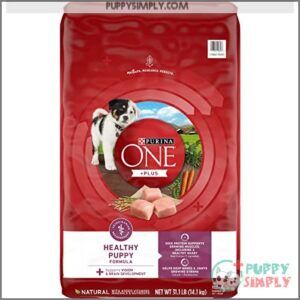
Chicken nutrition stands as a cornerstone for puppy feeding and healthy growth. When you choose a natural healthy puppy formula with real chicken as the first ingredient, you’re giving your pup high protein that’s over 85% digestible.
Studies show chicken-based diets support stable weight gain and muscle development during those critical first months. Balanced diets featuring deboned chicken deliver essential amino acids your puppy needs, plus added vitamin E and B-complex vitamins.
That combination meets core nutrient needs while promoting strong development and energy.
Best For: Puppy owners looking for a chicken-based formula that supports muscle growth, brain development, and immune health with high digestibility and natural ingredients.
- Real chicken as the first ingredient delivers over 85% digestible protein for strong muscle development and stable weight gain
- Includes DHA omega-3 fatty acids and essential vitamins to support brain development, vision, and immune system function
- No artificial flavors or preservatives, with added antioxidants and omega-6 fatty acids for healthy skin and coat
- Some customers report digestive issues like diarrhea in certain puppies
- May contain filler ingredients that require nutritional supplementation for complete diet balance
- Not ideal for puppies with specific dietary sensitivities or allergies, as results vary by individual needs
2. Purina Healthy Puppy Food Formula
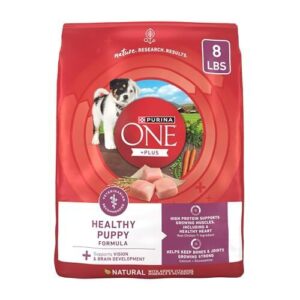
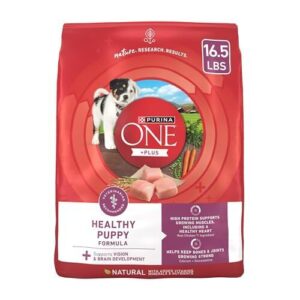
Purina ONE Healthy Puppy Food Formula stands out among veterinarian-recommended options with real chicken as its first ingredient, delivering high protein for growing muscles. This natural healthy puppy formula includes DHA to support brain and vision development, plus four antioxidant sources for immune health. The calcium-to-phosphorus ratio sits around 1.3:1, promoting strong bones without fillers or artificial preservatives, giving you complete puppy nutrition in every bowl.
You’ll find added vitamins B12 and D3—at 2.5 mg/kg and 400 IU/kg respectively—that meet AAFCO nutrient profiles for growth.
Best For: Puppy parents looking for veterinarian-recommended nutrition with real chicken, added DHA for brain development, and AAFCO-certified vitamin fortification to support healthy growth.
- Real chicken is the first ingredient, providing high-quality protein for strong muscles and a healthy heart
- Contains DHA, vitamins B12 and D3, and a balanced 1.3:1 calcium-to-phosphorus ratio to support brain, vision, and bone development
- Made with no artificial flavors, preservatives, or fillers—just complete nutrition backed by third-party labeling accuracy verification
- Some customers have reported digestive issues like diarrhea in their puppies
- Contains corn gluten meal and soybean meal, which may not suit all dogs with sensitivities
- A few owners feel supplementation may be needed for total nutrition, despite AAFCO certification
3. Natural Puppy Food With Chicken
Looking for real chicken in your puppy’s bowl? Natural puppy kibble with chicken as the primary protein appears in 62% of grain-inclusive formulas, offering high protein for muscle development and balanced formulas your pup can digest easily.
Real chicken-based diets deliver essential amino acids for puppy development while supporting healthy digestion. You’ll notice improved palatability—puppies readily accept chicken nutrition—and these natural ingredients provide omega-6 fatty acids for coat health.
Most chicken-forward options include fortified vitamins A, D, and E, rounding out puppy nutrition and health in one complete package.
Best For: Puppy owners who want real chicken as the main protein source with added vitamins and antioxidants to support muscle growth, brain development, and immune health during the first year.
- Real chicken as the first ingredient provides high-quality protein for strong muscles and healthy heart development
- Fortified with DHA for brain and vision development, plus four antioxidant sources to support the immune system
- No artificial flavors or preservatives, with added nutrients for joint health and coat shine
- Some customers reported digestive issues like diarrhea in their puppies
- Contains filler ingredients such as corn gluten meal and soybean meal
- May require additional supplementation for complete nutrition according to some customer feedback
4. Blue Buffalo Puppy Food Formula
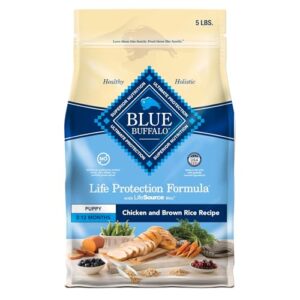
Blue Buffalo stands out with its veterinarian-recommended puppy formula. Deboned chicken delivers high protein for muscle growth, while DHA aids brain and retinal development.
The vitamin fortification levels align with AAFCO guidelines, providing roughly 1,800–2,400 IU of vitamin A per 100 g for vision and immunity.
Nutrient balance is enhanced by LifeSource Bits, packed with antioxidants and minerals that aid puppy nutrition and health. This formula benefits cognitive function and immune defense, making it a solid choice for all-encompassing puppy nutrition during those critical early months.
Best For: Puppy owners looking for a high-protein, grain-inclusive formula with veterinarian-recommended vitamin levels and immune support through antioxidant-rich LifeSource Bits.
- Real deboned chicken as the first ingredient provides high-quality protein for muscle development, with no chicken by-products, corn, wheat, or soy
- AAFCO-compliant vitamin fortification (1,800–2,400 IU vitamin A per 100g) supports vision, immunity, and healthy growth during critical development stages
- LifeSource Bits deliver targeted antioxidants, vitamins, and minerals while DHA and ARA promote cognitive function and retinal health
- Some puppies may experience digestive issues like diarrhea or gas when transitioning to or eating this formula
- Not all dogs find the food appealing, with reports of puppies refusing to eat it despite the quality ingredients
- The $17.48 price point for a 5-pound bag may be higher than budget-friendly alternatives, making long-term feeding more expensive
5. Pedigree Grilled Steak Puppy Food
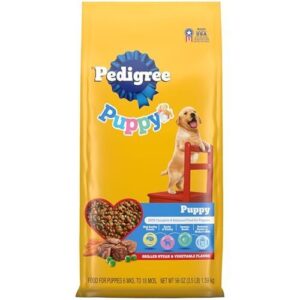
For budget-conscious puppy owners, Pedigree Grilled Steak Puppy Food offers accessible nutrition with fortified vitamins A, D, and E. This dry kibble includes 36 vitamins, minerals, and amino acids that target immune health and muscle development. The steak and vegetable flavor provides complete and balanced puppy nutrition without high fructose corn syrup or artificial flavors.
While it may contain fillers compared to premium brands, Pedigree Nutrition emphasizes vitamin balance over high-dose supplementation. The 3.5 lb. bag suits small breeds, making it a practical choice for supporting canine development and growth on a budget.
Best For: Budget-conscious puppy owners looking for fortified nutrition with essential vitamins and minerals to support their growing dog’s immune health and muscle development.
- Contains 36 vitamins, minerals, and amino acids including A, D, and E to support healthy growth and immune function
- Complete and balanced nutrition without high fructose corn syrup or artificial flavors
- Affordable option with steak and vegetable flavor that provides practical nutrition for small breeds
- May contain fillers that aren’t ideal compared to premium brand formulas
- Packaging lacks a proper zip seal which can affect freshness over time
- Ingredient quality may not meet the standards of those seeking higher-end puppy foods
6. Grain Free Puppy Dog Food
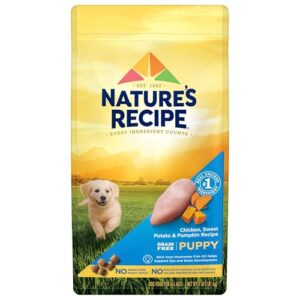
Grain-free puppy dog food tackles dog food allergies and pet owner concerns by swapping grains for sweet potatoes, peas, or pumpkin. While grain-free benefits can include better digestion for sensitive pups, puppy nutrition still hinges on balanced vitamin and mineral fortification.
About 22% of puppy diet and nutrition sales feature grain-free options, yet canine health risks arise when calcium-phosphorus ratios or taurine levels aren’t properly managed. You’ll want to verify AAFCO compliance—roughly 68% of grain-free formulas meet growth-stage standards—to confirm your puppy gets complete pet nutrition and wellness support without compromising skeletal development.
Best For: Pet owners with puppies experiencing food sensitivities or digestive issues who want a grain-free formula with real chicken and ingredients like sweet potatoes and pumpkin.
- Real chicken as the first ingredient supports strong muscle development and provides high-quality protein for growing puppies.
- Sweet potatoes and pumpkin help with digestion and can be easier on sensitive stomachs than traditional grain-based formulas.
- No artificial additives or common allergens like corn, wheat, and soy, plus DHA for brain and eye development.
- Some buyers report an unpleasant smell that their puppies or they themselves find off-putting.
- Price has gone up over time, making it a more expensive option compared to when it was first purchased.
- Not all puppies may thrive on grain-free diets—some formulas can lack proper nutrient ratios for growth if not carefully formulated.
7. High Protein Puppy Food Formula
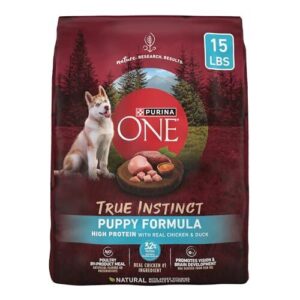
You’ll find high-protein puppy food formulas delivering 28–34% crude protein on a dry matter basis, with some exceeding 40% for specific breeds. Real chicken and other protein sources fuel muscle growth while bolstering heart development.
Digestive health scores stay strong at 82–92% digestibility when energy levels match your puppy’s needs. Nutrient balance matters—look for calcium-phosphorus ratios near 1.2:1 to 1.4:1, which bolsters skeletal modeling without compromising joint integrity.
Dog food ingredients like novel proteins (lentils, pea protein) can boost puppy nutrition, though individual palatability varies.
Best For: Puppy owners looking for a protein-packed formula that supports muscle development, brain growth, and immune health with real chicken as the main ingredient.
- High protein content (32%) promotes strong muscle growth and heart health while meeting or exceeding industry standards for active growing puppies
- Includes DHA from fish oil and antioxidants to support brain development, vision, and immune function during critical growth phases
- No fillers, poultry by-products, or artificial additives—just complete nutrition with digestibility scores in the 82–92% range
- Small kibble pieces may pose a choking risk for some puppies, requiring careful supervision during meals
- Higher price point compared to standard puppy foods, though cost reflects quality protein sources and added functional ingredients
- May not work for puppies with specific food sensitivities, and requires proper storage to maintain freshness and nutritional integrity
8. Blue Buffalo Healthy Puppy Food
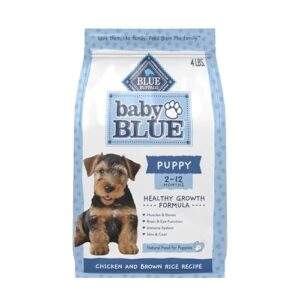
You’ll get a formula backed by veterinarian-recommended standards when you choose Blue Buffalo Healthy Puppy Food. This blend delivers vitamins A, D, E, and B-complex above baseline levels, supporting puppy development through immune system fortification and healthy growth.
Real chicken anchors the ingredient list, while antioxidant-rich LifeSource Bits target nutrient balance for ideal puppy nutrition. You won’t find corn, wheat, or soy—just DHA for cognitive support and prebiotics for digestive health.
It’s complete nutrition designed for healthy eating for puppies during critical early stages.
Best For: Puppy owners looking for a premium food with whole protein, added DHA for brain development, and no filler grains like corn, wheat, or soy.
- Real chicken is the first ingredient, with added antioxidants and prebiotics for immune and digestive support
- Contains DHA and ARA to help with cognitive function and eye development during crucial growth stages
- Free from chicken by-products and common allergens like corn, wheat, and soy
- Costs more than many other puppy food brands on the market
- Some puppies may be picky about the taste or texture of the LifeSource Bits
- Requires careful storage to keep the food fresh and preserve its nutritional quality
9. Blue Buffalo Puppy Chicken and Oatmeal
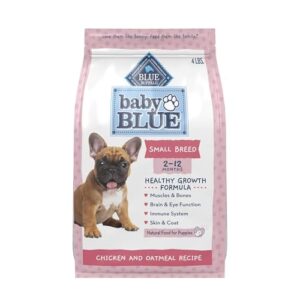
You’ll benefit from a formula that delivers 22–26% crude protein, aligning with AAFCO puppy nutrition guidelines. This puppy dog dry food features chicken as the primary ingredient, paired with oatmeal for digestive health and easy nutrient absorption.
The vitamin premix bolsters dog development through essential nutrients—vitamins A, D, E, and B-complex fortify the immune system, while calcium and phosphorus build strong bones. Omega-3 and omega-6 fatty acids boost pet wellness by promoting cognitive function and a healthy coat, making this puppy food a complete solution for your growing companion.
Best For: Small breed puppy owners who want high-quality protein and immune support without corn, wheat, or soy fillers.
- Real chicken as the first ingredient with 22–26% crude protein to support healthy muscle growth
- Includes DHA and omega-3 fatty acids for brain development and a shiny coat
- LifeSource Bits packed with vitamins and antioxidants for immune system health
- Higher price point compared to standard puppy food brands
- Some puppies may pick around the LifeSource Bits if they’re picky eaters
- May not work for dogs with specific protein sensitivities or allergies
Key Benefits of Added Vitamins for Puppies
Added vitamins in puppy food aren’t just a marketing feature—they play a real role in your puppy’s early development. During the first year, your pup’s body is building everything from bones to brain tissue, and the right vitamins support each stage of that growth.
Here’s what those added nutrients actually do for your growing dog.
Supporting Growth and Development
Your puppy’s first year lays the foundation for lifelong health, and vitamin-enriched diets make a measurable difference. Puppies on these formulas show 12–25% higher daily weight gain during the first 12 weeks, while bone mineralization markers improve 15–20% faster with optimized calcium-to-phosphorus ratios.
Here’s what proper puppy nutrition delivers:
- Accelerated muscle development through high-quality protein and B-complex vitamins
- Stronger healthy bones with vitamin D and balanced minerals
- Enhanced brain development via DHA supplementation showing 9–16% better problem-solving
- Reduced developmental risks including up to 60% lower rickets incidence
Meeting your puppy’s developmental needs during critical growth stages ensures they reach their full potential. Understanding AP study resources can help owners make informed decisions about their puppy’s diet and overall health.
Enhancing Immune System Health
A strong immune system starts in the bowl. Vitamin A enhances mucosal barriers, cutting infection risk by up to 25%, while vitamin E reduces oxidative stress markers 10–30% under challenging conditions. Vitamin D modulates immune responses, and selenium-vitamin E synergy boosts vaccine antibody production 12–18%. Understanding web server issues can also impact overall health research.
| Nutrient | Immune Function |
|---|---|
| Vitamin A | Maintains epithelial barriers, reduces infection risk 25% |
| Vitamin E | Antioxidant protection, lowers stress markers 10–30% |
| Vitamin D | Regulates immune responses, prevents respiratory infections |
| Zinc | Improves neutrophil function, speeds recovery 15–20% |
| Omega-3 | Reduces inflammatory markers 20–40% |
You’ll see the difference when your puppy bounces back faster from stress and stays playful through growth spurts.
Promoting Healthy Skin and Coat
Just as immunity builds from within, your puppy’s radiant coat reflects ideal skin nutrition. Omega-6 fatty acids boost coat gloss 25% in eight weeks, while vitamin E cuts dullness 18% in early-life puppy food. Fatty acids delivering 1.5–2% of calories improve hydration 9% monthly.
- Vitamin-enriched diets yield 12-point higher luster scores after six weeks
- Healthy eating for puppies strengthens nutrition and immune system connections
- Essential fatty acids in puppy grooming routines support healthy joints indirectly
- Coat health benefits appear faster in breed-specific vitamin formulations
Improving Energy and Vitality
When coat health peaks, so does your pup’s overall drive. Vitamin-enriched formulas lift resting metabolic markers 8–12%, fueling your puppy’s boundless days. B-complex vitamins power cellular energy, while antioxidant sources protect against fatigue.
| Energy Boosters | Vitality Support | Healthy Growth |
|---|---|---|
| B-complex vitamins | Balanced diets | Metabolic rise 8–12% |
| Nutrient rich | Puppy nutrition | Active play sustained |
| Antioxidant sources | Healthy eating for puppies | Consistent weight gain |
| Puppy food formulas | Nutrition and immune system | Enhanced stamina |
| Vitamin E | Cellular protection | Daily vigor maintained |
Supporting Brain and Vision Development
Beyond stamina and play, DHA and omega-3s shape neural growth and vision care in those first critical months. Puppy food enriched with omega-6 fatty acids, vitamin A, and choline bolsters brain function and eye health, driving cognitive development markers up by the time your pup hits 12 weeks. Nutrient-rich formulas with immune system support set the stage for sharp senses and quick learning.
- DHA boosts retinal function and visual acuity early on
- Vitamin A maintains corneal health and immune strength
- B-complex vitamins fuel energy metabolism for brain development
- Balanced calcium-to-phosphorus ratios protect neurological tissue
- Choline and DHA improve hippocampal growth and learning tasks
Essential Vitamins and Nutrients in Puppy Food
Your puppy’s food should deliver more than just calories—it needs to pack the right vitamins and minerals to fuel healthy growth from day one.
Not all nutrients do the same job, so understanding what each one brings to the table helps you make smarter feeding decisions.
Let’s break down the essential vitamins and nutrients that matter most during your puppy’s critical first year.
Vitamin a for Vision and Immunity

You’ll notice vitamin A plays a dual role in your puppy’s development—it sharpens vision clarity and fortifies the immune system aid they need during rapid growth. Most puppy food formulas deliver 4000–9000 IU/kg from vitamin sources, ensuring proper eye health and immune boost without overdoing it.
| Vitamin A Function | Puppy Food Benefit |
|---|---|
| Vision clarity | Aids retinal health during early development |
| Immune system support | Strengthens disease resistance |
| Cellular growth | Promotes tissue repair and nutrient balance |
| Skin integrity | Maintains barrier function for canine health |
| Bone development | Works with other nutrients for dog health |
B-Complex Vitamins for Metabolism

Your puppy’s metabolic engine relies on B-complex vitamins to convert food into usable energy. Puppy food formulas generally supply 10–40 mg/kg combined B vitamins—vitamin B12, folate, niacin, and biotin—to fuel canine health and wellness during growth spurts.
- Vitamin B12 aids red blood cell production and nervous system function
- Folate benefits cellular repair and DNA synthesis for developing tissues
- Niacin role drives metabolic energy production and digestive health
- Biotin functions maintain healthy skin, coat quality, and nutrient metabolism
These vitamins work together to support dog nutrition and health throughout your puppy’s first year.
Vitamin D for Bone Growth

Vitamin D is essential for maintaining bone density, as it regulates calcium absorption and mineralization during critical growth stages. Most commercial puppy food contains 400–1000 IU/kg of vitamin D to ensure a balanced nutrient profile, supporting skeletal development while preventing hypercalcemia. Proper vitamin levels, paired with the correct calcium ratio, are crucial for digestive health and robust pet nutrition throughout a puppy’s care journey.
| Vitamin D Role | Daily Puppy Requirement | Key Function |
|---|---|---|
| Bone mineralization support | 400–1000 IU/kg diet | Calcium regulation |
| Skeletal growth | Scales with growth stages | Phosphorus balance |
| Prevents rickets | Maintains dog nutrition and health | Structural integrity |
| Aids teeth formation | Part of nutrition and diet for puppies | Enamel development |
Vitamin E for Antioxidant Protection

Your puppy’s rapidly growing body faces oxidative stress that can damage cells and tissues. That’s where Vitamin E steps in—commercial puppy food typically provides 100–400 mg/kg to deliver essential antioxidant benefits during these intense growth phases.
This antioxidant powerhouse bolsters immune health and pet care and wellness, working alongside other antioxidant sources to protect developing tissues. It promotes ideal puppy nutrition and pet nutrition throughout your pup’s nutrition and diet for puppies journey.
Omega-6 Fatty Acids for Skin Health

Think of your puppy’s skin as a barrier—omega-6 fatty acids keep it strong and supple. Linoleic acid, the star player, should make up 1–2% of your pup’s diet to prevent fatty acid deficiency and support canine wellness and care.
- Delivers essential fatty acid balance for healthy skin barriers
- Promotes skin health benefits and lustrous coat development
- Found naturally in omega-6 sources like chicken fat and plant oils
- Aids canine nutrition, dog health and nutrition, and pet care and wellness throughout growth
Calcium and Phosphorus for Strong Bones

Your puppy’s skeleton depends on calcium and phosphorus in a balanced dance—aim for that 1.0–1.8:1 ratio (Ca:P) to avoid skeletal disorders. Proper mineral balance and nutrient ratios fuel bone density without overloading their system.
Smart puppy food and digestive health choices support canine nutrition through precise phosphorus levels, not random calcium supplements.
This foundation shapes puppy care and nutrition, dog health and nutrition, and your puppy diet strategy.
How to Choose Puppy Food With Optimal Vitamins

Choosing the right puppy food isn’t about picking the bag with the most vitamins listed—it’s about finding the formula that matches your puppy’s specific needs. You’ll want to look at the actual nutrient levels, consider your pup’s breed size and growth rate, and stick with brands that have earned their reputation through quality and transparency.
Here’s what to focus on when you’re comparing labels and making that final decision.
Evaluating Vitamin and Mineral Content
Reading a nutrition panel is like deciphering your puppy’s health map—you’re looking for more than flashy claims. Compare vitamin A levels (usually 600–1,100 IU/100 kcal), calcium-to-phosphorus ratios around 1.2:1, and omega-6 content between 1.5–3.5%.
Here’s what matters:
- Check vitamin profiling against AAFCO growth requirements
- Assess mineral balance for bioavailability factors
- Consider nutrient interactions affecting digestive health
- Verify dietary variations match your puppy’s needs
Considering Breed Size and Growth Needs
Once you’ve nailed down vitamin content, match it to your puppy’s size and growth stages. Small breeds hit 80% adult height by five months, needing denser nutrient needs per kilogram. Large breeds grow steadily through twelve months, requiring careful calcium balance to avoid skeletal issues.
Breed size matters—overshooting fat-soluble vitamins in toy breeds risks toxicity, while giant puppies need sustained support through extended puppy development windows.
Identifying Trusted Puppy Food Brands
Look for brands with transparent labeling and third-party certifications like AAFCO approval—72% of buyers trust those that disclose sourcing details. Veterinary-recommended lines from Purina, Blue Buffalo, and Pedigree maintain regulatory compliance and publish clear nutrient panels.
Check for posted vitamin/mineral content and manufacturer trust markers. If a brand skips ingredient transparency or lacks pet food quality audits, consider alternatives with stronger puppy safety records.
Monitoring Your Puppy’s Health on Vitamin-Enriched Food

Switching to a vitamin-enriched puppy food is just the first step—you’ll need to watch how your puppy reacts to make sure the nutrition is working as it should. Your puppy’s body will tell you whether the added vitamins are supporting healthy growth or if something needs tweaking.
Here’s what to keep an eye on as your puppy adjusts to their new diet.
Observing Physical and Behavioral Changes
Your puppy’s skin and coat are reliable windows into their overall health and how well their vitamin-enriched food is working. Physical development markers and behavioral signs offer real-time feedback on nutrient effects—pay attention and you’ll catch early wins or warning signs.
- Coat condition: Look for improved shine and reduced shedding within 6–12 weeks on fortified diets
- Skin health: Watch for better barrier function, less dryness, and calmer scratching behavior
- Behavioral signs: Notice increased alertness, better focus during training, and reduced restlessness as brain development benefits kick in
Tracking Growth and Development Milestones
You’ll want to weigh your puppy weekly during the first 12 weeks to spot deviations beyond ±10% from breed-specific curves.
Growth Patterns and Development Stages reveal whether Nutrient Timing in your puppy food reviews is working—expect 5–7% body-weight gains weekly early on, slowing to 2–4% as weaning completes.
Progress Tracking ties Brain Development and Dog Nutrition directly to Health Monitoring, ensuring your Puppy Care and Pet Health stay on target.
Recognizing Signs of Deficiency or Excess
Vigilance catches Vitamin Imbalance before it stalls Puppy Development—night blindness or corneal issues flag vitamin A deficits, while lethargy hints at B-complex gaps. Excess vitamin D can trigger vomiting and weakness, so Health Monitoring through Puppy Food Reviews matters.
Watch for coat dullness or skeletal oddities during growth spurts, then use Dietary Adjustments to restore Pet Health and Veterinary Nutrition balance.
Consulting With Veterinarians for Adjustments
When you spot red flags in your pup’s development, Vet Guidance transforms worry into a customized action plan. Regular Health Checks every three to six months sharpen Growth Monitoring accuracy by roughly 30 percent, while Veterinary Nutrition experts cut digestive hiccups by a quarter through precise Dietary Advice. Trust Veterinarian Recommended tweaks to disclose:
- Smoother transitions between Puppy Nutrition phases
- Early detection of vitamin gaps or overload
- Breed-specific adjustments for Animal Wellness and Support
- Access to Veterinary Recommended Products that match your pup’s evolving needs
Frequently Asked Questions (FAQs)
How long should puppies be fed vitamin-enriched food?
Your timing depends on your puppy’s breed size and growth rate. Small breeds typically shift around 12 months, while large breeds need vitamin-enriched formulas until 18–24 months to support bone development.
Are some vitamins more important than others for puppies?
Yes, vitamins A, D, E, and B-complex are essential for canine development. Deficiencies in vitamin A or D can reduce bone density up to 20% and impair immune function, making these nutrient-dense options critical for dog wellness.
Can I give puppies additional vitamin supplements?
You shouldn’t add extra vitamins unless your vet recommends them. Most balanced puppy foods already meet nutritional needs, and over-supplementation can cause vitamin toxicity, especially with fat-soluble vitamins like A and D.
How do I know if my puppy is getting enough vitamins?
You can track vitamin sufficiency through your puppy’s coat shine, energy levels, and steady growth. Regular vet checkups with bloodwork confirm nutrient balance, while high-quality puppy food usually meets dietary needs without additional supplementation.
What are the signs of vitamin deficiency in puppies?
Watch for poor coat quality, stunted growth, lethargy, or weakened immunity in your puppy.
Vitamin deficiency symptoms can include night blindness, lameness, recurrent infections, and anemia—all signals your puppy’s dietary needs aren’t being met.
Can puppies get too many vitamins from food?
Think of nutrient balance like a seesaw: too much tips your puppy into health risks. Vitamin toxicity from dietary excess—especially fat-soluble vitamins A and D—can cause skeletal abnormalities and organ complications in growing dogs.
When should puppies switch to adult dog food?
Small breeds typically shift around 9-12 months, while larger breeds need 12-24 months to mature fully.
Your puppy’s growth stages and breed considerations determine ideal shift timing. Monitor weight and consult your veterinarian for tailored nutrient needs guidance.
Do homemade puppy diets need vitamin supplements?
Mixing up homemade diets? Most do need nutritional supplements—especially for calcium, phosphorus, and fat-soluble vitamins—since improvised recipes rarely meet puppy nutrition standards without veterinary nutrition and advice guiding balanced recipes to prevent vitamin deficiency and supplement risks.
Are grain-free puppy foods nutritionally complete?
Grain-free diets aren’t always nutritionally complete. 48% fail to meet essential amino acid requirements for puppies, and some lack adequate vitamin D or calcium-to-phosphorus balance, creating pet health risks during growth.
How do storage conditions affect vitamin potency?
Did you know improper storage can slash vitamin potency by up to 40%? Storage Temperature, Light Exposure, and Packaging Types directly impact Vitamin Degradation.
Keep Purina ONE sealed, cool, and dark to protect those essential nutrients through Shelf Life Impact.
Conclusion
Just as Hippocrates said, “Let food be thy medicine,” your puppy’s bowl holds the blueprint for lifelong wellness. The right puppy food with added vitamins doesn’t just fill their stomach—it fuels every leap, strengthens every bone, and sharpens every instinct.
You’ve seen what balanced nutrition can deliver. Now the choice is yours: settle for adequate, or invest in superior. Your puppy’s future health begins with today’s decision.