
This site is supported by our readers. We may earn a commission, at no cost to you, if you purchase through links.

Your puppy loved meeting new people last week, but now she’s suddenly cowering behind your legs when visitors arrive. That seemingly random shift isn’t stubbornness or bad behavior—it’s likely the puppy fear imprint stage, a critical developmental window between 8 and 16 weeks when negative encounters can shape lifelong reactions.
During this heightened sensitivity period, your puppy’s brain is actively wiring threat detection pathways, making even minor scary moments stick in ways they wouldn’t at other ages.
Understanding this stage helps you protect your pup’s developing confidence while still providing the socialization experiences she needs. With the right approach, you can guide her through this vulnerable time and set the foundation for a well-adjusted, resilient adult dog.
Table Of Contents
Key Takeaways
- The puppy fear imprint stage occurs between 8 and 16 weeks when your puppy’s brain wires threat detection pathways, making negative experiences during this window stick in ways that shape lifelong fear responses and behavior patterns.
- You’ll notice sudden behavioral shifts like cowering at previously neutral stimuli or withdrawing from friendly strangers—these aren’t stubbornness but heightened sensitivity that can generalize one bad experience across similar situations if not handled carefully.
- Supporting your puppy through this stage means pairing new experiences with high-value rewards, keeping exposure sessions brief and positive, and avoiding punishment entirely since harsh corrections during fear periods trigger lasting avoidance and anxiety disorders.
- While this developmental window heightens emotional learning, your steady presence and thoughtful responses matter more than perfection—gentle exposure paired with calm guidance builds the resilience your puppy needs to become a confident adult dog.
What is The Puppy Fear Imprint Stage?
The puppy fear imprint stage is a critical developmental window when your puppy’s brain becomes particularly sensitive to new experiences, usually occurring between 8 and 16 weeks of age. During this time, negative encounters can leave lasting impressions that shape how your dog reacts to similar situations throughout their life.
Understanding the critical socialization window for puppies helps you navigate this period with confidence and protect your dog’s long-term emotional health.
Understanding what this stage looks like, why it happens, and how it affects your puppy will help you navigate this delicate period with confidence.
Recognizing the signs of a puppy fear period early on allows you to support your dog through these temporary developmental shifts without creating lasting anxiety.
Definition and Overview
The fear imprint stage is a critical window in canine development when your puppy’s brain becomes highly sensitive to new experiences.
Understanding how to handle puppy fear periods can prevent minor scares from turning into lifelong anxieties.
During this period, usually between 8 and 16 weeks of age, exposure to novel stimuli can shape long-term fear responses and behavior patterns.
Understanding the full timeline of puppy development stages helps owners anticipate and properly manage these sensitive windows when fear responses are most easily shaped.
It’s an evolutionary adaptation rooted in canine evolution that helps puppies learn what’s safe and what’s dangerous in their environment.
Key Characteristics of The Fear Period
During these puppy fear periods, your little one might suddenly withdraw from things they previously found ordinary—cowering at a vacuum cleaner or retreating from a friendly stranger. This heightened sensitivity can cause fear-based behaviors to generalize quickly if environmental factors create stress. Genetic influences play a role too, with some breeds showing more intense fear responses. The goal of trauma prevention is ensuring positive, gradual exposure.
- Sudden avoidance behaviors: Previously neutral objects or people may trigger cowering or hiding
- Heightened sensitivity levels: Your puppy processes stimuli more intensely, affecting puppy socialization and fear management
- Risk of generalization: One negative experience during puppy fear phases can create lasting associations across similar situations
Why It Occurs in Puppy Development
Understanding the neurological roots of this sensitivity helps you respond with patience. During canine developmental stages, your puppy’s brain undergoes rapid neuroplasticity factors that shape fear response mechanisms for survival. This genetically programmed window in puppy brain development coincides with critical socialization timing—when canine emotional growth accelerates and puppy fear periods naturally emerge to protect young dogs from danger in their ancestral past.
| Developmental Factor | Why It Matters for Your Puppy |
|---|---|
| Neural circuit formation | Brain pathways for threat detection actively wire during early puppy development |
| Evolutionary protection | Fear periods helped wild canines avoid predators during vulnerable growth stages |
| Hormonal fluctuations | Stress hormone sensitivity peaks, intensifying reactions to novel stimuli |
| Social learning window | Experiences during puppy socialization create lasting emotional associations |
| Breed-specific genetics | Different lineages show varied timing and intensity in fear response mechanism activation |
When Does The Fear Imprint Stage Happen?
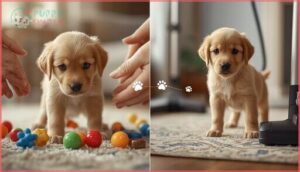
Knowing when to expect your puppy’s fear periods can help you prepare and respond with patience rather than panic. Most puppies go through two distinct fear stages, each occurring at different developmental milestones and bringing its own set of challenges.
If your puppy develops anxiety that doesn’t improve with time, professional behavior therapy can address deeper issues that typical socialization might miss.
The timing can also vary depending on your puppy’s breed and individual temperament, so let’s break down what you can expect.
Typical Age Ranges for Fear Periods
Most young dogs navigate two distinct windows of heightened sensitivity during their early months. Understanding these puppy fear periods helps you support your pup through normal canine sensitivity phases:
- First fear imprint stage: Generally occurs between 8 and 11 weeks, when your puppy becomes acutely aware of potential threats
- Second fear period: Usually emerges around 6 to 14 months during adolescence
- Breed variations: Guardian breeds and herding dogs may experience more pronounced age-related fears, with timing shifting 2–4 weeks earlier or later depending on individual temperament
These puppy development stages are completely normal milestones in canine growth.
Differences Between First and Second Fear Stages
Development timing creates distinct experiences across your puppy’s fear stages. Fear Period 1 appears earlier, usually lasting a shorter window with rapid fear responses to sudden, novel stimuli—think quick startle, quick recovery.
Fear Period 2 arrives during adolescence, producing more complex, generalized fear responses that can persist longer.
The first stage shapes initial social learning trajectories, while the second influences enduring temperament patterns and resilience in developmental phases.
Breed-Specific Timing Considerations
Across breeds, fear stage timing shifts by several weeks—small breeds often mature earlier than their larger cousins, entering fear periods sooner due to faster growth rates. Toy breeds may hit developmental milestones ahead of working dogs, whose extended socialization windows reflect genetic influences.
Even maternal care and breeder practices create timing variations within the same breed, making individual observation essential during puppy developmental stages.
How The Fear Imprint Stage Affects Puppies

During the fear imprint stage, your puppy’s brain is wired to be extra cautious, and you’ll likely notice some behaviors that weren’t there just days before. These changes can range from subtle hesitations to more obvious signs of anxiety, and understanding what’s happening helps you respond with the right support.
Let’s look at how this developmental phase shows up in your puppy’s day-to-day behavior, what it means for their confidence, and why your response matters for their long-term emotional health.
Behavioral Changes and Sensitivity
During puppy fear periods, you’ll notice your pup suddenly pulling back from people or situations they once found exciting—this social withdrawal reflects their developing canine emotional intelligence. Environmental factors trigger heightened fear responses, while sensory issues heighten startle reactions to everyday sounds.
Fear-based behaviors emerge as your puppy’s emotional regulation system matures, making them more cautious about new experiences during this critical phase of puppy emotional development.
Common Signs of Fear in Puppies
Recognizing fear responses in your pup means watching for behavioral cues like tucked tails, pinned-back ears, or cowering—these elements of puppy body language reveal canine anxiety during fear periods. Fear triggers might cause panting, trembling, or whale eye (visible eye whites), while fear-based behaviors include hiding, freezing, or backing away while barking.
Understanding these signs helps you support your puppy’s emotional development through challenging fear and anxiety in dogs. By using positive reinforcement techniques during fear period stages, you can help your puppy build confidence and overcome fear.
Potential Long-Term Impacts
What happens during those early weeks doesn’t just fade away—fear generalization can extend well beyond puppy fear periods, shaping how your dog reacts to new situations throughout life.
Early fear experiences don’t disappear—they shape how your dog responds to new situations for life
Early fear imprinting is linked to anxiety disorders and heightened stress in adulthood, including persistent fear-based behaviors like avoidance and reduced exploration.
Intense canine fear during imprinting may require behavioral therapy to address phobia development and support long-term stress management.
Supporting Puppies Through The Fear Imprint Stage
Now that you understand how fear periods shape your puppy’s behavior, you’re probably wondering what you can actually do to help them through this sensitive time.
The good news is that with a few thoughtful adjustments to your approach, you can make a real difference in how your puppy navigates these developmental stages.
Let’s look at three key strategies that will support your pup and build their confidence during the fear imprint stage.
Adjusting Training and Socialization

During puppy fear periods, you’ll need to make thoughtful training adjustments to protect your pup’s developing confidence. Keep sessions short—just 2–3 times daily—and prioritize calm environments where your puppy can explore at their own pace.
Pair new experiences with high-value treats to build positive associations, and avoid overwhelming situations that could trigger lasting fears.
This approach fosters fearless socialization while respecting your puppy’s emotional needs during this sensitive window.
Building Confidence With Positive Reinforcement

Once you’ve adjusted your training approach, positive reinforcement becomes your most powerful tool for confidence building during puppy fear periods. Reward systems that deliver treats, praise, or play within 1–2 seconds of calm engagement help your fearful puppy form positive associations with new experiences. This timing strengthens learning pathways, helping you guide overcoming fear in puppies through fearless training in calm environments.
Key principles for puppy confidence:
- Start with continuous rewards for every brave behavior, then gradually thin to variable schedules
- Use high-value treats paired with genuine enthusiasm to mark small victories
- Keep reinforcement balanced—excessive rewards can create overexcitement during sensitive moments
- Reward approach behavior toward feared objects, even if your pup doesn’t fully engage yet
- End each session on a positive note to build trust and resilience over time
Avoiding Negative Experiences and Punishment

While Positive Reinforcement builds trust, physical punishment during Fear Periods can backfire completely—triggering avoidance, aggression, and lasting Fear-Based Behaviors.
Skip harsh corrections entirely; instead, redirect unwanted actions and reward calm responses within your controlled Calm Environment.
Pair Gentle Handling with gradual exposures, letting your pup retreat when overwhelmed. This approach strengthens Puppy Socialization and Confidence while preventing Fear Prevention setbacks through humane, Reward Systems-focused strategies.
Tips for Managing and Preventing Lasting Fears

The good news is that with the right approach, you can help your puppy move through this sensitive period without developing long-term fears or anxieties.
It’s all about creating experiences that build trust rather than reinforce worry, and knowing when gentle support crosses into intervention that needs professional eyes.
Let’s walk through some practical strategies to keep your pup on a confident, healthy trajectory.
Creating Positive Associations
The cornerstone of helping your puppy through fear periods is building new, positive emotional responses to things that spark anxiety. Through counterconditioning and gentle desensitization, you’re fundamentally teaching your pup that scary things predict wonderful experiences.
Here’s how to create lasting positive associations during puppy socialization and confidence building:
- Pair new experiences with high-value rewards like treats, praise, or play the instant your puppy notices something unfamiliar
- Keep exposure sessions brief and positive to prevent overwhelming your pup before fear takes hold
- Use calm exposure techniques by maintaining comfortable distances from feared stimuli while rewarding brave behavior
- Practice fearless socialization across different contexts, people, and environments to broaden your puppy’s comfort zone
- Watch for stress signals and end sessions before anxiety builds, ensuring every encounter stays within your puppy’s emotional capacity
Positive reinforcement and reward systems work because they change how your puppy feels, not just how they behave. Consistency matters here—the more reliably good things follow potentially scary situations, the faster your pup learns there’s nothing to fear. This approach to puppy training builds resilience that lasts well beyond the fear imprint stage.
Handling Setbacks and Regression
Even with your best efforts, your puppy might suddenly fear something they’d handled well before—that’s fear regression, and it’s completely normal during fear periods.
When setbacks happen, drop back to lower-intensity exposure paired with positive reinforcement in a calm environment. Documenting what triggers fear-based behaviors helps you adjust your approach and rebuild confidence systematically, turning temporary regression into another opportunity for growth during these critical fear stages.
When to Seek Professional Help
Sometimes, despite consistent effort, your puppy’s fear signs persist beyond four to six weeks or worsen into aggressive responses like growling or snapping—that’s when professional guidance becomes essential.
A certified behaviorist can design behavioral therapy targeting anxiety treatment through expert intervention, addressing fear-based behaviors that interfere with daily life. Professional dog trainers specializing in dog behavior modification understand puppy fear periods and fear stages in ways that protect your pup’s long-term wellbeing.
Frequently Asked Questions (FAQs)
Can fear periods return in adult dogs?
While puppies usually outgrow fear periods, adult dogs can develop renewed fear responses after traumatic experiences, major life changes, or insufficient early socialization, requiring counterconditioning and sometimes professional behavioral support.
How do littermates influence fear period responses?
When siblings face something scary together, they lean on each other—literally reducing stress by up to 40%.
Littermate dynamics create social buffering during fear periods, helping puppies approach novel situations they’d otherwise avoid alone through cooperative learning and synchronized confidence-building.
Do rescue puppies experience different fear stages?
Yes, rescue puppies often show different fear stage variability due to environmental effects from their early history, genetic influences, and adoption impacts that can shift typical puppy fear periods earlier or later than expected.
What role does genetics play in fear?
Like a family heirloom passed down through generations, genetic predisposition shapes canine fear responses. Breed temperament and neurobiological factors influence heritability estimates, determining how intensely puppies experience fear periods and develop fear-based behaviors.
Should puppies attend training classes during fear periods?
Training classes can work during fear periods if they’re short, stress-free, and use positive reinforcement techniques. Avoid sessions that overwhelm your pup—calm exposure methods and gentle puppy socialization support healthy puppy development better than fear-based training.
Conclusion
Some believe the puppy fear imprint stage dooms dogs who have bad experiences, but resilience isn’t that fragile. While this window between 8 and 16 weeks does heighten emotional learning, your steady presence and thoughtful responses matter more than flawlessness.
You can’t bubble-wrap every moment, nor should you—gentle exposure builds strength. What you can do is notice her signals, respond with patience rather than pressure, and trust that your calm guidance creates the security she needs to grow confident.
- https://elsevier.blog/sub-points-outlining-organization/
- https://github.com/vinhphunguyen/how-to-write-a-paper/blob/master/how-to-write-paper.out
- https://mcluhan.unk.edu/lawson/?page_id=187
- https://libraryguides.ccbcmd.edu/c.php?g=1408884&p=10790074
- https://akc.org/expert-advice/training/changing-your-dogs-behavior-with-desensitization-and-counter-conditioning/