This site is supported by our readers. We may earn a commission, at no cost to you, if you purchase through links.
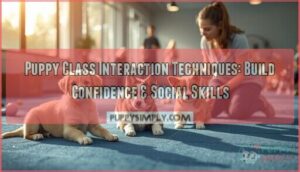
Your puppy’s first experience with other dogs can shape their social behavior for life, yet most owners walk into puppy class without a clear game plan. The critical socialization window closes around 16 weeks, and during that narrow timeframe, every interaction either builds confidence or plants seeds of fear.
Effective puppy class interaction techniques don’t just prevent future behavioral problems—they teach your dog the language of canine communication, from reading body language to managing play intensity. The difference between a well-adjusted adult dog and one that lunges, cowers, or escalates at the dog park often comes down to how those early group experiences were structured.
Getting the approach right means understanding when to let puppies work things out, when to step in, and how to create positive associations that stick.
Table Of Contents
Key Takeaways
- Your puppy’s critical socialization window closes around 16 weeks, making every early group interaction a make-or-break moment that shapes whether they’ll become a confident adult dog or one that lunges and cowers at the park.
- Effective puppy classes use structured techniques like rotating play partners every 5-7 minutes, limiting groups to 4-8 puppies per instructor, and delivering treats within one second of calm behavior to build lasting social skills.
- You can’t just throw puppies together and hope for the best—trainers must watch for stress signals like tucked tails and pinned ears, then intervene within 2-3 seconds when play escalates to prevent negative experiences that fuel lifelong reactivity.
- Even if you’ve missed the earliest window, intentional socialization with gradual exposure to new environments and positive reinforcement still works for older puppies, because dogs don’t outgrow poor social skills without deliberate intervention.
Key Goals of Puppy Class Interaction
When you bring your puppy to class, you’re not just checking a box—you’re laying the groundwork for a confident, well-adjusted dog. Every structured interaction fulfills a specific purpose, from teaching social cues to preventing behavioral issues down the road.
Let’s break down the three core goals that shape effective puppy class experiences.
Building Confidence and Social Skills
Confidence emerges when your puppy masters social learning through carefully designed interactions. In socialization classes, structured play with rotating partners builds social confidence and teaches critical skill development—like reading play bows and soft-mouth signals.
Positive reinforcement during these puppy friendships rewards calm environments and approach behaviors, turning each small victory into a confidence booster. Short, frequent sessions with varied dogs create resilient, well-adjusted companions who thrive in new situations.
By applying a methodological audit process, trainers can verify the effectiveness of their socialization techniques.
Preventing Fear and Reactivity
Your puppy’s early weeks shape their entire emotional future. Fear reduction starts with gradual exposure—introducing new sights, sounds, and dogs in calm environments before arousal signs like stiff posture or tail tucking appear.
If your puppy already shows reactivity on walks, choosing the right leash for reactive dogs gives you better control while you work on desensitization training.
Reactivity prevention relies on positive reinforcement paired with slow, predictable introductions. When you catch those social cues early and redirect with treats, you’re building resilience that prevents lifelong anxiety.
This approach, combined with structured puppy socialization strategies, helps your dog remain calm and confident in unfamiliar situations throughout their life.
Understanding language patterns, such as those found through dictionary search tools, can also improve communication with trainers and other dog owners.
Establishing Positive Associations
Building resilience takes more than managing fear—you’re actively creating positive associations that define how your puppy views the world. Positive reinforcement turns every class moment into confidence building through clear reward systems:
- Pair calm environments with high-value treats during new introductions
- Reward friendly social cues immediately to reinforce desired responses
- Use consistent praise when puppies engage appropriately with handlers
- Track which stimuli earn positive reactions to adjust future puppy socialization
Social learning happens fastest when good behavior meets reliable rewards.
Essential Puppy Class Techniques
The best puppy classes don’t just throw dogs together and hope for the best. They use specific techniques that create safe, productive interactions while teaching your puppy how to read social cues and respond appropriately.
Here are the core methods that make socialization classes work.
Positive reinforcement and controlled exposure help breeds like the Cavapoo dog build confidence and learn appropriate behavior around other puppies.
Structured Supervised Play
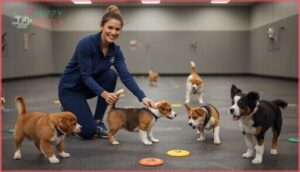
Small group play is central to effective socialization classes, where trainers closely monitor every interaction. Most programs limit groups to 4–8 puppies per instructor, enabling quick intervention if play becomes too rough. Trainers carefully pair puppies by size and temperament, rotate partners every 5–7 minutes, and incorporate brief training exercises—such as sits, downs, and recalls—to instill impulse control during moments of excitement.
These controlled interactions form the foundation of puppy socialization class benefits, teaching young dogs to read body language and respond appropriately to social cues.
| Play Element | Purpose |
|---|---|
| Size matching | Prevents injury, builds confidence |
| Partner rotation | Broadens social experience |
| Training interludes | Lowers arousal, practices calmness |
This structured approach to supervised play ensures puppies learn social cues in a safe, controlled environment. Positive reinforcement is used to shape every interaction, fostering a positive and educational experience.
Trainer-Led Social Stations
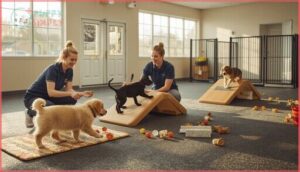
Many programs rotate your puppy through dedicated social stations that target different skills—each designed to build confidence through novel stimuli. One station might feature unstable surfaces or moving objects, another introduces varied sounds, and a third focuses on gentle handling and cooperative care.
Trainer guidance at each stop ensures positive reinforcement pairs with every new experience, turning socialization classes into structured, safe learning opportunities that prevent overwhelm.
Real-Time Feedback and Corrections
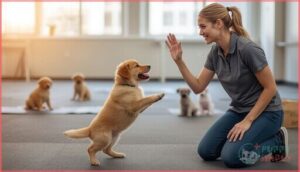
Often, trainers deliver feedback within 1–2 seconds of your puppy’s action—whether it’s a calm greeting or an overexcited jump—so the correction techniques stick. Short verbal cues paired with reward schedules teach social cues fast, while proximity control keeps play partners at a comfortable distance.
That immediate trainer feedback during supervised play turns every moment into a chance for positive reinforcement and confident puppy socialization.
Positive Reinforcement Strategies

Positive reinforcement is the cornerstone of effective puppy class interaction, turning every new experience into an opportunity your puppy will look forward to repeating. When you pair treats and praise with the right behaviors at the right moments, you’re building neural pathways that help your puppy feel safe and confident in social settings.
Here are three practical strategies you can use to make positive reinforcement work in puppy class and beyond.
Using Treats and Praise Effectively
Getting the timing right makes all the difference—your puppy learns fastest when you deliver treats within one second of good behavior. Here’s how to master treat timing and praise techniques during puppy training:
- Use marker signals (like “yes!”) to bridge delays between behavior and treat delivery
- Keep sessions brief—one minute per month of age maximizes motivation
- Reserve 10% of daily calories for training rewards through caloric management
- Vary treat types to maintain engagement during supervised play
- Pair praise with food to strengthen your bond and create lasting positive reinforcement
High-value treats work best in distracting puppy socialization environments, while trainer feedback helps you adjust your reinforcement strategies for best results.
Rewarding Calm and Friendly Behavior
Catching calm behavior the instant it happens—within one second—creates the strongest learning link during puppy socialization. When your puppy sits quietly while another pup walks by or watches calmly from their mat during socialization classes, that’s your moment to deliver high-value treats.
| Behavior to Reward | Timing Window | Recommended Treat Type |
|---|---|---|
| Quiet observation of other dogs | Within 1 second | Soft, high-value |
| Relaxed body during handling | Immediate | Small, frequent |
| Polite sitting instead of jumping | Mark then treat | Varied for engagement |
Use a marker word like “yes!” to bridge any delay between calm behavior and treat delivery. This positive reinforcement builds friendly interaction tips naturally—your puppy learns that staying composed around triggers pays off better than reacting. Pair food rewards with warm praise to strengthen your bond while teaching canine behavior that lasts.
During puppy training sessions, watch for soft eyes and loose muscles. Reward timing matters most when distractions run high, so carry extra treats to catch those golden moments of self-control. Gradually space out rewards as calm environment creation becomes habit, but keep reinforcing occasionally to maintain these friendly responses throughout your dog’s life.
Creating Positive Experiences
Every positive experience during puppy socialization builds a foundation of confidence that lasts a lifetime. Social learning thrives when you pair environmental exposure with rewards—treats when your pup meets someone new, praise during calm interactions at socialization classes.
Pair every new face and place with treats and praise—each positive moment builds lifelong confidence in your pup
Use these gentle handling strategies to boost puppy confidence:
- Pair each new sound or surface with high-value treats
- Let your puppy approach strangers at their own pace
- Reward relaxed body language during socialization techniques
- Keep initial exposures brief and always end on a positive note
- Celebrate small wins to reinforce confident exploration
These positive reinforcement moments shape how your dog views the world.
Managing Puppy Stress and Safety
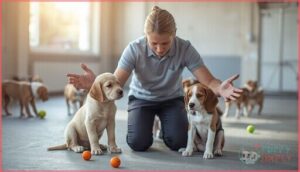
Even the most well-planned puppy class can go sideways if you’re not watching for stress signals or stepping in when play gets too rough. Your job is to keep interactions positive and safe so every puppy leaves feeling confident, not overwhelmed.
Let’s walk through the three key strategies that help you maintain that balance and protect your pups during class.
Monitoring Body Language and Stress Signals
Your puppy’s body tells a story before problems start. Watch for tucked tails, pinned ears, whale eyes, or excessive panting—these canine stress signs signal fear and reactivity building beneath the surface.
When you spot these body language cues during puppy socialization, you’re catching puppy anxiety early. Use calming techniques like gentle redirection and positive reinforcement to help your pup recognize social cues while mastering canine behavior management through effective socialization techniques.
Rotating Play Partners for Balanced Exposure
Switching up your puppy’s playmates every 5-7 minutes keeps socialization fresh and prevents any single interaction from becoming overwhelming or intense. This play partner rotation builds balanced exposure across different breeds, sizes, and playstyle diversity, strengthening social skill building through varied puppy interaction.
Smart rotation during socialization classes helps your pup:
- Experience gentle players, energetic wrestlers, and calm observers
- Recognize diverse social cues across different breeds and temperaments
- Build confidence through supervised play without forming dependent attachments
- Master socialization techniques that translate to real-world puppy socialization success
Intervention During Escalated Play
When rotation isn’t enough and play gets too rough, your trainer steps in fast—usually within 2-3 seconds. Recognizing escalation signs like stiff bodies, one-sided chasing, or ignored retreat signals protects your pup from negative experiences that fuel fear and reactivity. Play interruption through calm movement or neutral verbal cues prevents conflict without scaring anyone.
| Escalation Signs | Trainer Intervention | Time Out Strategies |
|---|---|---|
| Persistent pinning without role reversal | Calmly walk between puppies | 30-60 second breaks away from play |
| One-sided chasing, no reciprocal play | Low-tone “easy” or recall cue | Reintroduce only when body language relaxes |
| Stiff posture, high tail, closed mouth | Create spatial separation | Reinforces behavioral improvements through arousal management |
Brief time outs during supervised play in socialization classes teach self-control while keeping the overall experience positive for continued puppy socialization success.
Advanced Socialization Methods
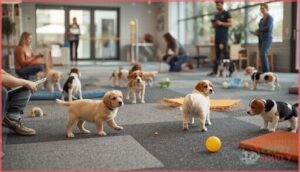
Once your puppy has built a solid foundation in class, you can take socialization to the next level with methods designed for specific needs and situations. Not every puppy progresses the same way, so tailoring your approach makes all the difference in helping shy, anxious, or special needs puppies thrive.
Here’s how to customize your socialization plan, introduce new environments safely, and measure your puppy’s progress along the way.
Tailoring Approaches for Shy or Special Needs Puppies
Patience transforms how you approach shy puppy handling and special needs assessment. Start by identifying your puppy’s specific triggers and comfort levels through individual assessment, then build a gradual desensitization plan with measurable milestones.
Keep initial encounters small and quiet to prevent fear and reactivity while fostering gentle socialization.
For puppies with sensory sensitivities, incorporate sensory integration techniques like scent games alongside behavioral modification strategies that celebrate every small victory.
Gradual Exposure to New Environments
Once your puppy feels secure in small settings, you can expand their world step by step during the critical window before 16 weeks. Start with different rooms and surfaces at home, then move to your backyard, followed by a quiet park.
This environmental exposure builds social confidence through novel space exploration while managing fear periods. Keep initial visits brief, gradually lengthening sessions as your puppy’s environmental adaptation improves.
Tracking Progress and Setting Milestones
Accountability transforms good intentions into real results. Define a measurable goal for each pup—like responding to a sit cue 8 out of 10 times within two weeks—and record baseline behavior at your first session.
Use weekly progress folders documenting new skills and any regressions with date stamps, then review these goals every two weeks to adjust objectives as your puppy’s social development unfolds.
Frequently Asked Questions (FAQs)
What vaccines are required before attending puppy class?
Before enrolling in puppy socialization, your veterinarian will need to provide clearance confirming core vaccines like DHPP are current, rabies shots meet local requirements, and health certificates document your puppy’s readiness for group interaction.
How do I choose the right puppy class?
Look for group classes with certified trainers, small class size (six puppies or fewer), clear safety protocols, a curriculum balancing puppy socialization with obedience, and opportunities for owner involvement and observation.
What should I bring to my first session?
You’ll need vaccination records, a 4-6 foot flat leash, high-value training treats, a treat pouch, water bowl, poop bags, a small mat for downtime, and any required forms your trainer requested beforehand.
Can adult dogs benefit from socialization classes too?
Absolutely. Adult dog training and socialization classes reduce fear, anxiety, and reactivity while providing lifelong learning and canine enrichment.
Socialization benefits extend beyond puppyhood, helping dogs develop better social skills and adaptability throughout their lives.
How much do puppy socialization classes typically cost?
Puppy socialization classes usually cost $100–$300 for a multi-week group course, averaging $20–$35 per session. Private training runs higher at $50–$150 hourly, with location and trainer credentials greatly affecting pricing models.
Conclusion
You might worry you’ve already missed the window, but even older puppies benefit from intentional exposure.
The puppy class interaction techniques you apply today—structured play, positive reinforcement, careful stress monitoring—create ripple effects that last years.
Your dog won’t magically “grow out of” poor social skills; they’ll mirror the experiences you provide now. Show up prepared, stay observant, and give your puppy the confident foundation they deserve.