This site is supported by our readers. We may earn a commission, at no cost to you, if you purchase through links.

Your perfectly trained puppy just stopped listening. One day she’s sitting on cue, coming when called, and walking politely on leash—the next, she’s acting like she’s never heard the word “come” in her life. You haven’t changed anything, but suddenly your 7-month-old pup treats every training session like a suggestion rather than a request. This isn’t a training failure on your part.
Between 6 and 18 months, dogs enter adolescence, a developmental stage where their brains literally rewire themselves, pruning old neural pathways and building new ones. The result? Increased independence, vanishing attention spans, and behaviors you thought were solid suddenly crumbling.
Understanding what’s happening in your dog’s developing brain—and adjusting your approach accordingly—makes the difference between fighting this phase and successfully steering through it.
Table Of Contents
Key Takeaways
- Puppy adolescence hits between 6-18 months when your dog’s brain literally rewires itself, causing previously mastered behaviors like recall and leash walking to vanish temporarily—this isn’t defiance, it’s normal neural pruning that requires you to adjust training with higher-value rewards and shorter sessions.
- The four core challenges you’ll face are increased independence and distractibility, regression in learned commands, impulse control problems that fuel reactivity toward triggers, and destructive chewing driven by boredom rather than spite.
- Combat adolescent behavioral issues through positive reinforcement paired with consistency—reward the exact moment your dog gets it right, keep training sessions under 5 minutes to match their shrinking attention span, and gradually layer in distractions rather than expecting perfect performance in chaotic environments.
- Balance your dog’s explosive teenage energy by matching exercise to breed size and age (toy breeds need 20-30 minutes daily while working breeds require 2+ hours), then add mental stimulation through puzzle toys, scent work, and problem-solving games that tire their brain as much as their body.
Key Challenges During Puppy Adolescence
Your puppy hit six months old, and suddenly it’s like they’ve forgotten everything you taught them. That sweet, focused companion now pulls toward every squirrel, ignores commands they mastered weeks ago, and seems determined to test every boundary you’ve set.
Let’s break down the four main challenges you’ll face during this frustrating but temporary phase, so you know exactly what you’re dealing with.
Increased Independence and Distractibility
Around six to eight months, your pup hits the adolescent phase—a whirlwind driven by brain development and social maturation. Suddenly, your once-attentive puppy shows increased independence, ignoring commands they knew cold. Environmental factors like new sights and smells become irresistible distractions.
Understanding these puppy developmental stages and behaviors helps you anticipate what’s normal versus concerning during this rebellious phase.
This shift demands training adjustments: higher-value rewards, shorter sessions, and patience as their maturing brain rewires itself. Understanding dog adolescence stages is vital for effective training during this period.
Regression in Learned Behaviors
Just when you think you’ve got training down, your adolescent pup starts “forgetting” commands like sit or stay—behaviors they nailed just weeks ago. This phenomenon can be attributed to puppy regression issues, which are common during the training process. These behavioral setbacks don’t mean your dog’s being stubborn—their brain’s pruning neural pathways, temporarily disrupting learning retention.
Understanding teenage puppy behavior changes helps you recognize that these lapses are developmental, not defiance, and usually resolve with patient consistency.
Combat this training relapse with frequent skill refreshers using positive reinforcement techniques, keeping sessions short and rewarding to rebuild those habit pathways.
Focusing on intelligent dog breeds that respond well to training can make this refresher process smoother, since they naturally pick up on cues faster.
Impulsivity and Reactivity
Beyond memory lapses, your adolescent dog’s impulsiveness skyrockets—they’ll lunge at squirrels mid-walk or bark suddenly at triggers. This reactive behavior stems from brain development and hormonal influences temporarily outpacing emotional regulation.
Young males especially struggle with impulse control during this window. Address these adolescent puppy challenges through positive reinforcement training that rewards calm responses, building the neural pathways for better self-control as their brain matures.
Destructive Chewing and Rough Play
While impulsivity fuels reactivity, it also drives two behaviors that’ll test your patience: destructive chewing and rough mouthing. Your adolescent dog isn’t being spiteful—they’re managing boredom, stress, and that overwhelming urge to explore everything with their teeth.
Tackle these adolescent dog training challenges through canine enrichment and destructive behavior prevention:
- Provide appropriate chew toy safety options matched to your dog’s size and jaw strength
- Establish rough play rules with frequent breaks to prevent adolescent biting from escalating
- Redirect destructive chewing toward long-lasting, interactive alternatives
- Maintain positive reinforcement and puppy socialization to build emotional regulation
Common Behavioral Issues and Solutions

When your adolescent pup starts showing problem behaviors, it’s easy to feel like you’ve lost all the progress you made during those early training months.
The good news is that most behavioral issues during this stage are completely normal and manageable with the right approach.
Let’s look at the most common problems you’ll face and how to handle them effectively.
Anxiety and Fear-Based Behaviors
Between 6 and 18 months, your dog’s fear triggers can multiply—thunderstorms, strangers, or even vacuum cleaners suddenly provoke trembling and hiding. These anxiety symptoms signal a critical window for positive reinforcement training and behavioral therapy.
Enrolling in puppy socialization classes during this developmental stage helps your dog build confidence and prevents these fears from escalating into long-term behavioral issues.
Don’t wait for phobias to worsen. Early desensitization paired with treats transforms fear-based behaviors into confidence, protecting your adolescent dog from lifelong stress management struggles and aggression.
Aggression Triggers and Management
Adolescent anxiety often fuels fear aggression when your dog encounters environmental triggers—other dogs, unfamiliar people, or sudden movements. Aggressive behavior escalates between 6 and 18 months as independence peaks and socialization gaps surface.
Master trigger management through:
- Identifying specific fear-based behaviors before reactions intensify
- Using positive reinforcement during controlled exposure to stressors
- Maintaining distance from aggression triggers while building confidence
Address aggression and anxiety together—they’re intertwined during this turbulent stage.
Marking and Heat Cycle Challenges
Female dogs start heat cycles between 6 and 12 months—right when puppy adolescence peaks. Estrus symptoms like restlessness and irritability complicate training, while marking behaviors escalate as scent rubbing and vertical urination emerge.
Implement 4–6 week heat cycle management with restricted access and supervision. Neutering effects vary by timing, but consistent boundaries during this canine developmental stage reduce stress-induced marking across adolescent dog behavior challenges.
Preventing Unwanted Behaviors
Think of unwanted behaviors as fires—you can’t extinguish what’s already burning without managing the spark. Proactive management paired with behavior modification cuts incidents by 30–50% in just four weeks when you stay consistent.
Here’s your prevention toolkit for managing adolescent dog behavior:
- Redirect chewing to appropriate outlets (reduces destruction by 40%)
- Practice daily cue-based training for impulse control
- Gradually expose your dog to common triggers to ease socialization and anxiety
- Use supervisory containment during high-risk moments
- Reinforce calm behavior with positive reinforcement training consistently
Environmental enrichment and redirected activities address aggression and fear-based behaviors before they escalate during adolescent dog training.
Effective Training Strategies for Adolescents
Training an adolescent dog isn’t about starting from scratch—it’s about adapting your approach to meet your teenager where they’re at. The methods that worked beautifully at three months might feel completely ineffective now, and that’s actually normal.
Training adolescent dogs means adapting proven methods to fit their teenage brain, not abandoning what worked before
Here are four training strategies that address the unique challenges of this developmental stage and help you rebuild that partnership with your distracted, impulsive pup.
Positive Reinforcement Techniques

When your teenage pup ignores cues they nailed as a youngster, don’t panic—reward systems still work; you just need sharper timing. Positive Reinforcement Training during Puppy Adolescence Management relies on pairing the exact moment your dog gets it right with something they love: food, toys, or praise. Marker Training, whether you use Clicker Methods or a quick “yes!”, bridges that split-second gap between behavior and treat.
Once a cue sticks, shift your Reinforcement Schedules from rewarding every sit to mixing it up—sometimes after one response, sometimes three—so behaviors stay strong without constant bribes. These Conditioning Techniques reduce stress and build focus, making Adolescent Dog Training less about control and more about partnership. Dog Behavior and Psychology research confirms that reward-based approaches outperform punishment, keeping your bond intact while your pup’s brain rewires itself.
| Reinforcement Type | Best Used For | Example in Adolescence |
|---|---|---|
| Food Treats | Teaching new cues or sharpening weak responses | Rewarding immediate recall when distractions spike |
| Toys & Play | High-energy dogs or building drive | Using tug as a jackpot after a perfect heel |
| Social Praise | Maintaining known behaviors in calm settings | Verbal “good job” for polite greetings at the door |
| Life Rewards | Real-world motivation your dog craves | Allowing sniff time after walking nicely on leash |
Focus and Attention Training

Your dog’s Attention Span shrinks when their world suddenly looks more exciting than you—that’s adolescence. Focus Training counters this drift with short, high-energy bursts where Reward Timing locks in eye contact before distractions steal the moment. Try these Engagement Strategies:
- Start Focus Exercises in quiet rooms, then layer in controlled chaos
- Use fixed-tempo cues and treats to build rhythm
- Keep sessions under three minutes to prevent mental fatigue
- Reward the instant your pup checks in, not a second later
- Release with a clear “OK” so they know when to relax
Distraction Control builds gradually—sniff privileges become the jackpot once your dog holds focus. These Training Techniques merge Positive Reinforcement Training with real-world pull, turning Obedience Training into a game your teenage pup wants to win.
Consistency and Patience in Training

Focus drills mean nothing if your Training Schedules swing with your mood. Consistency anchors Adolescent Dog Training—same cue, same Reward Systems, every time, even when your pup tests boundaries for the fifteenth round.
Patience pairs with Error Analysis: track what triggers backslides, adjust Calming Techniques, then restart without frustration.
Your Handler Mindset sets the tone, so breathe, repeat, and trust Positive Reinforcement’s slow burn. Training Techniques stick when you do.
Adjusting Methods for Teenage Dogs

Once consistency clicks, shift your Training Techniques to match Canine Development. Adolescent Phases demand shorter sessions—five minutes beats twenty when attention fractures.
Layer distractions gradually:
- Practice recall in your quiet yard before trying the dog park
- Reward focus before releasing your Adolescent Dogs to sniff
- Vary Positive Reinforcement timing to cement behaviors long-term
Behavioral Modification during these Canine Developmental Stages hinges on Owner Compliance with flexible, patient methods that honor Adolescent Dog Training realities while supporting Dog Socialization and Enrichment.
Managing Energy and Mental Stimulation
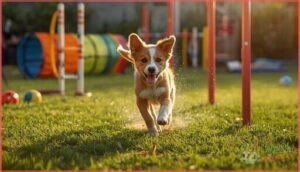
Your adolescent dog isn’t acting out because they’re bad—they’re bursting with energy that needs somewhere to go. Without the right outlets, that pent-up energy turns into chewed furniture, excessive barking, and all the frustrating behaviors you’re trying to stop.
Here’s how to channel that teenage energy into activities that tire them out physically and mentally.
Exercise Requirements by Breed and Age
Understanding how much activity your pup needs isn’t guesswork—it’s science meeting common sense. Breed size matters enormously: toy breeds like Chihuahuas thrive on 20–30 minutes daily, while Border Collies demand 2+ hours. Age-based training during canine developmental stages follows the 5-minutes-per-month rule for puppy joint care—your 5-month-old gets about 25 minutes of structured exercise twice daily.
| Breed Category | Daily Exercise Duration |
|---|---|
| Toy & Small | 20–45 minutes |
| Medium | 60–90 minutes |
| Large & Working | 1.5–2+ hours |
Breed-specific traits shape energy level management needs throughout puppy development. Large adolescent dogs require low-impact activities like swimming to protect growing joints, while high-energy breeds need task-oriented work beyond simple walks to truly satisfy their drive.
Interactive Toys and Puzzle Games
Beyond burning off physical energy, your adolescent pup needs cognitive enrichment through interactive play. Puzzle toys and brain games challenge problem-solving skills, extending engagement 10–15 minutes longer than regular toys.
Start with simple treat-dispensing designs, then rotate weekly to prevent boredom—this toy rotation strategy maintains interest while supporting puppy development.
Always supervise new puzzles for safety, and pair sessions with positive reinforcement to build focus.
Scent Work and Enrichment Activities
Nosework exercises tap into your puppy’s natural sniffing instinct while delivering cognitive stimulation that rivals a long walk. These olfactory training sessions calm arousal and channel curiosity into purposeful enrichment activities.
Effective scent work includes:
- Scent games with breathable materials – Start simple, progress gradually, keeping sessions 5–10 minutes
- Foraging mats and puzzle feeders – Slow eating, encourage problem-solving through enrichment toys
- Positive reinforcement tied to odor cues – Reinforce calm focus during puppy developmental stages, supporting canine brain development
Balancing Physical and Mental Outlets
True energy balance means combining physical exercise with mental stimulation—not choosing one over the other. When you alternate structured workouts with problem-solving tasks, you’ll notice better impulse control and stress reduction in your adolescent dog.
High-energy breeds especially need this dual approach to managing energy levels, reducing destructive behaviors while supporting positive reinforcement training during these challenging developmental months.
Supporting Owners Through Puppy Adolescence

Puppy adolescence can test even the most patient dog owners, and you’re not in this alone. The good news is that with the right support systems and strategies, you can navigate this challenging phase while strengthening your bond with your dog.
Here’s what you need to focus on to get through adolescence successfully.
Setting Boundaries and Clear Expectations
Your adolescent dog won’t respect boundaries that keep shifting. Establish consistent household rules from day one—same commands, same rewards, same enforcement across all family members.
Use doorways as natural training checkpoints for “wait” cues, control furniture access, and pair every boundary with positive reinforcement.
Clear communication through aligned verbal and nonverbal cues prevents confusion and strengthens your dog’s understanding during this challenging phase.
Importance of Socialization and Exposure
Don’t skip socialization just because your puppy graduated basic class—adolescence is when fear prevention matters most.
Early exposure to diverse people, animals, and environments through structured puppy socialization and training builds social learning that prevents fear-based aggression later.
Pair environmental exposure with positive reinforcement training to reward calm behavior during puppy interaction, strengthening your adolescent dog training foundation when your dog needs it most.
When to Seek Professional Help
You can’t DIY your way out of every problem—some adolescent dog training challenges require professional guidance. Aggression and fear-based behaviors that escalate despite consistent positive reinforcement training, or anxiety interfering with daily life beyond 2-3 weeks, signal the need for behavioral interventions.
A trainer specializing in dog behavior modification and aggression management provides the crisis prevention expertise your adolescent dogs desperately need.
Building a Strong Dog-Owner Relationship
Your relationship with your adolescent dog isn’t built on obedience alone—trust and emotional connection matter just as much during this challenging phase. When adolescent dog training challenges test your patience, consistent communication skills and bonding activities keep relationship dynamics strong.
- Schedule daily cooperative games that require joint problem-solving to deepen trust building
- Pair positive reinforcement training with calm, predictable language during every interaction
- Celebrate small wins together to strengthen your dog’s confidence and your bond
Frequently Asked Questions (FAQs)
How long does puppy adolescence typically last?
Most dogs enter their Adolescent Period between six and eighteen months, with the Adolescent Phase lasting six to twelve months depending on Breed Variability—though some pups show teenage traits until two years old.
Should I spay or neuter during adolescence?
It’s the million-dollar question dog owners wrestle with. Veterinary Guidance suggests spaying or neutering between 4 to 12 months, but Breed Considerations matter—large breeds may benefit from waiting longer for ideal joint development.
Can adolescent dogs attend group training classes?
Yes, adolescent dogs can join group training classes when matched to their developmental stage.
Look for positive reinforcement programs with qualified trainers, small class size management, and safety protocols that support puppy development.
What diet changes support adolescent dog development?
Your adolescent dog needs 10–20% more calories to fuel growth and activity.
Focus on high-quality protein sources, balanced omega-3s for brain health, and digestible whole foods to support energy requirements and digestive health.
How much sleep do adolescent puppies need?
Twelve to fourteen hours of quality sleep support adolescent dogs’ development each day—spread across restful nights and daytime naps.
Younger puppies within this period often need closer to sixteen hours for proper canine development.
Conclusion
Your adolescent dog will test every ounce of patience you have—then, one morning, something clicks. The pulling eases. The recall sharpens. The chaos settles into cooperation.
Puppy adolescence training challenges don’t last forever, but how you handle them shapes the adult dog standing beside you. Stay consistent, adjust your expectations without lowering your standards, and remember: the dog who ignores you today is learning to trust you tomorrow.
- https://pmc.ncbi.nlm.nih.gov/articles/PMC7280042/
- https://www.summitdogtraining.com/blog/surviving-puppy-adolescence
- https://caninelearningacademy.com/canine-adolescence-dog-teenage-phase/
- https://www.thetrainingofdogs.com/post/adolescent-fear-phase-in-dogs-prevent-lifelong-anxiety
- https://www.sciencedirect.com/science/article/abs/pii/S1558787815001550