This site is supported by our readers. We may earn a commission, at no cost to you, if you purchase through links.
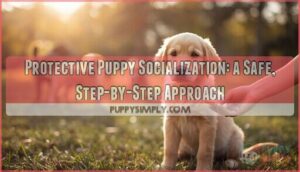
Your puppy’s first few months shape their entire adult life, yet most socialization advice pushes exposure over emotional safety. The result? Dogs who’ve “met everyone” but freeze at the vet or lunge at strangers.
A protective puppy socialization approach flips this script, prioritizing your pup’s comfort while still building confidence through carefully calibrated experiences. Instead of flooding young dogs with new sights and sounds, this method respects developmental readiness and watches for stress signals that traditional programs often miss.
When you match the pace of socialization to your puppy’s emotional capacity, you’re not being overprotective—you’re laying the groundwork for a resilient dog who navigates the world with confidence rather than fear.
Table Of Contents
- Key Takeaways
- What is Protective Puppy Socialization?
- Why Protective Socialization Matters for Your Puppy
- Understanding The Critical Socialization Window
- Pre-Vaccination Socialization: Safe Early Exposure Methods
- Creating Positive Associations With New Experiences
- Structured Socialization Activities for Maximum Safety
- Common Protective Socialization Mistakes to Avoid
- When to Seek Professional Guidance
- Frequently Asked Questions (FAQs)
- How do I socialize my protective dog?
- Can older puppies still benefit from protective socialization?
- How do different breeds respond to socialization techniques?
- What role does genetics play in socialization success?
- Should siblings be socialized together or separately?
- How does protective socialization affect multi-dog households?
- Conclusion
Key Takeaways
- Protective puppy socialization prioritizes your puppy’s emotional comfort during exposure rather than rushing them through experiences, preventing lifelong fear responses and behavioral problems that kill more dogs than infectious diseases.
- The critical socialization window occurs during your puppy’s first three months when neural connections form fastest, requiring you to balance disease prevention with carefully controlled exposure since missing this period makes confidence-building significantly harder.
- You can socialize pre-vaccinated puppies safely by carrying them in public spaces, introducing only vaccinated dogs in controlled settings, and creating positive associations through strategic high-value treat timing within 0.5 seconds of calm behavior.
- Watch for stress signals like lip licking, whale eyes, tail tucking, or freezing during socialization sessions, and immediately reduce intensity or seek professional guidance if these warning signs persist beyond three sessions.
What is Protective Puppy Socialization?
Protective puppy socialization puts your puppy’s emotional safety at the center of every new experience. It’s about thoughtful exposure that builds confidence without pushing your puppy past their comfort zone.
Using positive puppy exposure training helps your dog associate new sights, sounds, and situations with rewards rather than fear.
Let’s break down what this approach actually means and how it protects your puppy while helping them grow into a well-adjusted dog.
Defining The Protective Approach
Protective puppy socialization puts your puppy’s comfort front and center during the critical socialization period. Unlike rushing into every new experience, this approach uses gradual acclimation and clear social boundaries to build confidence without fear.
- Safety protocols guarantee health-aware introductions with vaccinated dogs in clean spaces
- Exposure methods rely on positive reinforcement and self-paced exploration
- Puppy socialization techniques prioritize stress-free learning over speed
Understanding your puppy’s behaviors can benefit from insights into, which highlights how gradual exposure reduces anxiety and promotes healthy development.
How It Differs From Traditional Socialization
While you’ve started with protective methods that honor your puppy’s comfort, traditional socialization often treats every encounter as something your puppy should “just handle.” The differences reshape the entire socialization process.
| Traditional Socialization | Protective Socialization |
|---|---|
| Busy dog parks before vaccines complete | Controlled settings with health-screened dogs |
| Large, chaotic puppy groups | One-on-one or small, structured sessions |
| Push through stress signals | Pause when lip licking or freezing appears |
For more details on the importance of early puppy socialization guidelines, consult resources supported by veterinary behavior experts.
Core Principles of Safety-First Exposure
Safety-first exposure builds on the differences you just learned by anchoring every introduction in clear protocols. Before each session, you’ll assess risk factors—noise levels, crowd size, vaccination status—and match exposure techniques to your puppy’s temperament.
Calm environments and gentle handling replace chaotic meetups, turning the socialization process into a series of controlled wins that honor the importance of socialization without gambling on your puppy’s well-being.
Why Protective Socialization Matters for Your Puppy

Protective socialization isn’t just about keeping your puppy safe—it’s about shaping who they’ll become as an adult dog.
The way you introduce your puppy to the world during those early weeks can prevent serious behavioral problems down the road, build lasting confidence, and set the stage for a lifetime of positive interactions. Let’s look at why this careful approach makes such a difference for your puppy’s future.
Preventing Behavioral Issues Through Careful Exposure
When your puppy encounters new experiences gradually and positively, you’re doing more than teaching social skills—you’re preventing behavioral problems before they start.
Careful exposure during the socialization process builds fear prevention through calm environments and positive reinforcement. This approach to dog socialization techniques fosters puppy emotional development and social learning while preventing aggression.
Each controlled introduction shapes how your puppy will respond to the world throughout their life.
Building Confidence Without Overwhelming Your Puppy
Confidence building happens when you let your puppy set the socialization pace during the socialization process. Gentle exposure in calm environments prevents stress while supporting healthy puppy development stages.
Watch for relaxed body language—soft eyes, a wagging tail—as signs you’re balancing the importance of socialization with your puppy’s emotional needs. Social learning thrives when curiosity leads, not pressure. These socialization techniques create resilience without fear.
Long-Term Benefits for Adult Dog Behavior
The payoff shows up years later when your adult dog navigates crowded parks without reactivity or lunges.
Early exposure to different species—like understanding how bearded dragons and dogs interact—teaches puppies calm behavior around unfamiliar animals.
Protective puppy socialization during critical puppy development stages builds canine emotional intelligence through social learning theory, reducing leash aggression and separation anxiety. This foundation in dog behavior and psychology strengthens lifetime companionship—your well-adjusted adult responds calmly to stress, recalls reliably, and cooperates eagerly during adult dog training sessions.
Understanding The Critical Socialization Window

Your puppy’s brain is working overtime during their first few months, building the foundation for how they’ll see the world as an adult dog. This narrow window offers your best chance to shape a confident companion, but it also comes with real health considerations you can’t ignore.
Let’s break down what makes this period so critical and how you can navigate it safely.
The First Three Months of Life
Think of your puppy’s brain during those first three months like a sponge that’ll never be this absorbent again. Puppy brain development happens at lightning speed during this critical window, shaping everything from fear prevention to habit formation.
Here’s what’s unfolding during this intense period of puppy development:
- Neural connections form faster than any other life stage
- Social learning peaks as your puppy decodes the world
- Sensory introduction to sights, sounds, and textures creates lasting impressions
- Emotional responses to new experiences become hardwired patterns
- Foundation skills for puppy training and socialization for adult dogs take root
This narrow window demands your attention because what your puppy experiences now directly influences their confidence, adaptability, and behavior for life. Missing these weeks means working against biology rather than with it.
Balancing Health Risks and Social Needs
You’re walking a tightrope between protecting your puppy from illness and meeting their puppy developmental needs. The American Veterinary Society of Animal Behavior confirms that behavioral problems kill more dogs than infectious diseases, yet vaccination timing and health protocols matter deeply during socialization phases.
Here’s how to navigate risk assessment while supporting puppy wellness:
| Socialization Phase | Health Protocol | Safe Exposure Strategy |
|---|---|---|
| Pre-vaccination weeks | Controlled indoor settings | Invite vaccinated dogs to your home |
| Partial vaccination | Clean, low-traffic areas | Carry puppy to observe public spaces |
| Full vaccination | Gradual public access | Introduce puppy vaccinations-compliant environments before dog park safety concerns arise |
This balanced approach prevents both disease and fear, laying groundwork for confident socialization for adult dogs.
What Happens if You Miss This Period
Missing the socialization period doesn’t mean your puppy is doomed, but it does make things harder. Fearful behavior and anxiety issues often emerge when social isolation limits early exposure.
Behavioral problems like aggression or extreme shyness become more common, requiring intensive work to address. While adult dogs can still learn, the stunted growth in confidence during those critical weeks creates challenges that patient, professional-guided training must overcome.
Pre-Vaccination Socialization: Safe Early Exposure Methods
Before your puppy completes their vaccination series, you can still provide rich socialization experiences without risking their health. The key is choosing environments and methods that minimize disease exposure while maximizing developmental benefits.
Here are four proven approaches that protect your puppy while building their confidence during those critical early weeks.
Controlled Indoor Environments

Your living room can become a powerful puppy socialization hub when you control air quality, noise reduction, and climate control to support early puppy training methods.
Design the space with puppy proofing essentials like non-slip mats and safe boundaries, then invite vaccinated friends to mimic puppy class curriculum activities. This controlled environment balances dog socialization needs with health safety during vulnerable weeks.
Carrying Your Puppy in Public Spaces

Before your puppy completes vaccinations, you can still offer rich socialization training by carrying them in public spaces. A sturdy puppy sling inside a puppy carrier lets your pup observe street sounds, strangers, and passing dogs safely.
This animal socialization technique builds puppy behavior confidence while protecting against illness. Practice public etiquette and leash training basics during these outings, then gradually move to ground-level socialization tips.
Introducing Vaccinated, Healthy Dogs

Once your puppy has starter shots, you can introduce vaccinated, healthy dogs in controlled settings. Choose calm, friendly adult dogs with known health records and confirm their vaccination requirements are current.
These canine body language experts model good puppy behavior during the socialization period. Use puppy interaction guidelines like brief, supervised sessions to build confidence through safe dog socialization and positive socialization training techniques.
Safe Surface and Sound Exposure at Home

Before your puppy ventures outdoors, home surfaces become training grounds for confident puppy development. Keep flooring smooth but not slippery—area rugs on hardwood prevent paw slips during the critical socialization period.
Create quiet zones with heavy curtains to dampen noise, pairing gentle household sounds like the vacuum with treats. These dog socialization techniques build resilience through safe, controlled social learning without exposure risks.
Creating Positive Associations With New Experiences

The way your puppy feels about new experiences shapes their confidence for life. When you pair unfamiliar sights, sounds, and people with something your puppy loves, you’re teaching them that the world is a rewarding place to explore.
Here are four essential strategies to build those positive connections during every socialization session.
Using High-Value Treats Strategically
Think of high-value treats as your puppy’s favorite currency during socialization techniques—they make unfamiliar experiences worthwhile. Choose small, protein-rich options with strong odor to hold attention during critical puppy development moments.
Reward timing matters most: deliver treats within 0.5 seconds of calm behavior to strengthen positive social experiences. Use lure techniques sparingly for new behaviors, then shift to cue-based rewards as your puppy’s training progresses and confidence builds.
Pairing Novel Stimuli With Rewards
Cue salience determines what grabs your puppy’s attention during the socialization period—pair it with immediate positive reinforcement for lasting impact. When your puppy notices a new sound or surface, deliver a high-value reward within half a second to strengthen puppy motivation.
This reward timing transforms novel stimuli into predictable, positive social experiences. Repetition across settings cements dog socialization training patterns that endure into adulthood.
Allowing Self-Paced Exploration
Autonomy is the foundation of confident canine development stages. When you let your puppy set the pace during the socialization period, you create safe spaces where gentle introductions feel reassuring rather than threatening.
This puppy freedom transforms exploration techniques into trust-building moments:
- Observe approach distance – your puppy decides how close to get to new stimuli
- Respect retreat signals – backward steps mean “I need more time”
- Maintain calm environments – reduce competing noises that trigger overwhelm
Effective dog socialization honors your puppy’s internal compass, building resilience through choice rather than pressure.
Avoiding Forced Interactions
Pressure derails puppy socialization faster than any viral pathogen. When you force contact—pushing your puppy toward strangers or unfamiliar dogs—you ignore stress signals and trample puppy boundaries that protect emotional wellbeing.
Forcing contact with strangers or dogs ignores your puppy’s stress signals and destroys the trust protective socialization builds
Gentle introductions respect canine behavior modification principles: let your puppy choose proximity during calm encounters, create safe spaces for retreat, and use socialization techniques that prevent behavioral problems rather than manufacture them.
Structured Socialization Activities for Maximum Safety

Once you’ve laid the groundwork for positive associations, it’s time to put those principles into practice through carefully planned activities.
The right structure protects your puppy from overwhelming experiences while still building the confidence they need. Here are four key activities that balance safety with meaningful social development.
Puppy Classes With Health Protocols
Puppy classes offer structured puppy socialization with critical health screening and vaccination requirements in place. Look for programs using hospital-grade sanitation methods between sessions, controlled exposure frameworks that prevent overwhelm, and trainer qualifications in positive reinforcement.
Responsible dog ownership starts here—these classes balance puppy care and development with safety, ensuring your pup builds confidence through proper dog training and socialization while minimizing disease risk.
Controlled Meet-and-Greets With People
Think of meet-and-greets as choreographed introductions—you’re the director setting the stage for safe greetings and successful puppy interactions. Keep sessions brief, limiting initial contact to 60 seconds while monitoring social cues closely. Choose calm environments with soft lighting to reduce overwhelm during these critical moments of socializing your dog.
- Allow only one or two people to approach at a time so your pup can process each new face without stress
- Maintain at least three feet of distance until you see relaxed body language—loose tail, soft eyes, easy stance
- End immediately if your puppy shows warning signs like lip licking, yawning, or stiffening, protecting their emotional wellbeing through gentle exposure
Gradual Environmental Exposure Plan
Your puppy’s world should expand like a carefully unfolding map, not a sudden explosion. Start with quiet residential streets where ambient noise stays low, then progress to parks during off-peak hours over six to eight weeks. This measured approach to environmental adaptation fosters healthy canine development and successful dog socialization.
| Exposure Phases | Environment Type | Duration |
|---|---|---|
| Week 1–2 | Quiet sidewalks, driveways | 3–5 minutes |
| Week 3–4 | Low-traffic parks, pet stores | 5–10 minutes |
| Week 5–8 | Busier streets, outdoor cafés | 10–15 minutes |
Use calming techniques and sensory introduction during each outing—let your pup sniff new textures, hear gentle traffic sounds, and observe passing strangers from a safe distance. Space management matters: maintain escape routes so your puppy can retreat if overwhelmed. Pair each novel experience with high-value treats to build positive associations during puppy training. Monitor body language closely—relaxed ears and a wagging tail signal readiness to advance, while tucked posture means you’re pushing too fast. Adjust your exposure phases based on your individual dog’s comfort level, because dog behavior varies widely between breeds and temperaments. This structured approach to socialization training prevents flooding while building the adaptive coping skills your puppy needs for confident exploration throughout their life.
Rest and Recovery Between Sessions
After environmental exposure, your puppy needs structured downtime to process what they’ve learned. Puppy fatigue shows up as yawning, tucked ears, or sudden stillness—stress signals that demand immediate recovery time.
Rest intervals between sessions should include:
- 15 to 45 minutes in calm environments with minimal noise
- Access to water and a comfortable bed for physical reset
- Observation of body language to gauge readiness for the next training round
This canine behavior modification approach prevents overwhelm during puppy socialization.
Common Protective Socialization Mistakes to Avoid

Even well-meaning puppy owners can stumble into common traps that undermine their socialization efforts. These missteps often stem from anxiety about doing things perfectly or from misunderstanding what protective socialization actually requires.
Let’s look at the mistakes you’ll want to steer clear of as you guide your puppy through this critical developmental window.
Over-Exposing Your Puppy Too Quickly
Enthusiastic owners sometimes rush puppy socialization, cramming new experiences into packed schedules. This approach backfires—pups show stress signals like lip licking, yawning, and turning away when exposed too quickly. Short sessions work best, and you should increase intensity only after calm behavior appears.
| What Happens | What You Should Do Instead |
|---|---|
| High-intensity stimuli trigger freeze responses | Start at very low levels and gradually raise exposure |
| Rapid exposure raises cortisol levels | Keep sessions brief, watch for relaxed tail and soft eyes |
| Overstimulation leads to avoidance behavior | Allow your puppy to approach new things at its own pace |
Gradual exposure methods prevent heightened reactivity later. If stress persists over three sessions, reduce the intensity and duration immediately.
Ignoring Warning Signs of Stress
Even with slow exposure, your puppy’s body language tells you when things aren’t working. Tail tucking, whale eyes (showing the whites), and persistent cowering signal overwhelm that can spiral into chronic anxiety prevention issues if dismissed.
Missing these stress signal recognition cues may allow behavioral issues and separation anxiety to take root. Watch for yawning, lip licking, or turning away—these aren’t random gestures but direct messages about your puppy’s emotional wellbeing and canine mental health that demand your immediate response.
Skipping Socialization Due to Fear of Illness
On the flip side, fear-based decisions around illness risk management can paralyze you into complete isolation. Waiting until sixteen weeks undermines the purpose—your puppy’s socialization timing matters more than you think.
Disease prevention strategies don’t require total quarantine. With thoughtful puppy health priorities, you can balance animal welfare and dog training and socialization needs without sacrificing either puppy socialization benefits or pet care safety.
Forcing Interactions With Unwilling Puppies
Coercion creates puppy trauma that can persist for years. When you push unwilling puppies into forced interaction despite clear refusal cues—cowering, freezing, or turning away—you’re teaching them the world isn’t safe. These canine stress responses signal genuine discomfort, not shyness to overcome.
Respecting puppy boundaries during dog training and socialization builds trust, while ignoring canine behavior warnings increases socialization risks and may trigger defensive aggression later.
When to Seek Professional Guidance

You can handle most puppy socialization yourself, but some situations call for a trained professional. Knowing when to reach out can save you months of frustration and help your puppy get back on track quickly.
Here’s when it’s time to bring in expert support.
Persistent Fear or Aggression Responses
If your puppy freezes defensively, shows rapid escalation when approached, or displays warning growls that signal protective aggression, these fear triggers demand immediate professional support.
Persistent fear and anxiety responses—beyond gentle desensitization methods and calming techniques you’ve tried—indicate the need for expert-guided dog behavior modification. Early intervention with proper puppy training methods prevents behavioral problems from becoming entrenched, protecting your pup’s future confidence and preventing aggression and resource guarding.
Finding a Qualified Puppy Trainer
Look for a dog trainer who holds certification from recognized programs like IAABC or APDT, confirming their expertise in positive reinforcement puppy training methods.
Ask about their specific puppy experience, session structure, and cost factors before committing. A qualified trainer will offer a clear plan covering socialization milestones, invite you to observe sessions, and provide detailed contracts outlining training methods and safety protocols.
Behavioral Red Flags That Need Expert Support
When your puppy shows persistent fear signals like a tucked tail lasting beyond thirty seconds, coupled with rapid shallow breathing, you’re seeing behavioral warning signs that need expert support.
Aggression cues—such as lunging with a sudden bark or a freeze response before snapping—demand immediate attention from a professional versed in behavioral psychology and canine behavior to prevent escalation and address puppy anxiety effectively.
Frequently Asked Questions (FAQs)
How do I socialize my protective dog?
Start by observing your dog’s body language closely.
Introduce familiar people first, then gradually expand to new faces, always rewarding calm behavior with high-value treats and backing off when stress signals appear.
Can older puppies still benefit from protective socialization?
Yes, older puppies retain the ability to develop confidence and adaptive training skills through gradual social learning.
Fear prevention remains achievable with structured behavioral resilience work, supporting puppy development and care even beyond the earliest socialization window.
How do different breeds respond to socialization techniques?
Working breeds thrive with short sessions, while toy breeds prefer gentle, low-stress encounters.
Retrievers enjoy play-based exposure, herding dogs need predictable routines, and sighthounds require gradual introductions to avoid overwhelming their sensitive temperaments.
What role does genetics play in socialization success?
Genetic influence on social traits shapes your puppy’s baseline temperament and breed temperament tendencies, while neurobiology factors like stress response genes affect heritability impact on learning pace and social adaptability throughout canine behavior development.
Should siblings be socialized together or separately?
Both approaches work. Joint training builds sibling bonding and social dynamics, while separate socialization honors puppy personalities and lets each learn canine communication at their own pace without competing influences.
How does protective socialization affect multi-dog households?
Protective puppy socialization in multi-dog households prevents conflict through controlled introductions, separate feeding stations, and structured pack dynamics.
Training and socialization protocols reinforce calm canine communication, helping each dog develop confidence without overwhelming stress or resource guarding.
Conclusion
Waiting until your puppy seems “ready” won’t make socialization easier—it makes fear more likely. A protective puppy socialization approach doesn’t mean delaying experiences; it means engineering them thoughtfully.
You’re not sheltering your dog from the world, you’re teaching them to trust it. Every positive encounter during those critical early months builds neural pathways that shape how your adult dog will respond to life’s uncertainties. Start now, but start smart.
- https://avsab.org/wp-content/uploads/2018/03/Puppy_Socialization_Position_Statement_Download_-_10-3-14.pdf
- https://images.akc.org/pdf/star_puppy/6_Weeks_Class.pdf
- https://www.apps.akc.org/cgc-evaluator/
- https://caninewelfare.centers.purdue.edu/resource/avsab-puppy-socialization-position-statement/
- https://www.iwdba.org/working-dog-resources/emotional-conflict-during-socialization/