
This site is supported by our readers. We may earn a commission, at no cost to you, if you purchase through links.

The moment a stranger’s footsteps echo on your front porch at midnight, you’ll understand why millions of families don’t just want a dog—they want a protector. Protective dog breeds that are defensive combine centuries of selective breeding with an instinctive drive to guard their territory and people, creating companions that can distinguish between a welcomed guest and a genuine threat.
German Shepherds patrol with 238 PSI bite force backing their vigilance, while Rottweilers assess every unfamiliar face with territorial precision honed over generations.
But here’s the catch: these powerful guardians need more than good genetics to become the family protector you’re envisioning. The difference between a reliable defender and a liability comes down to understanding breed-specific traits, matching energy levels to your lifestyle, and committing to the training that transforms raw protective instinct into disciplined response.
Table Of Contents
- Key Takeaways
- Most Protective Dog Breeds for Home Defense
- Key Traits of Defensive Dog Breeds
- Training and Socialization for Protection
- Family Compatibility of Protective Breeds
- Choosing The Right Breed for Your Needs
- Frequently Asked Questions (FAQs)
- What is the #1 most protective dog?
- What breed of dog is very protective?
- What is the least aggressive guard dog?
- What’s the friendliest guard dog?
- How do I train a protective guard dog effectively?
- What are the common health concerns for guard dog breeds?
- How do I introduce a new guard dog to my family?
- What are the potential downsides of owning a protective guard dog?
- Do protective breeds adapt well to apartment living?
- Can defensive dogs be trained for therapy work?
- Conclusion
Key Takeaways
- Protective breeds like German Shepherds, Rottweilers, and Dobermans combine physical deterrence (238 PSI bite force) with trainable intelligence, but their effectiveness depends entirely on early socialization before 16 weeks and consistent obedience training that reduces unprovoked aggression by 25-40%.
- True protection isn’t about aggression—it’s about controlled vigilance where properly trained guard dogs assess threats independently, respond with measured defensive behavior, and stand down on command rather than reacting unpredictably.
- Matching breed characteristics to your actual lifestyle matters more than picking the “toughest” dog, since high-energy breeds like Belgian Malinois need 2-3 hours daily exercise while even calmer guardians like Bullmastiffs require structured routines, secure fencing, and experienced handling to channel territorial instincts effectively.
- Long-term commitment extends beyond initial training with veterinary costs averaging $5,000-$12,000 over a decade, ongoing socialization requirements, and breed-specific health monitoring for conditions like hip dysplasia affecting 7-14% of German Shepherds and Rottweilers.
Most Protective Dog Breeds for Home Defense
When you’re looking for a dog that can truly protect your home, certain breeds stand out for their natural guarding instincts and defensive capabilities. These dogs combine intelligence, loyalty, and physical presence needed to deter intruders while remaining devoted family companions.
Let’s look at ten breeds that excel at home defense without sacrificing their ability to bond with the people they protect.
German Shepherd
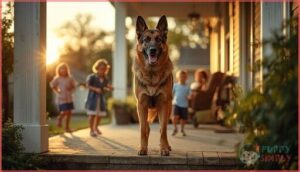
When it comes to loyal companions and guard dog breeds, the German Shepherd stands out as one of the most protective dog breeds. With a bite force around 238 PSI and a naturally alert temperament, your German Shepherd training focuses on channeling their defensive instincts through proper socialization.
They’re incredibly intelligent—learning new commands in under five repetitions—making dog guardianship reliable and effective for home defense. Understanding a dog’s bite force measurement is vital for responsible ownership and training.
Rottweiler
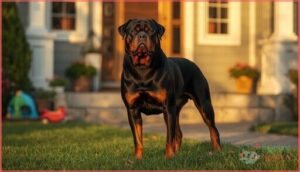
If you’re looking for loyal companions that bring serious home defense to the table, Rottweilers deliver. Their breed history as cattle herders translates into strong territorial instincts—62% of households report guarding behavior as a standout trait.
With proper Rottweiler training and early socialization, you’ll reduce unprovoked reactions by roughly 28%, balancing protective dog breeds’ defensive mechanics with family pet safety and reliability.
Understanding web server issues can also help you manage online resources for training and support.
Doberman Pinscher
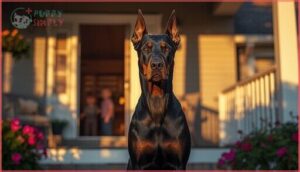
Doberman Pinschers rank among the most alert guard dog breeds, with historical roles in police work and personal protection shaping their reputation. Their intelligence and rapid threat response make them standout Loyal and Protective Dogs, provided you maintain consistent boundaries and structured routines that align with Guard Dog Laws and Family Dynamics.
When you invest in proper Doberman Care and Training Methods early—especially socialization before 14 weeks—you’ll see up to 35% reduction in fear-based reactions.
Bullmastiff

If you want quiet, controlled guarding power, Bullmastiffs bring 120–130 pounds of calm authority. These Protective Dog breeds score above 70% in owner-protection surveys, responding to threats with decisive, non-barking stances within seconds.
Early Bullmastiff Care and Guard Dog Training—starting before six months—reduce unprovoked aggression by 25–35%, letting you enjoy Family Protection without the chaos some Guard Dogs create.
Belgian Malinois
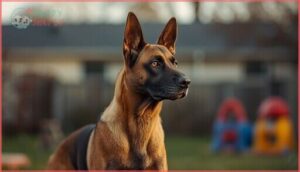
Belgian Malinois clock protection instincts and alertness faster than most Defensive Breeds—often noticing threats 18% quicker than German Shepherds. These Guard Dog Breeds demand serious Belgian Training and mental work to channel that intensity into reliable Family Protection. Here’s what sets the Malinois Temperament apart:
- Lightning-fast reaction times
- Tireless work ethic
- Razor-sharp focus
- Outstanding trainability
- High energy requirements
Akita

Rooted in centuries of Japanese heritage and royal service, the Akita Origins story reveals a guardian traits powerhouse that treats family loyalty like a sacred duty. This protective dog holds the title of national treasure in Japan, and its imposing stance—males reach 28 inches and 130 pounds—makes it one of the most formidable dog breeds for protection you’ll find.
| Characteristic | Male | Female |
|---|---|---|
| Height | 26–28 inches | 24–26 inches |
| Weight | 100–130 lbs | 80–100 lbs |
| Lifespan | 10–12 years | 10–12 years |
| Temperament | Reserved, loyal, dignified | Reserved, loyal, dignified |
Akitas form deep bonds with one family member, driving quiet but deliberate protective responses. Early socialization before 16 weeks reduces fear-based reactivity by up to 40%, transforming raw guardian traits into controlled vigilance. You’ll need firm, respectful leadership and secure fencing—these loyal breeds assess threats independently and won’t back down easily. Guard dog breeds like the Akita demand experienced handlers who understand breed history shapes modern behavior.
Cane Corso
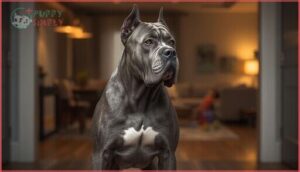
Few guard dog breeds command respect like the Cane Corso—a muscular Italian guardian that pairs 540 psi bite force with laser-focused family loyalty. This protective dog ranks in the top quartile for territorial instinct and defensive breeds characteristics, making it a formidable choice among family guardians:
- Males reach 24–28 inches and 99–110 pounds with sturdy skeletal builds
- Cane Corso training demands 3–4 weekly obedience sessions for the first 6 months
- Early socialization before 16 weeks shapes controlled protective instincts around children
- Professional trainers help family pets channel guarding drive into reliable home defense
Experienced handlers who understand breed characteristics release this protective dog’s true potential.
Anatolian Shepherd
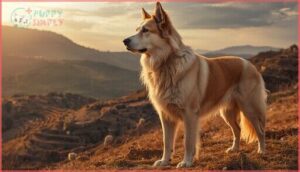
Anatolian Shepherd history traces back thousands of years to rural Turkey, where these livestock protection specialists still guard 85% of working flocks today.
You’re looking at a guard dog breed that reaches 110–150 pounds and thinks independently—73% of owners report constant alertness to property threats.
Early shepherd training before 14 weeks cuts inappropriate aggression by 30%, transforming this protective breed into a family-friendly guardian that balances territorial instinct with controlled defensive behavior.
Great Pyrenees

The Great Pyrenees evolved guarding mountain livestock across ancient breed history, and you’ll notice that calm, deterrent-based protection instinct the moment strangers approach your property.
This watchdog breed reaches 100–135 pounds and excels at homestead security through perimeter patrol rather than aggression—controlled socialization before 12 weeks maintains that balanced defensive profile, making guard dog training essential for pet protection without overreactivity in loyal and intelligent dog breeds.
Kuvasz

If you’re drawn to majestic, independent protection dogs with Hungarian origins, the Kuvasz embodies centuries of livestock guardian heritage in a striking 80–110 pound package. This breed displays confident territorial behavior without excessive aggression—yet that self-reliant problem-solving demands experienced handling.
You’ll need consistent obedience training and early socialization to channel guard dog traits into reliable family protection, balancing their imposing presence with manageable breed maintenance through your household’s daily routine.
Key Traits of Defensive Dog Breeds
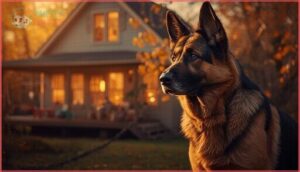
Not every dog that looks tough is cut out for protection work. The best defensive breeds share a handful of core traits that set them apart—things like unwavering loyalty, sharp instincts, and the ability to assess a situation before reacting.
Here’s what makes these dogs natural protectors.
Loyalty and Family Attachment
Family bonding sits at the heart of what makes a protective dog truly effective. Your guardian breed won’t just guard your home—they’ll form a deep pet attachment with you and your kids.
Studies show 68% of owners see this loyal companion behavior bloom within the first year, while protective breeds demonstrate canine emotions through eye contact and proximity-seeking with family.
These loyalty traits and guardian instincts make family-friendly dog breeds outstanding household dynamics partners.
Intelligence and Trainability
Smart dogs are easier to train, and that’s where trainability factors come into play. Belgian Malinois lead the pack, nailing new commands in just 5–10 sessions, while German Shepherds and Doberman Pinschers show strong learning capacity within six to eight weeks.
These intelligent breeds offer impressive obedience levels and cognitive abilities, making dog training and behavior work smoother when you’re shaping guard dog breeds with the right techniques.
Physical Strength and Presence
Beyond brainpower, your dog’s physical build plays a huge role in deterrence. Breeds like the Cane Corso and Rottweiler pack serious muscle structure and body proportions—males often hit 95–135 pounds—giving them natural physical intimidation. That broad chest and low center of gravity create a defensive posture that’s hard to ignore.
Large breed dogs like Anatolian Shepherds and Bullmastiffs offer the kind of presence that makes would-be intruders think twice.
Alertness and Watchfulness
Even the biggest guard dog breeds won’t protect your home if they’re not paying attention. Watchful behavior separates true watchdogs from gentle giants—82% of defensive breeds show alertness as their most reliable early-warning trait.
Belgian Malinois react 0.12 seconds faster than German Shepherds to unfamiliar stimuli, and that split-second alert response can make all the difference in threat detection and canine protection.
Territorial Instincts
You’ll notice territorial instincts kick in hard with working-line breeds—Belgian Malinois and German Shepherds prioritize boundary defense in 68–78% of controlled evaluations. That protective edge means your dog naturally treats property lines like a personal mission.
True guard dog breeds strengthen home security through four territorial behaviors:
- Property Patrols: Guarding strategies focus on perimeter monitoring over interior checks (42% of protection breeds)
- Peak Vigilance: Territorial marking intensifies during dusk and dawn activity windows
- Stranger Response: Protective behaviors escalate 15–25% when unfamiliar individuals approach urban homes
- Breed-Specific Thresholds: Anatolian Shepherds demonstrate higher property-protection responses than Great Pyrenees in comparable settings
Training and Socialization for Protection
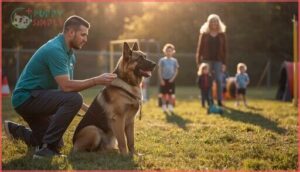
Getting a protective dog is only half the equation—the real work starts with training and socialization. Without proper guidance, even the most loyal breed can become unpredictable or overly aggressive in the wrong situations.
Let’s break down what it takes to raise a protector who knows when to guard and when to relax.
Importance of Early Socialization
Early socialization shapes your guard dog’s entire approach to the world. Research shows properly socialized puppies of protective breeds reduce unnecessary defensive reactions by 25% and cut fear responses by 34% within their first year.
Starting canine development during those critical first 16 weeks helps your dog distinguish real threats from everyday family dynamics, ensuring breed temperament works with you, not against you.
Obedience Training Basics
Strong obedience training transforms your guard dog’s protective instincts into reliable, controlled responses. Police-dog programs report that consistent command structure reduces performance variability across handlers by 63%, while positive reinforcement methods boost long-term retention of protective commands by 14–28%.
Focus on these training fundamentals:
- Start with core cues — Sit, stay, and heel form the foundation of canine communication and handler consistency
- Keep sessions short — Daily 15-minute intervals over 12 weeks outperform longer, sporadic training methods
- Use high-value rewards — Structured praise-based reward systems during initial weeks predict 18–34% higher reliability under distraction
- Train under real conditions — Simulated noise and visual distractions improve obedience correctness in protective tasks by 12–25%
Implementing basic obedience cues 8–12 weeks into your guard dog training program yields a 21% reduction in false alerts when your dog encounters unfamiliar stimuli.
Reducing Unprovoked Aggression
You can steer your dog away from unprovoked aggression with targeted behavioral therapy and smart environmental factors. Structured socialization programs cut high-risk incidents by 28% over a year, while positive reinforcement reduces aggression by 22% compared to punishment-based methods.
| Training Method | Aggression Reduction | Long-Term Success |
|---|---|---|
| Early Socialization (before 16 weeks) | 15–20% fewer outbursts | Sustained in 70% after 1 year |
| Positive Reinforcement | 22% lower incident rate | Quarterly sessions required |
| Environmental Enrichment (puzzle feeders) | 11% baseline drop | Sustained with regular use |
When you address canine emotional triggers through social learning, your guard dog breeds maintain their guarding instincts without crossing into risky territory—protecting breed characteristics while improving aggression control and overall dog behavior.
Balancing Protection and Sociability
Think of protection and sociability as two sides of the same coin—your dog needs both to be a true loyal companion. Structured social bonding in those first 16 weeks cuts fear reactions by up to 40%, letting your guard dog breeds keep their guarding instincts sharp while staying calm around your family.
That sweet spot? It’s where family safety meets breed compatibility through consistent dog training.
Family Compatibility of Protective Breeds

A protective dog isn’t worth much if it can’t settle into your home without turning your world upside down. Some breeds handle the chaos of family life better than others, balancing their guarding instincts with patience around kids, tolerance of other pets, and adaptability to your daily routine.
Let’s look at what really matters when you’re trying to find a protector that fits your household.
Protective Instincts Around Children
When your child cries or calls out, certain Guard Dog Breeds respond faster and with heightened alert postures—that’s protective behavior in action. Family Protection instincts naturally strengthen around kids, with Family-Friendly Dog Breeds like German Shepherds and Rottweilers showing increased vigilance when children are present.
Proper Parental Guidance and training help Loyal Dogs distinguish real threats from everyday noise, ensuring Kid-Friendly Breeds provide Household Security while maintaining Pet Safety. Child Safety Tips include consistent routines and supervised interactions.
Breed Temperament With Other Pets
Beyond watching over children, you’ll need to address Pet Interaction Dynamics in Multi-Pet Households. Belgian Malinois show neutral or positive Feline Tolerance in 58% of homes after structured socialization, while Anatolian Shepherds maintain non-predatory Canine Coexistence with small mammals in 72% of cases.
For harmonious living, these Guard Dog Breeds require:
- Early exposure to resident cats and dogs
- Controlled introductions during puppyhood windows
- Ongoing management for reactive individuals
- Supervised interactions with smaller animals
- Consistent reinforcement of calm behaviors
Great Pyrenees demonstrate cautious tolerance in 45% of multi-pet scenarios, though some Family-Friendly Dog Breeds like Cane Corso need extra guidance—51% integrate smoothly with cats, while 29% require persistent training. Breed Characteristics and Traits matter: Kuvasz maintain stable Small Pet Safety when socialized young, with 62% coexisting peacefully. Understanding these Loyal Dogs’ temperaments helps you create a secure, balanced home where everyone—two-legged and four—feels protected.
Space and Exercise Requirements
Sharing your home with a guard dog means meeting their Daily Exercise Needs head-on. High-energy breeds like Belgian Malinois thrive on 2–3 hours of Outdoor Activities daily, while Great Pyrenees manage with 90 minutes.
Space Requirements matter too—your backyard becomes their patrol zone. Without proper Physical Stimulation, even the most loyal dog breeds show restlessness, affecting both pet care quality and family safety.
Adaptability to Family Life
Your protective breed’s success hinges on Family Dynamics and Household Adaptation. Research shows 72% of families report high acceptance when Social Bonding starts before six months.
With structured Daily Routines and Environmental Adjustments, most Guard Dog Breeds for Family Safety reach stable Family Protection within a year. That balance of Dog Ownership and Responsibility transforms guardian instincts into reliable, Family-Friendly Dog Breeds behavior.
Choosing The Right Breed for Your Needs
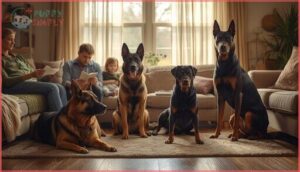
Picking the right protective breed isn’t just about finding the toughest dog—it’s about matching temperament, care needs, and training requirements with your actual lifestyle. You’ll want to think through whether a breed’s guarding instincts align with your experience level, and whether you’re ready for the grooming, health monitoring, and long-term responsibility that comes with it.
Here’s what to keep in mind before bringing a protective dog into your home.
Evaluating Guarding Vs. Aggression
Think of guarding like a controlled alert system—your dog senses a threat, responds with measured defensive mechanisms, then stands down when you give the all-clear.
Aggression triggers, on the other hand, push past that threshold into unpredictable territory.
True guard dog characteristics involve calculated threat response and behavioral conditioning, not raw hostility. Protection means control, not chaos.
Real protection isn’t aggression—it’s a trained dog responding to threats with control, then standing down on command
Assessing Experience Level of Owner
Honestly, your readiness as an owner matters just as much as the dog breed selection itself. Protective breeds demand substantial training needs and owner commitment—think weeks, not days, to build safe guarding behavior. Here’s what influences success:
- Novice owners often need 6+ weeks to establish basic obedience and responsible pet ownership routines
- Prior dog ownership can cut confidence-building timelines nearly in half with customized guard dog training
- Professional guidance during early socialization greatly reduces unprovoked incidents across all experience levels
Health, Grooming, and Maintenance Considerations
Big guardian dogs aren’t low-maintenance pets—they come with real costs and care demands you can’t skip. Veterinary care for large protective breeds usually runs $600–$1,200 yearly for preventive basics, while grooming for double-coated guardians like Great Pyrenees can add $300–$600 more. Here’s what responsible pet ownership looks like:
| Care Category | What You’ll Handle |
|---|---|
| Health Monitoring | Hip screenings every 1–2 years after age 4; cardiac checks for at-risk breeds; dental prophylaxis twice yearly ($300–$700 each) |
| Grooming & Exercise | Brushing 2–3 times weekly for shedding control; nail trims every 3–4 weeks; 60–120 minutes daily activity to prevent anxiety behaviors |
| Dietary Needs | Calorie-dense nutrition with joint supplements; obesity affects 25–40% of under-exercised guard dogs, stressing hips and joints |
Pet safety also means watching for breed-specific issues—hip dysplasia affects 7–14% of German Shepherds and Rottweilers, hypothyroidism impacts 5–9% of some guardian dog breeds, and skin conditions flare in 12% during seasonal changes. Regular vet visits and proactive dog health and wellness routines aren’t optional—they’re essential for keeping your protector healthy and effective long-term.
Long-Term Commitment and Responsibility
Committing to a guard dog means stepping into years of intentional care—something first-time handlers often underestimate. Structured training programs lasting 12–18 months dramatically improve owner retention and reduce liability risks tied to breed selection.
To support responsible pet ownership, you’ll need to plan for:
- Veterinary costs averaging $5,000–$12,000 over a decade, excluding emergencies
- Annual health checkups that cut behavioral issues by 34%
- Ongoing socialization reducing aggression incidents by 40% when done early
Pet ownership and lifestyle alignment matters—these guardians demand consistency, not shortcuts.
Frequently Asked Questions (FAQs)
What is the #1 most protective dog?
There’s no single “most protective” breed, but German Shepherds consistently rank highest—with 68% of owners reporting strong family protection and proven defense capabilities in both police and home settings.
What breed of dog is very protective?
Several breeds stand out for their protective instincts. German Shepherds, Rottweilers, and Doberman Pinschers excel in guard dog traits, demonstrating strong loyalty and watchdog capabilities.
These protective breeds balance family safety with trainable, alert temperaments.
What is the least aggressive guard dog?
Gentle giants prove that actions speak louder than barks—Bullmastiffs top the list as least aggressive guard dogs, showing low to moderate aggression levels when properly socialized, making them ideal loyal companions for family safety.
What’s the friendliest guard dog?
Belgian Malinois and German Shepherds consistently rank as the friendliest guard dog breeds when properly socialized.
Both excel at balancing protective instincts with family-friendly temperament, showing over 68% positive sociability in trained environments.
How do I train a protective guard dog effectively?
You’ll want to prioritize obedience training first—solid recall and impulse control lay the groundwork.
Early socialization before 16 weeks, paired with positive reinforcement methods, reduces unprovoked aggression by 40–60% in guard dog breeds.
What are the common health concerns for guard dog breeds?
Guard dogs face hip dysplasia, degenerative myelopathy, and bloat risk due to their size and build.
Osteoarthritis and hypothyroidism also affect many breeds, making preventive vet care essential for your dog’s long-term health and loyalty.
How do I introduce a new guard dog to my family?
Bringing your new pet home is like opening a door to trust. Start with a calm, structured meet-and-greet, introduce family members gradually, and establish a consistent routine to guarantee household safety and smooth family acclimation.
What are the potential downsides of owning a protective guard dog?
Owning a protective guard dog brings legal concerns and liability risks—23% of owners face lawsuits after bites. Training challenges, socialization issues, and financial burdens averaging $1,200–$2,500 annually require serious commitment.
Do protective breeds adapt well to apartment living?
Most watchdog breeds can adapt to apartment living if you commit to structured daily exercise—60 to 90 minutes minimum—and consistent training to manage territorial instincts in compact living spaces.
Can defensive dogs be trained for therapy work?
Yes, with careful canine behavioral modification and aggression management techniques, defensive breeds can balance protection and therapy.
Studies show obedience training reduces unprovoked reactions by 25-35%, enabling some loyal companions to become effective therapy dog training candidates.
Conclusion
Think protective dog breeds that are defensive automatically mean aggressive, unpredictable pets? That’s the myth preventing countless families from experiencing what proper training actually delivers.
Your German Shepherd or Rottweiler won’t become a liability—they’ll become the discerning guardian who differentiates between the mail carrier and genuine danger.
The reality is simple: when you match breed characteristics to your lifestyle and invest in consistent socialization, you’re not just getting protection. You’re gaining a family member who knows exactly when vigilance matters.