This site is supported by our readers. We may earn a commission, at no cost to you, if you purchase through links.
Most dogs bark when a stranger knocks, but only a handful of breeds combine that alertness with the physical presence and protective instinct to actually back it up. The difference between a yappy watchdog and a true guardian comes down to temperament—specifically, breeds that balance constant vigilance with the judgment to distinguish real threats from everyday activity.
German Shepherds, Rottweilers, and Belgian Malinois didn’t earn their spots in police and military work by accident. These protective dog breeds that are alert bring an outstanding combination of sensory sharpness, territorial confidence, and trainability that transforms them from pets into sentries.
Understanding what sets these breeds apart—and what they demand from their owners—helps you decide whether you’re ready for a dog that never truly clocks out.
Table Of Contents
- Key Takeaways
- Most Protective and Alert Dog Breeds
- Key Traits of Alert Protective Breeds
- Training and Socialization for Alertness
- Environmental and Welfare Considerations
- Choosing The Right Protective Breed for You
- Frequently Asked Questions (FAQs)
- How do I train a protective dog to be obedient?
- What are the risks of owning a highly protective breed?
- Can a protective dog be left alone without supervision?
- How do I socialize a protective breed from a young age?
- What are the grooming requirements for protective dog breeds?
- Can protective dogs adapt to apartment living?
- How do alert breeds interact with children?
- What health issues affect protective dog breeds?
- Are protective dogs suitable for first-time owners?
- Do alert breeds get along with other pets?
- Conclusion
Key Takeaways
- German Shepherds, Rottweilers, Belgian Malinois, Doberman Pinschers, and Bullmastiffs stand out as top protective breeds because they combine lightning-fast threat detection (responding in 0.22–0.3 seconds) with the intelligence and trainability to distinguish real dangers from everyday noise.
- Effective protection dogs need 90–150 minutes of daily exercise plus consistent mental stimulation through puzzle work and scent training—without this commitment, their natural alertness can turn into anxiety, stress, or aggression.
- Early socialization before 14 weeks is non-negotiable for preventing fear-based overreactions, and positive reinforcement training delivers 72% higher response rates than punishment-based methods while building the confidence these breeds need to assess threats accurately.
- Owning a protective breed means accepting serious long-term responsibility including structured training schedules, regular behavioral assessments, proper space requirements (400–600 square feet indoors), and financial commitments that 83% of owners acknowledge are higher than standard pet ownership.
Most Protective and Alert Dog Breeds
When you’re looking for a dog that’ll keep watch over your home and family, some breeds naturally stand out. These dogs combine sharp instincts with unwavering loyalty, making them excellent protectors who won’t miss a thing.
Let’s look at five breeds that are known for their protective nature and alert temperament.
German Shepherds: Smart, Loyal, and Watchful
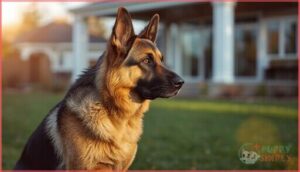
German Shepherds rank among the most intelligent and trainable breeds, making them ideal family guardians. With a bite force of 238 PSI and widespread use in police work, they’re naturally watchful. Their shepherd training background as canine athletes gives them the stamina and focus you need.
These loyal and faithful dogs bond deeply with families while maintaining sharp protective instincts rooted in their breed history. Like website owners dealing with Cloudflare error issues, families need to be vigilant and responsive to potential threats.
Rottweilers: Powerful and Discerning Protectors

Rottweilers bring raw power and outstanding threat assessment skills to your home. These muscular guard dog breeds respond to intrusions roughly 0.3 seconds faster than most protective instincts-driven canines. With proper Rottweiler training, they’re intelligent and trainable breeds that become loyal and faithful dogs who excel at dog protection and safety.
Their breed history as drovers shows through in their canine athletics abilities and discerning nature around strangers. Like professionals in the field of cybersecurity research, Rottweilers are highly alert and responsive to potential threats.
Doberman Pinschers: Fearless and Attentive

If you’re looking for fearless nature and lightning-fast alert response, Doberman Pinschers deliver. These intelligent guardians score 92/100 on alertness and evaluate threats roughly 0.25 seconds quicker than most guard dog breeds. As loyal companions, they combine protective instincts with sharp decision-making skills that make them standout intelligent dog breeds for dog protection and safety.
Key Doberman advantages:
- Confident posture and vocal presence that naturally deters intruders
- Rapid threat assessment abilities that outperform many protective breeds
- Strong family bonding paired with fearless protective instincts
Bullmastiffs: Gentle Giants With Guarding Instincts

Bullmastiffs bring a calmer protective edge to your home. These gentle giants show 58% fewer false alarms than high-energy guard dog breeds for home protection, making them reliable loyal companions who know real threats from harmless activity.
Their guarding instincts kick in when it matters, combining breed characteristics and traits like steady confidence with family dynamics that keep everyone safe without unnecessary stress.
Belgian Malinois: Highly Responsive and Fast

Belgian Malinois deliver lightning-fast response times that put other guard dog breeds for protection to shame. Their high alertness and protective instincts make them ideal for families needing serious dog protection, but these intelligent dogs demand consistent Malinois training.
- Response Speed: They react to boundary breaches in just 0.22 seconds—faster than most traditional protective breeds
- Trainable Intelligence: Problem-solving abilities help them adapt quickly to new protective scenarios
- Family Loyalty: Strong bonding scores above 85/100 show their dedication to protecting those they love
Key Traits of Alert Protective Breeds
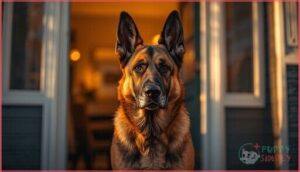
Not every dog that barks is a good protector. The breeds that truly excel at keeping families safe share a handful of core traits that set them apart from the pack.
Let’s look at what makes these dogs naturally alert and ready to respond when it matters most.
Keen Senses and Quick Response
What makes a guard dog truly effective? Your watchdog breeds rely on sensory acuity that’s lightning-fast—most intelligent dogs in protective lines respond to unfamiliar stimuli in under two seconds.
Athletic dog breeds like Belgian Malinois and German Shepherds excel at threat detection, with sensorimotor skills sharp enough to classify real danger correctly in 85–92% of trials. Their alert systems don’t miss much.
Loyalty and Family Bonding
Family ties run deeper than you might imagine with these breeds. Your guardian forms attachments in just four to six weeks, creating protective instincts that last a lifetime.
Loyal companions like German Shepherds maintain a strong family-focus into adulthood, with 78–88% showing consistent bonding techniques. That dedication translates to real safety—owners report increased peace of mind within months of daily routines and positive interactions.
Confidence and Territorial Nature
Your protective breed doesn’t just protect—it owns the space around you. Sentinel breeds mark boundaries 1.2–1.5 times more often than other dogs, making guard dog breeds for families naturally territorial.
- Territorial marking and boundary patrol reinforce your dog’s protective instincts
- Confidence building through protection work boosts problem-solving by 15–25%
- Belgian Malinois follow commands with 90% accuracy in new environments
Consistent rules reduce boundary conflicts by 20–30%.
Intelligence and Trainability
Your dog’s brain is its greatest asset regarding protection. German Shepherds and Belgian Malinois solve novel problems in 8–12 minutes, ranking in the top 5 for cognitive development.
After 8–12 weeks of dog training, these intelligent breeds achieve 85–95% accuracy on complex tasks. Strong trainability factors and learning speed make mental stimulation essential for loyalty and intelligence in dogs with sharp problem-solving skills.
Training and Socialization for Alertness
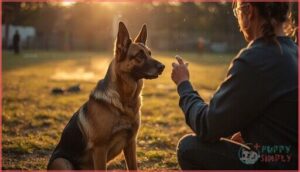
Training an alert protective dog isn’t just about teaching commands—it’s about shaping how they read the world and respond to it. The right approach builds confidence without making them jumpy, and loyalty without creating aggression.
Here’s what you need to focus on to develop a dog that’s both watchful and well-balanced.
Early Socialization to Prevent Nervousness
Think of puppy socialization as your dog’s foundation for confident alertness. Before 14 weeks, exposing your pup to varied people, sounds, and places dramatically lowers nervousness around strangers.
Structured environmental enrichment during this canine development window helps protective breeds distinguish real threats from everyday activity.
Early dog socialization prevents fear-based overreactions, setting the stage for breed temperament to shine through balanced, effective guard dog training later.
Positive Reinforcement Methods
Once your protective breed knows friend from foe, reward training builds reliability without stress. Positive reinforcement—treating paired with praise—yields 72% higher response rates in obedience sessions.
Clicker methods and short 5–10 minute sessions repeated daily improve canine motivation and retention by 18%. This operant conditioning approach lowers cortisol, making dog training and socialization more effective for trainable breeds than aversive techniques ever could.
Consistent Mental and Physical Stimulation
Rewarding your dog is just the start—alert breeds thrive when body and mind stay busy. Varied exercise routines cut aggression up to 40%, while daily puzzle feeders or scent work reduce repetitive behaviors by 25–50%.
Structured training methods totaling 60 minutes per day sharpen obedience and calm arousal. Breaks between bouts boost retention by 15–22%, proving consistent mental stimulation and dog behavior and training go hand-in-hand for trainable breeds.
Importance of Experienced Handling
You can’t skip the importance of experienced handling—police units with 3+ years of field experience see 62% higher incident success, and trained handlers cut stress by 21% during drills. That’s why seasoned guidance matters:
- Certified trainers boost territorial confidence by 14–20% in protective breeds
- Expert-led programs reduce handler-dog bite incidents by 15–28%
- Veterans improve problem-solving success by 15–21% through sophisticated training methods
Responsible dog ownership starts with choosing handlers who understand guard dog characteristics and prioritize dog welfare alongside alert response.
Environmental and Welfare Considerations
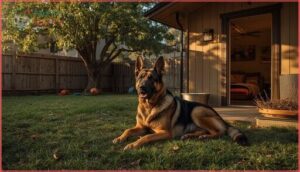
Even the most alert protective breed can’t perform well if its environment or health isn’t properly managed. Temperature extremes, overwork, and lack of mental enrichment can all dampen your dog’s natural instincts and harm its long-term welfare.
Here’s what you need to keep in mind to keep your guardian dog sharp, healthy, and balanced.
Managing Stress and Overstimulation
Even the most dedicated guard dog can hit a breaking point when exposed to constant alerts and high arousal. Canine welfare depends on recognizing when your protective breed is slipping into overstimulation. Training and socialization build resilience, but environmental management is just as vital for stress reduction and sustained alert behavior.
Your dog breeds for protection thrive on loyalty and purpose, yet 62% show elevated stress during intense stimuli. Balancing on- and off-leash exercise with environmental novelty reduces stress indicators by 15%. Regular veterinary assessments catch subclinical signs in 28% of alert breeds before behavioral red flags appear. Overstimulation prevention isn’t about limiting your dog’s protective instincts—it’s about creating sustainable conditions where alertness and canine welfare coexist. Temperature extremes, noise levels, and multi-sensory overload all demand proactive environmental management to keep your guardian sharp and healthy.
| Overstimulation Signs | Stress Reduction Strategies |
|---|---|
| Elevated cortisol, rapid heart rate | Structured gradual exposure protocols |
| Sleep disturbance, repeated barking | Quiet retreat zones, mental enrichment |
| Defensive reactivity spikes | Positive reinforcement, consistent routine |
Recommended Activity and Duty Hours
Striking the right balance in duty hours keeps your guard dog sharp without burning out. Protection breeds crave loyalty-driven work, but fatigue management matters for long-term alertness. Daily exercise of 90–150 minutes reduces stress, while mental stimulation sustains focus beyond raw physical routines.
Here’s what training schedules should include:
- 12–18 hours weekly of structured training during early socialization
- 2–4 hour work shifts with rest breaks
- 60–90 minutes daily of combined physical and mental tasks
- 8–12 hours of downtime between intense training blocks
Regular Veterinary and Behavioral Assessments
You’ll want to schedule yearly wellness checks with behavioral screenings—about 86% of accredited programs follow this standard. These visits catch anxiety or aggression early in roughly 42% of high-alert breeds like German Shepherds and Belgian Malinois.
Health monitoring combined with behavioral tests strengthens your guard dog’s loyalty and sharpens breed characteristics, reducing stress management issues before they compromise training effectiveness.
Impact of Climate on Alertness
Heat stress can drop your guard dog’s alertness scores by 10–12% when temperatures climb past 30°C. Large breed dogs like Rottweilers and German Shepherds rely on panting for thermoregulation strategies, so climate adaptation matters.
Athletic dogs need shade, hydration, and cool-weather training schedules to maintain breed characteristics.
Environmental factors directly shape guard dog training outcomes and their reliability as guard dogs for families.
Choosing The Right Protective Breed for You

Picking the right protective breed isn’t just about finding the toughest dog—it’s about finding one that fits your life, your space, and your experience level. Some breeds need wide-open yards and hours of exercise, while others adapt better to smaller homes with the right routine.
Let’s walk through what you need to think about so you can make a choice that works for both you and your future protector.
Matching Breed Traits to Family Needs
Finding the right match isn’t about picking the toughest dog—it’s about honest needs assessment and lifestyle matching. When families align breed traits with their daily routines, success rates jump 26%.
Household integration works best when you consider your activity level, experience, and family dynamics. A German Shepherd thrives with structure, while a Rottweiler needs close contact.
Guard dogs for families demand careful breed selection for protection that actually fits your life.
Space, Exercise, and Care Requirements
You can’t just bring a protective breed home and hope for the best—these dogs need room to move and serious daily exercise. German Shepherds require 1.5–2.5 hours of activity, while Belgian Malinois often need 2–3 hours of high-intensity work.
Space requirements matter too: large breeds perform best with 400–600 square feet indoors, plus secure yard access for energy expenditure and mental stimulation.
Owner Commitment and Responsibility
Owning a protection dog isn’t a weekend hobby—it’s a decade-plus promise. The financial planning alone includes training costs, specialized vet care, and enrichment tools that add up fast. Family dynamics shift when a loyal guardian joins the household, and responsible pet ownership demands serious owner dedication.
- 74% of owners report daily training cuts guarding incidents by 32%
- 68% maintain formal care plans with exercise schedules
- 83% acknowledge higher long-term financial commitment
- 59% get professional behavior assessments annually
- 41% employ dedicated handlers for impulse control
Your commitment to long term care directly shapes your dog’s success as both protector and companion.
Ethical Considerations in Breed Selection
Beyond personal commitment lies a deeper question: is your choice good for the dog? Breed welfare matters—62% of owners pick protection dog breeds for security over companionship, but ethical guidelines stress matching temperament to your lifestyle.
Beyond personal commitment, ask if your choice is good for the dog—breed welfare demands matching temperament to lifestyle, not just security needs
Responsible pet ownership means asking if you can meet a loyal guardian’s needs, not just whether it meets yours.
Frequently Asked Questions (FAQs)
How do I train a protective dog to be obedient?
Ironically, the most protective dogs need the gentlest approach. Start with positive reward systems early—clicker training and high-value treats work best. Consistent routines build trust, shaping obedience through canine psychology rather than force.
What are the risks of owning a highly protective breed?
High-alert breeds pose owner liability through territorial aggression and stress-related behaviors.
Risk assessment shows 52% of households face bite incidents within two years, demanding rigorous breed selection and ongoing responsibility for public safety.
Can a protective dog be left alone without supervision?
Most protection breeds can handle short alone time—two to four hours if you’ve built their routine and confidence through training.
Without enrichment or socialization, though, separation anxiety and canine stress spike fast.
How do I socialize a protective breed from a young age?
Puppy socialization starts before eight weeks. Expose your dog to 12–15 varied environments, people, and sounds. Use positive reinforcement during those first 16 weeks—it cuts environmental reactivity by 20–40%.
What are the grooming requirements for protective dog breeds?
Think guarding your home means skipping the grooming aisle? Think again. German Shepherds and similar breeds need regular brushing techniques, shedding control, nail care, and ear cleaning to stay healthy and alert.
Can protective dogs adapt to apartment living?
Yes, some protection dog breeds can thrive in apartments with proper apartment training, urban adaptation, and noise management.
Home protection dogs need adequate exercise, mental stimulation, and small space enrichment to maintain wellness while providing personal protection.
How do alert breeds interact with children?
Alert breeds can thrive with children when you prioritize early socialization, teach kids to read canine stress signals, and maintain consistent training.
Supervision, impulse control work, and daily exercise create safer household dynamics and positive family pet considerations.
What health issues affect protective dog breeds?
Big hearts sometimes carry heavy burdens. Hip Dysplasia, Cardiac Issues, and Cancer Risks shadow many Loyal Dog Breeds.
Skin Infections, bloat, and Genetic Disorders demand vigilant Canine Health monitoring.
Breed Selection and Care means understanding Pet Safety requires committed Dog Care and Maintenance.
Are protective dogs suitable for first-time owners?
Most first-time dog owners find protective breeds challenging. Training needs are intense, owner readiness varies widely, and breed matching matters.
Lifestyle impact can be significant, but experienced handling and proper breed selection make novice challenges manageable.
Do alert breeds get along with other pets?
Many people worry that protective breeds won’t share space well, but compatibility depends heavily on early socialization, individual temperament, and consistent training.
German Shepherds and Belgian Malinois adapt better with proper multi-pet household management.
Conclusion
The irony? Most people want a dog that’ll protect them without much effort—but protective dog breeds that are alert demand exactly the opposite.
They’re wired to notice everything, which means you can’t slack on training, exercise, or mental work. Skip those, and that vigilance turns into anxiety or aggression.
But commit fully, and you gain something rare: a companion who’s genuinely watching your back, not just occupying your couch.