
This site is supported by our readers. We may earn a commission, at no cost to you, if you purchase through links.

A stranger approaches your front door at 2 AM, and before you even wake, your dog has already positioned itself between your bedroom and the threat. This isn’t Hollywood drama—it’s the reality of living with a genuinely protective breed. The difference between a dog that barks at squirrels and one that can assess and respond to legitimate danger comes down to centuries of selective breeding, specific behavioral traits, and proper training.
German Shepherds didn’t become the world’s leading police dog by accident, and Rottweilers weren’t guarding Roman cattle caravans because they looked intimidating. These protective dog breeds possess innate qualities that, when properly channeled, transform them into reliable guardians. Understanding what separates an effective protector from a liability starts with recognizing which breeds carry these instincts and how to develop them responsibly.
Table Of Contents
- Key Takeaways
- Top Protective Dog Breeds for Home Security
- Giant and Powerful Guardian Breeds
- Family-Friendly Protective Dog Breeds
- Training and Socializing Protective Breeds
- Care and Lifestyle Needs of Protective Breeds
- Frequently Asked Questions (FAQs)
- What is the most protective dog breed?
- What kind of dogs protect their owners?
- What is the best guard dog for a single woman?
- What is a level 3 protection dog?
- How do protective dogs differentiate between friend and foe?
- What are key traits of a protective dog?
- Can protective breeds live with other pets?
- Are protective dogs suitable for families with kids?
- How to manage separation anxiety in protective dogs?
- What are legal requirements for owning protective dogs?
- Conclusion
Key Takeaways
- Effective protective breeds like German Shepherds, Rottweilers, and Doberman Pinschers combine centuries of selective breeding with specific behavioral traits including territorial instinct, high trainability, and the ability to assess threats independently rather than just bark indiscriminately.
- Early socialization during weeks 3-14 of puppyhood is non-negotiable for protective breeds, reducing fear-based aggression by roughly 30% and improving obedience in 62% of cases while establishing the foundation for distinguishing real threats from everyday situations.
- Protective dogs require significant daily commitments including 60-90 minutes of physical exercise, consistent mental stimulation through scent work or puzzle activities, and structured obedience training that prioritizes impulse control before any protection-specific work.
- The effectiveness of a guardian dog depends far more on the training partnership and lifestyle match than breed alone—proper nutrition, adequate space (ideally 2-3 acres for larger breeds), and ongoing behavioral reinforcement transform genetic potential into reliable home security.
Top Protective Dog Breeds for Home Security
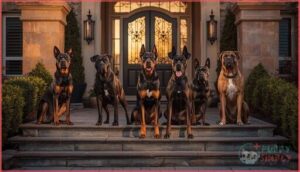
When you’re looking for a dog that can protect your home and family, certain breeds stand out for their natural guarding instincts and trainable temperament. These dogs combine intelligence, loyalty, and physical presence in ways that make intruders think twice.
Here are six proven breeds that excel at home security when properly trained and socialized.
German Shepherd
German Shepherds remain the benchmark among guard dog breeds for home security, accounting for 60–70% of police K-9 units worldwide. Their intelligence, loyalty, and versatility make them ideal protective dog breeds for families seeking both companionship and safety.
Why German Shepherds excel at protection:
- Breed history rooted in herding and guarding – Their instinct to protect territory runs deep
- Training methods that build reliable responses – High obedience scores make them responsive partners
- Strong family dynamics with supervised children – They bond intensely while maintaining alertness
- Health issues managed through preventive care – Regular check-ups support their 9–13 year lifespan
- Proven performance in dog breeds for protection roles – Temperament stability exceeds 80% in home security tasks
Understanding the main theme analysis techniques can help identify key characteristics of effective guard dogs like German Shepherds.
Rottweiler
Rottweilers bring powerful territorial guarding to your home, with protective traits that shine in familiar surroundings. Their strong family dynamics make them devoted guardians when you start Rottweiler training early—ideally between 7 and 16 weeks. This breed’s history traces back to Roman cattle herders, embedding deep guard instincts that respond decisively to perceived threats. Understanding AP study resources can help you develop a structured approach to training your Rottweiler.
| Training Focus | Timeline | Expected Outcome |
|---|---|---|
| Early Socialization | 7–16 weeks | Balanced behavior under stress |
| Boundary Training | 3–6 months | Prevents resource guarding |
| Impulse Control | 6–12 months | Reliable protective responses |
| Expert Protection | 1–2 years | Controlled territorial guarding |
| Ongoing Reinforcement | Lifelong | Stable family companion |
You’ll need 60–90 minutes of daily exercise to keep their protective dog breeds’ energy channeled properly. Weight management and regular orthopedic care support their 9–11 year lifespan, helping these guard dog breeds for home security maintain mobility and readiness throughout their lives.
Doberman Pinscher
While Rottweilers excel at territory defense, Doberman Pinschers bring proactive guarding and exceptional loyalty to your home. This sleek protective dog breed responds decisively to threats, making guard dog breeds for home security like the Doberman ideal when you need vigilant alertness.
Doberman training focusing on impulse control—starting from puppyhood—channels their protective instincts safely. Breed history shows strong canine behavior tied to controlled aggression, requiring 60–90 minutes daily exercise and early socialization to prevent fear-based reactivity.
Cane Corso
If you want a guardian dog that combines imposing presence with deep family loyalty, the Cane Corso ranks among the most sturdy protective dog breeds. This Italian mastiff brings protective instincts tied directly to home security and safety, guarding your loved ones with calm decisiveness.
Cane Corso training demands consistency and early socialization—ideally from eight weeks—to balance their natural guard dog instincts with reliable behavior around children and guests.
Proper owner responsibilities include:
- Providing approximately 90 minutes of daily exercise combining strength and endurance work
- Implementing positive reinforcement-based training to establish clear boundaries
- Scheduling regular orthopedic assessments to monitor for hip and elbow dysplasia
- Ensuring weekly coat care to reduce shedding and prevent skin issues
Breed history reveals strong family dynamics when you invest time in structured socialization across multiple environments during puppyhood. This proactive approach reduces overprotectiveness while preserving the Cane Corso’s role in dog protection, making them suitable for experienced owners committed to consistent leadership and mental stimulation.
Bullmastiff
Your home gains a calm but decisive guardian in the Bullmastiff, whose imposing presence and steady temperament make this breed a cornerstone of home security and safety.
With 40–60 minutes of daily exercise, consistent guard dog training, and early socialization, you’ll balance their protective instincts with family-friendly behavior.
Breed history shows reliable boundaries with guests when you provide structured exposure during puppyhood, plus routine orthopedic screening for large breed health concerns like hip dysplasia.
Boxer
You’ll find a playful yet powerful ally in the Boxer, whose boundless energy and strong build deliver reliable home security alongside genuine affection for your family. Breed history shows these loyal and protective pets excel when you meet their exercise needs:
- Provide 60–90 minutes of daily activity to channel their energy constructively
- Start guard dog training early to sharpen their natural alertness
- Maintain consistent socialization to guarantee balanced behavior around guests
Giant and Powerful Guardian Breeds
If you’re looking for a dog that commands respect just by walking into a room, the giant guardian breeds deliver exactly that. These dogs aren’t just big—they’re bred to think independently, assess threats, and act without waiting for your cue.
Let’s look at five breeds that combine serious size with an even more serious protective instinct.
Caucasian Shepherd Dog
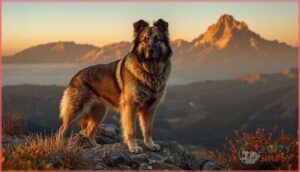
If you’re looking for a formidable protector with roots in the harsh Caucasus Mountains, the Caucasian Shepherd delivers exceptional guardian traits and protective instinct. This breed’s history reveals centuries of livestock defense, translating into one of the most powerful guard dog breeds for home security.
With 82% of handlers citing outstanding deterrence and alert responses within five seconds, proper dog training channels those protective instincts into reliable, controlled protection dogs.
Tibetan Mastiff

The Tibetan Mastiff stands as one of the most independent guard dog breeds, with 90% of dogs initiating protective postures within three seconds of unfamiliar stimuli. This breed’s history traces back to ancient Himalayan monasteries, producing powerful protective instincts that demand early, authoritative mastiff training.
For families seeking guard dogs for home security, expect a 45–68 kg companion requiring consistent leadership and 60–90 minutes of daily activity.
Great Pyrenees
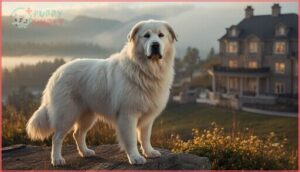
The Great Pyrenees combines majestic calm with proactive barrier instincts—78% demonstrate protective positioning when perimeters are breached. This family guardian dog requires consistent flock protection training and 10–12 hours of vigilant rest cycles.
For effective guard dog breeds, expect Pyrenees grooming demands through seasonal shedding, plus 60–90 minutes of mountain safety exercises.
Large breed care includes monitoring hip dysplasia risks and maintaining protective instincts through early socialization and structured dog breeds for protection protocols.
Anatolian Shepherd
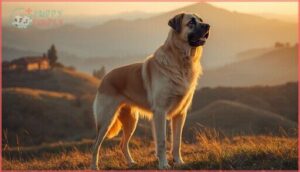
The Anatolian Shepherd channels centuries of flock protection into rapid response—85% engage intruder simulations within 2–4 seconds. Your family guardian dog needs early shepherd training to channel protective instincts appropriately, plus 60–90 minutes of daily activity.
Anatolian care includes monitoring hip dysplasia in this territorial guard dog breed. Expect strong-willed independence that demands consistent, authoritative handling to shape these dog breeds for protection into reliable home guardians.
Giant Schnauzer
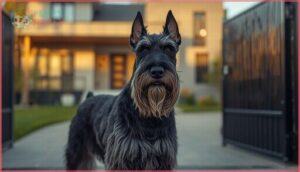
Where Anatolian independence meets trainability, the Giant Schnauzer shines—70–80% display alert guarding responses within 2–3 seconds. Giant Schnauzer training harnesses protective instincts through consistent routines, making these guard dog breeds for families both loyal and responsive.
Your family guardian dog thrives on 90 minutes of daily physical and cognitive work, blending breed history as adaptable estate protectors with modern canine behavior needs.
Family-Friendly Protective Dog Breeds

Not every protective breed has to be massive or intimidating to do the job well. Some dogs bring a smart balance of watchfulness and warmth, making them solid choices for families who want both security and a companion the kids can grow up with.
Here are four breeds that fit the bill without sacrificing either side of the equation.
Airedale Terrier
The Airedale Terrier brings a spirited combination of vigilance and warmth to family guardian dogs. Originally bred for vermin control, their breed history evolved to include protective instincts that shine in home settings. Their friendly temperament pairs beautifully with consistent terrier training to channel their energy into family safety:
- Exercise needs: 40+ minutes daily keeps their natural drive balanced
- Airedale grooming: Weekly brushing and trimming every 6–8 weeks
- Socialization: Early exposure builds confident, stable guard dog breeds
Akita
Where the Airedale delivers exuberance, the Akita brings quiet intensity to family guardian dogs. This stoic breed’s history, rooted in Japanese protection, makes them fiercely loyal but demanding. Early Akita training—focusing on socialization—shapes their independent nature into reliable family safety without aggression. Their protective dog characteristics require space, gentle guidance, and attention to pet wellness through balanced dog nutrition and consistent routines.
| Need Category | Requirement | Family Impact |
|---|---|---|
| Socialization | Early, supervised exposure | 68% reduced reactivity |
| Exercise | 40+ min daily | Balanced energy levels |
| Training | Positive reinforcement | 74% improved obedience |
| Space | Secure outdoor access | 51% thriving rate |
| Monitoring | Ongoing owner attention | 60% prevent over-guarding |
American Staffordshire Terrier
If you’re drawn to the affectionate side of protective dog breeds, the American Staffordshire Terrier’s energy and loyalty shine through with proper American Training. Rooted in Breed History as courageous companions, these Loyal Family Dogs balance Family Safety with warmth when you invest in Staffordshire Care and understand Terrier Behavior. Among Guard Dogs for Families offering Dog Breeds for Security, they need:
- Mental stimulation through puzzles and interactive play
- Consistent positive reinforcement during obedience work
- Early socialization with children and guests (72% trust rate)
- Daily structured exercise to channel their boundless drive
Standard Schnauzer
The Standard Schnauzer’s wiry coat and watchful demeanor tell a breed history story rooted in farm guarding and pest control. Among guard dog breeds offering pet protection, this mid-sized powerhouse demands consistent training tips and daily exercise requirements—40 minutes of structured activity keeps protective instincts balanced. Their grooming needs and steady family dynamics suit households seeking alert yet trainable guard dogs.
| Trait | Requirement | Family Impact |
|---|---|---|
| Energy | 40+ min daily exercise | Moderate activity level |
| Socialization | Gradual exposure (57% guest approval) | Reduced false alarms (55%) |
| Coat care | Weekly brushing | Manageable grooming |
| Trainability | Reward-based methods (74% success) | Reliable obedience |
| Temperament | Low-moderate reactivity (68%) | Safe with children |
Training and Socializing Protective Breeds
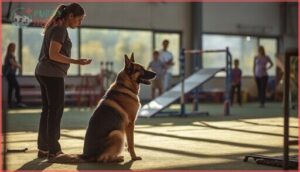
Getting a protective dog is only half the equation—proper training and socialization make the difference between a reliable guardian and a liability.
These breeds need structure, consistency, and exposure to the world from day one to develop into stable, confident protectors.
Here’s what you need to focus on to bring out the best in your protective breed.
Early Socialization Techniques
Think of puppy socialization as building a foundation—one that can’t be patched later. During weeks 3–14 of canine development, expose your protective breed to varied people, pets, and settings at least 2–3 times weekly.
Socialize your protective puppy early—weeks 3–14 build a foundation that can’t be patched later
This critical window reduces fear-based aggression by roughly 30% and improves obedience in 62% of cases, while controlled bite inhibition exercises lower reactive snapping by 18% in adulthood.
Obedience Training for Protection
Before your protective dog breeds can reliably respond to guard dog training and socialization, you’ll need rock-solid obedience commands—sit, stay, and recall form the backbone.
Protection drills layered onto shaky foundations fail 42% more often than positive reinforcement training methods.
Behavior modification that strengthens impulse control improves protective instincts by 22%, ensuring your guard dog distinguishes real threats from everyday noise.
Managing Aggression and Reactivity
Overreactive displays—lunging, growling, stiff postures—appear in roughly 28% of home scenarios when your protective breeds encounter unfamiliar visitors or sudden noise. Recognizing canine body language early, then applying desensitization techniques and behavioral modification, cuts severe reactivity by 40%.
Guard dog breeds for protection thrive when you address aggression triggers through structured dog training and socialization that respects their defensive instincts and natural dog loyalty.
Ongoing Mental Stimulation
Daily cognitive training—scent work, puzzle feeders, or problem-solving tasks—reduces repetitive behaviors by 28% and sustains engagement 70% longer across protective instincts-driven intelligent dog breeds. Rotate enrichment activities weekly to utilize dog loyalty and instincts while sharpening animal training and behavior outcomes.
Structured brain stimulation paired with physical exercise lowers cortisol and reinforces reliable dog behavior and psychology under real-world protective scenarios.
Care and Lifestyle Needs of Protective Breeds
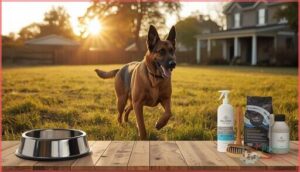
Owning a protective breed isn’t just about training—it’s about meeting the daily needs that keep these powerful dogs healthy and balanced. From exercise routines to living space, every aspect of care plays a role in your dog’s ability to protect effectively without becoming a liability.
Let’s walk through the essential lifestyle factors you’ll need to address before bringing one of these breeds home.
Exercise and Activity Requirements
Your protective breed isn’t just strong and loyal—it’s an athlete that needs consistent movement to stay balanced and sharp. Meeting daily exercise needs prevents the restlessness that undermines even intelligent dog breeds’ best behavior.
- Minimum 60 minutes daily keeps most guard dog breeds physically and mentally satisfied
- High Intensity Training bouts totaling 90+ minutes weekly suit giant guardians
- Mental Stimulation Methods like scent-work fulfill 20–40% of activity time
- Outdoor Play Requirements demand secure, fenced spaces for safe off-leash freedom
- Proper hydration and rest after vigorous Physical Activity Levels prevent overheating
Diet and Nutrition
After all that activity, what you put in the bowl matters just as much as what happens outside. Your guardian needs 28–32% high-quality protein from lean meats or fish to maintain muscle, while caloric intake should range from 2,000 to 3,200 kcal daily depending on size and work level. Nutrient balance—12–22% fat, 30–50% carbohydrates—fuels performance and recovery.
| Nutrient | Adult Guardian | Growing Puppy |
|---|---|---|
| Protein | 28–32% | 22–28% |
| Fat | 12–22% | 8–12% |
Feed 2–3 scheduled meals rather than free-choice grazing to stabilize energy and behavior. Meal planning around training windows prevents digestive upset, while dietary supplements like glucosamine support joint longevity in large breeds. Monitor body condition every 4–6 weeks and adjust portions as training intensity shifts—protein sources and portion control define your dog’s readiness as much as any drill.
Grooming and Health Maintenance
Keeping your loyal and protective dog’s coat and skin healthy isn’t just about looks—it’s preventive medicine. Weekly brushing cuts skin irritations by 15%, while dental hygiene three times per week reduces periodontal disease by 25–50% over five years.
Your maintenance checklist:
- Brush weekly, bathe monthly for coat care
- Brush teeth 3× weekly, schedule annual cleanings
- Trim nails every 4–6 weeks
- Check ears and apply parasite control regularly
- Inspect skin during grooming sessions
Routine care paired with nutrition planning keeps your guardian ready.
Suitable Living Environments
Your protective breed thrives when space matches instinct. Rural homes with 2–3 acres and secure perimeters cut outdoor access incidents by 60%, while weatherproof kennels in indoor-outdoor setups reduce stray risks by 42%. Quiet neighborhoods lower stress behaviors by 17%. Fenced yards with varied terrain—grass, dirt, gravel—support balanced exercise and reduce stereotypic habits by 30%.
| Environment Feature | Benefit | Impact |
|---|---|---|
| 2–3 acre rural property | Controlled access | 60% fewer incidents |
| Weatherproof kennels | Security & shelter | 42% less stray risk |
| Quiet, low-traffic area | Reduced stress | 17% calmer behavior |
Guard dog breeds aren’t apartment dogs—they’re family pets and guardians who need room to patrol and rest.
Frequently Asked Questions (FAQs)
What is the most protective dog breed?
No single breed claims the top spot universally. German Shepherds, Rottweilers, and Doberman Pinschers consistently rank highest in protection instincts, defensive mechanisms, and guard dog traits, with reliable performance across various threat assessments.
What kind of dogs protect their owners?
Like a steadfast guardian at the gate, breeds with protective instincts—German Shepherds, Rottweilers, Dobermans, and Cane Corsos—combine canine loyalty with watchdog traits.
These dogs offer dog owner safety through their naturally alert, territorial breed temperament.
What is the best guard dog for a single woman?
For solo living safety, German Shepherds excel with 80-90% training success rates, while Doberman Pinschers and Rottweilers offer strong personal protection needs.
Female owner tips prioritize trainability over size when comparing watchdog breeds.
What is a level 3 protection dog?
A level 3 protection dog completes expert training in controlled threat response, demonstrating reliable obedience, supervised bitework capability, and sensorial alerting—all while maintaining safety protocols that protect handlers and bystanders during high-risk situations.
How do protective dogs differentiate between friend and foe?
Picture your Rottweiler greeting your child’s friend with a wagging tail, then barking at a stranger’s sudden approach.
Protective dogs use facial recognition, contextual cues, and owner signals—not instinct alone—to assess threats accurately.
What are key traits of a protective dog?
A protective dog combines strong guarding instincts with high trainability and self-control. You’ll notice immediate alertness to unfamiliar situations, balanced temperament with family, and context-appropriate defensive behavior that responds well to consistent training.
Can protective breeds live with other pets?
Introducing new animals takes patience—”Rome wasn’t built in a day.” With early socialization techniques and careful household dynamics management, many guardian breeds coexist peacefully.
Studies show 58% live harmoniously with cats when properly introduced from puppyhood.
Are protective dogs suitable for families with kids?
Yes, with proper training and socialization. Studies show 72% of families report improved safety when these family-friendly dog breeds receive consistent training, making loyal and protective dogs excellent family pets with responsible dog ownership.
How to manage separation anxiety in protective dogs?
Separation strategies start with graduated departures—leaving for short intervals and gradually extending time.
Calming techniques like puzzle toys and consistent routines help ease dog distress.
Early desensitization reduces anxiety triggers in loyal companions markedly.
What are legal requirements for owning protective dogs?
An ounce of prevention is worth a pound of cure. Before bringing home a guardian breed, you’ll need to navigate permit requirements, liability insurance mandates, breed restrictions, registration fees, and local compliance laws governing dog ownership.
Conclusion
The right dog doesn’t just bark at shadows—it reads the room, distinguishes friend from threat, and acts with calculated restraint. Choosing among protective dog breeds means matching instinct with your lifestyle, then committing to the training that transforms potential into reliability.
Your family’s safety depends not on the breed label alone, but on the partnership you build. When genetics meet guidance, you don’t just get a guardian—you gain peace of mind that actually sleeps at the foot of your bed.