
This site is supported by our readers. We may earn a commission, at no cost to you, if you purchase through links.
A German Shepherd’s bite delivers 300 PSI of pressure—enough to crack bone—but that raw power means nothing without the right temperament and training behind it. Protective aggression dog breeds aren’t just large animals with intimidating appearances. They’re the result of centuries of selective breeding that hardwired specific traits into their DNA: unwavering loyalty, territorial awareness, and the ability to distinguish between genuine threats and everyday visitors.
When you bring one of these dogs into your home, you’re not just getting a pet—you’re taking on a partnership that demands respect, knowledge, and consistent leadership. The difference between a well-trained guardian and a liability often comes down to understanding what makes these breeds tick and whether you’re truly prepared for the commitment they require.
Table Of Contents
- Key Takeaways
- Top Protective Aggression Dog Breeds
- Key Traits of Protective Dog Breeds
- Training and Socialization for Guard Dogs
- Choosing The Right Protective Breed
- Responsibilities of Owning a Protective Breed
- Frequently Asked Questions (FAQs)
- Why Do You Need a Protection Dog?
- Is it safe to have a protection dog in your house?
- Is a Schnauzer a good dog for seniors?
- Why are protection dogs so expensive?
- What are some cons of having big dogs?
- What factors account for the steep cost of protection dogs?
- Why grooming requirements are an important factor while choosing a dog?
- How long does it take to train a protection dog?
- How to evaluate the health of personal protection dog before buying?
- What factors contribute to a dogs protective aggression instincts?
- Conclusion
Key Takeaways
- Protective dog breeds like German Shepherds, Rottweilers, and Belgian Malinois combine powerful bite force (300-358 PSI) with centuries of selective breeding that hardwired loyalty, territorial awareness, and threat assessment into their DNA.
- Early socialization during the critical 3-14 week puppy window is non-negotiable—miss it and you’ll face behavioral problems that no amount of training can reverse, especially in breeds bred for protective aggression.
- Owning a guardian breed demands serious commitment beyond the romanticized image: expect 90-180 minutes of daily exercise, $500-$3,000 in training costs, potential legal liability, and lifelong reinforcement sessions to maintain reliable protection without creating a dangerous liability.
- The difference between a well-trained protector and a household disaster comes down to handler expertise—80-90% of dog bites happen at home with familiar pets, proving that raw power means nothing without consistent leadership, positive reinforcement training, and the ability to read canine body language under pressure.
Top Protective Aggression Dog Breeds
If you’re searching for a dog that can truly stand guard, you’ve got plenty of powerful breeds to choose from. Each one brings its own blend of courage, loyalty, and instinct.
Let’s take a look at some of the most trusted protective breeds out there.
German Shepherds
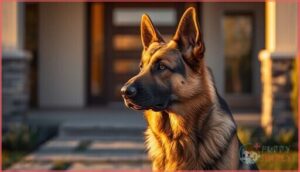
Loyalty in motion—German Shepherds are the benchmark for protection. Their guard instinct and impressive bite force (up to 300 PSI) make them trusted guard dogs in homes and police work alike.
With a breed history rooted in service, their protective nature shines when paired with solid Shepherd training. Early dog training and socialization are your keys to a confident, reliable companion.
Understanding their powerful jaw structure is essential for effective training and handling.
Rottweilers
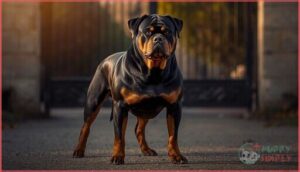
If you’re after raw power and unwavering protection, Rottweilers stand tall. Their bite force analysis clocks in at 320–328 PSI, making them formidable guardians. Rottweiler history is steeped in livestock guarding—today, they’re prized for:
- Muscular build
- Calm confidence
- Controlled aggression
- Guard dog legislation awareness
- Owner responsibilities in training and socialization.
Rottweilers demonstrate remarkable jaw strength capabilities that contribute to their reputation as powerful guardians.
Doberman Pinschers
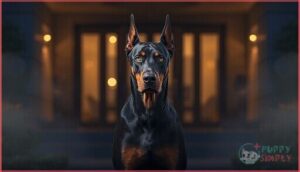
If Rottweilers are the muscle, Doberman Pinschers are the precision. Doberman history is rooted in personal protection—these dogs blend speed, loyalty, and sharp instincts. Breed standards call for alertness and watchfulness, not reckless aggression.
Their bite force (about 305 PSI) means business, but health risks like heart issues require careful management. With consistent training methods, Dobermans excel as adaptable guard dog breeds.
Belgian Malinois
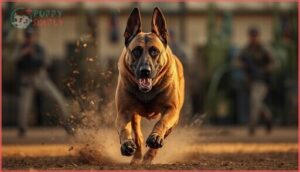
If Dobermans are the scalpel, Belgian Malinois are the multitool of guard dog breeds. Their bite force—roughly 358 PSI—backs up their reputation in police work and protection training.
You’ll see Malinois on airport patrols and SWAT teams for a reason: speed, focus, and loyalty. If you crave power and control, breed selection here demands serious commitment and expert dog training tips.
Bullmastiffs

Meet the nighttime enforcer from England’s 1860s estates: the Bullmastiff was bred by gamekeepers to pin poachers, not maul them. You’re looking at 110-130 pounds of controlled power and loyalty. Their guarding instincts shine through physical deterrence—body blocking, pinning, intimidation—while bite inhibition keeps aggression measured.
Training methods emphasizing early socialization (7-16 weeks) and owner responsibilities around consistency transform raw protection into disciplined security.
Why Bullmastiffs excel in guard dog roles:
- Calm confrontation style – They assess threats, then act with restraint
- Physical dominance – Size and strength deter without excessive violence
- Territorial alertness – Barking and body language signal danger early
- Trainable restraint – Proper socialization balances their natural protective drive
Akitas
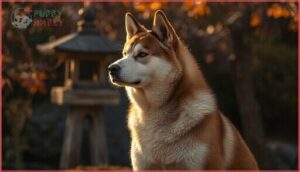
Akita Behavior is a study in contrasts—loyal to family, yet reserved and watchful with strangers. Their Breed History as Japanese guardians shaped powerful, independent instincts.
Training Methods must tackle Aggression Factors early, especially with other dogs. Owner Responsibilities include socialization, supervision, and using management tools.
If you crave a Protective Dog with gravitas, Akitas top the list of Dog Breeds for Protection.
Great Pyrenees
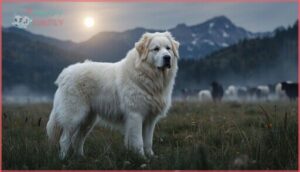
Picture a moonlit pasture—your Great Pyrenees stands watch, a gentle giant with unwavering loyalty. This Protective Dog thrives in Mountain Terrain, excelling at Livestock Protection thanks to strong Herding Instincts and a thick Double Coat.
As one of the top Guard Dog Breeds, their calm presence offers comfort, making them a reliable choice among Dog Breeds for Protection and security.
Anatolian Shepherds

Ever wondered what it takes to guard an entire flock on rugged hillsides? The Anatolian Shepherd is your answer—massive, watchful, and fiercely independent. Here’s what sets this Protective Dog apart:
- Deep Anatolian History as livestock guardians
- Extraordinary Loyalty to flock and family
- Essential Shepherd Training for boundaries
- Critical Breed Conservation for working Watchdog roles
Cane Corsos
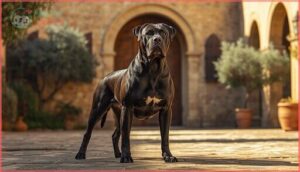
If you’re drawn to powerful Canine Protection with deep Italian Origins, the Cane Corso brings centuries of Mastiff History straight to your doorstep.
This member of Guard Dog Breeds showcases Guardian Traits refined through Cane Corso Genetics—muscular, alert, and intensely loyal.
While Breed Legislation restricts ownership in some areas due to their protective intensity, these Loyal Companions reward experienced handlers with unwavering Dog Protection and devotion.
Kuvasz
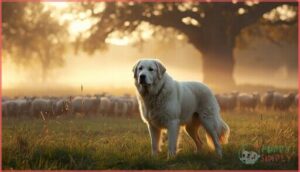
Rooted in Hungarian Origins, the Kuvasz emerges from centuries of Flock Protection, where its White Coat Genetics allowed it to blend with sheep while deterring predators.
This Livestock Guardian ranks among Guardian Breeds that think independently—a trait refined through Kuvasz History.
As one of the most devoted Guard Dog Breeds, these Loyal Companions offer exceptional Dog Protection when paired with experienced handlers.
Key Traits of Protective Dog Breeds
Every protective breed brings something unique to the table, but a few traits stand out across the board. If you’re wondering what sets these dogs apart, you’ll want to pay attention to the qualities that make them such reliable guardians.
Here are the key traits you should know.
Loyalty and Devotion
Loyalty runs deeper than fur—it’s chemistry and connection. In Guard Dog Breeds, Canine Bonding is fueled by rising Oxytocin Levels, shaping strong Attachment Styles and unmistakable Loyalty Traits. If you want Family Safety and Security from Loyal and Protective Pets, look for these devotion drivers:
- Intense Dog Loyalty
- Owner-focused attention
- Separation distress
- Preference for familiar people
Guarding Instincts
If loyalty is your guard dog’s heartbeat, then guarding instincts are its muscle. Genetic influences shape these protective reflexes—think stranger-directed aggression or territorial marking.
Some breeds, like German Shepherds or Cane Corsos, are wired for security and protection. Instinct development means your dog’s alertness isn’t random; it’s a breed specificity that gives your home its extra shield.
Physical Strength and Appearance
Beyond those sharp instincts, your dog’s physical strength and appearance act as visual deterrents before a single bark. Rottweilers hit 135 pounds with heavy muscle structure, while Doberman Pinschers use their 26–28-inch height to project speed and power. German Shepherds balance athletic ability with a 238 PSI bite force, and Bullmastiffs? Their sheer body proportions—over 100 pounds—can stop intruders cold.
Intelligence and Trainability
Muscle alone won’t cut it—your guard dog needs brainpower to back it up. German Shepherds and Belgian Malinois master new commands in under five repetitions, while Doberman Pinschers rank fifth overall for working intelligence.
That learning speed translates to real-world protection: these breeds execute complex task chains—tracking, alerting, controlled biting—faster than most dogs can learn “sit.” Quick minds mean safer homes.
Territorial Behavior
That invisible line around your property? Guardian breeds see it as a battle map. Seven percent of companion dogs display territorial aggression, but protection-bred Rottweilers and German Shepherds respond instinctively to boundary threats—doorways, fences, even your car interior become defended zones.
Common aggression triggers include:
- Strangers approaching property edges or windows
- Doorbells and footsteps near entry points
- Pedestrians passing yards with poor boundary training
Spatial awareness drives their threat response naturally.
Training and Socialization for Guard Dogs
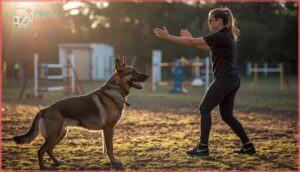
Training a protective breed isn’t just about teaching commands—it’s about shaping a dog who knows when to protect and when to stay calm. Without the right foundation, even the most loyal guard dog can become unpredictable or overly aggressive.
Here’s what you need to focus on to raise a confident, well-balanced protector.
Importance of Early Socialization
Your puppy’s first few months aren’t just adorable—they’re make-or-break. The critical period between 3 and 14 weeks shapes your guard dog’s entire life, determining whether they’ll confidently assess real threats or react with fear-based aggression.
Proper puppy socialization during this window prevents behavioral problems that training can’t fix later, especially in powerful breeds bred for protective aggression. Miss it, and you’re fighting an uphill battle.
Miss that early socialization window in protective breeds, and you’re stuck fighting behavioral problems no amount of training can reverse
Obedience Training Techniques
Build your guard dog’s foundation with positive reinforcement—dogs trained this way learn commands faster and show fewer stress signals than those trained with punishment. Reward-based methods strengthen the bond between you and your protector while teaching reliable obedience:
- Use clicker training to mark precise moments of correct canine behavior
- Reward compliance immediately with treats, praise, or play
- Practice basic commands daily in varied environments
- Avoid physical corrections that trigger fear-based responses
- Keep sessions short, consistent, and engaging for better retention
Research shows reward-focused behavioral modification creates confident, responsive guard dog breeds without compromising their protective instincts.
Advanced Protection Training
When your protection dog has mastered expert obedience, scenario training takes them into real-world simulations—low-light building searches, vigorous confrontations, and controlled bite force training that mirrors actual threats.
Military working dogs log four hours weekly in patrol drills to maintain 90–95 percent proficiency, and tactical integration with protection sports like PSA certifies your canine security partner can engage and release on command under pressure.
Role of Experienced Handlers
Think of a protection dog as a high-performance machine—it’s only as reliable as the person behind the wheel. Handler training methods determine whether your guard dog breeds channel their power appropriately or become a liability. Military working dog handlers sustain bite injury rates over 20 times higher than other personnel, proving that even professionals face serious risks without sharp skills.
Your experienced handler traits make all the difference:
- Reading body language: Half of dog-on-dog attacks involve owners who didn’t recognize escalating signals—subtle ear shifts or stiffening that forecast aggression before it erupts.
- Maintaining control under pressure: Only 21 percent of military dogs release on the first “out” command, showing how protection dog handling demands split-second handler decision making when adrenaline runs high.
- Using reward-based techniques: Teams that lean on appetitive methods outperform those relying on aversive corrections, strengthening the dog handler bond while achieving exceptional obedience and protection results.
When handlers increased punishment and reduced rewards between evaluations, performance dropped—proof that your approach directly shapes your dog’s reliability. Training a watchdog isn’t about dominance; it’s about finesse, timing, and understanding breed-specific traits so deeply you can anticipate your dog’s next move before they make it.
Dog training and socialization hinge on this expertise, transforming raw territorial instinct into disciplined, life-saving protection.
Consistency and Positive Reinforcement
Your guard dog breeds respond best when you pair clear expectations with genuine rewards—dogs trained with consistent obedience using positive reinforcement answered correctly 77% of the time on the first cue, compared to confused performance under mixed methods. Reward-based training builds behavioral stability while slashing stress behaviors up to 15-fold versus corrections.
| Training Method | Training Efficiency | Behavioral Stability |
|---|---|---|
| Reward-Based | 77% first-cue success | Low stress indicators |
| Electronic Collar | Higher repeated cues | Increased anxiety |
| Mixed Methods | Slowest acquisition | Unpredictable reactions |
| Clicker Training | 12 min per task | Strong retention |
| Food-Only | 27 min per task | Moderate consistency |
The importance of socialization paired with reward protocols transforms raw breed-specific traits into reliable protection. Training a watchdog demands this disciplined approach—inconsistent standards trigger anxiety and dangerous misreads. Dog training and socialization work only when you deliver the same message every single time.
Choosing The Right Protective Breed

Picking the right protective breed isn’t just about finding the toughest dog on the block—it’s about finding your perfect match. Your lifestyle, experience level, and home environment all play a role in determining which guardian will thrive alongside your family.
Let’s walk through the key factors you’ll want to keep in mind before bringing home your four-legged protector.
Assessing Family and Home Needs
Before you commit to a guard dog breed, take an honest inventory of your household dynamics—compatibility with children and other family members ranks highest in most selection decisions. Your space requirements, family lifestyle, financial constraints, and neighborhood regulations all shape which breed will thrive.
Consider these essentials for family safety and home security:
- Children’s ages and supervision capacity in your home
- Available square footage for large, active pet ownership
- Daily time for exercise and training commitments
- Insurance costs for powerful family protection breeds
Experience With Powerful Breeds
Your readiness for large, intimidating breeds matters more than ambition. First-time handlers managing powerful protection dogs face 2.4× higher aggression incidents than experienced owners—German Shepherd guardians, Belgian Malinois handlers, and other guard dog breeds demand sharp risk assessment skills. Breed management requires reading body language, rejecting aversive methods, and staying calm under social pressure.
| Novice Owner Risk | Experienced Handler Advantage |
|---|---|
| Higher aggression incidents | Skilled breed selection |
| Limited dog handling ability | Confident owner preparation |
Commitment to Training and Care
Protection breeds aren’t weekend hobbies. Your guard dog breeds demand 4–6 months of foundational proper training, then 10–15 minutes daily plus weekly hour-long sessions to maintain skills. Exercise needs hit 1–2 hours daily—miss it, and aggression spikes.
Training costs run $500–$3,000 for core programs, often more for specialized work. Owner expertise in socialization and Animal Care and Welfare isn’t optional; it’s your welfare responsibilities speaking.
Researching Breed Temperaments
Once you’ve committed to training, the next step is understanding Breed Temperament. Every Guard Dog Breed comes with its own set of Breed-Specific Traits and Genetic Factors that shape behavior.
Using tools like C-BARQ, you can compare Characteristics of Guard Dogs and spot patterns in Animal Behavior and Psychology—helping you match Training Methods to your family’s needs.
Consulting Professionals
Almost every owner of Guard Dogs finds Professional Guidance invaluable. Behavior Experts dig into Breeding and Genetics, tailoring Training Advice to your situation.
Expert Consultation can flag hidden medical issues and steer you toward the right Liability Insurance.
Whether you’re choosing among Guard Dog Breeds for Protection or refining Animal Training and Behavior, don’t underestimate the power of well-timed, professional input.
Responsibilities of Owning a Protective Breed
Owning a protective breed means stepping up to some serious responsibilities. There’s a lot more to think about than just their loyalty and muscle.
Here’s what you’ll need to keep in mind as you welcome one of these powerful dogs into your life.
Legal and Liability Considerations
Did you know owning a powerful guard dog can turn your home protection dream into a legal minefield? Strict Liability and Dog Bite Laws mean you could be held responsible for injuries—no matter your dog’s history.
Insurance Claims can skyrocket, especially for restricted Dog Breeds. Breed Restrictions and Owner Negligence raise the stakes for smart, responsible Pet Ownership.
Health and Veterinary Care
Owning a guardian breed means budgeting for serious Veterinary Costs. Large dogs face Chronic Conditions like hip dysplasia and bloat—expenses you can’t ignore.
- Preventive Care for giant breeds runs about $705 yearly, covering vaccines and parasite control
- Breed Screening and Health Testing help catch hereditary issues early, protecting your investment
- Hip dysplasia treatment alone can cost $500 to $7,000 per dog
Smart Pet Care and Animal Behavior knowledge keep your protector healthy and your family safe.
Proper Exercise and Mental Stimulation
Your protector’s mind and body demand more than a lap around the block. Guardian breeds need 90 to 180 minutes daily, combining Physical Conditioning and Mental Stimulation—think obstacle courses, scent games, and obedience drills. Under-exercised dogs show double the odds of compulsive behaviors.
Structured Daily Routines channel Intelligence and Athleticism into focus, not frustration, honoring their Breed-Specific Traits through proper training and Canine Enrichment that satisfies both Exercise Needs and Animal Behavior instincts.
Ongoing Socialization and Training
Your guardian’s education never graduates—it evolves. Protective breeds need 10-15 minute daily sessions reinforcing Obedience Techniques, plus intensive 30-60 minute workouts twice weekly to sharpen Behavioral Modification skills.
Socialization Techniques prevent the 10-60% fearfulness spike seen in under-exposed working dogs. Proper training through varied environments and controlled introductions maintains Canine Development, ensuring your protector distinguishes real threats from harmless strangers—a skill that demands lifelong commitment, not weekend enthusiasm.
Ensuring Safe Family Integration
Household Safety starts before your guardian breeds cross the threshold. The data’s sobering: 80-90% of pediatric bites happen at home with familiar family pets.
That’s why Dog Supervision isn’t optional—it’s mandatory during meals, rest periods, and child-dog interactions. Child Education programs boost knowledge, but Risk Assessment combined with baby gates, crates, and structured routines prevents the incidents that statistics warn about.
Family Dynamics depend on your vigilance, not your dog’s patience.
Frequently Asked Questions (FAQs)
Why Do You Need a Protection Dog?
You want peace of mind—whether it’s Personal Safety, Family Protection, or Home Security.
Security Dogs offer real Crime Deterrence, acting as living alarms for Home and Property Protection, Asset Guarding, and even Pet Protection when threats feel too close.
Is it safe to have a protection dog in your house?
Think of a protection dog like a double-edged sword—powerful for Home Safety and Pet Protection, but risky for Child Protection if training and Household Dynamics aren’t managed.
Dog Bite Risks rise with poor socialization and inconsistent Aggression Factors.
Is a Schnauzer a good dog for seniors?
Miniature Schnauzers can suit senior lifestyle needs with their manageable size and loyal temperament, but their daily exercise demands, grooming requirements, and potential health costs require careful consideration of aging owners’ physical capabilities and long-term pet care responsibility.
Why are protection dogs so expensive?
Protection dogs command premium prices—often $30,000 to $100,000—because of intensive training expenses, selective breeding fees, insurance premiums, and operational overheads that transform outstanding canine security candidates into reliable, family-safe guardians.
What are some cons of having big dogs?
Big dogs seem like ideal guard dogs, yet they come with higher costs, injury risks, space constraints, shorter lifespans, and training challenges that demand serious pet care and responsibility beyond typical breed-specific traits.
What factors account for the steep cost of protection dogs?
You’re looking at $20,000 to $60,000 for acquisition prices, driven by breeding costs, intensive guard dog training spanning years, veterinary expenses, and liability insurance—all reflecting the specialized breed-specific traits and pet protection expertise required.
Why grooming requirements are an important factor while choosing a dog?
Grooming demands directly impact your time, budget, and your dog’s skin health. Coat maintenance prevents matting risks and infections—especially in breeds like German Shepherds or Belgian Malinois—while ongoing grooming costs shape realistic pet care and ownership decisions.
How long does it take to train a protection dog?
Most dogs need 3 to 12 months of dedicated work once formal training starts. However, full maturity and scenario proofing can extend the timeline to 2 years, depending on the protection skills required and breed characteristics.
How to evaluate the health of personal protection dog before buying?
Start with a thorough veterinary exam, including hip and elbow screening. Request genetic testing results, cardiac evaluations, and eye exams.
Verify documentation from reputable registries like OFA to guarantee your guardian breed’s long-term health and working capability.
What factors contribute to a dogs protective aggression instincts?
Picture a shepherd puppy watching its mother bark at strangers—that’s social learning in action.
A dog’s protective aggression stems from genetic predisposition, environmental triggers, hormonal influences, and breed-specific traits shaped by early experiences and brain chemistry.
Conclusion
The wrong protective aggression dog breed in unprepared hands can unravel a household faster than you’d believe—but the right match, backed by commitment and training, transforms into a bond nothing else can replicate.
These dogs don’t just guard your property; they read your energy, anticipate danger, and stand between you and harm without hesitation.
If you’re ready for the responsibility, the loyalty you’ll earn isn’t measured in years—it’s measured in unwavering devotion that lasts a lifetime.