This site is supported by our readers. We may earn a commission, at no cost to you, if you purchase through links.
Your dog’s food bowl holds more power than you might realize. A quarter-cup difference—roughly 50 calories—can mean the gap between a lean companion and a dog carrying an extra 5 pounds by year’s end. That weight translates to measurable strain on joints, increased diabetes risk, and potentially two fewer years of life.
Portion control for dogs isn’t about restriction; it’s about precision control. Most owners eyeball portions or follow bag guidelines designed for average dogs, not their dog. The result? Over 56% of dogs in the United States are overweight or obese.
Getting portions right requires understanding your dog’s specific calorie needs, measuring accurately, and adjusting as their body changes—skills that protect their health at every life stage.
Table Of Contents
Key Takeaways
- A quarter-cup difference in food—roughly 50 calories—can add 5 pounds to your dog within a year, directly impacting joint health, diabetes risk, and potentially shortening their lifespan by two years.
- Proper portion control requires calculating your dog’s specific calorie needs based on age, breed, size, activity level, and health conditions rather than relying on generic bag guidelines designed for average dogs.
- Measuring food with a digital scale provides accuracy within grams, eliminating the 5% variation in measuring cups and preventing the gradual weight gain that affects over 56% of dogs in the United States.
- Treats should account for no more than 10% of your dog’s daily calories, with those calories subtracted from main meals to maintain the calorie budget that protects against obesity and related diseases.
Why Portion Control is Essential for Dogs
Every meal you serve your dog shapes their future health and energy, levels, and how many good years you’ll share together.
That’s why understanding what foods are safe for dogs helps you make confident choices that protect their wellbeing.
Every meal you serve shapes your dog’s future health, energy, and how many good years you’ll share together
Getting portion sizes right isn’t just about keeping your dog at a healthy weight—it directly influences their risk for disease, their daily comfort, and their overall quality of life.
Here’s what proper portion control can do for your dog’s health and longevity.
Health Benefits of Proper Portion Control
Proper portion control keeps your dog at a healthy weight, preventing joint stress and metabolic strain. You’ll see steady energy levels throughout the day and better nutrient balance—less excess fat, more vitamins where they matter.
Disease prevention improves as you reduce diabetes and heart disease risks. Over time, portion control promotes longevity gains, adding quality years to your dog’s life while protecting canine health at every stage.
Practicing portion control can also promote balanced nutrition and digestion, which are essential for your dog’s overall well-being.
Risks of Overfeeding and Obesity
When you overfeed, your dog’s body fat rises within weeks, straining joints and fueling obesity effects that shorten lifespan. Extra weight drives insulin resistance, raising diabetes risk, and burdens the heart with higher blood pressure.
Overfeeding consequences include inflammatory compounds from fat tissue, worsening mobility and canine health. Effective weight management through portion control protects against these health risks and promotes long-term pet wellness.
Obesity is a major risk factor for serious pet health problems, including diabetes and heart disease in dogs.
Impact on Lifespan and Quality of Life
Weight management through portion control adds two to three years to your dog’s life by preventing diabetes, heart disease, and joint wear.
Normal-weight dogs stay active longer, recover faster from illness, and experience fewer respiratory and dental issues.
Controlled portions lower inflammation, support muscle strength, and reduce food-seeking anxiety—translating to healthier aging, disease prevention, and quality living your dog deserves throughout their entire lifespan.
Key Factors Influencing Dog Food Portions

Your dog’s food needs aren’t one-size-fits-all. Several factors determine how much you should feed, and getting these right makes the difference between a healthy weight and gradual weight gain.
Let’s look at what influences your dog’s daily portions.
Age and Life Stage Considerations
Your dog’s calorie demands shift dramatically across life stages, making age-related diseases and obesity preventable through smart Life Stage Feeding. Here’s how to adjust portions by dog age:
Pairing proper portions with targeted exercises like those in building lean muscle for active dogs helps maintain ideal weight and strength as your dog matures.
- Puppies (0–1 year): Feed 3–4 meals daily; monitor growth every 2–4 weeks to prevent joint stress from overnutrition.
- Adolescents (1–3 years): Stabilize portions as energy needs plateau; track dog weight monthly.
- Adults (1–7 years, varies by dog breed): Maintain steady portions; highly active dogs need 20% more calories than sedentary peers.
- Seniors (7+ years): Reduce calories by 10–20% as metabolism slows; emphasize easily digestible Puppy Nutrition principles adapted for aging.
- Geriatric dogs: Customize portions for chronic conditions; rotate flavors if appetite fluctuates.
Consult your feeding guide and veterinarian to fine-tune portions as your dog size and health evolve through each stage.
Breed, Size, and Body Type Differences
Your dog’s skeletal structure, muscle mass, and breed-specific metabolism reshape portion control far beyond simple dog weight tables. Size Related Feeding demands precision: toy breeds need higher calories per pound due to faster metabolism, while giant breeds require carefully measured portions to prevent joint strain during growth. Body Type Variations matter—stocky bulldogs carry muscle differently than lean greyhounds of identical dog weight.
| Breed Category | Calorie Needs per Pound | Key Feeding Consideration |
|---|---|---|
| Toy breeds ( 90 lbs) | 20–25 calories | Slower metabolism; monitor joint health closely |
| Athletic/working breeds | 30–40+ calories | Adjust for high lean Muscle Mass Factors |
Breed Specific Needs extend to body shape: brachycephalic dogs (pugs, bulldogs) store facial and organ fat invisibly, while deep-chested breeds accumulate internal fat before you notice external changes. Skeletal Structure Differences in short-legged breeds like dachshunds alter energy use compared to long-legged hounds. Always cross-reference your feeding guide with your dog’s actual body condition rather than relying solely on dog breed averages—a muscular boxer needs different portions than a sedentary one at the same dog size.
Activity Level and Lifestyle
Activity Tracking reveals how daily exercise transforms caloric needs—a dog who jogs 90 minutes burns 25 to 35 percent more calories than one with light walks.
Urban Mobility often limits energy profiles to sidewalk strolls, requiring tighter portion control than pet friendly rural settings offer. Match your dog’s weight management to actual activity: sedentary routines need fewer calories, while vigorous exercise demands increased portions for ideal dog health and wellness.
Health Conditions and Special Needs
Chronic disease shifts your dog’s calorie equation—diabetes demands precise portions timed with insulin, while kidney conditions often require special diets lower in protein.
Food allergies and sensory issues may limit ingredient choices, making medical nutrition essential for both safety and weight management. Canine nutrition planning becomes a partnership between you and your veterinarian, balancing obesity prevention with therapeutic goals that support long-term pet nutrition and diet success.
How to Calculate Your Dog’s Daily Food Needs
Getting the math right on your dog’s food portions doesn’t have to be complicated. The key is understanding how to work with calorie calculators, factor in those extra treats, and know when you need professional input.
Let’s walk through the three main steps that’ll help you dial in the exact amount your dog needs each day.
Using Body Weight and Calorie Calculators

A calorie calculator translates your dog’s body weight and activity level into a daily energy target—your foundation for portion control and weight management. These tools use equations similar to Mifflin St Jeor to estimate basal metabolic rate, then adjust for lifestyle to produce a maintenance calorie range that guides feeding strategies and nutrient balance.
- Input current weight in pounds or kilograms with automatic conversion
- Select activity from sedentary to highly active to reflect daily exercise
- Receive a maintenance calorie target plus protein and fat macros
- Translate caloric needs into portions using your food’s calories per cup
- Update weight regularly to keep portion sizing aligned with energy requirements
Adjusting Portions for Treats and Extras
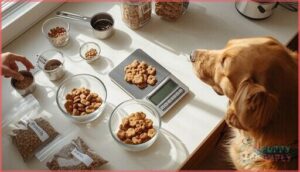
Every treat you give shrinks your dog’s meal bowl—most dogs should receive no more than 10 percent of total daily calories from snacks to maintain balanced nutrition.
Use a digital kitchen scale and weigh rewards, then subtract those calories from your dog’s main feeding portions. Pre-measure treats into daily bags so you can track your calorie budget and prevent overfeeding while keeping your reward systems effective.
Consulting Your Veterinarian for Guidance
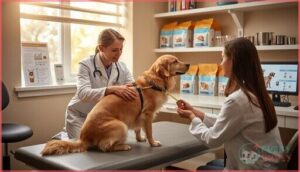
Your veterinarian translates complex pet nutrition into a clear care plan customized to your dog’s age, breed, and health history. They’ll calibrate portion sizes using diagnostic tools, integrate treats into your calorie budget, and provide written feeding schedules you can follow at home.
Ongoing vet communication ensures you adjust portions as your dog’s needs change, preventing guesswork and keeping health consults productive.
Setting Up a Consistent Feeding Routine

Once you’ve calculated your dog’s daily calorie needs, the next step is establishing a feeding routine that complements those numbers. A consistent schedule prevents overfeeding, helps your dog’s digestion, and makes portion control much easier to maintain long-term.
Here’s how to set up a feeding routine that works for your dog’s age, size, and lifestyle.
Choosing Meal Frequency by Age and Breed
Your dog’s age and breed determine how many times you should fill that bowl each day. Puppies under one year need three to four meals daily to fuel rapid growth, while most adult dogs do well on two meals spaced 8 to 12 hours apart.
Follow these age-based feeding schedules:
- Puppies (0–12 months): Feed three to four meals per day to support canine development and prevent blood sugar drops.
- Adult dogs (1–7 years): Provide two meals daily for steady energy and ideal digestion.
- Senior dogs (7+ years): Maintain two meals to support consistent metabolism and prevent hunger between feedings.
- Toy breeds (all ages): Offer two to three smaller meals to match high metabolism and avoid hypoglycemia.
- Large and giant breeds: Stick to two meals daily, spaced evenly, to reduce digestive stress and bloat risk.
Shift gradually over several weeks when changing your feeding schedule. This helps your dog’s digestive system adjust without stomach upset while maintaining appetite consistency throughout each life stage.
Measuring Food Accurately (cups Vs. Scales)
Once you’ve picked a schedule, accuracy in how you measure becomes equally important. A digital scale provides weight measurement importance that measuring cups simply can’t match—cups vary by up to 5 percent across brands, and kibble density differs widely.
Kitchen scales eliminate measuring cup errors by tracking grams directly, ensuring each portion matches your dog’s calculated calorie needs for proper portion control.
| Method | Key Advantage |
|---|---|
| Measuring Cups | Fast, convenient for casual feeding |
| Food Scale Accuracy | Precise grams align with label calories |
| Cups (Pitfall) | Density shifts cause portion control tips failures |
| Digital Scale Benefits | Tare function, repeatable measured meals |
Creating and Maintaining a Feeding Schedule
After you measure accurately, you need a feeding schedule that locks in those portion sizes. Most adult dogs thrive on two meals per day spaced 8 to 12 hours apart—this meal timing steadies their digestion and curbs begging.
To build your feeding guide around portion control and your dog’s dietary needs:
- Pick consistent times you can honor daily.
- Adjust feeding frequency for puppies or seniors.
- Review your feeding chart monthly to maintain nutrient balance.
Managing Treat Intake Within Daily Calories
Once your schedule is set, your treat strategy deserves the same precision. Reserve no more than 10 percent of daily calorie needs for treats—subtract those calories from meals to maintain portion control. Use healthy snacks like baby carrots or break training rewards into mini pieces.
Track every bite in your treat budget, and weigh portions when calorie tracking matters most.
| Treat Type | Calories per Serving |
|---|---|
| Baby carrots (3 pieces) | 5–10 kcal |
| Green beans (5 pieces) | 10–15 kcal |
| Commercial training treat (1 piece) | 3–8 kcal |
| Dental chew (small) | 15–25 kcal |
Monitoring Progress and Adjusting Portions

Once you’ve established a feeding routine, the real work begins with consistent monitoring. Your dog’s weight and body condition will tell you whether your portions are on track or need fine-tuning.
Here’s how to stay on top of progress and make smart adjustments when needed.
Tracking Weight and Body Condition Score
You can’t manage what you don’t measure, so weigh your dog one to two times per month to track weight loss or weight gain trends.
Pair that data with a body condition score assessment, checking ribs, waist, and abdomen tuck weekly. This dual approach to weight monitoring and health tracking ensures your feeding strategies support healthy weight and effective canine weight management.
Signs Your Dog’s Portions Need Adjustment
Your dog’s body signals tell you when portions need recalibration. Watch for rapid gobbling followed by relentless begging, visible ribs with muscle loss, or sudden lethargy after meals—all signs that caloric needs aren’t matched.
Conversely, firm stools with low volume, constant pacing before feeding, or a persistently tucked abdomen suggest underfeeding. These eating habits and energy levels guide effective dog weight management better than any feeding chart alone.
Keeping a Food Diary for Accuracy
Tracking your dog’s intake sharpens Portion Control and exposes patterns a feeding chart alone won’t reveal. Meal Tracking clarifies dietary needs and guides smart adjustments.
- Record exact dog food brands, amounts in grams or cups, and feeding schedule times
- Log all treats, table scraps, and extras to reflect true Calorie Monitoring
- Note hunger cues, energy shifts, and stool quality alongside Portion Sizes
- Review weekly to spot trends and fine-tune Feeding Records with your vet
When to Seek Veterinary Advice for Changes
Certain Vet Visit Signs demand immediate veterinary care—they’re Health Alerts your dog can’t voice. Sudden changes like unexplained weight loss or appetite drops within 24 hours, persistent vomiting or diarrhea, lethargy lasting a full day, new lumps, or blood in urine signal a Pet Emergency.
Don’t wait. Your veterinarian provides the veterinary guidance needed to rule out illness and protect your dog’s health.
Frequently Asked Questions (FAQs)
Can I free-feed my dog instead of portioning?
Picture a buffet open twenty-four seven—most dogs won’t stop at one plate.
Free feeding works only for self-regulating dogs, but controlled feeding prevents obesity and aids training, making scheduled portions the safer choice.
How do I handle multiple dogs with different needs?
Separate each dog at mealtime using barrier gates or closed doors, then calculate individual portions based on weight, age, and activity level.
Use distinct bowls and feeding charts to prevent cross-feeding in multi-dog households.
What if my dog always acts hungry after meals?
Dogs showing constant hunger after meals may signal low protein diets, digestive issues, or parasites affecting nutrient absorption.
Evaluate food quality, check for medical causes, and monitor hunger cues versus attention-seeking behaviors.
Should I adjust portions during seasonal temperature changes?
You should review portions monthly as seasons change. Cold weather may raise caloric needs slightly, while hot weather can reduce activity and energy burn, affecting your dog’s weight management and feeding chart accuracy.
How do I transition between different dog food brands?
Switching dog food is like changing the tune—blend brands gradually over seven to ten days. Start with 25 percent new food, then 50-50, finishing at 100 percent to protect digestive health.
Conclusion
A few extra pounds on your dog might seem harmless—until you measure the cost in joint pain, medication, and years lost. Portion control for dogs transforms that quarter-cup guesswork into measurable protection.
Weigh the food. Track the changes. Adjust as needed. Your dog can’t advocate for their own health, but you can. The scale, the measuring cup, and your consistent attention become the tools that add quality years to their life.