This site is supported by our readers. We may earn a commission, at no cost to you, if you purchase through links.
Imagine petting your dog and never finding a tumbleweed of fur stuck to your clothes or lurking under the couch.
That’s the promise of non-shedding breeds—yet the story behind their health is more complex than a spotless floor.
These dogs might spare your vacuum, but their unique coats demand a different kind of care, from regular grooming to monitoring skin health.
Understanding non-shedding dog health means looking beyond the surface, so you can spot subtle signs of trouble and keep your companion thriving.
Whether you share your home with a curly-coated poodle or a silky schnauzer, the details matter more than you think.
Table Of Contents
Key Takeaways
- Non-shedding dog breeds still produce allergens like dander and saliva, so they aren’t completely hypoallergenic.
- Regular grooming and coat care are essential to prevent matting, skin infections, and overheating in these dogs.
- Many non-shedding breeds face breed-specific health risks, including dental disease, joint problems, and genetic conditions.
- Balanced diet, exercise, and routine veterinary checkups help your non-shedding dog stay healthy and comfortable.
What Does Non-Shedding Dog Health Mean?
If you’ve ever wondered what makes a dog “non-shedding,” you’re not alone.
For a closer look at how even so-called non-shedding breeds lose their puppy coats, check out this guide on when Yorkies shed their puppy coat and what to expect.
Understanding these breeds goes beyond just fur on your couch—it’s about their health and unique needs. Let’s look at what sets them apart and what you should know.
Defining Non-Shedding and Hypoallergenic
Even though nonshedding dog breeds are often labeled hypoallergenic, it’s a bit of a hypoallergenic misnomer. These dogs still produce allergen protein sources—mainly dander and saliva.
Their unique coat structure types and longer hair growth phases help trap loose hairs, reducing seasonal dander variability.
For allergy sufferers, this means a lower risk, not zero, and easier, low‑maintenance care. While all dogs shed to some degree, non-shedding breeds shed minimally, making it barely noticeable.
Common Misconceptions About Shedding and Health
You might hear all sorts of myths about nonshedding dog breeds and their health. For instance, folks often mix up allergy source myth with coat type, thinking hair is the culprit. Here’s what matters:
- Shaving harm myth—shaving isn’t a fix and can cause skin trouble
- Grooming frequency myth—skipping brushing invites matting risk
- Low‑shed health myth—less shedding doesn’t mean healthier
- Hypoallergenic dogs still need regular care
Even hypoallergenic dogs still produce allergens can trigger reactions.
How Coat Type Relates to Canine Wellness
It’s easy to overlook how dog coat types shape health and comfort. For nonshedding and hypoallergenic dog breeds, dense coats act like a winter jacket—offering insulation but risking overheating and trapping moisture.
That’s why regular dog grooming and maintenance matter. Matting impact mobility, seasonal temperature sensitivity, and skin microbiome balance all hinge on coat density, insulation, and thoughtful dog health and care routines.
Common Health Issues in Non-Shedding Breeds
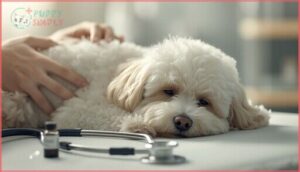
Even though non-shedding dogs are known for their unique coats, they still face a few common health challenges. It’s helpful to know what issues might come up so you can keep your pup feeling their best.
For tips on maintaining their coat and spotting early skin issues, check out this helpful guide on dog grooming routines with teeth brushing.
Here are some of the main concerns to watch for in these breeds.
Skin and Coat Disorders
Have you ever wondered why nonshedding dog breeds—those prized for being hypoallergenic—need such careful dog grooming and maintenance? Their unique dog coat types trap moisture, leading to Seborrhea Management challenges, Malassezia Dermatitis, and Bacterial Pyoderma.
Matting Complications can cause painful sores, while Endocrine Skin Issues make their coats dull and brittle. Regular care keeps your companion comfortable and healthy.
Allergies and Sensitivities
While hypoallergenic dog breeds are often chosen as low‑maintenance pets for allergy sufferers, nonshedding dog breeds can still face health hurdles like Environmental Triggers, Food Allergies, Contact Dermatitis, and Flea Allergy.
Managing dog allergies and solutions means understanding how pollen, grooming products, and diet impact your companion—and practicing Human Allergen Management to keep your home comfortable for everyone.
Genetic Predispositions in Popular Breeds
Every popular dog breed has its secrets, and nonshedding dog breeds are no exception. For example, you’ll want to watch for:
- Poodle Genetic Risks like Addison’s disease and eye conditions
- Bichon Bladder Stones causing urinary trouble
- Havanese Developmental Issues affecting bones and organs
- PWD Eye Syndrome and Wheaten Protein Loss, both requiring vigilant, lifelong care
Grooming and Maintenance for Optimal Health
Keeping your non-shedding dog healthy starts with good grooming habits.
There are a few key routines that make all the difference for their coat and skin.
Let’s walk through what matters most for their daily care.
Importance of Regular Grooming
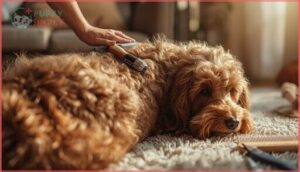
Have you noticed how a quick brush can turn a dull coat into a glossy masterpiece? Regular grooming for nonshedding dog breeds isn’t just about looks—it boosts blood circulation, enhances coat shine, and distributes skin oils.
You’ll spot parasites and catch allergies early, keeping your dog healthy.
These practical dog grooming tips make all the difference in dog health.
Bathing Frequency and Coat Care

Did you know dog’s coat needs a bath schedule as unique as their personality? For non‑shedding breeds, sticking to Coat‑Specific Intervals keeps skin pH balance in check and prevents irritation. Choose Allergy‑Friendly Shampoo and finish with Post‑Bath Conditioning for best shine.
Seasonal Bathing Adjustments help too—think less in winter, more after muddy spring adventures.
- Use lukewarm water for comfort
- Moisturizing formulas boost curly coats
- Gentle towel blotting preserves coat texture
Preventing Matting and Skin Problems
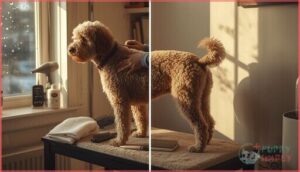
Matting sneaks up on nonshedding dogs like weeds in a garden—unless you use Targeted Brushing and smart Tool Selection daily. Moisture Management behind the ears and under legs prevents skin flare-ups. Seasonal Coat Care keeps things balanced, while an Allergy-Reducing Environment makes regular grooming easier. Think of dog grooming as weaving healthy habits into your routine for a resilient, beautiful coat.
| Prevention Step | Practical Tip |
|---|---|
| Targeted Brushing | Focus behind ears, legs |
| Moisture Management | Dry after walks |
| Tool Selection | Pin brush, slicker, rake |
| Seasonal Coat Care | Adjust grooming frequency |
| Allergy-Reducing Environment | Use pet-safe cleaners |
Choosing a Healthy Non-Shedding Dog
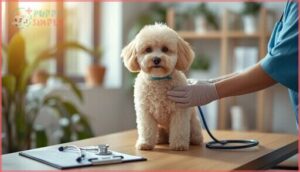
Picking a healthy non-shedding dog starts with knowing what to look for in each breed.
Every pup has its own strengths and quirks that matter for long-term wellness.
Here’s what you’ll want to keep in mind as you explore your options.
Breed-Specific Health Considerations
Choosing a nonshedding dog breed for allergies isn’t just about fur—health matters, too.
For instance, Standard Poodles and Portuguese Water Dogs face Hip Dysplasia, while Bichon Frise and Maltese battle Dental Health and skin allergies.
If you’re eyeing hypoallergenic dog breeds, watch for breed-specific quirks:
- Eye Diseases in Poodles and Terriers
- Cardiovascular Risks in Portuguese Water Dogs
- Gastrointestinal Issues in Schnauzers and Wheaten Terriers
Dog breed health shapes grooming needs and temperament.
Signs of a Healthy Non-Shedding Puppy
After weighing breed quirks, spotting a healthy non-shedding puppy brings peace of mind. You’ll see bright eyes, clean ears, and pink gums—each a sign of good circulation and comfort. Their silky coat feels full, with minimal shedding, and their energetic play shows a calm temperament. Regular grooming keeps these healthy dog breeds thriving.
A healthy non-shedding puppy shines with bright eyes, a silky, low-shedding coat, and playful calmness, thriving through regular grooming
If you’re exploring nonshedding dog options, check for these traits:
| Bright Eyes | Silky Coat | Energetic Play |
|---|---|---|
| Clean Ears | Pink Gums | Calm Temperament |
| Minimal Shedding | Regular Grooming | Healthy Dog Breed |
| Soft Fur | Steady Appetite | Smooth Walk |
| Confident Explore | Relaxed Rest | Gentle Response |
Tips for Keeping Non-Shedding Dogs Healthy

Keeping your non-shedding dog healthy takes a bit of know-how and daily attention.
There are a few key areas you’ll want to focus on to give your pup the best care.
Let’s walk through what matters most for their well-being.
Nutrition and Diet Recommendations
Feeding your non-shedding dog well is one of the simplest acts of care you can give. Here’s what truly matters for coat and skin health:
- Fatty Acid Balance – Omega-3s from salmon or flaxseed hydrate skin and reduce inflammation.
- Protein Needs – Aim for 25–30% protein to support keratin production.
- Mineral Support – Zinc and copper keep coats vibrant and skin resilient.
- Biotin Benefits – Eggs and liver strengthen curly or silky fur naturally.
For allergy-prone hypoallergenic breeds, a Single Protein Food like venison or turkey removes common triggers while supporting dog health beautifully.
Exercise and Mental Stimulation
After nourishing your hypoallergenic dog, daily walk variations and terrain hikes keep their mind sharp and joints limber.
Sniff exploration breaks and puzzle feeding games help regulate stress, while interactive training sessions build confidence and improve dog temperament.
These routines support canine health and prevent boredom behaviors—think of them as weaving enrichment into your dog care, making every day a little brighter.
Routine Veterinary Care and Monitoring
Just as exercise keeps your non-shedding companion lively, routine veterinary care is the safety net for lasting canine health.
Annual Exams, Dental Checkups, and Blood Screening help spot canine health issues early—especially those tied to unique dog breed characteristics or canine allergies.
Weight Monitoring and Parasite Prevention round out your dog care routine, weaving peace of mind into every season together.
Frequently Asked Questions (FAQs)
What is the healthiest non-shedding dog?
If you ever wondered which nonshedding dog breeds for allergies would win an Olympic gold, Poodle Longevity and Basenji Vitality stand out.
Bichon Immune Strength, Wheaten Heart Health, and Portuguese Water Fitness all shine among the healthiest dog breeds.
How do non-shedding dogs handle extreme temperatures?
Non-shedding dog breeds rely on their coat microclimate for heat tolerance and cold insulation, but thick fur can trap heat or lose warmth.
Seasonal grooming and temperature acclimation help calm, low-maintenance, hypoallergenic breeds handle extreme weather safely.
Are non-shedding breeds prone to dental issues?
Ironically, those “low-maintenance” hypoallergenic coats often hide a hidden cost. Small breed risk is real — nonshedding dogs are up to five times more prone to dental disease than larger breeds.
Can non-shedding dogs develop joint problems?
Absolutely, hypoallergenic dogs can face joint issues like Hip Dysplasia Risk, Patellar Luxation, or Cruciate Ligament Tears.
Weight‑Related Joint Stress affects all breeds, so Orthopedic Screening Protocols and mindful dog maintenance matter, even for the Healthiest dog breeds.
What vaccinations are essential for non-shedding breeds?
All dogs, including those with non‑shedding coats, need core vaccines like DHPP and rabies—these are part of every Core Vaccine Schedule.
Lifestyle Vaccines, such as Bordetella, depend on your dog’s activities and risk factors.
How do non-shedding dogs react to environmental toxins?
Exposure to environmental toxins can trigger skin irritation, inhaled pollutants, and coat chemical buildup in hypoallergenic dogs.
Sensitive breeds may ingest toxins while grooming, leading to immune responses and health issues—making regular dog maintenance essential for the healthiest dog breeds.
Conclusion
Caring for a non‑shedding dog is like tending a secret garden—hidden beauty thrives with thoughtful attention. Beneath those tidy coats, health blooms when you notice subtle changes, choose the right tools, and listen to your pup’s cues.
Remember, non‑shedding dog health isn’t just about less fur; it’s about nurturing the whole dog, inside and out. With patience and regular care, your companion’s vibrant well‑being will shine brighter than any spotless rug or hair‑free sofa.
- https://www.pawgroom.ai/questions/doodle-coat-care-mat-prevention-and-grooming/
- https://www.akc.org/dog-breeds/hypoallergenic-dogs/
- https://usa.inquirer.net/120081/15-dog-breeds-that-dont-shed
- https://www.telavets.com/blog/hypoallergenic-non-shedding-dogs
- https://dccpets.in/pet-care-blog/oral-health-tips-for-brachycephalic-dogs