This site is supported by our readers. We may earn a commission, at no cost to you, if you purchase through links.

Your dog’s constant scratching might not be anxiety or bad behavior—it’s often a red flag pointing straight to their food bowl. Beef triggers allergic reactions in roughly 34% of dogs with food sensitivities, while dairy and chicken aren’t far behind at 17% and 15% respectively. These numbers tell us that commercial dog foods, packed with common proteins and fillers, frequently become the source of inflamed skin, hot spots, and relentless itching.
Switching to natural dog food for skin issues gives you a strategic advantage: novel proteins your dog hasn’t been exposed to, cleaner ingredient lists without hidden additives, and essential fatty acids that rebuild the skin barrier from the inside out. Understanding which ingredients heal and which ones harm can transform your dog’s comfort within weeks.
Table Of Contents
- Key Takeaways
- Causes of Skin Issues in Dogs
- Benefits of Natural Dog Food for Skin Health
- Key Ingredients for Healthy Skin and Coat
- Top 10 Natural Dog Foods for Skin Issues
- 1. Diamond Naturals Salmon Skin and Coat
- 2. Wellness Sensitive Skin Salmon Dog Food
- 3. Blue Buffalo Skin and Coat Salmon
- 4. Natural Balance Salmon and Oatmeal Food
- 5. Natural Balance Salmon and Sweet Potato
- 6. Diamond Naturals Salmon and Potato Recipe
- 7. Natural Balance Sweet Potato Venison Food
- 8. Purina One Sensitive Stomach Dog Food
- 9. Natural Balance Salmon Brown Rice Dog
- 10. Natural Balance Salmon Sensitive Stomach Food
- Choosing and Transitioning to Natural Dog Food
- Frequently Asked Questions (FAQs)
- Conclusion
Key Takeaways
- Beef, dairy, and chicken trigger roughly 80% of food-related skin allergies in dogs, which means switching to novel proteins like venison, duck, or salmon can dramatically reduce scratching and inflammation within four to eight weeks.
- Natural dog foods with balanced omega-3 and omega-6 fatty acids (ideally 5:1 to 10:1 ratios) rebuild the skin barrier from the inside out, cutting transepidermal water loss by up to 40% and reducing dermatitis severity in clinical trials.
- Up to 24% of dogs with chronic skin issues have food-related triggers rather than environmental allergies, so a properly executed elimination diet lasting six to twelve weeks helps you pinpoint exactly which ingredients are causing the problem.
- Gradual diet transitions over seven to ten days prevent digestive upset while allowing accurate tracking of skin improvements, and pairing the switch with veterinary guidance ensures you’re addressing medical causes rather than masking symptoms with food changes alone.
Causes of Skin Issues in Dogs
When your dog’s scratching more than usual or dealing with dry, flaky skin, you’re probably wondering what’s behind it. The truth is, skin issues stem from a variety of sources—some related to what’s in the food bowl, others tied to environmental factors or underlying health conditions.
Let’s look at the main culprits so you can better understand what might be affecting your dog’s comfort.
Common Allergens in Commercial Dog Food
Regarding commercial dog food, certain proteins trigger the vast majority of allergic reactions. Here are the top culprits:
- Beef causes about 34% of food allergies in affected dogs
- Dairy accounts for roughly 17% of reactions
- Chicken triggers approximately 15% of allergy symptoms
Together with wheat and lamb, these ingredients represent nearly 80% of documented food allergies in dogs. A recent study highlights beef as allergen, affecting over a third of dogs studied.
Dietary Triggers and Sensitivities
Food sensitivities extend beyond obvious allergens to include hidden ingredients and additives in dog food for skin allergies. Your dog’s breed predisposition, gut microbiome health, and ingredient intolerance all influence dietary sensitivities.
Studies show up to 24% of dogs with skin conditions have food-related triggers. That’s why elimination diets work so well—removing potential allergens helps identify specific dietary sensitivities causing your dog’s allergy symptoms.
Up to 24% of dogs with skin issues have food-related triggers, which is why elimination diets work so well
Sometimes websites experience issues, so users may need to find alternative website solutions.
Recognizing Symptoms of Skin Problems
Your dog’s skin issues show up in ways you can spot at home. Excessive scratching, redness or inflammation, and hair loss around the paws or belly often signal allergic reactions. Watch for secondary infections—oozing sores with foul odor mean bacteria or yeast have moved in.
Behavioral changes like restlessness or constant licking tell you the itchy skin and skin inflammation are affecting your dog’s comfort.
Benefits of Natural Dog Food for Skin Health

When you’re dealing with a dog who can’t stop scratching or has a coat that’s lost its shine, switching to natural dog food often makes a real difference. The right ingredients work from the inside out, addressing the root causes rather than just masking symptoms.
Here’s how natural diets support healthier skin and a better quality of life for your dog.
Reducing Allergen Exposure
When you switch your dog to a limited diet with novel ingredients or hydrolyzed proteins, you’re directly cutting exposure to common allergens like beef, chicken, and dairy—the usual suspects behind up to 80% of food-related skin reactions.
These formulas minimize cross-contamination risks and help allergy-prone dogs avoid triggers, with diet efficacy reaching 60–80% in controlled studies, often reducing the need for medications.
Providing Whole, Nutrient-Rich Ingredients
Unlike processed kibble, whole food diets deliver 90% protein digestibility and antioxidant delivery that targets dog skin health at the cellular level. Here’s what you gain:
- Enhanced nutrient bioavailability – Fresh ingredients preserve enzymes that support your dog’s skin microbiome and reduce skin inflammation
- Ideal fatty acid ratios – Unprocessed sources maintain the 5:1 balance essential for healthy skin
- Clinical adoption benefits – 78% of owners report visible improvements in their dog diet transitions
Supporting Skin Moisture and Barrier Function
When your dog’s skin loses moisture faster than it can replenish, you’re seeing transepidermal water loss in action. Natural diets with balanced omega-3s and omega-6 fatty acids help restore ceramide levels in the outer skin layer, strengthening the skin barrier against allergens.
Studies show flaxseed oil and fish-based supplements reduce TEWL by 40%, supporting healthy skin from within while lowering atopic dermatitis risks.
Customizing Diets for Individual Needs
Because every dog’s skin reacts differently to proteins, carbs, and additives, customizable dog food meals allow you to pinpoint exactly what triggers your dog’s symptoms.
Through ingredient tailoring and allergy identification, you’ll create limited-ingredient diets that address skin sensitivities in dogs.
Veterinary guidance helps you balance nutrients while symptom monitoring tracks progress, ensuring veterinary recommendations translate into real relief for your dog.
Key Ingredients for Healthy Skin and Coat
Your dog’s skin and coat health depends heavily on what goes into their bowl each day. Certain nutrients work together to strengthen the skin barrier, reduce inflammation, and support a glossy coat from the inside out.
Let’s look at the key ingredients that make the biggest difference for dogs with skin issues.
Novel Proteins and Limited Ingredients

When you’re up against persistent itching and skin flare-ups, choosing the right protein can make all the difference. Novel proteins—like venison, duck, or certain fish—work because your dog hasn’t been exposed to them before, reducing the chance of an allergic reaction. Here’s why they help:
- Lower protein allergenicity: Unfamiliar proteins mean your dog’s immune system hasn’t developed a reaction yet.
- Hydrolyzed proteins break down allergens: Processing proteins into tiny peptides removes most allergen triggers, though incomplete hydrolysis can still cause issues in some dogs.
- Limited ingredients simplify elimination diets: Fewer components make it easier to identify and avoid specific triggers during diagnostic trials.
Veterinary advice for dogs with food allergy causes often starts with these novel sources and limited-ingredient diets to manage skin issues effectively.
Omega-3 and Omega-6 Fatty Acids

Omega-3 and omega-6 essential fatty acids work like a repair crew for your dog’s skin, each playing a specific role. Omega-3 sources—especially fish oil rich in EPA and DHA—calm inflammation and restore the skin barrier, while omega-6 benefits include maintaining cell structure.
For dogs with dermatitis, aim for omega fatty acids ratios between 5:1 and 10:1, with dosing guidelines around 50–100 mg/kg daily of EPA plus DHA for meaningful improvement.
Antioxidants and Essential Vitamins

Your dog’s skin health depends on more than good fats—antioxidants like Vitamin E, Vitamin C, and Beta-Carotene shield cells from damage and support healing. Clinical outcomes show that Vitamin E supplementation can cut dermatitis severity nearly in half, while raising plasma levels of these nutrients strengthens immune defenses.
Vitamin A and Zinc round out the toolkit, keeping barrier function strong and inflammation low.
Carbohydrates and Digestive Support

While vitamins protect the surface, what your dog eats also shapes gut health—and gut health drives skin health. Fiber, prebiotics, and low-glycemic starches work behind the scenes to:
- Maintain ideal stool quality and regular bowel movements
- Support microbiome modulation with beneficial bacteria
- Reduce inflammatory reactions that trigger itching
Resistant starch and prebiotic fibers like FOS promote digestive comfort, which means fewer flare-ups and a calmer coat.
Top 10 Natural Dog Foods for Skin Issues
Now that you know which ingredients support skin health, you’re probably wondering which products actually deliver.
The following ten formulas combine high-quality proteins, essential fatty acids, and minimal allergen exposure in ways that address common skin issues. Each option has been selected based on ingredient transparency, nutrient profiles, and formulations designed to reduce skin sensitivities.
1. Diamond Naturals Salmon Skin and Coat
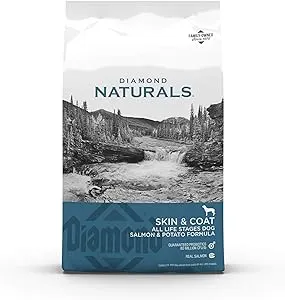
When you’re dealing with a dog who can’t stop scratching, real salmon as protein is beneficial. Diamond Naturals Salmon Skin and Coat delivers 25% crude protein with omega fatty acids—specifically 2.5% omega-6 and 0.4% omega-3s—that work beneath the surface to calm inflamed skin.
This grain-free formula uses potatoes and lentils instead of common allergens, while probiotic support (80,000,000 CFU/lb) aids digestion. It meets AAFCO compliance for all life stages, providing targeted nutrition for dogs with skin allergies.
Best For: Dogs with sensitive skin, allergies, or dull coats who need a grain-free, salmon-based formula with omega fatty acids and probiotics to support skin health and digestion.
- Real salmon as the first ingredient delivers 25% protein plus omega-3s and omega-6s that actively reduce itching and improve coat shine
- Grain-free recipe with potatoes and lentils avoids common allergens while 80 million CFU/lb of probiotics support gut health
- AAFCO-compliant for all life stages from puppies to seniors, including large breeds over 70 lbs
- Some dogs experience stomach upset or diarrhea during the transition period, especially if switched too quickly
- Higher price point can add up fast for households with large dogs or multiple pets
- A few picky eaters refuse the salmon flavor or find the pellet texture unappealing
2. Wellness Sensitive Skin Salmon Dog Food
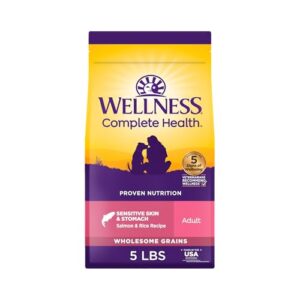
When inflammation meets the dinner bowl, Wellness Complete Health Sensitive Skin & Stomach offers a different angle. This salmon-first recipe provides 24% protein with quantified omega fatty acids—2.25% omega-6 and 1.0% omega-3—that target skin barrier resilience from within.
It excludes chicken, beef, and wheat, common culprits in food-triggered dermatitis, while rice and oatmeal support gentle digestion.
With 20,000,000 CFU/lb probiotics and prebiotic chicory root, it takes a gut-skin axis approach.
Before switching, consult your veterinarian to confirm this formula matches your dog’s specific sensitivities and nutritional requirements.
Best For: Dogs with sensitive skin or stomachs who need a limited-ingredient formula that avoids common allergens like chicken, beef, and wheat while supporting gut health and reducing inflammation.
- High omega-3 content (1.0%) from salmon and flaxseed helps calm skin inflammation and support a healthy coat
- Removes common allergens (chicken, beef, wheat) and includes 20 million CFU probiotics to address both skin issues and digestive sensitivity
- Salmon-first recipe with 24% protein provides quality nutrition without relying on poultry or red meat
- Higher price point compared to standard dog foods, which can add up for larger dogs or multi-dog households
- Some dogs may resist the switch initially or experience temporary digestive upset during the transition period
- Not suitable for dogs with fish allergies or those requiring grain-free diets due to rice, oatmeal, and barley content
3. Blue Buffalo Skin and Coat Salmon
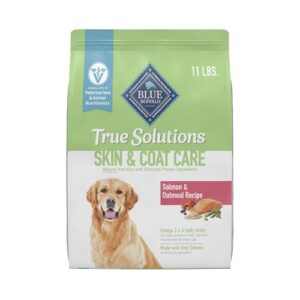
Blue Buffalo’s formula shifts the spotlight to deboned salmon as ingredient one, backed by clinically proven omega fatty acid ratios—omega-3 from fish oil and omega-6 from flaxseed—that target skin health and coat sheen. Consumer feedback documents fur regrowth and reduced itching within weeks, while clinical trials on hydrolyzed salmon diets showed measurable drops in dermatitis scores.
It excludes corn, wheat, and soy, and includes LifeSource Bits for antioxidant support.
With market performance reflecting strong parent brand growth, it’s worth discussing with your veterinarian for persistent skin allergies.
Best For: Adult dogs with skin allergies or coat issues who need a fish-based diet without common allergens like chicken, corn, wheat, or soy.
- Real salmon as the first ingredient with clinically proven omega-3 and omega-6 ratios that support healthier skin and shinier coats
- Excludes common irritants (corn, wheat, soy, poultry by-products) and includes LifeSource Bits for immune support
- Users report visible improvements like reduced itching, fur regrowth, and softer coats within a few weeks
- Higher price point compared to standard dog food formulas
- Mixed results—some dogs with persistent skin problems don’t see major improvements
- Not universally recommended by veterinarians, so consultation is important before switching
4. Natural Balance Salmon and Oatmeal Food
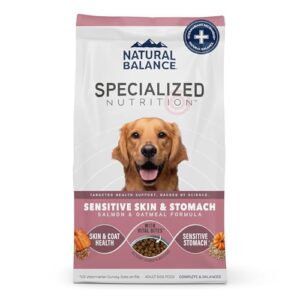
Natural Balance’s salmon-and-oatmeal recipe delivers 24% crude protein and marine EPA alongside DHA—omega-3 fatty acids clinically linked to reduced itching in allergic dermatitis. Oatmeal provides soluble fiber for digestive health, while pumpkin and live probiotics support the gut-skin axis.
Though the brand experienced Salmonella recalls in 2010 and 2012, no actions have targeted this specific formula. At 3,605 kcal/kg, it suits most adult dogs.
Before switching, review recall history with your veterinarian and monitor your dog’s skin response.
Best For: Adult dogs with itchy skin or sensitive stomachs who need a salmon-based diet with omega-3s and probiotics for coat and digestive support.
- Real salmon and salmon meal deliver marine omega-3s (EPA and DHA) that research links to less itching and healthier coats in dogs with skin issues.
- Oatmeal, pumpkin, and live probiotics work together to support digestion and gut health, especially helpful for dogs with upset stomachs.
- No corn, wheat, soy, or animal by-products, making it a cleaner option for dogs whose owners want to avoid common filler ingredients.
- The brand has had multiple Salmonella recalls in the past (2010, 2012), so even though this specific formula wasn’t affected, some owners may have trust concerns.
- Customer reviews show mixed results—some dogs see major improvements while others still struggle with skin or digestive issues, so it may not work for every sensitive dog.
- Higher price point compared to standard dog foods, which can add up for larger dogs or multi-dog households.
5. Natural Balance Salmon and Sweet Potato
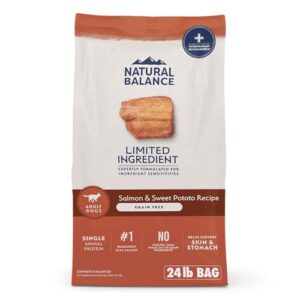
This grain-free formula lists salmon as its sole animal protein source, reducing the chance your dog will react to multiple meats. The recipe provides 0.5–1.0% omega-3 fatty acids from salmon oil and flaxseed, along with zinc and vitamin E for epidermal integrity. At 3,360 kcal/kg, it meets adult maintenance requirements.
Sweet potato fiber aids digestion—a factor veterinarians recognize as key to resolving some food-responsive skin issues.
Before you switch, confirm your dog’s skin concerns are dietary and check any recall history with your veterinarian.
Best For: Dogs with food sensitivities or skin allergies who need a simple, grain-free diet with one animal protein and proven omega fatty acid support.
- Single-protein salmon formula with 0.5–1.0% omega-3s helps reduce reactions and supports healthy skin and coat
- Sweet potato fiber aids digestion, which vets link to improving some food-related skin issues
- No corn, wheat, soy, or artificial additives—clean ingredient list for sensitive dogs
- Some owners report it’s pricey compared to multi-protein foods
- Mixed reviews on taste and smell—not every dog finds it appealing
- A few customers noticed kibble inconsistencies when ordering through certain retailers
6. Diamond Naturals Salmon and Potato Recipe
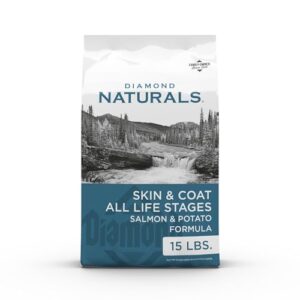
Diamond Naturals lists real salmon as the first ingredient, paired with potato carbohydrates for dogs sensitive to grains. You’ll find 2.5% omega-6 and 0.3% omega-3 fatty acids—important for skin barrier function—plus 150 mg/kg zinc to support epithelial repair.
At 3,600 kcal/kg, this formula delivers moderate energy without excess fat. Proprietary probiotics (80 million CFU per pound) improve digestibility, which can indirectly calm food-responsive dermatitis.
Before you feed any dog food for skin allergies, rule out environmental triggers with your veterinarian and switch gradually to monitor improvements.
Best For: Dogs with grain sensitivities or mild food-related skin issues who need a fish-based formula with targeted omega fatty acids and digestive support.
- Real salmon and fish meal deliver 2.5% omega-6 and 0.3% omega-3 fatty acids, plus 150 mg/kg zinc to nourish skin and coat from the inside out.
- Grain-free recipe uses potato and legumes instead of corn or wheat, making it easier on dogs with common grain intolerances.
- Contains 80 million CFU/lb of live probiotics to support gut health, which often ties directly to how well a dog’s skin responds to diet changes.
- Diamond Pet Foods had a significant Salmonella recall in 2012, which may concern owners even though current products are actively sold through major retailers.
- Some dogs experience gas or stomach upset during the switch, especially if you don’t transition slowly over 7–10 days.
- At roughly $2–3 per pound depending on bag size, long-term feeding can add up quickly for larger breeds or multi-dog households.
7. Natural Balance Sweet Potato Venison Food
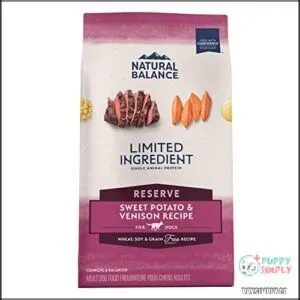
If your dog reacts to beef or chicken, ground venison offers a novel protein source that bypasses common triggers for skin allergies. Natural Balance pairs venison with sweet potato—a grain-free carbohydrate that delivers fiber for digestive support and helps stabilize blood sugar.
This limited ingredient diet minimizes allergen exposure, making it a solid choice for dogs with food-responsive dermatitis. User experience varies, but many owners report reduced scratching and improved coat texture within four to six weeks.
Always confirm vet-approved recipes and convert gradually to monitor skin sensitivity relief.
Best For: Dogs with beef or chicken allergies who need a novel protein source to calm skin irritation and reduce scratching.
- Single venison protein and grain-free sweet potato reduce common allergen exposure for sensitive dogs
- Omega fatty acids from salmon oil support healthier skin and shinier coat over time
- Limited ingredient formula makes it easier to identify triggers if reactions occur
- Some dogs don’t take to the taste or smell, making the transition difficult
- Higher price point compared to standard dog food brands
- Quality inconsistencies reported by customers, including kibble size variations and potential formula changes
8. Purina One Sensitive Stomach Dog Food
 View On Amazon
When your dog struggles with both digestive issues and skin allergies, Purina One Sensitive Stomach Dog Food addresses both concerns with real salmon as its first ingredient. The formula delivers 26% crude protein and 16% crude fat, while omega-6 fatty acids and vitamin E work together to support skin improvement.
You’ll find no artificial colors or preservatives, and the veterinarian-approved recipe includes natural glucosamine for joint health. Most owners report reduced itching and improved coat shine within weeks, making it a practical choice for dogs with sensitive digestion and reactive skin.
Best For: Dogs dealing with both sensitive stomachs and skin allergies who need a protein-rich formula that won’t trigger digestive upset or itching.
- Real salmon as the first ingredient provides high-quality protein while omega-6 fatty acids and vitamin E help reduce itching and improve coat shine
- Gentle on sensitive stomachs with easily digestible ingredients like rice flour and oat meal, plus no artificial colors or preservatives
- Includes natural glucosamine for joint support and four antioxidant sources to strengthen the immune system
- Contains by-products and grains, so it’s not suitable if you’re looking for a grain-free option
- Some dogs may refuse to eat it or experience diarrhea, so it might not work for every pet
- Amazon pricing can run up to 30% higher than other retailers, making it pricier than necessary
9. Natural Balance Salmon Brown Rice Dog
When your dog needs allergy relief without the guesswork, this formula offers a straightforward solution with salmon protein as the sole animal source and brown rice for digestive wellness. You’ll appreciate the omega balance—1.0% omega-3 and 2.5% omega-6 fatty acids—that targets skin issues while the limited ingredients approach helps identify triggers in sensitive stomachs.
The recipe includes prebiotic fiber and probiotics, promoting gut health that often reflects in improved coat quality. Most dogs show reduced scratching within four to six weeks on this veterinarian-recommended dog food.
Best For: Dogs with food sensitivities or allergies who need a single-protein formula that supports skin health and digestive wellness without common allergens like chicken, corn, or soy.
- Real salmon as the only animal protein makes it easier to pinpoint food triggers while delivering omega fatty acids for healthier skin and coat
- Prebiotic fiber and probiotic coating support gut health, which often helps reduce inflammation-related skin issues
- No artificial additives, poultry, or common fillers like corn and wheat, reducing exposure to typical allergens
- Some dogs may experience increased stool frequency initially as their system adjusts to the probiotics
- Limited to one animal protein source means less variety in amino acid profile compared to multi-protein formulas
- Calcium-to-phosphorus ratio of 1.33:1 isn’t ideal for owners seeking the optimal 1.2:1 balance for long-term bone health
10. Natural Balance Salmon Sensitive Stomach Food
If your veterinarian suspects food sensitivities are fueling both skin allergies and digestive upset, this dual-purpose salmon and oatmeal formula tackles both concerns at once. The salmon protein source delivers 0.08% EPA and 0.08% DHA—those omega-3 fatty acids that calm inflamed skin—while oatmeal as the carbohydrate source and added probiotics support gut health that often mirrors skin condition.
It meets AAFCO nutritional adequacy standards for adult maintenance and carries no recall safety history in this line, giving you confidence in your dog’s daily bowl.
Best For: Dogs dealing with both sensitive stomachs and itchy skin who need a single formula that addresses digestive issues and inflammation-driven allergies at the same time.
- Delivers measurable omega-3s (0.08% EPA and 0.08% DHA) from salmon to calm inflamed skin while oatmeal and probiotics support gut health
- Skips common trigger ingredients like corn, wheat, soy, and animal by-products that often worsen sensitivities
- Meets AAFCO standards for adult maintenance with no recall history in this salmon line, so you can feed it confidently long-term
- Premium pricing makes it less practical if you’re feeding multiple dogs or a large breed on a budget
- Won’t replace vet-prescribed treatments for severe allergies or medical-grade digestive issues
- Requires a gradual food transition to avoid upsetting your dog’s stomach during the switch
Choosing and Transitioning to Natural Dog Food

Picking the right natural dog food isn’t just about reading labels—it’s about matching ingredients to your dog’s specific skin needs and watching how their body responds. You can’t switch foods overnight without causing digestive upset, so a gradual shift protects both their stomach and their skin.
Let’s walk through how to choose wisely, make the change safely, and know when you’re seeing real improvement.
Identifying The Right Formula for Your Dog
How do you zero in on the formula your dog actually needs? Start by reviewing ingredient labels for limited ingredient dog food with novel proteins your dog hasn’t eaten before—duck, venison, or salmon often work well. Look for AAFCO standards on the label to confirm complete nutrition.
Schedule a vet consultation to discuss dog allergies and elimination diets, especially if your dog’s symptoms persist despite dog diet recommendations.
Gradual Diet Transition Steps
Once you’ve selected a vet-approved recipe, you’ll need to take the shift slowly. Mix 25% new dog food with 75% old for three to four days, then go 50‑50 for another three days, and gradually reach 100% over seven to ten days.
This adjustment duration lets your dog’s gut adjust, reducing loose stool and supporting accurate allergy assessment later. Adding probiotic inclusion can further ease the switch.
Monitoring Skin Improvements and Adjustments
After you’ve switched foods, record daily Pruritus scoring in owner diaries—zero means no itch, ten is severe. Diet trial length should run six to twelve weeks for reliable results, though some dogs show improvement within two to four weeks.
Track supplement tracking for omega-3s at one-month intervals, and watch for relapse detection signs like renewed scratching that signal you need to adjust the plan.
Consulting Your Veterinarian for Guidance
Before switching your dog’s food, schedule a vet consultation to rule out infections, parasites, or other medical issues that mimic food allergies.
Your veterinarian can guide allergy diagnosis through proper elimination diet trials, recommend ingredient safety standards, and make certain the new formula meets your dog’s nutritional needs—especially critical for allergy-prone dogs with chronic skin conditions requiring diet adjustments.
Frequently Asked Questions (FAQs)
Do natural dog foods really help with allergies?
Think of food as a detective clue, not a magic cure. Natural diets can help the 1–24% of dogs whose skin issues stem from dietary sensitivities, but environmental and flea allergies remain more common culprits.
How long until skin improvements become visible?
Most dogs begin showing initial pruritus relief within four to five weeks on a proper diet trial. Full remission timing usually occurs by eight weeks, though maximum coat and skin health benefits continue improving over three to six months with consistent feeding.
Are grain-free diets better for skin issues?
The short answer: grain-free isn’t a magic bullet for skin health. Ingredient quality and nutritional balance matter more than grain content.
Some dogs do better on grain-free formulas, but individual needs trump blanket rules.
What supplements boost homemade dog food effectiveness?
Marine omega-3 sources—fish oil, krill, or algae—reduce inflammation and improve barrier function. Vitamin E provides measurable antioxidant benefits, while probiotics show promise but lack strong evidence. Flaxseed oil offers plant-based essential fatty acids for coat support.
Can puppies eat natural food for skin?
Yes, when properly formulated. Research shows puppies fed minimally processed, balanced diets with appropriate fatty acid ratios between 2–18 months may develop fewer allergy and atopy-related skin symptoms in adulthood than those on ultra-processed food.
Conclusion
Like Hippocrates said, let food be thy medicine—and that wisdom extends to your dog’s dinner bowl. Choosing natural dog food for skin issues isn’t just about swapping brands; it’s about reading labels, identifying triggers, and watching your dog’s skin heal as inflammation subsides.
You’ve got the roadmap now: novel proteins, omega-rich formulas, and ingredient transparency. Your dog’s comfort depends on what you choose next, so make it count.
- https://pmc.ncbi.nlm.nih.gov/articles/PMC10874193/
- https://www.merckvetmanual.com/integumentary-system/food-allergy/cutaneous-food-allergy-in-animals
- https://pubmed.ncbi.nlm.nih.gov/19552700/
- https://www.bonza.dog/2025/06/hydrolysed-protein-dog-food-efficacy-risks/
- https://www.petmd.com/dog/nutrition/are-grain-free-diets-bad-for-dogs