This site is supported by our readers. We may earn a commission, at no cost to you, if you purchase through links.

About 10% of Americans are allergic to dogs, but that doesn’t mean you have to give up on the dream of having a furry companion. The real culprit isn’t dog hair itself—it’s the proteins found in dander, saliva, and urine that trigger those annoying sniffles and itchy eyes.
Low dander dog breeds produce fewer of these proteins and trap what they do make in their unique coat types, giving allergy sufferers a fighting chance at pet ownership. These breeds range from curly-coated poodles to nearly hairless Chinese Cresteds, each offering different personalities and care requirements.
Understanding which breeds work best for your lifestyle and learning how to manage allergens through grooming and home care can help you enjoy life with a dog without constantly reaching for the antihistamines.
Table Of Contents
- Key Takeaways
- Best Low Dander Dog Breeds for Allergies
- Key Traits of Low Dander Dog Breeds
- Grooming Tips to Reduce Dander
- Managing Allergies With Low Dander Dogs
- Top Products for Low Dander Dog Owners
- Frequently Asked Questions (FAQs)
- What dog breed has the least dander?
- What is the best dog to have when you have allergies?
- Are there any truly 100% non-shedding dogs?
- What is the best allergy dog?
- Can low dander dogs still trigger allergies?
- Do hypoallergenic dogs need special diets?
- Are mixed breed dogs ever low dander?
- How much do low dander breeds cost?
- Can allergy shots help with dog allergies?
- Conclusion
Key Takeaways
- Allergies stem from dog dander proteins, as well as saliva and urine, rather than fur itself, so breeds with curly or wiry coats that trap these proteins—like Poodles, Bichon Frises, and Portuguese Water Dogs—release fewer allergens into your home.
- No dog breed is truly hypoallergenic or 100% non-shedding since all dogs produce some dander through natural skin cell turnover, meaning even low-dander breeds can still trigger reactions in highly sensitive individuals.
- Consistent grooming routines, including brushing two to three times weekly and bathing every three to four weeks with hypoallergenic shampoo, can reduce surface allergens by up to 85% immediately after washing.
- Managing dog allergies requires a multi-layered approach combining breed selection, home modifications like HEPA air filtration and allergen-free zones, professional grooming every four to eight weeks, and consultation with allergists for personalized treatment plans.
Best Low Dander Dog Breeds for Allergies
If you’re dealing with allergies but still want a dog, certain breeds can make life much easier.
Many hypoallergenic options also appear on lists of the most expensive dog breeds, proving that size and allergy-friendliness don’t always mean budget-friendly.
These dogs have coats that trap dander instead of spreading it around your home, which means fewer sneezes and itchy eyes.
Let’s look at 18 breeds that produce less dander and might be the perfect match for your household.
Poodle (Toy, Miniature, Standard)

Poodles—toy, miniature, and standard—rank among the best hypoallergenic dogs because their curly coat traps loose hair instead of scattering it. You’ll find less dander on your floors when you brush weekly.
These low shedding breeds need mental stimulation and regular grooming every four to six weeks. Poodle training is easy thanks to their sharp intelligence, and proper dog nutrition promotes poodle health across all sizes.
Learn more about their unique coat characteristics and maintenance for ideal hypoallergenic benefits.
Bichon Frise

If you want a fluffy companion without the allergen storm, Bichon Frise dogs deliver. Their double coat traps loose hair, keeping dander off your furniture. These hypoallergenic dogs weigh 12 to 18 pounds and live 12 to 15 years with proper dog nutrition and pet insurance coverage.
Bichon Frise training is straightforward thanks to their eager-to-please canine behavior, and breed history shows they’ve charmed families for centuries as low shedding breeds.
To understand more about their adaptable nature and grooming needs, see this guide on Bichon Frise temperament and care.
Portuguese Water Dog
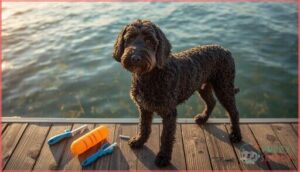
Portuguese Water Dogs rank high among low shedding dogs and hypoallergenic dogs for allergy friendly breeds. Their single layer coat sheds minimally, making them great for dog allergies.
You’ll need Portuguese Grooming every six to eight weeks and dog training sessions to channel their energy. These water dog care routines keep dog health tips in focus—expect an athletic companion who thrives on swimming and structured activity.
Maltese

If you crave a gentle lap dog with a silky, snow-white coat, Maltese might be your match. They’re classic low shedding dogs, making them a favorite among hypoallergenic dogs.
Daily brushing, balanced Maltese Nutrition, and routine Dog Training help manage Maltese Behavior and Canine Health.
- Minimal shedding
- No undercoat
- Regular grooming needed
- Pet Insurance recommended
Chinese Crested

Looking for a breed that barely sheds? Chinese Crested stands out among hypoallergenic dogs and dander-free dogs. These low-dander dog breeds come hairless or with a soft powderpuff coat, making Chinese Crested care surprisingly simple.
| Aspect | Details |
|---|---|
| Coat | Hairless or powderpuff |
| Shedding | Minimal to none |
| Grooming | Skin care or brushing |
| Temperament | Affectionate, sensitive |
Hairless grooming involves sunscreen and moisturizer, while Crested temperament thrives on gentle handling. Small breed health stays strong with dental care.
Xoloitzcuintli
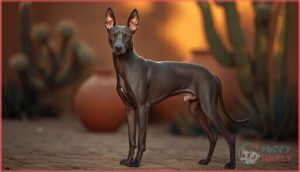
The Xoloitzcuintli—called Xolo for short—brings Mexican origins and ancient roots stretching back over 3,000 years. This hairless variety stands out among hypoallergenic dogs and low dander dog breeds, making Xolo care ideal for sensitive owners.
- Hairless or coated coat options reduce allergen spread
- Smooth skin needs regular moisturizing and sun protection
- Calm, loyal temperament bonds deeply with families
Non shedding dogs like these dander free dogs suit allergy-prone homes perfectly.
Spanish Water Dog
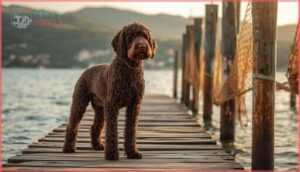
The Spanish Water Dog blends Spanish origins with centuries of water work, herding livestock across Iberian farms while helping fishermen haul nets. This medium-sized breed fits comfortably among hypoallergenic dog breeds and non-shedding dogs, offering dog breeds for allergy sufferers a devoted companion. Tight woolly curls trap dander instead of scattering it, though dog training and owner experience matter with this energetic working partner.
| Feature | Details | Allergy Benefit |
|---|---|---|
| Coat Type | Single-layer woolly curls | Traps loose hair and flakes |
| Shedding Level | Very low | Minimal airborne allergens |
| Grooming Needs | Clip 1-2 times yearly | Keeps dander manageable |
| Exercise Required | 1-2 hours daily | High energy, active homes |
| Temperament | Loyal, cautious with strangers | Bonds strongly with family |
Basenji

Ever met a dog that grooms itself like a cat? The Basenji stands out among low dander dog breeds for allergy sufferers, thanks to its short coat and minimal shedding.
This ancient breed’s square build and agile stride reflect its unique breed history. With proper Basenji training, balanced dog nutrition, and attention to pet wellness, allergy-prone owners enjoy fewer dog allergies.
Miniature Schnauzer

Have you noticed how a Miniature Schnauzer’s wiry double coat traps dander before it hits your floors? This breed’s low shedding and lively temperament make it a favorite among hypoallergenic dog breeds.
With smart dog training, balanced pet nutrition, and attention to canine health, Miniature Schnauzers offer allergy sufferers a sturdy companion rooted in a rich breed history.
Kerry Blue Terrier
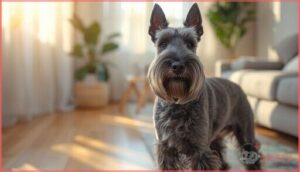
Did you know Kerry Blue Terriers start life jet black before their blue coats shine through? This breed’s wavy, low-shedding coat makes them one of the best low dander dog breeds for allergy sufferers.
With consistent Terrier Training and Blue Coat Care, you’ll enjoy affectionate Kerry Behavior and a playful companion rooted in Kerry Blue History. Don’t forget balanced Terrier Nutrition!
Irish Water Spaniel
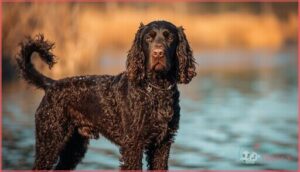
If you’re seeking low dander dog breeds, the Irish Water Spaniel stands out. Its tight, curly coat traps loose hair and dander, making Curly Coat Care a must for Dog Allergy Management.
Spaniel Training keeps their playful energy in check, while Water Retrieval showcases their athletic spirit. These hypoallergenic, lowshedding dog breeds suit allergy sufferers who love active, loyal companions.
Lagotto Romagnolo

The Lagotto Romagnolo is an Italian Breed known for Truffle Hunting and its woolly Curly Coat. This medium sized dog offers hypoallergenic dog breeds appeal with minimal shedding, making it one of the best dog breeds for allergies.
Lagotto Training and Dog Socialization help channel their playful energy, while regular grooming keeps dander low. If you want nonshedding dogs with charm and intelligence, the Lagotto Romagnolo delivers.
West Highland White Terrier
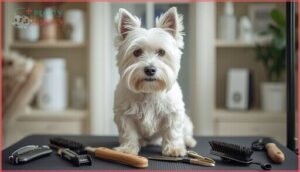
West Highland White Terriers, affectionately called Westies, stand out among hypoallergenic dog breeds with their dense, non-shedding white coats that trap loose hair and dander. These allergy friendly pets usually weigh 15 to 20 pounds and need regular brushing to maintain low shedding. Their confident terrier personality responds well to terrier training and dog socialization.
- Wiry double coat requires hand-stripping or clipping every 4 to 8 weeks
- Proper Westie nutrition promotes healthy skin and reduces allergen triggers
- Strong prey drive means secure yards are essential for safety
- Breed history as Scottish ratters gives them alert, vocal watchdog traits
- Pet insurance helps cover skin conditions common in the breed
Coton De Tulear

The Coton de Tulear brings a cotton-soft, continuously growing coat that sheds minimally and holds dander close to its fibers. These 8 to 15 pound companions from Madagascar fit perfectly into allergy-friendly pets’ households when you commit to regular Coton Care. Their playful, velcro-like personality pairs well with Tulear Training sessions, making them ideal hypoallergenic dog breeds for attentive owners.
| Trait | Details |
|---|---|
| Coat & Shedding | Hair-like texture; low shedding reduces visible allergens |
| Grooming Frequency | Brush 3-4 times weekly; monthly baths with gentle shampoo |
| Health & Lifespan | 14-19 years; monitor skin allergies with vet checkups |
Proper Dog Nutrition promotes skin health and minimizes triggers, while Pet Insurance covers common skin conditions. Their Breed History as Malagasy royal companions shaped their loyal, people-focused nature.
Havanese

Originally bred in Havana, the Havanese offers gentle charm wrapped in a long, silky coat that sheds very little. These low-shedding family pets trap loose hair and dander in their soft fibers, easing dog allergies for many owners.
Their eager-to-please temperament makes Havanese training rewarding, while their Cuban origins as velcro companions shine through hypoallergenic, affectionate behavior ideal for breeds for people with allergies.
Shih Tzu

This loyal lap dog brings minimal shedding to your home thanks to a hair-like double coat that traps loose strands instead of scattering them across your furniture. The Shih Tzu temperament blends affection with adaptability, making apartment living easy while their 10–18 year lifespan lets you enjoy long companionship. Regular grooming controls dander and keeps hypoallergenic dog breeds like this charming Chinese treasure comfortable despite health concerns tied to their flat face.
The following care tips can help maintain their health and happiness:
- Daily brushing prevents mats and removes trapped hair before dander spreads.
- Bathing every three to four weeks keeps their coat fresh and allergen levels low.
- Their small size and moderate energy suit indoor routines perfectly.
- Sociable nature makes them great with kids and other pets.
- Vocal watchdog tendencies may need gentle training in close quarters.
Yorkshire Terrier

You’ll love the silky single coat on this tiny terrier—it grows like human hair and rarely sheds, making Yorkshire Terrier care ideal for allergy-friendly dog breeds.
Their 4–7 pound frame releases less dander than larger dogs, while their bold personality and 13-plus year lifespan bring lasting companionship.
Regular brushing and puppy cuts keep their hypoallergenic, low-shedding coat manageable, though terrier training tips help curb their watchdog bark.
Cairn Terrier

This Scottish terrier sheds minimally and traps most loose hair in its weather-resistant double coat, making it one of the more allergy-friendly dog breeds if you brush weekly.
- Wiry topcoat reduces dander spread across floors and furniture
- Weekly brushing removes trapped undercoat and controls shedding
- Hand stripping maintains the hypoallergenic, low-shedding texture
- Terrier training channels their confident, independent nature
- Dog socialization prevents prey-drive reactions during walks
Key Traits of Low Dander Dog Breeds

Low dander dogs share a few common traits that make them easier on your allergies. Understanding these characteristics helps you choose the right breed for your lifestyle and health needs.
Let’s look at what sets these allergy-friendly companions apart.
Coat Type and Shedding Patterns
You’ll find that coat texture plays a huge role in how much fur ends up on your floors. Curly Coat Care for hypoallergenic breeds like Poodles and Bichons traps loose hairs instead of releasing them, while hairless breeds produce almost no shed at all.
Minimally shedding coats require consistent brushing, but the payoff in Dander Reduction makes low-shedding dogs worth every gentle stroke.
Dander Production and Allergen Levels
Even hypoallergenic dogs produce dander, but certain breeds create less of it. Your body reacts to proteins like Can f 1 found in saliva and skin flakes, not just fur.
Hypoallergenic dogs still produce dander—your body reacts to proteins in saliva and skin flakes, not fur
Allergen Testing helps identify specific sensitivities before you commit. Minimally shedding coats trap airborne allergens instead of scattering them, making Pet Allergy Management easier.
Canine Skin health matters too—dogs with flaky or irritated skin release more dander, so regular grooming helps Dander Reduction for allergy sufferers.
Size and Activity Considerations
Low dander breeds range from under 15 pounds for toy types like Maltese to 30 to 60 pounds for Portuguese Water Dogs.
Smaller hypoallergenic dog breeds for allergies fit apartments and need 20 to 40 minutes of light activity daily, while athletic low shedding dog breeds demand 60 to 90 minutes of brisk exercise.
Matching energy levels and space requirements to your daily routines prevents frustration and keeps both you and your pup happy.
Suitability for Families and Individuals
Once you’ve sorted size and energy, think about who’s in your home. Many hypoallergenic dog breeds for families bond closely with everyone, while some low-shedding companions prefer one or two people.
Consider these compatibility factors:
- Child Compatibility: Sturdy small breeds like Havanese suit older kids who enjoy gentle play.
- Senior Companionship: Calm Bichon Frise and Maltese fit quiet, indoor routines beautifully.
- Active Family Match: Portuguese Water Dogs thrive with children ready for outdoor adventures.
Allergy-friendly dog breeds for allergy sufferers vary widely in personality and lifestyle fit.
Grooming Tips to Reduce Dander

Even low dander dogs need consistent grooming to keep allergen levels down in your home.
The right techniques and tools make a real difference in how much dander ends up on your furniture and floors. Here’s what works best to minimize those allergy triggers while keeping your dog’s coat healthy.
Regular Brushing and Bathing
You’ll want to brush your low-shedding companion two to three times each week to trap loose hair and dander before it spreads through your home.
Bathing every three to four weeks with hypoallergenic shampoo cuts surface allergens by up to 85 percent right after washing. These simple grooming routines work together to minimize allergen buildup while keeping your dog’s coat healthy.
Trimming and Coat Maintenance
Regular grooming keeps allergen levels low, but trimming is just as important for hypoallergenic breeds. Most low-shedding dogs need professional coat trimming every four to six weeks to prevent mats that trap dander close to the skin.
- Curly coated breeds like Poodles require full body trims to stop allergen buildup
- Mat removal protects skin health and reduces flaking in non-shedding coat types
- Grooming schedules customized to coat type keep shedding control consistent
Recommended Grooming Tools and Techniques
The right grooming tools make dander control easier and more effective for hypoallergenic breeds. Slicker brushes work beautifully on curly or long coats by pulling out loose hair and skin flakes before they scatter around your home.
For low-shedding dogs with undercoats, gentle deshedding methods lift trapped fur without irritation. Pair regular grooming with hypoallergenic shampoos and steel combs to keep coat maintenance simple and your dog’s skin healthier.
Professional Grooming Vs. At-Home Care
Deciding between salon visits and home grooming depends on your schedule, budget, and your dog’s coat complexity. Many hypoallergenic dog breeds need regular grooming every four to eight weeks to control dander buildup effectively.
- Grooming costs: Professional sessions run around £70 to £100, while home grooming requires upfront tool investment but lower per-session expense.
- Salon benefits: Groomers use high-velocity dryers and specialized techniques that reduce airborne allergens more thoroughly.
- Owner convenience: At-home care offers flexibility and familiar surroundings, ideal for anxious dogs or owners who enjoy hands-on pet hygiene routines.
Managing Allergies With Low Dander Dogs

Choosing a low dander dog is just the first step in creating a comfortable home when you have allergies.
You’ll also need to make some practical changes to your living space and daily routines to keep allergen levels low. Here’s how to manage your allergies while enjoying life with your dog.
Cleaning Routines for Allergen Control
Managing pet allergies starts with a solid cleaning game plan. You’ll want to vacuum high traffic areas and carpets at least twice weekly with a HEPA filter to nail pet dander removal and dust mite control. Damp mopping hard floors beats dry sweeping for allergen neutralization. Wash your dog’s bedding in hot water twice weekly for floor sanitizing and serious allergy relief.
| Cleaning Task | Frequency |
|---|---|
| Vacuum carpets and furniture | 2-3 times per week |
| Damp mop hard floors | Weekly |
| Wash pet bedding in hot water | Twice weekly |
Air Filtration and Home Modifications
You can turn your home into a sanctuary for allergy sufferers by upgrading air quality and swapping out allergen traps. These changes matter even when you choose hypoallergenic dogs.
- Install true HEPA or H13 HEPA filters in air purifiers to capture 99.97 percent of airborne dander down to 0.3 microns.
- Switch HVAC filters to MERV 13 for whole-home allergen control.
- Replace wall-to-wall carpet with sealed hardwood or tile for easier dander removal.
- Use washable slipcovers on furniture to limit allergen buildup.
Creating Allergy-Free Zones in The Home
Even with hypoallergenic dogs, setting clear pet room boundaries protects your lungs. Block bedrooms with indoor gates so dander doesn’t settle on sheets, then swap carpets for allergen-free flooring like tile or vinyl. Wipe hard surfaces weekly, skip fabric curtains, and use washable slipcovers. These dander-reducing tips transform one clean zone into your breathing-easy retreat.
| Zone Strategy | What to Do | Why It Works |
|---|---|---|
| Bedroom Barriers | Install pressure-mounted gates in doorways | Keeps fur and saliva off beds and rugs |
| Surface Swaps | Replace carpet with sealed wood or tile | Allergens can’t embed in hard flooring |
| Textile Limits | Use blinds instead of drapes, washable covers on chairs | Less fabric means fewer dander traps |
| Daily Maintenance | Damp-dust tables, vacuum with HEPA filters twice weekly | Captures settled allergens before they spread |
Consulting With Allergists and Veterinarians
Before you bring home a hypoallergenic dog, team up with an allergist and vet to build a solid plan. Allergy testing confirms your reactions to dander proteins, while vet referrals guide breed choices. Together, they map out treatment options and pet care plans customized to your medical history, helping allergy sufferers manage dog allergies with confidence.
- Skin prick tests pinpoint sensitivity to specific dog dander proteins within 15 minutes.
- Blood tests measure antibody levels so you know exactly which allergens trigger symptoms.
- Immunotherapy shots gradually desensitize you to dog dander over six months, reaching 70 percent success.
- Veterinarian advice on coat types ensures your chosen breed actually produces less airborne allergens.
- Trial exposure to a puppy predicts real-world reactions before you commit to adoption.
Top Products for Low Dander Dog Owners
Even with a low dander dog, the right tools make a real difference in keeping your home allergen-friendly.
You’ll want products that capture loose hair, filter airborne particles, and simplify grooming routines.
Here are four essentials that can help you breathe easier and keep your pup looking great.
1. Eureka Powerful Upright Vacuum Cleaner
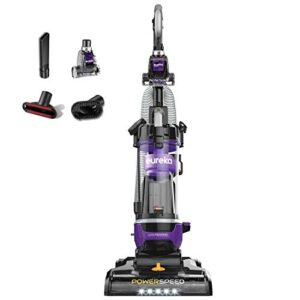
The Eureka Powerful Upright Vacuum Cleaner gives you serious suction strength to tackle pet hair and fine dander on carpets and hard floors. Its upgraded cyclone technology pulls in embedded dirt without losing power, while the 12.6-inch cleaning path covers more ground quickly.
You’ll appreciate the 25-foot cord for whole-room cleaning and the included pet tool for furniture and stairs. At around 11 to 12 pounds, it’s light enough to carry upstairs yet packs 960 watts of cleaning punch for thorough allergen removal.
| Best For | Pet owners and households that need a versatile, budget-friendly vacuum with strong suction for multiple floor types and don’t mind a bit of noise. |
|---|---|
| Primary Use | Pet hair removal |
| Power Source | Corded Electric |
| Weight | Not specified |
| Design Type | Upright vacuum |
| Pet Type | Dogs and cats |
| Maintenance | Regular cleaning required |
| Additional Features |
|
- Tackles pet hair effectively with dedicated tools and powerful cyclone suction
- Large 2.1-liter dust cup means less frequent trips to the trash
- Comes with four handy attachments for upholstery, crevices, and dusting
- At 88 decibels, it’s louder than many competing models
- Cord rewind feature can be frustrating to operate
- Roller brush and belt need regular maintenance to avoid performance issues
2. Afloia Air Purifier For Pets
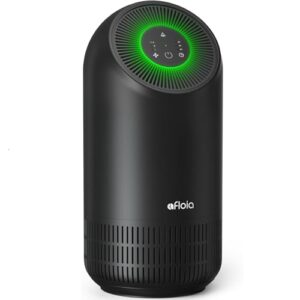
An air purifier helps capture the particles your vacuum leaves behind. The Afloia Air Purifier for Pets runs a three-stage filter system that traps 99.99% of pet dander, dust, and odors in rooms up to 880 square feet.
You can set it on sleep mode for whisper-quiet operation at just 22 decibels, and the touch controls let you adjust fan speeds or timers easily. Most owners replace the filter every four to six months to keep airflow strong and allergen levels low.
| Best For | Pet owners with allergies who need to tackle dander, dust, and odors in large rooms or apartments up to 880 square feet. |
|---|---|
| Primary Use | Air purification |
| Power Source | AC |
| Weight | 4.6 Pounds |
| Design Type | Tower purifier |
| Pet Type | Dogs and cats |
| Maintenance | Filter replacement |
| Additional Features |
|
- Three-stage filtration removes 99.99% of pet dander, dust, pollen, and odors
- Sleep mode runs whisper-quiet at 22 decibels so it won’t disturb you at night
- Covers large spaces up to 880 square feet with adjustable fan speeds and timer settings
- No handle or carrying indent makes it harder to move between rooms
- Buttons don’t click or make sounds when pressed, so you can’t feel confirmation
- Filter replacements needed every 4-6 months add to ongoing maintenance costs
3. GoPets Self Cleaning Slicker Brush
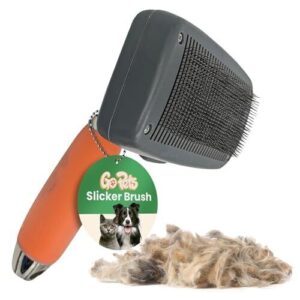
A slicker brush pulls out loose fur before it settles on your couch. The GoPets Self Cleaning Slicker Brush uses fine bent wire bristles that reach through the topcoat and grab dead undercoat hair without scraping skin.
Press the button on the back and the bristles retract so collected fur lifts off in one sheet. The 4-inch head covers more coat with each stroke, and the gel-filled handle stays steady even when your dog wiggles.
It works on most breeds and coat types, from fluffy double coats to long silky hair.
| Best For | Pet owners who need a comfortable, effective brush to remove loose undercoat fur and reduce shedding in dogs or cats of any breed or size. |
|---|---|
| Primary Use | Pet grooming |
| Power Source | Manual |
| Weight | Light |
| Design Type | Handheld brush |
| Pet Type | Dogs and cats |
| Maintenance | Self-cleaning |
| Additional Features |
|
- Self-cleaning button retracts bristles so you can remove collected fur in seconds without pulling it off by hand
- Fine bent wire bristles grab dead undercoat hair without scratching your pet’s skin
- Wide 4-inch brush head covers more area quickly, making grooming sessions shorter for wiggly pets
- Some users found the gel-filled handle uncomfortable to grip during longer brushing sessions
- Doesn’t include instructions on how to use it for different coat types or specific grooming needs
- Only combs through mats rather than cutting them out, so severely matted fur may need professional attention first
4. Oneisall Dog Grooming Clipper Set
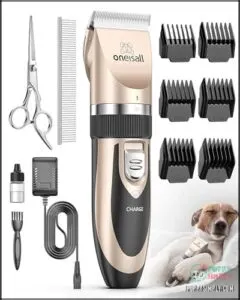
Trimming your low dander dog at home keeps allergens in check and saves trips to the groomer.
The Oneisall Dog Grooming Clipper Set runs on a cordless battery for up to two hours and stays under 50 decibels so nervous dogs stay calm.
Stainless steel blades cut smoothly through most coat types, and six guide combs let you adjust length on the body, legs, and face. The kit also includes scissors, a metal comb, and cleaning tools to keep the blades sharp between sessions.
| Best For | Pet owners who want to groom low-shedding or hypoallergenic dogs at home without stressing out noise-sensitive animals. |
|---|---|
| Primary Use | Pet grooming |
| Power Source | Battery Powered |
| Weight | 380 Grams |
| Design Type | Cordless clipper |
| Pet Type | Dogs and cats |
| Maintenance | Removable cutter head |
| Additional Features |
|
- Runs quietly under 50 dB so anxious pets stay relaxed during grooming sessions
- Comes with six guide combs and a full toolkit including scissors and cleaning brushes for complete grooming
- Cordless battery design gives you two hours of trimming freedom without tangled cords
- Needs regular oiling and cleaning to keep the blades running smoothly
- May struggle with extremely thick or matted coats without pre-trimming first
- Not strong enough for animals with very dense fur like angora rabbits
Frequently Asked Questions (FAQs)
What dog breed has the least dander?
No dog produces zero dander—all shed skin cells and proteins.
However, hairless breeds like the Xoloitzcuintli and Chinese Crested, plus curly-coated Poodles, usually release the fewest allergens into your home.
What is the best dog to have when you have allergies?
Poodles in all sizes work best for many allergy sufferers because their tightly curled coat traps loose dander and sheds very little, reducing allergens in your home.
Are there any truly 100% non-shedding dogs?
Sadly, no breed sheds zero hair—even hairless pups drop tiny skin flakes.
All dogs release dander and allergens through normal growth, so “non-shedding” really means low shedding, not allergen-free living.
What is the best allergy dog?
The best allergy dog varies by person, but Poodles, Bichon Frises, and Portuguese Water Dogs consistently rank highest because their low-shedding coats trap dander until grooming removes it, reducing your exposure.
Can low dander dogs still trigger allergies?
Yes, they can. All dogs produce allergen proteins in their skin, saliva, and urine.
Even low-shedding breeds spread these triggers on dander and coats, so sensitive people may still sneeze or itch.
Do hypoallergenic dogs need special diets?
Most hypoallergenic dogs don’t need special diets unless they develop food allergies themselves.
Focus on high-quality protein and balanced nutrition that promotes healthy skin and coat, which naturally helps minimize dander.
Are mixed breed dogs ever low dander?
Many mixed breeds can be low dander when they inherit curly or wiry coats from parents like Poodles or Schnauzers, though coat type varies widely even within the same litter.
How much do low dander breeds cost?
Purebred hypoallergenic puppies from reputable breeders usually run $1,500 to $5,000, depending on breed and lineage. Rarer varieties like Lagotto Romagnolo can push toward the higher end of that range.
Can allergy shots help with dog allergies?
Allergy shots can reduce dog allergy symptoms in most people who commit to the full treatment course.
You’ll need regular injections for two to three years before seeing lasting relief from dander reactions.
Conclusion
You don’t have to choose between breathing easy and having a four-legged friend. Finding the right low dander dog breeds means matching coat type, size, and energy level to your home and health needs.
Consistent grooming, smart cleaning habits, and quality tools make living with allergies manageable. Test your tolerance by spending time with your chosen breed first.
The right dog won’t make you choose between companionship and comfort—you can have both.
- https://www.allergytampa.com/2020/12/10/pets-with-dander-that-are-most-likely-to-trigger-allergy-symptoms/
- https://www.akc.org/dog-breeds/hypoallergenic-dogs/
- https://www.metlifepetinsurance.com/blog/breed-spotlights/hypoallergenic-dogs-breeds-good-for-people-with-allergies/
- https://www.petmd.com/dog/general-health/hypoallergenic-dogs
- https://www.wisdompanel.com/en-us/blog/dog-breeds-that-shed-the-least