This site is supported by our readers. We may earn a commission, at no cost to you, if you purchase through links.
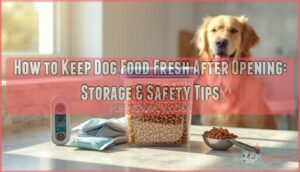
That bag of kibble you just opened won’t stay fresh as long as you think. Once exposed to air, moisture, and shifting temperatures, dog food begins a steady decline—fats oxidize, vitamins break down, and bacteria find opportunities to multiply.
Within weeks, what started as nutritionally complete food can become a source of digestive upset, nutrient deficiency, or worse. The difference between proper storage and a bag left loosely rolled in the garage isn’t just about crunch or smell.
It directly impacts your dog’s immune function, energy levels, and long-term health. Fortunately, keeping dog food fresh after opening the bag doesn’t require expensive equipment or complicated routines, just a few evidence-based practices that preserve quality from the first scoop to the last.
Table Of Contents
Key Takeaways
- Opened dry dog food stays fresh for four to six weeks when stored properly, though poor conditions can significantly reduce this timeframe and compromise your pet’s nutrition.
- Store kibble in an airtight, food-grade container placed in a cool location between 50-70°F with humidity below 60 percent to prevent fat oxidation, mold growth, and nutrient degradation.
- Trust your senses to identify spoiled food—rancid odors, visible mold, unusual texture changes, or your dog’s sudden refusal to eat all signal contamination requiring immediate disposal.
- Keep the original bag inside your storage container to preserve the protective metalized layers that block oxygen and light, while limiting air exposure during each feeding to maintain freshness.
Why Dog Food Freshness Matters
Keeping your dog’s food fresh isn’t just about avoiding waste—it directly affects your pet’s health and safety, and willingness to eat.
Fresh food also means your dog is more likely to enjoy their meals, and understanding what’s safe for dogs to eat helps you make smarter choices about their overall diet.
When food loses its freshness, it can develop harmful changes that put your dog at risk and make mealtime less appealing.
A well-planned dog food storage area helps you avoid these problems by keeping meals fresh, safe, and free from contamination.
Understanding why freshness matters helps you make better storage decisions and recognize problems before they affect your dog.
Keeping your dog’s food fresh is just one part of their overall care—maintaining your dog’s health also depends on proper nutrition and daily activity.
Impact of Freshness on Pet Health
Vitality starts with what your dog eats, and freshness testing confirms that nutrient retention directly influences pet health. Fresh dog food preserves the health benefits your companion needs, while degraded meals compromise pet nutrition and increase dog health risks. Food safety isn’t negotiable in regards to dog food freshness.
- Fresh protein sources maintain lean body mass and muscle strength during activity
- Higher moisture content aids hydration, urinary tract function, and kidney health
- Intact vitamins and minerals enhance immune response and skin barrier integrity
- Antioxidants from fresh ingredients reduce oxidative stress on tissues and organs
- Quality fats deliver steady energy levels and support metabolic processes throughout the day
For a deeper look at the benefits, see how a balanced intake of nutrients is essential for your pet’s long-term wellness.
Risks of Spoiled or Rancid Food
Fresh food protects your dog, but spoiled dog food introduces serious pet health risks. Rancidity and food spoilage trigger fat oxidation, creating off odors that signal unsafe conditions and potential food poisoning.
Toxin effects from bacteria like Clostridium perfringens can cause vomiting, diarrhea, and dehydration. Spoilage signs include sour smells, discoloration, and visible mold—clear warnings demanding immediate disposal to guarantee food safety and spoilage prevention, safeguarding your companion from dog health risks.
Spoiled dog food harboring bacteria like Clostridium perfringens triggers vomiting and diarrhea, while sour smells and visible mold demand immediate disposal to protect your pet
Even pets can be affected by the same foodborne illness risks that threaten human health when food safety is compromised.
How Freshness Affects Palatability
Beyond the health dangers, spoiled food loses its appeal at the bowl. Dog food freshness directly shapes palatability cues through aroma retention, flavor profiles, and texture changes.
Oxidation mutes meaty scents and creates bitter aftertastes dogs instinctively avoid. Sensory signals like crisp crunch and rich savory notes fade as kibble ages, triggering hesitation and refusals—even when dry dog food freshness looks acceptable on the surface.
How Long Dog Food Stays Fresh After Opening
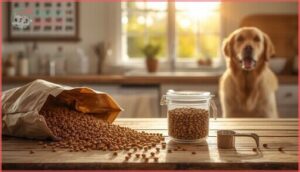
Once you open a bag of dog food, the clock starts ticking on its freshness. Knowing how long your dog’s kibble stays good helps you avoid waste and keep meals safe.
Let’s look at what you can expect after breaking that seal and the warning signs that tell you it’s time to toss the bag.
If you’re wondering about other salty meats like whether dogs can safely eat corned beef, the same careful approach applies—always check ingredients and watch portion sizes.
Shelf Life of Opened Dry Dog Food
Once you open a bag of dry dog food, the clock starts ticking on freshness. Proper storage extends shelf life substantially, but even under ideal conditions, you’re working with a finite window.
Here’s what you need to know about dry food preservation:
- Four to six weeks: Aim to use the opened bag within this timeframe to maintain ideal kibble freshness factors and pet nutrition safety.
- Expiration date matters: The “best by” date indicates peak quality before opening, not after exposure to air accelerates fat oxidation.
- Storage conditions dictate longevity: Airtight containers in cool, dry locations can push freshness closer to eight weeks, while poor food storage tips reduce usable life considerably.
Understanding dry dog food shelf life helps you balance buying in bulk with maintaining freshness testing standards at home.
Signs Dog Food is No Longer Fresh
Recognizing spoilage signs protects your dog from digestive upset and nutrient loss. Trust your senses and watch for these red flags:
| Spoilage Signs | What to Look For | Action Required |
|---|---|---|
| Rancid smell or chemical odor | Stronger when rubbing kibble between fingers | Discard immediately |
| Color change or mold growth | Dark spots, uneven coloring, visible moisture | Don’t feed |
| Texture alteration | Soft, sticky, clumping, or powdery residue | Replace with fresh food |
Your dog’s refusal to eat previously enjoyed meals often signals reduced palatability from staleness or fat oxidation—both clear indicators that the food has passed its shelf life and requires disposal.
Proper Storage Methods for Dog Food
Once you’ve opened a bag of dog food, how you store it makes all the difference in keeping it fresh and safe for your pet. The right approach combines choosing proper containers, managing air exposure, and selecting the best spot in your home.
Let’s look at the key storage methods that will help you protect your dog’s food from spoilage and maintain its nutritional quality.
Choosing Airtight, Food-Grade Containers
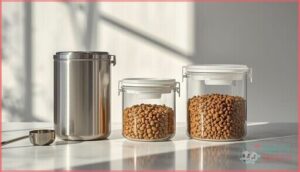
You need a container that creates an airtight seal to block oxygen and moisture, which trigger rancidity and mold. Choose food-grade plastic, stainless steel, or glass storage solutions that meet FDA standards and won’t leach chemicals into your dog’s kibble.
Look for containers with silicone gaskets and locking mechanisms, and select sizes between 0.5 and 8 liters based on your dog’s consumption rate to maintain food freshness and safety.
Benefits of Keeping Food in Original Bag
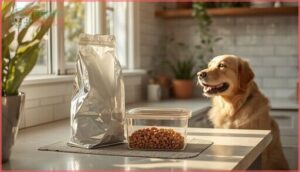
Keeping your dog food in its original bag preserves freshness and nutrient stability better than you might expect. The bag’s metalized layers block oxygen and light, slowing fat oxidation and protecting vitamins.
You’ll maintain bag integrity, reduce waste, and easily track the expiration date without transferring kibble. Simply place the sealed bag inside an airtight container for convenient storage that protects freshness.
Best Locations for Storing Dog Food
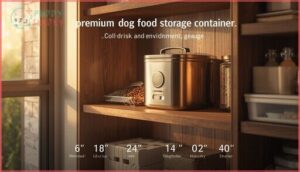
Where you store your dog’s food determines how long it stays nutritious and safe. Choose a quiet pantry corner or dedicated closet organization spot that’s cool, dry, and shielded from sunlight.
Proper storage means placing the airtight container on a shelf at least six inches off the floor. Avoid garages where summer heat spikes above 85°F, and skip basements with high humidity—these food storage solutions protect freshness best.
Cleaning and Maintenance of Storage Containers
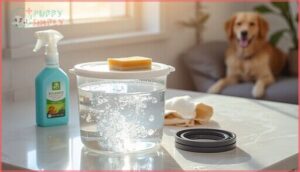
Regular container sanitation protects your dog’s food from contamination and keeps storage solutions effective. Wash the airtight container’s interior with mild soap and warm water after each refill, then dry completely to control moisture and prevent mold.
Inspect airtight seals for cracks every few months, replacing damaged gaskets to maintain proper food storage. Stick to a cleaning schedule—quarterly deep cleans keep odors low and storage hygiene high.
Controlling Temperature and Humidity
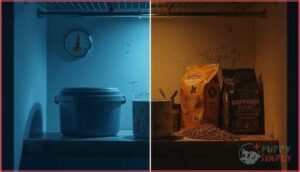
Even the best airtight container won’t protect your dog’s food if you store it in the wrong conditions.
Temperature swings and moisture can turn fresh kibble into a breeding ground for mold, bacteria, and pests faster than you’d expect.
Let’s look at how to control these factors and keep your dog’s food safe.
Ideal Storage Temperatures for Freshness
Your dog food freshness depends heavily on temperature control. Store opened dry kibble between 50 and 70 degrees Fahrenheit, ideally in an airtight container, to slow fat oxidation and preserve nutritional value.
This cooling method maintains proper storage conditions without refrigeration. Keep containers in a stable, cool pantry away from heat sources, monitoring both expiration date and freshness metrics for ideal food safety.
Effects of Heat, Cold, and Humidity
Temperature extremes and Humidity Effects directly accelerate Food Degradation in Dry Dog Food. Heat above 80°F speeds rancidity and weakens Proper Storage efforts, while cold below 50°F reduces palatability.
Moisture Management becomes critical when humidity exceeds 60 percent, triggering mold growth that compromises Food Safety. These Storage Solutions protect your pet’s nutrition well before the Expiration Date arrives.
Preventing Mold and Insect Infestation
Mold Prevention starts when you maintain humidity levels below 50 percent in your storage area, using a hygrometer to monitor levels weekly.
Insect Control relies on Air Tightness, so choose an Airtight Container that seals completely and inspect it regularly for cracks. Storage Hygiene matters too—wipe containers dry, fix leaks within 24 hours, and check the Expiration Date to guarantee Food Safety and Quality remain intact.
Best Practices to Prevent Spoilage
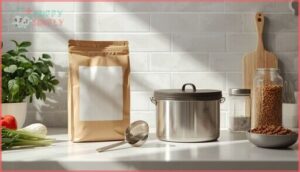
Even with the right container and storage conditions, you can accidentally spoil your dog’s food through everyday handling mistakes.
Small habits like how you scoop kibble or mix batches make a real difference in keeping food fresh and safe.
Here are four essential practices that help you avoid contamination and catch spoilage before it becomes a problem.
Avoiding Mixing Old and New Food
Cross-contamination poses a real threat when you combine leftover kibble with a fresh bag. Spoilage organisms, moisture, and odors transfer easily, compromising your entire supply of dry dog food.
Keep each feeding segment separated by using labeled containers or distinct scoops for old and new portions. When in doubt about freshness or expiration date, discard mixed portions to safeguard pet food safety and prevent food contamination.
Limiting Air Exposure During Feeding
Every time you open the bag, oxygen rushes in and speeds up spoilage.
Pre-measure portions into airtight containers to avoid repeatedly unsealing your main dog food storage, and feed in smaller, more frequent amounts rather than pouring large servings at once.
Immediately reseal any opened container after each feeding to limit airflow management issues and preserve dog food freshness between meals.
Recognizing and Disposing of Spoiled Food
Trust your nose first when conducting food safety checks—an off odor, whether sour or rancid, signals fat oxidation and spoilage indicators you can’t ignore. Check for visible mold, clumping from moisture, or unusual discoloration.
If your dog suddenly refuses food they previously enjoyed, that’s a freshness monitoring red flag. When you spot these rancidity tests failing, discard the entire bag immediately to prevent pet health risks from food contamination.
Regularly Checking for Signs of Contamination
Routinely inspecting your dog’s food for contamination signs helps you catch food spoilage before it threatens pet health risks. Each time you scoop, scan for moisture, mold patches, or unusual odors that signal food contamination.
Maintain storage hygiene by checking container seals and cleanliness weekly. These freshness testing habits, paired with food safety guidelines, protect your dog from spoiled dog food and preserve dog food freshness.
Frequently Asked Questions (FAQs)
Are you supposed to refrigerate dog food after opening?
You don’t need to refrigerate dry dog food after opening. Cool, dry storage around 40 to 60 degrees Fahrenheit in an airtight container maintains dog food freshness and prevents spoilage effectively.
Is it okay to leave a dog food bag open?
No, leaving a dog food bag open isn’t recommended.
Exposure to air speeds up fat oxidation and invites moisture, pests, and odors that compromise dog food freshness and nutritional quality quickly.
Can I freeze dry dog food to extend freshness?
Freezing dry dog food can extend shelf life by slowing fat oxidation and nutrient degradation, but proper packaging prevents freezer burn.
Rehydration methods restore palatability, preserving freshness through controlled food preservation methods and freeze storage techniques.
Should I refrigerate opened wet dog food cans?
Yes, refrigerate opened wet dog food cans promptly to slow bacterial growth and prevent food spoilage.
Transfer contents to an airtight container, then refrigerate for up to three to five days to maintain safety and freshness.
Does kibble size affect how quickly food spoils?
Kibble size impacts spoilage rates—smaller pieces absorb humidity faster and lose aroma sooner due to greater surface area, while larger kibble retains freshness longer when you store it properly in airtight containers.
Conclusion
It’s almost comedic how a $60 bag of premium kibble can turn into expensive compost simply because someone forgot to seal it properly.
Yet keeping dog food fresh after opening the bag isn’t rocket science—it’s basic chemistry paired with consistent habits. Store it cool, dry, sealed, and monitored.
Your dog’s digestive system will thank you with fewer upsets, better energy, and a shinier coat. Fresh food isn’t luxury; it’s the baseline your dog deserves every single day.
- https://www.usda.gov/about-usda/news/blog/protecting-your-family-food-spoilage
- https://crescosafe.com/the-risks-of-consuming-expired-or-spoiled-food/
- https://web.archive.org/web/20181025110232/https:/www.foodsafety.gov/blog/2016/02/what-is-food-spoilage.html
- https://pmc.ncbi.nlm.nih.gov/articles/PMC10325786/
- https://www.scribd.com/document/838966247/Causes-of-Food-Spoilage-and-Contamination