This site is supported by our readers. We may earn a commission, at no cost to you, if you purchase through links.
Walk through almost any village in India, and you’ll spot the same dog—lean, alert, ears pricked like antennae, watching you with calm, ancient eyes. That’s no stray mutt.
The Indian Pariah dog breed carries a genetic lineage stretching back roughly 15,000 years, making it one of the oldest domesticated dog populations on earth. Skull remains matching its modern form turn up at Harappan archaeological sites; rock carvings at Bhimbetka capture its silhouette in ochre and stone.
What looks ordinary at a tea stall happens to be a living artifact—shaped by natural selection long before selective breeding was ever a concept.
Table Of Contents
- Key Takeaways
- Indian Pariah Dog Breed Origins
- Physical Characteristics and Appearance
- Temperament and Social Behavior
- Care, Exercise, and Training Needs
- Health, Longevity, and Nutrition
- Frequently Asked Questions (FAQs)
- What is the lifespan of a pariah dog?
- What is the least wanted dog?
- Are Indian Pariah Dogs good for apartment living?
- Can they tolerate cold or hot weather extremes?
- How do they behave around small children?
- Do Indian Pariah Dogs get along with cats?
- What is the adoption process for rescue dogs?
- Are Indian Pariah Dogs legal to own everywhere?
- How much does an Indian Pariah Dog cost?
- Can Indian Pariah Dogs adapt to apartment living?
- Conclusion
Key Takeaways
- The Indian Pariah Dog is one of the oldest domesticated dogs on Earth, with genetic roots stretching back 15,000 years and archaeological evidence from Harappan and Bhimbetka sites confirming its ancient, unbroken lineage.
- Unlike purpose-bred dogs, this breed was shaped entirely by natural selection — giving it broad genetic diversity, strong disease resistance, and a lean, climate-adapted build that most modern breeds simply can’t match.
- Don’t let its street-dog reputation fool you: the Indian Pariah Dog is highly intelligent, picks up basic commands quickly, and thrives as a loyal family companion when socialized before 12 weeks of age.
- Caring for one is straightforward — 60 to 120 minutes of daily exercise, a protein-rich diet, minimal grooming, and routine vet visits are enough to support a lifespan that commonly reaches 12 to 16 years.
Indian Pariah Dog Breed Origins

The Indian Pariah Dog isn’t a recent breed someone designed in a kennel — it’s one of the oldest dogs on Earth, shaped by thousands of years of real life. Its roots run deep through ancient civilizations, cultural history, and natural survival.
Much like the Carolina Dog’s ancient American lineage, the Indian Pariah Dog traces its survival not to human breeding programs, but to thousands of years of living on its own terms.
Here’s what you should know about where this notable dog actually comes from.
Ancient History and Ancestry
Few breeds can claim roots as deep as the Indian Pariah Dog. Archaeological evidence from Mohenjo-daro and the Bhimbetka rock shelters traces this ancient breed back to the Neolithic period — roughly 4,500 years into the Indus Valley Civilization. Genetic lineage studies link it to canids from Central Asian Origins some 15,000 years ago, connecting it to dingoes and Basenjis through shared ancient ancestry. The breed is also known for its short dense double coat.
- Indus Valley Evidence includes dog skulls found at Harappan sites matching modern Indog morphology
- Ancient Rock Art at Bhimbetka depicts dogs strikingly similar to today’s Indian Pariah
- Neolithic Domestication predates virtually every modern kennel breed by millennia
- Central Asian Origins are confirmed through notable 2015 genetic research
- New Guinea Singing Dog ties this breed to the New Guinea Singing Dog and Canaan Dog
Role in Indian Culture and Society
Their ancient roots at Mohenjodaro and Bhimbetka are only part of the story. The Indian Pariah Dog‘s real staying power comes from how deeply it’s woven into everyday Indian life.
As Village Guardians, these dogs have protected lanes, markets, and homes for centuries — not through formal training, but through instinct and proximity. Their Street Life Presence is unmistakable; you’ll find them outside tea stalls, temple gates, and apartment blocks alike.
- Community Companions to families, shopkeepers, and wandering sadhus
- Cultural Symbolism tied to regional folklore and temple traditions
- Honored during Kukur Tihar, Nepal’s festival celebrating dogs
- Central to Public Health Impact discussions around urban sterilization drives
- Formally recognized through the Indian Pariah Dog Club‘s 2015 breed standard
Natural Evolution and Adaptation
What makes this breed genuinely exceptional isn’t just its ancient history and ancestry — it’s how the Indian Pariah Dog shaped itself without any human blueprint. Natural evolution and adaptation, driven by scavenger ecology and survival instincts across the Indus Valley Civilization’s settlements, built a dog with real body efficiency: lean, alert, and climate‑resilient.
The Indian Pariah Dog was never designed — it was forged by survival itself
Genetic diversity stayed broad because no breeder narrowed it.
That natural variation shows up in their bold, alert personalities, much like what you’d expect from a Jack Russell Chihuahua mix—a dog bred for character, not conformity.
The result? A dog whose environmental adaptation runs bone‑deep — not designed for a show ring, but built for real life.
Physical Characteristics and Appearance
Once you’ve learned where the Indian Pariah Dog comes from, you start to see how that ancient history shows up in the way they look. This breed has a distinctive build that’s been shaped by thousands of years of natural living, not human design.
Here’s what makes them stand out physically.
Size, Build, and Proportions
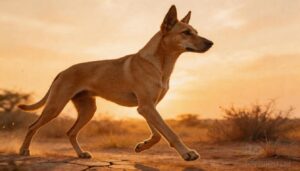
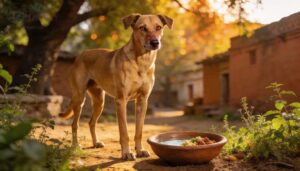
The Indian Pariah Dog sits firmly in the medium size category, with a shoulder height range of 20–25 inches for males and 18–23 inches for females. Body length ratio runs slightly longer than height, creating a balanced, athletic silhouette.
Here’s what defines their build:
- Lean yet muscular frame suited for endurance across varied terrain
- Chest depth reaches the elbows, supporting stamina
- Limb angulation is moderate, built for trotting efficiently
- Weight variability spans 28–45 pounds depending on sex and nutrition
Coat Types and Color Variations
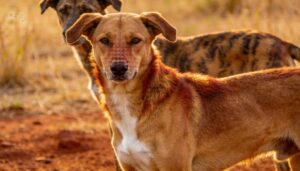
Your Desi Dog’s coat tells a story written over thousands of years. A double coat pairs a coarse upper coat with a soft undercoat beneath — practical, low-maintenance, and built for India’s climate.
About 20% develop seasonal coat changes with a denser winter undercoat. Color genetics produce fawn color most commonly, alongside tan and reddish-brown.
White markings patterns appear on chest and feet, while brindle pattern and rare pattern occurrences suggest mixed ancestry.
Distinctive Features (Ears, Tail, Body)
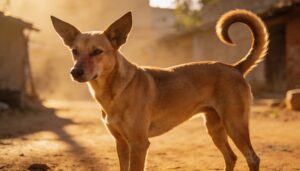
Three physical traits set this breed apart at a glance:
- Erect ear anatomy: The triangular ears stand firm with a broad base, rotating independently to catch sounds quickly — a real edge for a natural watchdog.
- Curved tail signaling: A high tail curls over the back when alert or happy, dropping loose at rest — mood on display without a word.
- Lean body efficiency: The medium, muscular frame pairs wedge head profile precision with agile gait dynamics across any terrain.
The short dense double coat completes this naturally engineered silhouette.
Temperament and Social Behavior

The Indian Pariah Dog has a personality that’s genuinely hard to ignore once you’ve spent time around one. Sharp, loyal, and surprisingly perceptive, these dogs bring a whole range of social behaviors that every owner should understand.
Here’s what you need to know about their temperament, instincts, and how they connect with the people and animals around them.
Personality Traits and Intelligence
What sets this breed apart isn’t just obedience—it’s genuine intelligence. Your pariah dog brings sharp social perception to every interaction, reading body language and tone with quiet precision.
Around 80% master basic commands within two weeks, and their problem solving tasks success rate hits 74% on food puzzles. That learning speed reflects deep cognitive adaptability.
Their trainability is rooted in independent judgment and natural curiosity levels, making them mentally engaged companions whose temperament and personality traits stay consistently stable and socially intelligent across varied environments.
Territorial Instincts and Watchdog Qualities
Your Pariah Dog is a natural-born watchdog—shaped not by breeders, but by thousands of years of surviving alongside human settlements. That history shows up in striking ways.
- Alert Bark Patterns kick in within seconds of detecting unfamiliar movement, often before you notice anything yourself.
- Boundary Patrol Behavior keeps them circling gates, fence lines, and doorways consistently throughout the day.
- Nighttime Vigilance sharpens after dark, when quiet amplifies every unfamiliar sound.
Their Stranger Response and Pack Defense Mechanisms make territorial behavior feel less like aggression—and more like instinct doing its job.
Socialization With People and Other Pets
Socialize your Indian Pariah early — ideally before 12 weeks — and you’ll dramatically reduce aggressive tendencies down the road. Early Human Exposure, structured Family Interaction Strategies, and calm Guest Introduction Protocols build a confident temperament.
Pet-to-Pet Socialization and Puppy Socialization Classes reinforce polite behavior with animals and strangers alike. breed thrives as a family companion when early socialization lays the foundation right.
Care, Exercise, and Training Needs

Caring for an Indian Pariah Dog isn’t complicated, but it does take consistency. These dogs thrive on routine, activity, and clear guidance from the people they trust.
Here’s what you need to know to keep yours happy, well-behaved, and looking great.
Daily Exercise and Activity Requirements
Built for endurance, this breed’s exercise requirements match its ancient roots. Your dog needs 60 to 120 minutes of daily exercise, ideally split across a Morning Walk Routine and an afternoon Play Session Variety that includes fetch and agility training.
A Safe Yard Enclosure keeps energy levels channeled safely.
Add Puzzle Toy Integration for mental stimulation, and always prioritize Hydration During Exercise, especially in warm weather.
Training Methods and Early Socialization
Training works best when it starts early. Puppy Socialization Window — roughly 3 to 12 weeks — is your best shot at shaping a calm, confident dog. Positive Reinforcement with treats and praise outperforms punishment every time. Focus on:
- Basic commands like sit, stay, and come
- Safe Introduction Techniques with calm people and vaccinated dogs
- Confidence Building Exercises using new surfaces and sounds
Impulse Control Training rounds it all out.
Grooming, Shedding, and Hygiene
Grooming this breed is genuinely low-effort. The short coat doesn’t demand much, but a consistent routine keeps your dog healthy and comfortable year-round.
- Weekly Brushing Routine — A curry or slicker brush removes loose hair and spreads natural oils.
- Bathing Frequency Guidelines — Every 6–8 weeks prevents skin dryness without stripping coat oils.
- Skin Condition Monitoring — Check for redness, ticks, or rashes during every session.
- Ear Cleaning Tips — Clean ears several times weekly to block infections.
- Nail Trimming Schedule — Trim monthly to avoid overgrowth and paw discomfort.
Health, Longevity, and Nutrition
One of the best things about the Indian Pariah Dog is that it’s genuinely built to last. Years of natural evolution have given this breed a resilience that most purebreds simply don’t have — but that doesn’t mean health care and nutrition are things you can ignore.
Here’s what you need to know to keep your dog thriving well into its senior years.
Common Health Concerns and Genetic Strengths
What makes the Indian Pariah Dog genuinely stand out is its genetic diversity—a naturally selected gene pool that keeps hip dysplasia, cancer risk, and most inherited joint problems remarkably rare. That broad genetic foundation also provides strong disease resistance overall.
Still, parasite resistance isn’t immunity; ticks, fleas, and worms remain real concerns for outdoor dogs.
Skin allergies from environmental triggers or diet can appear too.
Obesity management matters most here, since this scavenger-bred dog will happily overeat if you let it.
Average Lifespan and Wellness Tips
With good genetic health and disease resistance already in your dog’s corner, lifespan comes down to what you do daily. Most Indian Pariah Dogs live 12 to 16 years—some pushing beyond that.
Preventive vet visits catch problems early.
Weight management, hydration strategies, and mental stimulation all matter more than people realize.
Think of health, longevity, and nutrition as a triangle: neglect one side, and the whole structure weakens.
Dietary Needs and Feeding Guidelines
Your Indian Pariah Dog thrives on a protein-rich diet of 18–25% protein, split across two scheduled meals daily. Portion control matters—adults generally need 1–1.5 cups per meal based on weight and activity level.
Life stage nutrition shifts as your dog ages, so adjust accordingly.
Fresh water should always be available.
These safe feeding practices and smart diet management keep energy steady and weight in check.
Frequently Asked Questions (FAQs)
What is the lifespan of a pariah dog?
Like most survivors, the pariah dog plays the long game — usually living 12 to 16 years, with excellent care pushing that ceiling even higher.
What is the least wanted dog?
Street dogs consistently top shelter statistics as the least adopted.
Breed stigma, low market demand, and owner preferences for purebreds drive this overpopulation problem — making adoption campaigns for these dogs more critical than ever.
Are Indian Pariah Dogs good for apartment living?
Apartment living sounds limiting — until you meet a dog that’s spent 4,000 years adapting. With 60–90 minutes of daily exercise, consistent training, and early socialization, your Indian Pariah Dog thrives anywhere.
Can they tolerate cold or hot weather extremes?
Yes — their short, weather-resistant coat and lean build support strong heat tolerance and moderate cold resilience.
Still, shade, hydration, and seasonal activity adjustments matter. Even native breeds need smart temperature acclimation to avoid heat stress or cold discomfort.
How do they behave around small children?
With early socialization, they’re genuinely good with children — loyal, watchful, and affectionate.
Supervision guidelines and child interaction rules matter most around toddlers, where protective instincts and unpredictable energy can briefly clash.
Do Indian Pariah Dogs get along with cats?
Indian Pariah Dogs can get along with cats through gradual introductions, leash supervision, and cat safe zones.
Their prey drive control improves with early socialization, making long-term coexistence and family compatibility achievable in most homes.
What is the adoption process for rescue dogs?
Only 1 in 500 strays finds a home each year. The adoption and rescue of street dogs involves application requirements, a screening process, matching meetings, paperwork, fees, and post-adoption home adjustment support.
Are Indian Pariah Dogs legal to own everywhere?
Not quite — the law depends on where you live.
No global rule covers this breed, so check local licensing requirements, municipal leash ordinances, and import quarantine rules before bringing one home.
How much does an Indian Pariah Dog cost?
Adoption fees are often free or as low as ₹1,000–₹15,000 in India. Monthly expenses usually run ₹3,550–₹5,400, covering food, healthcare, and grooming.
Can Indian Pariah Dogs adapt to apartment living?
Yes, they can — if you’re committed. Medium-sized and low-maintenance, these dogs thrive in apartments with routine scheduling, indoor enrichment, and daily outdoor exercise. Owner commitment matters more than square footage.
Conclusion
Amidst modern breeds, the Indian Pariah dog breed stands out, its 15,000-year history a proof of resilience.
You now know this ancient dog’s origins, traits, and care needs.
As you consider the Indian Pariah dog breed, remember its unique place in canine history, shaped by natural selection, and deserving of thoughtful care and attention, making it a rewarding companion.