This site is supported by our readers. We may earn a commission, at no cost to you, if you purchase through links.

The Siberian Husky spent thousands of years pulling sleds across Arctic tundra.
The German Shepherd spent over a century herding livestock and guarding homes.
Put those two together, and you don’t get a calm lap dog—you get something closer to a force of nature.
The husky german shepherd mix, sometimes called the Shepsky, carries that full working‑dog legacy in one athletic, sharp‑eyed package.
Owners often describe them as loyal to the bone but wired like they’ve got somewhere to be.
Understanding what drives this mix makes all the difference between a dog that thrives and one that quietly dismantles your furniture.
Table Of Contents
- Key Takeaways
- What is a Husky German Shepherd Mix?
- Physical Characteristics and Appearance
- Temperament and Personality Traits
- Exercise and Activity Requirements
- Grooming and Coat Maintenance
- Health Issues and Lifespan
- Training and Intelligence
- Diet and Nutrition Needs
- Family Compatibility and Living Needs
- Cost, Adoption, and Responsible Ownership
- Frequently Asked Questions (FAQs)
- Will my shepsky protect me?
- How long do Gerberian Shepsky live?
- Are German Shepherd and husky mix good dogs?
- What is a German Shepherd husky mix called?
- How much does a Shepsky cost?
- Is a shepsky rare?
- What are the best living conditions for a Shepsky?
- How long is the exercise duration needed daily?
- What nutritional needs do German Shepherd Husky mixes have?
- Are Shepskies prone to specific behavioral issues?
- Conclusion
Key Takeaways
- The Shepsky isn’t just a pretty dog — it’s a working breed at heart, and it needs at least 90 to 120 minutes of real exercise every day or your furniture pays the price.
- Their loyalty runs deep, often bonding strongest with one person, but that same closeness can tip into separation anxiety if you don’t set boundaries early.
- Owning a Shepsky costs real money — budget around $2,500 a year for food, vet care, grooming, and training, plus the upfront cost of $400 to $3,000 depending on your source.
- That thick double coat sheds year-round and blows out hard twice a year, so brushing three to four times a week isn’t optional — it’s just part of the deal.
What is a Husky German Shepherd Mix?
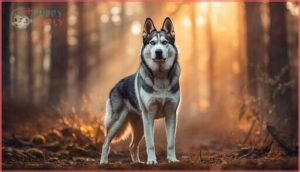
The Husky German Shepherd mix — often called a Shepsky or Gerberian Shepsky — is one of those crossbreeds that turns heads everywhere it goes.
Whether you call it a Shepsky or a Gerberian Shepsky, this German Shepherd Husky mix brings together two of the most beloved working breeds in one striking package.
It brings together two of the most capable working dogs in the world, and the result is something pretty impressive.
Here’s what you need to know about where this mix comes from and how it earned its place as a beloved companion.
Origins and History of The Breed
Gerberian Shepsky‘s story starts with two very different worlds. Siberian Husky roots trace back over 3,000 years to the Chukchi people, who relied on their dogs for survival across frozen terrain — that is the Chukchi sled tradition running deep in the breed’s DNA.
German Shepherd development began much later, in 1899. Early accidental litters brought these two canine genetics together long before the 1990s designer boom made hybrid dogs a household conversation.
They thrive on high mental stimulation needs.
Why Breeders Created The Shepsky
Breeders didn’t stumble into this mix by accident. They saw a clear goal: combine the German Shepherd’s guarding ability and hybrid intelligence with the Husky’s enhanced stamina and aesthetic appeal. The result? A designer hybrid built for both work and companionship.
Market demand grew fast, driven by families wanting a capable, striking dog — one whose genetics made the breed comparison almost irresistible. Their high energy levels require regular exercise needs.
Designer Breed Status and Recognition
The Shepsky is a designer hybrid, so don’t expect AKC papers.
Major kennel clubs won’t register mixed breeds, but a few hybrid registries will:
- American Canine Hybrid Club accepts Shepsky with parent verification
- Dog Registry of America lists it among recognized hybrid dog breeds
- International Designer Canine Registry has offered pedigrees since 1995
For legal ownership documentation, these registries are your best option.
Physical Characteristics and Appearance
No two Shepskies look exactly alike, and that’s part of what makes them so interesting. A lot depends on which parent they take after more. Here’s what you can generally expect regarding their size, coat, and facial features.
Size and Weight Range
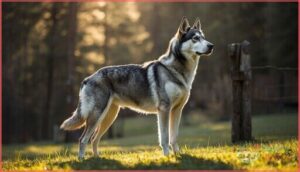
Most adult Husky German Shepherd Mix dogs stand 20 to 25 inches tall and weigh between 45 and 80 pounds. Male vs female size differences are real — males run heavier, females a bit lighter.
Adult height range and weight are shaped by genetics, diet, and activity.
Use body condition scoring, not just the scale, to judge their health.
Coat Types and Colors
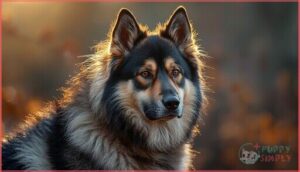
Their double coat is the first thing you’ll notice — dense, layered, and built to handle real weather. Coat types range from medium straight fur to fluffier long versions, with colors spanning black and tan, gray and white, sable variations, and the rare blue dilution. Many dogs show bold mask patterns across the face.
Shedding is year‑round, with heavier seasonal color shifts during spring and fall coat blows.
Facial Features and Eye Colors
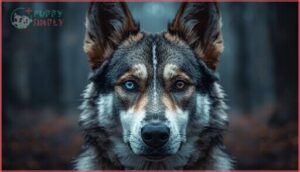
That wolf-like silhouette doesn’t happen by accident.
The head shape is strong and slightly elongated, while the muzzle structure tapers just enough to look refined rather than blocky.
Ear position sits high and erect, adding to the alert expression.
Eye color variations are where things get really interesting:
- Brown, ranging from warm honey to deep chocolate
- Icy blue from strong Husky influence
- Amber or soft green tones
- Complete heterochromia — one blue, one brown eye
- Sectoral heterochromia, where a single iris shows two colors
Those heterochromatic eyes are genuinely striking, and they’re perfectly healthy.
Temperament and Personality Traits
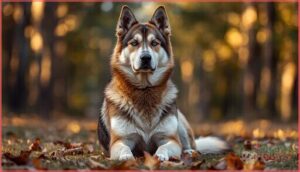
Living with a Shepsky is rarely boring — this dog has personality to spare.
What you get from this mix is a blend of the German Shepherd’s loyal, watchful nature and the Husky’s playful, social side, and that combination shows up in some pretty interesting ways.
Here’s what you can expect regarding their temperament and personality.
Loyalty and Affection Levels
This mix doesn’t do love halfway. Through Primary Bonding, your Shepsky picks one person and sticks close — following you from room to room, sleeping nearby, checking in on walks. Affectionate Gestures stay quiet: a lean, a head on your leg, soft eye contact.
The Shepsky loves deeply and quietly — one person, one bond, for life
| Behavior | Meaning | Frequency |
|---|---|---|
| Following you | Strong loyalty | Daily |
| Leaning in | Affectionate Gestures | Very common |
| Door-watching | Separation Anxiety Management | When left alone |
Protective Loyalty runs deep too, but Clingy Tendencies need gentle boundaries early.
Energy and Playfulness
Your Shepsky runs on a full tank — almost always. High-energy and built for endurance, this breed’s stamina building comes naturally from both working parent lines.
Expect High-Intensity Games like chase, tug, and fetch to be daily favorites. Zoomies Management becomes real when exercise needs aren’t met.
Cold-Weather Play energizes them even more. Meet their playful energy consistently, and you’ll avoid Mental Exhaustion turning into chaos.
Social Behavior and Expressiveness
Your Shepsky wears their heart on their sleeve — loudly.
Vocal Communication is part of daily life here: howls, whines, and expressive talking come with the territory.
Family Bonding runs deep, with Loyalty showing up in small ways like following you from room to room.
Body Language Signals are easy to read.
With good Socialization, Stranger Interaction stays calm, and Dog-to-Dog Compatibility usually follows naturally.
Exercise and Activity Requirements

The Husky German Shepherd mix isn’t a dog that’s happy lounging around all day — these dogs need real, consistent activity to stay balanced. Think of them as athletes who need a training schedule, not just a casual walk around the block.
Here’s what you need to know about keeping up with their energy.
Daily Exercise Needs
This dog doesn’t do well with a quick lap around the block.
Your Husky German Shepherd mix needs 1 to 2 hours of daily dog exercise to stay balanced — split into at least two sessions to keep energy levels steady.
Age-based exercise matters too: puppies need just 5 minutes per month of age.
Skip that, and high-energy behavior indoors becomes your new normal.
Suitable Activities and Sports
Once you’ve got those exercise needs covered, the fun part begins — finding activities your Shepsky genuinely loves.
- Agility Training — weaving poles and jumps sharpen focus and impulse control
- Canicross Pulling — trail running together using a leash line
- Trail Hiking — long adventures that match their stamina
- Scent Work — nose games that count as serious mental dog training
- Puzzle Play — sliding and flipping toys that balance energy levels indoors
Boredom and Destructive Behavior
Skip the activities, and your Shepsky will find its own entertainment — usually on your couch.
Boredom signs include chewing, digging, and relentless howling.
Destructive triggers often come down to separation anxiety or long stretches alone.
Mental enrichment like puzzle feeders cuts that risk fast.
Simple management strategies — rotating toys, crating safely — keep dog behavior on track without drama.
Grooming and Coat Maintenance
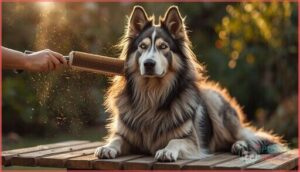
That gorgeous coat comes with some real upkeep — no way around it.
The Shepsky’s thick double coat sheds year-round, and if you’re not prepared, you’ll find fur on everything you own. Here’s what you need to know to stay on top of it.
Shedding and Seasonal Changes
Living with a Shepsky means shedding is just part of the deal.
That double coat sheds lightly year-round, then hits hard twice a year — the Spring Coat Blow in March or April and the Fall Shedding Cycle around September.
Light Temperature Triggers drive these changes.
Indoor Climate Effects can soften the peaks, but won’t stop them.
Poor nutrition worsens it, so Nutrition Shedding Impact is real — quality omega-3s help.
Brushing and Bathing Frequency
Once you’ve got a handle on shedding seasons, brushing and bathing fall into place pretty naturally.
Aim for three to four times a week with a good undercoat rake — daily during peak Seasonal Brushing periods. For Bathing Interval, every six to ten weeks works well for most Shepskies.
Activity-Based Grooming matters too; muddy trail dogs need more frequent attention than couch companions.
Managing Double Coat Care
Managing your Shepsky’s double coat comes down to having the right tools and a simple routine.
- Use an Undercoat Rake 2–3 times weekly, daily during Seasonal Blowout Planning periods
- Pair Deshedding Tools with short Grooming Session Timing — 10–20 minutes prevents fidgeting
- Protect Skin Oil Management by avoiding over-washing, which triggers flaking
Never shave the coat. It protects more than you think.
Health Issues and Lifespan

Like most large, active breeds, the Husky German Shepherd mix comes with a few health considerations worth knowing upfront.
Some of these go back to genetics, while others are just part of owning a big, high-energy dog.
Here’s what to keep on your radar.
Common Genetic Health Problems
This mix inherits a grab bag of dog health issues from both parent breeds.
Hip dysplasia and elbow dysplasia top the list, along with thyroid issues that cause weight gain and low energy.
Epilepsy seizures can appear as early as six months old.
Skin allergies and degenerative myelopathy are real concerns too.
Genetic diversity helps, but it doesn’t erase inherited risks entirely.
Joint and Eye Conditions
Beyond the genetic risks already mentioned, joint and eye conditions are where canine hybridization doesn’t always work in your favor. Watch for these three issues:
- Hip Dysplasia and Elbow Dysplasia — painful joint problems that worsen without weight control
- Arthritis Prevention — early low‑impact exercise protects cartilage long‑term
- Progressive Retinal Atrophy and Pannus Management — both threaten vision but respond well to monitoring
Canine health screenings catch these early.
Average Lifespan and Longevity Tips
Most Husky German Shepherd mixes live 10 to 14 years, and you have real influence over where your dog lands in that range.
Weight management, consistent exercise, and regular vet exams make a measurable difference. Don’t overlook dental care — it affects heart and kidney health too. Joint supplements, smart nutrition, and heat safety round out the basics of solid canine health and wellness.
Training and Intelligence
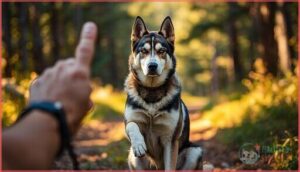
The Shepsky is one of the smartest mixed breeds you’ll come across, and that’s honestly a double‑edged sword. They pick things up fast, but they also get bored fast if you don’t keep them engaged.
Here’s what you need to know about training and keeping that sharp mind busy.
Trainability and Obedience
Shepsky’s trainability is genuinely impressive. Thanks to their German Shepherd genes, they can pick up new commands in just a few repetitions. Positive reinforcement works best here — think cooked chicken, quick tug games, or honest praise.
Consistency techniques matter a lot, though. Without daily repetition, that Husky independence kicks in and obedience drops. Short sessions build strong impulse control and reliable recall over time.
Socialization Strategies
Socialization is where training and socialization truly come together. Your Shepsky’s puppy social window — roughly 3 to 14 weeks — is prime time for noise desensitization, a visitor introduction protocol, and multi-pet integration.
Introduce traffic sounds, new faces, and other animals calmly and consistently. Don’t skip public space acclimation either; varied environments build real confidence. Dog training and animal behavior both agree: early exposure shapes everything.
Mental Stimulation and Enrichment
obedience clicks, keep that sharp mind busy. Your Shepsky genuinely needs mental challenges — not just walks.
Rotate puzzle feeders, scent challenges, hide‑seek games, trick sequences, and shell puzzles throughout the week. Each engages their intelligence and playful energy differently. Even short sessions count.
Think of it as exercise for their brain — skip it, and that clever dog will find their own entertainment.
Diet and Nutrition Needs

Feeding a Husky German Shepherd mix isn’t complicated, but it does matter more than most people think.
These are big, active dogs with real nutritional demands, and getting it right keeps them healthy for the long haul.
Here’s what you need to know about their diet.
Recommended Food Types and Portions
Most Shepskies thrive on a structured feeding plan built around their size and activity level. Getting dog nutrition right from puppyhood makes a real difference long‑term.
Here’s a simple Shepsky diet and nutrition guide:
- Puppy Feeding Schedule — Feed three meals daily until six months
- High-Protein Kibble — Choose formulas with at least 25–30 % protein
- Raw Diet Ratios — Adults need 2–3 % of body weight daily
- Portion Adjustment — Active dogs need up to 4.5 cups of kibble
- Calorie Targets — Active adults require 1,700–2,400 calories split across two meals
Managing Weight and Allergies
Once portions are sorted, weight and allergies become your next focus. Use body condition scoring monthly — you should feel your dog’s ribs without pressing hard. If your Shepsky creeps past 80 pounds, aim for calorie tracking and 60-plus minutes of daily exercise.
For dog allergies, an allergy-friendly diet with nutrient-rich supplements like omega-3s can calm itchy skin fast.
Hydration and Special Dietary Considerations
Water intake guidelines matter just as much as what’s in the bowl. A 50- to 80-pound Shepsky needs roughly 50 to 80 ounces of water daily — more during summer or after a long run.
Keep these in mind:
- Puppy hydration tips: young pups need about half an ounce per pound daily
- Seasonal hydration strategies shift in heat — intake can double
- Joint support foods with omega-3s and glucosamine protect aging joints
- Electrolyte supplements help after intense exercise sessions
- Fresh water should always be available, no exceptions
Family Compatibility and Living Needs

Before bringing a Shepsky home, it helps to know how they actually fit into daily family life. These dogs have big personalities, and your home setup matters more than most people expect. Here’s what you should know about living with one.
Interaction With Children
With the right foundation, a Husky German Shepherd mix can be wonderfully family-compatible around kids of all ages. Their protective instincts and friendliness shine through, but temperament depends heavily on socialization and energy levels.
Supervised play sessions keep things safe with toddlers, while gentle petting training teaches kids respectful boundaries.
For older children, age-appropriate games channel their drive beautifully.
Toddler safety signals — like lip licking or stiffening — are worth learning early.
Compatibility With Other Pets
Bringing a Husky German Shepherd mix into a multi-pet household takes planning, but it’s very doable. Dog-dog socialization works best when introductions happen early and gradually.
Cat introduction tips like scent swapping before face-to-face meetings really help.
Small animal safety is non-negotiable — their prey drive management needs consistency. With patient socialization and smart pet care, family compatibility across species is genuinely achievable.
Space and Environment Requirements
This mix needs room to breathe.
Before bringing one home, honestly assess your living situation against these key living requirements:
- Yard Size — Bigger is better; small yards frustrate their energy levels fast.
- Fencing Security — Six-foot, sturdy fences are non‑negotiable.
- Apartment Suitability — Possible, but only with serious daily commitment.
- Climate Tolerance — They handle cold well; heat, not so much.
Indoor living space matters too — they need family, not isolation.
Cost, Adoption, and Responsible Ownership

Bringing a Shepsky home is exciting, but the costs that come with it are worth knowing upfront.
From the initial price tag to everyday care, the numbers can add up faster than you’d expect.
Here’s what to keep in mind before you commit.
Purchase Price and Adoption Options
Shepsky puppy prices vary more than you’d expect. Typical puppy price from a small breeder runs $400–$1,200, while regional pricing in high-demand areas can push that to $3,000. Online listings usually show $600–$1,500.
Adoption fees through rescues are far friendlier — often $50–$350 — and usually include vaccines. Rescue applications take effort, but adoption is genuinely worth considering.
Ongoing Care and Ownership Costs
Owning one of these dogs costs more than most people plan for.
Food Budget alone runs $50–$100 monthly for quality kibble. Vet Expenses average $500–$1,000 yearly with routine care. Grooming Fees hit $480–$800 annually for that thick double coat.
Pet Insurance at $20–$50 monthly and Training Costs around $200–$500, and your total cost of ownership can easily reach $2,500 per year.
Choosing Ethical Breeders or Rescues
Finding the right breeder or rescue isn’t luck — it’s homework. A trustworthy source welcomes your questions instead of rushing you toward a decision.
- Ask for health screening records on both parents
- Review contract transparency before signing anything
- Request home visits or video walkthroughs
- Confirm rescue accreditation and adoption policies
- Expect post-adoption support from ethical breeding programs
Frequently Asked Questions (FAQs)
Will my shepsky protect me?
Your shepherd will likely watch over you — but how much depends on temperament and bond.
Guarding instincts, alertness triggers, and protective bonding all shape realistic expectations around loyalty and socialization impact.
How long do Gerberian Shepsky live?
Most Gerberian Shepskies live 10 to 14 years. With good food, daily exercise, and regular vet visits, some reach 15 or Hybrid vigor genuinely helps them outlive many purebreds.
Are German Shepherd and husky mix good dogs?
Yes — if you’ve got the time, space, and energy to match theirs.
This hybrid dog rewards active families with fierce loyalty, but its high energy levels and social needs aren’t for everyone.
What is a German Shepherd husky mix called?
This hybrid dog goes by a few names. Most people call it a Shepsky or Husky Shepherd.
The official Gerberian designation is also common, while some use the Siberian Shepherd term casually.
How much does a Shepsky cost?
Expect to pay anywhere from $400 to $3,000 depending on the source. Adoption fees run $100 to $ Reputable breeders with health testing usually charge $700 to $1,
Is a shepsky rare?
Shepskies aren’t extremely rare, but they’re not as common as Labradoodles or Goldendoodles.
Breeder availability is limited, though adoption rates from shelters are rising, making them easier to find than you’d think.
What are the best living conditions for a Shepsky?
A secure fenced yard, cool indoor space, and daily exercise routine matter most. They also need mental enrichment and social interaction to stay happy. Meet those needs, and they thrive.
How long is the exercise duration needed daily?
Plan for at least 90 to 120 minutes of daily exercise, split across two sessions. Puppies need far less — follow the five-minutes-per-month guideline to protect growing joints.
What nutritional needs do German Shepherd Husky mixes have?
Your Shepsky thrives on high-protein, calorie-balanced meals split across two daily feedings. Prioritize glucosamine-rich food for joint support, and choose allergy-friendly diets if sensitivities arise.
Hydration matters more than most owners realize.
Are Shepskies prone to specific behavioral issues?
Yes, this canine hybrid can struggle with separation anxiety, high prey drive, stranger reactivity, escape tendencies, and vocalization issues. Early dog training helps, but these behavioral traits need consistent management.
Conclusion
If you’re drawn to the husky german shepherd mix, picture yourself at the start of a wild adventure. This breed won’t just fill your home—they’ll shape your days with energy and loyalty.
Expect a companion who’s clever, sometimes stubborn, and always enthusiastic for action.
With good training, patience, and plenty of exercise, you’ll reveal their best side.
The journey won’t be quiet, but it’s one you’ll remember, step for step, for years to come.
- https://dogacademy.org/breeds/german-shepherd-husky-mix
- https://www.innovetpet.com/blogs/news/the-complete-guide-on-the-german-shepherd-husky-mix
- https://www.petscare.com/news/post/husky-shepherd-mix-guide
- https://the-pup-md.myshopify.com/blogs/main/what-is-a-gerberian-shepsky-the-german-shepherd-husky-mix-guide
- https://petvet.social/german-shepherd-husky-mix/