This site is supported by our readers. We may earn a commission, at no cost to you, if you purchase through links.
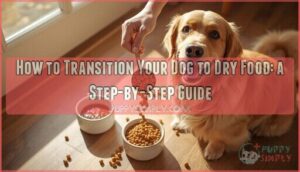
Most dogs will eat whatever lands in their bowl—until they won’t. A sudden bout of itchy skin, a vet’s quiet recommendation, or a bag of dry kibble that costs half the price of what you’ve been buying: any of these can push you toward switching your dog’s food.
The problem isn’t the decision to switch. It’s the switch itself.
Move too fast, and you’re dealing with loose stools, a gassy dog, and second-guessing every choice you made.
Knowing how to shift your dog to dry food—gradually, with a clear plan—makes the difference between a smooth adjustment and a stressful week for both of you.
Table Of Contents
Key Takeaways
- Switching your dog to dry food works best over 7–10 days, starting with 75% old food and 25% new, then shifting the ratio gradually every few days.
- Your dog’s stool is your clearest signal — medium brown and once or twice a day means things are on track; anything more frequent or bloody means slow down and call your vet.
- Sensitive dogs, seniors, and puppies often need a longer 14–21 day window, smaller meal portions, and softened kibble to avoid digestive upset.
- Before you change anything, talk to your vet — they’ll catch medication interactions, confirm the right formula, and help you avoid a week of midnight Googling.
Reasons to Transition Your Dog to Dry Food
Dogs end up on new food for all kinds of reasons — and it’s rarely planned.
Whether it’s allergies, a sensitive stomach, or mystery eye gunk, finding the best dog food for tear stains can make a real difference in how your dog looks and feels.
Whether it’s a health issue, an allergy, or your vet’s recommendation, the reason matters because it shapes how you make the switch. Here are the most common situations that call for a change.
Common Triggers for Switching Dog Food
Dogs switch foods for all sorts of reasons — recall alert, a new puppy joining the household, or seasonal activity shifts that change how many calories your dog actually needs.
Sometimes it’s practical: cost savings from bulk dry kibble, or the convenience of travel boarding with pre-measured portions.
Whatever the trigger, recognizing it early helps you plan a safer, smoother change.
Health and Allergy Considerations
Health concerns are often the real reason a food switch happens. Your dog might be showing signs of food allergies — itchy skin, paw licking, recurring ear infections — rather than just stomach issues.
Common reasons for choosing a new dry food:
- Food intolerance causing gastrointestinal upset
- Novel Protein or Hydrolyzed Diet for confirmed allergies
- Grain Sensitivity requiring limited‑ingredient formulas
- Skin Itch Management, Kidney‑Friendly Formula, or other condition‑specific needs
A hypoallergenic diet or veterinary consultation can pinpoint the right direction before you change anything.
Advice From Veterinarians
Once a vet spots the root cause, they’ll do a full assessment — checking your dog’s age, weight, body condition score, and medical history review to shape a safe plan. Medication interactions matter too; steroids and thyroid drugs can shift appetite during a gradual diet shift process. A veterinary consultation for dog diet change isn’t optional — it’s your smartest first step toward switching dog food safely.
A vet consultation before switching dog food is not optional — it is your smartest first step
Checking the pet food label for nutritional adequacy statements helps guarantee the diet meets your dog’s specific needs.
How to Choose The Right Dry Dog Food
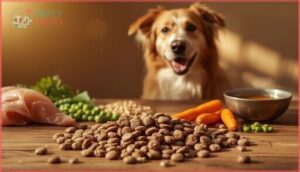
Not all dry dog food is created equal, and picking the wrong one can make the adjustment harder than it needs to be. The right choice depends on a few key factors — what’s actually in the bag and what your dog specifically needs. Here’s what to look for.
Once you’ve found the right food, figuring out how much dry food your dog actually needs matters just as much as what’s in it.
Identifying Quality Ingredients and Nutritional Value
Reading a dog food label isn’t complicated once you know what matters. Look for these markers of a high quality dog food:
- Protein Sources: A named animal protein — chicken, salmon, lamb — should top the ingredient list
- Fat Quality: “Chicken fat” beats vague “animal fat” every time
- Fiber Types: Beet pulp or brown rice helps steady digestion
- Natural Preservatives: Mixed tocopherols, not BHA or BHT
AAFCO certification confirms the formula meets your dog’s core nutritional requirements.
Matching Food to Your Dog’s Age, Breed, and Needs
Not every dog thrives on the same bag of kibble.
Life Stage Nutrition matters — a puppy needs more protein and fat than a senior dog ever would.
Breed Size Formulas also play a role: small dogs burn more energy per pound, while large breeds need joint support and controlled calories.
Factor in Activity Level Calories, Health Condition Diets, and Individual Customization for the right canine nutrition fit.
Refer to the AAFCO nutrient profiles for detailed requirements.
Step-by-Step Guide to Gradually Switching
Switching your dog to dry food doesn’t have to be stressful — it just takes a little patience and a clear plan.
Most dogs do best with a slow, steady shift spread over seven to ten days.
Here’s exactly how to do it, step by step.
Recommended Transition Timeline and Schedule

Most healthy adult dogs do well on a seven‑day plan — a simple, gradual shift that gives the gut time to adjust. Sensitive dogs or seniors often need an extended timeline of 10 to 14 days.
Puppies follow an age‑specific schedule with more frequent meals.
When managing a complex condition, your vet may design a veterinary‑designed protocol customized specifically to your dog’s needs.
Mixing Old and New Food Proportions

Getting the ratio right is the heart of any gradual process. Start at 75% old food, 25% new, then shift in 10–25% steps every few days. These measuring techniques keep things consistent:
- Use a marked cup or kitchen scale for Portion Tracking
- Apply Ratio Calculation to match calories between both foods
- Make Hydration Adjustment by adding 2–4 tablespoons of warm water as dry portions increase
- Pre-portion mixed meals to avoid accidental overfeeding
- Keep a simple log of each mixing food phase by date and ratio
Monitoring Stool Quality and Appetite

Your dog’s stool is a daily report card on how the process is going.
Watch Stool Color Indicators closely — medium brown means things are moving well.
Track Frequency Tracking daily; one extra movement is normal, but more than four trips signals trouble.
Note any Mucus Presence beyond two days.
Log Appetite Percentage each meal, and watch for Dehydration Signs if diarrhea appears.
Adjusting The Process for Sensitive Dogs

Some dogs just need more runway. If your pup has a sensitive stomach or a history of digestive issues, a standard 7‑day plan often isn’t enough. Veterinary guidance usually points toward an Extended Adjustment Timeline of 14 to 21 days instead.
- Portion Size Reduction: Split meals into 3 to 4 smaller servings to ease gastrointestinal upset
- Softened Kibble Technique: Soak kibble in warm water for 10 to 15 minutes
- Meal Frequency Increase and Environmental Calmness: Feed at consistent times in a quiet space to reduce stress during the gradual transition
What to Watch for During The Transition

Even a careful change can stir up some trouble along the way.
Your dog’s body is adjusting, and it will often send you clear signals when something’s off. Here’s what to keep an eye on as you make the switch.
Signs of Digestive Upset or Food Intolerance
Your dog’s gut talks — you just have to listen.
Gastrointestinal symptoms like diarrhea, soft stool, or loud stomach gurgling often appear within 6 to 48 hours of a food change. If you’re also adjusting portions during the transition, a dry dog food feeding guide by breed and weight can help you rule out overfeeding as a cause of those symptoms.
Abdominal pain signs include hunching, belly tensing, or restlessness after meals.
Watch for skin itch reactions, ear infection indicators with smelly discharge, behavioral changes like lethargy, and weight fluctuations — all common food intolerance symptoms.
When to Pause or Slow The Transition
Sometimes the body sends quieter signals before the big ones hit. Slow down — or stop — the switch if you notice:
- Mood changes like hiding, clinginess, or irritability around meals
- Urination spikes, house accidents, or straining to pee
- Skin irritation, weight loss, or a dull, rough coat
Medication interactions or major life changes — a move, new pet, or recent surgery — are also clear reasons to pause and get vet consultation before continuing.
Handling Vomiting, Diarrhea, or Refusal to Eat
When vomiting or diarrhea shows up mid-switch, your response matters. Here’s how to handle the three most common reactions during a gradual diet change process:
| Symptom | Home Response | Vet Contact Triggers |
|---|---|---|
| Single vomit, dog alert | Fast for 8–12 hrs, offer small water sips | Vomits again after restarting food |
| Loose stool, dog playful | Reduce portions 25–50%, bland diet recovery (chicken + rice) | Blood, black stool, or 24+ hrs |
| Food refusal | Try warming kibble; appetite stimulation via broth | Refuses treats too, over 24 hrs |
For Hydration Strategies, check gum moisture — tacky gums signal trouble. An upset stomach can spiral fast, especially in puppies or seniors. Trust veterinary advice: when in doubt, call first.
Tips for a Smooth and Safe Food Switch

Getting through a food change without a hitch takes more than just mixing two kibbles together. A few smart habits can make the whole process easier on your dog — and a lot less stressful for you. Here’s what actually helps.
Consulting Your Veterinarian for Guidance
Your vet is your strongest ally here. Before switching to a new dry food, a quick vet consultation for pets can prevent a lot of guesswork — especially if your dog has a health history worth reviewing.
- Share full vet diet history, including treats and medications, to catch any medication interactions early
- Ask about lab test recommendations or allergy testing if symptoms have been unclear
- Confirm a follow-up schedule to track progress with vet approved adjustments
Using Digestive Supplements to Support Gut Health
Once your vet signs off, a probiotic can make the dog food adjustment noticeably smoother.
Probiotic timing matters — start 2–3 days before mixing in the new kibble.
Products like FortiFlora support dog gastrointestinal health quickly.
Synbiotic blends pair probiotics with prebiotic dosage guidance by weight for stronger results.
Enzyme benefits include easier fat and protein breakdown.
Always check supplement storage instructions — live bacteria lose potency fast.
Maintaining Hydration and Proper Portion Control
Switching to dry kibble means your dog needs more water — sometimes 10 to 20 percent more daily.
Place two or three water bowls around the house, and refresh them several times a day.
Adding a splash of low-sodium broth helps picky drinkers.
For portion control, match calories, not volume — and stick to a consistent feeding schedule morning and evening.
When a Rapid Transition is Necessary
Not every change gets a full week. Emergency Recall, Acute Allergy Flare, or Immediate Medical Diagnosis can make a rapid change necessary overnight. The same goes for a Sudden Supply Shortage.
In these cases, use the quick dog food change method: switch within one to three days, watch closely for signs of improper dog food change, like Severe GI Distress, and keep your vet in the loop.
Frequently Asked Questions (FAQs)
What is the best dog food for dogs with allergies?
There’s no one-size-fits-all answer here. For canine allergies, your best options are Novel Protein, Limited Ingredient, or Hydrolyzed Prescription food — chosen through Label Inspection and veterinary guidance for dog nutrition.
Can dry food help with my dogs weight?
Yes, dry food can support weight management.
Measured portions, fiber satiety, and balanced protein levels make Calorie Counting straightforward.
Some formulas even include L‑Carnitine Benefits to aid fat metabolism.
Always follow dog feeding guidelines and consult your vet.
How should dry food be stored long-term?
Keep dry dog food in an airtight, food-grade container placed in a cool, dry spot around 10–25°C. Check the shelf-life label, rotate stock regularly, and store away from pests.
Is dry food safe for senior dogs?
Dry food is generally safe for most senior dogs.
Watch for choking risk with large kibble, support kidney hydration with fresh water, and make sure nutrient density suits their joint health and digestive health needs.
Can I mix wet and dry food together?
Absolutely — mixing wet and dry food together is a smart, flexible approach.
It provides hydration benefits, helps with calorie management, and satisfies texture preference.
Just make sure both options meet complete and balanced nutritional standards for your dog’s life stage.
How much water does dry food require daily?
Most dogs on dry food need about 50 to 60 milliliters of water per kilogram of body weight daily. Heat, activity level, and health conditions can raise that need substantially.
Conclusion
Switching dog food feels small—until your dog is miserable and you’re Googling symptoms at midnight. That’s the cost of rushing.
But when you know how to switch your dog to dry food the right way, the process is quiet, steady, and mostly uneventful.
A little patience upfront saves a lot of stress later. Follow the gradual schedule, watch your dog’s signals, and trust the process. Simple steps, done consistently, make all the difference.
- https://www.proplanveterinarydiets.ca/wp-content/uploads/2016/04/PPPVD-Fecal-Scoring-Chart-EN-FINAL.pdf
- https://retrievist.akc.org/list/top-rated-dog-food-for-large-breeds/
- https://www.wsava.org/
- https://pangovet.com/talk-to-a-vet-online-dog-nutrition/?utm_source=dogster&utm_medium=article&utm_campaign=dog-nutrition&utm_content=how-to-switch-dog-food