This site is supported by our readers. We may earn a commission, at no cost to you, if you purchase through links.

The average dog sheds between 30 and 100 hairs per minute during peak season. That number sounds absurd until you find fur in your coffee, your clean laundry, and somehow your closed laptop.
Most owners assume heavy shedding means something is wrong. Usually, it doesn’t.
But it does mean your dog’s coat, diet, and grooming routine are telling you something worth hearing. Knowing how to reduce dog shedding at home starts with understanding what’s driving it — because the fix for stress‑related shedding looks nothing like the fix for a protein‑deficient diet.
Table Of Contents
- Key Takeaways
- Why Do Dogs Shed at Home?
- What Causes Excessive Dog Shedding?
- How Brushing Reduces Dog Shedding
- Choosing The Right Brush for Shedding
- Bathing Tips to Control Shedding
- Diet and Nutrition for Less Shedding
- Home Cleaning Strategies for Shedding
- Reducing Shedding Through Stress Management
- When to Worry About Dog Shedding
- Can Dog Shedding Be Prevented Entirely?
- Frequently Asked Questions (FAQs)
- Conclusion
Key Takeaways
- Shedding is driven by biology, breed, diet, and stress — so the fix depends entirely on which one is actually causing the problem.
- Brushing daily with the right tool for your dog’s coat type is the single most effective thing you can do to keep fur off your furniture.
- Most kibble has a 20:1 omega-6 to omega-3 ratio, far outside the ideal 5:1 range, and that imbalance quietly drives excess shedding.
- Bald patches, sudden clumps, or off-season hair loss aren’t normal shedding — they’re your dog telling you something is medically wrong.
Why Do Dogs Shed at Home?
Every dog sheds — that’s just biology, not a flaw in your cleaning routine.
But a consistent grooming routine for shedding breeds can make a real difference in how much ends up on your couch.
how much your dog sheds depends on a few specific things working together.
Here’s what’s actually driving all that fur.
Natural Shedding Cycles
Every dog sheds — baked into their biology.
Hair cycles through four phases: growth, shrinkage, rest, and release.
Photoperiod influence drives a lot of this, meaning daylight hours trigger hormonal cycle shifts that signal coat turnover.
Climate shift speeds things up seasonally.
Age-related shedding adds another layer, since puppies and seniors cycle differently.
Follicle regeneration keeps running on repeat, no matter what.
regular grooming practices can considerably lessen the amount of hair released.
Breed Differences in Shedding
Not all shedding is equal — and breed matters more than most people realize. Double‑coat density in breeds like Huskies and German Shepherds means heavier seasonal dumps, while single‑coat shedding in Poodles stays steadier year‑round.
Arctic breed cycles tend to be dramatic. Even size‑related volume plays a role.
Low‑allergy breeds drop less, but no dog offers complete shedding prevention and control. For example, the Bichon Frise low shedding is a hypoallergenic, low‑shedding breed.
Environmental and Health Factors
Breed explains a lot — but home environment does more than you’d think. Artificial indoor lighting tricks your dog’s hormones into year-round shedding. Low humidity dries skin out fast. Poor air quality irritates everything.
- Humidity control (40–60%) keeps skin from flaking
- Parasite prevention stops itch-driven hair loss
- Temperature regulation reduces stress-triggered shedding
Underlying health issues, diet and nutrition gaps, and omega fatty acids all matter too.
What Causes Excessive Dog Shedding?

Normal shedding is one thing — but when your dog is leaving behind small tumbleweeds, something else might be going on.
A few specific triggers are usually behind that kind of excessive hair loss.
Here’s what to look at first.
Diet and Nutritional Deficiencies
What your dog eats shows up in their coat fast. Nutritional gaps — a Protein Shortage, Zinc Deficiency, Vitamin A Lack, Biotin Shortage, or Omega Imbalance — all trigger excess shedding.
| Nutrient | What Happens Without It |
|---|---|
| Protein food | Brittle, thinning hair |
| Omega-3 fatty acids | Inflamed skin, dull coat |
| Zinc | Crusty patches, hair loss |
| Biotin | Alopecia, breakage |
Dog nutrition matters more than most owners realize. Fix the diet first.
Allergies and Skin Conditions
Allergies are one of the sneakiest causes of excessive shedding. Pollen‑triggered itch, flea allergy dermatitis, and atopic dermatitis management all fall under allergies and sensitivities that wreck your dog’s coat from the inside out. Food allergy skin signs and contact dermatitis prevention matter too.
Watch for:
- Patchy hair loss on the belly or tail base
- Red, inflamed skin with constant licking
- Scaly patches on paws or face
- Dull, uneven coat with extra floor hair
- Secondary skin infections worsening shedding
Stress and Hormonal Imbalances
Stress hits a dog’s coat harder than most people realize. cortisol levels spike — from loud noise, long workdays alone, or chaotic routines — hair follicles cut growth short.
When stress shedding spirals into patchy skin or sudden coat changes, it’s worth checking whether your breed is naturally prone to heavy hair loss — Boxer shedding patterns and skin sensitivities can help you tell the difference between stress and genetics.
That’s your floor covered in fur.
Thyroid signs, Cushing indicators, adrenal imbalance, and heat cycle shedding all point to hormones gone sideways.
Stress management for dogs and proper veterinary care, including targeted medications and supplements, can reset the cycle.
How Brushing Reduces Dog Shedding

Brushing is one of the simplest things you can do to cut down on shedding — and it actually works. Done right, it pulls out loose hair before it ends up on your couch, your clothes, and somehow your coffee.
Here’s what you need to know about the benefits, technique, and how often to brush based on your dog’s coat.
Benefits of Daily Brushing
Daily brushing is one of the most effective tools you have for shedding control. It manages loose hair removal before fur hits your couch, manages oil distribution across the full coat, and gives skin circulation a quiet boost.
You’ll also catch fleas, lumps, or irritation early — that’s early health detection working in your favor. Regular brushing means serious home hair reduction without much effort.
Proper Brushing Techniques
Technique matters more than most people realize.
Always brush in the direction of hair growth — that’s your baseline for Brushing Direction. Use Gentle Pressure so that pins just kiss the skin without scratching.
Sectioned Brushing works best: divide the coat into zones and work skin-to-tip.
Give extra attention to Sensitive Areas like armpits and ears.
Good Brush Handling and regular brushing make coat maintenance and shedding control genuinely manageable.
Brushing Frequency by Coat Type
Not every dog needs the same brushing calendar.
Short coat schedule? Once a week covers it — maybe three times during spring and fall shedding spikes.
Double coat routine means two to three times weekly, daily when they’re blowing their coat.
Curly coat timing calls for every other day at minimum.
Silky coat frequency runs three to four times weekly.
Wirecoat brush plan? Twice weekly keeps things tidy.
Choosing The Right Brush for Shedding
Not all brushes are created equal — and the wrong one won’t do much for shedding.
Your dog’s coat type determines which tool actually works.
Here’s what you need to know before you buy.
Slicker Vs. Bristle Brushes

Think of these two brushes as different tools for different jobs. Slicker brushes have fine wire pins with natural pin flexibility, letting them reach deeper into medium, long, or curly coats to pull trapped hair before it hits your floor.
Bristle brushes offer gentle skin stimulation and shine for short, smooth coats.
Regular brushing with the right pick makes all the difference in coat care.
Undercoat Rakes and Shedding Tools

For double-coated breeds, you need something that reaches past the guard hairs entirely.
Undercoat rakes do exactly that — pulling loose undercoat before it lands on your couch.
Top picks use:
- Tool Material Choice — rounded stainless steel teeth that glide and resist rust
- Ergonomic Handle Design — textured rubber grips for long sessions
- Tooth Spacing Variations — wider for thick coats, tighter for medium ones
- Safety Pressure Guidelines — light strokes only near armpits and belly
- Maintenance and Cleaning — clear collected fur from teeth every few passes
Matching Brushes to Coat Types
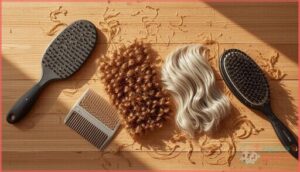
Now that you’ve got the right tools, matching them to your dog’s coat makes all the difference.
| Coat Type | Best Brush |
|---|---|
| Short/Smooth | Rubber curry mitts |
| Curly/Wool | Slicker brush |
| Long/Silky | Pin brush |
Rubber curry mitts work short coats beautifully. Pin brush technique suits silky and double coats. Add a metal comb to check for hidden tangles. Regular brushing with the right shedding tools keeps coat care and maintenance simple.
Bathing Tips to Control Shedding

Bathing does more than clean your dog — done right, it pulls out loose fur before it ends up on your couch.
The key is knowing how often to bathe, what products to use, and how to adjust your approach by breed.
what actually has an impact.
How Often to Bathe Shedding Dogs
Bath Frequency Guidelines depend on your dog’s coat and lifestyle. Most shedding dogs do well with:
- Every 4–6 weeks for general maintenance
- Every 2–4 weeks during seasonal shedding peaks
- Weekly bathing for allergen reduction timing in sensitive households
- Every 6–8 weeks for mostly indoor, regularly brushed dogs
Outdoor dogs need more frequent dog grooming to support skin health balance and reduce shedding effectively.
Choosing The Best Shampoo and Conditioner
Once you’ve nailed your bathing schedule, the products you reach for matter just as much. A good deshedding shampoo works because of what’s actually in it.
| Feature | What to Look For | Why It Helps |
|---|---|---|
| pH Balance | Dog-specific formulas | Protects skin barrier |
| Natural Oil Blends | Coconut, jojoba, flaxseed | Moisturizes and releases loose hair |
| Allergy‑Safe Formulas | No sulfates, parabens, dyes | Reduces irritation‑triggered shedding |
Conditioning technology — like keratin amino acids or oatmeal — adds real shedding control between grooming sessions.
Bathing Techniques for Different Breeds
Every breed has different needs regarding bathing.
For double coat soak breeds like Huskies, work shampoo all the way to the skin.
Short coat rinse dogs like Beagles need two thorough rinses to prevent residue buildup.
Curling coat lather requires gentle squeezing, never scrubbing.
Brachycephalic water safety means keeping water away from flat faces.
Silky long drying calls for careful section-by-section blotting — loose hair comes out on the brush, not your sofa.
Diet and Nutrition for Less Shedding

What your dog eats shows up in their coat — sometimes faster than you’d expect. Poor nutrition is one of the most common reasons dogs shed more than they should.
Here’s what actually matters.
Importance of High-Quality Protein
Dog hair is about 95 percent keratin — and your dog can’t build it without quality protein. That’s not a small detail.
Keratin synthesis pulls up to 30 percent of daily protein intake.
Look for named meats like chicken or salmon first on the label. These deliver essential amino acids and hit over 80 percent protein digestibility.
AAFCO protein standards set the floor; quality meat sources aim higher.
Omega-3 and Omega-6 Fatty Acids
Balancing omega fatty acids matters more than most labels let on.
Most kibble runs an omega-6 to omega-3 ratio around 20:1 — far outside the ideal 3:1 to 5:1 range for coat health. That imbalance quietly drives inflammation and excess shedding.
Most kibble’s omega ratio sits at 20:1 — far from the ideal range that keeps inflammation and excess shedding in check
A quality fish oil supplement — salmon, sardines, or anchovies — delivers real EPA and DHA. Flaxseed benefits are real too, though conversion to usable omega3 fatty acids is limited.
Supplements and Hydration
Your dog’s coat is only as healthy as what goes in — and that includes water. Most dogs need 40 to 60 ml per kilogram daily; less than that, skin dries out fast.
- Vitamin E dosing: roughly 225 IU daily for small dogs
- Omega-3 supplements like fish oil reduce inflammation directly
- Probiotic benefits include better nutrient absorption from high-protein food
- Water intake guidelines support electrolyte balance and follicle health
- Omega fatty acids work best alongside consistent hydration
Home Cleaning Strategies for Shedding

Grooming and diet help from the inside out, but your home still needs some attention. Dog hair has a way of ending up everywhere — furniture, floors, even your morning coffee.
Here are a few simple strategies that actually make a dent.
Effective Vacuuming and HEPA Filters
Your vacuum is your best ally against shedding. True HEPA filters trap 99.97% of particles — including pet dander — so nothing sneaks back into the air.
Use strong suction settings and switch pet hair attachments for furniture and tight corners.
Vacuum in multiple directions to pull embedded fur from carpet fibers.
Swap filters every 6 to 12 months for peak HEPA filter efficiency.
Washable Covers and Cleaning Routines
Washable furniture covers are one of the easiest dog shedding solutions you’ll find.
Cover Material Choice matters — tightly woven microfiber traps fur on the surface instead of letting it embed.
Wash Frequency Tips, once weekly works for most dogs.
Add a Vinegar Rinse to loosen clinging hair.
Use low-heat Drying Techniques to protect fabric.
Stain Prevention Strategies start with prompt washing after muddy days.
Creating Pet-Free Zones
Clean covers help, but containing shedding to specific rooms is even smarter. Designating pet‑free zones — bedroom gate placement near doorways, kitchen access barriers, office air filtration setups — cuts your cleanup in half.
- Baby gates (29–36 inches tall) work well for most dogs
- Physical fence options can span up to 20 feet
- Training cue consistency, like “place,” builds reliable habits within weeks
- Bedroom exclusions reduce overnight allergens considerably
- Daily 5‑minute sessions with high‑value treats reinforce boundaries quickly
Reducing Shedding Through Stress Management

Stress is one of the sneakiest causes of excessive shedding — and most owners don’t even realize it’s happening. Your dog’s mental state directly affects their coat, so managing anxiety isn’t just good for them, it’s good for your furniture too.
Here’s what actually helps.
Recognizing Signs of Stress in Dogs
Stress shows up in your dog’s body before it ever becomes a health problem.
Watch for tail tucked under the belly, whale eye, or lip licking — these aren’t random quirks.
Pacing behavior and rapid panting signal real anxiety.
Chronic stress left unchecked causes skin issues, worsens dog allergies, and drives excessive shedding.
Knowing your dog’s behavior is the first step in protecting their pet’s health and nutrition.
Creating a Calm Environment
Once you know dog’s stress signals, the next step is making your home feel safer.
Try these simple changes:
- Plug in a Pheromone Diffuser — one unit covers up to 70 square meters and mimics calming nursing hormones.
- Use Calming Music playlists around 95 beats per minute to ease tension.
- Set up Quiet Retreats away from doors with Anxiety Vests nearby for rough days.
Consistent schedules do the rest.
Exercise and Mental Stimulation
A calm home helps, but a tired dog sheds less, too. Daily structured walks at the same time each day lower baseline anxiety noticeably.
Add interactive play — 10 to 15 minutes of fetch burns nervous energy fast. Puzzle toys and mental enrichment games like scent hunts keep dogs focused and calm.
For high‑drive breeds, agility training covers both needs at once.
When to Worry About Dog Shedding

Most shedding is normal, but sometimes it’s your dog’s way of waving a red flag. Knowing the difference between everyday fur loss and something worth calling your vet about can save you a lot of worry — and your dog a lot of discomfort.
Here’s what to watch for.
Signs of Abnormal or Sudden Shedding
Some shedding is normal — but bald patches, persistent scratching, or skin redness are red flags. Watch for off-season timing, sudden hair texture changes, or dog hair loss concentrated around the tail or flanks.
Clumps larger than 1 cm, dull brittle fur, or asymmetric thinning all signal something’s off. These signs point toward deeper skin health concerns that warrant vet visits and parasite control checks sooner rather than later.
Health Issues Linked to Excessive Shedding
Behind excessive shedding, you’ll often find a medical culprit. Hypothyroidism effects include a dull, thinning coat with symmetric fur loss along the trunk and thighs.
Cushing disease signs show up as sparse back fur with fragile skin.
Flea allergy dermatitis, yeast skin infection, and autoimmune hair loss all damage follicles directly.
Canine health and nutrition and diet gaps — especially low protein or zinc — quietly worsen skin health too.
When to Consult a Veterinarian
If gut says something’s off, trust it. Call your vet when you notice:
- Sudden bald patches on the face, belly, or legs
- Excessive thirst, weight changes, or low energy alongside hair loss
- Skin lesions, behavioral changes, or a coat that smells off
Prompt veterinary advice and vet visits catch problems early. Dog health and wellness — including dog health and nutrition — gets harder to restore once damage sets in.
Can Dog Shedding Be Prevented Entirely?

Let’s be honest — shedding is never going away completely.
Every dog sheds, and that’s just biology doing its thing.
But what you can control is how much ends up on your couch, your clothes, and that one dark shirt you keep wearing anyway.
Realistic Expectations for Pet Owners
Here’s the honest truth: no amount of regular brushing or dog grooming tips will stop shedding completely.
Breed shedding limits are real — even perfect grooming leaves 20 percent of loose fur falling naturally.
Seasonal hair loss is part of accepting natural cycles, your dog is built around.
The goal isn’t zero hair. It’s less hair.
Grooming time commitment and dog health and wellness habits simply tip the odds in your favor.
Managing Vs. Stopping Shedding
Think of managing shedding like managing your own health — you can’t stop aging, but you can absolutely slow the damage.
Regular brushing, shedding tools, and high-protein food don’t eliminate hair loss. They redirect it.
Realistic goals keep you sane:
- Less fur on the couch, not zero fur
- Health-based limits mean some shedding is just biology
- Owner expectations shift when veterinary guidance replaces guesswork
Long-Term Coat Care Practices
Long-term coat health isn’t complicated — it just needs to be consistent. Stick to a seasonal grooming schedule, rotate in professional de-shedding every four to six weeks, and don’t skip nutrient monitoring when your dog’s coat starts looking dull.
Regular brushing, seasonal conditioning, and high-protein food do the heavy lifting. Coat health tracking catches problems early. That’s how reducing dog shedding becomes second nature.
Frequently Asked Questions (FAQs)
Does spaying or neutering affect dog shedding?
Yes and no.
Spaying or neutering doesn’t stop shedding, but hormonal coat change is real — some females develop a fluffier spay coat texture, while post‑heat shedding reduction is a genuine bonus for intact females.
Can air purifiers help with dog hair allergies?
Air purifiers won’t stop your dog from shedding — but a true HEPA filter captures 97% of airborne dander, giving real relief if allergies and sensitivities make living with your dog uncomfortable.
Are some dog breeds truly hypoallergenic?
No dog breed is truly hypoallergenic. Every dog produces Can f 1 allergen protein — even hairless breeds.
Designer mix variability makes guarantees impossible. Owner exposure trials before adoption matter far more than any label.
Does dog shedding worsen with age?
Sort of — but not dramatically.
Age-related thinning, hormonal decline, and reduced skin elasticity mean seniors shed more steadily.
Normal shedding just lingers longer.
It rarely turns a light shedder into a heavy shedder.
Can professional grooming reduce shedding long-term?
Professional grooming does reduce shedding long-term — but only when it’s consistent. A single deshedding session helps, but regular undercoat removal every 8 to 12 weeks keeps loose fur manageable year-round.
Conclusion
Think of your dog’s coat like a garden. Left unattended, it overgrows and makes a mess everywhere.
But with consistent care — the right tools, a solid diet, and a low-stress routine — it stays manageable.
Learning how to reduce dog shedding at home isn’t about chasing flawlessness. It’s about working with your dog’s natural biology instead of against it.
Small, steady habits outperform occasional deep cleans every time. Tend the garden daily, and the mess takes care of itself.
- https://barkplacedogspa.com/how-grooming-reduces-dog-shedding-and-keeps-your-home-clean/
- https://www.pawparentacademy.com/blog/best-dog-brush-for-shedding
- https://www.dogfoodadvisor.com/dog-health/excessive-shedding-in-dogs-causes-diet-omega-fatty-acids/
- https://www.deporrevet.com/services/dogs/blog/secret-saving-your-sanity-shedding-dog
- https://www.veg.com/post/why-is-my-dog-excessively-shedding