This site is supported by our readers. We may earn a commission, at no cost to you, if you purchase through links.
A leash that’s too loose lets your dog slip free mid-walk, while one that’s too tight digs into their shoulders and restricts breathing. Most owners guess at sizing based on weight alone, but two 50-pound dogs can have completely different chest measurements and neck measurements depending on their breed and build.
Getting accurate measurements takes less than five minutes and prevents weeks of rubbing, chafing, and escape attempts. The difference between a comfortable dog vest and one that causes problems comes down to measuring two specific points on your dog’s body: the chest girth at its widest point and the neck girth where it meets the shoulders.
With a flexible measuring tape and these straightforward techniques, you’ll get the exact numbers needed to choose a dog jacket that keeps your dog safe and comfortable on every walk.
Table Of Contents
Key Takeaways
- Accurate harness sizing requires measuring two specific points: chest girth at the widest part behind the front legs and neck girth where the neck meets the shoulders, using a flexible measuring tape for precise results.
- A properly fitted harness prevents injury by distributing pressure across the chest instead of the neck, stops escape attempts through correct sizing, and improves training outcomes by allowing natural movement without discomfort.
- The two-finger rule is the key fit test—you should be able to slide two fingers between any harness strap and your dog’s body to ensure security without restriction or chafing.
- Size charts alone don’t account for individual body types, so breed-specific proportions matter more than weight, and puppies need remeasurement every two to four weeks during their first year of rapid growth.
Why Accurate Harness Measurement Matters
A collar that doesn’t fit right can turn your daily walk into a frustrating experience for both you and your dog. Taking just a few minutes to measure correctly makes the difference between a collar that works and one that rubs, slips, or restricts movement.
Pair a well-fitted collar with a training treat pouch designed for senior dogs to keep rewards within that critical one-second window during walks.
Here’s why getting those measurements right matters so much.
A bed that’s too small will bunch up and feel uncomfortable, while one that’s too large can shift around—that’s why choosing the right dog crate beds for large dogs depends on nailing those dimensions first.
Preventing Discomfort and Injury
A well-fitted vest protects your dog from unnecessary pain prevention by spreading pulling forces across the chest instead of concentrating pressure on the neck.
This even weight distribution also makes vests ideal for building muscle strength during training walks, especially when paired with controlled resistance exercises.
When measuring your dog for proper vest sizing, accurate neck girth and chest girth measurements prevent rubbing, chafing, and shoulder restriction. Vest fit directly impacts health benefits like comfortable breathing and joint support, making injury prevention a top priority during vest safety checks.
Ensuring Security and Escape Prevention
A snug vest fit stops your dog from slipping free during walks, just like access control and perimeter security prevent escape tactics in high-risk facilities.
When chest girth and neck girth measurements match vest sizing charts, your dog can’t back out or wriggle a leg through loose straps.
Before you finalize your vest choice, review the pros and cons of neutering your dog with your vet, since body shape can shift after the procedure.
Proper measurements create surveillance systems-level security, keeping your companion safely attached to the leash.
Improving Walks and Training Outcomes
A well-fitted vest transforms every outing into better leash training and improved canine fitness. When your vest fit enables natural movement, your dog focuses on walk optimization instead of fighting uncomfortable straps.
Proper measurements deliver these training strategies benefits:
- Front-clip vests reduce pulling when sized correctly, facilitating positive dog behavior reinforcement.
- Comfortable gear keeps your dog engaged during longer sessions.
- Secure attachments prevent mid-walk adjustments that interrupt training flow.
Essential Tools for Measuring Your Dog

You don’t need much to measure your dog for a collar, but having the right tools makes the process faster and more accurate. A flexible measuring tape is the most important item, and you’ll also want a way to keep your dog calm and still during measurement.
Let’s look at what you’ll need and how to use each tool effectively.
Choosing The Right Measuring Tape
A flexible cloth or soft vinyl measuring tape is your best tool for accurate girth measurement. Unlike rigid steel tape measures, fabric tapes conform to your dog’s body curves for precise chest girth and neck girth readings.
Pairing accurate measurements with a strong foundation in dog health ensures your pup gets the right fit and stays in top condition.
Look for a tape that shows both inches and centimeters with clear markings. A retractable blade length of at least 60 inches works for most breeds.
For more details about the different types of measuring tape, you can explore their unique uses and features.
Preparing Your Dog for Measurement
A calm dog yields the most accurate vest fit measurements. Choose a quiet, well-lit room and schedule your session after a short walk to settle any nervous energy.
Remove any collars or vests that could interfere with chest girth readings. Have small treats ready to reward cooperation, and consider enlisting a helper if your pup is prone to wiggle or shift during handling.
For a detailed breakdown of the proper height and girth measurement steps, consult reliable guides before you begin.
Recording and Using Measurements
Write down your measurements right away so you don’t second-guess numbers later. Jot down both chest girth and neck girth in inches, then compare them against the manufacturer’s size chart to pinpoint your dog’s collar size.
Double-check that your recorded figures match measurement best practices—accuracy now means fewer returns and a happier pup on every walk.
How to Measure Chest Girth Correctly
Chest girth is the most important measurement you’ll take when sizing a vest for your dog. This measurement determines whether the vest will fit properly around the widest part of your dog’s ribcage, where most vests sit.
Let’s walk through where to measure, how to get an accurate reading, and what mistakes to watch out for.
Locating The Widest Part of The Chest

The widest part of your dog’s chest sits just behind the front legs, where the rib cage expands most laterally—usually around the ninth or tenth rib. To pinpoint this spot, have your dog stand square and run your hand along the ribcage, feeling for the broadest point. This reference point ensures the vest distributes pressure evenly and matches the size chart accurately.
| Breed Type | Widest Chest Location |
|---|---|
| Stocky builds | Higher, near armpit |
| Slender breeds | Lower along costal arch |
| Barrel-chested | Pronounced lateral flare |
Step-by-Step Chest Girth Measurement
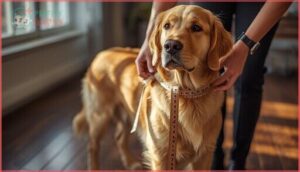
Once you’ve found the broadest point, wrap your measuring tape around your dog’s chest so it crosses the back and sternum at the same level. Keep the tape flat and snug—not tight—while your dog stands with relaxed shoulders and mouth closed.
Here’s how to nail the measurement:
- Position the tape at mid-exhale to avoid inflated numbers
- Record chest girth to the nearest quarter-inch for accurate vest sizing
- Double-check that the tape didn’t twist during the fitting process
Common Mistakes to Avoid

Even a quarter-inch sizing error can lead to dog vest malfunctions or fitting issues down the road. Don’t measure over a collar or thick coat—both add bulk that skews your dog vest sizing guide numbers.
Avoid using stretchy cloth tapes or metal rulers, since these measuring tools give inconsistent readings. Always take two measurements and average them for reliable dog vest fit and proper Pet Sizing and Fitting results.
Measuring Neck Girth for a Proper Fit
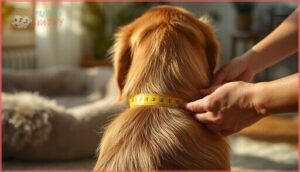
Neck girth is just as important as chest measurement in terms of fit. You’ll measure around the base of your dog’s neck, where it meets the shoulders, to guarantee the harness won’t slip over their head or rub uncomfortably.
Here’s how to get that measurement right and make sure your dog stays secure without feeling restricted.
Identifying The Correct Neck Position
The correct neck position sits just above your dog’s shoulders at the base of the neck, where it naturally aligns with the chest. This spot keeps the vest level and prevents the neck strap from pressing on the trachea.
When your dog stands, the ears should rest roughly above the shoulders, showing balanced neck alignment that won’t shift during movement.
Measuring Snugly Without Tightness
Once you’ve located the base of the neck, wrap the tape snugly around without pulling tight. You should fit two fingers between the tape and your dog’s skin to guarantee proper breathing room.
This flexible measurement technique balances sizing accuracy with comfort priorities. Record to the nearest half inch, then compare against your saddle fit chart. The right saddle material will give slightly during movement.
Allowing for Comfort and Movement
Your dog’s neck expands when they turn their head, breathe deeply, or shift their shoulders. Vest materials like breathable mesh and elastic gussets accommodate this natural motion without binding.
Look for ergonomic shapes with flexible designs that follow your dog’s contours rather than restricting them. Proper vest fit means your dog can move freely while staying secure during every walk.
Determining The Right Harness Size
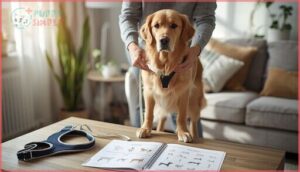
Once you’ve got your dog’s measurements in hand, the next step is matching those numbers to the right vest size. Most manufacturers provide size charts based on chest girth, but picking the perfect fit also means thinking about your dog’s unique build and life stage.
Let’s walk through how to interpret sizing information and make the best choice for your specific dog.
Interpreting Size Charts and Measurements
Once you’ve finished measuring your dog with your measuring tape, the vest size chart becomes your roadmap to the right fit. Most brands use chest girth as the primary sizing guideline, and understanding chart formats will help you navigate size variance with confidence.
- Compare your dog’s measurements to the range listed for each size
- Check whether the chart shows body measurements or finished garment dimensions
- Look for measurement tools like centimeters or inches and convert if needed
- Review any fit considerations or sizing guidelines specific to vest design
Considering Breed and Body Type
Size charts don’t tell the whole story—body proportions matter more than breed size alone. A barrel-chested bulldog and a slender greyhound both wear medium, but they need different vest materials and chest panel designs.
Deep-chested breeds require broader support to avoid neck leverage, while long-bodied breeds like dachshunds need extra torso coverage. Your dog’s build shapes the perfect fit.
Adjusting for Puppies and Growing Dogs
Growth monitoring becomes your most reliable tool when choosing the right vest for a puppy. Rapid development means measuring every two to four weeks during the first year, and breed considerations matter—larger breeds mature slower and need more size adjustments.
- Track chest girth monthly to catch growth spurts before the vest becomes too tight
- Budget for two to three vest sizes during puppy development instead of one adjustable model
- Leave extra room in adjustable straps without compromising the two-finger fit rule
Checking and Adjusting Harness Fit
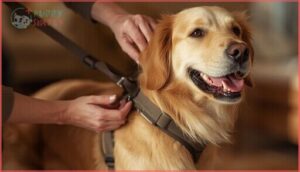
Getting the measurements right is only half the battle—now you need to make sure the dog vest actually fits your dog correctly.
A proper fit means your dog stays secure and comfortable during every walk, run, or training session.
Let’s walk through the key checks and adjustments that will help you dial in the perfect fit.
The Two-Finger Rule Explained
Once you’ve got the vest on, you need to confirm a safe, comfortable fit. Slide two fingers between the straps and your dog’s chest or neck in every fitted area. This gap—about one to two inches—gives room for breathing and movement without excess slack. If your fingers slip out easily, tighten the chest strap. If you can’t fit two fingers, loosen it to prevent rubbing and chafing.
| Check Area | Two-Finger Test | Action Needed |
|---|---|---|
| Chest strap | Fingers fit snugly | Proper vest fit |
| Neck loop | Fingers slide easily | Tighten adjustment |
| Behind front legs | Fingers can’t fit | Loosen for dog comfort |
Signs of a Poor Fit
Even a well-adjusted dog vest can show clear discomfort signs if sizing is off. Watch for rubbing behind your dog’s front legs—those are classic pressure points that lead to chafing problems.
If your dog consistently tries to wriggle free or backs out easily, you’re facing escape risks that compromise safety. Movement issues like restricted shoulder rotation or reluctance to walk signal your dog vest fit needs immediate adjustment.
Tips for First-Time Harness Fitting
Fitting your first vest can feel tricky, but a calm approach makes the process smoother for you and your dog. Here’s how to get started:
- Review sizing charts carefully and compare your measurements to recommended ranges before purchasing.
- Choose vest materials like mesh or padded nylon that suit your dog’s coat and activity level.
- Allow 10-15 minutes for gradual introduction, letting your dog sniff and adjust to the vest before fastening.
- Check vest fit using the two-finger rule at neck and chest points after initial adjustment.
- Address fitting challenges by consulting dog breed considerations or exchanging sizes if straps max out.
The key to a successful fitting is patience and attention to your dog’s comfort, ensuring a positive experience for both of you.
Frequently Asked Questions (FAQs)
How to measure your dog for a perfect fit harness?
Start by wrapping a flexible measuring tape around your dog’s chest at its widest point, right behind the front legs.
Keep it snug but loose enough to fit two fingers underneath.
Can I use a regular tape measure instead?
You can use a regular tape measure, but a flexible fabric measuring tape wraps more smoothly around your dog’s chest girth and contours, giving you more accurate saddle sizing results without reading errors.
How often should I re-measure my dog?
Your dog’s growth monitoring needs dictate remeasurement frequency. Puppies require monthly checks during rapid development, while adults need yearly assessments.
Weight fluctuations, health changes, and seasonal adjustments all trigger immediate remeasurement to maintain proper collar sizing and fitting.
What if my dog falls between two sizes?
When your dog’s measurements land between two vest sizes, choosing the right vest means selecting the smaller size for a snug fit, then using adjustable straps to fine-tune chest and neck dimensions for security.
Should I measure my dog standing or sitting?
Always measure your dog standing to capture accurate chest girth and natural posture.
Standing measurements prevent collar slipping and guarantee a secure fit, while sitting can underestimate chest depth and compromise safety.
Conclusion
Measure twice, fit once—that’s the difference between a dog vest that works and one that fails. When you know how to measure dog for dog vest correctly, you’re not just buying gear; you’re investing in safer walks and better control.
Those two measurements—chest girth and neck girth—take minutes to capture but prevent years of frustration. Your dog deserves equipment that fits their actual body, not a generic size that almost works.
- https://news.orvis.com/dogs/measure-dog-harness
- https://ruffwear.com/blogs/explored/the-size-is-right-how-to-measure-for-your-dogs-gear
- https://support.petsafe.net/articles/how-to-measure-your-dog-to-determine-which-size-easy-walk-harness-is-needed/
- https://woollywolf.co/pages/softline-harness-size-chart
- https://susanlancidesigns.com/blogs/tips/how-to-properly-fit-your-dog