This site is supported by our readers. We may earn a commission, at no cost to you, if you purchase through links.

Your dog circles three times, paws at the floor, then curls into an awkward position because the crate bed doesn’t fit right. It’s a scenario countless pet owners face, yet most blame the bed when the real problem starts with measurement. A crate bed that’s even an inch too large bunches at the edges, while one that’s too small leaves hard plastic exposed—both creating uncomfortable pressure points that disrupt your dog’s rest.
Learning how to measure dog crate for bed correctly ensures your pet gets the support and security they need. The process involves more than grabbing a tape measure; you’ll need to account for your dog’s dimensions, sleeping style, and the crate’s interior space to find that perfect fit that transforms a simple enclosure into a cozy retreat.
Table Of Contents
- Key Takeaways
- Why Accurate Crate Measurement Matters
- Essential Tools for Measuring a Dog Crate
- Step-by-Step: How to Measure Your Dog
- Calculating The Ideal Crate Size
- Determining The Right Bed Size for The Crate
- Special Considerations for Puppies and Breeds
- Common Mistakes to Avoid When Measuring
- Frequently Asked Questions (FAQs)
- Conclusion
Key Takeaways
- Measure your dog’s body length from nose to tail base and height from floor to head (including ears) while standing, then add 2-4 inches to length and 1-2 inches to height for proper crate sizing that allows natural movement without excess space.
- Choose a crate bed that’s at least 6 inches narrower than the crate’s interior width and matches the interior length minus 2 inches, while keeping bed thickness under 8 inches to maintain airflow and prevent cramping.
- Watch your dog’s sleeping style—curlers need less space than sprawlers—and re-measure puppies every 2-3 months during rapid growth to ensure the crate adapts to their changing size.
- Always measure the crate’s interior dimensions rather than exterior specifications, since walls and hardware reduce usable space and can make an advertised size misleadingly large for your dog’s actual comfort.
Why Accurate Crate Measurement Matters
Getting your dog’s crate measurements right isn’t just about buying the correct size—it directly affects how your dog feels, behaves, and stays safe inside their space. A crate that’s too small creates stress and discomfort, while one that’s too large can actually work against house training efforts.
If you’re unsure where to start, this guide on choosing the right dog crate size walks you through measuring your dog and matching those dimensions to the perfect crate.
Let’s look at three key reasons why taking the time to measure accurately makes all the difference for your dog.
Impact on Your Dog’s Comfort
Comfort starts with fit. When your dog’s crate is sized correctly, they can settle into natural sleeping postures without curling too tightly or feeling cramped. Proper dog crate dimensions reduce joint pressure and support canine relaxation, which leads to better rest and lower pet anxiety.
A well-fitted space creates a cozy den, not a confined box—your dog will notice the difference immediately. Choosing bedding designed for can further support your dog’s restful experience.
A properly sized crate becomes a cozy den your dog instinctively seeks, not a confined space they tolerate
Health and Safety Concerns
The wrong dog crate size creates real hazards. Too small, and your dog can’t stand properly—leading to muscle strain and posture problems. Too large invites accidents that compromise pet hygiene and stress reduction.
Poor crate ventilation from blocked airflow increases overheating risk.
Safety features like rounded edges and secure latches prevent injury, making accurate dog crate measurement essential for dog health and wellness.
House Training and Behavior Benefits
A properly sized crate facilitates successful crate training by discouraging your dog from using one corner as a bathroom. When house training, the right dog crate size prevents accidents—dogs naturally avoid soiling their sleeping area. This canine psychology principle helps establish consistent potty schedules and speeds housebreaking tips.
Correct crate sizing chart guidance also reduces anxiety-related behaviors, making behavior modification smoother for both of you.
Essential Tools for Measuring a Dog Crate
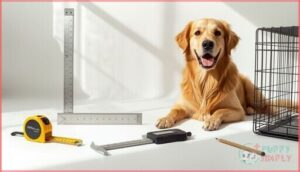
You don’t need fancy equipment to measure your dog’s crate accurately. A few basic tools and a little preparation will make the process smooth and stress-free for both you and your pup.
Let’s look at what you’ll need to get precise measurements every time.
Choosing The Right Measuring Tape
You’ll need a flexible measuring tape with a reliable locking mechanism to capture your dog’s dimensions accurately. A cloth or fiberglass tape works best for dog measurement since it bends easily around your pup’s body.
Look for one with both metric and imperial units display, a sturdy end hook, and clear blade material markings. Skip stiff steel tapes—they won’t follow curves when you measure dog crate size.
Understanding how features like blade material and durability affect precision and longevity can help you select the best tool for measuring your crate.
Preparing Your Dog for Measurement
Before you measure dog crate size, let your pup relax in a quiet spot for 5–10 minutes. Speak softly and keep the area free of distractions. Let them sniff the measuring tape for pet acclimation.
Once they’re settled, you can compare your measurements against different dog crate options for travel to find the right fit.
Offer treats every minute or two during measurement prep to encourage canine relaxation.
Dog calming techniques and pre-measurement tips make gathering accurate dimensions much easier.
Tips for Accurate Measurements
Double-check every crate dimension by repeating the process once more—consistent measurement techniques catch errors before you buy.
Record crate dimensions to the nearest quarter inch on a flat surface, and always measure dog posture while they’re standing naturally. Use accurate sizing with a soft tape that follows curves without sagging.
These space calculations confirm your crate size matches what a dog crate dimensions chart recommends.
Step-by-Step: How to Measure Your Dog
Getting the right measurements is easier than you think—you just need your dog, a tape measure, and maybe a treat or two to keep them still. We’ll walk through three key measurements that tell you exactly what size crate and bed your pup needs.
Here’s how to measure your dog the right way.
Measuring Body Length

Your dog’s body length forms the foundation for choosing the right dog crate size. Start at the tip of your pup’s nose and run a flexible measuring tape along the spine to the base of the tail—not the tip. Body Length Basics require a straight, natural stance on a flat surface.
Here’s what matters:
- Keep the tape aligned along the spine for accurate Spine Alignment
- Measure twice and record in both inches and centimeters
- Use a soft tape that follows body contours without pulling fur
- Note your dog’s natural posture for consistent Length Calculations
Measuring Height (Including Ears)

Standing height determines whether your pup can sit comfortably without ducking. Place your dog on a flat surface in a natural stance—Canine Posture matters for Accurate Sizing.
Measure from floor to the top of the head, including upright ears for Ear Inclusive Height. Stiff ears add 1-2 inches to dog crate dimensions. Write down this Head Alignment measurement twice.
These Ear Measurement Tips guarantee your crate sizing chart calculations match real-world dog crate size needs.
Considering Tail and Sleeping Style

Your pup’s tail positioning and sleep postures reveal vital dog comfort clues. Watch how their tail movement shifts during rest—some dogs curl tightly, others sprawl out.
These sleeping habits directly affect dog crate size needs. If your dog stretches fully or wraps their tail around their body, add 3-4 inches to your dog measurement for ideal dog crate dimensions in any crate sizing chart or dog bed size guide.
Calculating The Ideal Crate Size

Now that you’ve got your dog’s measurements written down, it’s time to do a little math. Don’t worry—this isn’t complicated, just some simple addition to make sure your pup has enough wiggle room.
Here’s how to turn those numbers into the perfect crate size.
Adding Extra Space for Comfort
Your dog’s comfort zones depend on breathing room inside the crate. Proper space allowance means your pup can shift, stretch, and settle without feeling cramped. Here’s what you need:
- Dog posture flexibility – Leave 2 extra inches of height so your dog’s head moves naturally while lying down.
- Crate ventilation – Position breathable mesh panels on two sides to keep air circulating.
- Movement freedom – Include a 3-inch gap between the bed and crate wall.
Recommended Allowance for Length and Height
After you’ve got your dog’s measurements, use these space allowance rules: add 2 to 4 inches to their body length for turning room, and tack on 1 to 2 inches above their height so they won’t bump the ceiling.
These sizing guidelines prevent cramping while keeping your crate size snug enough for potty training success—it’s the sweet spot every pup needs.
Matching Measurements to Crate Dimensions
Once you’ve calculated the total space needed, compare those figures against manufacturer specifications. Most brands provide a crate sizing chart showing interior dimensions—look for measurements that meet or exceed your dog’s requirements by at least the recommended allowance.
For instance, if your dog measurement totals 28 inches in length, choose a crate labeled 30–32 inches to maximize dog comfort levels and space.
Determining The Right Bed Size for The Crate
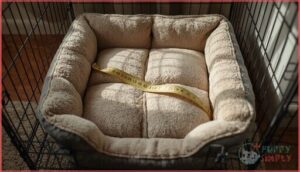
Once you’ve got your crate measurements locked down, it’s time to find a bed that actually fits inside. You want something snug enough to stay put but roomy enough for your dog to settle in comfortably.
Here’s how to match bed size to crate space without ending up with a lumpy mess or wasted room.
Measuring The Crate’s Interior Space
Your crate’s interior dimensions—not the exterior box—are what count for dog comfort and crate safety. Measure the interior length from front wall to back wall at floor level, then width side to side, and height from floor to ceiling at the center. Use a rigid tape or ruler for accuracy, checking twice.
These real measurements guide your dog crate sizing and guarantee proper puppy crate size fit.
Selecting Bed Dimensions That Fit
Now that you’ve got your interior measurements, choosing the right bed dimensions comes next. Your dog bed size guide should aim for a bed at least 6 inches narrower than the crate width—so a 24-inch wide crate fits an 18-inch bed snugly.
Match the bed length to your crate’s interior length, leaving 2 inches for shifting. This balance ensures dog comfort, proper crate ventilation, and pet safety.
Adjusting for Bed Thickness and Material
Beyond dog bed dimensions, thickness plays a huge role in crate ventilation and comfort. Mattresses over 8 inches can press against crate lids, restricting airflow and dog crate sizing accuracy.
Material Selection matters too—dense memory foam offers Edge Support and keeps beds flat, while gel-infused layers aid Thermal Regulation. Check your dog crate measurement against Bed Thickness to avoid a cramped fit.
Special Considerations for Puppies and Breeds
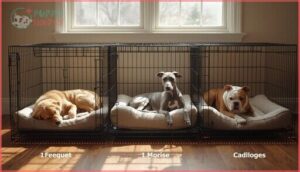
Not every dog fits the standard sizing chart, and that’s especially true when you’re dealing with puppies or specific breeds. A Golden Retriever puppy won’t stay small for long, and a Greyhound needs different space than a Bulldog of the same weight.
Here’s what you need to know to get the measurements right for your specific situation.
Growing Puppies and Adjustable Crates
Puppies grow faster than your measuring tape can keep up with, which is why an adjustable crate is your best friend. These smart designs use removable panels to expand as your pup hits new growth stages, saving you from buying multiple crates.
- Adjustable panels usually add 2 to 3 inches per expansion stage
- Middle dividers control puppy crate size and prevent potty accidents
- Reinforced corners withstand chewing during teething phases
- Welded rails support heavier dogs as they mature
- Secure latches resist pawing and keep puppies safely contained
Check your crate sizing chart every few weeks and adjust accordingly.
Breed-Specific Sizing Tips
Body proportions matter more than breed labels when you’re nailing down dog crate sizing. A Bulldog’s broad chest needs extra girth, while a Dachshund’s long back demands accurate length measurements.
Use this crate sizing chart to match breed variations with the right crate adjustments:
| Breed Type | Key Measurement | Special Consideration |
|---|---|---|
| Brachycephalic (Pugs, Bulldogs) | Chest girth + 2 fingers | Looser neck fit for breathing |
| Long-bodied (Dachshunds, Corgis) | Nose to tail when stretched | Extra back length prevents cramping |
| Deep-chested (Greyhounds, Dobermans) | Rib cage depth | Clearance for chest expansion |
| Curled sleepers (Spaniels, Terriers) | Hip to shoulder | Width for curled sleeping styles |
| Tall breeds (Great Danes, Collies) | Shoulder height standing | 1.5-2 inches headroom above ears |
Sleeping styles and growth factors also shift your puppy crate size requirements, so pair these breed characteristics with your dog’s unique quirks.
Re-measuring as Your Dog Grows
Your dog won’t stay the same size forever, so tracking growth patterns helps you avoid cramped quarters. Re-measure every 2 to 3 months during rapid puppy development and every 4 to 6 months once growth slows.
Record length, height, and chest girth each time to spot when crate upgrades become necessary, keeping dog crate sizing aligned with your dog’s changing body.
Common Mistakes to Avoid When Measuring

Even with the best intentions, it’s easy to slip up when measuring your dog for a crate and bed. These missteps can lead to a poor fit that affects your pup’s comfort and safety.
Let’s walk through the most common measuring mistakes so you can avoid them from the start.
Overlooking Interior Vs. Exterior Crate Size
Many owners confuse advertised crate dimension standards with what their dog actually feels inside. Exterior measurements include walls, latches, and hardware—they tell you where the crate fits in your room. Interior dimensions reveal the real usable space for turning and stretching.
This common measurement mistake in dog crate sizing can leave your pup cramped even when the box looks plenty big.
Ignoring Your Dog’s Sleeping Habits
Some pups curl into tight balls; others sprawl like starfish. If you don’t factor in your dog’s sleep patterns and preferred sleeping style, you’ll end up with a bed that looks right on paper but feels wrong in practice.
Watch how your pup settles at night—canine behavior reveals whether you need extra room for restful nights and better sleep quality.
Not Allowing for Future Growth
What works today won’t fit tomorrow. Puppies can double their weight in weeks, and ignoring growth projections is a costly mistake. Space planning matters—adjustable dividers let you scale up your puppy crate size without buying new.
Check dog development charts for your breed, then factor in crate adaptation needs. Measuring once locks you into rigid dog crate sizing that fails puppy training tips and your wallet.
Frequently Asked Questions (FAQs)
Can I use a human bed pillow instead?
Standard pillows shift and flatten easily, creating uneven sleep surfaces that won’t support your dog’s joints properly.
Crate-specific beds offer better washability, allergen control, and chew resistance—prioritizing pet wellness over convenience.
What if my dog has joint problems?
Picture your pup wincing as he curls up. Dogs with joint pain need orthopedic beds with memory foam for arthritis management.
Consult your vet about canine therapy options and joint pain relief strategies.
Should the bed be waterproof or washable?
Choose both if possible—washable covers handle routine dirt and dander, while waterproof materials protect against accidents.
This combo maximizes bed hygiene, moisture control, and pet comfort without sacrificing easy cleaning.
How often should I replace the crate bed?
Most pet owners wait too long—beds should be inspected quarterly and replaced every 1–2 years. Watch for flattened padding, tears, persistent odors, or mold to maintain crate hygiene and dog comfort.
Do anxious dogs need different bed materials?
Yes—anxious dogs benefit from plush, textured calming fabrics like faux fur or memory foam that offer gentle pressure and security.
These bed textures improve sleep quality and anxiety relief through tactile comfort and stable support.
Conclusion
Measure twice, cut once—this old carpenter’s wisdom applies perfectly when you learn how to measure dog crate for bed. Those few minutes spent with a tape measure prevent weeks of discomfort for your pet.
Double-check your numbers, account for your dog’s unique sleeping style, and remember that a properly fitted bed transforms a crate from simple confinement into a sanctuary. Your dog’s peaceful sleep starts with precision today.