This site is supported by our readers. We may earn a commission, at no cost to you, if you purchase through links.
Every dog parent knows the look—a pair of hopeful eyes begging for something fun to do, even as your to-do list grows. Chew toys and fetch get old, but there’s a secret weapon for battling canine boredom: puzzle toys.
These clever gadgets tease out hidden talents, flex your dog’s brain, and keep curious paws busy long after the first treat drops. Forget the myth that puzzle toys only distract for a few minutes; when you know how to introduce puzzle toys to your dog, you discover lasting joy, confidence, and calm in their daily routine.
Table Of Contents
- Key Takeaways
- Why Puzzle Toys Benefit Your Dog
- Choosing The Right Puzzle Toy
- How to Introduce Puzzle Toys Step-by-Step
- Encouraging Engagement and Preventing Frustration
- Maintaining Puzzle Toys for Ongoing Success
- Frequently Asked Questions (FAQs)
- How to teach a dog to use a puzzle toy?
- What is 15 minutes of mental stimulation for dogs?
- Are puzzle toys good for dogs?
- What are the 5 pillars of enrichment for dogs?
- Can multiple dogs share the same puzzle toy?
- How do I handle treat allergies with puzzle toys?
- What if my dog ignores all puzzle toys?
- Are puzzle toys suitable for senior or disabled dogs?
- How do I prevent my dog from chewing the toy apart?
- Conclusion
Key Takeaways
- Puzzle toys offer powerful mental stimulation, helping your dog build confidence, develop problem-solving skills, and stay engaged.
- Introducing puzzle toys step-by-step—starting simple, demonstrating use, offering high-value rewards, and supervising play—sets dogs up for success.
- Rotating toys and matching the challenge level to your dog’s age, breed, and skill keeps them interested and prevents frustration or boredom.
- Regular cleaning, careful material selection, and monitoring your dog’s progress ensure puzzle toys remain safe, enjoyable, and effective for ongoing enrichment.
Why Puzzle Toys Benefit Your Dog
Puzzle toys do more than keep your dog busy—they can boost brainpower in surprising ways. These special toys help channel their energy and curiosity for good, all while making life a little less stressful for both of you.
For fresh ideas on the best brain-boosting toys and how to use them, check out this guide to top interactive dog toys for solo play.
Puzzle toys not only keep dogs entertained but also sharpen their minds, channel energy, and ease stress for both pet and owner
Let’s look at the key reasons puzzle toys are such a smart addition to your dog’s routine.
Mental Stimulation and Cognitive Development
Discovery is at the heart of a dog’s world—and mental stimulation with puzzle toys brings it front and center. Cognitive training and interactive toys do more than entertain; they encourage healthy brain development and boost neuroplasticity.
With every bit of mental exercise, you help your pup:
- Strengthen memory
- Sharpen problem solving skills
- Build attention spans
- Support better learning
- Promote dog mental health
Consistent engagement in mentally challenging activities can substantially improve.
Preventing Boredom and Destructive Behaviors
Ever wonder why your shoes end up chewed or the couch gets a little too much “love” when you’re out? Puzzle toys offer the mental stimulation dogs crave, serving as boredom prevention and the perfect backup for rainy days.
By weaving canine enrichment into their daily routine, you help steer those busy minds away from destructive behavior and boost dog mental health.
Supporting Emotional Well-Being and Reducing Stress
Keeping your dog’s emotional balance in check is about more than cuddles—mental stimulation plays a big part, too.
Puzzle toys act like calming techniques in action, offering real anxiety relief and healthy outlets for stress reduction.
By weaving canine enrichment into your routine, you’ll strengthen mental health and provide gentle separation anxiety solutions—without your pup ever noticing it’s a lesson.
Encouraging Independent Play and Problem-Solving
Alongside boosting emotional health, puzzle toys set the stage for real independent play. Dog Brain Games encourage your pup to work things out solo—no constant hand-holding required.
As your dog navigates these mental challenges, you’re quietly supporting canine enrichment, cognitive development, and problem solving.
Over time, your furry friend learns to tackle dog puzzle toys confidently, turning curiosity into lifelong skills. Just like children, dogs benefit from practicing independent problem solving techniques to master new skills and foster confidence.
Choosing The Right Puzzle Toy
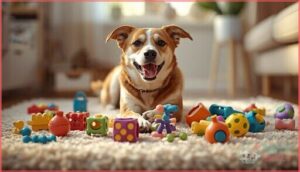
Picking out the right puzzle toy for your dog isn’t always straightforward. Every pup is different, and a toy that’s perfect for one might frustrate another.
To help you strengthen your bond and keep your dog mentally engaged, consider exploring these ideas for interactive puzzle play based on expert recommendations for social enrichment.
Here’s what you’ll want to take into account as you narrow down your options.
Assessing Your Dog’s Age, Breed, and Skill Level
Think of your dog as a puzzle in progress—no two pieces are quite the same. Age considerations guide which puzzles fit. Breed traits shape curiosity and energy.
Skill assessment means watching how your dog plays and solves problems. Developmental stages—puppy, adult, or senior—teach you when to adjust. This is real canine cognition at work.
Matching Difficulty Levels to Your Dog
Patience pays off when matching puzzle toys to your dog’s canine learning curve. Use dog skill assessment to avoid overwhelm—a bored retriever’s not the goal! Puzzle toy calibration means starting with easy wins, then adjusting difficulty levels.
For breed specific challenges, tweak the task, not just the treat. Interactive play ensures progress; cognitive stimulation guides every adjustment.
| Difficulty Level | Example Toy | Dog Indicator |
|---|---|---|
| Beginner | Simple treat ball | Quick success |
| Intermediate | Slide compartment | Tries multiple steps |
| Complex | Multi-step puzzle | Persistent problem-solver |
| Expert | Time-delay feeder | Stays engaged longer |
| Custom | Mixed challenge maze | Needs variety |
Selecting Safe, Durable, and Easy-to-Clean Materials
When you shop for puzzle toys, put Easy Cleaning at the top of your list—nobody enjoys scrubbing gooey crevices. Look for Nonporous Surfaces and Durable Plastics to block bacteria and bite marks.
For your peace of mind:
- Choose Safe Materials (like BPA-free)
- Favor Odor Resistance
- Go dishwasher safe
- Seek smooth construction
Pet Care and Wellness never tasted cleaner.
Considering Treat-Motivated and Interactive Options
Ever seen your dog’s eyes light up at the promise of a treat? That’s the magic behind treat dispensers and puzzle feeders.
These interactive games are more than toys—they teach real-life problem solving skills while making use of creative reward systems.
Play variations keep things fresh as your dog learns, trains, and stays happily engaged.
| Puzzle Toys | What They Spark |
|---|---|
| Treat Dispensers | Motivation and focus |
| Interactive Games | Curious problem solvers |
How to Introduce Puzzle Toys Step-by-Step
Bringing puzzle toys into your dog’s routine doesn’t have to be complicated. With a little planning and the right approach, you’ll set your pup up for success.
Here’s how you can introduce puzzle toys step by step.
Starting With Simple Toys and Gradually Increasing Challenge
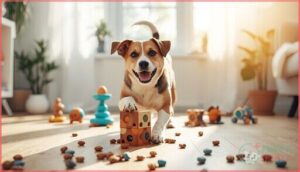
Kicking off your Puzzle Toy Introduction with easy wins sets your dog up for success—it’s the training wheels of canine cognitive development. Simple Toy Benefits aren’t just about entertainment; they spark curiosity and build confidence for bigger leaps later.
To keep motivation high, focus on:
- Gradual Challenge boosts problem solving skills
- Dog Engagement Strategies fend off frustration
- Interactive toys invite curiosity
- Toy Rotation Techniques maintain excitement
Demonstrating How The Toy Works
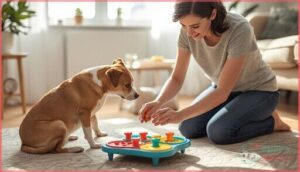
Think of yourself as your dog’s game show host—demonstrate Toy Mechanics step by step with clear Visual Guidance. Gently nudge levers or rotate dials so your pup sees treats appear, making the Reward Systems shine.
Point out Safety Features as you go. Interactive Demos build your dog’s understanding early, smoothing the road for introducing Puzzle Toys to dogs with confidence and excitement.
Using High-Value Rewards for Motivation

Now that your dog’s seen how the puzzle works, it’s time to crank up the motivation. Use tiny, high-value treats—they’re the jackpot of reward-based learning.
Mix things up: alternate flavors, toss in a favorite toy, or even use a spritz of scent for sensory stimulation. Smart Reward Scheduling prevents boredom, keeps caloric intake in check, and encourages problem-solving without overfeeding.
Supervising Initial Interactions for Safety

Once those tasty treats have sparked interest, keep an eye on your pup’s first puzzle sessions. Following Safety Protocols matters—even canine enrichment calls for Hazard Assessment. Your role? Model Supervisor Training at home: stand between curious noses and tricky parts, spot risks early, and pause for Incident Reporting if needed. Keep the atmosphere light, but focused on dog safety.
- Watch for small pieces or loose parts.
- Supervise all early play with interactive toys.
- Step in if frustration or roughness bubbles up.
- Celebrate problem-solving while guiding gentle behavior.
Encouraging Engagement and Preventing Frustration

Once you’ve introduced your dog to puzzle toys, the real magic happens by keeping things fun and frustration-free.
A few simple tricks can make all the difference in your dog’s experience.
Here’s how to set your pup up for success every step of the way.
Showing Excitement and Giving Praise
Enthusiasm can transform simple praise into a powerful training tool. Pair Positive Reinforcement and Verbal Cues with visible Excitement Signals—a cheerful tone, a quick shoulder shrug, or a smile—to make your encouragement unforgettable.
Fast Praise Timing and clear Reward Systems help your dog understand exactly which action deserves treats, playtime, or attention with puzzle toys and daily dog training techniques.
| Excitement Signal | Example Phrase | Reward Pairing |
|---|---|---|
| Cheerful smile | “You did it, champ!” | Tasty treat |
| Soft hand clap | “Great work!” | Favorite toy |
| Upbeat, high voice | “Awesome job!” | Extra playtime |
Keeping Play Sessions Short and Positive
Pairing upbeat encouragement with short bursts of play works wonders for dog mental health and focus. Set a timer for under ten minutes; this keeps puzzle toys fresh and playtime fun.
Short Play Benefits shine brightest when followed by Positive Reinforcement—praise or treats—ending with a clear signal. These Play Session Tips support cognitive development while preventing frustration for both of you.
Rotating Toys to Maintain Interest
Every week or so, mix things up—Toy Rotation leverages your dog’s natural curiosity, keeping canine enrichment and stimulation sky-high.
Try this for fresh Play Schedules and engagement:
- Swap puzzle toys every 1–3 weeks
- Alternate interactive toys and puzzle variety
- Store out-of-play toys out of sight
- Monitor dog engagement, rotating favorites in
- Track responses for smart Toy Refreshment
Providing Guidance Without Taking Over
Guided Learning with puzzle toys isn’t about doing the thinking for your dog. Instead, offer Gentle Prompts—point to a compartment or nudge a treat closer.
Calm Supervision supports reward-based learning; show patience as your dog explores. Use Positive Reinforcement and celebrate each small win.
Patient Guidance helps your dog build confidence, weaving strong problem solving habits into daily Dog Training routines.
Maintaining Puzzle Toys for Ongoing Success
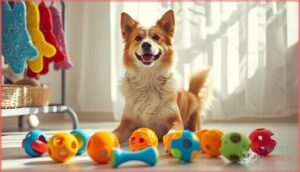
Once your dog’s puzzle toys are in the rotation, a little ongoing care makes a big difference.
You’ll want to keep things clean, safe, and interesting for your pup.
Here’s what to pay attention to as you move forward.
Cleaning and Inspecting Toys Regularly
Ever stop to think about what’s living on your dog’s puzzle toys? Regular Toy Sanitizing and Inspection aren’t just fussy routines—they’re the backbone of sound Hygiene Practices and reliable Puzzle Maintenance.
Clean dog toys with mild soap and warm water, scrub seams, inspect for cracks or loose parts, and always air dry thoroughly. That’s simple, effective pet care for better dog health and safer pet entertainment.
Storing Toys Properly Between Uses
Did you know toy chaos can sabotage playtime? Smart Toy Storage Solutions are the unsung heroes of pet care.
To keep puzzle toys fresh and safe, try these Organization Tips:
- Use labeled, clear bins to spot dog toys easily
- Keep storage dry for moisture control
- Store heavier items low for safe handling
- Rotate toys to boost fun—and minimize clutter
Monitoring Your Dog’s Progress and Adjusting Difficulty
Think of Progress Tracking like tuning an old radio—you want to catch the right signal of canine engagement. Log success rate, Difficulty Adjustment, reward tweaks, and puzzle rotation in a simple table.
This way, you’ll clearly see your dog’s leaps in cognitive stimulation and problem solving skills, letting you adjust your approach for ongoing dog training and development.
| Metric | Observation |
|---|---|
| Success Rate | 3/5 puzzles solved |
| Time to Solve | 4 minutes average |
| Prompts Needed | Two per puzzle |
| Reward Used | High-value treat |
Integrating Puzzle Toys Into Your Dog’s Daily Routine
A smart Puzzle Toy Scheduling trick? Pair play right after meals, so Puzzle Toys double as a slow-feeding strategy.
Regular daily routine tips like using mornings for Interactive Toys and rotating games keep your dog’s curiosity fresh. This playtime optimization boosts canine enrichment and stimulation, and also strengthens dog training and development—plus, it gives real mental health benefits.
Frequently Asked Questions (FAQs)
How to teach a dog to use a puzzle toy?
No need to reinvent the wheel here—start by letting your dog sniff the puzzle toy, use high-value treats, and show how to nudge, roll, or lift parts.
Praise successes.
Interactive play builds problem solving skills and confidence.
What is 15 minutes of mental stimulation for dogs?
Fifteen minutes of mental stimulation—using activities like puzzle toys or scent games—works wonders for dog focus and cognitive stimulation.
Think of it as brain exercise, boosting problem solving skills and canine cognition while gently tiring their mind.
Are puzzle toys good for dogs?
Like a brain gym for your pup, puzzle toys pack real benefits. They boost canine cognitive skills, spark dog intelligence, and fuel problem solving skills—supporting dog mental health, pet problem solving, and overall animal enrichment with every play session.
What are the 5 pillars of enrichment for dogs?
The five pillars of enrichment for dogs are Social Contact, Occupational Tasks, Sensory Stimulation, Nutritional Balance, and Physical Activity.
Focusing on these pillars boosts Dog Mental Health, problem solving skills, and facilitates essential animal enrichment activities.
Can multiple dogs share the same puzzle toy?
Imagine a group of dogs solving a riddle together—the magic of cooperative puzzle toys!
Multi dog toys foster dog socialization and boost problem solving skills, but always supervise group play dynamics to avoid resource guarding and guarantee shared play benefits.
How do I handle treat allergies with puzzle toys?
Worried about treat allergies with puzzle toys? Stick to allergen free treats, monitor ingredients closely, and choose food-safe, washable toys.
Good Allergy Management and regular Toy Cleaning protect your dog’s health—and make Puzzle Safety simple and stress-free.
What if my dog ignores all puzzle toys?
You know the saying, “You can lead a horse to water, but you can’t make it drink.” Sometimes, dogs ignore puzzle toys due to low Dog Motivation, unsuitable Puzzle Toy Design, Canine Anxiety, or other Frustration Factors.
Try adjusting Interactive Rewards or routine.
Are puzzle toys suitable for senior or disabled dogs?
Absolutely—puzzle toys are a smart choice for senior or disabled dogs, offering gentle challenges and adaptive toys that support elderly engagement, promote mental stimulation, aid dog health, and encourage positive dog behavior modification as canine cognitive development continues.
How do I prevent my dog from chewing the toy apart?
Think of dog toys like a sturdy fortress—Toy Durability and Safe Materials are your walls.
Mix Chew Prevention training, Dog Supervision, and regular Puzzle Maintenance to keep interactive toys and treat dispensing puzzle toys safe from destruction.
Conclusion
Did you know that dogs who work for their food—like those using puzzle toys—can spend up to 40 minutes longer engaged at mealtime than with a regular bowl? That’s an entire episode of your favorite show, bought with a sprinkle of kibble and curiosity.
When you learn how to introduce puzzle toys to your dog, you’re giving them more than a treat; you’re unlocking confidence, focus, and calm that echo long after playtime ends.