This site is supported by our readers. We may earn a commission, at no cost to you, if you purchase through links.

Your dog’s coat tells a story—about their health and comfort, and whether you’ve been putting off that grooming session you promised yourself you’d do last weekend.
Professional grooming appointments can cost $50 to $100 per visit, and for most dogs, that adds up to $600 or more each year.
Learning how to groom your dog at home isn’t just about saving money, though that’s a nice bonus. It’s about building trust with your pet, catching health issues before they become serious problems, and giving your dog the kind of regular care that keeps their skin healthy and their coat gleaming.
With the right tools and techniques, you can transform your bathroom or backyard into a grooming space that rivals what the professionals offer.
Table Of Contents
- Key Takeaways
- Essential Tools for At-Home Dog Grooming
- Brushing and Combing Techniques
- Bathing Your Dog at Home
- Nail, Ear, and Oral Care Steps
- Advanced Grooming for Different Breeds
- Top 10 Dog Grooming Products for Home Use
- Kwik-Stop Styptic Powder for Pets
- Tick Remover for Dogs and Cats
- Elevated Dog Bathing Grooming Center
- Tropiclear Papaya Coconut Pet Shampoo Conditioner
- Aloe Vera Waterless Dog Shampoo
- Bamboo Pet Metal Pin Brush
- Conair Pro Pet Dog Shears
- Safari Professional Dog Nail Trimmer
- Enzymatic Dog Toothpaste by Vet’s Best
- Virbac CET Dog Cat Toothbrush
- Frequently Asked Questions (FAQs)
- How do you groom a dog for beginners?
- How often should I groom my dog?
- What tools are necessary for grooming my dog?
- Can I use human toothpaste for my dogs teeth?
- How do I remove a tick from my dog?
- What should I do if my dogs paw gets cut?
- How do I groom my puppy for the first time?
- What human foods are safe for dogs?
- Can I use a hairdryer on my dog?
- How do I prevent my dog from biting during grooming?
- Conclusion
Key Takeaways
- Home grooming saves $600+ annually while strengthening your bond with your dog and catching health issues early through regular hands-on inspection during brushing, bathing, and nail care sessions.
- Match your tools and techniques to your dog’s specific coat type, short-haired breeds need weekly brushing with curry brushes, while double-coated dogs require undercoat rakes two to three times weekly to prevent mats and control seasonal shedding.
- Use pH-balanced dog shampoos around 6.5-7.5 pH, rinse until water runs completely clear, and never use human toothpaste on dogs since xylitol causes dangerous blood sugar drops within 30 minutes.
- Keep grooming sessions short and reward-based for anxious dogs, watching for stress signals like lip licking or stiffening, and stop immediately if your dog shows fear to build trust over time.
Essential Tools for At-Home Dog Grooming
You don’t need a professional salon to keep your dog looking and feeling their best. With the right tools in your grooming kit, you can handle most grooming tasks safely and effectively at home.
During grooming sessions, you might notice changes like enlarged dog nipples, which can signal hormonal shifts or other health considerations worth monitoring.
Let’s walk through the essential equipment you’ll need to set up your own grooming station.
Start with the basics like a quality brush, nail clippers, shampoo, and a non-slip mat—our complete puppy checklist covers all the grooming essentials to keep your pup looking and feeling great.
Choosing The Right Brushes and Combs
The right brush makes all the difference in keeping your dog’s coat healthy, so match your tool to their fur type. Short-haired dogs do well with a curry brush or gentle slicker brush, while long or double-coated breeds need a pin brush paired with detangling tools like an undercoat rake.
For breeds like the Corgi Pug mix, a rubber curry brush works perfectly to lift dead hair and distribute natural oils during quick daily sessions.
Consider these features when selecting grooming tools:
Understanding how much corgis shed helps you pick brushes and deshedding tools that actually work for their thick double coat.
- Bristle options that suit your dog’s sensitivity, from soft nylon to sturdy steel pins
- Ergonomic grips with non-slip holds to reduce hand fatigue during longer sessions
- Brush materials like natural boar bristles for oil distribution or silicone for gentle brushing
- Comb types including wide-tooth designs for wet coats and dematting combs for stubborn tangles
Choose tools you can control comfortably, because steady hands prevent accidental skin irritation while brushing. For more on the importance of, understanding your pet’s specific needs is key.
Selecting Dog-Friendly Shampoos and Conditioners
Pick a dog shampoo free from sulfates and artificial dyes, which strip natural oils and irritate sensitive skin.
Many dog shampoos for long hair are specifically formulated with pH-balanced, sulfate-free ingredients to protect both skin and coat.
Match the formula to your dog’s coat—moisturizing blends with shea butter work wonders on dry fur, while clarifying options tackle oily buildup without overdrying.
Check for pH balanced labels around 6.5 to 7.5, and test a small patch on the neck before full bathing. For more information on the importance of avoiding harmful shampoo ingredients, consult expert resources.
Nail Clippers, Shears, and Other Grooming Tools
Once you’ve chosen the right shampoo, turn your attention to nail clippers and cutting tools—your safety net against overgrown nails and unruly fur. Guillotine clippers suit small to medium nails, while scissor-type versions manage curved edges with precision. Stainless steel blades resist rust and keep their edge longer, and ergonomic handles reduce hand fatigue during extended sessions.
- Safety stops prevent accidental cuts into the quick
- Rubberized grips improve control on damp paws
- Replaceable blades extend tool life without full replacement
- Regular oiling of pivot points maintains smooth operation
Preparing Your Grooming Space
Set your grooming station on a waterproof mat in a well-lit corner where shadows won’t hide nicks or tangles. Keep dog grooming tools within arm’s reach using magnetic trays or small shelves, and maintain a room temperature between 65 and 75 degrees for pet safety.
A non-slip mat under your feet prevents fatigue during longer sessions, while a dedicated waste bin streamlines workspace organization and sanitation tips.
Brushing and Combing Techniques
Brushing isn’t just about keeping your dog looking good—it’s one of the most important things you can do for their dog’s health. The right technique depends on your dog’s coat type, and knowing how to handle tangles, distribute natural oils, and spot skin problems early will make grooming easier and more effective.
Here’s what you need to know to brush like a pro.
How Often to Brush Different Coat Types
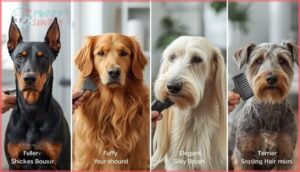
Your dog’s coat type dictates brushing frequency, and understanding this prevents mats while controlling shedding. Slick and short-haired coats need weekly brushing, increasing during seasonal shedding.
Double-coated breeds require two to three sessions per week to reach the undercoat, while long and silky coats demand at least three weekly brushings. Wire coats respond well to weekly grooming plus periodic hand-stripping to maintain texture.
Removing Tangles and Mats Safely
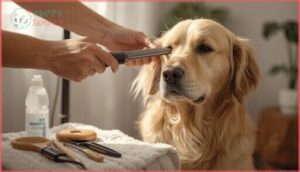
Separate your dog’s coat into small sections before reaching for detangling tools, working from tips toward roots to prevent new knots. Use your fingers first to loosen outer tangles, then follow with a wide-tooth comb for gentle combing and safe brushing.
Apply detangling spray to provide slip during mat removal, and keep sessions short if your dog shows distress—patience prevents accidents while controlling shedding.
Detangling spray eases mat removal, but short sessions and patience prevent accidents when your dog shows distress
Distributing Natural Oils for Healthy Skin
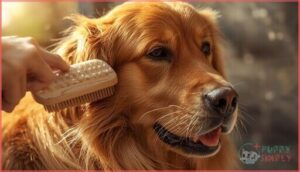
Brushing your dog with long, gentle strokes pulls natural oils from the skin down each hair shaft, creating coat shine and supporting skin health.
Use a soft bristle brush or grooming glove to spread sebum evenly, which maintains natural balance and helps repel dirt. This oil distribution through proper dog grooming techniques strengthens your dog’s barrier against irritants while keeping fur glossy between baths.
Detecting Skin Issues Early
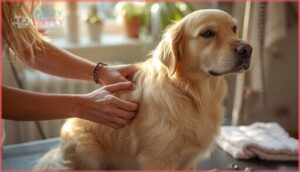
Your hands are your best diagnostic tools during dog grooming—run them over your dog’s whole body weekly to feel small bumps, scabs, or rough patches before they spread.
Skin checks catch early redness signs around the belly, groin, and paws, while unusual odor detection, persistent itch patterns, or hair loss signal infections needing veterinary attention, protecting canine health and pet health tips effectively.
Bathing Your Dog at Home
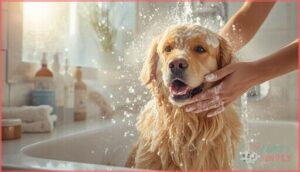
Bathing your dog properly keeps their coat clean, their skin healthy, and helps you catch any problems early.
Getting it right comes down to choosing the right products, knowing how often your dog actually needs a bath, and following a process that won’t stress either of you out.
Here’s what you need to know to make bath time safe and effective.
How to Choose The Right Shampoo
Your dog’s skin operates at a neutral pH around 7.5, so reaching for your own shampoo can weaken that protective barrier and trigger irritation.
Match the formula to your dog’s needs:
- Short coats (Boxers): gentle all-purpose works well
- Long coats (Shih Tzus): moisturizing prevents tangles
- Curly coats (Poodles): conditioning keeps curls soft
- Wiry coats (Terriers): mild cleanser maintains texture
- Double coats (Huskies): residue-free rinse is critical
Skip sulfates, parabens, and synthetic fragrances—they strip natural oils.
Bathing Frequency by Breed and Lifestyle
There’s no one-size-fits-all answer to how often you should bathe your dog—breed specific coat types, lifestyle factors, and seasonal adjustments all play a role.
Short-haired Beagles can wait six to eight weeks between baths, while long-haired Yorkies need grooming every three to four weeks.
Active outdoor dogs may require weekly dog bathing and shampooing, especially during muddy spring months when dirt clings stubbornly.
Step-by-Step Bathing Process
Before you turn on the tub, gather your dog shampoo, towels, cotton balls, and grooming tools so you won’t leave your pet unattended.
Let your dog potty first, then place a non-slip mat in the tub for steady footing. Set water to lukewarm—test it on your forearm—and wet from shoulders back, avoiding the dog’s face entirely.
Proper Rinsing and Drying Methods
After shampooing, rinse from neck to tail with lukewarm water—test it on your wrist—working your fingers down to the skin until the water runs completely clear. This prevents soap residue from causing skin irritation, especially in armpits and between toes where buildup hides.
Drying methods for coat maintenance:
- Press absorbent towels against wet fur instead of rubbing to avoid tangles
- Use a dog-specific dryer on cool settings, never a hot human hairdryer
- Keep your dog warm and draft-free until fully dry
Nail, Ear, and Oral Care Steps
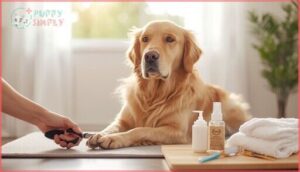
Grooming your dog goes beyond keeping their coat clean—nails, ears, and teeth need regular attention to prevent pain, infection, and serious health problems down the road.
These tasks might seem intimidating at first, but with the right approach and a little patience, you’ll handle them confidently at home. Let’s walk through each technique step by step, focusing on safety and building trust with your dog.
Safe Nail Trimming Techniques
Start by choosing sharp pet nail clippers that won’t crush the nail. Position the blades parallel to the nail’s natural edge, then cut straight across, leaving a small white tip beyond the quick.
For light-colored nails, trim just above the pink line; for dark nails, work in 1–2 millimeter increments and check the exposed edge after each cut to avoid bleeding.
Cleaning Your Dog’s Ears
Regular ear cleaning prevents infections and keeps your dog comfortable. Gently lift the ear flap, fill the canal with vet-approved solution, then massage the base for twenty to thirty seconds until you hear squishing. Let your dog shake, then wipe visible debris with cotton balls—never cotton swabs, which push wax deeper.
- Dogs with floppy ears need cleaning every other week to prevent moisture buildup
- A yeasty smell or thick discharge signals infection, not just routine wax removal
- Over-cleaning strips protective oils and actually increases irritation risk
Brushing Your Dog’s Teeth
Brushing your dog’s teeth twice daily with enzymatic toothpaste prevents plaque buildup and promotes long-term oral health. Use a soft-bristled toothbrush designed for dogs, applying gentle circular motions to outer tooth surfaces at a forty-five degree angle toward the gum line. Start slowly, letting your dog lick toothpaste from your finger before introducing the brush, and reward each session with praise to build positive associations.
| Step | What to Do | Why It Matters |
|---|---|---|
| Choose Tools | Use enzymatic dog toothpaste and soft-bristled brush | Human toothpaste contains unsafe ingredients; dog formulas are safe to swallow |
| Introduce Gradually | Let dog lick toothpaste, then brush a few teeth | Reduces stress and builds trust through positive experiences |
| Brush Technique | Lift lip, angle brush forty-five degrees, use circular motions | Targets plaque at gum line where buildup collects most |
| Focus Areas | Prioritize outer surfaces of molars and canines | These teeth accumulate tartar fastest and affect overall canine health |
| Reward Consistently | Offer praise or small treat after each session | Reinforces cooperation and makes teeth brushing routine easier |
Short sessions work best—even thirty seconds per day improves gum care and reduces veterinary dental cleanings. Replace toothbrushes every three to four months, and watch for red gums or persistent bad breath that signals deeper issues requiring professional attention.
Preventing Common Health Issues
Vigilance during nail care sessions transforms routine grooming into preventive health monitoring. Trimming nails properly protects joint mobility by preventing abnormal toe pressure, while regular ear checks catch infections before they worsen.
Inspect skin for lumps, redness, or hair loss—early detection often prevents serious illness. These canine health and hygiene practices safeguard coat health, parasite control, and overall pet health and wellness through consistent observation.
Advanced Grooming for Different Breeds

Once you’ve mastered the basics, you’ll need to adjust your approach based on your dog’s breed and temperament.
Different coat types require specific trimming techniques, and some areas need extra care to keep your dog comfortable and healthy.
Here’s how to handle sophisticated grooming tasks that go beyond the everyday routine.
Clipping and Trimming for Coat Maintenance
Clipping your dog’s coat keeps fur manageable and prevents matting, but choosing the right clipper blade matters more than most realize. Higher numbers remove more hair while lower numbers leave length, so match blade size to your dog’s coat texture and the cutting style you want.
Always brush, bathe, and dry thoroughly before trimming—wet fur clogs blades and creates uneven results that’ll frustrate both you and your pup.
Grooming Sensitive Areas (Eyes, Paws, Private Parts)
Your dog’s most delicate zones—eyes, paws, and private parts—demand extra caution and the right gentle grooming techniques to avoid injury or stress.
- Eye Care Tips: Wipe around outer eye corners daily with a damp cloth to remove discharge, trim facial fur away from the eye line, and check weekly for redness or swelling
- Paw Hygiene: Inspect pads daily for cuts or debris, trim hair around paw pads for better traction, and apply pet-safe moisturizer in dry weather
- Private Area Cleaning: Use unscented wipes or a damp cloth during routine grooming, trim surrounding hair carefully to prevent matting, and monitor for redness or unusual odors
Always stop if your dog shows fear or trembling, keeping sessions short and rewarding progress with treats to build trust.
Handling Double-Coated and Long-Haired Breeds
Double coats shed like crazy twice a year, so you’ll need an undercoat rake to reach that dense, plush layer beneath the topcoat. Brush daily during heavy shedding seasons, working from hair tips toward the skin to prevent painful pulling.
For long-haired breeds, focus on mat-prone zones—behind ears, underarms, and hindquarters—using conditioning spray before detangling. Never shave double coats; it compromises their natural insulation.
Tips for Nervous or Anxious Dogs
Anxious dogs need patience and trust, not force. Stress management starts before you pick up the first grooming tool. Use these calming techniques to build trust:
- Work in a quiet, softly lit room away from household traffic and noise
- Let your dog sniff clippers and brushes daily before using them
- Pair each handling step—touching paws, lifting ears—with high-value treats
- Watch for whale eye, repeated lip-licking, or tense panting, then pause immediately
- Keep sessions short, around 5 to 10 minutes, ending before fear escalates
Gentle handling with a padded grooming loop and non-slip mat prevents scrambling. For severe anxiety affecting canine health and hygiene, ask your vet about calming aids or medication alongside fear desensitization training.
Top 10 Dog Grooming Products for Home Use
Having the right grooming tools makes home grooming safer, faster, and less stressful for both you and your dog. You don’t need a full salon setup, but investing in a few quality products will give you professional-level results without the professional price tag.
Here are ten grooming essentials that’ll help you handle everything from everyday brushing to emergency nail bleeds.
Kwik-Stop Styptic Powder for Pets
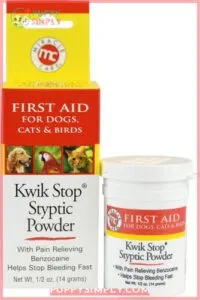
Accidents happen, and when you nick the quick during nail trimming, Kwik-Stop Styptic Powder becomes your safety net for pet wound care. This trusted pet first aid staple combines ferric subsulfate to stop nail bleeding fast and benzocaine to ease the sting.
Moisten a cotton swab, dip it in the powder, and press firmly on the cut for five to ten seconds. Keep a jar next to your nail clippers—it works on dogs, cats, and birds, costs under seven dollars, and treats minor injury treatment far better than any styptic pencil ever could.
| Best For | Pet owners who regularly trim their pets’ nails at home and want a fast, effective solution for stopping bleeding from minor cuts or accidentally clipping the quick. |
|---|---|
| Price | $6.35 |
| Primary Use | Stops nail bleeding |
| Material | Ferric subsulfate powder |
| Suitable For | Dogs, cats, birds |
| Skill Level | Beginner-friendly |
| Maintenance | Single use per application |
| Additional Features |
|
- Stops bleeding quickly with ferric subsulfate while benzocaine provides immediate pain relief
- Works on dogs, cats, and birds of all sizes and ages, making it versatile for multi-pet households
- Affordable at $6.35 and easy to use with simple application instructions
- Only suitable for minor injuries and cannot replace veterinary care for serious wounds
- May not be appropriate for pets with certain medical conditions or allergies to the ingredients
- Requires proper technique and firm pressure for several seconds to be effective
Tick Remover for Dogs and Cats
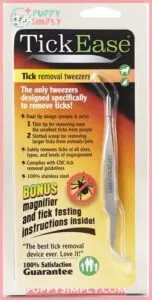
You’ll also need a reliable tick remover in your grooming tools arsenal, because even one attached tick poses serious pet safety risks. Choose a dual-tipped stainless steel tool—around twelve dollars—that complies with CDC tick removal guidelines and works on both dogs and cats.
Slide the slotted end under the tick’s body close to your pet’s skin, then pull straight up with steady pressure. This method removes the entire tick without crushing it, which lowers disease transmission during tick prevention checks and keeps your animal health routine complete.
| Best For | Pet owners who want a durable, CDC-compliant tool that safely removes ticks from both dogs and cats without leaving parts behind. |
|---|---|
| Price | $12.00 |
| Primary Use | Removes ticks safely |
| Material | Stainless steel |
| Suitable For | Dogs and cats |
| Skill Level | Requires practice |
| Maintenance | Sterilize after use |
| Additional Features |
|
- Dual-tipped design works for different tick sizes and on both pets and people
- Made from stainless steel so you can sterilize it between uses and it won’t break
- Comes with a magnifier and tick testing instructions to help you handle the whole process
- Takes some practice to get the technique right, especially on squirmy pets
- Not the best choice for removing ticks from delicate areas without extra care
- You need to clean and sterilize it properly after each use to avoid infection risks
Elevated Dog Bathing Grooming Center
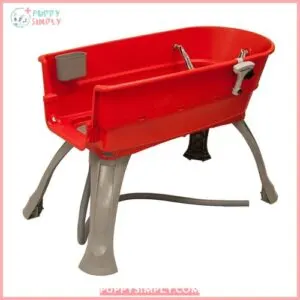
Investing in an elevated bathing station—around one hundred seventy-five dollars—transforms your dog grooming routine by bringing the tub to waist height, so you won’t strain your back during dog bathing and shampooing sessions.
Look for a unit with a non-slip textured mat, three-point safety restraint, and spray nozzle that controls water pressure while you work through bathing techniques. This grooming ergonomics upgrade gives you 360-degree access for thorough pet hygiene, prevents your dog from jumping out mid-shampoo, and drains efficiently to keep your space tidy.
| Best For | Dog owners who bathe their pets at home and want to avoid back strain while keeping their dog secure and preventing bathroom messes. |
|---|---|
| Price | $175.00 |
| Primary Use | Elevated bathing station |
| Material | Metal with non-slip mat |
| Suitable For | Dogs all sizes |
| Skill Level | Easy to use |
| Maintenance | Remove legs for storage |
| Additional Features |
|
- Waist-high design eliminates bending and reduces back pain during grooming sessions
- Non-slip mat and 3-point harness keep your dog safely in place while you wash
- Complete 360-degree access and built-in spray nozzle make thorough cleaning faster and easier
- At $175, it’s a significant upfront investment compared to using your regular tub
- Legs need to be removed for storage, which adds extra steps before and after each use
- Large or heavy dogs may find the space too cramped or exceed weight limits
Tropiclear Papaya Coconut Pet Shampoo Conditioner

TropiClean’s papaya coconut formula—priced at fourteen ninety-nine—delivers a true 2-in-1 solution for dog bathing and shampooing that simplifies your routine without sacrificing results. You’ll appreciate the mild coconut cleanser paired with colloidal oatmeal and vitamin E, offering gentle skin care through natural ingredients that hydrate dry coats while you work through tangles.
This cruelty-free testing product won’t strip spot-on flea treatments, making it one of the smartest pet grooming tools for regular maintenance. The tropical scent stays fresh for days, and coconut oil benefits include improved coat shine and reduced static during brushing.
| Best For | Pet owners looking for a convenient 2-in-1 shampoo and conditioner that gently cleanses while leaving their dog’s or cat’s coat soft, hydrated, and smelling tropical. |
|---|---|
| Price | $14.99 |
| Primary Use | 2-in-1 shampoo conditioner |
| Material | Coconut cleanser liquid |
| Suitable For | Dogs and cats |
| Skill Level | Beginner-friendly |
| Maintenance | None required |
| Additional Features |
|
- Soap-free coconut cleanser is gentle on skin and won’t interfere with flea treatments
- Colloidal oatmeal and vitamin E hydrate dry coats and help detangle fur for easier brushing
- Pleasant papaya-coconut scent lasts for days without being overwhelming
- Contains fragrance which may irritate pets with sensitive noses or skin allergies
- No pH level information provided, so suitability for specific skin conditions is unclear
- Lacks details on environmental impact or ingredient biodegradability
Aloe Vera Waterless Dog Shampoo
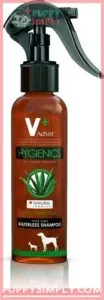
Between baths, you’ll find waterless shampoo delivers gentle cleansing without the stress of a full tub session. This fourteen ninety-nine formula combines aloe vera benefits with natural ingredients like arnica, echinacea, and vitamin E to soothe itchy skin and hot spots while you spray and brush through the coat.
No rinsing required means faster dog grooming tips for busy schedules, and the aloe scent keeps your pet fresh until the next proper bath—a smart addition to your pet grooming tools for maintaining dog health and skin care.
| Best For | Dog owners looking for a quick, stress-free way to freshen up their pet between regular baths, especially helpful for dogs with sensitive or irritated skin. |
|---|---|
| Price | $14.99 |
| Primary Use | Waterless cleaning spray |
| Material | Aloe vera spray |
| Suitable For | Dogs all sizes |
| Skill Level | Beginner-friendly |
| Maintenance | None required |
| Additional Features |
|
- No rinsing needed, so you save time and skip the hassle of a full bath
- Natural ingredients like aloe vera and vitamin E help soothe itchy skin and hot spots
- Detangles fur while leaving a pleasant, fresh scent
- Not ideal for dogs with allergies to common ingredients like coconut oil or aloe vera
- Still requires some effort—you’ll need to brush and wipe down your dog with a towel
- No details on how long it lasts or how to store it properly
Bamboo Pet Metal Pin Brush

For ten ninety-nine, this bamboo handle pin brush combines eco-friendly design with stainless steel bristles that penetrate loose fur without harsh snagging, making it essential among your pet grooming tools and supplies. You’ll use it daily on short to medium coats, where the metal bristle care distributes natural oils for shine while removing dirt between baths—far more effective than a standard curry brush.
The ergonomic grip reduces hand fatigue during brushing sessions, and pin brush benefits include early detection of skin irritation across multiple pet coat types.
| Best For | Pet owners with dogs or cats that have short to medium coats who want an eco-friendly grooming tool for daily brushing and maintaining a healthy, shiny coat. |
|---|---|
| Price | $10.99 |
| Primary Use | Daily brushing |
| Material | Bamboo and steel |
| Suitable For | Short to medium coats |
| Skill Level | Beginner-friendly |
| Maintenance | None required |
| Additional Features |
|
- Bamboo handle is sustainable and provides a comfortable, ergonomic grip that won’t tire your hand during grooming sessions
- Metal bristles effectively remove loose fur and distribute natural oils throughout your pet’s coat for better shine and health
- Affordable price point at $10.99 makes it accessible for regular grooming maintenance
- Metal bristles may be too harsh for pets with sensitive skin or very fine coats
- Not ideal for long-haired breeds that need deeper penetration or detangling power
- Limited information available about how well the brush holds up with frequent use over time
Conair Pro Pet Dog Shears
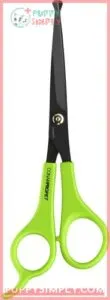
For fourteen ninety-nine, these rounded-tip shears give you grooming safety when trimming delicate zones around your dog’s eyes, nose, and ears—areas where dog clippers can’t navigate without risk.
You’ll appreciate the Japanese stainless steel blades with EverGuard coating that glide through dry, mat-free fur for precise dog styling, while soft-grip finger holes reduce hand strain during detailed pet trimming work.
Blade sharpening every six months maintains cutting performance across various dog grooming techniques, making these shears indispensable among your pet grooming tools and supplies.
| Best For | Pet owners who need to safely trim hair around their dog’s sensitive facial areas like eyes, ears, and nose without the risk of accidental nicks. |
|---|---|
| Price | $14.99 |
| Primary Use | Facial area trimming |
| Material | Japanese stainless steel |
| Suitable For | Dogs all sizes |
| Skill Level | Intermediate |
| Maintenance | Sharpen every 6 months |
| Additional Features |
|
- Rounded tips provide safe trimming around delicate areas where regular scissors or clippers might cause injury
- EverGuard-coated Japanese stainless steel blades offer smooth, precise cuts with minimal snagging
- Ergonomic soft-grip design with finger rests reduces hand fatigue during detailed grooming sessions
- Only works on completely dry, mat-free fur, requiring pre-grooming prep work
- Not designed for heavy-duty grooming or cutting through thick, dense coats
- Blades need professional sharpening every six months to maintain cutting performance
Safari Professional Dog Nail Trimmer
For twelve ninety-nine, this stainless steel trimmer delivers swift, clean cuts through most nail types while its built-in safety stop prevents you from reaching the quick—your biggest concern during nail trimming.
You’ll notice the spring-loaded double blades require less hand pressure than standard pet grooming tools and supplies, which matters when you’re working through multiple nails on anxious dogs.
The non-slip grip accommodates both left- and right-handed use, giving you better control during essential nail trimming and care sessions that protect your dog’s long-term nail health and overall dog hygiene.
| Best For | Pet owners and professional groomers looking for a reliable, affordable nail trimmer that works for both nervous dogs and regular maintenance sessions. |
|---|---|
| Price | $12.99 |
| Primary Use | Nail trimming |
| Material | Stainless steel |
| Suitable For | Dogs all sizes |
| Skill Level | Beginner-friendly |
| Maintenance | Sharpen as needed |
| Additional Features |
|
- Safety stop feature helps prevent cutting into the quick, reducing stress for both you and your dog
- Spring-loaded double blades make cutting easier on your hands during multi-nail sessions
- Ambidextrous non-slip grip gives you solid control whether you’re left- or right-handed
- May struggle with extremely thick or hard nails on larger breeds
- Blades will need sharpening or replacement over time to maintain effectiveness
- Requires some practice and care to use safely and avoid accidents
Enzymatic Dog Toothpaste by Vet’s Best
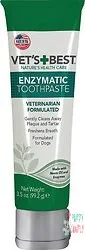
At six sixty-one, this veterinarian-formulated gel gives you enzyme technology that breaks down plaque-forming sugars while baking soda scrubs away surface stains, delivering oral health benefits through natural ingredients like neem oil, grapefruit seed extract, and aloe.
Apply the toothpaste with a finger or brush two to three times weekly, withholding food and water for thirty minutes afterward to optimize dental plaque control and freshen breath between professional cleanings—essential pet oral care that enhances your dog’s teeth brushing and oral health routine.
| Best For | Dog owners looking for an affordable, natural toothpaste that tackles plaque and freshens breath without harsh chemicals. |
|---|---|
| Price | $6.61 |
| Primary Use | Plaque control gel |
| Material | Enzyme gel |
| Suitable For | Dogs all sizes |
| Skill Level | Beginner-friendly |
| Maintenance | None required |
| Additional Features |
|
- Uses enzymes and natural ingredients like neem oil and aloe to fight tartar while being gentle on gums
- Easy squeeze tube makes application simple whether you’re using a brush or your finger
- Budget-friendly at $6.61 while still being vet-formulated for effective dental care
- Doesn’t specify if it works for all dog sizes or breeds, so you might need to check with your vet first
- No info on how it interacts with other medications your dog might be taking
- Could cause issues for dogs with specific allergies since it contains multiple plant-based ingredients
Virbac CET Dog Cat Toothbrush

At seven ninety-nine, this dual-ended design puts a larger head on one side for molars and broad surfaces while the smaller end addresses tight spots in cats and toy breeds, letting you switch angles without changing tools—essential for consistent teeth brushing and oral health routines that prevent tooth decay.
The reverse-angled handle places soft bristles at forty-five degrees to the gumline for effective dental care tips, while the compact seven-inch length gives you control when introducing brushing techniques to nervous pets, working perfectly with Virbac CET enzymatic toothpaste for complete pet oral health and maintenance.
| Best For | Pet owners with cats or small dogs who want an affordable, beginner-friendly toothbrush that makes daily dental care easier to stick with. |
|---|---|
| Price | $7.99 |
| Primary Use | Daily tooth brushing |
| Material | Plastic bristles |
| Suitable For | Cats and small dogs |
| Skill Level | Beginner-friendly |
| Maintenance | Replace periodically |
| Additional Features |
|
- Dual-ended design lets you tackle different areas without switching tools, saving time during brushing sessions
- Angled bristles reach the gumline at the right angle, making it easier to clean effectively even if you’re new to pet dental care
- Soft bristles and compact size help anxious pets adjust to brushing without fighting the process
- Won’t work for medium or large breed dogs—the small head just isn’t big enough for bigger mouths
- You’ll need to brush daily to see real results, which takes commitment and routine
- At $7.99 it’s not expensive, but you’ll need to replace it regularly like any toothbrush
Frequently Asked Questions (FAQs)
How do you groom a dog for beginners?
Start by gathering your brushes, dog clippers, and canine shampoo. Focus on gentle brushing to remove mats, followed by a thorough bathing routine.
Trim nails carefully, prioritizing pet safety throughout every grooming step.
How often should I groom my dog?
Grooming frequency depends on your dog’s coat type and lifestyle.
Long-haired breeds need daily brushing, while short-coated dogs require brushing two to three times weekly.
Most dogs benefit from bathing every four to six weeks.
What tools are necessary for grooming my dog?
You’ll need dog brushes like a wire slicker or rubber-bristled brush, pet clippers with blade guards, nail care tools, grooming kits, shedding tools, and dog-safe shampoo to handle everything at home.
Can I use human toothpaste for my dogs teeth?
Many mint-flavored human toothpastes contain xylitol, which triggers dangerous blood sugar drops in dogs within 30 minutes. Never use human toothpaste—choose enzymatic dog formulas that are safe to swallow.
How do I remove a tick from my dog?
Use fine-tipped tweezers to grasp the tick close to your dog’s skin, then pull upward with steady, even pressure—never twist.
Clean the bite area thoroughly with antiseptic afterward to prevent infection.
What should I do if my dogs paw gets cut?
What if your pup steps on glass? Apply firm pressure with clean gauze to control bleeding, rinse the cut paw gently with lukewarm water, bandage securely, and call your vet for deeper wounds.
How do I groom my puppy for the first time?
Start with short sessions after playtime, when your puppy is calm. Touch paws, ears, and tail gently for one to three minutes daily, rewarding with treats to build trust before attempting full grooming.
What human foods are safe for dogs?
Safe lean proteins like plain chicken, turkey, and fish are excellent for your dog, while dog safe fruits such as apple slices and blueberries make healthy snacks.
But always avoid toxic foods like chocolate and grapes.
Can I use a hairdryer on my dog?
Dryers deliver drying power, but demand deliberate distance and dialed-down heat settings.
Human hairdryers work only on low heat, held several inches away, moving constantly to prevent burns on delicate canine skin while ensuring thorough coat drying.
How do I prevent my dog from biting during grooming?
Keep grooming sessions short and reward-based, reading stress signals like lip licking or stiffening.
Desensitize your dog to tools gradually, use gentle handling techniques, and consider muzzle training for anxious pets.
Conclusion
Mastering how to groom your dog at home will transform your relationship with your pet in ways you never imagined possible.
You’ve learned the techniques, gathered the tools, and discovered the rhythm that works for your dog’s unique coat and temperament. Now, each grooming session becomes an opportunity to strengthen your bond, protect their health, and see your dog shine with the kind of vitality that only consistent, careful attention can bring.