This site is supported by our readers. We may earn a commission, at no cost to you, if you purchase through links.
That strap your pup wears every day? It’s collecting more than just fur. Between muddy trails, slobbery play sessions, and the natural oils from your dog’s coat, the webbing becomes a breeding ground for bacteria that can irritate skin and cause infections.
Most dog owners don’t realize their pet’s redness or scratching might stem from a dirty strap, not allergies or sensitivity. Regular cleaning protects your dog’s health and extends the life of your gear—but the method matters. Toss a leather-trimmed strap in the washing machine, and you’ll ruin it. Skip proper drying, and mildew takes hold.
Whether you’re dealing with a quick refresh or a deep clean after a particularly adventurous romp, the right approach keeps your dog comfortable and your strap in working condition.
Table Of Contents
- Key Takeaways
- Why Cleaning Your Dog Harness is Important
- How Often Should You Wash a Dog Harness?
- What Supplies Do You Need to Clean a Harness?
- How to Hand Wash Your Dog Harness
- Can You Machine Wash a Dog Harness?
- Drying and Maintaining Your Dog Harness
- Frequently Asked Questions (FAQs)
- How often should you wash your dog’s harness?
- How to clean a dirty harness?
- Can I use bleach to disinfect the harness?
- How do you clean reflective strips or lights?
- What if the harness smells after cleaning?
- Can padding or foam inserts be removed separately?
- Is professional cleaning ever necessary for harnesses?
- Conclusion
Key Takeaways
- Dirty harnesses breed bacteria that cause skin infections, rashes, and hotspots in dogs, while regular cleaning with mild detergent prevents these health issues and extends the gear’s lifespan by protecting fabric fibers and metal hardware from degradation.
- Weekly washing works for active dogs, but you’ll need to clean immediately after muddy adventures or when you spot signs like persistent odor, darkened webbing, redness, or frayed edges that signal bacteria buildup.
- Hand washing with cold water and gentle soap gives you the most control, though machine washing on a gentle cycle in a mesh bag works for nylon and polyester harnesses—never machine wash leather, which requires hand cleaning and conditioning.
- Always air dry your harness completely in a well-ventilated area away from direct sunlight and heat, which weakens fabric fibers and makes plastic buckles brittle, compromising your dog’s safety.
Why Cleaning Your Dog Harness is Important
You mightn’t think twice about tossing your dog’s collar in the closet after every walk, but that daily-use gear picks up more than you’d expect.
Over time, dirt, sweat, and outdoor allergens settle into the fabric, so knowing how to clean and maintain quality dog collars helps them last longer and stay hygienic.
A dirty collar isn’t just unpleasant—it can actually affect your dog’s health and comfort.
Let’s look at the key reasons why regular cleaning should be part of your pet care routine.
Preventing Skin Irritation and Infections
Neglecting dog strap cleaning can turn a safety tool into a breeding ground for bacteria and fungi that threaten your dog’s skin. Dirty fabric pressed against your pup’s body causes rashes, hotspots, and infections that need veterinary care.
A dirty dog harness becomes a breeding ground for bacteria that causes skin infections, rashes, and hotspots requiring veterinary treatment
Here’s what proper strap hygiene prevents:
- Bacterial buildup from sweat and dirt creating skin infections
- Allergic reactions triggered by accumulated dander and environmental allergens
- Fungal growth in damp strap materials causing itchy rashes
- Pressure sores worsened by grime-filled straps rubbing sensitive areas
Regular sanitizing protects dogs with sensitive skin.
Extending Harness Lifespan
Regular strap cleaning prevents material degradation that shortens your gear’s useful life. Dirt particles work like sandpaper against nylon webbing and stitching, breaking down fibers with each walk.
Salt, mud, and grime corrode metal hardware and weaken plastic buckles over time. By maintaining a consistent cleaning frequency, you protect your investment and avoid replacing worn straps prematurely.
Proper dog strap care pays off.
Eliminating Dirt, Odor, and Allergens
A clean collar does more than look good. Dirt removal protects fabric fibers from abrasion while collar sanitizing eliminates bacteria that create foul smells.
When you hand wash with mild detergent, you’re tackling odor control and allergen prevention simultaneously. Pollen, dander, and dust mites cling to unwashed straps, triggering reactions in sensitive dogs.
Material protection through regular dog collar cleaning keeps your pup comfortable and healthy.
How Often Should You Wash a Dog Harness?
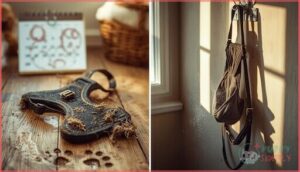
There’s no one-size-fits-all answer to how often you should wash your dog’s collar. The right cleaning schedule depends on your dog’s activity level, lifestyle, and the conditions they’re exposed to.
If accidents happen on the collar, use enzyme-based cleaners to eliminate stubborn odors—the same strategy that works when you wake a puppy up to pee during overnight training.
Let’s look at the key signs that it’s time for a wash, general guidelines to follow, and what factors might mean you need to clean more or less often.
Signs Your Harness Needs Cleaning
Your dog’s collar talks to you—you just need to listen. Watch for these dirty collar signs that demand immediate dog collar cleaning:
- Redness or itching after short wear indicates skin irritation from bacteria buildup
- Darkened webbing along straps shows mud, saliva, or grime accumulation
- Persistent doggy odor signals bacteria in padding needing odor removal
- Frayed edges suggest material damage from entrenched dirt
- Musty smell reveals mildew risk in damp areas
Spotting these means it’s time for washing the dog collar immediately. For guidance on preventing return issues and ensuring longevity, review the importance of.
Recommended Cleaning Frequency
Generally, aim for a light strap wash every 7 days if your pup wears it daily. After muddy adventures or heavy sweating, clean the dog strap within 24 hours to prevent deep-set grime. For odor control during hot weather, wash every 2–3 days.
Perform seasonal deep cleaning at the start of each season to maintain dog strap care and extend its life.
Factors Affecting Cleaning Schedule
Your strap cleaning schedule flexes based on several real-world factors that influence dog strap maintenance:
- Activity level – High energy pups generate more sweat and odor, demanding frequent cleaning frequency adjustments.
- Weather factors – Rain and mud accelerate dirt buildup on surface materials.
- Skin sensitivity – Dogs prone to irritation need stricter pet hygiene routines.
- Equipment availability – Access to gentle detergents shapes your odor removal timing.
- Storage conditions – Humid spaces require more vigilant strap cleaning.
Understanding the balance of the can help you maintain ideal hygiene and care routines for your dog’s gear.
What Supplies Do You Need to Clean a Harness?

You don’t need fancy products to clean your dog’s collar effectively. Most of what you’ll use is probably already sitting in your laundry room or kitchen.
Let’s break down the safe cleaners and basic tools that’ll get the job done right.
Safe Detergents and Cleaning Products
Your best bet is choosing a mild soap that won’t irritate your pup’s skin or harm the strap fabric. Look for eco-friendly detergents with EPA Safer Choice or Ecolabel certifications. Pet-safe cleaners free from dyes, fragrances, and phosphates work wonders for washing dog strap gear. Biodegradable soaps break down quickly, reducing residue buildup. Non-toxic formulas protect dogs with allergies, while gentle stain removers tackle tough messes without harsh chemicals.
| Product Type | Best For |
|---|---|
| Fragrance-free hypoallergenic detergent | Sensitive skin and odor removal |
| Biodegradable liquid soap | Nylon and fabric straps |
| Enzyme cleaner | Organic stains and pet care needs |
| Baking soda paste | Stubborn odors and gentle cleaning |
| White vinegar solution | Sanitizing and dog strap cleaning |
Essential Tools and Accessories
You’ll need just a handful of items to tackle dog gear cleaning like a pro. Grab soft nylon cleaning brushes or an old toothbrush for seams and Velcro. A mesh laundry bag protects your dog equipment during washing.
Microfiber cloths handle drying without leaving lint. For air circulation, breathable drying racks work best. Keep storage bags handy for between-use freshness, and don’t forget mild soap plus conditioners for leather pet gear washing.
How to Hand Wash Your Dog Harness
Hand washing is the gentlest way to clean your dog’s strap, especially if it has delicate materials or hardware. The process takes just a few minutes and gives you complete control over how thoroughly you clean each part.
Here’s how to hand wash your strap from start to finish.
Step-by-Step Hand Washing Instructions
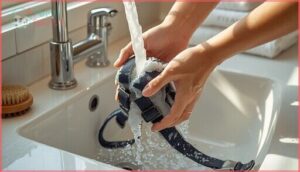
Start by wetting your dog gear completely with cold water. Apply a small amount of mild soap directly onto dirty areas, then use gentle scrubbing motions with your hands or a soft brush.
Focus on straps, buckles, and crevices where grime hides. Continue for about 20 seconds, ensuring your cleaning solutions reach all surfaces before moving to a thorough rinse.
Pre-Treating Stains and Odors
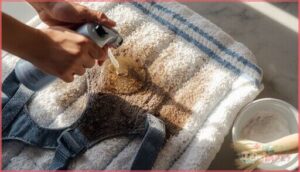
Stubborn stains won’t budge without a little extra effort first. Apply a pre-treatment spray or paste directly to soiled spots, letting it sit for 5 to 10 minutes to loosen fibers.
For odor removal, try an enzyme cleaning solution at room temperature—it targets organic residues like saliva.
Cold water works best for protein stains, preventing them from setting during fabric care and gentle washing.
Rinsing and Ensuring Soap Removal
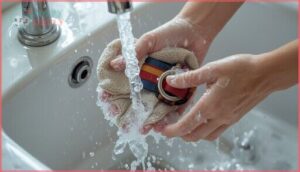
After pre-treating, rinse your strap with lukewarm water until that slippery feeling disappears completely. Use a gentle stream—forcing water into buckles can trap soap residue inside.
Check every textile area for lingering bubbles after your initial rinse. Wipe metal hardware dry to stop corrosion before it starts.
Proper soap removal during hand washing protects your dog’s skin and keeps the strap fresh between cleanings.
Can You Machine Wash a Dog Harness?
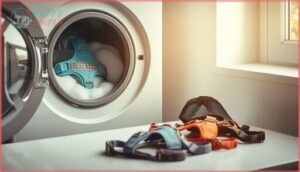
Yes, you can machine wash most dog straps, but it depends on the material and manufacturer’s guidelines. Some straps hold up beautifully in the washing machine, while others need gentler care to avoid damage.
Let’s look at when it’s safe, how to protect your strap during the wash, and what precautions to take based on what your strap is made of.
When Machine Washing is Safe
Before tossing your dog’s collar into the washing machine, check the manufacturer’s label to confirm machine wash suitability. Nylon and polyester collars usually handle machine washing well, especially on a gentle cycle with cool water. Fasten all buckles first to prevent snagging.
Skip the machine entirely if your collar contains leather components—water causes stiffness and cracking.
Using a Mesh Bag and Gentle Cycle
A mesh bag is your equipment’s best friend during machine washing. Here’s how to protect your gear:
- Place the equipment inside a medium to large mesh laundry bag with a secure zipper to prevent hardware from snagging on the drum or other items.
- Select the gentle cycle with cold water to minimize agitation and stress on buckles, D-rings, and reflective trim.
- Use mild detergent sparingly to avoid residue buildup on plastic components and webbing.
Precautions for Different Materials
While mesh bags add protection, each strap material has unique needs. Leather straps should never enter the washing machine—they’ll crack and stiffen. For nylon straps, stick with cool water and skip soaks longer than 15 minutes to prevent fiber damage. Polyester tips include avoiding fabric softeners that reduce flexibility. Metal maintenance means checking buckles post-wash for corrosion or stiffness that signals replacement time.
| Material | Machine Washing | Key Precaution |
|---|---|---|
| Leather | Never machine wash | Hand clean and condition only |
| Nylon | Cold water, gentle cycle | Limit soak to 15 minutes max |
| Polyester | Cold water only | Skip fabric softeners entirely |
Drying and Maintaining Your Dog Harness

Once your gear is clean, how you dry and store it makes all the difference in keeping it safe and functional. Proper drying prevents mold, preserves the material, and protects those metal buckles from rust.
Let’s walk through the best ways to dry your gear and keep it in top shape between washes.
Best Air Drying Practices
After equipment washing, hang your dog equipment on a drying rack with space around every strap for air flow optimization. Position it in a well-ventilated spot where natural air circulation speeds moisture removal. Use a fan if needed for better ventilation techniques.
Rotate the equipment occasionally to guarantee even drying on both sides, and confirm it’s fully dry before moving to equipment storage methods—this protects your investment.
Avoiding Damage From Heat and Sun
While air drying protects your equipment, direct sun exposure creates heat damage that weakens fabric durability over time. UV resistance matters—those rays break down nylon fibers and make plastic buckles brittle.
Keep your leather equipment and fabric care items in shade during summer safety season. Use mild soap and air dry indoors when possible, checking for stiffened webbing after sun protection lapses.
Ongoing Harness Care and Storage Tips
Proper gear maintenance between washes keeps your equipment performing at its best. Store your gear thoughtfully and inspect it regularly to catch problems early:
- Gear Storage: Keep it in a cool, dry spot away from sunlight—use a breathable bag and hang or lay flat to prevent warping.
- Material Care: Condition leather quarterly and check metal hardware for rust.
- Regular Inspection: Monthly checks catch frayed webbing and worn buckles before they fail.
Frequently Asked Questions (FAQs)
How often should you wash your dog’s harness?
You’ll want to wash your dog’s collar weekly for active pups, every two to three weeks for moderate use, or monthly for indoor dogs.
Always clean immediately after muddy adventures to prevent staining.
How to clean a dirty harness?
You won’t need fancy supplies for equipment washing—just warm water, mild pH-neutral detergent, and a soft brush work wonders.
Remove hardware first, scrub gently, rinse thoroughly, then air dry completely.
Can I use bleach to disinfect the harness?
Skip the bleach—it weakens nylon webbing and irritates skin.
Instead, use 70 percent alcohol or quaternary ammonium disinfectants on dog collar materials after washing with mild detergent for safer sanitizing methods.
How do you clean reflective strips or lights?
Reflective strip care demands delicate attention. Wipe the surface gently with a soft microfiber cloth and warm soapy water, avoiding harsh solvents that degrade the reflective coating and compromise your dog’s nighttime visibility.
What if the harness smells after cleaning?
Persistent odor causes usually trace back to trapped moisture or leftover residue.
Deep cleaning steps like vinegar soaks and enzyme cleaners tackle odor removal effectively, while proper drying and sanitizing guarantee your equipment washing routine controls future smells.
Can padding or foam inserts be removed separately?
Like a pioneer checking their wagon gear, you’ll want to inspect whether the foam insert detaches. Many modern dog gear models feature Velcro-secured padding removal for easier cleaning methods and gear maintenance.
Is professional cleaning ever necessary for harnesses?
Yes, professional cleaning becomes necessary for delicate materials like genuine leather harnesses, heavy mildew removal, or when certified sanitization methods are required for service animals and grooming safety standards.
Conclusion
Think of your dog’s collar like a second skin—when it’s clean, your pup moves freely and comfortably. Now that you know how to clean and wash a dog collar properly, whether by hand or machine, you’re equipped to prevent irritation and protect your investment.
Set a regular schedule based on your dog’s activity level, use gentle products, and always air dry. Your dog’s comfort starts with these simple, consistent habits.