This site is supported by our readers. We may earn a commission, at no cost to you, if you purchase through links.

Your puppy’s food bowl holds more power over their future than you might realize. The nutrients they consume during their first year don’t just fuel playful zoomies and those adorable head tilts—they’re literally building the foundation for every bone, organ, and body system that’ll carry them through life.
A German Shepherd puppy, for instance, will increase their birth weight by 70 times in just twelve months, demanding precise nutrition that balances rapid growth without triggering joint problems down the road.
Yet walk down any pet store aisle and you’ll face hundreds of bags making bold promises, each claiming to be exactly what your furry friend needs. Understanding what truly matters in puppy nutrition means looking past the marketing and focusing on science-backed essentials that support healthy development without compromising their long-term wellbeing.
Table Of Contents
- Key Takeaways
- Why Choosing The Right Puppy Food Matters
- Key Nutritional Requirements for Puppies
- Types of Puppy Diets Explained
- How to Read Puppy Food Labels
- Matching Food to Your Puppy’s Breed and Size
- Identifying High-Quality Puppy Food Brands
- Addressing Special Dietary Needs
- Determining The Right Feeding Amount
- Safely Transitioning Puppy Foods
- When to Consult Your Veterinarian
- Frequently Asked Questions (FAQs)
- Conclusion
Key Takeaways
- Your puppy’s first-year nutrition directly impacts lifelong health outcomes, from joint integrity and cognitive function to immune strength, making food choices during rapid growth (70x birth weight in 12 months for some breeds) critically important for preventing developmental issues.
- Puppy-specific formulas contain higher protein (22-32%), elevated calorie density, balanced calcium-phosphorus ratios, and added DHA that adult dog food lacks—nutrients essential for building muscle, bones, and brain function during critical growth windows.
- AAFCO “complete and balanced” statements on labels guarantee minimum nutritional standards through feeding trials or formula analysis, while ingredient lists reveal quality through specific protein sources (like “chicken” versus vague terms) and the presence of omega-3 fatty acids.
- Breed size determines formula needs—large breed puppies require controlled calcium to prevent joint problems from rapid growth, while small breeds need nutrient-dense kibble in smaller pieces, making one-size-fits-all approaches potentially harmful to development.
Why Choosing The Right Puppy Food Matters
Your puppy’s first year sets the foundation for their entire life, and the food you choose plays a major role in that. Getting it right means supporting everything from strong bones to a healthy immune system, while the wrong choice can lead to problems down the road.
Here’s why your puppy food decision matters more than you might think.
Growth and Development Needs
Your puppy’s transformation from tiny furball to full-grown companion happens faster than you’d expect. During these critical growth stages, their nutritional requirements shift constantly to fuel rapid puppy development. Here’s what drives their unique dietary needs:
- Energy Requirements increase dramatically—puppies need more calories per pound than adults to power their boundless activity
- Protein builds lean muscle and facilitates skeletal growth during those vital first months
- Calcium and phosphorus must maintain precise balance to prevent bone issues while facilitating strong frames
- DHA and omega-3 fatty acids fuel brain development and visual maturation throughout year one
- Caloric intake needs careful adjustment as your pup grows to maintain ideal body condition
A complete and balanced diet designed for canine nutrition ensures every nutrient works together, facilitating healthy development without the guesswork. Ensuring the scientific study of dog nutrition involves rigorous methodological rigor to provide accurate recommendations.
Long-Term Health Benefits
The canine nutrition choices you make now shape health outcomes far beyond puppyhood. Research shows proper nutrient balance during growth patterns directly influences your dog’s longevity factors—from stronger joints and healthier weight trajectories to sharper cognitive function.
The nutrition you choose now shapes your dog’s joints, weight, and cognitive health for life
A complete and balanced diet meeting nutritional requirements sets the stage for canine health that lasts, reducing obesity risks and supporting your furry friend’s vitality for years ahead.
Differences From Adult Dog Food
Your growing companion’s nutritional requirements differ dramatically from adult formulas. Puppy-specific food delivers precisely what development needs demand during critical growth stages.
Here’s what sets puppy nutrition apart:
- Higher calorie density per kilogram fuels rapid energy expenditure
- Elevated protein levels build lean muscle and tissue
- Balanced calcium and phosphorus support strong bones and teeth
- Added DHA enhances brain and vision development
Choosing the right puppy food means matching nutrient ratios to your pup’s unique timeline.
Key Nutritional Requirements for Puppies

Your puppy’s body is working overtime to grow strong bones, build muscle, and develop a sharp brain—all in just their first year of life. That means they need more than just any dog food off the shelf.
Let’s break down the specific nutrients your growing pup needs to thrive during this critical window.
Essential Nutrients for Growth
Your furry friend’s body is working overtime to grow, and that demands a precise nutritional toolkit. Puppies need higher levels of calcium and phosphorus for strong bones, with balanced ratios preventing skeletal problems down the road. Complete and balanced nutrition includes quality protein sources to build lean muscle, plus essential vitamins and minerals like zinc and iron. Don’t forget DHA—this omega-3 fosters brain development.
| Nutrient | Why It Matters |
|---|---|
| Calcium & Phosphorus | Support bone development and prevent skeletal issues |
| Protein | Builds lean body mass and strengthens immune system |
| DHA (Omega-3) | Aids brain and retinal development |
Importance of Protein and Fat
Balanced nutrition hinges on two powerhouse ingredients: protein and fat. You’ll want puppy food with around 22–32% protein on a dry matter basis to fuel rapid muscle growth and immune development.
Fat provides dense energy for your pup’s activity level while delivering digestible essential fatty acids. Together, these nutrient requirements support steady growth without excess weight gain or skeletal stress.
Role of DHA and Omega Fatty Acids
DHA—docosahexaenoic acid—is the brain development champion in puppy nutrition and health. Studies link higher brain DHA levels to sharper cognitive function, while omega-3 fatty acids preserve eye health during critical growth windows. Look for puppy food fortified with DHA supplements to meet these needs.
Omega balance matters too: proper omega-3 to omega-6 ratios support joints and help manage inflammation, giving your pup the fatty acid benefits they deserve.
Types of Puppy Diets Explained
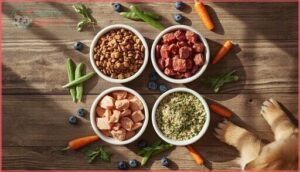
When you walk down the pet food aisle, you’ll notice several different diet types—each with its own benefits and considerations for your growing puppy. From traditional kibble to fresh and raw options, understanding what sets these diets apart helps you make an informed choice.
Let’s break down the main types you’ll encounter and what makes each one worth considering.
Dry Kibble Diets
Dry kibble is often the go-to choice for new puppy owners, and for good reason. Here’s why it works:
- Complete nutrition – Most dry puppy food meets AAFCO standards, delivering balanced protein and fat levels your growing pup needs.
- Feeding convenience – Kibble texture and nutrient retention make portions easy to measure and store.
- Puppy palatability – Coatings boost flavor, encouraging healthy eating habits.
Wet and Canned Foods
Wet food diets give your puppy something dry kibble can’t—moisture content that helps hydration. Canned diet options contain 70–80% water, compared with 10–12% in kibble, making them ideal for picky eaters or sensitive stomachs. These puppy-specific foods aid digestive health while meeting AAFCO standards for growth.
Check labels for complete and balanced statements, real meat as the first ingredient, and age-appropriate portions. Combine wet and dry options to balance dog nutrition with dental benefits, adjusting amounts as your furry friend grows.
| Wet Food Benefits | Practical Considerations |
|---|---|
| Higher palatability for fussy pups | Refrigerate leftovers within 3–4 days |
| Gentler on developing digestive systems | Serve at room temperature for best aroma |
| Complements kibble for balanced nutrition | Smaller portions due to energy density |
| Aids canine health and wellness goals | Follow feeding guidelines by weight |
Fresh and Raw Diets
Fresh diets and raw feeding appeal to owners seeking whole-food approaches, but they require careful planning. Raw diet advocates point to shinier coats and better energy, while fresh options offer puppy hydration benefits similar to wet food—though both carry raw feeding risks if not handled properly.
- Nutrient balance: Professional formulation prevents calcium-phosphorus imbalances that harm growing bones
- Raw food safety: Batch-tested commercial products reduce bacterial contamination risks like Salmonella
- Fresh diet benefits: Higher moisture bolsters dog nutrition without the preparation concerns of home-prepared raw meals
Always consult your vet before verifying your puppy’s canine health and wellness needs are met.
Commercial Vs. Homemade Diets
Commercial kibble diet options shine with AAFCO-verified nutrient balance and food safety testing, while homemade plans offer diet flexibility for dogs with unique needs. Cost comparison favors store-bought puppy food for convenience, but raw diet enthusiasts cite ingredient control as their priority.
Without veterinary guidance, homemade dog nutrition risks calcium deficiencies that derail growth—professional formulation isn’t optional, it’s essential.
How to Read Puppy Food Labels
Reading a puppy food label might feel like cracking a secret code at first, but once you know what to look for, it becomes second nature. These labels hold the key to understanding whether a food truly meets your puppy’s nutritional needs or if it’s all marketing hype.
Let’s break down the three most important elements you should check every time.
Understanding Ingredient Lists

You’ll spot the most important ingredients at the top of the list, where specific protein sources like chicken or salmon tell you what’s actually fueling your puppy’s growth. Label decoding gets easier once you understand that ingredient clarity matters—look for named proteins, not vague terms.
Bioactive additives like DHA and omega fatty acids appear further down but play essential roles in nutrition science and meeting your pup’s dietary needs.
“Complete and Balanced” Statements

Beyond the ingredient list, you’ll find a statement declaring the food ‘complete and balanced’ for your puppy’s growth. This label claim references regulatory standards like AAFCO and confirms the formula meets nutrient profiles through feeding trials or compliance verification.
That guaranteed analysis panel backs up the claim, showing the food meets your pup’s dietary needs with proper amounts of protein, fat, and essential nutrients.
AAFCO Nutritional Standards

AAFCO—the Association of American Feed Control Officials—sets the nutritional standards you see referenced on puppy food labels. These standardization guidelines guarantee your pup gets minimum levels of protein, fat, calcium, phosphorus, and other nutrients needed for healthy growth.
Here’s what AAFCO compliance means for your puppy:
- Verified nutrient profiles that meet regulatory compliance for growth diets
- Label claims backed by feeding trials or formula analysis
- Clear AAFCO statements confirming the food promotes dog nutrition during development
- Veterinary nutrition benchmarks that guide manufacturers in formulating safe, balanced recipes
Matching Food to Your Puppy’s Breed and Size

Your puppy’s breed and size play a bigger role in food selection than you might expect. A Chihuahua pup has very different nutritional needs than a Great Dane, from calorie density to the actual kibble size they can safely chew.
Let’s break down how to match the right formula to your puppy’s specific growth pattern.
Small Vs. Large Breed Formulas
Your puppy’s breed size determines more than just feeding amounts—it shapes their entire nutritional strategy. Large breed puppies need formulas with controlled calcium and phosphorus to slow growth rates and protect developing joints, while small breed puppy food packs higher nutrient density into smaller kibble texture.
This formula comparison isn’t about marketing—it’s about matching Dog Nutrition to your pup’s grainfree or grain-inclusive needs and preventing breed-specific health issues down the road.
Breed-Specific Considerations
Your puppy’s breed characteristics extend beyond size—German Shepherds and Bulldogs face digestive challenges, while Golden Retrievers show higher food allergy rates. Genetic factors matter as much as growth rates.
Consider these breed-linked needs:
- Working breeds need higher fat for endurance and lean muscle
- Brachycephalic dogs require lower-calorie, digestible formulas to prevent obesity
- Double-coated breeds benefit from omega-rich diets for coat quality
- Large breed puppies need controlled calcium for joint health
- Toy breeds require frequent feeding to prevent hypoglycemia
Food Size and Texture
Kibble size directly affects how well your puppy can eat. Small breeds need smaller pieces to match their tighter jaws, while larger puppies handle bigger chunks.
Food texture also shapes dental development and chewing effort—dry kibble encourages jaw strength, whereas wet formulas work better for young or teething pups.
Palatability factors into whether your furry friend actually enjoys mealtime, making food formulation choices surprisingly important.
Identifying High-Quality Puppy Food Brands

Not all puppy foods are created equal, and the brand behind the bag matters just as much as what’s printed on the label. When you’re standing in the pet food aisle, you want to know which companies actually deliver on their promises and which ones are all bark and no bite.
Here’s what separates the trustworthy brands from the rest.
Manufacturer Reputation
When you’re picking food for your growing puppy, the company behind the bag matters just as much as what’s inside it. Look for manufacturers with solid track records:
- Brand longevity and consistent quality control practices
- Transparent supply chain and ingredient sourcing locations
- Quick response times to public recall situations
- Regular independent audits and certifications
Brands like Purina and Eukanuba have earned veterinary recommendations through decades of reliability.
Transparency matters, so check any dog food selection guide or pet nutrition facts before committing to a brand for your furry friend.
Ingredient Sourcing
Where your puppy’s ingredients come from directly impacts their nutrition and health. Reputable brands provide sourcing transparency through packaging or online resources, listing ingredient origin and supplier audits that verify quality.
Look for companies that disclose farming practices, sustainability metrics, and traceability details—this commitment to animal nutrition standards signals reliable dog feeding strategies.
Following these pet nutrition facts ensures better puppy care and development while supporting long-term dog nutrition and health.
Addressing Special Dietary Needs

Not every puppy thrives on standard food formulas. Some need adjustments for allergies, sensitivities, or specific health conditions that require a more customized approach.
Here’s what you should know about special dietary considerations for your growing pup.
Food Allergies and Sensitivities
True dog allergies aren’t as common as you might think, but food sensitivities can still make your puppy miserable. If you notice persistent scratching, ear infections, or tummy troubles, your vet may recommend allergy testing or elimination trials lasting 8–12 weeks.
These involve feeding novel proteins or hypoallergenic diets to pinpoint the culprit, helping you choose puppy food that promotes better dog health and pet nutrition.
Grain-Free Vs. With-Grain Options
You’ve probably seen ‘grain-free’ plastered across dog food bags and wondered if it’s the right move for your furry friend. The truth is, most puppies thrive on quality with-grain formulas featuring brown rice or barley that support steady energy and gut health.
Consider these points when choosing puppy food:
- Grain-free diets offer no proven developmental advantage and may carry DCM risks in certain breeds
- Food labels with AAFCO statements matter more than grain status alone
- Diet change should happen gradually, guided by your vet’s assessment of nutrient profiles
Puppy allergies to grains are rare—prioritize complete nutrition over marketing buzz.
Therapeutic and Specialized Diets
Some puppies need more than standard food—therapeutic diets and prescription foods target medical conditions like allergies, kidney disease, or pancreatitis through specialized nutrition. Your vet might recommend tailored feeding with controlled protein or novel ingredients, whether you’re considering raw diet, fresh diet, or veterinary-approved kibble.
Diet planning for health issues requires veterinary advice, careful monitoring, and gradual adjustments to support your puppy’s recovery.
Determining The Right Feeding Amount

Getting the portion size right can feel like guesswork at first, but it doesn’t have to be complicated. Your puppy’s food bag offers a starting point, though you’ll need to adjust based on what you’re seeing in real time.
Let’s break down how to gauge the right amount, watch for signs your puppy’s thriving, and adapt portions as those little legs grow longer.
Feeding Guidelines by Weight
Most reputable puppy food brands publish feeding charts on their packaging or website, showing you exactly how much to feed based on your pup’s current weight. These portion control tools are essential for diet planning because they account for your puppy’s growth stage and expected adult size.
Check your dog’s weight every week or two, then adjust caloric intake using the manufacturer’s dog feeding guide to support healthy weight management throughout those critical growth months.
Monitoring Body Condition
Once you’ve checked the feeding guidelines, you’ll want to keep tabs on how your furry friend actually looks and feels. Body Scoring charts help you assess fat coverage over your pup’s ribs and hips each month, while Weight Tracking paired with breed-specific Growth Charts ensures steady, healthy gains.
This Health Monitoring approach fine-tunes your Nutrition Planning and bolsters peak dog health throughout puppyhood.
Adjusting Portions as Your Puppy Grows
As your pup grows, you’ll need to tweak portions every two to four weeks based on weight trends and body condition. Target gradual weight gain—about 2–4% of body weight per week during rapid growth—by adjusting calorie targets and portion control according to breed-specific charts.
Keep feeding schedules consistent to support steady canine development, and avoid sudden jumps that stress developing joints.
Safely Transitioning Puppy Foods

Switching your puppy to adult food isn’t something you do overnight—it takes planning and patience. The timing depends on your dog’s breed and size, and the process itself needs to happen gradually to avoid upsetting their stomach.
Here’s what you need to know about making this shift smoothly and recognizing when something isn’t sitting right.
When to Switch to Adult Food
Most furry friends reach their adult size between 12 and 24 months, marking the right shift timing for dietary adjustment from puppy food to adult dog food. Small breeds usually hit this marker around 12 months, while large and giant breeds need 18 to 24 months to complete their growth stages.
This nutrient change aids proper canine development without disrupting dog care and feeding routines.
Gradual Transition Process
Patience during this shift timing protects your pup’s digestive health. Mix a small portion of the new puppy food into the current diet, then increase it gradually over 7 to 14 days.
This food mixing approach aids portion control and maintains stool quality. Keep feeding times consistent throughout the process, and if your puppy has shown sensitivity before, extend the timeline to 2 or 3 weeks.
Signs of Digestive Upset
Discomfort during dietary changes can reveal itself through clear warning signs. Watch for vomiting causes like rapid food switching or diarrhea symptoms that persist beyond a day, both pointing to digestive issues your puppy can’t handle alone.
Key dehydration signs and stool changes to monitor:
- Tacky gums or skin that tents for more than 2 seconds
- Loose, bloody, or mucus-filled dog stool
- Lethargy paired with refusing puppy food for 24 hours
These canine health and wellness signals demand veterinary attention to protect your dog’s health and prevent complications from an unsuitable dog diet.
When to Consult Your Veterinarian

Your veterinarian is your strongest ally regarding feeding your puppy right. While you can do plenty of research on your own, there are times when professional guidance isn’t just helpful—it’s necessary.
Let’s look at the key situations where reaching out to your vet makes all the difference.
Selecting The Best Food for Your Puppy
Your vet is your partner in puppy nutrition, especially when choosing the best dog food feels overwhelming. They’ll review food selection guides, recommend puppy-specific food matched to your pup’s growth stages, and help you understand nutrient balance for ideal development.
If you’re managing food allergies or adjusting feeding schedules, don’t hesitate—schedule a consultation to get customized dog food reviews and ratings designed for your furry friend’s needs.
Monitoring Health and Development
Keeping tabs on your puppy’s growth is like watching a masterpiece unfold—every week brings visible changes that reveal whether nutrition is hitting the mark. Regular health checks and growth tracking help you catch early signs that something’s off, so you can adjust before small issues become big problems.
- Weight and body condition scoring every two weeks ensures steady, healthy gains without overdoing it
- Sleep patterns and energy levels signal whether nutrient balance meets your pup’s development stages
- Coat quality and skin health reflect how well their diet delivers essential fatty acids and vitamins
- Veterinary care appointments at 6-8 weeks establish baselines for canine health and wellness monitoring
Addressing Feeding Concerns
When feeding issues like persistent vomiting or diarrhea last more than 2–3 days, don’t wait it out. Food intolerance and nutrient deficits won’t fix themselves, and puppy obesity develops faster than you’d think.
Track changes in appetite, stool quality, and energy alongside your dog feeding routine, then bring that data to your vet—they’ll help pinpoint whether you need puppy-specific food adjustments or a wet food diet for digestive health.
Frequently Asked Questions (FAQs)
Can I mix different puppy food brands together?
Mixing brands can dilute nutritional uniformity and create nutrient imbalance risks. While some puppies tolerate mixed feeding, digestive issues and inconsistent calcium-phosphorus ratios may affect growth, making single-brand, puppy-specific food safer.
How should I store opened puppy food properly?
Store opened dry kibble in an airtight, food-grade container away from heat and sunlight.
Refrigerate wet food in sealed packaging, discarding after three to four days to prevent spoilage and maintain freshness.
Are puppy food toppers safe and beneficial?
Wondering if toppers are worth it? They can boost caloric intake and digestive health when chosen carefully, but supplement risks exist.
Use nutrient boosters sparingly alongside complete puppy food, ensuring topper safety for your growing companion.
What human foods are toxic to puppies?
Keep chocolate, grapes, raisins, onions, garlic, and xylitol away from your furry friend.
These toxic food list items can cause serious puppy poisoning, including kidney failure, anemia, and life-threatening complications requiring immediate veterinary care.
Should puppies take vitamins or supplements daily?
Your growing puppy won’t need daily vitamins if you’re feeding complete and balanced puppy food.
Most supplement risks outweigh benefits—excess fat-soluble vitamins can cause toxicity, disrupting careful nutrient balancing already present.
Conclusion
Your puppy’s bowl shapes their bones, fuels their brain, and builds their immune defenses—choosing wisely now pays dividends for years to come.
Learning how to choose the right dog food for my puppy doesn’t require a nutrition degree, just attention to AAFCO standards, quality ingredients, and your breed’s specific needs.
Trust your veterinarian’s guidance, watch your puppy’s energy and growth, and remember: you’re not just feeding a meal, you’re investing in a healthier, happier companion.
- https://www.fda.gov/animal-veterinary/cvm-updates/fda-provides-update-investigation-potential-connection-between-certain-diets-and-cases-canine-heart
- https://vetnutrition.tufts.edu/2016/04/when-your-baby-isnt-such-a-baby-anymore-when-to-switch-to-adult-foods/
- http://www.merckvetmanual.com/mvm/management_and_nutrition/nutrition_small_animals/nutritional_requirements_and_related_diseases_of_small_animals.html
- http://petfood.aafco.org/Labeling-Labeling-Requirements
- https://academichelpexpress.blog/2024/08/please-use-the-bulleted-points-and-the-rubric-below-to-guide-your-work-your-pa/