
This site is supported by our readers. We may earn a commission, at no cost to you, if you purchase through links.

Most dog owners know grooming matters—the “how often” question trips up even experienced pet parents. A Labrador and a Poodle might both need a bath every four to six weeks, yet their brushing routines look nothing alike.
Get the schedule wrong, and you’re dealing with mats that require shaving, nails that curl into paw pads, or a coat so packed with undercoat that dog overheats in July.
Grooming frequency isn’t one-size-fits-all—it’s built around your dog’s specific coat type, lifestyle, and a handful of other factors that actually change the math.
Table Of Contents
Key Takeaways
- Your dog’s coat type is the single biggest factor in grooming frequency — a short-haired Beagle needs weekly brushing, while a Poodle or Shih Tzu needs daily attention to prevent painful mats.
- Grooming isn’t just brushing and bathing — nail trims every 3–4 weeks, teeth brushing 2–3 times per week, and ear checks every 1–2 months are all part of a complete routine.
- Lifestyle, seasons, and health conditions shift your schedule too — active dogs, allergy-prone pups, and senior dogs often need more frequent grooming than the standard calendar suggests.
- Warning signs like clicking nails, a persistent smell, visible matting, or excessive scratching mean your dog needs grooming now, not at the next scheduled appointment.
Grooming Frequency by Dog Coat Type
How often you groom your dog depends almost entirely on what kind of coat they have. short-haired Beagle and a long-haired Shih Tzu are living in completely different grooming realities.
A Shih Tzu, for example, ranks among the most high-maintenance cute dog breeds — beautiful to look at, but that coat demands professional attention every 4–6 weeks.
Here’s a breakdown of each coat type and what it actually needs.
Short-Haired Dogs – Weekly Brushing, 4-6 Week Baths

Short-haired dogs like Beagles and Labs are actually pretty low-maintenance — but they still need attention.
Brush once a week using a rubber curry brush with light brushing pressure tips to manage oil balance and keep shedding under control.
For bathing, every 4 to 6 weeks hits the sweet spot.
Choose a pH-balanced bath shampoo selection to protect post-bath skin care and avoid stripping natural oils.
According to experts, short-haired breeds usually require grooming every 8‑12 weeks as per the short-haired breeds schedule.
Long-Haired Dogs – Daily Brushing, 4-6 Week Baths

Long-haired dogs are a different story. Breeds like Shih Tzus, Maltese, and Afghan Hounds need daily brushing — no shortcuts. Use the sectional brushing technique: work in small sections from skin to tip, paying extra attention to armpits and behind the ears where mats form fast. Consistent daily brushing helps prevent mat formation, a key factor in maintaining coat health.
Key habits for long-haired dogs:
- Daily brushing promotes oil distribution benefits, keeping the coat soft and shiny.
- Skin irritation prevention starts with removing trapped dander and dead hair before it builds up.
- Bathe every 4-6 weeks to maintain coat condition and rinse away allergens.
- Mind your bathing water temperature — lukewarm only, never hot.
- Always follow with conditioner use to reduce tangling between sessions.
Your grooming frequency directly protects their comfort and coat health.
Double-Coated Breeds – Daily Brushing, 4-6 Week Baths
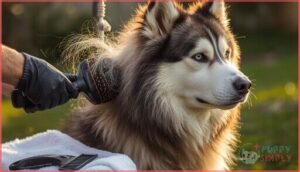
Double-coated dogs like Huskies, Golden Retrievers, and German Shepherds take grooming up a notch. Daily brushing is non-negotiable — combine slicker brush technique with undercoat rake use to clear loose fur before it mats.
Bathe every 4–6 weeks using gentle bath product selection to protect skin health. shedding season management, daily sessions cut the hair your furniture collects.
hidden skin issues — thick coats make skin health monitoring easy to skip.
Wire-Coated Breeds – 2-3x Weekly Brushing, 6-8 Week Baths

Wirehaired dogs — think Wire Fox Terriers or Border Terriers — don’t need daily brushing, but skipping it entirely causes real problems. Aim for 2–3 sessions weekly, about 10–15 minutes each, focusing on Undercoat Maintenance and proper Brush Type Selection.
- Use a slicker brush for detangling, then finish with a wide-tooth comb.
- Bathing every 6–8 weeks preserves Coat Oil Management naturally.
- Always do Skin Sensitivity Checks and use a coarse-coat shampoo for smart Bath Shampoo Choice.
Curly & Wavy-Haired Dogs – Daily Brushing, 4-6 Week Baths
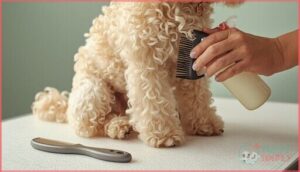
Curly and wavy coated dogs — Poodles, Doodles, Bichon Frises — need daily brushing, no exceptions. Their curly hair tangles fast, especially behind the ears and under the legs.
Use Detangling Sprays to help the brush glide, then confirm you’ve reached the skin with a metal comb.
Bathing every 4–6 weeks with Curl-Optimized Conditioners keeps coats soft. Always follow Bath Drying Techniques: never air-dry — blow-dry on low while brushing to prevent new mats.
| Task | Frequency |
|---|---|
| Brushing | Daily |
| Bathing | Every 4–6 weeks |
| Professional Grooming Intervals | Every 6–8 weeks |
Regular Skin Health Monitoring during grooming frequency sessions catches hidden issues early.
Grooming sessions are also the perfect time to check for irritation or dryness, especially when using tools designed for heavy shedders like those covered in this Siberian Husky shedding and coat care guide.
Essential Dog Grooming Tasks and Timing

Brushing and bathing are just part of the picture. Your dog also needs regular attention to their nails, teeth, ears, eyes, and sometimes their anal glands.
Here’s a straightforward breakdown of each task and how often you should be doing it.
Nail Trimming – Every 3-4 Weeks
Nail trimming belongs on your dog grooming schedule every 3 to 4 weeks — no exceptions. Use the Floor Test: if you hear clicking on tile, the nails are already too long.
For Clipper Selection, scissor-style clippers work well for most breeds. Nail Grinding smooths sharp edges afterward.
Senior Paw Care matters most here, since overgrown nails worsen joint strain.
Quick Trim Tips: trim little, trim often.
Teeth Brushing – Daily or 2-3x Weekly
Teeth brushing is honestly one of the most skipped steps in a dog grooming schedule — and dogs pay the price for it. Aim for daily brushing to stay ahead of plaque prevention, but 2–3 times weekly still protect canine dental health.
Teeth brushing is the most skipped grooming step, yet daily brushing is all it takes to protect your dog’s dental health
Use an enzyme toothpaste with glucose oxidase, apply it at a 45-degree angle, and watch for age-related dental needs as your dog gets older.
Ear Cleaning – Every 1-2 Months or as Needed
Most healthy dogs only need ear cleaning every 1–2 months — that’s your vet‑recommended frequency for canine hygiene and health.
Here’s what shapes your grooming schedule:
- Wax Removal Technique – Fill the canal, massage for 30 seconds, let them shake.
- Moisture Control – Post‑swim cleaning prevents infection after water exposure.
- Allergy Inflammation – Allergy‑prone dogs may need more frequent cleans under vet guidance.
- Floppy Ears – Trap debris faster, shortening the ear infection prevention window.
- Weekly Checks – Inspect ears often; only clean when you see buildup or smell odor.
Eye Cleaning – With Baths or as Needed
Eye cleaning doesn’t need its own calendar slot for most dogs. Wipe away any visible discharge during bath-time eye wipe routines — that’s usually enough. Flat-faced breeds like Pugs and Shih Tzus are the exception; they often need daily wiping for tear stain prevention.
| Situation | Cleaning Frequency |
|---|---|
| Normal tearing | During baths only |
| Flat-faced breeds | Daily or 2-3x weekly |
| Heavy tear staining | Once daily minimum |
| Dusty/pollen environments | Increase temporarily |
| Thick or colored discharge | Vet visit needed |
Always use a saline solution use method — moisten a cotton pad, hold it on the crust briefly, then wipe inner corner outward. Environmental debris impact is real too; dusty walks mean more frequent checks. A dog grooming schedule that includes quick eye checks keeps problems from sneaking up on you.
Anal Gland Expression – Every 3-4 Weeks for Some Breeds
Not every dog needs this done — but for some, skipping it means real pain. Anal glands are small sacs near your dog’s rear that can fill up and cause serious discomfort if ignored. High-risk breeds like French Bulldogs, Pugs, and small dogs often need expression every 3–4 weeks as part of their breed-specific grooming routine.
- Watch for impaction warning signs: scooting, licking the rear, fishy odor, or straining to poop
- High-risk breeds (Chihuahuas, Bulldogs, Shih Tzus) often need scheduled expression every 3–4 weeks
- Fiber diet impact is real — firm stools help dogs empty glands naturally during bowel movements
- Vet vs groomer: vets do internal expression (more thorough); groomers usually do external only
- Home expression tips: learn proper technique from your vet before attempting it yourself
Factors Affecting How Often You Groom

Grooming isn’t one-size-fits-all — even dogs of the same breed can have different needs. A few key factors determine how often your dog actually needs to be brushed, bathed, or trimmed.
Here’s what to think about before settling on a grooming routine.
Breed-Specific Grooming Needs
Your dog’s breed shapes everything about grooming frequency.
A Poodle’s clip frequency runs every 4 to 8 weeks because that coat never stops growing.
Brachycephalic fold care on Bulldogs means daily wiping — skip a day and you’re inviting infection.
Ear hair management matters for Spaniels weekly, while a Husky’s winter grooming demands more sessions during seasonal blowouts.
Silky toy breeds need beard attention several times a week, too.
Coat Length and Thickness
Breed tells part of the story — but coat length and thickness fill in the rest.
- Shorthaired dogs need less frequent brushing because their coat insulation is minimal and drying time factors are low.
- Longhaired dogs trap debris fast, increasing grooming frequency.
- Doublecoated dogs face skin thickness issues if undercoats mat.
- Coat density variations affect heat regulation and how often you need to groom.
Lifestyle and Activity Level
Your dog’s lifestyle shapes grooming frequency just as much as coat type.
Active dogs that hike, swim, or hit the dog park weekly need baths every 4–6 weeks — sometimes quick rinses in between.
Indoor companion care is simpler; city apartment dogs stay cleaner longer.
Urban rural grooming needs differ too — sidewalk chemicals versus trail mud call for different routines.
Seasonal Shedding and Climate
Seasons change your dog’s coat more than most people expect. Photoperiod influence — the shift in daylight hours — triggers heavier shedding each spring and fall, sometimes lasting a full month. Temperature shedding spikes during sudden warm-to-cool swings.
Indoor lighting effects and air conditioning impact can flatten those cycles, causing year-round low-level shedding instead. Climate zone variations mean your grooming frequency should shift with the calendar.
Health Conditions Impacting Grooming
Your dog’s health conditions directly shape how often grooming happens.
Skin issues and allergy management often mean baths every one to two weeks with hypoallergenic shampoo.
Arthritis care calls for shorter, gentler sessions — senior dogs need more frequent visits, not fewer.
Ear infections, dental health concerns, and obesity fold care all add regular cleaning tasks that keep dermatological health from quietly spiraling into something worse.
Signs Your Dog Needs Immediate Grooming

Sometimes your dog can’t tell you they need a groom — but their body sure can. Waiting for a scheduled appointment isn’t always the right call.
Here are the signs that mean it’s time to take action now.
Matted or Tangled Fur
Matted fur isn’t just an eyesore — it’s a real health risk. tight mats pull on the skin, trap moisture, and can hide fleas or cause infections underneath.
Check these high-risk areas first:
- Behind the ears
- Armpits and inner thighs
- Collar and leash zones
Prevention habits like daily brushing, detangling sprays, and professional dematting appointments keep matting and tangles from becoming serious problems.
Odor or Dirty Coat
A smelly coat is your dog’s way of asking for help. Bacterial or yeast infections, seborrhea management issues, and environmental odor sources like mud or road salt can all cause persistent stink.
If bathing doesn’t clear it up, that’s a red flag. Following bathing frequency guidelines — every 4–6 weeks for most dog coat types — keeps your dog hygiene schedule on track.
Overgrown Nails
That clicking sound your dog makes when walking across hardwood floors?
That’s a red flag for dog nail care.
Dog nails grow roughly 0.2mm daily, and without natural wear surfaces like concrete, they curl fast.
Overgrown nails cause painful gait and a real joint strain risk over time.
Quick identification matters — if nails touch the ground while standing, it’s time for nail trimming now.
Visible Debris or Discharge (Ears/Eyes)
little gunk in the eye corners is normal — light brown or grayish debris that wipes away easily is just dried tears mixed with dust. thick yellow or green discharge signals an eye infection and needs prompt vet care.
Same with ears: light wax is fine, but dark coffee-ground debris often means ear mites. Trust your nose too — a yeasty smell almost always means an ear infection brewing.
Discomfort or Excessive Scratching
Scratching that won’t quit is your dog telling you something’s wrong. It could be an allergic skin reaction to flea saliva, shampoo residue, or coat dryness from over-bathing. Left unchecked, it leads to hot spot development and skin barrier damage fast.
Watch for these grooming-related triggers:
- Matting pulling on skin
- Itchy ear infections from trapped moisture
- Skin irritation from product residue
- Clipper burn causing post-groom scratching
Top Dog Grooming Tools for Home Care
Having the right tools makes home grooming so much easier — and honestly, less stressful for both you and your dog. Not every brush or comb works for every coat type, so it’s worth knowing which ones are actually worth keeping in your kit.
Here are three solid options that get the job done.
1. Bodhi Dog Bath Brush

The Bodhi Dog Bath Brush is one of those tools you’ll reach for nearly every bath. Its soft rubber tips scrub away loose fur and dead skin while working shampoo into a solid lather — so you’re cleaning and deshedding at the same time.
The oval, palm-fit design measures about 3.5 by 5 inches, giving you solid control even with soapy hands.
It’s gentle enough for sensitive skin and works on wet or dry coats, making it a genuinely adaptable addition to your grooming routine.
| Best For | Pet owners with short-haired dogs or cats who want a gentle, all-in-one bath brush that cleans, deshedds, and massages at the same time. |
|---|---|
| Primary Use | Deshedding & scrubbing |
| Coat Compatibility | Short hair breeds |
| Skin Safety | Soft rubber tips |
| Material | Natural rubber |
| Portability | Lightweight, 0.22 lbs |
| Shedding Control | Removes loose fur |
| Additional Features |
|
- Soft rubber tips are easy on sensitive skin while still scrubbing away dead skin and loose fur effectively
- Works double duty — lathers shampoo and deshedds in one step, cutting bath time down
- Simple to use on wet or dry fur, so it’s not just a bath-time tool
- Not great for long-haired dogs or breeds with a thick undercoat — the rubber tips don’t reach deep enough
- The back strap runs small, so it might feel awkward for people with larger hands
- Cleaning out trapped fur can take some extra effort, especially after a heavy shedding session
2. Andis Stainless Steel Pet Grooming Comb
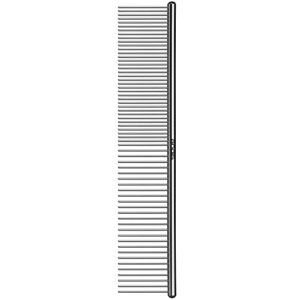
Once you’ve finished the bath, you’ll want a comb that can check your work. The Andis 7.5-inch Stainless Steel Pet Grooming Comb is a go-to finishing tool.
One half has wide teeth for working through tangles and thicker coat areas; the other has fine teeth for detail work around the face, ears, and paws.
It’s lightweight, rust-resistant, and built to last. For daily maintenance or post-bath finishing, this comb covers both jobs without switching tools.
| Best For | Pet owners who want a reliable, everyday grooming comb that handles both detangling and finishing for dogs, cats, and other short- or long-haired pets. |
|---|---|
| Primary Use | Dematting & detangling |
| Coat Compatibility | Short and long hair |
| Skin Safety | Rounded pin ends |
| Material | Stainless steel |
| Portability | Lightweight, 0.07 kg |
| Shedding Control | Removes loose hair |
| Additional Features |
|
- Dual-sided design means you get coarse and fine teeth in one tool — no need to grab a second comb
- Lightweight and rust-resistant stainless steel holds up well with regular use
- Rounded pin ends are gentle on skin, making it a safe choice for routine grooming
- Not the best option for pets with very sensitive skin or severe matting
- Requires a patient, careful hand to avoid pulling or snapping hair
- At 7.5 inches, it may feel a bit small for grooming large, thick-coated breeds
3. Paws Pamper Grooming Rake Dogs Cats
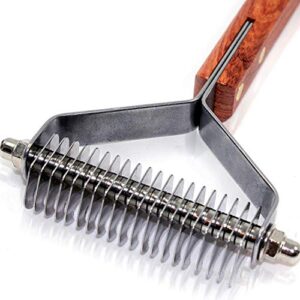
If the comb is your finishing pass, the Paws Pamper Grooming Rake is the heavy lifter that comes before it.
It’s built for dogs and cats with thick or double coats — think Golden Retrievers or long-haired breeds that shed enough to fill a bag.
The rounded stainless steel blades pull out loose undercoat without scratching skin, and the classic wood handle gives you real control.
At under 4 ounces, it won’t wear out your hand mid-session.
| Best For | Dog and cat owners with thick or double-coated breeds who need a reliable tool to tackle heavy shedding and tough mats before a finishing comb pass. |
|---|---|
| Primary Use | Deshedding & dematting |
| Coat Compatibility | All coat types |
| Skin Safety | Rounded teeth ends |
| Material | Stainless steel & wood |
| Portability | Lightweight, 3.98 oz |
| Shedding Control | Reduces shedding |
| Additional Features |
|
- Rounded teeth are gentle on skin — no scratching, just smooth deshedding
- Lightweight at under 4 ounces, so your hand won’t give out halfway through
- Works on both dogs and cats, single and double coats alike
- Short-haired dogs need quick, short strokes to get much benefit from it
- Thick coats can make sessions tiring — both for you and your pet
- The longer teeth side can pull out more undercoat than you might want if you’re not careful
Frequently Asked Questions (FAQs)
How long can a dog go without grooming?
It depends on dog’s coat. Short-haired breeds like Beagles can stretch to 8 weeks before odor kicks in.
Long-haired dogs? They’ll develop painful mats in as little as two weeks without brushing.
Can you groom your dog too often?
Yes, you can. Bathing too often strips your dog’s natural skin oils, leaving the coat dry and dull. Stick to the right schedule for your dog’s coat type.
Should you tip your professional dog groomer?
Tipping your groomer is like leaving a thank-you note — but with cash. A 15–20% tip is standard, so for a $70 groom, $10–$14 goes a long way.
At what age should puppies get first groomed?
Most puppies are ready for their first professional groom around 12 to 14 weeks, once their core vaccinations are complete. That small wait keeps them safe in a salon environment.
Is professional grooming better than grooming at home?
The right tool for the right job.” Professional groomers catch health issues 40% more often and use salon-grade equipment — but consistent home brushing between visits keeps your dog comfortable and clean.
How do you calm an anxious dog during grooming?
Start small. Let your dog sniff the brush before you use it, offer treats throughout, and keep first sessions under 10 minutes.
A tired dog from a pre-groom walk is much easier to handle.
Conclusion
They say ounce of prevention is worth a pound of cure—and nowhere is that truer than knowing how often you should groom your dog.
A consistent schedule built around your dog’s coat type, activity level, and individual needs prevents painful mats, overgrown nails, and costly vet visits before they start.
You don’t need to be a professional groomer.
You just need the right routine, the right tools, and the commitment to stick with it.
- https://backyardpetservices.com/2025/11/07/grooming-frequency-by-breed-a-quick-guide/
- https://www.edenbeau.uk/post/the-ultimate-guide-to-dog-grooming-how-often-should-your-dog-be-groomed
- https://www.riverpaws.dog/blog/how-often-should-you-groom-your-dog
- https://www.luckydogmobilegroomers.com/how-often-should-you-groom-your-dog-a-complete-guide/
- https://adogslifespa.com/blogs/pro-tips/how-often-should-i-bathe-my-dog-by-breed-coat-type