This site is supported by our readers. We may earn a commission, at no cost to you, if you purchase through links.
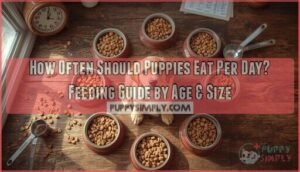
Your puppy’s stomach is about the size of a walnut at eight weeks old, which means it can’t hold enough food to fuel a full day of growth in just one or two sittings. That’s why feeding frequency matters so much during these critical early months.
Young puppies need to eat four to six times daily, while older puppies do fine with two or three meals. Getting the timing wrong can lead to low blood sugar in small breeds or digestive problems in larger ones.
The right schedule depends on your puppy’s age, breed size, and individual needs—and it will change several times before your pup reaches adulthood.
Table Of Contents
- Key Takeaways
- How Often Should Puppies Eat Per Day?
- Feeding Schedules for Different Puppy Ages
- Breed Size and Puppy Feeding Frequency
- Creating an Effective Puppy Feeding Schedule
- Nutritional Needs at Each Puppy Stage
- Signs You Should Adjust Feeding Frequency
- Transitioning to Fewer Meals as Puppies Grow
- Puppy Feeding Tips for Busy Owners
- Frequently Asked Questions (FAQs)
- Conclusion
Key Takeaways
- Puppies need four to six meals daily until three months old, then shift to three meals until six months, and finally two meals from six to twelve months as their stomach capacity grows and metabolism stabilizes.
- Small breed puppies face serious hypoglycemia risk and must eat every three to four hours, while large breed puppies need smaller, more frequent meals to prevent dangerous bloat and support controlled bone growth.
- Consistent meal timing at the same hours each day promotes healthy digestion, makes potty training predictable, helps you spot appetite changes early, and reinforces crate training when you pair feeding with positive crate experiences.
- Weekly body condition checks—feeling ribs without pressing hard and watching for a visible waist—combined with weight tracking against growth charts tell you when to adjust portions or meal frequency before problems develop.
How Often Should Puppies Eat Per Day?
Your puppy’s feeding schedule isn’t one-size-fits-all—it changes as they grow. Younger puppies need more frequent, smaller meals to keep their energy steady and support rapid development.
Here’s what you need to know about meal frequency at each stage and why consistency matters so much.
Feeding Frequency by Puppy Age
Your puppy’s feeding frequency shifts as they grow, and getting it right fosters healthy puppy development at every growth stage. Here’s how meal scheduling changes with puppy age: For mixed breeds like German Shepherd Labrador mixes, following age-appropriate feeding schedules becomes especially important since their growth patterns can vary significantly.
- Up to 3 months: Feed 4-6 meals per day, spaced 3-4 hours apart, following feeding charts for your puppy’s weight.
- 3-6 months: Shift to 3 meals daily during this critical puppy growth phase.
- 6-12 months: Move to 2 meals per day, maintaining consistent puppy nutrition through your puppy feeding schedule.
Ensuring proper nutrition is vital, and using scientific study methods can help.
Importance of Consistent Meal Times
Setting regular meal times does more than fill your puppy’s belly—it promotes digestive health and creates predictable feeding routines that benefit both of you. Consistent puppy schedules help regulate gastric emptying, stabilize energy levels, and make appetite changes easier to spot.
A reliable puppy feeding schedule also reinforces training efforts, maintains nutrient balance, and gives you better control over potty breaks throughout the day. Pairing this routine with high-quality food designed for large breed puppies ensures they get the right nutrients at every stage without overloading their growing frames.
Feeding Schedules for Different Puppy Ages
Your puppy’s stomach is only about the size of a golf ball when they first come home, and it grows fast. That means their feeding schedule needs to shift as they get bigger and more capable of handling larger meals.
Your puppy’s stomach starts golf-ball-sized and grows fast, so their feeding schedule must shift as they mature
Here’s what you need to know about feeding frequency from birth through their first year.
0. 3 Months: Number of Meals and Timing

During the first three months, your puppy needs four meals per day, spaced roughly four hours apart. This frequent feeding schedule promotes digestive health and steady energy levels during rapid growth and development stages. As your Cavapoo grows, you’ll eventually shift to fewer feedings—check out this complete Cavapoo feeding schedule guide to learn when and how to make that transition smoothly.
Consistent meal frequency helps prevent hypoglycemia in young puppies while establishing a predictable puppy feeding schedule. Always provide fresh water between feedings to support proper puppy nutrition and hydration. Large breed puppies have unique nutritional requirements, so choosing dog food for large breed puppies with controlled calcium and phosphorus levels supports healthy bone development.
3. 6 Months: Adjusting Meal Frequency

Between three and six months, you can shift your puppy to three meals per day, spaced five to six hours apart. This feeding schedule promotes digestive health and stable energy as growth continues.
Monitor body condition weekly and adjust puppy food portions if weight gain accelerates or slows. Gradual feeding transitions over one to two weeks prevent stomach upset while maintaining proper puppy nutrition during critical puppy growth and development stages.
6. 12 Months: Transition to Fewer Meals

By six to twelve months, you’ll generally move from three meals to two per day, spaced eight to twelve hours apart. This feeding shift aids puppy development as growth slows and energy needs shift.
Key steps for this feeding schedule:
- Adjust portions gradually to maintain steady weight gain and nutrient balance
- Monitor body condition weekly through growth monitoring and weight checks
- Watch for appetite changes that signal nutritional requirements aren’t being met
Breed Size and Puppy Feeding Frequency

Your puppy’s breed size plays a bigger role in feeding frequency than you might expect. Small breeds face different challenges than large ones, and understanding these differences helps you avoid serious health issues.
Let’s look at how breed size shapes your puppy’s feeding needs and what adjustments you should make.
Small Breed Puppies and Risk of Hypoglycemia
Small breed puppies walk a tightrope with blood sugar—their limited glycogen stores and high metabolic demands put them at real risk for hypoglycemia.
You’ll need to feed your toy or miniature breed puppy 4-6 small meals daily during those critical first 12 weeks. Watch for hypo symptoms like tremors, lethargy, or disorientation, and never let more than 4 hours pass between meals.
Large Breed Puppies and Bloat Prevention
Large breed puppies face a serious bloat risk when meals are too big or eaten too quickly. You’ll want to split their daily food into three smaller portions and wait at least 60 minutes after eating before any vigorous exercise.
- Watch for early bloat signs like restlessness, unproductive retching, or a swollen, tight abdomen
- Feed from elevated bowls to reduce air intake during meals
- Choose large breed-specific formulas that support steady, controlled growth rates
Customizing Feeding Schedules for Breed Needs
Your puppy’s breed isn’t just about size—it shapes their entire feeding plan. Small breeds burn energy fast and need frequent meals to maintain stable blood sugar, while large breeds require controlled nutrition to support steady puppy growth without stressing developing bones.
Work with your vet to design feeding schedules that match your puppy’s specific energy requirements and nutrient needs.
Creating an Effective Puppy Feeding Schedule
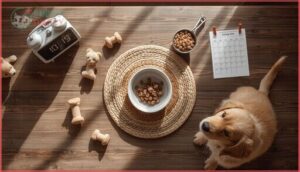
A good feeding schedule does more than just keep your puppy’s belly full—it sets the foundation for healthy digestion, steady energy, and long-term wellbeing. Getting the timing and method right takes a bit of planning, but it’s simpler than you might think.
Here’s how to build a routine that works for both you and your growing pup.
Setting Regular Meal Times
Think of meal timing as your puppy’s internal compass—it guides digestion health and sets the stage for balanced feeding routines. Consistency in your puppy feeding schedule helps you stay ahead of potential issues and bolsters their nutrition planning from day one.
- Predictable digestion means fewer tummy troubles and smoother bathroom breaks
- Early detection of appetite changes alerts you to health concerns quickly
- Portion control prevents overfeeding and keeps growth on track
- Training synergy aligns feeding habits with crate time and behavioral milestones
Choosing The Right Feeding Method (free Choice, Timed, Food-restricted)
You’ll choose among three core feeding techniques to shape your puppy’s meal routine. Free choice feeding offers unlimited access but can encourage overeating, while timed feeding sets regular intervals to help you monitor intake.
Food-restricted meal portioning is your best bet for growing puppies—it controls calories, promotes steady growth monitoring, and lets you fine-tune nutrient requirements without the guesswork.
Tracking and Adjusting for Growth
Once you’ve settled on food-restricted meals, regular weigh-ins become your roadmap for nutrient balance and feeding adjustments. Weekly weight tracking during rapid puppy development—especially between 8 and 16 weeks—lets you spot deviations early and recalibrate portions before problems arise.
- Weigh your puppy monthly until six months, then every two to three months
- Plot age and weight on growth charts to confirm steady curves
- Assess body condition alongside numbers—ribs should be easily felt
- Adjust meal size in small steps when your pup jumps between percentile lines
- Schedule veterinary health checks to catch feeding missteps or underlying issues
Monitoring a puppy’s optimal growth rate is vital for their overall health and development.
Nutritional Needs at Each Puppy Stage

Your puppy’s nutritional needs shift dramatically as they grow, and understanding what fuels their development helps you choose the right food at the right time. Growing puppies need specific amounts of protein, fat, vitamins, and minerals to build strong bodies without growing too fast or too slow.
Let’s break down the essential nutrients your puppy needs and how those requirements change based on age and breed size.
Protein, Fat, and Carbohydrate Requirements
Your puppy’s dietary needs center on three critical building blocks. Growth diets usually contain 22-32% protein from quality animal sources, 8-20% fat for energy and brain development, and balanced carbohydrates for steady fuel.
These nutrient ratios support rapid tissue formation while avoiding metabolic overload. Energy needs peak during growth, so choosing formulas with proper protein sources, fat metabolism support, and carbohydrate balance ensures healthy canine nutrition without excess weight gain.
Essential Vitamins and Minerals for Growth
Beyond the big three macronutrients, micronutrients drive skeletal and immune development. Vitamin D benefits calcium absorption—critical for strong bones—while a calcium-to-phosphorus ratio around 1.2:1 to 1.5:1 prevents developmental issues.
Omega-3 sources like DHA support brain and vision growth. Zinc, iron, and copper round out mineral balance, fueling enzymes and blood formation that keep your puppy thriving.
Special Nutrition for Large and Small Breeds
Large breed puppies need higher protein with careful calcium balance to support long bone growth without stressing joints—that’s where large breed supplements and growth stage nutrition matter most.
Small breed formulas pack more calories into smaller kibble since tiny pups burn energy fast and risk low blood sugar.
Breed specific diets align nutrient requirements and planning with your puppy’s unique growth curve, ensuring proper puppy feeding and nutrition at every stage.
Signs You Should Adjust Feeding Frequency

Your puppy’s body will tell you when something’s off with their feeding schedule. You might notice changes in their weight, energy, or even bathroom habits that signal it’s time to make adjustments.
Let’s look at the key signs that mean you should rethink how often you’re filling that food bowl.
Monitoring Body Condition and Weight
You can keep your puppy on track by checking body score weekly—feel those ribs without pressing hard, and watch for a visible waist.
Weight tracking against growth charts helps you spot trouble early, whether you’re feeding too much or too little.
This health monitoring ties directly to your feeding schedule and ensures nutrition requirements match your puppy’s development stage, keeping nutrient balance right where it should be.
Identifying Overfeeding or Underfeeding
If your puppy gains weight steadily despite consistent puppy food portions, or you notice loose stools after meals, you’re likely overfeeding. On the flip side, visible ribs, spine outline, or low energy signal underfeeding.
Compare your puppy’s progress to growth charts and adjust feeding schedules accordingly. These feeding signs help you maintain nutrient balance and avoid serious health risks.
Consulting Your Veterinarian for Guidance
Regular check-ins with your veterinarian are a smart move for puppy care and nutrition. A professional can spot health issues early, tailor feeding plans, and guide you through growth tracking.
If you’re ever unsure about your puppy’s feeding schedule or timeline, veterinary advice helps keep nutrition and health monitoring on track. Think of it as your puppy feeding guide in action.
Transitioning to Fewer Meals as Puppies Grow

As your puppy matures, their stomach capacity increases and their metabolism stabilizes, which means they won’t need to eat as frequently. Most puppies gradually shift from three meals a day to two meals somewhere between six and twelve months of age.
Let’s look at how to make this change smooth and stress-free for both of you.
When to Move From Three to Two Meals Per Day
Most puppies are ready to shift from three to two meals per day around six months of age, though this feeding shift depends on individual puppy development and breed size. The change in meal frequency aids puppy growth and helps establish a feeding schedule that works as your pup matures.
- Gradual is key: Shift over 1–2 weeks to protect digestion and prevent stress
- Maintain total calories: Split the same daily nutrient balance between two meals instead of three
- Watch the timeline: Start planning with your vet and adjust based on growth stages and weight management
Signs Your Puppy is Ready for Fewer Meals
You’ll know your pup is ready for fewer meals when you see steady puppy growth rates over 2–4 weeks, consistent energy after eating, and well-formed stools. Your vet can confirm readiness during health checks by evaluating body condition and growth.
Watch for stable appetite at meal times and balanced energy between feedings—these feeding cues signal your puppy’s nutritional needs align with reduced meal frequency.
Supporting Healthy Transitions
Making the shift smoother starts with change planning. Reduce meals gradually only after your puppy shows steady growth and stable weight.
Schedule feedings at consistent times to avoid tummy upset, and track body condition weekly so you can adjust portions precisely.
Health checks with your vet confirm feeding adjustments support proper nutrient balance as nutritional needs change throughout puppy growth.
Puppy Feeding Tips for Busy Owners
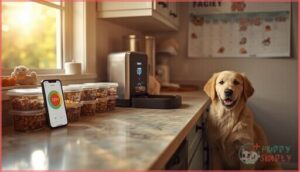
Raising a puppy takes commitment, but a hectic schedule doesn’t mean you can’t stick to a solid feeding routine. A few smart strategies can help you maintain consistency even when life gets chaotic.
Here are three practical tips to keep your puppy’s meals on track without adding stress to your day.
Feeding in a Distraction-free Environment
Your puppy’s focus at mealtime matters more than you might think. Set up a dedicated, quiet feeding spot away from household traffic, loud noises, or toys that could pull their attention away. Keep the lighting and temperature steady to reduce sensory overload.
A calm environment promotes healthy digestion and reinforces a consistent routine, making every meal more productive and stress-free for your growing pup.
Maintaining Routine When Away From Home
When travel or work pulls you away, your pup’s feeding schedule shouldn’t suffer. Automated feeders deliver meals on time, reducing digestive upset and keeping energy levels steady.
If you prefer a personal touch, recruit a pet sitter, neighbor, or friend. Give your caretaker clear instructions—exact portions, timing, and feeding cues your puppy knows. Consistent routines make trips less stressful for everyone involved.
Using Feeding Time for Crate Training and Bonding
Feeding time doubles as a perfect training opportunity. Place your puppy’s meal inside the crate with a gentle “in your crate” cue, turning meals into calm, positive experiences that build trust and reduce anxiety.
- Pair each feeding with soft verbal praise to strengthen your bond during crate sessions
- Reward voluntary crate entry with a small portion of the meal before settling
- Keep feeding routines distraction-free so your puppy learns the crate means safety and comfort
Frequently Asked Questions (FAQs)
Can puppies eat human food as treats?
Most human food isn’t safe for puppies and can trigger digestive upset or nutritional imbalances. While plain boiled chicken works as an occasional treat, avoid toxic foods like chocolate, grapes, onions, and xylitol completely.
What if my puppy skips a meal?
If your puppy skips a meal, don’t panic right away. Monitor them closely for signs like lethargy or vomiting. Contact your veterinarian if food refusal continues beyond 12 hours.
Should water be available all day long?
Yes, fresh water should be available all day long. Puppies have high hydration needs and fluid balance requirements. Clean water access prevents dehydration risks and promotes puppy health, development, and overall dog nutrition and health.
How to switch between puppy food brands?
Introduce the new puppy food gradually over 7 to 10 days, mixing increasing amounts with the current brand. Monitor stool consistency and appetite daily, slowing the shift if digestive upset occurs.
When do puppies stop needing nighttime feedings?
Most puppies progress past nocturnal hunger between 12 and 16 weeks as their growth stages stabilize. By four months, many sleep soundly through the night when daytime feeding schedules meet their energy needs.
Conclusion
The smallest stomachs need the most attention—that’s the paradox of puppy feeding. How often should puppies eat per day? The answer shifts as your pup grows, but the principle stays the same: frequent, measured meals protect their health and fuel their development.
Watch your puppy’s body condition, stick to consistent times, and adjust as needed. When you match feeding frequency to their changing needs, you’re not just filling a bowl—you’re building a foundation for lifelong wellness.
- https://www.kingsdale.com/vet-clinic-kitchener/team/vets
- https://notabully.org/author/zoie-keast-cpdt/
- https://akc.jotform.com/252115238925860?source=16
- https://academichelpexpress.blog/2024/08/please-use-the-bulleted-points-and-the-rubric-below-to-guide-your-work-your-pa/
- https://www.linkedin.com/posts/bohdanlukianets_tasks-study-research-activity-7373377539521667072-UTEi