This site is supported by our readers. We may earn a commission, at no cost to you, if you purchase through links.

Your Yorkie’s behavior shifts unexpectedly—she’s restless, clingy, and leaving small spots of blood on your floor. If you’ve never experienced a heat cycle with your female Yorkie, these signs can catch you completely off guard. Yorkshire Terriers usually go into heat every 5 to 8 months, with each cycle lasting 2 to 4 weeks.
Understanding this pattern isn’t just about managing the mess or preventing surprise pregnancies. It’s about recognizing when your dog’s hormones are triggering physical discomfort, knowing which days she’s most fertile, and spotting any irregularities that might signal health concerns.
Whether you’re considering breeding, planning to spay, or simply want to support your Yorkie through each cycle, knowing what to expect makes all the difference in keeping her healthy and comfortable.
Table Of Contents
Key Takeaways
- Yorkies typically go into heat every 5 to 8 months (about twice yearly), with each cycle lasting 2 to 4 weeks and the fertile estrus window occurring around days 7-10 when conception rates hit 80-95%.
- The heat cycle unfolds in four distinct stages—proestrus (7-10 days with bloody discharge), estrus (5-10 days of peak fertility), diestrus (60-90 days of hormonal stabilization), and anestrus (4-5 months of reproductive rest).
- Leaving your Yorkie unspayed carries serious long-term risks, including a 25% chance of pyometra (life-threatening uterine infection) and 25% risk of mammary tumors by age 10, while spaying before the first heat drops mammary cancer risk to just 0.5%.
- Managing a Yorkie in heat requires practical hygiene tools like reusable diapers (changed every 4-6 hours), hypoallergenic wipes for vulva cleaning, and self-warming mats for comfort, plus strict supervision outdoors since male dogs can detect her scent from three miles away.
Yorkie Heat Cycle Overview
Understanding your Yorkie’s heat cycle starts with knowing the basics. Your female Yorkie will experience physical and behavioral changes as her body gets ready for reproduction, and recognizing what’s normal helps you provide the best care.
Let’s break down what a heat cycle actually is, when you can expect it to begin, and why your petite pup’s size has an impact.
What is a Heat Cycle?
A Yorkie heat cycle—also called estrus—is your girl’s natural window for reproduction, driven by hormone regulation that orchestrates reproductive health. Understanding cycle phases helps you recognize heat symptoms and manage her care confidently. Here’s what happens:
- Proestrus begins with bloody discharge and vulva swelling
- Estrus stage marks peak fertility windows when ovulation occurs
- Diestrus follows, lasting roughly 60 days regardless of pregnancy
- Anestrus provides a 4–5 month rest period
To better understand the canine reproductive process, it’s vital to study the estrous cycle stages.
Age of First Heat in Yorkies
Now that you understand what happens during the estrus cycle, you’re probably wondering when it all begins. Most female Yorkies experience their first heat between 6 and 12 months old—though some start as early as 5 months or as late as 18 months.
This age variance depends on genetics, nutrition, and individual development, so tracking first heat signs around the 6-month mark helps you stay prepared. Understanding a dog’s life stage development is vital for anticipating these changes.
Differences in Heat Cycles by Dog Size
Size matters more than you’d think in canine reproduction. Yorkies and other small breeds cycle every 5 to 8 months—roughly twice yearly—while large breeds like Great Danes go into heat just once a year.
This breed variation affects heat duration too: Yorkie heat cycles usually last 2 to 4 weeks, with dog heat cycle symptoms appearing faster and resolving sooner than in their bigger counterparts.
Frequency of Yorkie Heat Cycles

Understanding how often your Yorkie goes into heat helps you plan ahead and provide the best care during these recurring cycles. Most female Yorkies experience heat about twice a year, though this timing isn’t set in stone for every dog.
Let’s look at what influences how frequently your Yorkie’s heat cycles occur and what variations you might expect.
Typical Cycle Intervals
Most Yorkies settle into a predictable rhythm—going into heat roughly every 6 to 8 months, or about twice a year. Think of these Yorkie heat cycles like clockwork your pet’s body naturally keeps.
Here’s what you can generally expect:
- First-year irregularity: Your Yorkie’s initial heat cycle stages might seem unpredictable, but consistency usually develops by 18 to 24 months.
- Established patterns: Once mature, most follow a 6-to-7-month interval between cycles.
- Individual variation: Some Yorkies cycle as frequently as every 5 months or stretch to 9 months—tracking helps you anticipate her fertility window and maintain her reproductive health.
Factors Affecting Frequency
Climate impact, nutritional effects, and environmental stress all shape the frequency of heat cycles in your Yorkie. Poor diet or hormonal imbalances can disrupt canine fertility patterns, while genetic factors determine her baseline reproductive cycle timing.
Even sunlight exposure influences these heat cycle stages in dogs—warmer climates and increased daylight may accelerate cycling, while stress delays it.
Understanding these variables helps you predict your Yorkie’s heat cycle stages accurately.
Variations Among Individual Yorkies
Every female Yorkie marches to her own reproductive rhythm. Genetic factors and hormonal variance create cycle irregularity—some experience heat every five months, others wait nine.
Signs of heat in Yorkies vary dramatically too: one dog shows obvious discharge and behavioral differences, while another has silent heats you’ll barely notice.
Health influences like stress or body condition shift frequency of heat cycles, making tracking Yorkie heat cycle stages essential for your individual dog.
Stages of The Yorkie Heat Cycle
Understanding the heat cycle isn’t just about knowing when it happens—it’s about recognizing what’s going on inside your Yorkie’s body at each phase. The complete cycle breaks down into four distinct stages, each with its own physical and hormonal changes.
Let’s walk through what happens during proestrus, estrus, diestrus, and anestrus so you can support your pup through every step.
Proestrus

Think of proestrus as your female Yorkie’s warm-up phase before the main event. This first stage of the heat cycle usually spans 7 to 10 days and kicks off with noticeable hormone changes.
Here’s what you’ll observe:
- Vulva swelling that’s hard to miss
- Bloody vaginal discharge starting light, then intensifying
- Male dogs suddenly showing interest, though your girl firmly rejects their advances
- Increased genital licking as she keeps herself clean
Understanding proestrus duration helps you master cycle management.
Estrus (Fertile Phase)

When your female Yorkie enters estrus—the true fertile window—everything shifts. This phase lasts 5 to 10 days, typically hitting peak fertility around days 11 to 14 of the heat cycle. You’ll notice the bloody discharge lighten to pink, her vulva soften, and suddenly she’s receptive to male dogs.
Hormone changes drive tail-flagging and restless Yorkie behavior. Fertility testing through progesterone levels pinpoints ideal breeding timing, while vigilant estrus care prevents unplanned pregnancies during this critical reproductive health phase.
Diestrus
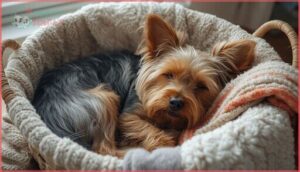
Once estrus ends, your female Yorkie enters diestrus—a quieter phase lasting 60 to 90 days where progesterone effects dominate her hormone levels regardless of pregnancy. Discharge stops, vulvar swelling subsides, and she rejects male attention.
However, pseudopregnancy strikes up to 75% of dogs during this diestrus duration, triggering nesting behaviors and mammary development. This prolonged phase also elevates uterine health risks like pyometra in unspayed females.
Anestrus

Anestrus is your Yorkie’s reproductive rest period—the longest heat cycle phase, usually lasting about 4 months between cycles. Her ovaries go quiet, hormone levels bottom out, and you won’t notice any behavioral or physical changes.
Here’s what happens during anestrus:
- Ovarian Inactivity: No follicle growth occurs as her reproductive system truly rests
- Hormone Levels: Progesterone and estrogen remain consistently low throughout
- Uterine Regeneration: Her uterus repairs and recovers from the previous cycle
- Follicle Growth Preparation: Late in anestrus, rising hormones trigger the next cycle
- Extended Duration: This phase makes up most of the time between your female Yorkie’s heat cycles
This reproductive rest is essential for dog reproductive health, giving her body time to reset completely.
Signs Yorkies Are in Heat

Recognizing when your Yorkie’s in heat isn’t always obvious, especially if this is your first time managing the cycle. The signs show up in three main ways: physical changes you can see, shifts in how she acts, and differences in her daily habits.
Let’s break down what to watch for so you’re never caught off guard.
Physical Symptoms
Watch for these telltale signs: your Yorkie’s vulva will become noticeably swollen—often the earliest indicator—and you’ll see vaginal discharge that shifts from bloody red to lighter pink as the cycle progresses. You might spot blood spots around your home.
Many Yorkies instinctively increase genital licking to stay clean, while some develop slightly swollen nipples or mild abdominal sensitivity during hormonal surges.
Behavioral Changes
Beyond the physical symptoms, your Yorkie’s personality might feel like it’s gone through a blender. Up to 73% of Yorkies become unexpectedly clingy during estrus, following you room to room. You’ll notice restlessness—pacing, whining, even nighttime wakefulness in 58% of cases.
Mood swings hit hard: one moment she’s affectionate, the next irritable. Watch for marking behavior and flirtatious tail-flagging around male dogs, plus sudden nesting instincts with toys.
Changes in Appetite and Urination
Those personality shifts often come with tangible physical changes. Up to 40% of Yorkies show appetite decrease during early heat—some skip meals entirely for 7–10 days. Meanwhile, urination frequency jumps 30–50%, especially during peak fertility. You’ll also notice urine changes: stronger-smelling, pheromone-rich marking that signals readiness to males. Tracking these patterns helps distinguish normal cycle duration from potential health complications.
- Appetite fluctuations usually resolve within 72 hours post-cycle
- Marking behavior peaks during days 7–17 of estrus
- Cloudy or discolored urine warrants immediate veterinary attention
Duration of Each Heat Cycle

Understanding how long your Yorkie’s heat cycle lasts helps you plan ahead and provide the right care at each stage. The full cycle usually spans 2 to 4 weeks, but each phase within that window has its own timeline and characteristics.
Let’s break down what you can expect during each stage and how tracking these patterns can make life easier for both of you.
Average Length of Heat Cycle
Your Yorkie’s heat cycle usually lasts 2 to 4 weeks from start to finish, though most owners notice the heaviest symptoms during the first two weeks. The estrus phase—when she’s actually fertile—runs about 5 to 10 days in the middle of this window.
Individual Yorkies can vary slightly, so tracking her reproductive cycle helps you recognize her unique pattern and prepare for future heat symptoms.
How Long Each Stage Lasts
Each stage of the heat cycle unfolds on its own timeline. Proestrus usually runs 7 to 10 days with bloody discharge and vulvar swelling. Estrus timing follows for 5 to 10 days—your Yorkie’s fertile window.
Diestrus care spans 60 to 90 days as hormones stabilize, while anestrus management covers the longest stretch at 4 to 5 months of reproductive rest before the cycle repeats.
Tracking Your Yorkie’s Cycle
Consistently recording your Yorkie’s reproductive cycle helps you anticipate the next estrus and spot irregularities early. Track each heat cycle with tools designed for symptom logging and prediction:
- Mark start dates on calendars or apps like Breedera for cycle management
- Document physical signs—bleeding, swelling, behavioral shifts during estrous cycle stages
- Note duration of each phase for pattern recognition
- Set alerts for upcoming heats based on your record keeping history
Caring for a Yorkie in Heat

When your Yorkie’s in heat, she’ll need extra support to stay comfortable and safe. This period comes with physical changes, mood swings, and a strong instinct to mate—so you’ll need to adjust your routine.
Here’s how to handle the essentials during those few weeks.
Hygiene and Cleanliness
Keeping your Yorkie clean during heat is fundamentally about infection prevention, not just appearances. Doggie diapers, changed every 4–6 hours, effectively contain bloody and vaginal discharge.
Gentle cleaning of the vulva with fragrance-free wipes 2–3 times daily reduces dermatitis by 40%. Sanitary products like washable panties cut household mess by 90%, while proper hygiene practices and odor control keep your girl comfortable and infection-free.
Managing Behavior and Comfort
Hormonal shifts during heat can turn your normally calm Yorkie into a clingy, restless companion. Stress management matters: consistent routines and close supervision during behavioral changes keep your girl feeling secure through each heat cycle.
Environmental adjustments like low-traffic resting zones cut stress by 60%, while comfort products—self-warming mats, breathable clothing—ease abdominal cramping and anxiety. Emotional support through gentle play and positive reinforcement stabilizes dog behavior changes.
Preventing Unwanted Mating
Male dogs can detect a female in heat from three miles away, making physical separation essential. Keep your Yorkie leashed outdoors and away from intact males during estrus.
Spaying before six months offers 100% breeding prevention and significant benefits, including reduced cancer risk. If immediate spaying isn’t possible, consider barrier methods like locked rooms or professional boarding during peak fertility to prevent pregnancy.
While you weigh pet contraception options, these measures ensure your Yorkie remains safe and pregnancy-free.
Health and Breeding Considerations
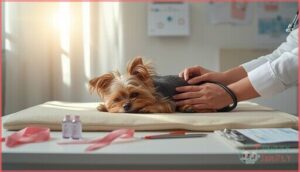
Understanding the reproductive health of your Yorkie goes beyond just managing heat cycles—it’s about making informed decisions that affect her long-term wellbeing. Whether you’re considering breeding or prevention, timing matters more than you might think.
Let’s look at the key health factors every Yorkie owner should know about breeding windows, the risks of leaving your girl unspayed, and when spaying makes the most sense.
Best Timing for Breeding
Timing your Yorkie’s breeding requires precision and patience. You’ll want to wait until she’s at least 18 to 24 months old—after her second heat cycle—to guarantee full reproductive maturity.
The fertile window peaks during estrus, usually days 7-10 after initial symptoms, when ovulation occurs. Progesterone testing identifies ideal mating days, and spacing two breedings 48 hours apart maximizes conception and litter size.
Risks of Unspayed Females
While breeding sounds straightforward, leaving your Yorkie unspayed carries serious health risks. Pyometra—a life-threatening uterine infection—affects up to 25% of unspayed females by age 10. Mammary tumors strike another 25%, with half being malignant.
Leaving your Yorkie unspayed risks life-threatening infections like pyometra and mammary tumors, each affecting up to 25% of intact females by age 10
You’re also facing increased risks of uterine cancer, hormone disorders, and accidental pregnancy. These reproductive issues compound over time, threatening your dog’s longevity and quality of life.
Benefits and Timing of Spaying
Spaying offers powerful cancer prevention, reducing the risk of mammary tumors to just 0.5% when done before your Yorkie’s first heat cycle. It also eliminates pyometra, a deadly uterine infection that affects 7% of intact females.
Most vets recommend spaying between 6–12 months for ideal health outcomes.
Beyond protecting your dog, spaying aids population control and prevents unwanted litters.
Top 3 Products for Yorkies in Heat

Managing a Yorkie in heat doesn’t have to feel overwhelming when you’ve got the right tools on hand. The products below can make cleanup easier, keep your girl comfortable, and help you both navigate this phase with less stress.
Here are three veterinarian-recommended essentials that’ll simplify life during your Yorkie’s heat cycle.
1. Self Warming Pet Bed Mat
When your Yorkie’s going through her heat cycle, thermal comfort becomes essential for managing stress and restlessness. A self-warming pet bed mat offers practical relief by reflecting up to 90% of her body heat back to her, raising surface temperature about 15°F above room temperature without electricity.
These mats prioritize pet safety—no cords, no burn risk—and are fully machine washable for easy bed maintenance during messy discharge days. The plush mat materials provide joint support while heating efficiency helps your girl rest easier through those uncomfortable weeks.
Best For: Small dog owners looking for a safe, washable heating solution that helps pets stay cozy during cold weather, recovery periods, or stressful times like heat cycles.
- Completely safe with no electrical cords or burn risks, making it perfect for unsupervised use in crates or carriers.
- Machine washable design makes cleanup easy during messy situations like heat cycles or accidents.
- Reflects up to 90% of body heat naturally, providing consistent warmth without adding to your electric bill.
- Thin profile may not offer enough cushioning for dogs that need extra joint support or padding.
- Some pets take time adjusting to the crinkly sound of the thermal layer inside the mat.
- Not ideal for puppies who are still teething and might chew through the material.
2. Reusable Female Dog Diaper Set
Beyond warmth, you’ll need practical protection against vaginal discharge throughout the heat cycle. Reusable doggie diapers solve that messy reality while honoring eco-friendliness—cutting household waste by up to 2,000 items annually per dog.
Quality sets feature adjustable velcro closures and multi-layer cores that hold roughly 250ml of dog discharge without leaking. The diaper materials stay soft against your Yorkie’s skin, maintaining dog comfort while supporting pet hygiene.
With proper care, these reusable benefits extend across 150-300 washes, paying for themselves within months while protecting your Yorkie’s health and behavior.
Best For: Pet owners with female Yorkies in heat, puppies still being housebroken, or dogs dealing with incontinence who want an eco-friendly solution that saves money long-term.
- Multi-layer absorbent cores hold up to 250ml without leaking, and over 85% of users report zero accidents during normal use
- Lasts through 150-300 washes while keeping 90% absorbency, paying for itself in 2-3 months compared to disposables
- Cuts down household waste by roughly 2,000 items per year while offering adjustable velcro fit for dogs from 2-100 pounds
- Incorrect sizing causes leaks in about 13% of cases, so you’ll need to measure carefully and possibly adjust the fit
- Requires regular washing to prevent odor buildup and bacteria growth, adding to your laundry routine
- Tail holes may run small for certain breeds, and some determined dogs can wiggle out if the fit isn’t snug enough
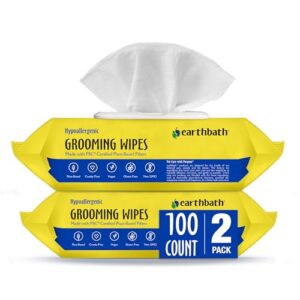
3. Hypoallergenic Dog Grooming Wipes
 View On Amazon
Daily maintenance becomes critical during your Yorkie’s heat cycle, when hormonal shifts can trigger skin sensitivities and bacterial overgrowth. Hypoallergenic dog grooming wipes with natural ingredients like aloe and oatmeal offer allergy relief while removing discharge residue from her vulva and hindquarters—reducing airborne allergens by up to 84%.
These eco-friendly grooming tips support pet skin health between baths, addressing both canine estrus hygiene needs and Yorkie behavior and health concerns. Choose fragrance-free, pH-balanced formulas that protect dog health without irritating sensitive areas during this vulnerable phase.
Best For: Yorkie owners managing heat cycle hygiene who need gentle, allergy-friendly wipes to clean sensitive areas and reduce dander without causing skin irritation.
- Removes up to 84% of allergens from fur immediately after use, making them effective for dogs with sensitivities during hormonal changes.
- Fragrance-free and pH-balanced formula (6.2-7.4) is safe for daily use on delicate areas like the vulva and hindquarters without causing irritation.
- Natural ingredients like aloe and oatmeal soothe skin while preventing bacterial buildup, offering a convenient alternative between baths.
- Not effective for heavy dirt or mud—requires traditional bathing with water for thorough cleaning in those situations.
- Larger dogs may require multiple wipes per session, increasing cost and usage frequency.
- Most wipes aren’t flushable and contribute to landfill waste, though biodegradable options are becoming more available.
Frequently Asked Questions (FAQs)
How long does a Yorkie’s heat cycle typically last?
From that first swollen vulva to the last trace of discharge, your Yorkie’s heat cycle usually spans 2 to 4 weeks, with the fertile estrus phase lasting roughly 5 to 10 days.
Can a Yorkie get pregnant during first heat?
Yes, your Yorkie can get pregnant during her first heat. The fertility window peaks between days 7–10 after heat begins, with conception rates reaching 80–95% if she mates during this period.
How does weather affect Yorkie heat cycles?
While you might think Mother Nature calls the shots, weather fluctuations have minimal impact on Yorkie heat cycles.
Temperature effects, humidity impact, and seasonal patterns matter less for indoor Yorkies than hormonal changes and genetics do.
Can stress delay or skip a heat cycle?
Stress can absolutely disrupt your Yorkie’s heat cycle. Environmental factors, major life changes, or chronic anxiety trigger hormonal changes that may delay estrus, cause split heats, or even skip cycles entirely—especially in younger females.
Are silent heats common in Yorkshire Terriers?
Silent heats—cycles without obvious symptoms—affect roughly 5% to 15% of Yorkshire Terriers. Young Yorkies experiencing their first estrus or those with hormone imbalances show the highest risk, making reproductive health monitoring essential.
Conclusion
Knowing how often Yorkies go in heat—and recognizing each stage—gives you control over her comfort, her health, and your household peace.
Track her cycles, manage the mess with practical tools, and decide confidently whether breeding or spaying fits your life.
Your Yorkie’s heat isn’t a crisis; it’s a predictable rhythm you can prepare for. With the right knowledge and a few smart supplies, you’ll navigate every cycle with ease and keep her thriving.
- https://www.vet.cornell.edu/departments-centers-and-institutes/riney-canine-health-center/canine-health-information/dog-estrous-cycles
- https://www.abcspuppyzs.com/goldendoodle-blog/how-long-do-dogs-stay-in-heat/
- https://www.youtube.com/watch?v=FFK-0qErO9Q
- https://www.britannica.com/animal/dog/Reproductive-cycle
- https://www.dialavet.com/vet-answers/yorkie-age-safe-breeding-start-100140