This site is supported by our readers. We may earn a commission, at no cost to you, if you purchase through links.
Most dog owners don’t realize that the bag of kibble sitting in their pantry has already lost nutritional value from the moment it was manufactured. Even unopened, dry dog food begins a slow decline in quality—and once you break that seal, the clock speeds up considerably.
The difference between fresh and stale kibble isn’t just about palatability. Rancid fats can cause digestive upset, and degraded nutrients mean your dog isn’t getting the nutrition you’re paying for.
Understanding how long your dog’s food stays fresh and what causes it to spoil helps you make smarter purchasing decisions and storage choices that protect both your investment and your dog’s health.
Table Of Contents
Key Takeaways
- Unopened dry dog food stays fresh for 12 to 18 months, but once you open the bag, you’ve got only 4 to 6 weeks before fat oxidation and nutrient degradation compromise quality—regardless of the printed expiration date.
- Storage conditions matter more than the bag itself: keep kibble below 80°F in a cool, dry, dark location using airtight containers, and never mix old batches with new ones since cross-contamination spreads spoilage.
- Trust your dog’s instincts and your own senses—rancid smells, color changes, clumping texture, visible mold, or sudden food refusal all signal that kibble has gone bad and poses digestive risks.
- Buy only what your dog can finish within 6 weeks of opening, since smaller quantities reduce waste and ensure you’re feeding fresh food with intact nutritional value rather than degraded kibble.
How Long Does Dry Dog Food Stay Fresh?
You need to know how long your dog’s kibble stays good so you can keep mealtime safe and nutritious. The freshness timeline depends on whether you’ve opened the bag yet and how you’re storing it.
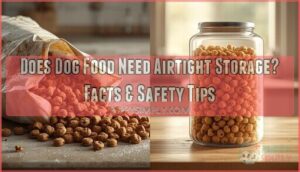
Storing kibble in an airtight container helps prevent spoilage from moisture and pests, extending its shelf life significantly beyond an open bag.
Let’s break down the specific timeframes you should follow.
Shelf Life of Unopened Dry Dog Food
Unopened dry dog food usually stays fresh for 12 to 18 months from manufacture when stored properly. Look for the best-by date printed near the barcode or bag seam—that’s your quality window, not a hard expiration date. Pet food regulations let manufacturers set these dates based on their own testing, so shelf life varies by formula. Synthetic preservatives extend freshness longer than natural ones. Always check the to verify your pet food maintains ideal nutrition.
If you’re considering human-grade dog food, expect similar shelf stability with expiration dates typically ranging 12–24 months.
Shelf Life After Opening
Once you break that seal, the clock starts ticking. Opened dry dog food stays fresh for 4 to 6 weeks with proper storage—less if you’re not careful. Your storage conditions determine whether you hit that 6-week mark or lose freshness sooner.
Airtight containers designed for dog food can help you reach that full 6-week window by blocking out humidity and pests.
Here’s what happens after opening:
- Fat oxidation begins immediately, degrading essential fatty acids and triggering rancidity
- Nutrient loss accelerates as vitamins break down from air exposure
- Storage methods directly impact freshness maintenance—airtight containers slow deterioration
- Higher-fat formulas spoil faster than leaner kibble due to increased oxidation risk
For best results, be sure to follow recommended dry dog food storage methods.
How Expiration Dates Are Determined
You might wonder how manufacturers actually set that expiration date on your bag. They use Real Time Testing to track nutrient degradation and Accelerated Studies under elevated temperatures. Stability Modeling predicts how packaging performance protects against oxidation. Here’s what they monitor:
Once you understand the science behind those dates, you’ll want to follow proven storage techniques that preserve freshness and prevent contamination.
| Test Type | What It Measures |
|---|---|
| Real Time Testing | Microbial counts, moisture levels, rancidity markers over full shelf life |
| Accelerated Studies | Fat oxidation rates, vitamin stability, water activity under heat stress |
| Packaging Performance | Oxygen permeability, barrier effectiveness, moisture protection capacity |
This data determines your food’s safety window.
Factors That Affect Dry Dog Food Freshness
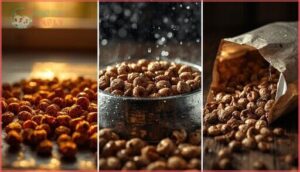
Even when you buy the freshest bag of kibble, how you handle and store it determines how long it actually stays good. Several environmental factors can speed up spoilage and strip away nutrients before your dog finishes the bag.
Let’s look at the three biggest threats to your dog food’s freshness.
Heat, moisture, and air exposure can all break down nutritious dog food ingredients and shorten shelf life significantly.
Storage Temperature and Humidity
Where you store your dry dog food matters more than you might think. Temperature control and humidity levels directly impact shelf life and food freshness.
Follow these storage conditions for dry food preservation:
- Keep temperatures below 80°F – Studies show kibble stays stable at room temperature up to 35°C (95°F) for four months, but cooler is better.
- Avoid areas above 100°F – Heat speeds up fat breakdown and nutrient loss.
- Control humidity – Damp conditions invite mold and pests, even in low-moisture kibble.
- Choose cool, dry spots – Basements or pantries work well; skip garages or sheds where temperatures swing.
Proper storage protects your dog’s food and your investment in freshness maintenance.
Exposure to Air, Light, and Moisture
Once you open that bag, air exposure risks become real. Oxygen causes lipid oxidation, turning fats rancid and destroying shelf life. Light damage speeds this breakdown, especially near windows where sunlight hits the kibble.
Moisture control is equally critical—damp food invites mold fast. For oxidation effects prevention and food safety, seal bags tightly and choose dark, dry storage conditions every time.
Original Packaging Vs. Other Containers
You’ll keep dry dog food freshest in its original packaging. Those bags use multi-layer materials engineered to block moisture, oxygen, and light—far better than generic bins.
For best storage solutions, slip the whole bag into an airtight container made of stainless steel or quality plastic. This combo preserves food freshness, protects against pests, and keeps batch codes visible for recalls.
Signs Your Dry Dog Food Has Gone Bad
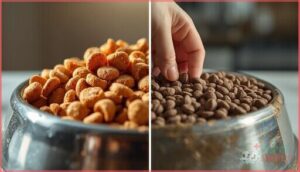
Knowing when dog food has spoiled isn’t always obvious, but catching it early protects your dog’s health. Your senses are your first line of defense—trust what you see, smell, and observe.
Here’s what to watch for when checking your dog’s kibble.
Changes in Smell, Color, or Texture
Your senses are your first line of defense when checking dry dog food for spoilage signs. Fresh kibble smells neutral or slightly meaty, but a rancid odor signals that fats have oxidized and the food isn’t safe.
Watch for these freshness tests:
- Color shift: Dark spots or unusual patches suggest contamination
- Texture change: Soft or clumpy kibble means moisture got in
- Strong smell: Sour or off odors indicate spoilage
Presence of Mold, Pests, or Moisture
Mold, pests, and moisture are three red flags you can’t ignore. When dry food absorbs more than 10 percent moisture, visible mold can develop—especially in warm spots. You’ll spot fuzzy growth, webbing from moth larvae, or clumping kibble that feels damp. Rodent droppings or tiny beetles signal contamination that makes the food unsafe.
| Warning Sign | What It Means |
|---|---|
| Visible mold or fuzzy spots | Moisture exceeded safe levels; mycotoxins may be present |
| Silk webbing or larvae | Indianmeal moths have infested the bag |
| Rodent droppings or gnaw marks | Packaging compromised; bacteria and moisture introduced |
Dog Refusal or Adverse Reactions
Sometimes your dog will tell you the food has gone bad before you even open the bag—trust those instincts. Canine sensitivity to rancid fats or mold triggers food refusal long before you notice spoilage.
Dogs often refuse spoiled food before you notice anything wrong—trust their instincts about freshness
Watch for these reaction symptoms that signal digestive issues or food allergy:
- Sudden refusal to eat previously enjoyed kibble
- Vomiting within hours of feeding
- Diarrhea or loose stools
- Excessive drooling or lip-licking
- Lethargy or abdominal discomfort after meals
These adverse reactions compromise dog health and demand immediate food safety action.
Best Practices for Storing Dry Dog Food
Storing your dog’s food the right way keeps it fresh, nutritious, and safe for weeks after you open the bag. The good news is that you don’t need fancy equipment—just a few smart habits around containers, placement, and cleanliness.
Here’s what actually works to protect your pup’s kibble from spoilage.
Using Airtight Metal or Glass Containers
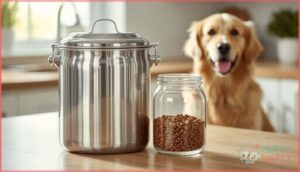
Metal container benefits shine when you need durable, rodent-proof dry dog food storage solutions. Metal and glass storage tips both emphasize airtight sealing methods that lock out oxygen and moisture.
Choose container size options that fit the original bag inside—this freshness preservation technique protects the factory barrier while your airtight container adds an extra shield. Glass works well for smaller portions, letting you spot any changes at a glance.
Proper Placement: Cool, Dark, Dry Areas
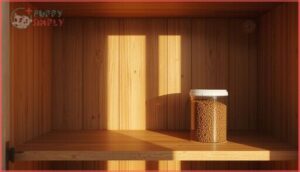
Once you’ve sealed your dry dog food in an airtight container, storage conditions become your next priority. The US Food and Drug Administration recommends keeping pet food below 80°F in a cool dry place—think pantries or interior closets, not garages.
Humidity control and ventilation systems matter too: choose dry environments away from windows, direct sunlight, and moisture sources to preserve food freshness and nutritional value.
Keeping Containers Clean and Labeled
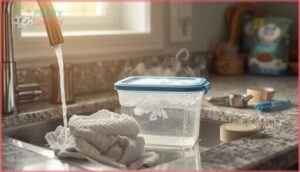
Even the best storage conditions won’t protect your dog if the container itself becomes a contamination risk. The FDA advises washing and drying bins between bags to remove residual fats and crumbs that support bacterial growth. Here’s your container cleaning and labeling routine:
- Wash containers with soap and hot water at least monthly or whenever you finish a bag—no exceptions for bin maintenance
- Dry completely before refilling because any moisture invites mold into your airtight container
- Label with the brand, flavor, and opening date so you can track freshness and respond quickly if recalls happen
Don’t top off old kibble with new food. Empty everything, clean thoroughly, then refill. This storage hygiene practice prevents rancid oils from contaminating fresh batches and keeps your pet food safety standards high.
Tips to Maximize Dry Dog Food Freshness
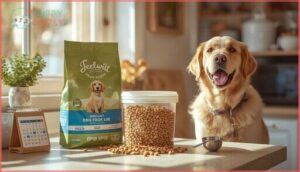
You’ve set up proper storage—now let’s talk about the habits that make the biggest difference. A few smart purchasing and handling decisions can add weeks to your dog food’s freshness.
Here’s what works best in real-world practice.
Buy Appropriate Quantities
Only purchase what your dog can consume within 6 weeks after opening. Buying too much dry dog food leads to waste and compromises food freshness, especially if storage conditions aren’t ideal.
Calculate how much kibble your dog eats weekly, then buy accordingly—smaller bags help you manage expiration dates better and reduce the risk of spoilage while maximizing shelf life.
Avoid Mixing Old and New Batches
When you open a new bag, resist tossing it into the same container as leftover kibble. Mixing old and new batches creates confusion about actual expiration dates and can spread spoilage risks through cross contamination.
Proper batch rotation protects food freshness:
- Separate storage prevents food contamination between batches
- Clear dating aids smart inventory management practices
- Older stock gets used first, reducing waste
- You’ll spot spoilage risks before they spread
- Shelf life stays accurate for each bag
Finish one bag completely before starting the next.
Frequently Asked Questions (FAQs)
How long will dried dog food last?
Unopened dry dog food usually lasts 12 to 18 months from manufacture, while opened bags stay fresh for about 4 to 6 weeks—though storage conditions dramatically impact both timeframes.
Can you freeze dry dog food to extend freshness?
Freezing dry dog food can slow nutrient loss and microbial growth, but standard kibble isn’t designed for frozen storage.
Fat rancidity and texture changes may still occur, limiting freezer viability compared to freeze-dried products.
Does kibble size affect how long it stays fresh?
Size matters little regarding shelf life. Whether your kibble is bite-sized or chunky, storage conditions—not the pieces themselves—determine food freshness and nutrient retention over time.
How does ingredient quality impact shelf life?
Higher-quality proteins and saturated fats resist oxidation better than heavily processed meals or unsaturated oils.
Natural versus synthetic preservatives, grain quality, and antioxidant systems directly determine how long dry dog food maintains nutritional value and freshness.
Should you refrigerate dry dog food in summer?
You don’t need to refrigerate dry dog food in summer. Refrigeration risks condensation and mold growth.
Instead, store kibble in a cool, dry indoor space below 80°F to preserve freshness and quality.
Conclusion
Here’s the truth: knowing how long dry dog food stays fresh isn’t about paranoia—it’s about prevention. Rancid fats and degraded nutrients don’t announce themselves until your dog suffers the consequences.
Check those dates, seal that bag properly, and store it somewhere cool and dry. Your dog depends on you to protect what goes into their bowl.
Make freshness a habit, not an afterthought, and you’ll see the difference in their energy and health.
- https://petzyo.com.au/blogs/dry-food/how-long-does-dry-dog-food-last
- https://pmc.ncbi.nlm.nih.gov/articles/PMC10029885/
- https://www.fda.gov/animal-veterinary/animal-health-literacy/proper-storage-pet-food-treats
- https://dog.eukanuba.eu/dog/dog-advisor/nutrition/how-long-does-dry-dog-food-last
- https://www.wellnesspetfood.com/blog/how-long-does-dry-dog-food-typically-last/