This site is supported by our readers. We may earn a commission, at no cost to you, if you purchase through links.
Most dog owners grab whatever dog shampoo looks right on the shelf and assume it’ll do the job. The truth is, your dog’s skin operates at a fundamentally different pH level than yours — closer to neutral — and using the wrong formula can strip protective oils, trigger inflammation, and leave their coat looking dull within days.
Dog shampoo isn’t just soap and water; it’s a system of surfactants, moisturizers, and pH-balancing agents working together at a chemical level. Understanding how dog shampoo works on coat and skin changes how you pick products, how you apply them, and how quickly your dog actually feels better.
Table Of Contents
- Key Takeaways
- How Dog Shampoo Works on Coat and Skin
- Why Dog Skin Requires Special Shampoo Formulas
- Key Ingredients and How They Function
- How Different Coat Types Respond to Shampoo
- How Medicated Shampoos Target Skin Conditions
- Top 5 Dog Shampoos for Different Needs
- How The Bathing Process Enhances Shampoo Effectiveness
- How Conditioning Works After Shampooing
- How Environmental Factors Affect Shampoo Performance
- Selecting The Right Shampoo for Your Dog
- Frequently Asked Questions (FAQs)
- What helps dogs coat and skin?
- How long does antifungal shampoo take to work on dogs?
- How long should I leave dog shampoo on?
- How often should you bathe your dog?
- Can puppies use adult dog shampoo?
- What happens if you skip rinsing completely?
- Do dry shampoos work for all coats?
- How does diet affect your dogs coat health?
- Conclusion
Key Takeaways
- Your dog’s skin runs at a nearly neutral pH (6.2–7.4), so using human shampoo — which is formulated for our more acidic skin — can strip their protective oils and trigger inflammation within days.
- Surfactants in dog shampoo form micelles that trap dirt and oils at the molecular level, which is why the chemistry of the formula matters far more than the brand name on the bottle.
- Coat type dictates everything from how deeply shampoo needs to penetrate to how quickly moisture dries out, so a one-size-fits-all product will underperform on curly, dense, or double-layered coats.
- Medicated shampoos containing active ingredients like ketoconazole or hydrocortisone target specific skin conditions directly, but they only work consistently when you follow contact time and rinsing steps precisely.
How Dog Shampoo Works on Coat and Skin
Dog shampoo isn’t just soap in a bottle—it’s a carefully designed formula that interacts with your dog’s skin and coat on a chemical level. Understanding how these products work helps you choose the right one and use it effectively.
Each ingredient plays a specific role, from moisturizing agents to natural cleansers, and knowing what to look for helps you pick a shampoo that actually works for your dog’s unique coat and skin type—check out what makes a good dog shampoo for a deeper breakdown.
Let’s break down the three key mechanisms that make dog shampoo effective: surfactants that lift away dirt, pH balance that protects skin health, and moisturizers that keep the coat in top condition.
The Science Behind Surfactants and Cleansing
Surfactants are the workhorses in dog shampoo ingredients, designed with a water-loving head and an oil-loving tail that tackle dirt at the molecular level.
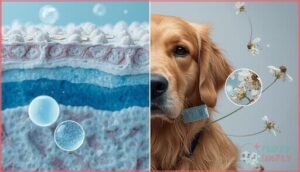
When you lather up your pup’s coat, these molecules form tiny spheres called micelles that trap oils and grime inside, lifting them away from dog skin. Rinsing washes away the mess without harsh scrubbing, minimizing skin irritation while the foaming agents suspend debris during cleansing.
Micelles in dog shampoo capture oils and grime, letting you rinse away dirt gently while protecting your dog’s sensitive skin
Understanding the importance of skin mildness in cleansers helps guarantee shampoos are effective yet gentle for your dog’s skin.
How PH Balance Affects Dog Skin
Once your shampoo’s cleansing action is complete, pH levels determine whether your dog’s skin barrier stays healthy or shifts toward dryness and irritation. Dog skin sits between 6.2 and 7.4—a mildly acidic balance that defends against bacteria.
pH balanced formulas preserve that range, while alkaline products weaken the barrier, triggering itchiness and flaky patches, especially on sensitive skin prone to canine dermatology issues. For further insight into the benefits of, consider how proper balance promotes overall skin health.
The Role of Moisturizers and Conditioners
After cleansing restores your dog’s pH, moisturizers lock in hydration and repair the skin barrier. Humectants like glycerin pull water into the coat, while occlusives such as dimethicone prevent moisture loss. Natural emollients—fatty alcohols and plant esters—smooth the surface, reducing skin irritation.
Effective dog shampoo formulas combine these elements to support coat health:
- Humectants attract moisture during grooming
- Occlusives seal hydration after rinsing
- Emollients fill gaps between cells
- Ceramides restore lipid layers
- Antioxidants maintain barrier function
Why Dog Skin Requires Special Shampoo Formulas
You can’t just grab your own shampoo and use it on your dog, even though it might seem like a simple solution.
Dog skin operates differently than human skin in several important ways, from pH levels to structural makeup. Understanding these differences helps explain why your pup needs products designed specifically for their biology.
PH Differences Between Human and Dog Skin
Your dog’s skin sits at a pH level around 6.5 to 7.0, while yours runs more acidic at 4.5 to 5.5. That species difference matters because the acid mantle protecting your pup’s skin barrier works differently than yours.
Human shampoos disrupt canine hydration and trigger skin irritation on sensitive skin. Dogs with skin conditions need formulas that respect their neutral pH for proper canine skin care.
The Unique Structure of Canine Skin
Beneath your pup’s fur lies a three-tiered architecture—epidermis, canine dermis, and hypodermis—each playing a vital role in canine skin care.
The epidermis function centers on barrier defense, while the dermis houses hair follicles and sebaceous glands that produce protective oils.
This layered skin barrier explains why dog skin and coat care demands specialized formulas, especially when skin conditions threaten the delicate balance that keeps your companion comfortable.
How Dog Coats Differ From Human Hair
A dual-layer coat structure sets dog coats apart from human hair, with stiff guard hairs protecting a soft, dense undercoat that traps air for insulation. This breed-specific architecture creates unique shedding patterns tied to seasonal transitions, requiring specialized coat care.
Unlike human hair’s continuous growth, canine hair growth follows shorter cycles, producing varied texture variations that demand formulas supporting both layers for ideal skin and coat health and canine skin care.
Key Ingredients and How They Function
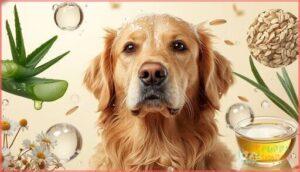
Dog shampoos rely on specific ingredients to clean, protect, and nourish your dog’s skin and coat. Each ingredient plays a distinct purpose, from calming irritation to locking in moisture and fighting bacteria.
Understanding how these key components work helps you choose products that truly benefit your dog’s unique needs.
Aloe Vera for Soothing and Inflammation Reduction
When your dog’s skin feels hot and irritated, aloe vera acts like a cool compress in liquid form. This ingredient contains polysaccharides that provide gentle rash relief on contact, while creating a lightweight moisture seal that doesn’t feel greasy.
You’ll find it in many dog shampoos designed for sensitive skin and itchy skin, offering conditioning benefits alongside skin cooling properties that support effective canine skin care and skin irritation treatment.
Oatmeal for Moisture Restoration
Ground oatmeal creates a fine suspension that works wonders on dry, flaky skin by restoring moisture and calming itchy skin without stripping natural oils. You’ll notice your dog’s skin barrier improving after using oatmeal shampoo, which is why it’s a go-to natural ingredient in hypoallergenic shampoo formulas.
Oatmeal Benefits for Sensitive Skin:
- Softens rough patches and reduces itching sensations through gentle skin soothing
- Normalizes the skin surface while maintaining coat hydration
- Creates a protective layer that locks moisture into superficial skin layers
- Cleanses effectively without harsh chemicals that irritate sensitive skin
Coconut Oil for Natural Moisturizing and Antibacterial Protection
Coconut oil benefits your dog’s coat through natural emollients that soften both skin and hair while creating a healthier skin barrier. Its moisturizing properties deliver fatty acids that reduce water loss and improve shine, and you’ll appreciate its antibacterial effects that limit surface bacteria.
It’s among the gentlest natural ingredients in hypoallergenic shampoo for sensitive skin, though moderate amounts prevent greasiness.
Tea Tree Oil’s Antibacterial Properties and Precautions
Tea tree oil targets skin bacteria through terpinen-4-ol, which disrupts cell membranes on contact, making it valuable in medicated shampoo for minor skin conditions. However, you’ll need proper oil dilution to avoid skin sensitivity, especially on dogs with sensitive skin.
While it offers antibacterial action through topical application, overuse can trigger bacterial resistance, so choose shampoo ingredients from reputable brands that balance natural ingredients with safety.
How Different Coat Types Respond to Shampoo
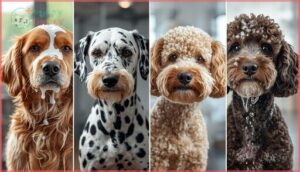
Not all dog coats are created equal, and each type has its own relationship with shampoo ingredients. The texture, density, and structure of your dog’s fur determine how well cleansing agents penetrate, how moisture gets distributed, and how quickly the coat dries after bathing.
Let’s look at how shampoo works across the most common coat types you’ll encounter.
Wavy and Curly Coats
Wavy and curly coat types trap moisture, oils, and debris more readily than straighter fur, which makes choosing the right dog shampoo critical for canine hygiene. These coat textures demand specific grooming tips for effective coat care.
The following tips are essential for maintaining healthy and clean coats:
- Brush wavy coats 3–5 times weekly, curly coats daily for mat prevention
- Use sulfate-free formulas to protect natural oils
- Apply hydrating conditioners for wavy maintenance without weighing down
- Choose leave-in detanglers for curly care and shedding control
- Bathe less frequently to prevent frizz and dryness
Short and Dense Coats
Short and dense coats behave quite differently once you lather them up. These compact layers trap air near the skin for insulation, but that same tightness means your dog shampoo needs extra work to penetrate down to the scalp. You’ll want formulas that rinse clean without leaving residue, since leftover product can cause skin irritation and disrupt moisture balance.
| Coat Feature | Shampoo Need | Grooming Frequency |
|---|---|---|
| High pile density | Deep-cleansing formula | Weekly brushing |
| Tight undercoat | Thorough rinsing | Seasonal shedding control |
| Water-resistant guard hairs | Gentle surfactants | Monthly bathing |
| Compact fur texture | Lightweight conditioner | Daily checks for mats |
Proper canine hygiene for this coat type means brushing before bathing to lift dead hair, then using lukewarm water to open cuticles without stripping natural oils that protect dense fur. Shedding control becomes easier when you maintain consistent routines, and your dog’s skin and coat health improves as moisture balance stabilizes between baths.
Double and Wooly Coats
Double and wooly coats pack extra wool insulation between fibers, so your dog shampoo must reach through that fluffy surface to cleanse the undercoat without stripping natural lanolin.
Dog grooming for this coat type demands gentle formulas that respect coat texture while managing shedding, since the double faced structure traps debris easily.
Proper wool care means thorough rinsing to prevent residue from dulling that characteristic plush finish.
Silky and Corded Coats
Silky and corded coat types sit at opposite ends of the grooming spectrum, yet both demand shampoo ingredients that won’t disrupt coat texture. Silky coats feature long, fine guard hairs that lie flat when you brush regularly, maintaining natural shine with moderate seasonal shedding.
Corded coats form tight rope-like strands requiring mild formulas to avoid residue buildup inside those characteristic mop-like cords.
- Choose soap-free shampoos that preserve natural oils without weighing down silky texture
- Hand-separate cords during washing to prevent compact, mold-prone areas
- Rinse thoroughly since trapped shampoo residue dulls silky shine and irritates corded skin
How Medicated Shampoos Target Skin Conditions
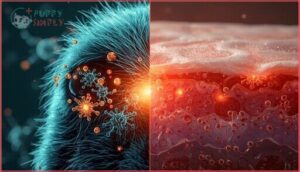
When your dog’s skin isn’t just dirty but actually struggling with a health issue, regular shampoo won’t cut it.
Medicated formulas work differently because they contain active ingredients designed to treat specific problems, from relentless itching to stubborn fungal infections. Let’s break down how these targeted shampoos address the most common skin conditions your dog might face.
Anti-Itch Formulas for Allergic Reactions
When your dog won’t stop scratching, anti-itch formulas can bring real relief by calming inflamed skin during flare-ups.
Medicated shampoos with hydrocortisone work as powerful skin soothers, reducing inflammation that drives itchy skin, while antihistamine-based options help manage allergies by blocking the reaction to allergy triggers.
These anti-inflammatory ingredients target sensitive skin directly, making allergy management more effective than basic bathing alone.
Anti-Fungal Shampoos for Infections
Fungal infections, especially Malassezia yeasts behind dandruff and seborrheic dermatitis, respond well to targeted anti-fungal agents like ketoconazole and selenium sulfide. These medicated shampoo ingredients lower yeast counts and control flake production, tackling scalp treatment needs through regular use at prescribed intervals.
You’ll often notice improved redness and irritation as the formula decreases inflammatory signals, offering solid infection prevention in canine dermatology.
Hypoallergenic Options for Sensitive Skin
Sensitive skin demands extra care, which is why hypoallergenic shampoo formulas strip away common allergens and fragrance to prevent contact dermatitis. These gentle formulas focus on allergy relief through minimal additives and natural soothers like oatmeal or aloe vera.
Key benefits include:
- Ultra mild surfactants that preserve barrier function
- Fragrance free options reducing irritation risk
- Dermatologist recommended formulations for chronic skin issues
- Low allergen botanicals delivering itch relief without flare ups
Your vet can guide you toward the right medicated shampoo when standard products worsen itchy skin.
Top 5 Dog Shampoos for Different Needs
Now that you understand how different ingredients and formulas work, it’s time to put that knowledge into practical use. Picking the right shampoo can feel overwhelming with so many options on the shelf, so narrowing it down by specific needs makes the choice much easier.
Here are five solid picks, each designed to handle a different coat or skin situation.
1. CAREFUNY Portable Dog Paw Cleaner
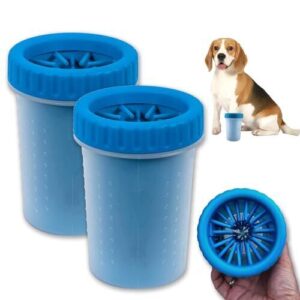
Keeping your dog’s paws clean isn’t always about shampoo — sometimes it’s about what happens before the bath even starts.
The CAREFUNY Portable Dog Paw Cleaner tackles exactly that gap. Its soft, food-grade silicone bristles work in a 360-degree cup to scrub mud from between toes and paw pads, without scratching sensitive skin.
The compact design fits small to medium dogs, and the whole unit detaches for easy rinsing. It’s a practical, hands-free tool worth keeping in your kit.
| Best For | Dog owners with small to medium-sized pups who want a quick, mess-free way to clean muddy paws after walks or outdoor adventures. |
|---|---|
| Brand | CAREFUNY |
| Form | Silicone Device |
| Primary Use | Paw Cleaning |
| Size/Volume | Medium (7.48 x 6.42 x 3.98 in) |
| Made In | Not Specified |
| Safe for Puppies | Yes |
| Additional Features |
|
- The soft silicone bristles are gentle enough for regular use, even on dogs with sensitive paws or skin conditions.
- It’s genuinely hands-free — just add water, stick the paw in, and twist. No wrestling required.
- Compact and portable, so you can toss it in a bag and use it at the park or after a hike.
- Won’t work for bigger dogs — paws over 3½ inches wide are too large for the cup.
- Some dogs will need a little time to get comfortable with the process, so expect a short adjustment period.
- You have to be careful not to overfill it, or you’ll end up with more of a muddy mess than you started with.
2. Nature’s Specialties Dog Shampoo Conditioner
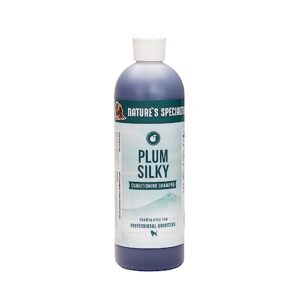
If you want a shampoo that does double duty, Nature’s Specialties is worth a close look. This ultra-concentrated formula dilutes into up to 3 gallons with tap water, which makes it a smart pick for grooming routines on a budget.
Its pH-balanced blend pairs aloe vera, panthenol, and vitamins A, D, and E to cleanse and condition in one step. The result is a soft, silky coat that’s easier to brush through — gentle enough for sensitive skin, too.
| Best For | Pet owners and professional groomers looking for a gentle, budget-friendly shampoo that cleans and conditions in one step — especially for dogs with sensitive skin. |
|---|---|
| Brand | Nature’s Specialties |
| Form | Liquid |
| Primary Use | Coat Cleaning & Conditioning |
| Size/Volume | 16 oz |
| Made In | USA |
| Safe for Puppies | Yes |
| Additional Features |
|
- Ultra-concentrated formula stretches into up to 3 gallons, so one bottle lasts a long time and keeps costs down.
- The pH-balanced mix of aloe vera, panthenol, and vitamins leaves the coat soft, silky, and way easier to brush through.
- Gentle enough for sensitive skin, which means less worry about irritation or dryness after bath time.
- The diluted version can come out pretty runny, so it takes a little trial and error to nail the right ratio.
- There’s a chance the bottle could leak during shipping if it’s not packed well.
- It may not play nice with every skin type, so it’s worth doing a small patch test first if your dog has known allergies.
3. Bio Groom Hypoallergenic Dog Shampoo
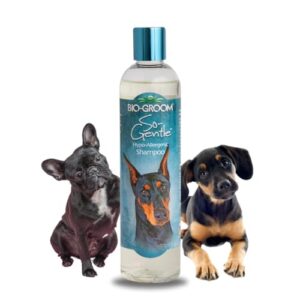
For dogs with skin that’s already on edge, hypoallergenic formula offers a reassuring starting point. It relies on coconut oil-based cleansers — specifically disodium cocoamphodiacetate — to lift dirt without stripping your dog’s natural skin oils.
The pH is balanced to match canine skin, and it’s completely free of perfumes, dyes, and parabens. Panthenol and vegetable glycerine work together to retain moisture after rinsing. It’s safe for puppies and dogs of all ages, making it an all-around, gentle choice.
| Best For | Dogs with sensitive skin, allergies, or hot spots — especially puppies and older dogs who need something gentle and non-irritating. |
|---|---|
| Brand | Bio-Groom |
| Form | Liquid |
| Primary Use | Sensitive Skin Care |
| Size/Volume | 12 fl oz |
| Made In | USA |
| Safe for Puppies | Yes |
| Additional Features |
|
- The coconut oil base cleans without stripping natural skin oils, so your dog’s coat stays soft and healthy after bath time.
- It’s completely free of dyes, parabens, and artificial fragrances, making it a solid pick for dogs who react to harsher shampoos.
- Safe for puppies, kittens, and dogs of all ages, so you can stick with one product for the whole household.
- The scent is pretty subtle — if you’re hoping for a noticeable fresh smell after a bath, you might be disappointed.
- Dogs with serious or chronic skin conditions may need something medicated instead, so check with your vet first.
- The bottle can be a bit loose during shipping, so don’t be surprised if it arrives with some leakage.
4. Envirogroom Gentle Dog Shampoo
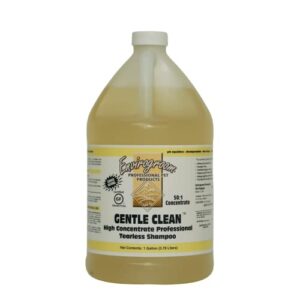
If you’re looking for something built for professional grooming but still practical at home, Envirogroom Gentle Clean stands out. It’s a high-concentrate formula that dilutes up to 50:1, so a little goes a long way.
The blend includes aloe, panthenol, vitamin E, and soy protein — working together to cleanse without stripping natural oils. It’s pH balanced, hypoallergenic, and tearless, making it safe for puppies and gentle on sensitive skin across all coat types.
| Best For | Pet owners and professional groomers looking for a gentle, cost-effective shampoo that works on puppies, kittens, and dogs of all coat types. |
|---|---|
| Brand | Envirogroom |
| Form | Liquid |
| Primary Use | Professional Grooming |
| Size/Volume | 50:1 Concentration |
| Made In | USA |
| Safe for Puppies | Yes |
| Additional Features |
|
- The 50:1 concentration means one bottle lasts a long time — great for groomers and multi-pet households alike.
- It’s hypoallergenic, tearless, and pH balanced, so it plays nice with sensitive skin and coats.
- Certified wheat and gluten free, paraben free, and biodegradable — a solid pick if you care about what you’re putting on your pet.
- At that high a concentration, improper dilution can cause skin or eye irritation, so you’ll want to follow the mixing ratio carefully.
- A few pet owners have reported bad reactions, including eye irritation, so it’s worth doing a small patch test first.
- Dogs with specific allergies or sensitivities may not tolerate it well — check with your vet if you’re unsure.
5. Envirogroom Berry Silk Dog Conditioner
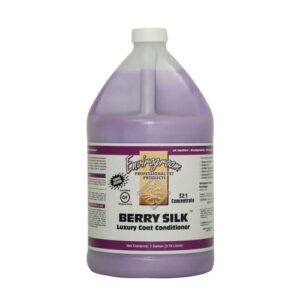
If the Envirogroom Gentle Clean shampoo is already part of your routine, pairing it with Berry Silk Conditioner makes a lot of sense.
This 32-to-1 concentrate is designed for professional-grade results, leaving the coat silky, shiny, and easier to brush. The plant-based formula includes aloe, jojoba oil, soy protein, and vitamin E — a solid lineup for hydration and structure.
It’s pH balanced, non-toxic, and safe for puppies, making it a flexible post-bath finishing step across coat types.
| Best For | Pet owners already using Envirogroom’s shampoo line who want a natural, professional-quality conditioner for puppies, kittens, or horses with coats that tangle easily. |
|---|---|
| Brand | Envirogroom |
| Form | Liquid |
| Primary Use | Conditioning & Detangling |
| Size/Volume | 17 oz / 1 gallon |
| Made In | USA |
| Safe for Puppies | Yes |
| Additional Features |
|
- The plant-based formula with aloe, jojoba oil, soy protein, and vitamin E does a solid job keeping coats hydrated, shiny, and way easier to brush
- It’s non-toxic, pH balanced, and gentle enough for puppies and sensitive skin, so you don’t have to stress about what you’re putting on your pet
- Works across a range of animals — dogs, cats, and even horses — which is a nice bonus if you’ve got a multi-pet household
- At $64.95, it’s a pricier pick, especially if you’re going through it fast on larger dogs
- The ingredient list isn’t super transparent, which makes it tough to rule out allergens on your own
- Larger or thicker coats may need dilution, and there’s not a ton of guidance on how to dial that in
How The Bathing Process Enhances Shampoo Effectiveness
A great shampoo only does so much on its own — the way you actually bathe your dog matters just as much.
Small steps before, during, and after the wash can make a real difference in how well the shampoo cleans and protects.
Here’s what to keep in mind at each stage of the process.
Pre-Bath Brushing to Remove Debris
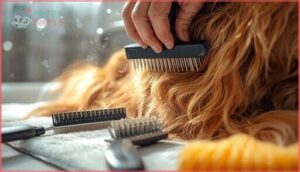
A good brush session is the foundation of an effective bath. Before water touches your dog’s coat, debris removal clears loose dirt, shed hair, and trapped particles, making coat preparation smoother and shampoo distribution more even. This step alone cuts bath time and reduces skin irritation substantially.
| Brush Type | Best For | Key Benefit |
|---|---|---|
| Slicker Brush | Dense, matted coats | Lifts mats without pulling skin |
| Undercoat Rake | Heavy-shedding breeds | Removes loose undercoat, reducing shedding |
| Pin Brush | Medium to long coats | Clears surface debris efficiently |
| Rubber Mitt | Short coats | Stimulates circulation while brushing |
Use short, controlled strokes and keep your brush clean—reintroducing dirt undermines the purpose. These dog grooming tips improve your grooming routine and bath efficiency every single time.
Water Temperature and Skin Comfort
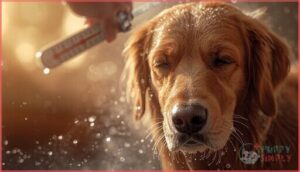
Once your coat is brushed clean, the next step is getting the water right. Lukewarm water, around 92 to 98°F, enhances your dog’s Skin pH and maintains proper skin barrier—key for Thermal Sensitivity and Water Balance.
Hotter water disrupts natural oils, risking dry, itchy skin. Think of it as Temperature Control for Coat Hydration and lasting skin comfort with any dog shampoo.
Proper Application and Massage Techniques
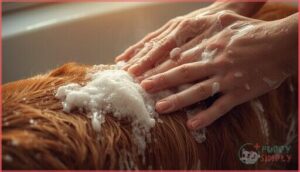
Once your dog’s skin is prepped with lukewarm water, it’s time to put your massage techniques to work. Gentle Lathering draws dog shampoo down to the skin, where surfactants actually do their job—breaking up oils and debris. Good Skin Preparation and Coat Conditioning start right here, during the wash itself.
- Apply a small amount of dog shampoo along the spine, then work it outward using smooth, even strokes.
- Use light to medium pressure during Gentle Lathering to avoid shocking sensitive skin.
- Move from the neck toward the tail in continuous motions, keeping contact for 20 to 30 seconds.
- Avoid vigorous scrubbing near the ears, eyes, and nose to protect delicate mucous membranes.
- Finish with gentle petting across the whole body—this eases your dog’s stress and improves shampoo-to-skin contact during pet grooming and bathing.
Thorough Rinsing to Prevent Residue Buildup
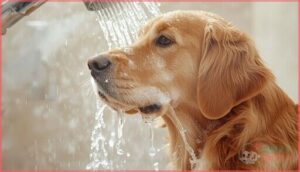
After a thorough massage, rinsing becomes your next critical step. Use clean water at 95 to 105°F, directing it from the scalp downward in continuous streams. A two-pass rinse clears both bulk lather and fine residues, protecting your dog’s sensitive skin and coat pH balance.
| Rinsing Techniques | Residue Removal Tips |
|---|---|
| Rinse from scalp downward | Check for soap film after each pass |
| Direct nozzle at oblique angles | Repeat rinsing where bubbles remain |
| Massage water into skin folds | Use warm, not hot, rinse water temperature |
| Perform two full rinse passes | Verify undercoats are fully flushed |
| Keep streams continuous and flowing | Inspect coat visually before drying |
Leftover shampoo residue effects include skin irritation and increased shedding—so never skip that second pass during pet grooming.
How Conditioning Works After Shampooing
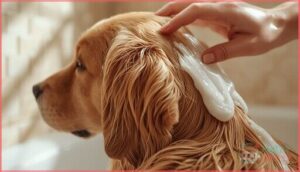
Once the shampoo is rinsed away, your job isn’t quite done yet.
Conditioning is what actually locks in the benefits of that cleansing step and keeps your dog’s coat looking and feeling its best.
Here’s how each part of that process works in your favor.
Sealing Moisture Into The Coat
Think of conditioning as your dog’s coat getting a protective raincoat after shampooing.
Moisture Lock and Coat Sealing work together — humectant effects draw water in, while natural oils create a Barrier Repair layer that shields sensitive skin.
This process promotes long-term Skin and Coat Health, keeping your dog’s coat condition at its best between grooming sessions with the right dog shampoo.
Reducing Tangles and Improving Manageability
Tangles don’t just look messy — they signal that your Coat Texture needs better post-wash care. Conditioners smooth the cuticle layer, reducing friction so your Detangle Methods actually work.
Here are three Manageability Tips for your grooming routine:
- Use a wide-tooth comb from ends to roots for gentle Brushing Techniques.
- Apply conditioner to damp coats for Tangle Prevention.
- Pair shampoo selection with coat care suited to your dog skin care needs.
When to Use Leave-in Balms
Leave-in balms are your coat’s last line of defense after shampooing. Apply them while fur is still damp — this locks in Coat Moisture far better than waiting until fully dry. For Balm Application, smooth a small amount using gentle Hair Smoothing strokes from root to tip.
Dogs with Dry Skin or recurring skin issues may benefit from pairing a Leave In balm with their regular dog shampoo and grooming routine, especially after using a medicated shampoo for coat care.
How Environmental Factors Affect Shampoo Performance

Even the best shampoo can’t do its full job if your dog’s environment is working against it.
Things like indoor heating, seasonal pollen, and scented household cleaners can quietly undermine your grooming routine without you noticing. Here’s how each of these factors plays a role.
Indoor Heating and Skin Dryness
Your home’s heating system quietly works against your dog’s skin barrier all winter long. Dry air effects pull moisture from the outermost skin layer, increasing moisture loss and leaving your dog vulnerable to itchy skin and irritation.
Humidity control, ideally between 40 and 50 percent, helps preserve that protective barrier. Pair that with a gentle shampoo for effective heating mitigation and lasting skin care.
Seasonal Pollen and Allergic Reactions
While indoor heating dries skin from within, Pollen Exposure attacks from the outside. Spring and summer bring seasonal Allergy Symptoms like itchy skin, scratching, and Skin Reactions on paws and bellies.
Managing dog allergies starts with smart Coat Protection habits:
- Bathe your dog with a hypoallergenic shampoo to wash away surface pollen.
- Brush frequently to remove allergens before they irritate the skin.
- Wipe paws and face after every outdoor walk.
Consistent Seasonal Management keeps allergic reactions under control.
Scented Cleaners and Skin Irritation
Pollen isn’t the only outdoor threat lurking around your home. Scented cleaners pose serious Scented Product Risks indoors, where VOC Effects and Fragrance Sensitivity quietly trigger Skin Irritation and Allergic Reactions in dogs with sensitive coats.
| Common Trigger | Skin Effect | Solution |
|---|---|---|
| Synthetic fragrances | Itchy skin, redness | Switch to fragrance-free cleaners |
| Harsh surfactants | Damaged skin barrier | Use gentle, soap-free products |
| Airborne VOCs | Ongoing skin issues | Improve ventilation, consult a vet about medicated shampoo |
Selecting The Right Shampoo for Your Dog
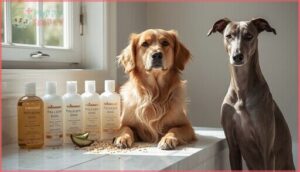
Picking the right shampoo comes down to knowing your dog’s coat and skin a little better than you might think. It’s not just about what’s on the shelf — it’s about matching the right formula to what your dog actually needs.
Here’s how to make that choice with confidence.
Matching Shampoo to Coat Type and Condition
Your dog’s coat analysis is your first clue. Start with a coat analysis — fur texture, density, and breed specificity all point you toward the right shampoo categories.
Dogs with curly or wooly coat types need hydrating shampoo ingredients with detangling support, while short, dense coats do best with mild cleansers. Factor in skin sensitivity too, since coat care and medicated shampoo options overlap when irritation is present.
When to Consult Your Veterinarian
Matching shampoo to your dog’s coat is a solid starting point, but it doesn’t cover everything. When skin issues persist beyond what over-the-counter options can handle, vet consultation becomes your next step.
A veterinarian can offer customized veterinary recommendations grounded in proper health monitoring. Think of regular veterinary guidance as part of your pet wellness routine — especially when symptoms signal the need for emergency care.
Frequently Asked Questions (FAQs)
What helps dogs coat and skin?
Think your pup’s coat maintains itself? Think again. A healthy coat and skin thrive on nutrient balance, gentle cleansing, and natural oils.
The right dog shampoo preserves skin pH, enhances coat texture, and keeps skin care simple.
How long does antifungal shampoo take to work on dogs?
Most antifungal dog shampoos deliver noticeable improvement within two to three weeks of consistent use.
Leaving the medicated shampoo on for five to ten minutes each session helps enhance shampoo efficacy against fungal infection.
How long should I leave dog shampoo on?
Patience pays during bath time — most dog shampoos need 3 to 5 minutes of shampoo contact for proper coat cleansing.
For sensitive dog skin, aim shorter. Always rinse techniques should remove all residue completely.
How often should you bathe your dog?
Most dogs do well with a Bath Frequency every 4 to 8 weeks.
Your dog’s Bathing Frequency Basics depend on Coat Type Needs, Skin Health Impact, and Activity Influence—so adjust your dog shampoo routine accordingly for ideal dog hygiene, skin issues, and coat care and maintenance.
Can puppies use adult dog shampoo?
Ironically, your puppy’s skin is softer yet far more vulnerable.
Puppy skin care demands gentle cleansers and pH balance.
Skip adult dog shampoo—opt for age appropriate, vet recommended puppy shampoo designed for sensitive coats instead.
What happens if you skip rinsing completely?
Skipping rinsing causes residue buildup, leading to skin irritation, coat dryness, and odor issues. Trapped residue also increases toxin exposure.
For sensitive dogs, hypoallergenic shampoo helps, but thorough rinsing during grooming remains essential for dog health and skin issues.
Do dry shampoos work for all coats?
Not every coat texture responds the same way.
Dry shampoo suits most coat types for quick oil control, but fine or curly coats need lighter powder absorption and extra brushing to avoid residue on sensitive skin.
How does diet affect your dogs coat health?
Your dog’s coat starts with what’s in the bowl. Protein intake fuels strong hair growth, while fatty acid balance keeps fur shiny.
Poor hydration levels and nutrient deficiencies dull coats fast — dietary supplements can help restore overall dog health and wellness.
Conclusion
Choosing a shampoo might feel like a small decision, but for your dog’s skin and coat, it’s one of the most impactful choices you’ll make.
Once you understand how dog shampoo works on coat and skin, the right product becomes obvious — not guesswork. Match the formula to your dog’s needs, respect their skin’s chemistry, and every bath becomes a step toward healthier, shinier fur.
- https://isbusa.com/
- https://petworshiper.com/dog-coat-types/
- https://www.allaboutdogfood.co.uk/articles/top-tips-to-keep-your-dogs-skin-and-coat-healthy
- https://www.google.com/url?sa=t&source=web&rct=j&opi=89978449&url=https://www.4-legger.com/blogs/fetch-the-dog-blog/looking-for-a-new-dog-shampoo-ingredients-are-everything%3Fsrsltid%3DAfmBOop2Gj6UfEwH7Z5HzYNTZJo_0Jmun0kQwte8JX-l_-pIN4c5109y&ved=2ahUKEwjH9aigr_uOAxVozDgGHSSKHAs4ChAWegQIFRAB&usg=AOvVaw2LsSfMGSpDhVhsmHy-WEUu