
This site is supported by our readers. We may earn a commission, at no cost to you, if you purchase through links.

Your dog doesn’t shred your couch cushions out of spite—they’re trying to tell you something. Destructive chewing is a coping mechanism rooted in unmet physical and emotional needs, from teething pain and boredom to anxiety that builds when you leave the house.
The right chew toy transforms that gnawing urge from a problem into a solution by satisfying natural instincts while protecting your furniture. Understanding which toys work—and why they work—means you can redirect your dog’s energy before they turn your favorite shoes into confetti.
Table Of Contents
Key Takeaways
- Destructive chewing stems from four main triggers—teething pain, boredom, anxiety, and separation stress—which means the right chew toy addresses the root cause instead of just the symptom.
- Chew toys work by satisfying hardwired instincts, relieving physical discomfort through cold therapy for teething, and activating the parasympathetic nervous system to lower cortisol during stressful moments.
- Material selection and size matching are non-negotiable for safety—natural rubber suits most dogs, nylon works for power chewers, and toys must match your dog’s mouth size to prevent choking hazards.
- Rotating toys every 1-2 weeks maintains novelty and engagement, which cuts boredom-driven furniture destruction by keeping your dog’s attention focused on appropriate outlets.
Why Dogs Engage in Destructive Chewing
Your dog’s latest chewing spree on the couch isn’t just bad behavior—it’s communication. Dogs chew for reasons rooted in biology, emotion, and environment, and understanding these triggers gives you the power to redirect the behavior before it starts.
From excessive barking to destructive chewing, many dog behaviour problems stem from unmet needs like boredom, anxiety, or lack of mental stimulation.
Your dog’s chewing isn’t misbehavior—it’s communication rooted in biology, emotion, and environment
Let’s break down the four main drivers behind destructive chewing so you can identify what’s happening with your dog.
Understanding these triggers is the first step toward finding effective solutions to stop your puppy from chewing furniture and protecting your home.
Causes of Destructive Chewing
Destructive chewing isn’t just bad behavior—it’s your dog’s way of coping with unmet needs. Teething pain drives puppies to gnaw relentlessly, while nutritional deficiencies can spark unusual chewing patterns.
Addressing these triggers early with puppy training tips for aggressive chewing helps redirect the behavior before it becomes a stubborn habit.
Boredom, stress, anxiety, and separation anxiety trigger this behavior as self-soothing mechanisms.
Understanding why dogs chew their paws can help you identify whether emotional triggers or other underlying issues are driving the behavior.
Environmental factors and breed influences also play roles, making some dogs more prone to destructive habits than others.
Teething in Puppies
Between 3 and 6 months of age, your puppy’s tooth eruption ramps up—baby teeth fall out, permanent ones push through, and their gums get swollen and sore. That teething pain makes them chew everything in sight.
That’s why choosing the right chew toys for this stage—ones designed to soothe sore gums without damaging emerging teeth—makes a huge difference in keeping them comfortable and protecting your furniture.
It’s not rebellion; it’s oral relief. Redirect their nipping with gum soothing chew toys designed for puppy development, and you’ll protect your furniture while giving them the comfort they need.
Boredom and Lack of Stimulation
Once teething passes, boredom often takes its place as the main driver. Dogs stuck in under-stimulated environments turn to destructive chewing for entertainment.
Research shows that environmental enrichment—playtime activities, sensory toys, and interactive games—cuts down these episodes substantially. Providing mental stimulation through chew toys redirects that restless energy, giving your dog a constructive outlet instead of your couch cushions.
Stress, Anxiety, and Separation Issues
Anxiety triggers in dogs can escalate quickly when you’re not home. Separation anxiety affects 20–40% of dogs, sparking destructive chewing as a coping mechanism. Your dog’s stress management needs three calming strategies:
- Gradual desensitization to departures through short practice sessions
- Structured routines that signal safety and predictability
- Appropriate chew toys for anxiety relief and emotional support
Reducing stress and anxiety requires consistent separation techniques, not quick fixes.
How Chew Toys Redirect Chewing Behavior

Chew toys work because they give your dog something they actually want to gnaw on—turning what would be destructive behavior into a healthy outlet. When you provide the right toy at the right time, you’re not just protecting your furniture; you’re meeting a genuine need your dog can’t ignore.
Here’s how the right chew toys redirect that chewing instinct in four key ways.
Satisfying Natural Chewing Instincts
Chewing is hardwired into your dog’s DNA—it’s how their ancestors explored, foraged, and kept jaws strong. When you provide the right chew toys, you’re channeling that natural instinct away from your furniture.
Quality chew toy selection satisfies canine dental needs and bolsters pet wellness by offering safe outlets for chewing behavior. This simple swap promotes healthy chewing habits while managing destructive chewing before it starts.
Relieving Teething Discomfort
Pain drives behavior—and for puppies going through teething between 3 and 8 months, chew toys offer real gum relief. Cold therapy works: frozen teething remedies numb sore spots and shorten discomfort periods.
Here’s what makes chew toy safety critical during puppy teething and development:
- Firm textures provide counter-pressure against erupting teeth
- Chilled toys reduce inflammation and tenderness
- Safe chew toys prevent destructive chewing on furniture
- Proper options satisfy teething symptoms without injury risk
- Consistent use decreases inappropriate chewing by 80%
Providing Mental and Physical Stimulation
Boredom doesn’t just happen—it builds until your dog finds their own entertainment, often targeting your couch. Puzzle toys and interactive games engage problem-solving circuits while extending play sessions beyond passive chewing. Mental stimulation through chew toys reduces destructive chewing by occupying attention and channeling energy. Rotate toys every 3–7 days to prevent habituation.
Here’s how different activities support development:
| Activity Type | Cognitive Benefit | Behavioral Impact |
|---|---|---|
| Puzzle Toys | Problem-solving skills | Reduces boredom-driven destruction |
| Interactive Games | Sustained attention | Extends engagement time |
| Sensory Stimulation | Dopamine release | Improves stress coping |
Consistent exercise and a playtime routine with reward systems create outlets that satisfy your dog’s need to chew appropriately—especially during puppy teething phases when energy peaks.
Reducing Anxiety Through Chewing
When stress hits, your dog’s jaw becomes their reset button. Chew therapy activates the parasympathetic nervous system, lowering cortisol and releasing calming endorphins. This natural anxiety relief makes chewing one of the most effective stress management tools—especially for separation anxiety.
Structured chewing routines build predictability around triggers, reducing destructive chewing while providing canine comfort through focused mental stimulation and calming aids.
Choosing Safe and Effective Chew Toys
Not all chew toys are created equal, and choosing the wrong one can create more problems than it solves. You need to match the toy to your dog’s size, chewing style, and developmental stage while keeping safety front and center.
Let’s break down what to look for so you can confidently stock your dog’s toy box with options that work.
Materials and Durability Considerations
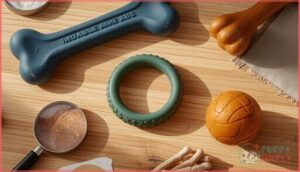
Material selection separates safe chew toys from hazards. Natural rubber toys offer chew resistance for weeks in smaller dogs, while nylon blends suit strong chewers but need supervision to prevent tooth wear. Look for nontoxic, BPA-free plastic alternatives that match your dog’s bite force.
Toy durability directly impacts how well these tools prevent destructive chewing—inspect regularly and replace cracked or frayed items immediately.
Size and Texture for Different Dogs

You can’t hand a Chihuahua the same chew toy you’d give a Mastiff—dog mouth size and jaw force analysis demand precise matching. Small dogs need toys under 3 inches to prevent choking, while large breeds require 6-8 inch options that withstand stronger bites.
Texture preferences matter too: aggressive chewers benefit from rugged surfaces, whereas gentle chewers need softer materials that won’t fracture teeth.
Safety Tips to Prevent Choking

Even the right size won’t guarantee chew toy safety—you need to watch how your dog interacts with every item. Choking prevention starts with smart pet proofing and ongoing toy maintenance to catch hazards before they become emergencies.
- Inspect toys daily for cracks, tears, or chunks that could break off and block airways
- Supervise the first 10 minutes with any new toy to spot aggressive chewing patterns
- Retire worn items immediately—hazard reduction beats saving a few dollars
Rotating and Introducing New Toys

Your dog’s interest in any single toy fades fast—novelty keeps chewing focused where it belongs. Rotating toys every week or two rechannels attention toward fresh textures and scents, cutting boredom-related furniture damage by a measurable margin.
Pair chew toy selection with a structured rotation schedule, and you’ll sustain engagement while reducing destructive chewing long-term.
Top Chew Toys to Prevent Destructive Chewing
Not all chew toys are created equal—some work better than others at satisfying your dog’s need to chew while standing up to serious use. The right toy depends on your dog’s age, chewing style, and what motivates them to keep coming back for more.
Here are five proven options that consistently redirect destructive chewing in dogs across different life stages and temperaments.
1. Nylabone Puppy Teething Chew Toy
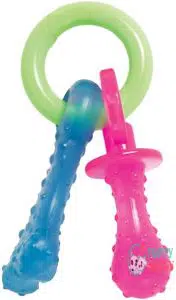
You’ll find veterinary-recommended support for puppy teething in the Nylabone Puppy Teething Chew Toy, specifically designed to address oral fixation during critical puppy development stages.
Its textured surface provides teething relief by massaging sore gums while reducing destructive chewing on furniture.
Made from BPA-free materials with bacon flavor throughout, this toy promotes dental health and encourages healthy chewing habits.
Choose a size matching your puppy’s breed—it’s designed for dogs up to 25 pounds—and inspect regularly for wear to maintain chew toy safety standards.
| Best For | Puppy owners with small breeds (up to 25 pounds) who need a safe, veterinary-recommended teething toy to soothe sore gums and redirect destructive chewing behavior. |
|---|---|
| Material | Polyurethane |
| Age Range | Puppy |
| Dishwasher Safe | No |
| Weight | 3.53 Ounces |
| Made in USA | Not specified |
| Durability Level | Moderate |
| Additional Features |
|
- Softer material with textured nubs massages gums and cleans teeth while providing teething relief
- BPA-free polyurethane with bacon flavor throughout keeps puppies engaged and encourages healthy chewing habits
- Dishwasher-safe design makes cleaning easy to maintain oral hygiene between uses
- Not suitable for aggressive chewers or very small breeds—size and hardness may be a mismatch
- Requires frequent inspection for wear, sharp edges, or crumbling that could create choking hazards
- May lose appeal over time as puppies outgrow the teething stage or lose interest in the toy
2. Kong Puppy Pacifier Dog Toy
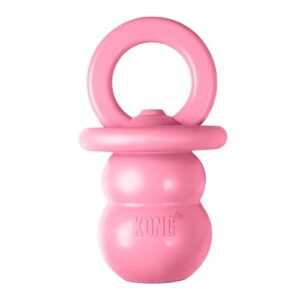
You’re looking for a multipurpose option? The Kong Puppy Pacifier Dog Toy offers a treat-dispensing hollow core that addresses puppy teething while reducing destructive chewing on your furniture.
Made from soft, natural rubber suitable for developing teeth, it promotes pet dental health through gentle gnawing resistance.
Stuff it with puppy-safe fillings to extend interactive play sessions and keep boredom at bay.
Choose the size matching your pup’s breed to guarantee chew toy safety, and inspect regularly for wear—damaged toys should be replaced immediately to prevent choking hazards.
| Best For | Puppy owners seeking a durable, treat-dispensing toy that soothes teething pain while keeping their pup entertained and away from furniture. |
|---|---|
| Material | Rubber |
| Age Range | Puppy |
| Dishwasher Safe | Yes |
| Weight | 0.24 pounds |
| Made in USA | No |
| Durability Level | High |
| Additional Features |
|
- Hollow center lets you stuff treats inside, turning chewing time into a puzzle that keeps puppies busy and mentally engaged
- Made from soft natural rubber that’s gentle on developing teeth but tough enough for moderate chewers
- Dishwasher safe and easy to clean, so you can keep it fresh without extra hassle
- May not hold up well with very aggressive chewers—some owners report damage over time
- Dishwasher cleaning can wear the toy down faster than hand washing
- Quality control issues have been noted, with some units showing defects or shorter lifespans than expected
3. Benebone Bacon Dog Chew Toys
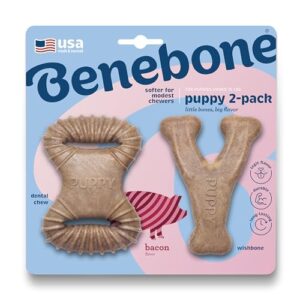
You want a chew toy that lasts? Benebone bacon-flavored chews deliver outstanding Benebone durability through their nylon material—designed specifically to withstand moderate-to-heavy chewing while discouraging destructive chewing on your belongings.
The curved wishbone shape lets your pup grip easily, and that real bacon flavor keeps engagement high, redirecting dog teething behavior away from furniture.
These best dog toys for chewing promote longer sessions, but you’ll need to supervise initially and replace worn pieces to maintain chew toy safety and pet satisfaction.
| Best For | Puppy owners looking for a durable, bacon-flavored chew toy that helps with teething while keeping their pup entertained and away from furniture. |
|---|---|
| Material | Nylon |
| Age Range | Puppy |
| Dishwasher Safe | No |
| Weight | 0.27 Pounds |
| Made in USA | Yes |
| Durability Level | High |
| Additional Features |
|
- Real bacon flavor and curved wishbone shape keep puppies engaged for hours
- Nylon material holds up well against moderate-to-heavy chewing
- Easy-grip design helps redirect destructive chewing behavior during teething
- May be too hard for smaller dogs or puppies with sensitive teeth
- Size can be hit-or-miss depending on your puppy’s breed and mouth size
- Not safe for households with peanut allergies and requires supervision to check for wear
4. West Paw Zogoflex Dog Frisbee
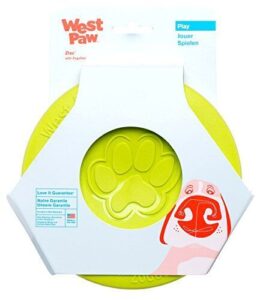
When outdoor play meets chew resistance, West Paw Zogoflex delivers both frisbee durability and safety for dogs prone to destructive chewing. This BPA-free flyer withstands repeated bites without splintering, keeping dog engagement high during fetch while satisfying chewing urges.
The flexible design prevents choking hazards yet holds up under heavy chomping, making it one of the safest chew toys for redirecting problem behavior. You’ll notice improved focus during active play—plus it’s dishwasher-safe, so cleanup stays simple after those slobbery sessions.
| Best For | Dog owners with moderate to heavy chewers who want a durable frisbee that can handle both fetch and chewing without falling apart. |
|---|---|
| Material | Flexible polymer |
| Age Range | All ages |
| Dishwasher Safe | Yes |
| Weight | Varies by size |
| Made in USA | Yes |
| Durability Level | Moderate |
| Additional Features |
|
- Made from flexible, puncture-resistant Zogoflex material that withstands aggressive chewing while staying soft on dogs’ mouths
- Dishwasher-safe and floats in water, making it easy to clean and great for outdoor or water play
- Backed by a 100% guarantee against dog damage and made in the USA with non-toxic, BPA-free materials
- Heavier design means it may not fly as far as traditional hard plastic frisbees and can drop quickly
- Higher price point compared to standard dog frisbees
- Not suitable for extreme power chewers or dogs that systematically destroy toys
5. Chuckit Flying Squirrel Dog Toy
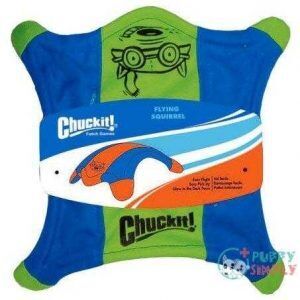
The Chuckit Flying Squirrel combines aerodynamic fetch with controlled chew prevention through its soft polyester canvas construction. Unlike hard durable toys, this 9.5-inch flyer won’t damage teeth during interactive play—but you’ll need supervision since it’s not built for aggressive destructive chewing sessions.
The floating design works well for water-loving dogs, redirecting teething urges into active games that strengthen your bond. It’s one of those safe chew toys that prevents furniture damage through engagement, not just toughness—though persistent chewers will need sturdier dog toys alongside this fetch option for complete pet safety.
| Best For | Dog owners with medium-sized breeds who want a versatile fetch toy for active play sessions in yards, parks, or water—especially if their dog isn’t an aggressive chewer. |
|---|---|
| Material | Polyester canvas |
| Age Range | Adult (medium breeds) |
| Dishwasher Safe | No |
| Weight | Not specified |
| Made in USA | Not specified |
| Durability Level | Low to Moderate |
| Additional Features |
|
- Aerodynamic design glides smoothly through the air and floats in water for versatile play environments
- Soft polyester canvas is gentle on dogs’ teeth and gums during fetch games
- Bright orange and blue colors make it easy to spot in grass or water
- Not durable enough for heavy chewers or dogs who treat fetch toys as chew toys
- Requires supervision during play to prevent fabric ingestion
- May not perform well in windy conditions and actual size might differ from what’s advertised
Frequently Asked Questions (FAQs)
Can chew toys help with adult dog aggression?
Chew toys can reduce some aggression-related stress in adult dogs when paired with behavioral therapy and professional guidance.
They’re not a standalone fix, but they support stress management and anxiety reduction as part of a broader training plan.
How often should I replace my dogs chew toys?
Like a worn tire losing traction, chew toys need swapping when they crack, tear, or lose texture—usually every 6–12 weeks for heavy chewers, and sooner for puppies whose teething demands fresh, safe options.
Are homemade chew toys safe for dogs?
Homemade chew toys carry real risks, including toxic material risks from glues or dyes, poor homemade toy durability that creates choking hazards, and unpredictable safety compared to tested commercial options.
Always follow strict pet safety guidelines or choose non-toxic alternatives instead.
Can chew toys prevent resource guarding behavior?
Toys alone won’t guard against possessiveness. Resource guarding stems from deeper behavioral roots, requiring desensitization and counterconditioning—not just chew toy substitution.
Trade-ups and management strategies help, but consult a certified behaviorist for lasting results.
Conclusion
Think of your home as a garden—left untended, your dog’s energy will sprout where it shouldn’t. How chew toys prevent destructive chewing is simple: they’re the irrigation system that channels that force toward something productive.
You’ve planted the right foundation by understanding the science. Now give your dog the outlet they’re wired to need, and watch the chaos transform into calm, one satisfying gnaw at a time.
- https://unsplash.com/?utm_content=creditCopyText&utm_medium=referral&utm_source=unsplash
- https://veterinarypartner.vin.com/default.aspx?pid=19239&id=7998415
- https://www.aspca.org/pet-care/dog-care/common-dog-behavior-issues/destructive-chewing
- https://x.com/godofprompt/status/1990526288063324577
- https://www.sciencedirect.com/science/article/pii/S0260691723000977