This site is supported by our readers. We may earn a commission, at no cost to you, if you purchase through links.

Your puppy’s first year shapes everything from bone density to brain function, and protein fuels nearly every biological process during this critical window. While adult dogs thrive on maintenance diets with moderate protein levels, puppies need substantially more—their bodies are building tissue, not just maintaining it.
The challenge isn’t simply finding high protein puppy food brands, but identifying formulas that balance elevated protein with appropriate calcium-to-phosphorus ratios, digestible energy sources, and bioavailable amino acids. Some brands load their kibble with plant proteins that inflate crude protein percentages without delivering complete amino acid profiles. Others nail the protein content but create mineral imbalances that compromise skeletal development in large breeds.
Understanding what separates genuinely beneficial high-protein formulas from marketing hype helps you select nutrition that aids your puppy’s growth trajectory without creating developmental complications down the road.
Table Of Contents
- Key Takeaways
- What is High Protein Puppy Food?
- Benefits of High Protein Diets for Puppies
- Choosing The Right High Protein Puppy Food
- Top 9 High Protein Puppy Food Brands
- 1. High Protein Dog Food Chicken
- 2. Raw Dog Food With Lean Beef
- 3. Grain Free Dog Food Recipe
- 4. Limited Ingredient Lamb Dog Food
- 5. Purina Large Breed Dog Food
- 6. Blue Buffalo Senior Dog Food
- 7. Natural Lamb Dog Food Recipe
- 8. Fresh Turkey And Yams Dog Food
- High Protein Dog Food Chicken (duplicate Listing if Different Formula)
- Tips for Feeding High Protein Puppy Food
- Frequently Asked Questions (FAQs)
- What puppy food is high in protein?
- What is the #1 recommended puppy food?
- What is the easiest protein for puppies to digest?
- Do puppies need higher protein food?
- Which brands offer subscription delivery for puppy food?
- How do I store high protein puppy food properly?
- What certifications should I look for on puppy food?
- Conclusion
Key Takeaways
- Puppies need at least 22.5% crude protein (versus 18% for adults) to fuel rapid tissue building, brain development, and immune function during their critical first year of growth.
- High-quality animal proteins like chicken, beef, and fish deliver complete amino acid profiles more effectively than plant-based alternatives, which can inflate protein percentages without providing bioavailable nutrients.
- Large and giant breed puppies require controlled calcium-to-phosphorus ratios (around 1.4% calcium) to prevent skeletal problems during their extended 18–24 month growth window, making breed-specific formulas essential.
- Grain-free diets rich in legumes have been linked to dilated cardiomyopathy in atypical breeds, so choosing AAFCO-compliant formulas with balanced ingredients matters more than simply avoiding grains.
What is High Protein Puppy Food?
High protein puppy food isn’t just kibble with extra meat—it’s a carefully formulated diet that delivers the elevated protein levels your growing pup needs to build strong muscles, support brain development, and fuel their boundless energy. While standard adult dog food meets basic maintenance requirements, puppies require markedly more protein to support their rapid growth and unique developmental needs.
To help you understand what sets these formulas apart, let’s break down the protein standards, key ingredients, and nutritional differences that make puppy food distinct from adult formulas.
Definition and Protein Content Standards

High protein puppy food delivers more crude protein than standard adult formulas, generally exceeding 30% on a dry matter basis. Unlike adult maintenance diets requiring only 18%, puppy nutrition demands higher amino acids to fuel rapid growth.
Protein standards are expressed in several ways:
- AAFCO growth profiles mandate at least 22.5% crude protein for puppies versus 18% for adults
- Energy-based metrics require approximately 56 grams of protein per 1,000 kilocalories for growing canines
- Commercial high protein formulas commonly range from 30–40% crude protein content on dry matter
- Nutrient profiles verify balanced canine dietary needs beyond just meeting minimum protein requirements.
Understanding protein intake levels is vital for ideal puppy growth and development.
Key Ingredients in High Protein Puppy Formulas
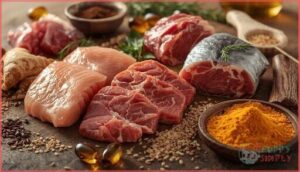
You’ll notice that top-tier high protein puppy food lists animal protein—like chicken, beef, or fish—right up front. These recipes blend quality protein sources, amino acids, omega fatty acids, and nutrient balance for ideal puppy nutrition. Organ meats, fish oils, and digestible grains all support digestive health and dog nutrition. A high protein diet promotes puppy muscle growth and overall development.
Here’s a quick look at key ingredients:
| Protein Sources | Key Nutrients |
|---|---|
| Chicken | Amino Acids |
| Beef | Omega Fatty Acids |
| Fish | Nutrient Balance |
| Organ Meats | Digestive Health |
| Whole Grains | Puppy Nutrition |
Differences Between Puppy and Adult Protein Needs

Now that you understand the ingredients, let’s talk about why puppy nutrition demands more. Your puppy’s protein requirements differ dramatically from an adult dog’s because of rapid canine development and growth.
AAFCO mandates 22.5% crude protein for growth stages versus 18% for adults—a 25% jump reflecting intense amino acid profiles needed for tissue building.
This nutrient density fuels life stage needs during critical growth windows, making high protein puppy food non-negotiable for healthy development.
Benefits of High Protein Diets for Puppies

Protein does more than just fill your puppy’s bowl—it’s the foundation for nearly every system in their growing body. From building strong muscles to fostering a sharp mind, the right amount of quality protein shapes how your puppy develops during those critical early months.
Let’s look at the specific ways a high-protein diet bolsters your pup’s health and long-term vitality.
Muscle Growth and Healthy Development
Your puppy’s muscles aren’t just getting bigger—they’re rapidly laying down protein fibers that will support every leap and sprint for years to come.
High protein puppy food delivers essential amino acids that drive muscle development through protein synthesis, supporting healthy growth factors and nutrient balance.
This amino acid profile is critical for canine development and growth, especially in active breeds requiring strong muscle development during early life.
Brain and Cognitive Function Support
Neurodevelopment support during your puppy’s first months sets the foundation for a lifetime of sharp thinking and problem-solving.
High protein puppy food enriched with DHA, choline, and B vitamins delivers critical cognitive health benefits:
- Brain function enhancement: DHA-supplemented diets improve maze completion speed by over 25%, demonstrating measurable learning gains.
- Neurotransmitter synthesis: Essential amino acids and B6 aid serotonin and norepinephrine production for focus.
- Neural protection: Taurine stabilizes neurons and aids myelin formation for efficient signal transmission.
Proper nutrient balance ensures mental stimulation translates into lasting cognitive capacity.
Improved Immune System and Vitality
Resilience starts from within—your puppy’s immune defense relies heavily on protein intake and nutrient balance. High protein puppy food delivers amino acids that drive antibody production, with studies showing enhanced vaccine responses and improved gut health through probiotic-protein combinations.
Adequate canine health support through proper puppy nutrition and health practices translates to fewer infections, stronger vitality support, and the physical stamina active dogs need for exploration and play.
Satiety and Weight Management
Control starts early—overfeeding puppies sets the stage for lifelong obesity struggles. High protein dog food with elevated fiber keeps your pup fuller longer through satiety mechanisms that reduce voluntary caloric intake by up to 23%.
High-protein puppy food with added fiber curbs overeating early, reducing calorie intake by up to 23% and preventing lifelong obesity
This protein balance aids weight management during growth, offering greater nutrient density while enabling caloric restriction when needed.
Proper puppy nutrition and health practices, paired with nutrition for active dogs principles, help maintain ideal body condition without sacrificing lean muscle development essential for dog food and diet success.
Choosing The Right High Protein Puppy Food

Not all high protein puppy foods are created equal, and picking the right one takes more than just checking the percentage on the bag. You’ll need to weigh protein sources, formula types, your puppy’s breed size, and any sensitivities before you commit.
Here’s what matters most when you’re comparing labels and making your choice.
Protein Sources: Animal Vs. Plant-Based
You’ll notice that both animal protein and plant-based options can meet your puppy’s needs—it’s all about protein digestibility and amino acid profiles. Animal protein benefits include complete essential amino acids from chicken or beef, while sustainable ingredients like wheat gluten meal actually exceed 93% digestibility.
High protein dog food works when formulas balance protein content with proper nutrients, whether you choose grain-free, raw dog food, or conventional recipes for ideal dog nutrition and health.
Grain-Free Vs. Grain-Inclusive Formulas
Choosing high protein dog food means weighing grain-free against grain-inclusive formulas—and despite marketing hype, grains aren’t the enemy. Over 90% of DCM cases reported to the FDA involved grain-free diets rich in legumes, yet confirmed food allergies in dogs trace back to animal proteins in most instances, not grains.
- Grain benefits include digestible carbs, B vitamins, and fermentable fibers that support digestive health
- Grain-free options substitute peas and potatoes, which may alter nutrient balance and taurine availability
- Food allergies rarely stem from grains—beef and chicken trigger most true sensitivities
- Pet nutrition experts note both formulas meet AAFCO standards when properly balanced
- Dog food nutrition quality depends on complete formulation, not grain presence alone
Breed Size and Age Considerations
Puppy growth rates vary dramatically by breed size, making age-related feeding decisions critical when choosing high protein dog food. Large and giant puppy breeds need controlled mineral intake—around 1.4% calcium—to prevent skeletal problems during their extended 18–24 month developmental stages, while small breeds tolerate higher energy and nutrient density.
Matching puppy food to your dog’s specific life stage and breed size ensures proper nutrient balance without overnutrition risks.
Food Allergies and Sensitivities
Beyond breed size, food sensitivities and allergies can derail even the best feeding plan. Around 8% of dogs with skin issues show cutaneous adverse food reactions, and beef, dairy, chicken, and wheat account for roughly 80% of canine allergen cases. If your puppy develops itching or digestive upset, consider these strategies:
- Switch to novel proteins like duck or venison to avoid common triggers
- Try hydrolyzed diets with peptides under 1 kilodalton for confirmed allergies
- Run a strict 6–8 week elimination trial before reintroducing ingredients
- Consult your vet for allergen testing if symptoms persist despite dietary therapy
Meeting AAFCO Puppy Nutrition Standards
Any high protein puppy food you pick must carry an AAFCO statement confirming it’s “formulated to meet” or tested for growth and reproduction. That guarantees at least 22.5% crude protein on a dry matter basis—along with proper calcium, phosphorus, and essential amino acids.
Skip “adult maintenance only” labels; they won’t support your puppy’s rapid muscle and bone development.
Top 9 High Protein Puppy Food Brands
After reviewing dozens of formulas and consulting current industry testing data, we’ve narrowed the field to nine standout puppy foods that consistently deliver high protein content alongside essential nutrients for growth.
Each brand on this list meets AAFCO standards for puppy nutrition and brings something different to the table—whether that’s premium animal protein sources, specialized formulations for large breeds, or options for pups with dietary sensitivities.
Here’s what you need to know about each one.
1. High Protein Dog Food Chicken
Real chicken stands as the benchmark in high protein dog food formulas for your growing puppy. Chicken-based puppy food recipes generally deliver 28–30% crude protein, exceeding AAFCO’s 22.5% minimum for growth diets.
This protein source supplies essential amino acids your puppy needs for muscle development and tissue repair, with digestibility studies confirming chicken’s nutritional effectiveness at inclusion levels up to 40%.
When paired with DHA and antioxidants, chicken nutrition promotes brain development and immune vitality throughout critical puppy development stages.
Best For: Dog owners seeking a veterinarian-recommended, high-protein wet food with real chicken as the first ingredient to support their adult dog’s muscle maintenance, hydration, and immune health.
- Real chicken provides 28–30% crude protein with essential amino acids for muscle support and tissue repair, exceeding AAFCO standards
- Contains 23 vitamins, nutrients, and antioxidants with no artificial colors or preservatives for complete nutrition
- Versatile feeding options—works as a complete meal, food topper, or mixed with dry food to encourage hydration
- Some customers report receiving damaged cans with torn packaging or busted seals upon delivery
- Price fluctuations and increases have been noted by repeat buyers over time
- Not all dogs tolerate the formula well, with occasional reports of digestive upset or taste rejection
2. Raw Dog Food With Lean Beef
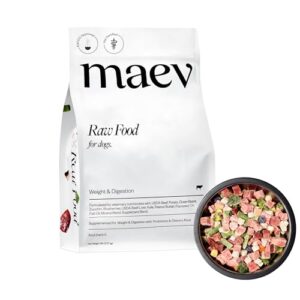
Raw beef diets offer high-quality protein, but they demand careful evaluation. Lean beef formulations usually deliver 15–20% crude protein as-fed—well below the 56.3 grams per 1,000 kilocalories puppies require for ideal growth.
You’ll also face raw meat safety concerns: FDA surveys found Salmonella and Listeria in commercially available raw dog food samples.
If you’re considering a raw diet, choose AAFCO-compliant formulas that incorporate organ meats, bone, and vegetable components. Consult your pet nutritionist before switching to grain-free and raw dog food options for your puppy.
Best For: Dog owners who want to feed their puppies a high-protein diet and are willing to handle food safety concerns, consult with a veterinarian, and choose AAFCO-compliant formulas with organ meats and bone.
- Delivers high-quality protein from human-grade, USDA-approved beef with organ meats and fresh produce for nutrient density
- May improve coat shine, energy levels, and digestive health when formulated as a complete, balanced diet
- Flash-frozen for convenience with no prep required, making raw feeding easier for busy owners
- FDA surveys found Salmonella and Listeria in raw dog food samples, posing health risks to pets and humans
- Lean beef alone falls short of puppy nutrition standards (below 56.3 g protein per 1,000 kcal), requiring careful formula selection
- High price point and reported issues with spoiled deliveries, difficult cancellations, and inconsistent customer service
3. Grain Free Dog Food Recipe
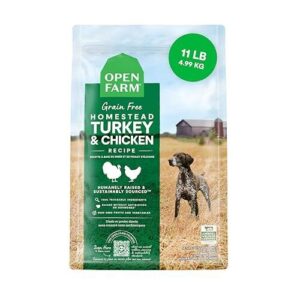
Many grain-free formulas rely on peas, lentils, and chickpeas to replace traditional grains, but you’ll want to evaluate nutrient balance carefully. Commercial grain-free recipes generally deliver 30–40% crude protein on a dry matter basis, with fat levels around 14–22%. However, veterinary cardiology services have linked certain grain-free diets rich in legumes to dilated cardiomyopathy in atypical breeds.
If you’re considering grain-free puppy food or homemade recipes with raw ingredients, consult a board-certified veterinary nutritionist to guarantee proper calcium, trace minerals, and amino acid ratios that prevent long-term deficiencies.
Best For: Dog owners looking for high-quality, ethically sourced nutrition who want to avoid grains and are willing to invest in premium food, especially for dogs with digestive sensitivities or skin issues.
- Real meat as the first ingredient with transparent, traceable sourcing and non-GMO fruits and vegetables
- Works well for dogs with stomach problems or skin sensitivities, often resulting in healthier digestion and firmer stools
- Suitable for all life stages and breeds, making it a versatile option if you have multiple dogs
- Significantly more expensive than most other dog food brands at $54.99 for 11 pounds
- Some dogs lose interest in the food over time or may not respond well to the formula
- Veterinary research has linked certain grain-free diets high in legumes to heart issues (DCM) in some breeds, so consultation with your vet is recommended
4. Limited Ingredient Lamb Dog Food
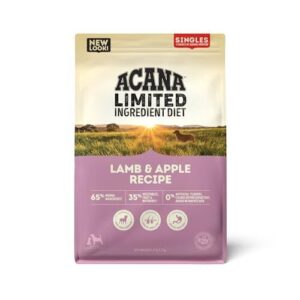
When you’re managing food sensitivities, limited ingredient lamb dog food offers a simplified protein source that can ease digestive health concerns while delivering impressive protein density. Lamb ranks among the least common allergens—affecting only about 14.5% of dogs with suspected food allergies—making it a practical choice for allergy considerations.
Look for formulas listing lamb and lamb meal first, with guaranteed crude protein in the mid-teens to low-30% range. Ingredient sourcing matters: quality lamb nutrition fosters muscle development without overwhelming sensitive systems.
Always consult veterinary advice before switching puppy food.
Best For: Dogs with food sensitivities or suspected allergies to common proteins like beef or chicken, especially when you want a high-protein, simplified recipe that supports digestive and skin health.
- Lamb is one of the least common allergens, affecting only about 14.5% of dogs with food sensitivities, making it a safer alternative protein for many dogs.
- High protein formulas (often mid-teens to low-30% crude protein) support muscle development and overall health while simplifying ingredient lists to reduce digestive triggers.
- Many lamb limited ingredient diets include functional additives like omega-3 fatty acids, probiotics, and prebiotics to support skin health, coat shine, and gut function.
- Lamb-based dog foods tend to be more expensive than formulas using more common proteins like chicken or beef.
- Not all dogs find lamb palatable, and some may refuse to eat it despite the nutritional benefits.
- While lamb is less allergenic overall, about 14.5% of allergic dogs do react to it with symptoms like itching, skin irritation, or digestive upset, so it’s not allergen-free for every dog.
5. Purina Large Breed Dog Food
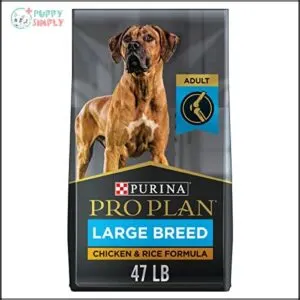
Purina Nutrition delivers targeted Large Breed formulas like Pro Plan Large Breed Puppy Chicken & Rice, which packs 30% crude protein on an as-fed basis to fuel Puppy Development without overloading growing joints. You’ll find chicken listed first among Dog Food Ingredients, alongside controlled calcium (1.1% minimum) and added DHA for brain function—key pillars of Breed Specificity in High Protein Dog Food.
This AAFCO-compliant Puppy Food promotes Dog Wellness through muscle conditioning and immune defense. Always seek Veterinary Advice to match Puppy Care and Nutrition to your pup’s growth curve.
Best For: Large breed puppy owners who want high-protein nutrition with joint support and controlled calcium to help their growing dogs build muscle without stressing developing bones.
- Real chicken as the first ingredient delivers 30% protein to support healthy muscle growth while controlled calcium levels (1.1% minimum) protect developing joints in large breeds
- Includes DHA from fish oil and glucosamine (500 ppm) to support brain development, vision, and long-term joint health as your puppy grows
- AAFCO-tested and proven complete nutrition for all life stages, with feeding guidelines tailored to your puppy’s age and expected adult weight
- Some dogs experience digestive upset including vomiting and diarrhea, so you may need to transition slowly or try a different formula
- Higher price point compared to many other puppy foods on the market
- Calorie-dense formula means you need to measure carefully and avoid overfeeding, especially important for large breeds prone to rapid growth issues
6. Blue Buffalo Senior Dog Food
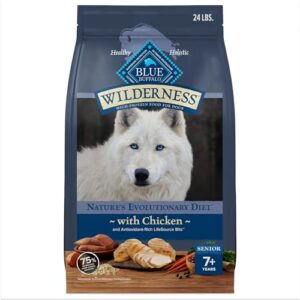
Blue Buffalo Life Protection Formula Senior Dog Food targets aging canines, yet its 18% crude protein—below the high-threshold mark—reminds you to distinguish Senior Nutrition from Puppy Food demands. Puppies need denser protein to fuel rapid growth.
While Dog Food Reviews praise deboned chicken, glucosamine, and antioxidant LifeSource Bits for Pet Health Benefits and Senior Dog Care, Blue Buffalo Products excel in geriatric support.
For Veterinary Advice for Pet Owners seeking Dog Food Recommendations, reserve this formula for mature companions and explore true High Protein Dog Food options that satisfy Pet Care and Nutrition Advice for developmental stages.
Best For: Senior dogs needing joint support and quality protein without common allergens like corn, wheat, or soy.
- Real deboned chicken as the first ingredient plus glucosamine and chondroitin for aging joints
- LifeSource Bits packed with antioxidants to support immune health in older dogs
- No poultry by-products, corn, wheat, or soy—cleaner ingredients for sensitive stomachs
- 18% protein sits below what some active seniors might need for muscle maintenance
- Price point runs higher than average, which adds up on a 24-pound bag
- Some dogs find it too dry and need extra water, plus occasional reports of insect issues
7. Natural Lamb Dog Food Recipe
Lamb nutrition shines in homemade diets when crafting recipes for sensitive pups, though achieving puppy-grade protein density demands precision. Balanced formulas combining 24 oz lean lamb muscle, 4.8 oz liver, and nutrient-rich vegetables like kale deliver roughly 58.7% protein on a dry matter basis—well above high protein dog food thresholds.
Natural ingredients such as sweet potato and chia seeds supply fiber and omega-3s, supporting pet health benefits from digestion to coat quality.
Yet homemade diets require calcium-phosphorus ratios near 1.9:1 for growth, so consult pet care and nutrition advice before replacing commercial puppy food entirely.
Best For: Dog owners who want to prepare high-protein, nutrient-dense meals at home for dogs with food sensitivities or those seeking limited-ingredient diets across all life stages.
- Delivers exceptional protein density at 58.7% on a dry matter basis with quality ingredients like lean lamb muscle, liver, and organs that support muscle health and energy
- Highly digestible formula with superior dry matter absorption compared to many commercial options, making it easier on sensitive stomachs when properly balanced
- Customizable recipe allows you to control exactly what goes into your dog’s bowl, incorporating superfoods like kale, sweet potato, and chia seeds for targeted health benefits
- Requires careful formulation and supplementation to hit proper calcium-phosphorus ratios (1.9:1 for puppies), making it easy to create nutritional imbalances without expert guidance
- Time-intensive preparation compared to scooping kibble, involving sourcing fresh ingredients, precise measuring, and proper storage of perishable components
- Can become expensive when factoring in quality lamb cuts, organ meats, and necessary vitamin-mineral supplements to meet complete nutrition standards
8. Fresh Turkey And Yams Dog Food
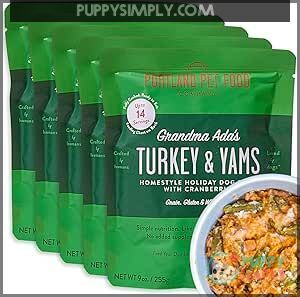
Portland Pet Food Company’s Grandma Ada’s Turkey & Yams brings human-grade puppy feeding to your dog’s bowl with fresh ingredients you’d recognize in your own kitchen. Turkey nutrition delivers lean muscle-building protein at 8% as-fed (roughly 33% dry matter), while yam benefits include 14,187 mcg vitamin A per 100g for sharp vision and steady growth.
This high protein dog food works as a rotational meal or topper, supporting dog wellness through grain-free simplicity—though you’ll want to pair it with complete puppy food for balanced calcium ratios during rapid development.
Best For: Dog owners who want human-grade, limited-ingredient meals for puppies or dogs with sensitive stomachs, especially when used as a topper or rotational meal rather than a sole diet.
- Human-grade turkey and yams provide clean, recognizable ingredients with strong vitamin A content and lean protein for muscle development
- Flexible feeding options let you use it as a complete meal, mixer, or topper depending on your dog’s needs
- Limited 11-ingredient formula works well for dogs with food sensitivities or allergies
- Higher price point compared to traditional dog food makes it expensive for daily feeding
- Pouches aren’t resealable, so you need to refrigerate leftovers and use within 4 days
- Some dogs experience digestive upset or diarrhea when switching to this food
High Protein Dog Food Chicken (duplicate Listing if Different Formula)
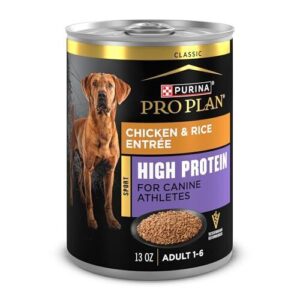
If you’re comparing chicken-based puppy foods, you’ll notice formula variations create distinct nutrient profiles. Purina Pro Plan Puppy Shredded Blend leads with whole chicken and 28% protein, while Instinct Raw Boost adds freeze-dried raw pieces for 31% protein levels. High protein dog food options like these maximize meat content differently—grain-free formulas concentrate amino acids more than grain-inclusive blends, so match your choice to your pup’s activity level.
- Whole chicken vs. chicken meal changes moisture and protein density
- Raw-coated kibbles deliver enzymes fresh meat preserves
- Shredded textures encourage picky eaters to finish meals
Tips for Feeding High Protein Puppy Food

Choosing the right high protein puppy food is only half the battle—you also need to feed it correctly. Proper feeding practices guarantee your puppy gets the nutrients they need without overloading their developing digestive system.
Let’s walk through the essential feeding strategies that will set your puppy up for healthy growth.
Feeding Frequency and Portion Sizes
Feeding schedules and portion control form the foundation of successful puppy nutrition. You’ll want to offer three to four meals daily for puppies under six months, then shift to twice-daily feedings as they mature.
Calorie intake varies dramatically—a five-pound puppy needs roughly 392 kcal daily, while a twenty-pounder requires 1100 kcal. Growth monitoring helps you adjust portions as your puppy develops.
Transitioning Puppies to High Protein Diets
You can’t rush a diet change—your puppy’s digestive health depends on a careful, gradual shift over seven to ten days. Start with 75% old food mixed with 25% new high protein kibble, then shift to a 50-50 split midweek.
By day ten, you’ll reach 100% high protein dog food while maintaining proper protein balance and nutrient monitoring throughout.
Monitoring Puppy Health and Growth
Once you’ve switched to high protein dog food, puppy care and development depends on consistent health monitoring.
Track your pup’s weight every two weeks against growth charts—small breeds hit 75% adult size by six months, while giant breeds reach only 50%.
Schedule veterinary care visits every three to four weeks until sixteen weeks old, watching for rapid gains that signal skeletal risks like hip dysplasia.
Combining Wet and Dry High Protein Foods
Mixed feeding combines kibble’s convenience with wet food’s hydration—canned formulas deliver around 75% moisture while boosting palatability for picky eaters. When blending wet and dry high protein dog food, confirm both meet AAFCO growth standards to maintain protein balance and proper nutrient ratios.
Follow these feeding strategies:
- Adjust portions so combined calories match your puppy’s needs
- Shift gradually over five days to prevent digestive upset
- Match life stages—use puppy-specific formulas, not adult versions
- Refrigerate opened cans and use within days
- Monitor body condition weekly, tweaking the wet-to-dry ratio as needed
Frequently Asked Questions (FAQs)
What puppy food is high in protein?
Puppy kibble with protein content above 25% on a dry matter basis qualifies as high protein. Look for formulas listing real chicken, beef, or fish first—these meet AAFCO’s puppy nutrition standards.
What is the #1 recommended puppy food?
Hill’s Science Diet Puppy holds the top spot among veterinarians globally, thanks to its balanced protein sources, AAFCO-compliant formulation, and consistent support for healthy growth, immune function, and digestive wellness in young dogs.
What is the easiest protein for puppies to digest?
Fresh chicken protein and fish meal rank among the most digestible options for puppies, with fish meal achieving 87% digestibility.
These amino acid–rich sources support healthy digestive health and meet demanding canine nutrition needs during growth.
Do puppies need higher protein food?
Yes, puppies need higher protein dog food than adult dogs. Growing puppies require at least 5% protein versus 18% for adults, supporting muscle development, brain function, and immune health during critical growth stages.
Which brands offer subscription delivery for puppy food?
Several companies offer convenient autoship options for your pup’s meals. Chewy, The Farmer’s Dog, and Ollie provide flexible subscription discounts, while We Feed Raw and Nom Nom deliver fresh food subscriptions on recurring schedules.
How do I store high protein puppy food properly?
Store puppy kibble in its original bag inside an airtight container, keep it below 80°F in a dry spot, and use opened bags within two to three months for maximum freshness and safety.
What certifications should I look for on puppy food?
Look for an AAFCO statement confirming the food meets growth or all life stages nutrient profiles. FDA regulations require proper labeling, while FEDIAF guidelines apply in Europe for thorough pet health and wellness assurance.
Conclusion
Your puppy won’t tell you when suboptimal nutrition starts affecting joint development or cognitive wiring—those consequences surface months later, when corrective intervention becomes exponentially harder.
Selecting high protein puppy food brands that balance muscle-building amino acids with appropriate mineral ratios isn’t about flawlessness; it’s about giving your growing dog’s biology what it genuinely needs during this irreplaceable developmental window.
Their adult health trajectory begins with the decisions you’re making right now.
- https://souldogsynergy.com/wp-content/uploads/2022/06/AAFCO-Nutrient-Requirements-for-Dogs.pdf
- https://caninecardio.com/dog-safety/high-protein-dog-food/
- https://www.petfoodindustry.com/top-pet-food-companies/article/15751940/chart-top-20-pet-food-companies-2024-purina-mars-still-dominate
- https://www.stellarmr.com/report/pet-food-market/2713
- https://www.dogfoodadvisor.com/best-dog-foods/high-protein/