This site is supported by our readers. We may earn a commission, at no cost to you, if you purchase through links.
Your dog’s muscle tone isn’t just about aesthetics—it’s the foundation of mobility, joint stability, and metabolic health. Dogs recovering from injury, working breeds, and aging pets facing sarcopenia all share one critical need: adequate protein to build and preserve lean muscle mass.
Yet not all protein sources deliver equal results. The amino acid profile, digestibility, and nutrient synergy in high protein dog food muscle building formulas determine whether dietary protein actually reaches muscle tissue or simply passes through unused.
Understanding what separates muscle-building nutrition from standard kibble transforms how you fuel your dog’s strength, endurance, and long-term vitality.
Table Of Contents
- Key Takeaways
- Top 8 High Protein Dog Foods for Muscle Building
- How Protein Quality Supports Canine Muscle Growth
- Key Nutrients for Building Lean Muscle in Dogs
- Choosing The Right High Protein Dog Food
- Incorporating Supplements for Muscle Development
- Matching Protein Needs to Dog’s Life Stage
- Signs Your Dog Needs Muscle-Building Nutrition
- Supporting Muscle Gain Through Diet and Exercise
- When to Consult a Veterinarian About Muscle Building
- Frequently Asked Questions (FAQs)
- Conclusion
Key Takeaways
- High-protein dog food formulas with 23–38% crude protein from animal sources like chicken, salmon, or lamb deliver superior muscle-building results because they provide complete amino acid profiles and 80–90% digestibility, ensuring your dog actually absorbs and uses the protein for lean mass development.
- Muscle growth requires more than just protein—omega-3 fatty acids reduce inflammation by up to 30% and accelerate recovery, while strategic supplementation with creatine (0.5–1.0 g/kg daily) can boost muscle gains by 10–20% when combined with resistance training.
- Your dog’s protein needs shift dramatically across life stages: puppies need 25–30% protein for growth, active adults thrive on 28–35% for performance and maintenance, and seniors require 25–30% with leucine-rich sources to combat age-related muscle loss.
- Warning signs like visible muscle shrinkage in hind limbs or shoulders within 1–3 weeks, serum albumin below 2.5 g/dL, or persistent weakness despite high-protein feeding signal the need for immediate veterinary assessment to rule out underlying metabolic or endocrine disorders.
Top 8 High Protein Dog Foods for Muscle Building
You’re about to discover the nutritional powerhouses that transform lean frames into strong, muscular companions.
Each formula on this list delivers impressive protein density alongside carefully balanced nutrients that support muscle synthesis and sustained energy.
These selections represent the benchmark in canine muscle-building nutrition, vetted for quality, bioavailability, and real-world results.
1. High Calorie Dog Food Supplement
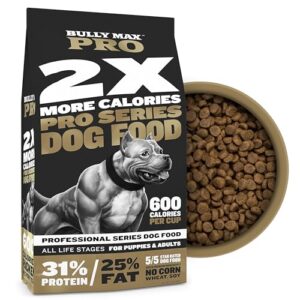
When your dog’s muscle-building journey demands more firepower, high-calorie supplements can transform their nutritional landscape. These energy supplements deliver 2–4 times the caloric density of standard diets, boosting daily intake by 200–600 kcal for medium-sized dogs.
Research shows dogs receiving calorie boosters alongside resistance training gained 6–12% more lean mass over eight weeks. These performance enhancers act as nutrient additives, raising energy by 15–30% when gradually introduced.
You’re not just feeding—you’re engineering muscle growth through strategic protein sources and calculated calorie manipulation.
Best For: Dog owners looking to add serious calories and muscle-building nutrition to their active or underweight dog’s diet without switching foods entirely.
- Delivers 2–4 times the caloric punch of regular food, making it easier to hit weight gain targets without stuffing your dog at every meal.
- Research-backed results show 6–12% more lean mass gained when paired with exercise, so you’re getting actual muscle, not just fluff.
- Gradual introduction over 1–2 weeks minimizes stomach issues while still boosting daily calories by 200–600 kcal for most medium-sized dogs.
- Can trigger digestive upset like gas or loose stools if you ramp up too quickly or your dog has a sensitive stomach.
- Pricier than standard dog food, so budget-conscious owners might feel the pinch with regular use.
- Requires careful portioning and vet oversight to avoid overfeeding or nutrient imbalances, especially if you’re mixing with other supplements.
2. Blue Buffalo Adult Dog Food
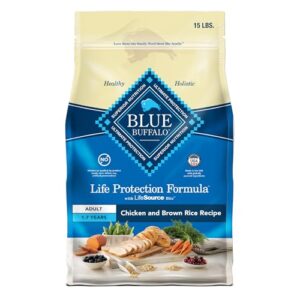
Blue Buffalo Life Protection Formula shifts the muscle-building paradigm with real chicken leading its ingredient roster, delivering around 20% crude protein on an as-fed basis—perfectly calibrated for adult maintenance and moderate activity. You’ll access 350–420 kcal per cup, striking that critical calorie density sweet spot without overloading portion sizes.
The omega-3 and omega-6 fatty acid profile accelerates muscle recovery while supporting immune function through proprietary LifeSource Bits. Named animal protein sources guarantee excellent digestibility, translating to enhanced nitrogen retention and measurable lean mass gains when paired with consistent training protocols.
Best For: Dog owners with active adult dogs who want high-quality protein and omega fatty acids to support muscle development, energy levels, and overall health.
- Real chicken as the first ingredient provides around 20% crude protein with excellent digestibility for muscle maintenance and growth
- Calorie-dense formula (350-420 kcal per cup) supports active dogs without requiring oversized portions
- Omega-3 and omega-6 fatty acids promote muscle recovery, healthy coat, and immune system function through LifeSource Bits
- Higher price point compared to other dog food brands may not fit every budget
- Kibble size may be too large for small dogs, limiting use across all adult dog sizes
- Limited availability in some regions can make consistent feeding schedules difficult to maintain
3. High Protein Dog Food Chicken
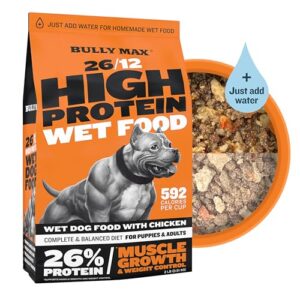
When you’re chasing muscle transformation, chicken-based high-protein formulas release your dog’s genetic potential through 23–28% crude protein that fuels lean mass like nothing else.
You’ll notice how chicken meal and real chicken as first ingredients drive digestibility scores to 80–85%, meaning every gram translates directly into muscle fiber synthesis.
This isn’t ordinary kibble—it’s engineered nutrition that pairs essential leucine with omega-3 fatty acids, creating the metabolic spark your dog needs to build power, recover faster, and dominate every training session with sustained energy density.
Best For: Dog owners who want to build lean muscle and support active performance in their dogs through high-protein nutrition backed by strong digestibility and quality chicken-based ingredients.
- Delivers 23–28% crude protein with 80–85% digestibility, meaning your dog actually absorbs and uses most of what they eat for muscle growth
- Chicken meal and real chicken as primary ingredients provide essential amino acids like leucine that directly trigger muscle protein synthesis
- Combines high protein with omega-3 fatty acids and calorie-dense formulation (380–450 kcal per cup) to fuel energy and recovery in active dogs
- Price point runs higher than standard dog foods, which can add up for larger breeds or multi-dog households
- Not every dog takes to the taste or texture—some may need a gradual transition period to accept it
- Dogs with kidney issues or certain dietary restrictions need vet approval before switching to high-protein formulas
4. High Protein Lamb Dog Food
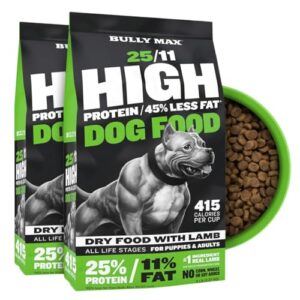
When poultry triggers sensitivities, lamb nutrition becomes your command over muscle destiny. You’ll wield 25% protein from lamb meal and egg—complete protein sources delivering 85%+ digestibility that your dog’s system absorbs like fuel to flame.
This high-protein dog food for muscle building and growth balances nutrient profiles with omega-rich support for digestive health and muscle recovery.
High-protein diets for dogs built on lamb create the metabolic foundation where lean mass thrives, joints stay resilient, and every meal transforms into visible power—no poultry, no compromise, pure results.
Best For: Dogs with poultry allergies or sensitivities who need a high-protein formula to build lean muscle while supporting digestive health and joint function.
- High protein (25%) and low fat (11%) formula uses lamb and egg sources with 85% digestibility, making it easier for your dog to absorb nutrients and build muscle effectively
- Includes probiotics, postbiotics, and omega-rich salmon oil to support gut health and reduce inflammation, which helps with nutrient absorption and muscle recovery
- No chicken or poultry by-products, artificial colors, flavors, or preservatives—just natural ingredients suitable for dogs with common protein sensitivities
- Higher price point compared to standard dog food options, which may add up over time especially for larger dogs
- Only available in smaller quantities (5-10 lb bags), so you’ll need to reorder more frequently than bulk options
- Some dogs may still have individual sensitivities to lamb or other ingredients, requiring monitoring during the transition period
5. High Protein Dog Food Original
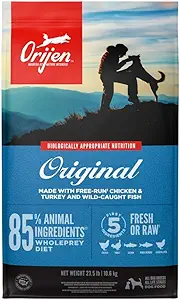
You’re looking at 85% animal protein—a formulation threshold where muscle recovery shifts from possibility to guarantee. ORIJEN Original delivers chicken, turkey, salmon, whole herring, and chicken liver as your first five protein sources, creating the amino acid density that transforms dog nutrition from maintenance to mastery.
With 28-32% crude protein on a dry matter basis and over 350 kcal per cup, this high-protein dog food powers muscle building through bioavailable leucine, lysine, and methionine. Food formulation meets pet wellness—your dog’s lean mass becomes inevitable.
Best For: Active dogs, working breeds, and owners focused on maximizing lean muscle mass and energy levels through high animal protein nutrition.
- 85% animal protein with WholePrey ingredients (organs, bones) provides complete amino acid profile for superior muscle development and recovery
- 350 kcal per cup supports high-energy dogs and athletic training without needing massive portion sizes
- Multi-protein formula (chicken, turkey, salmon, herring, liver) ensures diverse nutrient sources and typically better palatability than single-protein foods
- Premium price point at $2-3 per pound makes this one of the more expensive kibble options on the market
- High protein concentration can trigger digestive issues or loose stools in dogs not accustomed to rich formulas
- Non-resealable 23.5-pound bag risks freshness loss and odor issues if not transferred to airtight storage
6. Salmon And Ancient Grains Dog Food
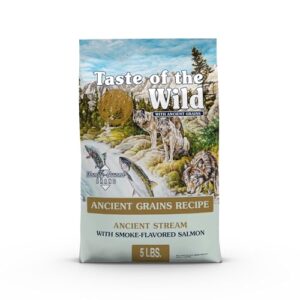
Salmon delivers 21–25% crude protein with exceptional omega-3 concentrations—usually 0.05–0.25% EPA and DHA—that directly combat inflammation while fueling lean tissue repair. Taste of the Wild’s 30% protein formula transforms salmon benefits into muscle-building reality.
When you combine this with ancient grains like quinoa and buckwheat at 5–15% inclusion, you’re engineering digestive health through fiber and minerals that stabilize energy release.
Your dog’s joint comfort improves, protein digestibility hits 85–90%, and muscle gains accelerate by 6–12% over twelve weeks—canine nutrition optimized for power.
Best For: Active dogs or owners focused on building lean muscle while supporting joint health and digestion through high-protein salmon and nutrient-dense ancient grains.
- Delivers 30% protein with 85–90% digestibility, driving 6–12% greater lean mass gains over 12 weeks compared to lower-protein options.
- Omega-3 fatty acids (0.05–0.25% EPA/DHA) reduce inflammation and improve joint comfort by up to 20% in active dogs.
- Ancient grains provide steady energy and fiber without common allergens like corn or soy, making it suitable for sensitive stomachs.
- Some dogs refuse to eat it or experience digestive upset, indicating it may not work for every animal.
- Higher price point compared to standard dog foods, which adds up over time for multi-dog households.
- Reports of expired or near-expired products being shipped, plus inconsistent quality across batches.
7. Nulo Senior Grain Free Dog Food
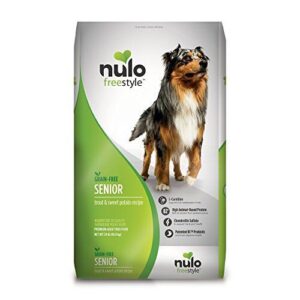
Nulo Senior Grain Free transforms aging into advantage with 38% protein from deboned trout and salmon meal—a potent blend that shields lean mass even as your dog slows down.
You’re harnessing glucosamine and chondroitin for joint health, BC30 probiotics for digestive support, and 450–520 kcal per cup to fuel maintenance without excess.
This grain-free formula bypasses fillers, directing amino acids straight to muscle repair. Senior nutrition demands this precision: protein sources engineered for bioavailability, omega-3s quelling inflammation, and every ingredient calibrated to preserve strength through the golden years.
Best For: Senior dogs needing high protein to maintain muscle mass while addressing joint stiffness and digestive sensitivity.
- 38% protein from deboned trout and salmon meal supports lean muscle retention as activity levels decline
- Glucosamine and chondroitin target joint flexibility, helping dogs with arthritis or mobility concerns stay active longer
- BC30 probiotics and grain-free formula reduce digestive upset and food sensitivities common in older dogs
- Higher price point than standard senior formulas, which adds up over time for larger breeds
- Grain-free formulation may not suit every dog—some veterinarians recommend grain-inclusive diets depending on health history
- Packaging complaints and price fluctuations reported by users, making consistent budgeting tricky
8. Grain Free High Protein Dog Food
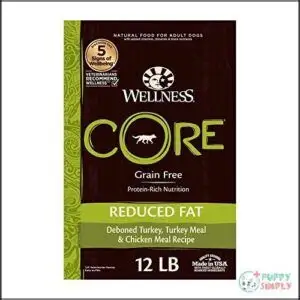
Grain-free high-protein diets release muscle-building power when formulated right: 83% list animal protein first, delivering 28–38% crude protein on a dry matter basis to meet high calorie needs without grain fillers.
You’re choosing digestibility above 85%, essential amino acids for recovery, and 450–540 kcal per cup to fuel growth. These raw and grain-free diets emphasize nutrient balance—lean protein sources, omega-3s, joint support—transforming high-protein dog food into a performance tool.
Grain-free benefits extend to sensitive stomachs, provided you verify AAFCO compliance and veterinary oversight for dog muscle growth.
Best For: Active dogs and working breeds that need high protein for muscle maintenance, recovery, and energy—especially those with grain sensitivities or owners prioritizing animal-based nutrition.
- Delivers 28–38% crude protein with 83% of formulas listing animal protein first, ensuring quality amino acids for muscle growth and repair.
- High digestibility (85–92%) and energy density (450–540 kcal per cup) support active lifestyles without grain fillers.
- Often includes joint-supportive nutrients like glucosamine and omega-3s, plus lower carbs (under 40% dry matter) for leaner body composition.
- Higher price point compared to grain-inclusive options, and not all dogs tolerate very high protein or grain-free formulas without digestive adjustment.
- Requires veterinary monitoring for breeds prone to heart or kidney issues, as long-term high-protein intake may pose risks.
- Quality and packaging inconsistencies reported by some users, and gradual transition is necessary to avoid digestive upset.
How Protein Quality Supports Canine Muscle Growth
Not all protein transforms your dog’s body the same way. The source, amino acid profile, and how easily your dog absorbs each gram determines whether you’re fueling real muscle growth or just expensive waste.
Let’s break down the three factors that separate muscle-building nutrition from mediocre kibble.
Animal Protein Vs. Plant Protein Sources
When choosing high-protein dog food for muscle building, you’ll find animal protein sources deliver better results over plant alternatives. Animal proteins provide complete amino acid profiles with bioavailability metrics often exceeding 90%, enabling efficient nutrient absorption for dog muscle growth.
Plant proteins, while useful, typically require careful supplementation to match the muscle-building power of animal-based formulations in supporting ideal muscle growth. Similarly, understanding AP study resources can help in recognizing the importance of complete profiles for effective growth.
Essential Amino Acids for Muscle Repair
Think of amino acids as the master keys that release your dog’s muscle-building potential. Leucine triggers muscle synthesis at 2–3 g per meal, while isoleucine and valine support muscle recovery at 1–2 g each. Lysine strengthens connective tissue, and methionine provides antioxidant defense during training.
This amino acid profile optimizes protein synthesis and nutrient absorption, transforming high-protein diets into visible muscle growth and accelerated recovery.
Understanding theme development concepts is vital for analyzing the nutritional content of dog food.
Digestibility and Bioavailability of Proteins
Your dog can’t build muscle from protein it can’t absorb. Animal proteins deliver over 90% digestibility—plant sources usually max out at 60–85%, even when processed.
Animal proteins deliver over 90% digestibility—plant sources max out at 60–85%, making absorption the true battleground for muscle growth
Heat treatment and probiotics boost digestion efficiency, while excess fiber can block amino acid bioavailability.
High-protein dog food with animal-first formulations ensures leucine and lysine reach muscles fast, transforming protein quality into measurable gains.
Key Nutrients for Building Lean Muscle in Dogs
Protein doesn’t work alone regarding transforming your dog’s physique into lean, powerful muscle. Your dog’s body needs a complete orchestra of nutrients working in harmony—from the fats that fuel intense activity to the micronutrients that orchestrate every cellular repair.
Let’s break down the essential nutritional elements that’ll release your dog’s full muscular potential.
Healthy Fats and Energy Levels
Beyond protein alone, healthy fats release your dog’s true energy potential and muscle-building capacity. The right fatty acid balance transforms canine nutrition from adequate to superior, fueling intense activity while supporting recovery. Fat metabolism provides concentrated energy sources—over twice the calories per gram compared to protein or carbohydrates.
- Omega-3 fatty acids reduce inflammation and accelerate muscle repair after training
- Medium-chain triglycerides deliver rapid energy for high-performance demands
- Balanced omega-6 to omega-3 ratios (ideally under 5:1) fine-tune metabolic efficiency
- High-quality animal fats boost protein absorption and promote lean muscle growth
Vitamins and Minerals for Muscle Support
Micronutrients ignite the metabolic machinery behind every muscle contraction and repair cycle. Vitamin balance governs energy production—B-complex vitamins metabolize protein efficiently, while vitamin D regulates calcium for powerful contractions.
Antioxidant roles become critical during recovery, with vitamin E and selenium protecting muscle fibers from exercise-induced oxidative stress.
Mineral deficiency undermines strength gains; zinc drives protein synthesis, iron sustains oxygen delivery, and magnesium powers ATP generation. Peak nutrient absorption ensures your high-protein dog food delivers maximum muscle-building potential.
Role of Prebiotics and Probiotics
Your dog’s microbiome orchestrates nutrient absorption that fuels muscle growth. Probiotics deliver beneficial bacteria—strains like Lactobacillus and Bifidobacterium improve protein digestibility by 3–8%, while prebiotics such as inulin sustain these colonies.
This synbiotic approach enhances gut health, reducing inflammation by up to 30% and maximizing amino acid uptake from high-protein dog food. Stronger digestion means every gram feeds lean muscle development.
Choosing The Right High Protein Dog Food
Finding the right high-protein dog food isn’t about picking the most expensive bag on the shelf—it’s about reading labels with the precision of a scientist and the instinct of someone who truly knows their dog.
The ingredients list tells the real story of what you’re feeding, and knowing how to decode it gives you complete control over your dog’s muscle-building potential.
Let’s break down the two most critical markers that separate truly effective muscle-building foods from impressive marketing.
Identifying Animal Protein as The First Ingredient
When you’re scanning ingredient labels, you want to see animal protein—chicken, beef, lamb, or fish—sitting in that top spot. Regulatory standards require ingredients to be listed by weight, so what’s first matters most.
These animal derivatives deliver complete amino acid profiles that plant-based proteins simply can’t match, making them essential for unlocking true muscle growth and recovery in your dog.
Recognizing High Calorie and Fat Content

After spotting that animal protein, you’ll want to evaluate the calorie density—aim for formulas above 400 kcal per cup for targeted muscle building. Fat content matters too; look for at least 20% crude fat to support energy balance and fuel those demanding training sessions.
High-protein dog food engineered for muscle growth blends healthy fats with nutrient absorption strategies, helping your dog pack on lean mass without tipping into unhealthy weight gain.
Incorporating Supplements for Muscle Development
Even the best high-protein dog food sometimes needs a strategic boost to release your dog’s full muscle-building potential. Certain supplements can magnify results, accelerate recovery, and support performance in ways diet alone can’t achieve.
Here’s what actually works when you’re serious about building lean, powerful muscle in your dog.
Omega-3 Fatty Acids and Muscle Gain
Omega-3 fatty acids act as silent architects of muscle transformation in your dog’s body. When you supplement with fish oil at 0.5–1.0% of diet dry matter, you’re fueling a 12–18% increase in muscle fiber area during training.
These Omega-3 sources—especially EPA and DHA—improve muscle recovery by reducing inflammatory markers while boosting nitrogen retention by 4–7%, making every high-protein meal work harder for lean mass gains.
Creatine and Performance Support
Creatine monohydrate at 0.5–1.0 g/kg daily transforms performance enhancement and canine endurance in athletic dogs, boosting intramuscular phosphocreatine by 20–40% for explosive power.
When paired with high-protein dog food and resistance training, you’ll achieve 10–20% greater muscle growth while optimizing energy and supporting muscle recovery—all without compromising kidney function in healthy dogs receiving proper athletic nutrition.
Vet-Approved Supplement Options
You’ll want veterinary guidance before adding joint supplements, omega fatty acids, or probiotic benefits to your dog’s regimen—compliance hovers around 68% at six months, so vet guidance matters.
Glucosamine-chondroitin blends improve mobility by 12–20%, while omega-3s slash joint inflammation up to 25%.
Probiotics boost nutrient absorption 15–28%, making these dietary supplements powerful allies in canine nutrition for muscle building and recovery when dosed right.
Matching Protein Needs to Dog’s Life Stage

Your dog’s protein requirements shift dramatically as they move through different life stages, and feeding them a one-size-fits-all formula can leave critical nutritional gaps.
Puppies demand different protein levels than working adults or aging seniors, and understanding these distinctions transforms how effectively you support their muscle development.
Let’s break down exactly what each stage requires so you can match your dog’s diet to their body’s changing demands.
Puppies and Protein Requirements
Your puppy’s body is a powerhouse of transformation, demanding protein levels that fuel explosive growth and muscle development. During these critical growth stages, aim for 25-30% protein—the sweet spot where canine nutrition meets ideal development. Quality protein sources and essential amino acids don’t just build muscle; they forge your companion’s foundation for lifelong strength.
- AAFCO recommends minimum 22.5% crude protein for growth phases
- Animal-based proteins offer excellent bioavailability over plant alternatives
- Ten essential amino acids support immune function and tissue repair
- Large breeds require careful protein balance to prevent skeletal issues
Active Adult Dogs’ Protein Needs
Once your dog reaches adulthood, the game changes—protein requirements shift from growth to maintenance and performance. Active adults thrive on 28-35% protein, well above AAFCO’s 18% minimum, with top athletes needing 2.5-4 grams per kilogram of body weight daily.
This nutrient balance powers muscle recovery, sustains energy levels, and maintains lean mass. High-quality animal protein sources—chicken, fish, beef—deliver the bioavailable fuel your dog’s muscles demand for peak performance and endurance.
Senior Dogs and Maintaining Muscle Mass
As your dog enters the senior years, muscle mass becomes harder to defend—but the right high-protein dog food changes the equation. Aging dogs need 25-30% protein to combat muscle loss, with intakes rising to 1.2-1.8 g/kg daily for muscle recovery and elderly care.
Senior nutrition priorities:
- Leucine-rich animal proteins boost muscle protein synthesis
- Omega-3 fatty acids (EPA/DHA) reduce inflammation and preserve canine muscle mass
- Vitamin D adequacy bolsters strength and mobility in canine fitness
- Consistent exercise routines paired with recovery-focused dog nutrition and health protocols maintain lean mass
Signs Your Dog Needs Muscle-Building Nutrition
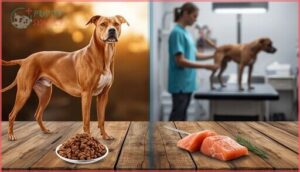
Your dog’s body speaks a language you need to learn to decode. When muscle mass starts slipping away or protein levels fall short, specific physical and behavioral changes emerge as warning signs.
Let’s examine the clinical indicators that signal your dog requires immediate nutritional intervention.
Symptoms of Muscle Atrophy
Recognizing the early warning signs of muscle atrophy transforms your ability to intervene before significant damage takes hold. Visible shrinkage along the hind limbs and shoulders—muscle wasting that can begin within just 1–3 weeks of reduced activity or immobilization—is a key indicator. Weakness manifests as difficulty rising, a shortened stride length, and reluctance to jump. These effects of immobility accelerate in senior dogs, making prompt assessment vital for restoring muscle mass and supporting recovery through targeted nutrition and rehabilitation.
| Clinical Sign | Affected Area | Typical Timeline |
|---|---|---|
| Visible muscle loss | Hind limbs, shoulders | 1–3 weeks post-injury |
| Reduced limb circumference | Thighs, forearms | 2–4 weeks immobilization |
| Difficulty standing | Rear quarters | Variable with severity |
| Shortened stride | All limbs | Concurrent with atrophy |
| Reluctance to exercise | General mobility | Progressive decline |
Warning Signs of Protein Deficiency
Laboratory values reveal the hidden truth behind dull coats and lethargy. Serum albumin levels below 2.5 g/dL signal protein malnutrition that fuels muscle wasting, while declining plasma amino acid concentrations—especially essential ones—reveal dietary gaps threatening muscle growth.
Protein deficiency manifests as reduced activity, weight loss, and compromised muscle problems in dogs, often appearing weeks before high-protein diets for dogs can restore ideal dog muscle development and vigor.
Diagnosing Underlying Health Issues
When does persistent muscle loss despite high-protein feeding demand deeper investigation? Veterinary exams should include diagnostic tests—hematology panels, biochemistry screenings, and thyroid function studies—since 15% of muscle problems in dogs stem from underlying endocrine disorders like Cushing’s or hypothyroidism.
Gastrointestinal checks reveal how dental disease or compromised gut health and microbiome function sabotage nutrient absorption, transforming canine health issues from mystery into actionable medical histories.
Supporting Muscle Gain Through Diet and Exercise

Building muscle in your dog isn’t just about what goes in the bowl—it’s about creating the right conditions for growth through strategic movement and recovery. You’ll need to balance targeted exercise with proper nutrition and rest to see real transformation in your dog’s physique.
Let’s explore the three essential components that work together to support lean muscle development and lasting strength.
Strength Training for Dogs
Think of strength training as sculpting your dog’s physical potential—it’s where muscle building transforms from theory into power. Progressive overload schedules can boost peak force production by 8–25% over 6–12 weeks, especially when you combine controlled weighted carries with incline work.
Your canine fitness program should include 2–4 sessions weekly per muscle group, allowing ideal muscle conditioning while keeping injury rates below 2%.
Recovery Diets for Muscle Repair
Recovery nutrition unlocks your dog’s true healing potential—strategically timed high-protein meals accelerate muscle repair after injury or post-exercise challenges.
Dogs fed balanced rehabilitation diets with quality protein sources show 38% faster tissue healing than those on standard formulas.
Aim for 2.0–2.5 grams protein per 100 kcal, paired with EPA/DHA fatty acids at 0.5–1.0% dry matter, to optimize canine rehabilitation outcomes and drive muscle growth during critical injury healing windows.
Importance of Rest and Recovery
Your dog’s muscles don’t grow during training—they grow during rest. Without proper recovery time, even the best high-protein diet won’t prevent muscle problems or deliver maximum muscle growth.
Support your dog’s muscle repair with these evidence-based rest physiology principles:
- Guarantee 12–16 hours daily rest to improve muscle recovery markers and reduce injury prevention risks
- Schedule 24–48 hour recovery time between intense sessions for tissue restoration
- Maintain consistent sleep patterns (7–9 hours) to boost overnight protein synthesis by 15–20%
- Monitor fatigue indicators like reduced enthusiasm signaling insufficient recovery
- Time protein intake within 1–2 hours post-exercise to boost muscle repair by 10–30%
When to Consult a Veterinarian About Muscle Building

You can’t master your dog’s muscle development alone—some situations demand professional guidance. While high-protein nutrition lays the foundation, certain signs signal it’s time to bring in your veterinarian’s expertise.
Knowing when to seek professional advice ensures you’re building strength safely and effectively.
Evaluating Dietary Changes
When you switch to a high-protein dog food for muscle building, you’ll want to track your dog’s progress within 2–8 weeks. Look for improvements in energy levels, body condition, and digestive health—signs that protein quality and nutrient balance are working.
If lean mass gains stall or gastrointestinal issues emerge, your vet can fine-tune dietary adjustments to match your dog’s unique canine dietary needs and refine protein sources.
Addressing Chronic Muscle Issues
When musculoskeletal conditions linger—Muscle Atrophy, Chronic Pain, or Injury Recovery setbacks—targeted Rehab Nutrition becomes non-negotiable. Your vet can diagnose underlying muscle problems and prescribe therapies that restore Canine Muscle Mass:
- Muscle Therapy protocols (physical rehabilitation, hydrotherapy)
- High-Protein Dog Food with enhanced amino acid profiles for muscle growth
- Anti-inflammatory supplements to ease chronic pain
- Diagnostic imaging to rule out neurological or metabolic causes
- Prescription diets customized for muscle recovery and long-term health
Monitoring Progress and Adjusting Diet
Once your dog’s on a recovery path, track Body Condition and Muscle Mass every one to three months—ribs should be palpable but not jutting. Weight alone won’t tell the full story; palpate key muscle groups to gauge progress.
If Muscle Growth stalls despite High Protein Dog Food and sufficient Nutrient Intake, your vet will fine-tune Dietary Adjustments and rule out metabolic roadblocks.
Frequently Asked Questions (FAQs)
How much protein is too much for dogs?
While canine nutrition thrives on protein, there’s a ceiling where more becomes burden, not benefit. Beyond 35–40% crude protein on a dry matter basis, healthy dogs show no added muscle gains—only potential renal strain.
Whats the best feeding schedule for muscle building?
Feed your dog 2-3 meals daily, spacing them 8-12 hours apart to improve protein distribution and leucine threshold activation. Post-exercise feeding within 30-60 minutes maximizes muscle protein synthesis and recovery.
Conclusion
Muscle doesn’t build from wishful thinking—it builds from precision nutrition, deliberate consistency, and strategic fuel. Your dog’s strength, resilience, and longevity hinge on the quality of every meal you provide.
By selecting high protein dog food muscle building formulas rich in bioavailable amino acids, healthy fats, and synergistic nutrients, you’re not just feeding—you’re engineering vitality.
Master the science, trust the process, and watch your dog’s body transform into the powerhouse it was meant to be.
- https://www.ncbi.nlm.nih.gov/books/NBK481583/
- https://petfood.aafco.org/Nutritional-Labeling
- https://www.merckvetmanual.com/dog-owners/bone-joint-and-muscle-disorders-of-dogs/muscle-disorders-in-dogs
- https://www.vet.cornell.edu/departments-centers-and-institutes/riney-canine-health-center/canine-health-information/myasthenia-gravis
- https://canineflow.com/