This site is supported by our readers. We may earn a commission, at no cost to you, if you purchase through links.

Your dog’s weight creeping up isn’t just a cosmetic issue—it changes how their body works at a fundamental level. Extra pounds strain joints, stress the heart, and shorten the years you have together.
Many owners assume switching to grain-free dog food automatically solves this problem, but the reality is more nuanced. Grain-free doesn’t mean low-calorie or weight-loss focused. The right grain-free formula, though, combines higher protein with controlled fat and strategic fiber to help dogs shed pounds while keeping their muscles strong.
Finding that balance requires understanding what makes these diets different and which ones actually deliver results for weight management.
Table Of Contents
- Key Takeaways
- What is Grain-Free Dog Food for Weight Loss?
- Benefits and Risks of Grain-Free Diets
- Which Dogs Should Eat Grain-Free for Weight Loss?
- Top 9 Grain-Free Dog Foods for Weight Loss
- 1. Solid Gold Healthy Weight Dog Food
- 2. Merrick Grain Free Weight Management Food
- 3. Wellness Core Healthy Weight Dog Food
- 4. Merrick Grain Free Weight Management Dog
- 5. High Fiber Grain Free Dog Food
- 6. Go! Solutions Weight Joint Chicken
- 7. Wellness Complete Health Grain Free Chicken
- 8. Nutrish Zero Grain Chicken Dog Food
- 9. Wellness Grain Free Chicken Stew
- Choosing The Right Grain-Free Weight Loss Food
- Frequently Asked Questions (FAQs)
- Why do vets not recommend grain-free dog food?
- What is the best thing to feed a dog to lose weight?
- How much weight can my dog safely lose in a month?
- Is grain-free food better for diabetic dogs?
- Can grain-free food help with my dogs constipation?
- What are some healthy, natural grain alternatives for dogs?
- Should I combine grain-free food with exercise changes?
- How often should I weigh my dog during dieting?
- Conclusion
Key Takeaways
- Grain-free doesn’t automatically mean weight-loss friendly—you need formulas with 28–40% protein, 7–12% fat, and high fiber (12–20%) to cut calories while protecting muscle mass and keeping your dog satisfied.
- The FDA has linked grain-free diets heavy in legumes to dilated cardiomyopathy (DCM) in dogs, so talk with your vet before committing long-term, especially if your dog is a breed predisposed to heart issues.
- True grain allergies affect fewer than 1% of dogs, meaning most pets don’t need grain-free food for weight loss—standard weight management formulas work just as well without the DCM risk.
- Successful weight loss requires portion control, weekly weigh-ins, and gradual food transitions over 7–14 days, not just switching to grain-free kibble and hoping for results.
What is Grain-Free Dog Food for Weight Loss?
Grain-free dog food swaps out traditional grains like wheat, corn, and rice for alternative carbohydrate sources while adjusting protein and fat levels to support weight loss. You’ll find different ingredients doing the heavy lifting in these formulas, and understanding what sets them apart from standard diets helps you make informed choices.
Let’s break down what you’re actually getting in a grain-free weight loss formula and how it differs from other options.
Key Ingredients Replacing Grains
Grain-free dog food ingredients swap traditional grains for legumes like peas and lentils, which appear in 40% of formulations. Sweet potatoes, found in over 70% of these products, offer rich root vegetable fiber. Real deboned chicken and turkey meals boost protein sources to 16-27%. Seed oils like flaxseed provide omega-3s, while alternative starches from chickpeas and quinoa round out the nutrition.
Some research suggests a possible link between grain-free foods and heart conditions.
Differences From Grain-Inclusive Diets
Beyond the swap in carbohydrate sources, you’ll notice grain-free and grain-inclusive diets differ considerably in macronutrient composition and digestibility differences. Studies show grain-free dog food generally contains 5–10% more fat, increasing energy density. Research comparing 21 diets found balanced grain-inclusive diets achieved higher nutrient digestibility.
You’ll also see distinct glycemic response patterns, varied ingredient profiles, and a noticeable cost comparison—grain-free options generally run more expensive. Both types of food provide essential nutrients for canine health.
Nutritional Considerations for Weight Loss
When your dog needs to slim down, the numbers on the label tell the real story. Grain-free weight-loss formulas generally deliver 28–40% protein to protect muscle, 7–12% fat to cut calories, and 12–20% fiber to keep your pup feeling full. Here’s how these formulas stack up:
| Nutrient | Weight-Loss Range | Standard Diet |
|---|---|---|
| Protein | 28–40% dry matter | ~18% minimum |
| Fat Content | 7–12% dry matter | 12–18% typical |
| Fiber Intake | 12–20% dry matter | 2–6% typical |
Caloric density drops to about 2.6–3.2 kcal per gram—roughly 30% fewer calories than regular kibble. Don’t overlook micronutrients, either. Weight management for dogs requires fortified formulas to meet vitamin and mineral needs despite reduced portions.
Nutritional analysis of dog food ingredients matters more than marketing claims when you’re choosing the right grain-free dog food for lasting results.
Benefits and Risks of Grain-Free Diets

Grain-free dog foods can offer real benefits for dogs with specific sensitivities, but they’re not automatically the best choice for every pet trying to lose weight. You’ll want to understand what grain-free diets actually do well and where they fall short before making the switch.
Let’s look at the advantages, the allergy question, and the heart health concerns you need to know about.
Potential Weight Loss Advantages
You may wonder if switching to grain-free dog food actually delivers measurable weight loss results. Research shows three distinct advantages that support your dog’s weight management journey:
- Enhanced protein digestion – Grain-free formulas demonstrate 60% higher crude protein digestion rates, helping maintain lean muscle during calorie restriction.
- Improved nutrient absorption – Dogs require 13% less food to maintain healthy body condition.
- Better stool quality – Reduced stool excretion indicates efficient energy extraction.
Grain Allergies and Sensitivities in Dogs
Despite popular belief, grain allergies affect fewer than 1% of dogs. A dog’s immune response to grains develops when proteins trigger inflammation, although animal proteins cause allergies more than twice as often. Common symptoms include itchy skin, ear infections, and paw licking.
Diet elimination remains the best approach for confirming grain allergies in your pet.
| Diagnostic Methods | Treatment Options | Managing Dog Allergies |
|---|---|---|
| Elimination trials (6-12 weeks) | Remove grain-containing foods | Symptoms improve in 6-8 weeks |
| Blood tests and skin scrapings | Medicated shampoos and creams | Veterinary monitoring essential |
| Diet compliance critical | Hypoallergenic or grain-free diets | Most dogs recover quickly |
Heart Health and DCM Concerns
Since 2018, the FDA has warned about potential risks of grain-free diets and dilated cardiomyopathy (DCM). Over 90% of reported cases involved grain-free dog food containing legumes, which may interfere with taurine absorption.
Since 2018, the FDA has linked grain-free dog foods—particularly those containing legumes—to dilated cardiomyopathy cases by potentially interfering with taurine absorption
Golden Retrievers and Dobermans show higher breed susceptibility to heart health risks. Diet reversibility occurs in some cases when you switch foods and supplement taurine under veterinary guidance.
Which Dogs Should Eat Grain-Free for Weight Loss?

Not every dog needs grain-free food to lose weight. In fact, most dogs do just fine with grain-inclusive weight loss formulas.
However, certain situations make grain-free diets worth considering—especially when you’re dealing with food sensitivities or specific health concerns alongside weight management.
Identifying Candidates for Grain-Free Diets
Your dog might be a candidate for grain-free dog food if you notice persistent allergy symptoms like chronic itching, paw chewing, or recurring ear infections. Consider these signs:
- Diagnostic testing confirms grain intolerance after ruling out beef or chicken allergies
- Elimination diet trials show improvement when grains are removed
- Skin issues persist despite standard treatments
Only about 1% of dogs actually need grain-free diets, so consult your veterinarian before switching.
Veterinary Guidance and Breed Considerations
Before switching your dog to grain-free dog food for weight loss, talk with your veterinarian about breed-specific concerns. Golden Retrievers and Cocker Spaniels face higher DCM risk on certain diets.
Your vet will evaluate taurine levels, calorie density needs, and breed predispositions to create individualized plans. This partnership ensures safe weight loss while protecting your dog’s heart health throughout the change.
Managing Food Sensitivities During Weight Loss
When your dog scratches constantly or battles recurring ear infections, dropping pounds becomes twice as hard. Around 9–40% of itchy dogs have food reactions that mask weight loss progress or drain energy needed for exercise.
To untangle allergies from weight issues:
- Run an 8-week elimination trial to identify 95% of food triggers accurately
- Track pruritus levels alongside weekly weigh-ins to separate allergy flare-ups from true stalls
- Choose hydrolyzed or novel-protein grain-free dog food to address grain allergies and pancreatitis risk
- Watch for secondary infections like pyoderma that raise energy needs and slow fat loss
- Monitor digestive health markers—diarrhea or vomiting can mimic successful calorie cuts
Hypoallergenic diets stabilize inflammation, letting you see real progress.
Top 9 Grain-Free Dog Foods for Weight Loss
Finding the right grain-free food for your dog’s weight loss journey means looking at protein content, calorie density, and ingredient quality.
The foods below meet veterinary recommendations for safe weight management while avoiding common grains.
Each option balances nutrition with calorie control to help your dog slim down without sacrificing essential nutrients.
1. Solid Gold Healthy Weight Dog Food
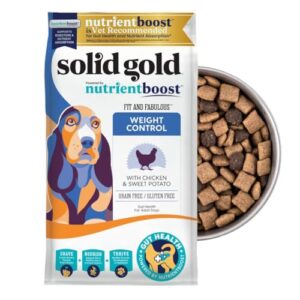
Solid Gold Fit and Fabulous delivers 330 kilocalories per cup with 26% protein and 6.5–9.5% fat—numbers that support steady weight loss when you follow the feeding guidelines. Ingredient analysis shows Alaskan pollock as the primary protein, replacing grains with sweet potatoes and chickpeas.
User reviews note it helps dogs reach a healthy weight, though some find it pricey. The brand’s recall history shows minimal incidents since 2012.
This grain-free dog food balances weight management with gut health through added probiotics.
Best For: Dog owners managing their pet’s weight or supporting dogs with pancreatitis who need a low-fat, high-fiber formula that keeps them satisfied on fewer calories.
- Delivers 330 calories per cup with 26% protein and up to 9% fiber, helping dogs feel full while losing weight without extreme portion cuts.
- Features Alaskan pollock as the main protein source, providing omega-3s for skin and coat health while keeping fat between 6.5–9.5%.
- Includes probiotics at 2 × 10^5 CFU per gram to support gut health during weight management.
- Some users report the price feels steep compared to other weight control formulas.
- A few customers received expired bags, raising concerns about quality control.
- The grain-free formula may not suit every dog’s digestive system, and some pets need time to adjust to the nutrient blend.
2. Merrick Grain Free Weight Management Food
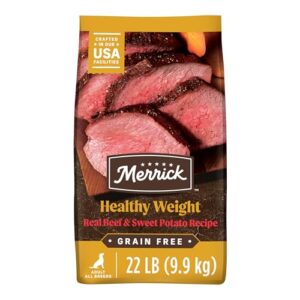
Merrick’s grain-free weight management recipe delivers 322 kilocalories per cup—lower than many standard kibbles that hit 360–400. The ingredient analysis shows real beef first, followed by peas and lentils instead of grains. With 34% protein and 17% fat, this dog food helps preserve muscle during weight loss.
Customer reviews report visible results in 4–8 weeks, earning consistent 4.5-star ratings.
But here’s what you need to know: DCM concerns have put this brand under scrutiny. The FDA linked Merrick to at least 16 canine heart cases in grain-free diet investigations. Talk with your vet before choosing this formula.
Best For: Adult dogs needing weight loss with owners who want high protein kibble and are comfortable discussing grain-free diets with their veterinarian.
- Real deboned beef as first ingredient with 34% protein helps maintain lean muscle during weight loss
- Lower calorie density at 322 kcal per cup supports gradual weight reduction with typical results in 4–8 weeks
- Includes omega fatty acids and joint support ingredients for overall health during weight management
- FDA linked Merrick to at least 16 DCM cases in grain-free diet investigations, requiring veterinary consultation
- Higher price point at $60 for 22 pounds compared to other weight management options
- Some customers report quality control issues like burnt food and inconsistent palatability
3. Wellness Core Healthy Weight Dog Food
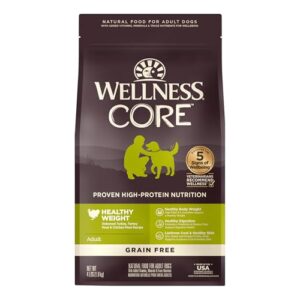
Your dog deserves more than empty promises. Wellness Core Weight Management delivers 366 kilocalories per cup with 33–37% protein and just 10–12% fat—numbers that matter for real weight loss. Turkey and chicken meals lead the ingredient list, backed by scientific testing that kept dogs’ blood work normal through AAFCO trials.
Four out of five veterinarians recommend Wellness formulas, giving you confidence beyond marketing claims. Feeding guidelines adjust from ½ to 5 cups daily based on your dog’s size, making portion control straightforward for steady, safe results.
Best For: Adult dogs needing to shed pounds without losing muscle, especially those with grain sensitivities or sensitive stomachs.
- High protein formula (33–37%) keeps dogs satisfied while cutting calories to 366 per cup, making weight loss manageable without constant hunger
- Backed by actual AAFCO feeding trials and recommended by 4 out of 5 vets, not just marketing hype
- Includes joint support ingredients (glucosamine and chondroitin) plus probiotics, addressing multiple health needs in one formula
- Costs more than standard dog foods, which adds up over time for larger dogs or multi-dog households
- Some dogs need a slow transition period to avoid digestive issues when switching to this formula
- Won’t work for every dog—individual results vary, and some may need different nutritional approaches
4. Merrick Grain Free Weight Management Dog
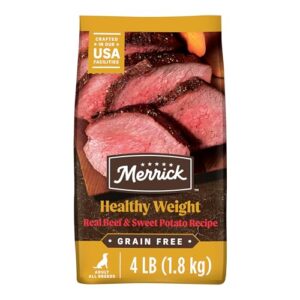
Another strong contender uses deboned beef as its first ingredient. Merrick Grain Free Weight Management recipe delivers 334 kilocalories per cup—lower than most standard kibbles—with 30–32% protein and just 10% fat. That macronutrient balance helps your dog shed pounds without losing muscle.
Here’s the catch: this formula includes peas and potatoes, which appeared in over 90% of FDA DCM reports. Merrick adds taurine supplementation at 0.17%, but veterinary guidance remains clear—dogs with heart disease or predisposed breeds need individual assessment before long-term use.
Best For: Adult dogs who need to lose weight while maintaining muscle mass, especially those whose owners prefer grain-free formulas and are willing to monitor heart health with their vet.
- Lower calorie density at 334 kcal per cup with high protein (30–32%) helps dogs lose weight without muscle loss
- Real deboned beef as the first ingredient with 55–60% animal-sourced ingredients in some recipes
- Includes glucosamine and chondroitin (400–600 mg/kg each) to support joint health during weight loss
- Contains peas and potatoes, which appeared in over 90% of FDA DCM reports, requiring veterinary monitoring for at-risk breeds
- More expensive than many conventional weight-management kibbles
- Some dogs refuse to eat it due to palatability issues
5. High Fiber Grain Free Dog Food
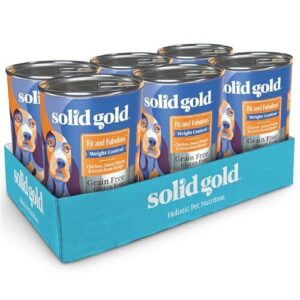
Fiber makes all the difference when your dog needs to feel full on fewer calories. High fiber grain-free formulas leverage sweet potatoes, peas, and lentils to deliver 8–13% fiber—well above standard kibbles—supporting satiety benefits and digestive health through improved gut microbiome activity.
Market growth in this category reflects demand, yet DCM risks from legume-heavy recipes remain under FDA review. Brands promoting lowcarb, high-fiber weight management options should provide transparent taurine levels and ingredient sourcing.
Always consult your vet before choosing fiber-focused grain free dog food for long-term use.
Best For: Dog owners looking for a weight management solution that keeps their pup feeling full between meals while avoiding grains—especially helpful for dogs with sensitive stomachs or those who need to shed a few pounds.
- High fiber content (8-13%) from sweet potatoes, peas, and legumes helps dogs feel satisfied on smaller portions, making weight control easier
- Packed with real chicken and nutrient-dense superfoods like flaxseed, spinach, and fish oil that support overall health and energy
- No fillers, artificial colors, or preservatives means you’re feeding clean ingredients that promote better digestion and gut health
- Price point runs higher than standard wet foods at $20.35 for six cans, which adds up for regular feeding
- Quality control complaints include dented cans, texture inconsistencies, and occasional shipping errors (some customers received only one can instead of six)
- Legume-heavy grain-free formulas are still under FDA review for potential links to heart issues (DCM), so vet consultation is smart before committing long-term
6. Go! Solutions Weight Joint Chicken
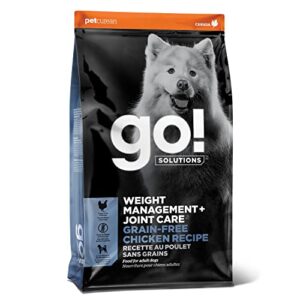
Your dog’s joints carry extra burden when they’re overweight, which makes Go! Solutions Weight Joint Chicken a smart dual-purpose choice.
This grain-free dog food delivers 22% chicken protein to maintain muscle, while 10% fiber content helps your dog feel satisfied between meals.
With 410 kcal per cup and 38% less fat than standard formulas, you’ll see calorie control that works. L-carnitine benefits fat metabolism, and 400 mg/kg glucosamine promotes joint health—key nutritional analysis points when choosing healthy weight dog food for aging or heavy dogs.
Best For: Adult and senior dogs who need to lose weight while protecting their joints, especially larger breeds or dogs showing signs of reduced mobility.
- Combines weight management with joint support ingredients (glucosamine, chondroitin, and green mussels) so you’re addressing two common aging dog issues in one food
- High fiber content (10%) keeps dogs feeling full longer, which helps with begging and portion control between meals
- 38% less fat than regular formulas while maintaining solid protein levels means real calorie reduction without sacrificing muscle maintenance
- Higher price point compared to standard dog foods, which adds up over time for larger dogs
- Some dogs may be picky about the taste or have sensitivities to chicken-based formulas
- Larger bag sizes can be hard to find, making it inconvenient if you have multiple dogs or a big breed
7. Wellness Complete Health Grain Free Chicken
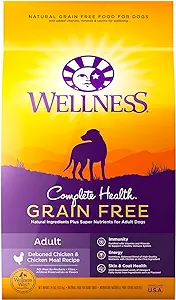
When you feed Wellness Complete Health Grain Free Chicken, you’ll provide 26% chicken protein that preserves lean muscle during weight loss. This grain-free dog food replaces grains with peas and chickpeas for controlled energy, delivering about 380 kilocalories per cup—lower calorie density than many formulas.
You’ll appreciate the 600 mg/kg glucosamine for joint support and added probiotics that promote digestive balance. The 11% fat keeps portions satisfying without excess calories, making this grain-free option effective for gradual, veterinarian-supervised weight management.
Best For: Adult dogs needing gradual weight loss or maintenance with joint support, especially those with grain sensitivities or allergies who benefit from legume-based carbohydrates and moderate calorie density.
- High-quality chicken protein at 26% helps maintain lean muscle during weight management while the lower 380 kcal/cup density makes portion control easier than richer formulas
- Includes 600 mg/kg glucosamine and chondroitin for joint health—particularly valuable for overweight dogs whose mobility is already stressed by extra pounds
- Grain-free formula with peas and chickpeas works well for dogs with corn, wheat, or soy sensitivities, plus added probiotics and prebiotics support digestive health during diet transitions
- Legumes like chickpeas and peas contribute plant-based protein that dilutes the animal protein percentage, meaning not all of the 26% protein comes from chicken sources
- Some dogs may experience digestive upset or diarrhea when switching to this formula, and palatability can be hit-or-miss with certain picky eaters
- At $69.99 for 24 pounds, it’s pricier than many standard adult foods, and occasional quality control concerns have been reported across some batches
8. Nutrish Zero Grain Chicken Dog Food
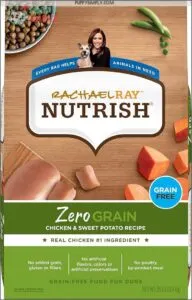
Real chicken as the first ingredient makes Nutrish Zero Grain Chicken Dog Food a solid choice for weight management. With 29.9% protein and 16.3% fat on a dry matter basis, it promotes lean muscle while you’re reducing calories.
Each cup delivers roughly 340 kcal, making portion control straightforward. The sweet potato and fiber content—around 5% dry matter—promotes satiety so your dog feels fuller longer.
A 4.5-star health rating and clean safety record through October 2025 affirm its quality for grain-free weight loss diets.
Best For: Dogs of all sizes and breeds that need weight management and have grain sensitivities, especially those whose owners want a straightforward, protein-rich formula they can trust.
- Real chicken as the first ingredient with 29.9% protein supports lean muscle maintenance during weight loss, backed by a 4.5-star health rating and clean safety record.
- Sweet potatoes and 5% dietary fiber promote satiety and healthy digestion, making portion control easier and helping dogs feel fuller longer.
- Grain-free formula with no artificial preservatives or by-product meal makes it gentle on sensitive stomachs and aligns with dogs’ natural dietary needs.
- Some dogs experience digestive issues like diarrhea or refuse to eat it, and owners have reported mixed reactions to the smell of the kibble.
- Larger kibble pieces may lead to whole swallowing, creating potential dental health concerns for some dogs.
- Higher price point compared to other dog food options makes it less budget-friendly for cost-conscious pet owners.
9. Wellness Grain Free Chicken Stew
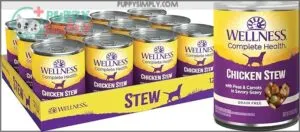
Wellness Grain Free Chicken Stew delivers a homestyle approach to weight management through its chunky texture and real protein. At 326 kcal per can with just 3.5% fat, this wet food supports controlled calorie intake while the 82% moisture content promotes hydration and satiety.
The chicken-based formula with added omega fatty acids improves skin health concerns. For dogs with grain sensitivities or allergies, this complete meal works as a standalone option or topper.
Switching gradually prevents digestive upset while promoting steady, healthy weight loss.
Best For: Dogs struggling with weight management who need a complete, grain-free meal that supports satiety and skin health without excess calories.
- High moisture content (82%) promotes hydration and helps dogs feel fuller longer, supporting weight loss goals
- Grain-free formula with real chicken protein is ideal for dogs with sensitivities or allergies
- Moderate fat and calorie levels (326 kcal per can) allow precise portion control for weight management plans
- Some customers report it’s pricier compared to other wet dog foods
- Mixed reviews on palatability—not all dogs find it appealing, and some may refuse to eat it
- Cans can arrive dented during shipping, and some dogs may experience digestive upset during the transition
Choosing The Right Grain-Free Weight Loss Food
Finding the right grain-free weight loss food means understanding what works for your dog’s body and lifestyle. You’ll want to look for formulas with high protein and lower fat that support steady weight loss without digestive upset.
Below are nine options that balance these needs while keeping your dog satisfied during the weight loss journey.
Transitioning Dogs to Weight Loss Diets

Switching your dog to a grain-free weight loss food isn’t something you should rush. A gradual introduction over seven to fourteen days—or up to thirty days for sensitive dogs—prevents digestive discomfort and gives their system time to adapt. Start by mixing 25% new food with 75% old food for three days, then increase the new food incrementally.
| Phase | New Food % | Old Food % | Duration |
|---|---|---|---|
| Week 1 | 25% | 75% | Days 1-3 |
| Week 2 | 50% | 50% | Days 4-7 |
| Week 3 | 75% | 25% | Days 8-11 |
| Final | 100% | 0% | Day 12+ |
Watch for vomiting or prolonged diarrhea. Veterinary oversight during changeover ensures successful weight management without nutritional gaps. Most dogs adjust smoothly within two weeks.
Monitoring Progress and Adjusting Portions

Tracking your dog’s progress is where weight loss actually happens. Start with veterinary rechecks every two weeks to verify your portion size matches the target rate of weight loss—aim for 1–2% of body weight per week. Use body condition scoring monthly to spot changes early.
Weigh meals on a kitchen scale, especially with grain-free formulas, since these are calorie-dense and portion size matters tremendously. If progress stalls after two to four weeks, your veterinarian may adjust portions downward.
Keep detailed logs of food, treats, and activity to catch hidden calories sabotaging your dog’s results.
Frequently Asked Questions (FAQs)
Why do vets not recommend grain-free dog food?
Most veterinarians exercise caution with grain-free diets because of unresolved links between certain legume-heavy formulas and dilated cardiomyopathy, plus the reality that true grain allergies are rare—animal proteins trigger most food sensitivities.
What is the best thing to feed a dog to lose weight?
The best thing to feed a dog to lose weight is a high-protein, low-calorie diet with increased fiber content.
Pair it with strict calorie counting, limited treat alternatives, and a gradual shift to support healthy weight management.
How much weight can my dog safely lose in a month?
Your dog should lose about 1–2% of body weight per week—roughly 4–8% monthly—to reach a healthy weight safely.
Veterinary monitoring prevents excessive loss risks and helps overweight dogs succeed with steady dog weight loss strategies.
Is grain-free food better for diabetic dogs?
Grain-free food isn’t automatically better for diabetic dogs. What matters most for glycemic control is fiber content and carbohydrate quality, not whether grains are present—both formats work when properly formulated for individual needs.
Can grain-free food help with my dogs constipation?
It depends on the formula. Grain-free diets low in fiber can worsen constipation, while those with adequate soluble and insoluble fiber support gut health and regular bowel movements—always check fiber content first.
What are some healthy, natural grain alternatives for dogs?
You don’t have to choose grain-free fillers like sweet potatoes, peas, lentils, or chickpeas.
Barley benefits digestive health, brown rice aids weight maintenance, oats advantages include blood sugar regulation, and sorghum nutrients aid inflammation reduction.
Should I combine grain-free food with exercise changes?
Yes, you should. Combining a grain-free diet with increased exercise intensity helps preserve muscle maintenance during weight loss while burning calories.
However, monitor heart health closely and adjust both diet and exercise gradually for safety.
How often should I weigh my dog during dieting?
Think you can just eyeball your dog’s weight loss? You can’t.
Weigh your dog every two weeks to track safe progress—one to two percent weekly—and adjust portions when the scale tells you something’s off.
Conclusion
Your dog’s future hinges on the choices you make today. Switching to grain-free dog food for weight loss won’t work unless you pick formulas with controlled calories, high protein, and proven ingredients.
Monitor your dog’s progress weekly. Adjust portions based on what the scale shows, not what the bag suggests. If weight plateaus or health changes emerge, consult your veterinarian immediately.
The right food matters, but consistent effort determines whether your dog reaches a healthier weight.
- https://www.houndsy.com/blogs/modern-tails/is-grain-free-dog-food-good-for-weight-loss-exploring-what-2024-pet-nutrition-research-tells-us
- https://nutrisourcepetfoods.com/our-food/weight-management-recipe-grain-free/
- https://journals.plos.org/plosone/article?id=10.1371%2Fjournal.pone.0250806
- https://www.towardsfnb.com/insights/grain-free-pet-foods-market
- https://dalemabryanimalhospital.com/wp-content/uploads/2023/01/Grain-Free_Pet_Foods_Fact_vs_Fiction.pdf