This site is supported by our readers. We may earn a commission, at no cost to you, if you purchase through links.

Your small dog’s energy levels, digestion, and even that persistent scratching might have more to do with their kibble than you think. Grain-free dog food for small breeds has moved from niche specialty to mainstream option, driven by mounting evidence that traditional grain-heavy formulas don’t align with how small dogs process nutrients.
Unlike their larger counterparts, small breeds have faster metabolisms and different calorie requirements per pound of body weight, which means the protein-to-carbohydrate ratio in their diet carries more weight. The challenge isn’t just removing grains—it’s finding formulas that replace them with ingredients that actually benefit your dog’s unique nutritional needs without introducing new problems.
Table Of Contents
- Key Takeaways
- Benefits of Grain-Free Dog Food for Small Breeds
- Key Ingredients in Grain-Free Small Breed Formulas
- Top 10 Grain-Free Dog Foods for Small Breeds
- 1. Instinct Raw Boost Grain Free Food
- 2. Weruva Steak Frites Classic Dog Food
- 3. Stella Chewys Chicken Freeze Dried Food
- 4. Grain Free Small Breed Dog Food
- 5. Wellness Core Large Breed Dog Food
- 6. Orijen Senior Grain Free Dog Food
- 7. Merrick Lil Plates Puppy Food Chicken
- 8. Nulo Puppy Salmon and Turkey Food
- 9. Taste of the Wild Beef Recipe
- 10. Taste of the Wild Angus Beef
- How to Choose The Best Grain-Free Food
- Frequently Asked Questions (FAQs)
- How much dog food should I feed my small dog?
- Should small dogs eat only small-size kibble?
- When should I switch my small dog to a senior dog food?
- Should small dogs eat grain free?
- What is the point of grain free dog food?
- What foods are healthy for small dogs?
- How do I know if my dog needs grain free food?
- Are there age restrictions for grain-free diets in puppies?
- How much grain-free food should I feed daily?
- Is grain-free food more expensive than regular?
- Conclusion
Key Takeaways
- Grain-free formulas typically deliver 30-43% protein and show 10% better protein digestibility than grain-based options, which matters more for small breeds because their faster metabolisms demand higher nutrient density per calorie.
- True grain allergies affect less than 1% of dogs—most food reactions trace back to protein sources like beef or chicken, not grains, though grain-free diets can still help by using limited ingredients that simplify allergen identification.
- The FDA has investigated links between grain-free diets high in legumes (peas, lentils) and dilated cardiomyopathy (DCM) in dogs, making veterinary consultation essential before switching, especially for predisposed breeds.
- When choosing grain-free food, prioritize named animal proteins as the first ingredient, verify the formula meets AAFCO standards for your dog’s life stage, and transition gradually over 7-10 days to avoid digestive upset.
Benefits of Grain-Free Dog Food for Small Breeds
Grain-free dog food has become a popular choice for small breed owners, but you might wonder if it’s actually the right fit for your dog.
These formulas offer several potential advantages, especially for dogs with specific dietary needs or sensitivities. Let’s look at the main benefits grain-free options can provide for your small breed companion.
Higher Protein Content for Small Breeds
When you’re feeding a small breed dog, protein content matters more than you might think. Grain-free dog food generally delivers 30–43% protein on a dry matter basis—well above the 18% minimum—supporting your pup’s unique energy requirements and muscle maintenance needs. The crude protein percentage is essential for canine health.
- Amino acids for metabolism: Small breed dog nutrition demands higher protein density per calorie to fuel faster metabolic rates
- Muscle maintenance without excess: Quality animal proteins support lean body mass while maintaining renal health in healthy dogs
- Protein digestibility: Properly processed grain-free formulas achieve excellent amino acid availability, ensuring your dog absorbs what they need
Improved Digestion and Nutrient Absorption
Beyond protein content, grain-free dog food can genuinely improve digestion in your small breed. Studies show protein digestibility jumps 10% and fat absorption increases 7% compared to grain-based formulas. You’ll often see a lower glycemic index—around 41—which moderates blood sugar spikes.
Better fecal quality and enhanced micronutrient availability mean your pup absorbs more of what matters, supporting overall digestive health without unnecessary grain fillers.
Research indicates that dog breed affects digestion, suggesting diets designed for specific needs are beneficial.
Relief From Food Allergies and Sensitivities
If your small breed has food sensitivities, grain-free dog food can help—but not for the reason you might think. True grain allergies affect less than 1% of dogs. Most reactions trace back to protein allergens like beef or chicken, not grains.
That said, grain alternatives can reduce exposure to wheat (the most allergenic grain), while limited-ingredient formulas help identify triggers. Always consult your vet before switching, especially given DCM concerns with some grain-free options.
Healthier Skin and Coat Support
Grain-free formulas often deliver higher omega fatty acids—especially from fish or flaxseed—which support skin health and reduce irritations. In clinical trials, dogs receiving omega-3 supplementation showed measurably improved coat quality and less inflammation over 8–10 weeks.
- Omega oils calm inflammatory skin conditions and boost shine
- Antioxidant benefits from vitamin E and zinc strengthen hair follicles
- Moisture content in wet grain-free diets helps hydrate skin
- Digestibility impact matters—better nutrient absorption improves coat density
Therapeutic diets work, but you’ll need 6–8 weeks to see real change.
Supports Muscle Mass and Energy Needs
Because your small dog’s metabolism runs hot, a protein-rich, grain-free dog food becomes your best ally. Higher protein content preserves lean mass—studies show dogs on 12% protein diets lost muscle and gained fat, while those above 24% maintained strength. Energy density matters: grain-free formulas deliver 400+ kcal per cup, meeting caloric intake demands without overfeeding. That translates to stamina assistance and sustained energy levels throughout the day.
| Benefit | Grain-Free Advantage | Impact on Small Breeds |
|---|---|---|
| Protein Digestibility | 10% better absorption than cereal diets | Maximizes amino acid uptake for muscle repair |
| Energy Density | 3,600–4,100 kcal/kg typical | Meets high metabolic needs in smaller meals |
| Lean Mass Preservation | 24–33% protein formulas common | Prevents muscle wasting, aids activity |
| Stamina Support | High-fat profiles (50%+ energy) | Fuels endurance and playful energy |
Key Ingredients in Grain-Free Small Breed Formulas
When you’re scanning the ingredient panel on grain-free small breed dog food, you’ll notice some key players that replace traditional grains while meeting your dog’s nutritional needs.
These formulas rely on specific proteins, carbohydrate sources, and functional ingredients designed to support everything from digestion to coat health.
Let’s break down what you should look for and why these ingredients matter for your small dog.
High-Quality Animal Proteins (Chicken, Turkey, Salmon)

You’ll find chicken, turkey, and salmon at the heart of quality grain-free dog food for small breed dogs—and for good reason. These high-quality ingredients deliver protein digestibility exceeding 90%, ensuring your dog absorbs essential amino acids for muscle maintenance.
Salmon brings omega fatty acids that support skin health, while poultry provides energy-dense nutrition to meet the elevated calorie needs of smaller dogs without overloading their tiny stomachs.
Carb Alternatives (Sweet Potatoes, Peas, Legumes)
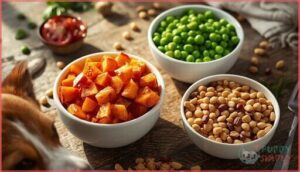
When grains disappear from the formula, sweet potatoes, peas, and legumes step in as carb alternatives—each with distinct nutritional profiles. Sweet potatoes offer low-glycemic energy and beta-carotene for immune support, while peas deliver around 25% protein by dry weight.
However, legumes appear in 93% of DCM-related grain-free cases, so you’ll want to balance these grain substitutes carefully with your vet’s guidance for your small breed dogs.
Superfoods and Added Nutrients (Blueberries, Spinach, Omega-3s)

Blueberries, spinach, and omega-3 sources like salmon oil pack your small breed’s bowl with antioxidant benefits and spinach nutrients that go beyond basic nutrition. These superfoods deliver:
- Blueberries: 9,380 IU vitamin A per 100g plus anthocyanins that boost serum antioxidant levels
- Spinach: 558 mg potassium supporting heart function
- Omega-3s: 70 mg EPA+DHA daily improved pain scores from 7.4 to 6.2 in small dogs
- Formula integration: High-quality ingredients maintain protein quality post-processing
When breed supplementation meets proper dosing—2-3 blueberries or 1 teaspoon cooked spinach weekly for dogs under 20 lbs—you’re supporting everything from coat health to cognitive development.
Probiotics and Prebiotics for Gut Health
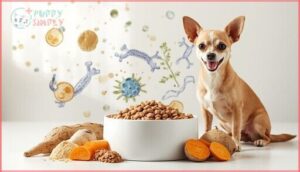
Your small breed’s digestive health depends on beneficial bacteria, and that’s where probiotics and prebiotics come in. Many grain-free dog food formulas now include these gut-boosting ingredients to support microbiome modulation and fecal quality.
| Gut Health Benefit | Clinical Impact |
|---|---|
| Faster Diarrhea Recovery | Acceptable stool consistency in 3.5 days vs. 4.8 with placebo |
| Improved Immune Response | Enhanced mucosal barrier function and anti-inflammatory signaling |
| Optimized Dosing | 1–3 billion CFU daily for dogs under 20 lbs |
Dosage guidelines emphasize the gradual introduction of these supplements to minimize safety concerns, such as temporary gas. When combined with grain-free dog food, they deliver measurable improvements in digestive health for small breed dogs.
Limited Ingredient and Novel Protein Options

If your small breed shows signs of food sensitivities, limited ingredient formulas with novel protein sources like rabbit, venison, or duck can help. These grain-free dog food options simplify allergen identification during elimination diets.
However, mislabeling concerns are real—studies found undeclared proteins in up to 100% of tested products. That’s why elimination diet accuracy depends on choosing reputable brands and consulting your veterinarian before making the switch.
Top 10 Grain-Free Dog Foods for Small Breeds
After reviewing ingredients and formulations, you’ll want to know which specific products deliver on quality and nutrition for your small dog.
The following ten grain-free foods have been selected based on protein quality, ingredient transparency, and formulation standards appropriate for small breeds.
Each option offers distinct nutritional profiles to match different life stages and dietary needs.
1. Instinct Raw Boost Grain Free Food
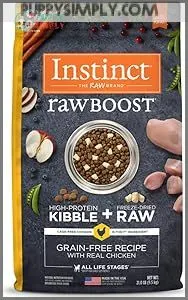
Instinct Raw Boost combines traditional kibble with freeze-dried raw chicken pieces, delivering 37% protein on a dry matter basis—ideal for your small breed’s energy needs. The smaller kibble design fits tiny jaws, while guaranteed probiotics support digestive health.
This grain-free formula uses cage-free chicken as its first ingredient, providing 390–430 kcal per cup without potato, corn, or artificial preservatives.
Feed about 1–2 cups daily for dogs weighing 5–15 pounds, adjusting for activity level. It’s formulated for all life stages except large-breed puppies.
Best For: Small dog owners who want a high-protein, grain-free diet with the added benefits of freeze-dried raw pieces and are willing to pay a premium for quality ingredients.
- High protein content (37% dry matter) from cage-free chicken supports lean muscle and active lifestyles in small breeds
- Smaller kibble size designed specifically for tiny jaws, plus added probiotics for digestive health
- Grain-free formula without fillers, artificial preservatives, or common allergens like corn, wheat, and soy
- Higher price point compared to most conventional dog food brands
- Some customers report inconsistent quality or packaging issues across batches
- Featured in FDA investigations into potential links between grain-free diets and heart issues in dogs, though no definitive connection was established
2. Weruva Steak Frites Classic Dog Food
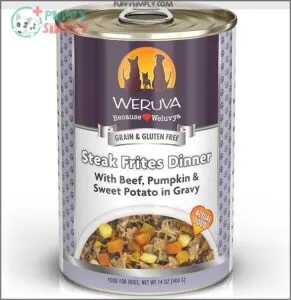
If your pup has a sensitive stomach or poultry allergy, Weruva Steak Frites Classic offers a beef-based protein alternative that’s earned high marks for ingredient quality.
Each 14-ounce can delivers grass-fed Australian beef with pumpkin and sweet potato in gravy—no chicken, grains, or carrageenan. At 580 kcal/kg, it’s lower in calories than kibble, so you’ll need roughly one can per 20 pounds of body weight daily.
The visible meat chunks boost palatability factors for picky small breed dogs, though the price adds up for multi-dog households.
Best For: Dogs with poultry allergies or sensitive stomachs who need a single-protein beef option with visible, high-quality ingredients.
- Grass-fed Australian beef with no chicken, grains, gluten, or carrageenan—great for dogs with common food sensitivities
- Made in human-grade facilities with zero recalls on record as of 2025, giving you peace of mind on safety and quality control
- Chunks of real meat and vegetables in gravy make it appealing to picky eaters, especially small breeds that turn their nose up at other foods
- Pricey compared to most wet foods—feeding a larger dog daily can get expensive fast
- Some customers report dented or damaged cans on arrival, pointing to occasional packaging and shipping issues
- Lower calorie density means you’ll go through cans quickly, especially if you have multiple dogs or a bigger breed
3. Stella Chewys Chicken Freeze Dried Food
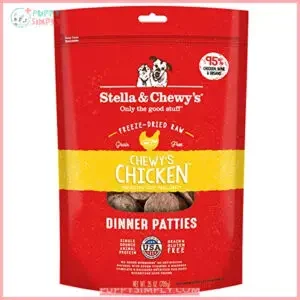
Stella & Chewy’s Chewy’s Chicken Freeze-Dried Raw Dinner Patties pack 95% chicken and organs into small-breed-specific formulas that rehydrate instantly. At roughly 4,420 kcal/kg, you’ll feed about four patties daily to a ten-pound dog—adjusting up or down based on activity level.
Nutritional analysis confirms 48% crude protein as-fed, with probiotics for digestive support and omega fatty acids for coat health. The ingredient sourcing emphasizes high-quality, cage-free chicken, though a 2015 Listeria recall and occasional palatability concerns about texture warrant mention.
Freeze-dried benefits include nutrient retention and convenient portioning for grain-free dog food enthusiasts.
Best For: Small-breed dog owners who want a high-protein, grain-free raw diet with flexible feeding options and are comfortable with premium pricing.
- 95% cage-free chicken and organs deliver 48% crude protein with probiotics for digestive health and a shiny coat
- Freeze-dried format preserves nutrients while offering versatility as a complete meal, topper, or training treat
- Convenient portioning at about 50–60 calories per patty makes it easy to adjust feeding amounts for small dogs
- Expensive option, especially for multi-dog households or larger breeds that need higher daily volumes
- 2015 Listeria recall and some customer reports of hard texture or bone fragments raise safety and palatability concerns
- Not ideal for dogs with chicken allergies or sensitivities, given the single-protein formula
4. Grain Free Small Breed Dog Food
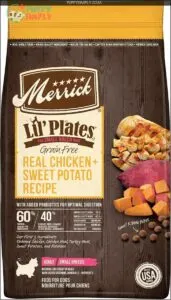
Merrick Lil’ Plates Grain Free Small Breed Real Chicken Recipe exemplifies how brand reputation translates into practical small breed-specific formulas. With real deboned chicken as the first ingredient, this grain-free dog food delivers high-quality ingredients at roughly 3,510 kcal/kg—matching the caloric density your fast-metabolism companion needs.
The kibble size measures about 8.5 mm, engineered for small jaws, while macronutrient balance hits 34% protein minimum and 17% fat. Ingredient sourcing includes sweet potatoes and peas instead of grains, plus added glucosamine for joint support at $39.98 per bag.
Best For: Small breed dog owners who want a high-protein, grain-free formula with real chicken and joint support ingredients, and don’t mind paying a premium for smaller kibble designed specifically for tiny mouths.
- Real deboned chicken as the first ingredient delivers 34% protein to support lean muscle mass and energy in active small dogs
- Kibble size around 8.5 mm makes it easy for small breeds to chew, plus added glucosamine and chondroitin help maintain healthy hips and joints
- Grain-free formula with sweet potatoes and peas provides 3,510 kcal/kg energy density perfect for small dogs’ fast metabolisms
- At $39.98 per bag, it’s more expensive than many other small breed dog food options on the market
- Some customers report quality control issues like ripped bags, and not all dogs enjoy the taste or texture
- Grain-free diets with peas have been flagged in past DCM investigations, so long-term feeding may require veterinary monitoring even though no causal link was established
5. Wellness Core Large Breed Dog Food
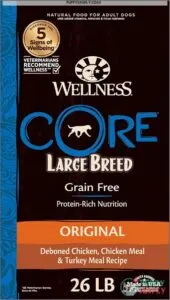
While Wellness CORE Grain Free Large Breed Dog Food targets bigger dogs—not small breed-specific formulas—understanding cross-formula options matters when you’re evaluating grain-free dog food brands.
This large-breed formula lists deboned chicken, chicken meal, and turkey meal as primary protein sources, hitting 34% crude protein with added glucosamine and chondroitin for joint support.
However, DCM concerns shadow its legume-heavy grain-free status (lentils, peas, potatoes), placing it among formulations flagged in FDA investigations.
For small breed dogs needing high-quality ingredients, better-matched alternatives exist.
Best For: Large breed dog owners looking for high-protein, grain-free food with joint support ingredients, though buyers should weigh DCM concerns and consider whether this formula matches their dog’s specific needs.
- High protein content at 34% from quality chicken and turkey sources, plus glucosamine and chondroitin for joint health in big dogs
- Made in the USA with no corn, wheat, soy, or artificial additives, and includes probiotics for digestive support
- Omega-3 and omega-6 fatty acids support healthy skin and coat, with added nutrients targeting large breed wellness
- Contains legumes and potatoes that place it among grain-free formulations flagged in ongoing FDA DCM investigations
- Priced at $79.98, making it more expensive than many mainstream large breed options
- Not formulated specifically for small breeds, so owners of smaller dogs should look at better-matched alternatives
6. Orijen Senior Grain Free Dog Food
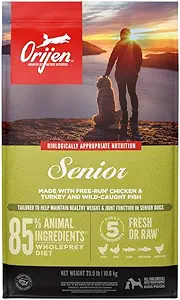
Orijen Senior Grain-Free Dog Food packs 38% protein from fresh chicken, turkey, salmon, and whole herring—making it a heavyweight contender for senior small breed dogs needing lean muscle support. You’ll get 85% quality animal ingredients with senior-specific benefits like 600-1,400 mg/kg glucosamine, plus 25% more fiber content than standard formulas to aid digestion.
However, palatability concerns arise—some dogs reject the taste—and its legume-heavy carb base (lentils, chickpeas) links it to DCM investigations despite impressive ingredient quality and calorie distribution designed for aging metabolisms.
Best For: Senior small breed dogs needing high-protein nutrition to maintain lean muscle mass, especially those with joint concerns or food sensitivities to grains.
- Loaded with 85% quality animal ingredients and 38% protein from fresh chicken, turkey, salmon, and herring to support aging muscles
- Includes 600-1,400 mg/kg glucosamine and chondroitin for joint health, plus 25% more fiber than standard formulas for easier digestion
- Grain-free formula without soy, corn, or wheat makes it suitable for dogs with common food sensitivities
- Pricey compared to other senior dog foods and may be hard to find due to high demand
- Some dogs don’t like the taste or smell, and it can cause digestive upset in certain pups
- Heavy reliance on legumes (lentils, chickpeas) raises concerns given ongoing DCM investigations linked to legume-based diets
7. Merrick Lil Plates Puppy Food Chicken
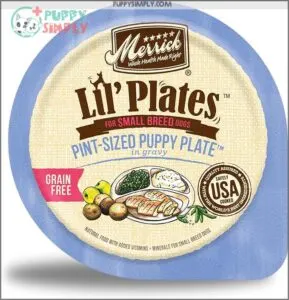
Your growing pup needs serious fuel, and Merrick Lil’ Plates Puppy Food Chicken delivers with 46% protein from deboned chicken—excellent for puppy muscle development in small breed dogs. The ingredient quality shines with sweet potatoes replacing grains, plus glucosamine for joint health and DHA supporting brain growth.
You’ll appreciate the smaller kibble digestibility, specifically sized for tiny jaws. With 4.5+ star customer ratings and vet recommendations for grain-free dog food, it’s a premium choice.
Just watch your wallet—it’s pricier than competitors, though the high-quality ingredients and thorough health support justify the investment.
Best For: Small breed puppy owners who want high-protein, grain-free nutrition with premium ingredients and don’t mind paying extra for quality.
- 46% protein from real deboned chicken supports strong muscle development and high energy levels in growing puppies
- Smaller kibble size designed specifically for tiny jaws makes it easy for small breed puppies to chew and digest
- Includes glucosamine for joint health and DHA for brain development, plus probiotics for digestion
- Significantly more expensive than many competing puppy foods
- Some customers report digestive issues or increased urination in certain puppies
- Mixed reviews on appearance and smell, with some preferring other premium brands like Blue Buffalo
8. Nulo Puppy Salmon and Turkey Food
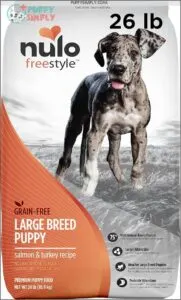
Think of brain-building blocks for your little pup—Nulo Freestyle Puppy Salmon Turkey Blend delivers 33% protein minimum with 0.15% DHA to support cognitive development in small breed dogs. You’re feeding high-quality ingredients like deboned turkey, salmon meal, and sweet potatoes instead of grains, plus probiotics reaching 80 million CFU per pound for digestive health. The 3,627 kcal/kg formula meets puppy nutritional needs without overfeeding.
Despite DCM concerns surrounding the grain-free dog food industry-wide (1,382 FDA reports across all brands), Nulo’s feeding guidelines and AAFCO-approved formulation provide balanced nutrition when following veterinary recommendations.
Best For: Large breed puppy owners who want high-protein, grain-free nutrition with DHA for brain development and probiotics for digestive support.
- High protein content (33% minimum) with quality ingredients like deboned turkey and salmon meal supports healthy growth and muscle development
- Includes DHA (0.15%) and omega-3 fatty acids for cognitive development, plus 80 million CFU/lb probiotics for gut health
- AAFCO-approved formula specifically designed for large breed puppies with balanced calcium and phosphorus for proper bone growth
- Higher price point compared to other puppy foods, with mixed customer opinions on overall value
- Some reports of damaged or opened bags upon delivery, raising quality control concerns
- Grain-free formula may be a concern for some owners due to ongoing FDA investigation into potential DCM links, though no direct causality has been established
9. Taste of the Wild Beef Recipe
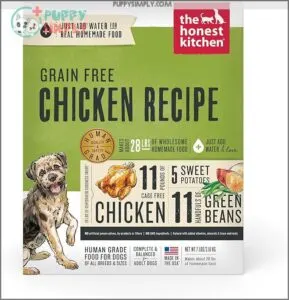
Taste of the Wild High Prairie Beef Recipe delivers 32.2% protein from water buffalo, lamb meal, and roasted bison—that’s serious muscle-building power for your small dog. You’re feeding 3,656 kcal/kg through a grain-free formula using sweet potatoes and peas instead of wheat or corn, plus 80 million probiotics per pound for gut health.
Consumer feedback shows 4.5-star ratings praising coat quality, though safety concerns persist: Diamond Pet Foods experienced a 2012 Salmonella recall, and the formula contains legumes flagged in the FDA’s DCM investigation involving 1,382 diet-related reports.
Best For: Active adult and senior dogs who need high-protein nutrition and owners willing to pay premium prices for grain-free formulas with probiotics and whole-food ingredients.
- Delivers 32.2% protein from quality sources like water buffalo, lamb meal, and roasted bison, giving active dogs the muscle-building fuel they need
- Includes 80 million live probiotics per pound plus fiber-rich ingredients like chicory root and sweet potatoes to support healthy digestion
- Highly rated at 4.5 stars with thousands of reviews reporting shinier coats and better stool quality
- Diamond Pet Foods has a history including a 2012 Salmonella recall that affected multiple production lots
- Contains peas and legumes linked to the FDA’s ongoing DCM investigation involving over 1,382 diet-related reports
- Costs more than standard kibble and may cause digestive upset in dogs sensitive to legume-heavy recipes
10. Taste of the Wild Angus Beef
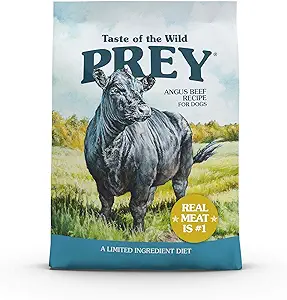
You’ll find just four key ingredients in Taste of the Wild PREY Angus Beef—pasture-raised beef, lentils, tomato pomace, and sunflower oil. This limited-ingredient, grain-free dog food delivers 27% protein with 80 million probiotics per pound, supporting digestive health in small breed dogs.
The formula includes 0.12% taurine and omega fatty acids for cardiac support, though DCM concerns remain relevant since lentils dominate the carbohydrate profile.
At 15% fat and with high-quality ingredients throughout, you’re feeding a complete diet—but veterinary monitoring matters given ongoing FDA investigations into legume-rich pet food formulas.
Best For: Small breed dog owners looking for a limited-ingredient, high-protein formula to address food sensitivities while supporting digestive and skin health.
- Four-ingredient simplicity with real Angus beef as the first ingredient makes it easier to identify and avoid allergens
- 80 million probiotics per pound plus added taurine and omega fatty acids support digestion, heart health, and coat quality
- 27% protein and 15% fat provide solid nutrition for active small dogs without artificial flavors or preservatives
- Grain-free formula with lentils as the main carb raises DCM concerns that require veterinary monitoring, especially in predisposed breeds
- Higher price point compared to conventional dog foods may strain budgets for long-term feeding
- Mixed customer reports on smell and occasional skin reactions suggest it won’t work for every dog
How to Choose The Best Grain-Free Food
Not all grain-free dog foods are created equal, and choosing the right one for your small breed requires more than just scanning the label. You need to know which ingredients matter most, how to spot red flags, and what specific features support your dog’s unique nutritional needs.
Here are five essential factors to keep in mind when selecting the best grain-free formula for your small dog.
Look for High-Quality Protein Sources
When you’re scanning dog food ingredients, prioritize diets where named animal protein sources—chicken, salmon, or lamb—top the label. High-quality animal proteins deliver complete amino acid profiles essential for maintaining lean body mass in small breed dogs.
Research shows that many plant-based formulas require extensive fortification to match animal protein’s nutrient density. Look for specific protein sources, not vague terms like “meat meal,” to guarantee your pup gets digestible, muscle-supporting nutrition.
Check for Small Breed-Specific Formulation
Beyond named proteins, you’ll want confirmation that the formula targets small breed dogs specifically. Check the AAFCO Statement to verify the Life Stage matches your pup’s age, then examine Calorie Density—small-breed-specific formulas generally exceed 3,600 kcal/kg to fuel faster metabolisms without overloading tiny stomachs.
Kibble Size matters too; manufacturer specs should list reduced dimensions that fit mouths under 10 kg comfortably.
Avoid Artificial Additives and Fillers
High-quality ingredients mean skipping what doesn’t serve your dog. Scan labels for synthetic preservatives like BHA or BHT—linked to liver and kidney strain over time—and artificial colors that add zero nutritional value. Low-nutrient fillers such as corn gluten or hulls dilute protein density, while emulsifiers and gelling agents can irritate sensitive guts. Even “natural” grain-free formulas may contain synthetic vitamins, so watch for:
- BHA, BHT, or ethoxyquin in the preservative line
- FD&C dyes or monosodium glutamate among flavorings
- Corn, wheat, soy, or hulls dominating the ingredient deck
Assess Calorie and Kibble Size for Small Dogs
Picking calorie-dense grain-free food means portion control gets trickier. A 10-pound dog needs roughly 350 kilocalories daily—about 0.8 cups if your food delivers 450 kilocalories per cup. Check that kibble diameter sits around 6–10 millimeters: small enough for tiny jaws, large enough to encourage chewing benefits and slow plaque buildup. Match caloric needs to your dog’s lifestyle, not just the bag’s feeding chart.
| Body Weight | Daily Caloric Needs |
|---|---|
| 5 lb (2.3 kg) | ~208 kcal |
| 10 lb (4.5 kg) | ~349 kcal |
| 15 lb (6.8 kg) | ~472 kcal |
| Puppies Most grain-free dog foods tied to heart disease contain high levels of legumes, yet the exact cause remains unclear |
Certain breeds appear more vulnerable. Before choosing a grain-free diet, discuss these considerations with your vet—especially if your small breed has mitral valve disease or breed predisposition.
Grain-Free Vs. Gluten-Free Vs. Wheat-Free
Understanding the difference between grain-free, gluten-free, and wheat-free diets can feel confusing. Grain-free dog food excludes all cereal grains—wheat, corn, rice, barley—while gluten-free diets only remove gluten-containing grains like wheat and barley. Wheat-free simply means no wheat.
Most dogs don’t actually have grain sensitivities or allergies; true gluten issues remain rare, despite consumer perception suggesting otherwise.
Monitoring for Food Allergies and Sensitivities
Even with grain-free formulas, food allergies can sneak up on you—beef and chicken trigger more reactions than wheat does. Watch for year-round itching, especially around paws and ears, and track stool consistency weekly.
An eight-week elimination diet correctly identifies 95% of food-allergic dogs, but you’ll need near-perfect compliance. Schedule veterinary follow-up every four to eight weeks to fine-tune your allergy management strategy.
Transitioning Safely to Grain-Free Formulas
Your dog’s gut microbiome won’t flip overnight—rushing a grain-free switch invites diarrhea and metabolic chaos. Follow a structured seven-to-ten-day Gradual Introduction, mixing 25% new dog food for sensitive stomachs with 75% old food initially, then progressing through 50/50 and 75/25 ratios.
- Track Stool Consistency daily—loose stools signal too-fast shifts
- Monitor energy and appetite—lethargy demands Veterinary Consultation
- Consider Taurine Supplementation (500–1000 mg twice daily) when switching small breed dogs to legume-heavy formulas
Pause immediately if Digestive Monitoring reveals persistent vomiting beyond day three.
Frequently Asked Questions (FAQs)
How much dog food should I feed my small dog?
Your small dog’s portion depends on weight and activity level. Most need 1/4 to 1 cup daily, split into two meals. Consult veterinary guidance and adjust for breed metabolism and calorie content.
Should small dogs eat only small-size kibble?
Not necessarily. While small kibble reduces choking hazards and aids easier chewing for small breed dogs, larger kibble may improve dental health by increasing plaque removal through chewing action—consult your veterinarian.
When should I switch my small dog to a senior dog food?
Most small breed dogs should switch to senior dog food between 10 and 12 years of age.
Watch for health indicator signs like joint stiffness or weight changes, and consult your veterinarian for an individual nutritional needs assessment.
Should small dogs eat grain free?
Most small breed dogs don’t need grain-free diets. Veterinarian recommendations emphasize grain-free diet considerations only for confirmed allergies through allergy testing.
Diet rotation and vet consultation help address DCM risk while meeting the nutritional needs of small breed dogs.
What is the point of grain free dog food?
The point of grain-free dog food centers on addressing dietary needs and grain sensitivities through ingredient alternatives.
It offers nutritional benefits like improved digestive health while meeting market demand for food allergy management in dogs.
What foods are healthy for small dogs?
You’ll want to focus on high-quality protein sources like lean meats, safe treats such as blueberries, healthy carbs including sweet potatoes, and small breed-specific formulas that support proper hydration needs and portion control.
How do I know if my dog needs grain free food?
Not every dog needs grain-free food—think of it like discovering lactose intolerance. Watch for persistent itching, recurrent ear infections, chronic diarrhea, or inflamed skin.
Consult your veterinarian for proper elimination diet testing before switching.
Are there age restrictions for grain-free diets in puppies?
Grain-free dog food doesn’t have a minimum age for puppies. You can start at weaning—around four weeks—if the formula meets AAFCO growth standards.
Always consult your veterinarian before choosing any puppy diet.
How much grain-free food should I feed daily?
Your dog’s daily portion depends on their weight, activity levels, and life stage. Most small breed dogs need 40–60 calories per pound. Check your food’s calorie density and adjust for body condition.
Is grain-free food more expensive than regular?
Like choosing organic produce over conventional, grain-free dog food for small breeds generally costs more—averaging $50–$50 per pound versus $85–$20 for grain-inclusive formulas, reflecting premium ingredient costs and specialized production expenses.
Conclusion
What’s the real cost of ignoring what goes into your dog’s bowl? Choosing grain-free dog food for small breeds isn’t about following trends—it’s about matching nutrition to your dog’s specific metabolic needs.
The right formula balances protein density, digestible carbohydrates, and bioavailable nutrients without unnecessary fillers.
Your veterinarian remains your best resource for evaluating whether grain-free aligns with your dog’s health profile, age, and activity level. Feed with intention, not impulse.
- https://www.towardsfnb.com/insights/grain-free-pet-foods-market
- https://www.petmd.com/dog/nutrition/What-Is-AAFCO-and-What-Does-It-Do
- https://pmc.ncbi.nlm.nih.gov/articles/PMC10633431/
- https://www.fda.gov/animal-veterinary/outbreaks-and-advisories/fda-investigation-potential-link-between-certain-diets-and-canine-dilated-cardiomyopathy
- https://www.akc.org/expert-advice/nutrition/dilated-cardiomyopathy-dogs-update/