This site is supported by our readers. We may earn a commission, at no cost to you, if you purchase through links.

Your puppy’s brain operates on a countdown clock—between 3 and 14 weeks of age, their neuroplasticity reaches peak capacity, making every single interaction a permanent imprint on their emotional development. Miss this narrow window, and you’re statistically 60% more likely to face lifelong anxiety disorders, stranger panic, and behavioral problems that derail training for years.
Gradual exposure for puppies isn’t optional enrichment; it’s the difference between a confident, adaptable companion and a dog that trembles at doorbell rings or lunges at strangers.
The good news? You don’t need expensive trainers or complicated protocols—just strategic, bite-sized exposures paired with positive reinforcement during those critical early weeks. What you do right now shapes whether your puppy views the world as fascinating or terrifying.
Table Of Contents
- Key Takeaways
- Why Gradual Exposure is Essential for Puppies
- Understanding The Socialization Window
- Preparing for Safe Puppy Socialization
- Step-by-Step Guide to Gradual Exposure
- Recognizing and Managing Puppy Stress
- Using Positive Reinforcement in Exposure
- Socializing Puppies in Public Spaces
- Preventing and Addressing Setbacks
- Long-Term Benefits of Gradual Exposure
- Frequently Asked Questions (FAQs)
- Conclusion
Key Takeaways
- Your puppy’s brain has a non-negotiable 3-to-14-week socialization window when neuroplasticity peaks—miss it and you’re 60% more likely to face lifelong anxiety, aggression, and behavioral problems that no amount of later training can fully reverse.
- Gradual exposure isn’t about expensive trainers or complex protocols; it’s strategic, bite-sized introductions to sights, sounds, surfaces, and people paired with immediate positive reinforcement during those critical early weeks when your puppy’s brain accepts novelty without triggering fear responses.
- You must recognize stress signals like lip licking, tucked tails, and whale eye immediately—pushing past your puppy’s comfort threshold during fear periods (8-11 weeks and 6-14 months) can hardwire anxiety instead of confidence, so dial back intensity the moment distress appears.
- The payoff is measurable: properly socialized puppies show 60% fewer behavior problems across their lifetime, including reduced fear-based aggression, stronger adaptability to new environments, and enhanced owner-dog trust that lasts 10-15 years.
Why Gradual Exposure is Essential for Puppies
Your puppy’s brain is wired differently than an adult dog’s—and that creates a narrow window of opportunity you can’t afford to miss. Between 3 and 14 weeks of age, your puppy’s nervous system is primed to accept new experiences without triggering fear responses; rush this process or skip it entirely, and you’re setting up your dog for a lifetime of anxiety and behavioral struggles.
During this brief but crucial phase, strategic socialization techniques can shape whether your dog becomes confident and well-adjusted or struggles with lifelong behavioral issues.
Here’s what you need to understand about why gradual exposure isn’t optional—it’s essential.
The Critical Socialization Period
Your puppy’s brain development hinges on a narrow window—roughly 3 to 14 weeks—when neuroplasticity effects are at their peak. This Critical Socialization Window is when early exposure through positive reinforcement and socialization techniques shapes canine emotional intelligence for life.
During these formative weeks, socializing young puppies safely means balancing new experiences with their developing immune systems and avoiding overwhelming stimuli.
During this Fear Imprint Period, Social Learning Theory tells us puppies absorb new experiences without fear; miss it, and you’re playing catch-up forever. Understanding the importance of critical periods of development can help guide effective and timely socialization practices.
Effects of Missed Early Exposure
Skip early exposure and you’re opening the door to lifelong anxiety disorders and behavioral issues. Dogs that miss the Critical Socialization Window often show fear development rooted in social isolation—stranger panic, touch sensitivity, noise phobia.
Early intervention through structured juvenile puppy social behavior training prevents these fear-based patterns from becoming permanent neurological responses.
Fear prevention through gradual exposure training during puppy socialization isn’t optional; it’s your only shot to dodge the lifetime consequences that derail both training and your dog’s quality of life.
For more insight into the importance of addressing fear and anxiety impact, read about how early socialization shapes long-term behavior.
Benefits for Long-Term Behavior
The payoff is measurable—Fear Prevention through Puppy Socialization cuts behavior problems by over 60 percent across your dog’s life. Here’s what Gradual Exposure Training delivers:
- Fear Reduction and Behavioral Resilience: Lower stress hormones at the vet; faster bounce-back from sudden noises; minimal panic during routine care.
- Social Competence and Confidence Building: Smoother dog-park visits; calmer public outings; genuine problem-solving skills in new situations.
- Emotional Stability through Positive Reinforcement and Social Learning: Fewer anxiety disorders; better adaptability to schedule changes; stronger owner-dog trust for life.
Understanding The Socialization Window

Your puppy’s brain isn’t a blank slate—it’s a ticking clock. Between 3 and 14 weeks, their nervous system is wired to absorb the world without fear; miss that window, and you’re fighting an uphill battle for the rest of their life.
Your puppy’s brain has a ticking clock—miss the 3-to-14-week socialization window, and you’re fighting fear for life
Here’s what you need to know about timing, brain development, and the stages that determine whether your puppy becomes confident or chronically anxious.
Ideal Age for Gradual Exposure
Your window is tighter than you think. Most puppies enter homes at around 8 weeks—exactly when gradual exposure training must begin.
The socialization period peaks between 6 and 16 weeks, making early exposure critical for fear prevention and behavioral outcomes.
Start daily positive reinforcement sessions immediately; waiting even two weeks shrinks your puppy’s development advantage and compromises long-term social learning success.
Understanding puppy fear period handling helps you time these sessions perfectly, so your puppy gains confidence instead of developing lasting anxieties.
Neurological Changes in Puppies
Understanding your puppy’s brain is non-negotiable. Between 3 and 14 weeks, neuroplasticity peaks—your puppy’s brain forms and strengthens neural pathways based on every single experience.
- Sensory maturation accelerates rapidly: vision, hearing, and coordination all sharpen dramatically between 4 and 6 weeks, making controlled exposure critical.
- Emotional learning circuits wire fast: the amygdala tags experiences as safe or scary, so positive reinforcement now shapes lifelong responses.
- Neural pruning begins early: unused pathways disappear, making consistent, varied social learning essential for behavioral flexibility.
This window won’t wait.
Recognizing Sensitive Development Stages
Most puppies experience their first fear period between 8 and 11 weeks, with the second occurring around 6 to 14 months during adolescence. Both stages require a lighter exposure intensity to ensure healthy development.
| Age Range | Fear Period Signs | Emotional Overload Behavioral Cues |
|---|---|---|
| 8–11 weeks | Sudden startle at sounds, hesitating at doorways, hiding behind legs | Whale eye, tail tucking, refusing treats |
| 6–14 months | Barking at familiar objects, lunging at strangers, trying to escape | Pacing, excessive whining, stress panting |
| Both stages | Freezing instead of investigating, backing away from new items | Lip licking, yawning, turning head away |
Recognize these Puppy Development markers now—they dictate when to pause Gradual Exposure Training and when to push forward during your Socialization Period using Positive Reinforcement. Missing Sensitive Stages creates long-term anxiety; reading Puppy Socialization cues prevents it.
Early intervention matters most when fear-driven behaviors surface, which is why addressing dog training and aggression issues before they solidify saves months of rehabilitation work.
Preparing for Safe Puppy Socialization
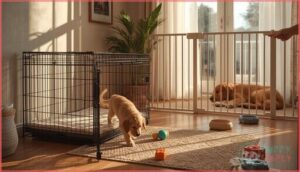
Before you step out the door with your puppy, you need to get your home base locked down first. The right setup—safe spaces, trustworthy people, and a few key tools—makes all the difference between building confidence and accidentally overwhelming your pup.
Here’s exactly what you need to create a solid foundation for safe, effective socialization.
Setting Up a Controlled Environment
Your home is your puppy’s launch pad—and proper Environment Design makes all the difference. Set up a quiet, enclosed space with controlled Lighting Systems (neutral daylight spectrum), solid Airflow Control via HEPA filtration, and non-porous surfaces for Contamination Prevention.
These Safety Protocols create the ideal Controlled Environment for Gradual Exposure Training, supporting effective Puppy Socialization through deliberate Environmental Enrichment and proven Socialization Techniques.
Choosing Safe People and Animals
Who you bring into your puppy’s world matters—Safe Interactions demand Gentle Handlers who move slowly and speak softly. Choose calm, well-socialized adult dogs for Animal Selection, avoiding aggressive or fearful animals entirely. Supervise every meetup in Calm Environments; pair each introduction with treats to build Positive Associations.
This deliberate approach to Puppy Socialization through proven Socialization Techniques and Gradual Exposure Training ensures your Socialization Methods create confidence, not fear.
Essential Puppy Gear for Exposure
The right tools transform chaos into confidence. Invest in well-fitted Puppy Harnesses with Y-shaped front clips to protect delicate necks during Leash Training; add lightweight six-foot leads for exploration.
Keep Treat Pouches clipped and ready to reinforce Positive Associations. Stock Calming Aids like snuffle mats and lick mats for post-outing decompression.
Quality Safety Gear fosters effective Puppy Socialization, Gradual Exposure Techniques, and healthy Puppy Development through proven Socialization Techniques.
Step-by-Step Guide to Gradual Exposure
You can’t just toss your puppy into the deep end and hope they learn to swim—gradual exposure is a deliberate, step-by-step process that builds confidence without triggering fear. The key is starting small and layering complexity as your puppy shows you they’re ready for more.
Here’s exactly how to introduce new experiences in a way that sticks.
Introducing New Sights and Sounds

Visual stimulation and auditory training form the foundation of sensory development during the socialization period. Start calm exposure with high-contrast toys—reds and yellows—paired with soft chimes at low volume. Early exposure to everyday sounds like running water builds familiarity.
Keep sessions brief; 3–5 minutes of environmental enrichment using these gradual exposure techniques teaches your pup that new sights and sounds mean good things ahead.
Gradual Surface and Texture Exposure

After your pup feels calm with new sights and sounds, surface introduction becomes the next critical layer of environmental enrichment.
Texture variety—grass, gravel, tile—teaches confidence through gradual progression during the socialization period. Your puppy’s paw sensitivity means short sessions (5–10 minutes) prevent overwhelm.
Pair each new surface with treats using desensitization and these socialization techniques, building trust one step at a time.
Building Up Complexity Over Time

Once your puppy navigates different surfaces comfortably, layered learning begins—progressive scaling through environmental adaptation and social complexity.
Building behavioral resilience means:
- Adding elements gradually so puppy socialization stays positive
- Tracking each session’s intensity to prevent overwhelm
- Combining socialization techniques with gradual introductions
- Celebrating milestones during the socialization period
- Using positive reinforcement as challenges grow
Small steps create confident dogs.
Recognizing and Managing Puppy Stress

Your puppy’s body language is talking—and if you miss the signals, you risk pushing them past their comfort zone into genuine fear.
Stress isn’t always dramatic; sometimes it’s as subtle as a yawn or a quick lip lick that tells you they’ve had enough.
Here’s what to watch for, how to respond when your puppy gets overwhelmed, and exactly when to dial things back.
Common Stress Signals in Puppies
Recognizing distress is your foundation for successful puppy socialization. Watch for dilated pupils, ears pressed back, or a tucked tail—these fear responses demand immediate attention.
Lip licking, yawning outside sleep, and stiff body posture signal puppy anxiety you can’t ignore.
Behavioral cues like pacing, trembling, or avoidance behaviors tell you to dial back the intensity before stress derails canine behavioral development and healthy puppy behavior and development.
Responding to Overstimulation
When overstimulation signs appear, act immediately—remove your puppy from the trigger and guide them to a designated quiet time zone with soft lighting and minimal noise. Use calming techniques like gentle massage or slow rhythmic petting to reset their nervous system.
Recovery methods work best when paired with familiar scents and toys; wait several minutes before reintroducing any stimuli to prevent escalating dog anxiety treatment needs.
Adjusting Exposure Intensity
Fine-tune your exposure techniques by watching body language closely—when your puppy freezes or tucks their tail, increase distance from the trigger immediately; systematic desensitization works through gradual introductions at levels your pup can handle.
Puppy stress signals guide effective socialization methods; reduce duration, simplify the environment, or add calming strategies like high-value treats to prevent fear and support habituation through proper exposure therapy.
Using Positive Reinforcement in Exposure

Positive reinforcement isn’t just a nice-to-have—it’s the foundation that transforms your puppy’s new experiences from confusing to confidence-building. When you pair unfamiliar sights, sounds, and situations with something your puppy already loves, you’re literally rewiring their brain to associate novelty with good things.
Here’s how to use treats, timing, and calm encouragement to make every exposure session count.
Pairing New Experiences With Treats
Food rewards become your secret weapon during gradual introductions—high-value treats like cheese or chicken transform scary moments into opportunities. This positive reinforcement builds powerful associations through exposure therapy.
- Feed treats as your puppy notices new sights; treat selection matters—pea-sized soft bites keep focus sharp
- Pair every unfamiliar sound with immediate food rewards, creating calming techniques that override worry
- Use strong-smelling treats to draw puppies toward new objects during socialization techniques sessions
When treats appear, fear disappears.
Timing Rewards for Best Results
Your window of opportunity closes fast—deliver rewards within 2 seconds of the desired behavior to lock in positive reinforcement. This reward timing precision strengthens motivation techniques and accelerates puppy socialization and development.
Reward consistency matters; delayed treats confuse which action earned the prize during gradual introductions. Training schedules built on immediate reinforcement create confident responses across all socialization techniques.
Encouraging Calm and Confident Behavior
Calm behavior doesn’t happen by accident—you shape it through deliberate positive reinforcement and gentle handling during every exposure session. Building confidence in dogs requires you to recognize and reward emotional support moments that strengthen canine behavioral development.
Here are key strategies to achieve this:
- Praise immediately when your puppy maintains a loose body and relaxed tail in calm environments.
- Pair treats with confident eye contact to reinforce socialization methods and techniques.
- Use steady vocal tones to signal safety during gradual exposure to new stimuli.
- Reset to familiar behaviors before introducing complexity in puppy socialization and development.
- Track progress to fine-tune confidence building strategies across all sessions.
Socializing Puppies in Public Spaces

The real world doesn’t wait for your puppy to be ready—but you can control how and when they meet it. Public spaces offer invaluable socialization opportunities, yet they also carry risks if you rush the process or choose environments beyond your puppy’s current comfort level.
Here’s how to strategically introduce your puppy to the wider world without overwhelming their developing nervous system.
Choosing Low-Distraction Locations
Picking the right spot can make or break your puppy socialization sessions—start where distractions won’t sabotage progress. Quiet Streets and Low Traffic neighborhoods let your pup focus on you instead of dodging chaos. Calm Spaces like cul-de-sacs, off-peak Park Safety zones, or controlled Home Environments during mid-morning offer low-distraction environments that support safe exposure and gradual introductions during the critical socialization period.
| Location Type | Best Times & Key Benefits |
|---|---|
| Quiet residential streets | Mid-morning weekdays; predictable foot traffic, grass strips for quick breaks |
| Small community parks | Early mornings or midweek; visible dogs at distance, multiple exit paths |
| Private fenced yards | Anytime; fully controlled distractions, familiar scents build confidence |
| Dog-friendly stores | Weekday mornings; mild indoor smells, wide aisles reduce cart pressure |
| Apartment courtyards | Off-peak hours; restricted access limits strangers, low vehicle noise |
Gradually Increasing Environmental Challenges
Once your puppy manages quiet spots, it’s time to turn up the dial on Challenge Progression without triggering Fear Prevention alarms. Environmental Adaptation builds Social Confidence when you layer one new factor at a time during the socialization period.
- Add moderate noise (traffic recordings or busier sidewalks) while keeping distance and crowd size steady.
- Introduce faster motion (joggers, skateboards) after your pup masters slow-moving pedestrians through gradual introductions.
- Combine mild challenges (light crowds plus new surfaces) only after each element succeeds alone—Sensory Exposure stacked correctly creates resilient new environments mastery.
Ensuring Safety During Outings
Pavement Safety and Weather Precautions matter as much as the exposure itself. Test asphalt with your hand—if it’s too hot to hold for five seconds, skip the walk; burns happen fast when air hits 75–85°F. Below 20°F, limit outings to quick potty breaks to avoid frostbite.
Use a well-fitted Y-shaped leash for Leash Handling, keep your pup on the inside edge for Traffic Awareness, and add reflective gear for Nighttime Visibility during early-morning or evening sessions.
Preventing and Addressing Setbacks

Even with the best planning, your puppy will have tough moments—and that’s completely normal. The key isn’t flawlessness; it’s knowing how to recognize when things aren’t working and what to do next.
Here’s your action plan for handling setbacks without derailing your puppy’s progress.
What to Do if Your Puppy Shows Fear
Fear response management starts the moment you spot trembling, tucked tails, or frozen postures—these are your puppy’s red flags demanding immediate action. Calming techniques and fear trigger identification prevent anxiety from snowballing into chronic behavioral problems.
- Stop the exposure instantly and create distance from whatever triggered the fear response
- Speak in a calm, steady voice; avoid sudden movements that escalate puppy anxiety solutions
- Offer high-value treats only if your puppy accepts them—forced interaction worsens fear and anxiety in dogs
When to Pause or Slow Down Exposure
Timing is everything—you can’t rush fear response management or ignore puppy anxiety when stress signal recognition reveals your pup is struggling. Exposure thresholds vary; if your puppy shows fearful behavior across multiple sessions, immediately dial back the socialization pace and repeat easier setups until relaxed body language returns.
Proper desensitization means accepting plateaus; habituation strengthens when you honor your puppy’s emotional limits and rebuild socialization skills gradually.
Seeking Professional Help if Needed
Sometimes plateaus turn into entrenched fears—that’s when professional guidance becomes non-negotiable. Seek expert consultation if puppy anxiety persists beyond two weeks despite adjusted exposure, or if aggression emerges during socialization attempts.
A certified animal behavior specialist offers:
- Tailored behavioral therapy plans rooted in behavioral psychology
- Crisis intervention for severe fear or reactivity patterns
- Hands-on dog behavior and training strategies for behavior modification
Don’t wait until problems escalate.
Long-Term Benefits of Gradual Exposure
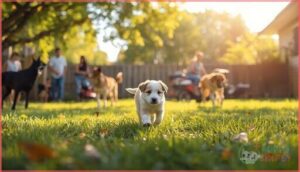
The time and effort you invest in gradual exposure training doesn’t just help your puppy today—it shapes the dog they’ll become for the next 10 to 15 years. You’re building a foundation that prevents serious behavioral problems before they ever take root.
Let’s look at three major long-term wins you can expect when you get early socialization right.
Reduced Risk of Fear and Aggression
Well-socialized puppies aren’t just friendlier—they’re measurably less likely to develop fear-based aggression or chronic anxiety.
When you pair gradual exposure with calm behavior reinforcement during puppy socialization, you’re actively rewiring fear conditioning pathways before they harden.
This stress management foundation directly lowers fear and anxiety triggers, giving your dog the aggression reduction and emotional stability that last a lifetime.
Improved Adaptability and Confidence
Puppy resilience grows stronger when gradual socialization skills teach your dog to handle novelty without shutting down. Early socialization builds the emotional balance and adaptability training that separates confident dogs from anxious ones:
- Puppies generalize calm behavior across multiple rooms and settings after repeated exposure.
- Exposure to varied surfaces teaches confident gait adjustment and balance.
- Combining simple commands with new experiences sharpens memory and quick retrieval under pressure.
This confidence building creates dogs who thrive—not just survive—in unpredictable situations.
Enhanced Owner-Puppy Bond
Trust deepens every time your puppy looks to you for guidance in a new situation. Gradual socialization creates countless bonding techniques—from shared positive experiences at quiet cafés to calm reassurance during mild stress.
This emotional support builds puppy trust and canine confidence simultaneously. Dogs who receive consistent relationship building through puppy socialization develop stronger attachment, better responsiveness to dog training and behavior cues, and lifelong loyalty.
Frequently Asked Questions (FAQs)
Can gradual exposure help with crate training anxiety?
Is your puppy panicking at the sight of their crate? Gradual exposure techniques paired with positive reinforcement dramatically reduce crate anxiety by building puppy confidence through small, manageable steps that prevent overwhelming stress.
How does breed temperament affect exposure timelines?
Breed temperament directly shapes how fast you progress—fearful breeds need slower timelines; confident, social breeds advance quicker.
High-drive pups require shorter sessions; calmer temperaments tolerate longer intervals between exposure steps.
Should siblings be socialized together or separately?
Two heads are better than one—siblings can socialize together to build cooperative play and social learning, yet individual sessions sharpen focus, prevent over-reliance, and tailor puppy development to each temperament.
What role does sleep play in processing exposures?
Adequate sleep stabilizes memories and recalibrates fear networks. Your dog’s brain consolidates new experiences overnight, strengthening neural pathways that label unfamiliar stimuli as safe while reducing stress hormone sensitivity for steadier responses.
How do you socialize puppies to children safely?
Children spark joy—but they can also overwhelm young dogs if introductions aren’t handled right.
Start with calm, supervised Child Interaction in Gentle Handling sessions; use treats to reward Puppy Boundaries and build Safe Encounters gradually.
Conclusion
Exposure is everything—and time won’t wait for you to get comfortable. Gradual exposure for puppies transforms genetic potential into real-world confidence, one controlled interaction at a time.
You’ve got the roadmap; now commit to daily, intentional socialization before that 14-week window slams shut. Your consistency today determines whether your dog navigates life with ease or spends years reacting to shadows.
Start small, stay strategic, and watch your puppy’s world expand safely.
- https://www.4pawsinnandhotel.com/post/the-importance-of-early-socialization-for-puppies
- https://animalsfirstvethospital.com/2025/10/21/puppy-socialization-tips-haddon-township-nj/
- https://vcahospitals.com/know-your-pet/introduction-to-desensitization-and-counterconditioning
- https://www.preventivevet.com/puppy-socialization/sounds
- https://pmc.ncbi.nlm.nih.gov/articles/PMC10705068/