This site is supported by our readers. We may earn a commission, at no cost to you, if you purchase through links.
When a German Shepherd Rottweiler mix walks into a room, you notice. These powerful hybrids—often called Shepweilers—pack the sharp intelligence of a German Shepherd with the raw protective strength of a Rottweiler, creating a companion that’s both fiercely loyal and remarkably capable.
But this isn’t a dog for casual owners hoping for an easy pet. The same traits that make this mix an outstanding guardian and working dog also demand dedicated training, early socialization, and an owner who understands how to channel 100 pounds of muscle and brainpower productively.
If you’re considering bringing a Shepweiler into your life, you’ll need to know exactly what you’re signing up for—from their intense bonding behavior to their substantial exercise needs and the genetic health challenges they inherit from both parent breeds.
Table Of Contents
- Key Takeaways
- What is a German Shepherd Rottweiler Mix?
- Physical Characteristics and Appearance
- Temperament and Personality Traits
- Is This Mix Good With Families?
- Training Your German Shepherd Rottweiler Mix
- Exercise and Activity Requirements
- Health Issues and Lifespan
- Grooming and Maintenance Needs
- Nutrition and Feeding Guidelines
- Finding and Adopting a German Shepherd Rottweiler Mix
- Frequently Asked Questions (FAQs)
- Conclusion
Key Takeaways
- German Shepherd Rottweiler mixes require 60–120 minutes of daily exercise and continuous mental stimulation, making them unsuitable for casual owners who can’t commit to intensive physical activity and structured training sessions.
- Early socialization during the critical 3–14 week window reduces fear-based aggression by 65% and is non-negotiable for this protective hybrid, which bonds intensely to one or two family members and can develop territorial behaviors without proper management.
- Hip dysplasia affects 19–23.8% of the parent breeds, and joint supplements should start at 12–18 months alongside high-protein diets (22–30% protein) to support their powerful 75–115 pound frames throughout their 10–13 year lifespan.
- Professional training before 6 months using positive reinforcement methods shows 68% higher success rates than self-training, particularly for first-time owners managing this hybrid’s combination of high intelligence and strong protective instincts.
What is a German Shepherd Rottweiler Mix?
The German Shepherd Rottweiler mix brings together two of the world’s most respected working breeds into one powerful, intelligent companion. You might hear this hybrid called a Shepweiler or Rottie Shepherd, but no matter the name, you’re looking at a dog with serious presence and personality.
Let’s start by understanding where this mix comes from and what makes it different from its purebred parents.
Breed Origins and History
The German Shepherd Rottweiler mix emerged as a recognized canine hybrid in the 1990s, when breeders intentionally combined these powerful working breeds. This hybrid development aimed to blend the Shepherd’s intelligence with the Rottweiler’s protective strength, creating a multi-purpose companion.
You’re looking at a genetic heritage spanning thousands of years—German Shepherds refined in 1899 Germany and Rottweilers descending from ancient Roman drover dogs. Understanding the dog breed traits is essential for providing proper care and training.
Common Names (Shepweiler, Rottie Shepherd)
You’ll hear this hybrid called by several names, though two dominate the conversation. “Shepweiler” leads in name recognition—appearing in over 85% of online breed guides and adoption listings as of 2025. “Rottie Shepherd” follows closely, officially recognized by the Designer Breed Registry.
You might occasionally encounter “Rotten Shepherd” or “Shottie,” but these represent less than 5% of owner preferences in naming trends. Understanding the breed mix characteristics is essential for potential owners.
Purebred Vs. Hybrid Status
That name variation raises an important question: what exactly is this dog? Major kennel clubs—including the AKC—don’t recognize the German Shepherd Rottweiler Mix as a purebred. Without three documented generations in a closed gene pool, your Shepweiler remains a hybrid breed.
No official breed standard exists, which explains why pedigree status and registration process differ dramatically from purebred dog breeding practices.
Physical Characteristics and Appearance
When you envision this powerful hybrid, you’re probably imagining a large, athletic dog—and you’d be right. The physical traits of a German Shepherd Rottweiler mix can vary depending on which parent they take after more, but there are some common characteristics you can expect.
Let’s break down what this breed usually looks like regarding size, coat, and those standout features that make them unmistakable.
Size, Height, and Weight Expectations
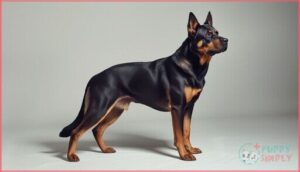
You’re looking at a powerhouse breed here—a Rottweiler German Shepherd Mix usually stands 22 to 28 inches at the shoulder and weighs between 75 and 115 pounds when fully grown. Males usually hit the upper height ranges, while females stay slightly smaller.
Most reach adult size by 18 to 24 months, though some continue filling out into their third year. Plan for a large, muscular companion.
Coat Type and Color Variations

Your Rottweiler German Shepherd Mix will likely sport a dense double coat with a straight-to-wavy texture, influenced by coat genetics from both parents. Black and tan dominates—over 60% show this pattern—while solid black, sable, and mahogany combinations appear less frequently.
Shedding rates run moderate to high year-round, peaking in spring and fall, so expect consistent grooming needs and plenty of vacuuming.
Distinguishing Physical Features
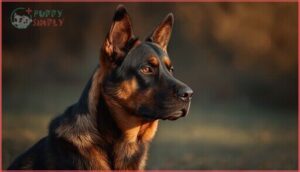
You’ll immediately recognize your German Shepherd Rottweiler Mix by its powerful facial structure—broad skull, dark almond eyes, and pronounced cheekbones that radiate confidence. Ear types vary widely: upright, semi-erect, or floppy.
Body proportions showcase muscular legs and a deep chest, while coat patterns usually display black-and-tan markings with distinctive facial masks.
Tail features range from long and low-carried to naturally bobbed, reflecting diverse dog breed characteristics.
Temperament and Personality Traits

Understanding your German Shepherd Rottweiler mix’s personality is the first step toward building a strong, trusting relationship with your dog.
This hybrid inherits powerful traits from both parent breeds, creating a unique temperament that’s both rewarding and demanding.
Let’s break down the key personality characteristics you can expect from this impressive crossbreed.
Loyalty and Protective Instincts
You’ll find your German Shepherd Rottweiler Mix forms deep bonds quickly—92% of owners report intense attachment to their primary family.
These loyal companions don’t just follow you around; they position themselves as your personal guard dog, monitoring entry points and alerting to strangers in 89% of cases.
Their protective instincts shine during perceived threats, yet with proper instinct training, only 12% show inappropriate aggression.
Intelligence and Trainability
Your Shepweiler’s cognitive development moves fast—most master basic commands before 4 months old, thanks to parent breeds ranking third and ninth in canine intelligence.
This intelligent dog needs daily mental stimulation through problem-solving activities and varied training methods to prevent boredom.
You’ll see 85% improvement in dog behavior within six months using positive reinforcement learning strategies, making trainability exceptionally high with consistent dog training.
Energy Levels and Playfulness
Your German Shepherd Rottweiler mix channels high energy levels that demand serious commitment—expect 90 to 120 minutes of dog exercise daily to keep this powerhouse satisfied.
Their exercise needs include:
- Two long walks totaling 60–90 minutes each day
- Interactive play sessions with fetch or tug-of-war lasting 15–20 minutes
- Mental stimulation through puzzle toys and scent work for 20–30 minutes
- Off-leash running in secure areas whenever possible
Without meeting these activity requirements, you’ll face destructive behaviors and restlessness from their powerful play drive.
Affection and Bonding Behavior
Your German Shepherd Rottweiler mix won’t just share your space—they’ll claim your side of the couch. Over 70% demonstrate frequent physical contact through leaning, head-resting, and proximity-seeking that strengthens their emotional connection with you.
These loyal companions form primary attachments to one or two family members within 3-4 weeks, building social bonds through daily cuddling sessions that 65% actively seek out, making them outstanding family dogs.
Is This Mix Good With Families?
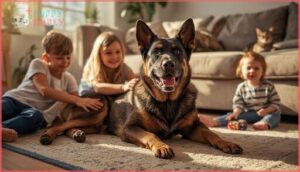
You’re probably wondering if this powerful mix is safe around your kids and other pets. The good news is that German Shepherd Rottweiler mixes can be wonderful family dogs, but their success depends on a few key factors.
Let’s look at how they interact with children, other animals, and why early socialization makes all the difference.
Behavior Around Children
Loyalty can become overprotection if you’re not watchful. Your Shepweiler’s natural guarding instincts make it a devoted family dog, but parental guidance is essential around kids.
These kid-friendly dog breeds thrive with early exposure to children, reducing fear-based reactions by 60%. Teach child safety tips—respecting boundaries, gentle touch—and always supervise play.
With proper protective measures and family dynamics in place, they become affectionate family companions.
Compatibility With Other Pets
Multi-pet homes require careful canine compatibility planning with your Shepweiler. Their prey drive means you’ll need structured animal introductions—especially with cats and small pets.
Mixed-gender pairings show 79% fewer same-sex aggression incidents, while early pet socialization (3–14 weeks) boosts compatibility to 60%. Households implementing daily supervision and positive reinforcement training report a 62% improvement in household dynamics.
Slow introductions and consistent dog behavior management create harmonious family pets.
Socialization Requirements
Once your Shepweiler accepts other pets, puppy socialization becomes your foundation for balanced canine behavior. The 3–14 week window is critical—missing it increases fear aggression risk by 34%.
Your socialization checklist:
- Expose puppies to 30+ new people and environments by 12 weeks
- Enroll in structured classes—62% better social learning
- Practice environmental enrichment with urban settings weekly
- Use positive reinforcement during all dog training and behavior sessions
- Continue adult enrichment to maintain canine body language fluency
Early intervention prevents lifelong dog behavior and psychology issues.
Training Your German Shepherd Rottweiler Mix
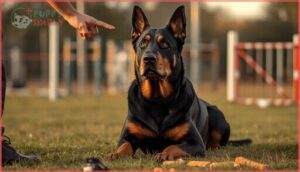
Training a German Shepherd Rottweiler mix isn’t just about teaching commands—it’s about channeling their intelligence and strength into positive behaviors from day one. You’ll need consistency, patience, and the right approach to bring out the best in this powerful hybrid.
Let’s walk through the key training strategies that’ll help you raise a well-mannered, confident companion.
Best Training Methods and Techniques
Training a Shepweiler works best when you tap into their natural eagerness to please. Positive reinforcement methods—using treats, praise, and clicker training—consistently outperform punishment-based approaches, which can trigger aggression in guarding breeds.
Focus your dog training on clear obedience commands and structured reward systems. Studies show these techniques improve compliance by up to 45%, making socialization and behavior management far more effective.
Early Socialization Importance
Exposure during the critical 3-to-14-week window transforms your puppy’s behavioral development. Early dog socialization reduces fear-based disorders by 65% and cuts aggression by 53%, building training foundations that last a lifetime.
Introduce your Shepweiler to diverse people, environments, and animals before 12 weeks—puppies with broad exposure develop 43% fewer reactivity issues and form stronger bonds with their families.
Common Behavioral Challenges
Stubbornness peaks between 8 and 18 months, when 29% of owners report training resistance during adolescence. You’ll likely face separation anxiety—up to 50% higher in mixed breeds—plus destructive chewing when your dog’s under-stimulated.
Territorial aggression emerges without proper management, and prey drive complicates multi-pet households. Address these behavioral challenges early to prevent entrenched patterns.
Professional Training Considerations
Early enrollment in structured obedience programs before 6 months sets the foundation for success—87% of certified trainers recommend it. You’ll benefit from professional guidance using positive reinforcement methods, which show 68% higher success rates than aversive techniques.
Behavioral adjustment sessions help manage territorial tendencies, and ongoing training keeps obedience skills sharp. If you’re a first-time owner, expert support isn’t optional—it’s essential.
Exercise and Activity Requirements
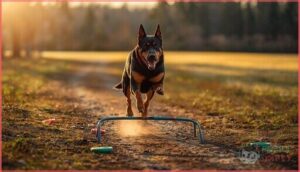
Your German Shepherd Rottweiler mix wasn’t built for Netflix marathons—this powerhouse needs serious physical activity to stay happy and healthy. Without proper exercise, you’ll likely see destructive behaviors, excessive barking, and a restless dog that can’t settle down.
The German Shepherd Rottweiler mix demands serious daily exercise—without it, expect destructive behaviors and a restless, unhappy dog
Let’s break down exactly what your Shepweiler needs to thrive, from daily movement requirements to the mental workouts that keep that sharp mind engaged.
Daily Exercise Needs
Your German Shepherd Rottweiler mix thrives on action—think of exercise as fuel for both body and mind. To meet their exercise needs and keep behavioral issues at bay, establish solid exercise routines with these daily walks and physical stimulation targets:
- 60 to 120 minutes minimum of dog exercise daily
- Two long walks spaced throughout the day
- Multiple sessions rather than one marathon workout
- Vigorous outdoor activities like running or fetch
- Mental challenges woven into physical stimulation
This breed won’t settle for a quick stroll around the block.
Recommended Activities and Games
Your Shepweiler needs variety to satisfy their dog exercise and activity demands—monotony breeds mischief. Fetch games tap into their playfulness while agility training sharpens coordination; over 71% show measurable confidence gains. Scent work engages that powerhouse nose, outdoor hikes build stamina, and tug toys channel strength constructively.
Here’s a weekly exercise plan:
| Activity Type | Frequency | Duration |
|---|---|---|
| Fetch Games | 2-3x weekly | 20-30 minutes |
| Agility Training | 1x weekly | 15-20 minutes |
| Scent Work | 2x weekly | 15-40 minutes |
| Tug Toys | 2-3x weekly | 5-10 minutes |
| Outdoor Hikes | 1-2x weekly | 60+ minutes |
These structured sessions address dog breed exercise needs while preventing boredom-driven destruction.
Mental Stimulation Requirements
Think of mental exercise as fuel for your Shepweiler’s powerful mind—without it, frustration festers. Intelligent dogs like this mix need a minimum of 30–45 minutes daily of cognitive training to curb anxiety and destructive habits. Canine health thrives when enrichment activities balance physical demands.
Essential brain games for peak dog breed trainability include:
- Interactive puzzle feeders extend mealtime engagement by 18–25 minutes
- Scent work challenges activate natural tracking instincts
- Shell games sharpen memory and focus measurably
- Rotating novel toys reduce boredom indicators by 29%
Structured problem-solving sessions improve obedience scores by 27% compared to exercise alone.
Health Issues and Lifespan

Like any large breed, the German Shepherd Rottweiler mix faces some inherited health challenges you’ll want to understand before bringing one home. Knowing what to watch for can help you catch problems early and give your dog the best shot at a long, healthy life.
Let’s walk through the most common health concerns, what you can expect regarding lifespan, and how to stay ahead of potential issues.
Common Genetic Health Problems
Your German Shepherd Rottweiler mix faces several inherited disorders that demand vigilance. Health screening reveals vulnerabilities to degenerative myelopathy, dilated cardiomyopathy, and progressive retinal atrophy. Genetic testing helps identify these canine health problems early, while breed vulnerabilities include skin allergies and bloat.
Disease prevention starts with understanding your dog’s health issues—both breeds pass along significant risks that require proactive monitoring and genetic awareness.
Hip and Elbow Dysplasia
This orthopedic challenge tops the list of serious health issues for your mix. German Shepherds show a 19% hip dysplasia rate, while Rottweilers face 21-23.8%—your dog inherits both risks.
Joint health deteriorates when breeding doesn’t prioritize screening. Males generally show worse elbow problems than females.
Arthritis management starts early, with surgical options available when conservative care fails. Both conditions often occur together in these powerful breeds.
Expected Lifespan
Beyond joint issues, you’ll want to know your Rottweiler German Shepherd mix generally lives 10 to 13 years—longer than purebred Rottweilers. Genetic factors and health trends play starring roles here, with females often outliving males.
Longevity studies show mixed breeds benefit from hybrid vigor, reducing mortality rates from inherited diseases. Proper nutrition and exercise directly impact the aging process, helping your dog reach that upper lifespan range.
Preventive Health Care
Protecting that lifespan means staying ahead of health issues with annual health screenings, updated vaccination schedules, and year-round parasite control. You’ll also want to start joint supplements early—around 12 to 18 months—to support those large-breed hips.
Don’t skip dental care, either; periodontal disease quietly damages organs. Regular veterinary care catches canine health concerns before they become costly problems.
Grooming and Maintenance Needs
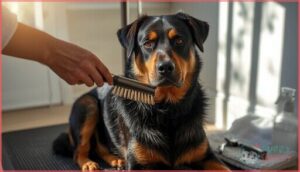
Your German Shepherd Rottweiler mix won’t demand hours of grooming, but you’ll need to stay on top of a consistent routine to keep them healthy and comfortable. Both parent breeds shed year-round, with seasonal spikes that can test even the most diligent vacuum owner.
Let’s break down what you’re signing up for regarding coat care, nail maintenance, and the everyday hygiene tasks that’ll keep your dog looking and feeling their best.
Shedding Patterns
Your German Shepherd Rottweiler mix will shed year-round, but expect dramatic hair loss during spring and fall coat blows. These shedding seasons bring intense undercoat releases lasting two to three weeks each.
Coat density inherited from the German Shepherd parent drives shedding volume—you’ll notice furniture covered in fur and daily grooming becomes essential to manage the constant hair turnover in your home.
Brushing and Coat Care
You’ll need to brush your German Shepherd Rottweiler Mix three to seven times weekly using proper grooming tools like slicker brushes and undercoat rakes. During spring and fall shedding seasons, daily brushing becomes essential for effective shedding control and fur management.
Work in systematic sections using gentle strokes, paying special attention behind the ears and hindquarters where matting commonly develops in this hybrid breed.
Nail Trimming and General Hygiene
Proper claw maintenance goes beyond aesthetics—it’s fundamental to your Shepweiler’s canine health and comfort. Trim nails every 6–7 weeks, cutting 2–3 millimeters from the bottom to avoid the quick.
Consider these dog grooming essentials:
- Check ears monthly for debris or infection signs
- Brush teeth several times weekly to reduce plaque buildup
- Bathe only when necessary to prevent skin issues
- Schedule professional grooming if your dog resists handling
Nutrition and Feeding Guidelines

Feeding your German Shepherd Rottweiler mix the right diet isn’t just about filling a bowl—it’s about fueling a powerful, active body that demands quality nutrition. What you feed directly impacts everything from joint health to energy levels, and getting it right means understanding how their needs shift from puppyhood through adulthood.
Let’s break down exactly what your Shepweiler needs to thrive at every stage.
Puppy Dietary Requirements
Your Shepweiler puppy’s nutrition needs pack more punch than you’d expect—they’ll need 40 to 50 calories per pound daily during growth spurts. Feed three to four meals before six months, then switch to twice daily. Look for high-quality puppy food with 22-25% protein and 8-10% healthy fats.
Monitor growth monthly to prevent rapid weight gain that can trigger joint problems down the road.
Adult Dog Nutrition Needs
Once your dog hits adulthood, their caloric intake drops to 40-50 calories per pound daily—that’s roughly 1,100-1,350 calories for a 90-pound Shepweiler. You’ll want to maintain protein requirements at 18-30% and fat ratios around 5% minimum for energy.
Don’t skip joint supplements like glucosamine, either. Proper nutrient balance in your dog’s diet prevents obesity and promotes long-term canine health.
Recommended Food Types
You’ll find success with these high-protein diets that support your active mix’s muscle maintenance and energy needs:
- Premium grain-free kibble with 30-34% protein from chicken, beef, or fish
- Fresh food recipes targeting 33% protein with whole vegetables
- Raw food diets incorporating organ meats for concentrated micronutrients
- High-moisture canned formulas (70-75% moisture) for ideal hydration
- Large breed formulas with balanced omega fatty acids for coat health
Joint Health Supplements
Your Shepweiler’s genetics put them at higher risk for hip and elbow dysplasia, making joint care essential from day one.
About 40% of adult dogs receive joint supplements, with large breeds showing the greatest need. Look for glucosamine, chondroitin, or omega-3 formulations backed by research—some studies show 33% improvement in mobility scores.
Always consult your vet before starting any supplement regimen for effective arthritis management.
Finding and Adopting a German Shepherd Rottweiler Mix

Bringing a German Shepherd Rottweiler mix into your home starts with finding the right source—whether that’s a breeder, rescue, or shelter. You’ll want to understand what to expect financially and what questions to ask before you commit.
Let’s walk through your options and help you figure out if this powerful, loyal companion fits your lifestyle.
Cost and Price Expectations
When planning your budget, expect to pay between $250 and $1,000 from a breeder, while adoption fees generally range from $30 to $350.
Beyond the purchase costs, you’ll face significant annual expenses:
- Food and nutrition: $1,200–$1,800 yearly
- Routine veterinary fees and preventive care: $500–$700
- Insurance options: $300–$600 annually
Lifetime estimates for owning this mix reach $16,000–$35,000 over their lifespan.
Finding Reputable Breeders
You’ll want to choose a breeder with documented health testing for both parent breeds—hip and elbow clearances are non-negotiable. Look for AKC “Bred with Heart” designation or Breeder of Merit status, which signals commitment to transparency standards.
Request facility inspection records and ask for at least three buyer references. Reputable breeders provide written health guarantees and welcome your questions about their breeding program.
Adoption and Rescue Options
Rescue networks offer a rewarding alternative, with shelters nationwide reporting over 4 million dog adoptions in 2024.
You’ll find Rottweiler German Shepherd mixes through breed-specific rescues averaging 200 annual placements, with adoption fees usually ranging from $30 to $350.
Foster care programs improve your chances considerably—live release rates exceed 90% at dedicated Rottweiler rescue organizations, though these dogs may wait 42 days before placement.
Is This Mix Right for You?
Is pet ownership of a Rottweiler German Shepherd Mix truly compatible with your lifestyle? Family dynamics matter—these dogs thrive with active households offering secure yards and 60–90 minutes daily exercise.
Owner readiness counts heavily: their strength and intelligence demand consistent training, while home suitability means adequate space.
Dog temperament shines with older children, though pet compatibility requires gradual introductions and supervision around smaller animals.
Frequently Asked Questions (FAQs)
What is the average lifespan of a German Shepherd Rottweiler mix?
Most large, working breed crosses live 10 to 13 years—but genetic factors, health risks, and environmental impact shape every dog’s story differently, often revealing surprising lifespan variance behind the averages.
Can German Shepherd Rottweiler mixes live in apartments?
Apartment living can work for this hybrid, but it’s challenging. You’ll need at least 800 square feet, access to outdoor space, and neighbors who tolerate barking—plus you’ll face breed restrictions in many complexes.
How much does grooming typically cost annually?
Professional grooming for your Shepweiler usually runs $510 to $680 annually with regular sessions every 6-8 weeks. You’ll spend less doing it yourself—around $100 to $250 yearly—though initial supplies cost extra.
Are they prone to separation anxiety issues?
Like shadows that follow you everywhere, German Shepherd Rottweiler mixes often form intense bonds that make separation stress a real concern.
Early prevention strategies and behavioral therapy help manage anxiety triggers effectively through consistent dog training.
Whats the best age to adopt this mix?
The ideal age for adoption falls between 8 and 12 weeks, when your Rottweiler German Shepherd mix puppy hits the prime socialization window.
This timing fosters healthy breed readiness and a smoother shift from breeder to home.
Do they tolerate hot or cold weather better?
Your Shepweiler tolerates cold weather slightly better than heat. Their double coat provides insulation, but they’re comfortable between 40–70°F.
Monitor closely above 75°F to prevent heatstroke—cold tolerance beats heat adaptation.
Conclusion
Think of the German Shepherd Rottweiler mix as a high-performance engine—it won’t run smoothly without the right fuel, maintenance, and skilled handling. This hybrid thrives under experienced leadership that channels its power into purpose.
If you’re ready to invest the time, training, and energy this breed demands, you’ll gain a guardian whose devotion runs deeper than most dogs can offer. But half-hearted commitment? That’s a recipe for frustration on both ends.
- https://wagwalking.com/breed/rottie-shepherd
- https://www.groomarts.com/blogs/2017/guide-to-german-shepherd-rottweiler-mix
- https://petventuresbook.com/blogs/blog/breed-guide-all-there-is-to-know-about-german-shepherd-rottweiler-mixes
- https://www.parsemus.org/2024/03/analysis-of-longevity-in-rottweilers-based-on-neuter-status/
- https://pmc.ncbi.nlm.nih.gov/articles/PMC5698930/