
This site is supported by our readers. We may earn a commission, at no cost to you, if you purchase through links.

Two working dogs with completely different jobs somehow produced one of the most capable crossbreeds around. The German Shepherd was bred to herd and guard. The Siberian Husky was built to run hundreds of miles through frozen tundra.
Put them together, and you get a dog that’s sharp, athletic, stubborn in the best way, and almost impossible to tire out.
The German Shepherd Husky mix—often called a Shepsky—inherits the best (and most demanding) traits from both sides. Before you fall for those striking eyes and that thick double coat, there’s a lot worth knowing.
Table Of Contents
- Key Takeaways
- What is a German Shepherd Husky Mix?
- Physical Characteristics and Appearance
- Temperament and Personality Traits
- Shepsky Exercise and Activity Needs
- Grooming and Shedding Considerations
- Health Issues and Genetic Risks
- Diet and Nutrition for Shepskies
- Training Tips for German Shepherd Husky Mixes
- Shepskies as Family and Companion Dogs
- Is The German Shepherd Husky Mix Right for You?
- Frequently Asked Questions (FAQs)
- Will a husky protect its owner?
- How rare are Gerberian Shepsky?
- How much should a shepsky eat a day?
- Are German Shepherd and Husky mix good dogs?
- What are the pros and cons of the Shepsky?
- What is a husky and German Shepherd mix called?
- How much does a Shepsky cost?
- How much exercise does a Gerberian Shepsky need?
- What kind of diet suits a Gerberian Shepsky?
- How often should a Gerberian Shepsky be groomed?
- Conclusion
Key Takeaways
- The Shepsky is a high-energy, highly intelligent crossbreed that needs at least two hours of daily exercise and consistent mental stimulation — without it, your furniture pays the price.
- That stunning double coat isn’t just for looks; it sheds heavily year-round and demands brushing three to four times a week, ramping up to daily during seasonal coat blows.
- Hip dysplasia, eye conditions, and bloat are the biggest health risks to screen for, and catching them early through regular vet visits can add years to your dog’s life.
- This breed thrives with experienced, active owners who have space, time, and patience — apartment living and long daily absences are a recipe for a stressed, destructive dog.
What is a German Shepherd Husky Mix?
German Shepherd Husky mix is one of those dogs that turns heads wherever it goes — and for good reason. It brings together two of the most capable, striking breeds in the world.
If you love the idea of a bold, intelligent mix, the Pomeranian Husky mix offers that same striking combination in a more compact, spirited package.
Here’s what you should know right from the start.
Breed Origins and History
The German Shepherd Husky Mix doesn’t have a tidy origin story. Unlike purebreds with centuries of documentation, this hybrid dog emerged from early breeding experiments sometime in the late 1900s, riding a crossbreed popularity surge that swept through North America.
It’s a designer breed — meaning it was intentionally bred, not accidental.
Because of that, historical breed registries like the AKC still don’t recognize it today.
Common Names (Shepsky, Gerberian Shepsky)
This hybrid dog goes by a few names depending on who you ask. Shepsky.
Most people call it a Gerberian Shepsky or Husky Shepherd. These breed nicknames and regional names all refer to the same dog — there’s no trademark or official standard behind any of them.
The German Shepherd Husky Mix label is the most descriptive, but Shepsky is what usually sticks.
Parent Breeds Overview
To really understand your Shepsky, you need to know what’s behind it.
The German Shepherd was bred in 1899 as a working and herding dog — loyal, intense, protective.
The Siberian Husky comes from Chukchi sled-dog roots: built for endurance, friendly with strangers, and stubborn as the Arctic wind.
These two original roles explain almost everything about your Husky German Shepherd’s genetic contributions, temperament, and physical build.
Physical Characteristics and Appearance
One of the first things people notice about a Shepsky is just how striking they look. This mix can pull features from both parent breeds in surprising ways, so no two dogs look exactly alike.
Here’s what you can generally expect regarding size, coat, eyes, and those signature ears.
Size and Weight Range
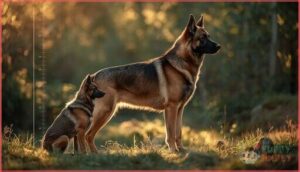
Most Shepskies stand 20 to 26 inches tall and weigh between 45 and 80 pounds — putting them firmly in the medium-to-large category. Sex-based size differences are real: males usually weigh 10 to 15 pounds heavier than females.
Growth timeline-wise, height locks in around 12 months, but muscle fills out through month 24. Parent breed size and diet are the biggest size influencing factors.
Coat Type and Colors
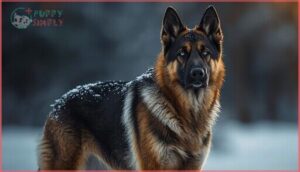
That coat is one of the most striking Breed Characteristics and Traits you’ll notice right away. The German Shepherd Husky Mix carries a true Double Coat Density — a dense undercoat beneath weather-resistant guard hairs — built for real conditions.
Common coat features include:
- Saddle Pattern and Mask Markings for a wolfish look
- Colors ranging from black-tan to white, sable, or gray
- Rare Color Dilution Genes producing blue-gray or liver shades
- A Seasonal Color Shift after shedding that sharpens your Shepsky‘s pattern
Dog Grooming starts with understanding this Husky Mix coat fully.
Eye Color Variations
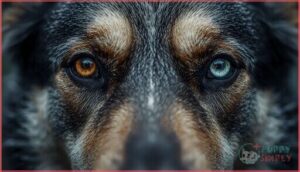
Eyes are where this dog’s genetics really show off.
The German Shepherd Husky Mix can inherit Almond Eye Shades ranging from deep brown to striking blue — or even a Blue Green Mix that stops people mid-stride. Genetic Pigment Factors from both parent breeds drive these variations, and some dogs carry heterochromia, one eye each color.
| Eye Color | Source Breed |
|---|---|
| Brown | German Shepherd |
| Blue | Siberian Husky |
| Green/Hazel | Mixed Genetics |
| Amber | Either Parent |
| Two-Toned | Hybrid Dogs |
Seasonal Eye Changes can subtly shift intensity as puppies mature.
Distinctive Features (Ears, Build)
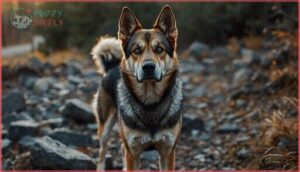
The German Shepherd Husky Mix carries a bold, wolfish frame that turns heads on any trail.
Ears Shape is one of the most telling Breed Characteristics — triangular and upright by around 5 months, thanks to dog genetics from both parent breeds.
The Muscular Frame, deep chest, and head proportions feel purposeful, built for endurance.
Even the Tail Structure and neck length signal strength in these impressive hybrid dogs.
Temperament and Personality Traits
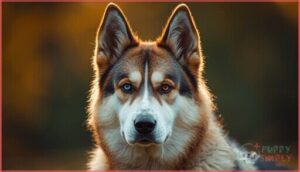
The Shepsky’s personality is one of the biggest reasons people fall in love with this breed.
You’re getting a dog that’s sharp, devoted, and full of energy — sometimes all at once.
Here’s what you can expect regarding their temperament.
Intelligence and Trainability
hybrid’s intelligence is genuinely impressive. Your Shepsky inherits sharp problem solving skills and rapid recall speed from two of the most capable working breeds around.
That means adaptive learning comes naturally — they pick up new commands quickly.
But command consistency matters here. Without it, their smarts work against you.
Strong impulse control needs reinforcement early, making structured dog training essential for managing this clever canine’s behavior.
Loyalty and Affection
Once a Shepsky bonds with you, they’re all in. These hybrid dogs pour their loyalty into daily bonding rituals — following you from room to room, leaning against your legs, nudging your hand when they want closeness.
Their affectionate body language and emotional sensitivity make them impressive companion animals.
That devotion does come with a catch, though: separation anxiety is real and worth planning for.
Energy Levels
This dog breed doesn’t have an "off" switch — and that’s exactly what makes the German Shepherd Husky Mix so thrilling to own.
As a high energy level hybrid dog, your Shepsky hits daily activity peaks in the morning and evening.
Age stamina naturally dips over time, and seasonal energy shifts mean winter often brings out their liveliest bursts. Plan rest period needs accordingly.
Social Behavior With Humans
All that energy needs somewhere to land — and for a Shepsky, it lands squarely on you.
Family interaction comes naturally to this breed. They lean in, literally, resting against you during quiet moments.
Bonding rituals like daily training and couch time build deep trust fast.
Their protective instincts stay balanced with proper socialization, and stranger greeting improves when you lead calmly.
Just don’t leave them alone too long.
Shepsky Exercise and Activity Needs
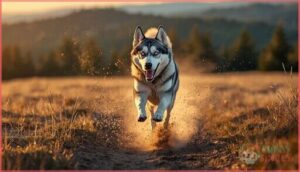
A Shepsky isn’t the kind of dog that’s happy with a short lap around the block. Both parent breeds were built to work, which means your dog comes with a serious need to move every single day.
Here’s what that looks like in practice.
Daily Exercise Recommendations
Your Shepsky needs at least two hours of daily exercise — no shortcuts.
Start with a solid Morning Walk length of 45 to 60 minutes, then add Interval Training Sessions or Playground Agility Drills later in the day.
Off-leash Endurance runs in a safe area burns that extra fuel.
Consistent Exercise isn’t just good Dog Health practice — it’s what keeps your Shepsky genuinely happy.
Mental Stimulation Requirements
Physical exercise alone won’t cut it — your Shepsky’s brain craves a workout too. These hybrid dogs are wired for problem‑solving, and a bored one will redecorate your furniture.
A bored Shepsky won’t just nap — it’ll redecorate your furniture
Strong canine behavior patterns from both parent breeds mean mental stimulation isn’t optional. Try mixing it up daily:
- Puzzle Toys that reward patience
- Scent Work trails around the yard
- Interactive Feeding with slow feeders or Kongs
- Obedience Challenges that layer new commands
Animal behavior and training experts agree: consistent dog training targeting canine behavior keeps Shepskies sharp, calm, and genuinely satisfied.
Suitable Activities and Sports
Once you’ve got mind busy, channel that energy into structured outlets. Shepskies genuinely shine in active sports — they were built for this.
| Activity | Why It Works |
|---|---|
| Agility Training | Sharpens focus and burns energy fast |
| Canine Hiking | Satisfies their endurance drive |
| Flyball Competition | Combines speed with dog training rewards |
| Dock Diving | Builds canine health and wellness through full-body effort |
Search and rescue work and sledding trials are also natural fits for this breed.
Grooming and Shedding Considerations

Owning a Shepsky means accepting one truth upfront: this dog sheds a lot.
That thick double coat is gorgeous, but it comes with real grooming responsibilities, you’ll want to stay on top of.
Here’s what you need to know about keeping that coat healthy and your furniture (mostly) fur‑free.
Brushing and Coat Maintenance
Grooming a Shepsky isn’t complicated — but it does demand consistency. That thick double coat needs brushing 3 to 4 times per week, ramping to daily during peak seasonal deshedding.
Your tool selection guide starts with a pin slicker brush, then an undercoat rake technique for deep removal. Coat conditioning sprays reduce static beautifully. For mat prevention strategies, always check behind the ears and armpits.
Bathing Frequency
Most Shepskies do best with a bath every 6–8 weeks — that’s your Ideal Bath Interval sweet spot.
Your Lifestyle Bath Needs matter too: a trail-loving Shepsky may need one every 4–6 weeks, while a city dog can stretch longer.
Watch for Skin Coat Indicators like greasiness or odor.
Overbathing Risks are real — strip those natural oils too often and you’ll see dry, itchy skin fast.
Between‑Bath Care like paw wipes keeps things fresh.
Seasonal Shedding and Tips
Twice a year, your Shepsky will shed like it’s a full-time job — and Light Cycle Influence, not temperature, triggers it.
Indoor Climate Control matters too; dry heat makes loose fur worse.
Here are five Grooming and Dog Grooming Tips to stay ahead:
- Brush 4–7 times weekly during coat blows
- Use a Humidifier to support Dog Health
- Vacuum 2–3x weekly with pet attachments (Vacuum Strategies)
- Groom outdoors for easier Pet Care and Dog Care cleanup
- Run a HEPA purifier for Allergy Management
Health Issues and Genetic Risks

Like any mixed breed, the Shepsky can inherit health quirks from both sides of the family tree.
Knowing what to watch for puts you well positioned as an owner. Here’s what you need to keep on your radar.
Common Health Concerns
German Shepherd Husky mix carries a few health risks worth knowing.
Hip Dysplasia and Elbow Dysplasia top the list, since both parent breeds pass down joint vulnerabilities.
Cataracts Risk and progressive retinal atrophy threaten vision over time.
Bloat Prevention matters too — that deep chest is a real risk factor.
Watch for Skin Allergies, Thyroid Issues, and commit to consistent Veterinary Care to stay ahead.
Lifespan Expectations
Most German Shepherd Husky mixes live 10 to 14 years — and where your dog lands in that range often comes down to you.
Genetic Factors like Hip Dysplasia play a role, but Weight Management, Nutrition Longevity, and Exercise Impact matter just as much.
Prioritizing Dog Health from day one, including screening for inherited Genetics risks, gives your Shepsky the best shot at a full, active life.
Preventative Care and Vet Visits
Your vet is your Shepsky’s most important teammate. Annual Wellness Exams catch early signs of Dog Health Issues before they become expensive problems.
Start a Vaccination Schedule at 6–8 weeks, and don’t skip Parasite Prevention — heartworm and ticks are real risks.
Add Joint Monitoring from 12–18 months and commit to regular Dental Care.
Consistent Veterinary Medicine keeps Pet Health Issues manageable.
Diet and Nutrition for Shepskies

What your Shepsky eats makes a bigger difference than most people realize.
These dogs are active and muscular, so their diet needs to actually keep up with them. Here’s what you need to know about feeding them right.
Recommended Diet Types
Feeding a Shepsky well is one of the best investments you can make for their long-term canine health. Here are five diet types worth considering:
- High Protein Kibble — 24–30% protein helps their active muscles
- Grain Inclusive — whole grains aid digestion and coat health
- Raw Balanced — nutrient-dense, but requires careful handling
- Fresh Cooked — wholesome and digestible
- Sensitive Stomach — ideal for dogs with food reactions
Feeding Schedules
Once you’ve nailed down the right diet type, meal timing and portion size are the next pieces of the puzzle.
Puppies need three meals a day; adults do well with two.
Your dog’s calorie needs shift with age and activity level, so activity-adjusted meals matter more than most owners realize.
For solid dog nutrition and long-term dog health, ask your vet to fine-tune amounts as your Shepsky grows.
Foods to Avoid
Some foods are flat-out dangerous for your Shepsky. Chocolate, grapes, onions, and dairy products can trigger serious dog health issues — some even fatal.
Fatty bones splinter and cause internal damage. These aren’t minor pet care slip-ups; they’re real threats to your dog’s health.
When in doubt, check with your vet. Good pet nutrition means knowing what to leave off the menu entirely.
Training Tips for German Shepherd Husky Mixes
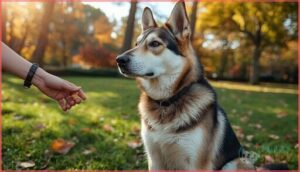
Training a German Shepherd Husky mix is rewarding, but it takes consistency and the right approach from day one. These dogs are sharp, so they pick up habits fast — good ones and bad ones alike.
Here’s what you need to know to set your Shepsky up for success.
Socialization Best Practices
Start socialization early — a Shepsky’s temperament is shaped heavily by what it experiences before six months old. As a canine hybrid with strong instincts from both parent breeds, gradual exposure to new people, sounds, and environments is everything.
Build a simple socialization schedule around:
- Puppy Playdates — controlled introductions with calm, vaccinated dogs
- Positive Reinforcement — reward curiosity, never force interactions
- Gradual Exposure — new settings weekly, starting quiet then busier
- Dog Behavior check-ins — watch body language and adjust the pace
Obedience Training Techniques
Once socialization clicks, obedience training is where a Shepsky truly shines. These dogs are wired to work — so give them a job.
| Technique | How It Works | Best For |
|---|---|---|
| Positive Reinforcement | Reward correct behavior instantly | Building new commands |
| Clicker Marker | "Yes" or click marks exact moment | Precise timing |
| Leash Long Line | 20–30ft line for distance work | Proofing Cues outdoors |
Short sessions beat marathon drills every time.
Preventing Unwanted Behaviors
Consistency is your best tool here. Shepskies learn patterns fast — and that’s a double-edged sword.
When you nail Reward Timing and pair Cue Training with Boundary Management, good habits stick quickly.
Use Structured Play to channel their drive, and practice Noise Desensitization early.
With this hybrid dog behavior in mind, Responsible pet ownership means the same rules, every day, from everyone.
Shepskies as Family and Companion Dogs

Shepskies aren’t just working dogs — they’re deeply devoted companions who genuinely love being part of a family.
But like any big, energetic breed, how well they fit into your household depends on a few key factors. Here’s what you need to know before bringing one home.
Compatibility With Children
Shepskies can be wonderful with kids — but their size and energy demand Supervised Play Rules from day one.
Age-Appropriate Interaction matters too; school-age children handle this breed far better than toddlers.
Focus on Impulse Control Training early, establish Safe Space Boundaries so your dog can decompress, and practice Resource Guarding Prevention around meals.
Their temperament shines brightest when dog training, dog ownership, and responsibility stay consistent.
Interaction With Other Pets
Their prey drive is real — small pets like rabbits or cats aren’t automatically safe companions. Smart Prey Drive Management and Cat Introduction Techniques, like scent-swapping before face-to-face meetings, go a long way.
For Dog-to-Dog Play, neutral territory introductions work best. Apply Resource Guarding Strategies at feeding time, and you’ll build a genuinely harmonious multi-pet home with this impressive hybrid dog behavior in mind.
Separation Anxiety Risks
This breed doesn’t do well with long goodbyes — or long absences.
Owner absence triggers, such as sudden schedule changes, can flip a calm Shepsky into a stressed shadow. Environmental stressors, problem behaviors, and long‑term health impact all connect to responsible pet ownership.
- Destructive chewing near exits
- Nonstop howling or barking
- House accidents despite training
- Refusing food while alone
- Scratched doors and paws
Is The German Shepherd Husky Mix Right for You?

The Shepsky is a wonderful dog — but it’s not the right fit for everyone.
Before you fall head over heels, it’s worth being honest with yourself about your lifestyle, your living situation, and how much time you can realistically give. Here’s what to think about.
Ideal Owner Profiles
This mix doesn’t suit every household — it thrives with people who live an Active Lifestyle and genuinely enjoy being outdoors daily.
Experienced Owners who understand working-dog Temperament handle their intensity with confidence.
Training Enthusiasts love the challenge of shaping their Trainability and Loyalty.
Time‑Committed Caregivers and Engaged Social Families who practice Responsible pet ownership and take Dog Ownership and Responsibility seriously will find this crossbreed deeply rewarding.
Living Space and Environment Needs
Your living space matters more than you’d think with this dog. Apartment suitability is basically zero here — a German Shepherd Husky Mix needs room to move, and their temperament suffers without it. Yard requirements are real, not optional.
- Fenced yard strongly preferred
- Temperature tolerance runs cold to moderate climates best
- Noise sensitivity can trigger barking in dense neighborhoods
- Indoor enrichment is non‑negotiable on rest days
Time and Care Commitment
Space is just one piece of the puzzle — your time is the bigger ask.
Plan on 2 to 3 hours daily covering exercise, training, grooming, and genuine daily interaction.
Weekend care planning matters too, since spontaneous trips require real travel preparation.
Long-term time investment spans a decade or more.
Owner schedule flexibility isn’t a bonus here — it’s the baseline.
Frequently Asked Questions (FAQs)
Will a husky protect its owner?
Huskies love their people deeply, but guarding instincts? Not exactly their strong suit.
friendly to a fault.
German Shepherd Husky Mix, though, brings more territorial behavior and protective training potential into the picture.
How rare are Gerberian Shepsky?
Gerberian Shepskies are genuinely rare. Breeder scarcity, registration gaps, and low market demand keep population density thin.
You’ll find geographic pockets where they exist, but most dog lovers never meet one in person.
How much should a shepsky eat a day?
Most Shepskies do well on 5 to 3 cups of high-protein kibble daily, split into two meals. Adjust portion size based on activity level and always monitor weight to catch changes early.
Are German Shepherd and Husky mix good dogs?
Yes, German Shepherd Husky mixes make great dogs — for the right owner. They’re loyal, smart, and affectionate.
But their temperament, high energy, and need for training consistency mean they thrive best with committed, active people.
Their double coat sheds year-round requires regular grooming.
What are the pros and cons of the Shepsky?
The Shepsky wins you over fast — loyal, smart, and built for adventure.
But that same energy demands daily commitment.
Expect heavy shedding, training challenges, and health screening for joint issues.
regular veterinary check-ups can catch inherited joint problems early.
What is a husky and German Shepherd mix called?
This hybrid dog goes by a few names, but most people call it the Shepsky or Gerberian Shepsky — a portmanteau blending both parent breeds into one catchy, recognizable label.
How much does a Shepsky cost?
Prices vary quite a bit — puppies generally run $700 to $1,200 from reputable breeders, while adoption fees average just $ Factor in annual care expenses of $1,500 or more when budgeting.
How much exercise does a Gerberian Shepsky need?
A Gerberian Shepsky needs 1 to 2 hours of exercise daily. Split sessions help with joint protection and prevent boredom. Adjust intensity guidelines based on age adjustments and your dog’s overall health.
What kind of diet suits a Gerberian Shepsky?
Your Shepsky thrives on high-protein meals from quality animal sources like chicken, beef, or salmon.
Active adults need roughly 1,700–2,400 calories daily, split into two feedings to support health and reduce bloat risk.
How often should a Gerberian Shepsky be groomed?
A stitch in time saves nine.
Brush your Gerberian Shepsky 2–3 times weekly, daily during shedding season.
Regular coat health monitoring, paw pad care, and eye fur cleaning keep your dog comfortable and healthy.
Conclusion
Some dogs look impressive but disappoint in real life. The german shepherd husky mix is the opposite—it’s even more rewarding than it looks, but only if you’re ready to meet it halfway.
This isn’t a dog that thrives on the sidelines. It needs your time, your energy, and your consistency.
Give it those things, and you’ll have a loyal, superb companion that makes every long walk, training session, and snowy morning completely worth it.
- https://www.petscare.com/news/faq/what-is-a-husky-german-shepherd-mix
- https://dogacademy.org/breeds/german-shepherd-husky-mix
- https://www.fitpetgo.com/breeds/gerberian_shepsky
- https://www.huskydogclub.com/german-shepherd-husky-mix/
- https://www.innovetpet.com/blogs/news/the-complete-guide-on-the-german-shepherd-husky-mix