This site is supported by our readers. We may earn a commission, at no cost to you, if you purchase through links.
Your French Bulldog’s loud snoring might seem adorable until you realize it signals something serious. Between 60 and 80 percent of French Bulldogs struggle with Brachycephalic Airway Syndrome, a condition that makes every breath harder than it should be. Their flat faces and compact airways create a cascade of respiratory challenges that range from mild snoring to life-threatening obstruction.
You’ll notice the signs during play sessions, hot summer days, or even while your dog sleeps. The good news is that you can take action now. With the right combination of home management, veterinary care, and environmental adjustments, you can help your French Bulldog breathe easier and live more comfortably.
Table Of Contents
- Key Takeaways
- Common Causes of French Bulldog Breathing Problems
- Recognizing Breathing Issue Symptoms
- Diagnosing Breathing Problems in French Bulldogs
- Health Risks of Untreated Breathing Difficulties
- Home Management Strategies for Easier Breathing
- Weight Management and Diet Solutions
- Environmental Changes to Support Breathing
- Surgical Options for Severe Cases
- Preventive Measures for Long-Term Health
- When to Seek Veterinary Help Urgently
- Frequently Asked Questions (FAQs)
- Conclusion
Key Takeaways
- Between 60-80% of French Bulldogs suffer from Brachycephalic Airway Syndrome, a cluster of anatomical abnormalities (narrow nostrils, elongated soft palate, collapsed trachea) that make breathing progressively harder and can lead to organ stress, heat stroke, and respiratory failure if left untreated.
- Home management strategies—keeping your dog cool below 78°F, maintaining 5-10% weight loss through balanced diets, using chest harnesses instead of collars, and improving indoor air quality with HEPA filters—can reduce respiratory effort by 12-40% without medical intervention.
- Surgical corrections like soft palate reduction and nostril widening improve breathing in 70-85% of cases, with most dogs showing measurable relief within 2-6 weeks, though 10-20% may need minor follow-up adjustments.
- Emergency warning signs requiring immediate veterinary care include blue gums or tongue (indicating severe oxygen deprivation), labored breathing lasting over 10 minutes, sudden collapse during activity, or grunt-like abdominal breathing—symptoms that signal potential respiratory failure.
Common Causes of French Bulldog Breathing Problems
Your French Bulldog’s breathing struggles aren’t random—they stem from specific physical conditions that affect their airways. Most of these issues trace back to the breed’s distinctive flat face and compact skull structure.
Let’s look at the main culprits behind those concerning snorts and labored breaths.
Brachycephalic Airway Syndrome
Brachycephalic Airway Syndrome affects 60 to 80 percent of French Bulldogs, making it the leading cause of their breathing problems. This condition involves multiple anatomical abnormalities that create airway obstruction—often combining an elongated soft palate with other structural issues. The syndrome disrupts normal breathing mechanics, forcing your dog to work harder for every breath.
Early syndrome diagnosis matters because respiratory failure risk increases with heat, exercise, and weight. Understanding the importance of a thorough research analysis process can help in addressing these health issues.
Stenotic Nares (Narrow Nostrils)
Narrow nostrils, clinically called Stenotic Nares, markedly worsen French Bulldog breathing problems by restricting airflow at its entry point. Nasal obstruction increases respiratory resistance by up to 60%, forcing your dog to expend 15–25% more energy during activity. These pinched nostrils reduce airflow dynamics through narrowed passages by 25–40%.
Nostril correction surgery offers proven surgical outcomes, improving inspiratory flow by 25–35% and directly addressing this component of Brachycephalic airway syndrome.
Understanding AP study guides can help dog owners better comprehend complex health issues.
Elongated Soft Palate
When your Frenchie’s soft palate extends too far back, it contacts the epiglottis during breathing, creating airway obstruction that increases breathing effort by 20–40%. This elongated soft palate causes:
- Noisy sleep breathing in most moderate cases
- Exercise fatigue after brief activity
- Gagging episodes when eating or drinking
- Severe heat intolerance outdoors
Soft palate resection improves breathing scores by 1.5–2.0 points within three months, addressing this core component of Brachycephalic airway syndrome and restoring respiratory efficiency.
Collapsed Trachea
While soft palate issues obstruct the upper airway, tracheal collapse strikes deeper—weakening cartilage rings that keep your dog’s windpipe open. This creates a honking cough and labored breathing, especially during excitement or exercise.
Though more common in older Frenchies, tracheal collapse often coexists with brachycephalic airway syndrome, intensifying breathing difficulties and sometimes leading to respiratory emergencies requiring prompt trachea repair or medical management.
Genetic Factors
Your Frenchie’s breathing challenges aren’t just bad luck—they’re written into their DNA. Heritability estimates for brachycephalic syndrome hover around 0.4–0.6, meaning genetic predisposition plays a major role.
Genome analysis reveals multiple genes controlling craniofacial development contribute to airway constriction, a polygenic influence that makes breed-specific health issues inevitable without responsible breeding practices and genetic counseling for dog breeders targeting healthier brachycephalic breeds.
Recognizing Breathing Issue Symptoms
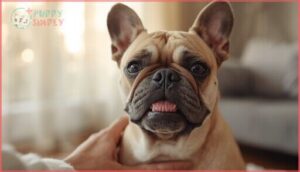
Spotting breathing trouble early can make all the difference in your Frenchie’s health and comfort. Some symptoms are subtle and easy to miss during everyday activities.
Others signal a more urgent problem that needs immediate attention.
Heavy Panting and Snoring
You might notice your French Bulldog’s breathing problems show up most clearly at night—snoring that rattles the walls or heavy panting even while they’re resting. These aren’t just quirks.
In dogs with Brachycephalic Syndrome, snoring affects 70–90% of cases, while panting during rest can reach 65%. These breathing rhythms signal airway resistance and sometimes sleep apnea, pointing to underlying respiratory issues that deserve attention.
Exaggerated Noises During Exercise
When your French Bulldog moves, listen carefully. Honking, wheezing, or snorting during walks often signals airway dynamics at work—tissue flutter and partial collapse behind those exaggerated sounds.
Studies show up to 28% of Frenchies exhibit exercise-induced sounds during moderate activity, with noise patterns lasting 6–12 seconds in mild cases.
These breathing struggles aren’t just loud—they’re respiratory monitoring opportunities pointing to Brachycephalic Syndrome complications.
Gums or Tongue Turning Blue
When you spot blue gums or tongue, you’re witnessing cyanosis—a red flag signaling severe oxygen deprivation. This emergency symptom appears in 5–20% of acute Brachycephalic Syndrome crises, often during exertion or heat exposure.
Airway obstruction limits oxygen exchange, and without immediate oxygen therapy and cooling measures, respiratory failure risks escalate rapidly. If your dog’s mucous membranes turn blue, seek emergency interventions immediately to restore breathing function.
Drooling and Choking Sounds
Excessive drooling paired with choking sounds affects up to 75% of French Bulldogs with Brachycephalic Syndrome. These respiratory issues stem from airway obstruction caused by their anatomy—elongated soft palates and stenotic nares force mouth breathing and trigger hypersalivation.
Watch for these warning signs:
- Pawing at the face or lip smacking during breathing difficulties
- Gagging or hacking sounds, especially during meals or sleep
- Mouth breathing accompanied by unusual respiratory noises
Proper drool management and choke prevention start with recognizing these symptoms early to protect your dog’s respiratory health.
Diagnosing Breathing Problems in French Bulldogs
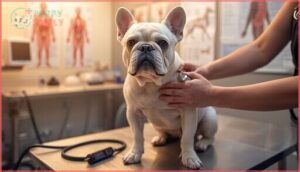
Once you notice breathing issues in your French Bulldog, getting a proper diagnosis is the next step. Your veterinarian has several diagnostic tools at their disposal to pinpoint exactly what’s causing the problem and how severe it is.
Let’s look at the main assessment methods vets use to evaluate respiratory function in brachycephalic dogs.
Physical Examination by Veterinarian
Your vet’s physical exam acts as the first line of defense in catching breathing problems early. During this respiratory evaluation, they’ll listen for telltale inspiratory noise—present in 78% of French Bulldogs with airway obstruction. They’ll check your dog’s nasal airflow, assess weight status (overweight pups face 1.5–2× higher risk), and monitor heart rate alongside breathing patterns for a complete medical diagnosis.
| Exam Component | What Your Vet Checks |
|---|---|
| Nasal Airflow | Stenotic nares detected in 54% of affected bulldogs |
| Respiratory Rate | Tachypnea (>40 breaths/min) with effort in 62% of cases |
| Mucous Membranes | Cyanosis or delayed refill signals severe compromise |
Endoscopic Grading of Airway Obstruction
When your vet suspects significant airway obstruction, endoscopy techniques provide a direct look inside your dog’s respiratory tract. This airway assessment uses a tiny camera to grade breathing problems from I to III based on how much the airway narrows.
Studies show 30–70% of French Bulldogs have at least mild obstruction. These obstruction grades and respiratory scores guide surgical planning for brachycephalic syndrome treatment.
Imaging and Functional Tests
Beyond endoscopy, your vet uses CT imaging and other diagnostic tools to map your French Bulldog’s airway. These tests measure how breathing problems affect respiratory health:
- CT scans detect stenotic nares and soft palate issues with 72% accuracy
- Fluoroscopy in motion reveals tracheal collapse during breathing
- Airway measurement tracks obstruction severity
- Exercise-tolerance tests show 20–40% reduced endurance in affected dogs
- Pulse oximetry monitors oxygen levels during activity
Functional testing provides the complete respiratory assessment picture for brachycephalic syndrome.
Polysomnography and Sleep Quality Assessment
Sleep studies offer a window into your Frenchie’s nighttime breathing problems. Polysomnography tracks airway obstruction while your dog sleeps, measuring respiratory events and oxygen drops below 90%.
Dogs with brachycephalic syndrome show increased arousal from nocturnal monitoring, waking frequently when airways collapse.
PSG interpretation reveals how sleep disorders affect respiratory health, with 20–60% of French Bulldogs showing breathing difficulties during rest.
Health Risks of Untreated Breathing Difficulties

When your French Bulldog’s breathing problems go untreated, the consequences extend far beyond occasional discomfort. Chronic airway obstruction creates a cascade of health complications that worsen over time and directly threaten your dog’s longevity.
Understanding these risks helps you recognize why early intervention isn’t optional—it’s essential for your dog’s survival and happiness.
Oxygen Deprivation and Organ Stress
When your French Bulldog can’t breathe properly, the ripple effect reaches far beyond their lungs. Chronic oxygen deprivation places serious strain on essential organs, creating cascading health risks that demand your attention:
- Heart strain – Oxygen saturation drops below 90% during sleep in up to 40% of cases, forcing the heart to work overtime.
- Metabolic stress – Elevated lactate and troponin levels signal tissue hypoxia during breathing episodes.
- Blood changes – Compensatory polycythemia thickens blood as the body desperately tries to carry more oxygen.
- Prolonged recovery – Oxygen levels can take over 15 minutes to normalize after respiratory distress.
This isn’t just discomfort—it’s organ damage unfolding in real time.
This isn’t just discomfort—it’s organ damage unfolding in real time
Reduced Exercise Tolerance
When airway obstruction goes unaddressed, your French Bulldog’s physical conditioning steadily declines—research shows 58% experience measurable drops in endurance during standard walks. You’ll notice activity modifications become necessary as respiratory monitoring reveals they tire faster, with peak oxygen uptake falling 22% below healthy peers.
These exercise limitations compound quickly: what started as minor overexertion concerns evolves into serious tolerance training challenges, especially when heat stress enters the picture.
Heat Stroke Risk
During temperatures above 77°F, your Frenchie’s heat stroke risk multiplies up to eight times—their breathing problems sabotage normal cooling, pushing core temperatures past 104°F even with light activity. Heat safety for dogs starts with recognizing this silent danger.
Critical Summer Safety Tips for Heat Stroke Prevention:
- Limit outdoor play when afternoon heat peaks—even mild exertion triggers overheating
- Monitor rectal temperature; anything above 105°F demands immediate veterinary intervention
- Provide constant water access to support canine hydration and internal cooling
- Use active cooling strategies—wet towels, fans, air conditioning reduce breathing emergencies
- Recognize collapse signs early; 20% of heat stroke cases prove fatal without rapid treatment
Breathing problems heighten every warm-weather threat your dog faces.
Impact on Quality of Life
Your Frenchie’s breathing problems don’t just create medical risks—they quietly erode daily joy. Around 62% of dogs with Brachycephalic Syndrome experience disrupted sleep patterns, leaving them lethargic and disengaged. Exercise limits clip their playfulness, while anxiety levels climb during simple activities like eating or resting.
Meanwhile, you shoulder increased owner burden through nighttime monitoring and frequent vet visits, reshaping your routines around their respiratory health in dogs needs.
Home Management Strategies for Easier Breathing
You can’t change your Frenchie’s anatomy, but you can make everyday life easier on their airways. Small adjustments at home often add up to noticeable improvements in breathing comfort and overall well-being.
Here are four practical strategies that work together to help your dog breathe more easily.
Keeping Dogs Cool and Hydrated

You wouldn’t run a marathon in a wool coat, so don’t let your Frenchie overheat either. Keep indoor temperatures below 78°F using air conditioned spaces, and always provide fresh water at multiple locations throughout your home.
On hot days, offer shade during outdoor breaks and consider cooling mats that can lower body temperature by 1-2°C. Early morning or late evening walks reduce heat stress by roughly 40%.
Using Harnesses Instead of Collars
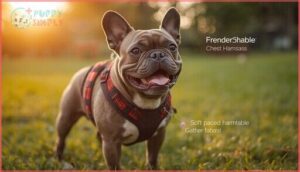
Switching from a collar to a chest strap can cut neck pressure that worsens your French Bulldog’s breathing problems. A 2020 study showed chest strap use reduced respiratory effort by 12% during walks, while collar-related airway narrowing dropped 25% after the switch.
Consider these chest strap essentials for better dog health:
- Choose front-clip designs to distribute tension across the chest instead of the throat
- Secure snug chest fit with adequate neck clearance to prevent rubbing
- Select breathable, flexible materials over rigid front panels
- Check oxygen saturation improvements of 3-5% during exercise with proper chest strap use
- Monitor your Frenchie for reduced coughing and improved leash training outcomes
Begin with a 10-14 day trial period to assess canine comfort and breathing changes.
Creating a Calm, Stress-Free Environment
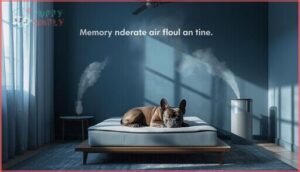
Your Frenchie breathes easier when you manage the spaces they live in—think of it as building their personal sanctuary. Aim for air-conditioned rooms between 68–72°F, which cut panting by 25%. Quiet time management with noise below 40 dB reduces nighttime distress by 30%, while a humidifier maintaining 40–60% humidity prevents airway irritation through better moisture control.
Lifestyle changes like elevated sleeping areas and indirect fan airflow create environmental enrichment that fosters long-term respiratory health.
| Calm Space Design Element | Measured Breathing Benefit |
|---|---|
| Temperature control + shade access | 25% less daytime panting |
| Air quality control (HEPA filtration) | 25% fewer nocturnal episodes |
| Stress reduction techniques (routine + low stimulation) | 18% improved respiratory stability |
Adjusting Exercise and Activity Levels
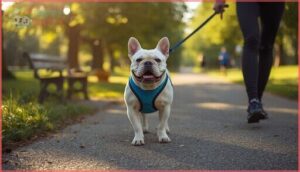
Once your home is calm, focus on dog exercise and activity with care. Short walks, split into 15–20 minutes daily, help manage Exercise Intensity and Activity Duration. Schedule outings during cooler hours for Heat Management.
Always use a chest strap, watch for exaggerated breathing, and pause for rest—these steps protect Brachycephalic Breeds from breathing difficulties and other canine respiratory issues.
Weight Management and Diet Solutions

Extra weight puts additional strain on your French Bulldog’s already compromised airways, making every breath harder work. The good news is that you have direct control over this factor through thoughtful feeding and activity choices.
Let’s look at three practical ways to keep your Frenchie at a healthy weight and breathing easier.
Importance of Healthy Weight
Weight sits at the heart of breathing health for your French Bulldog. Studies show 40% of Frenchies are overweight, directly worsening brachycephalic syndrome and obesity-related airway issues. Here’s why weight management matters:
- Respiratory efficiency improves 2–3% with each 1% body fat reduction
- Obesity increases airway collapse risk by 15–20% during sleep
- Weight loss of 5–10% enhances exercise tolerance within weeks
- Balanced diets and gentle exercise plans prevent obesity
- Healthy feeding routines reduce breathing problems long-term
Balanced Diet Recommendations
Your Frenchie’s diet shapes their breathing. Aim for high-protein meals (25–30% of calories) with moderate fat and added omega-3s to reduce airway inflammation. Include dietary fiber at 5–10% to support gradual weight loss and satiety.
Cut sodium-heavy treats and potential food allergens that irritate airways. A 5–10% caloric reduction improves respiratory efficiency without compromising nutrition—small changes that make breathing easier.
Gentle Exercise Plans
The right exercise routine facilitates breathing without strain. Keep sessions short and structured to build canine fitness safely while respecting your French Bulldog’s breathing difficulties:
- Warm up slowly for 5–10 minutes using gentle, low-resistance movements that reduce fatigue by roughly 20%
- Try interval training—three rounds of 1–2 minutes of light activity with equal rest between
- Cap daily activity at 20–30 minutes total, split across 2–3 brief sessions
- Walk during cooler hours on level ground in shade, reducing perceived exertion by up to 15%
- Use a front-clip strap during leash training to promote upright posture and breath control
These lifestyle changes and physical therapy principles protect airways while maintaining cardiovascular health.
Environmental Changes to Support Breathing

Your home environment plays a bigger role in your Frenchie’s breathing than you might think. Simple adjustments to air quality and temperature can make each breath easier and reduce daily strain on their compromised airways.
Let’s look at three practical changes that create a respiratory-friendly space for your dog.
Improving Air Quality at Home
Clean air makes a real difference for your Frenchie’s breathing comfort. HEPA-rated air purifiers reduce indoor pollutants by 60-90% within 30 minutes, while proper ventilation systems with MERV-13 filters cut particle counts by 20-50%. Maintaining humidity control between 40-60% decreases mold and dust mites—two common respiratory irritants.
| Air Quality Strategy | Breathing Benefit |
|---|---|
| HEPA air purifiers | Remove 60-90% airborne particles |
| HVAC filtration methods | Reduce indoor pollution 20-50% |
| Humidity control (40-60%) | Lower mold and dust mite activity |
| Temperature control + ventilation | Prevent overheating, improve airflow |
Allergen and Irritant Reduction
Beyond air purification, you’ll want to tackle allergens directly. Reducing indoor dander improves respiratory symptoms in 28% of French Bulldogs.
Dust reduction through HEPA-filtering and mattress encasing lowers dust mite allergen levels by 60% within three months.
Switching to fragrance-free cleaners cuts irritant exposure by 40%, while humidity management at 40–50% reduces cough frequency by 12–20%.
Using Air Conditioning and Purifiers
In warm months, air conditioning doesn’t just keep your French Bulldog comfortable—it directly reduces respiratory distress. HEPA purifiers can cut indoor PM2.5 by 60%, lowering airway irritation. Aim for spaces rated 200–400 square feet to reduce airborne irritants by 50–70% within an hour.
Pair cooling systems with humidity control between 40–50% and proper ventilation to minimize breathing difficulties year-round.
Surgical Options for Severe Cases

When home management and lifestyle changes aren’t enough to help your French Bulldog breathe comfortably, surgery may offer meaningful relief.
These procedures target the specific anatomical issues that restrict airflow in brachycephalic breeds. Your veterinarian will help you understand which surgical options could improve your dog’s quality of life based on their individual condition.
Soft Palate Reduction Surgery
Soft palate resection tackles one of the most common obstructions in brachycephalic syndrome. This airway reconstruction procedure trims excess tissue blocking your dog’s throat, and studies show 70-85% of dogs experience improved breathing outcomes.
Recovery time usually spans 2-6 weeks with restricted activity. Surgical risks include temporary swelling or coughing in 5-15% of cases. Postoperative care requires close monitoring during healing.
Nostril Widening Procedures
Stenotic nares surgery widens your French Bulldog’s pinched nostrils through nasal reconstruction techniques. This procedure reduces inspiratory resistance by 20-35%, markedly improving airflow in most cases. Nostril calibration during the surgery helps surgeons achieve ideal breathing improvements.
Postoperative care spans 2-6 weeks, with activity restrictions to prevent complications. Younger dogs often experience better surgical outcomes, addressing one of the most correctable French Bulldog health issues affecting breathing problems.
Laryngeal Saccules Resection
When laryngeal saccules evert into your French Bulldog’s airway, saccules removal becomes necessary for respiratory relief. This surgical intervention resolves breathing obstructions in brachycephalic syndrome, offering meaningful improvements in dogs with persistent respiratory issues:
- Reduces nocturnal breathing difficulty by 10-20%
- Complements other airway surgery procedures effectively
- Shows complication rates of 5-15% at specialized centers
- Maintains clinical benefits for several years in most cases
Laryngeal health stabilization helps dogs with fixed saccules contributing to upper airway blockage.
Post-Surgical Care and Outcomes
After surgical interventions for breathing problem treatment, your French Bulldog’s airway management journey continues at home. Postoperative care requires close monitoring during the first six weeks—you’ll see improved breathing in about 85% of dogs during this time.
Follow-up exams track surgical recovery and breathing rehabilitation progress, though 10-20% may need minor adjustments. Watch for swelling or breathing changes and contact your veterinarian immediately if respiratory health issues emerge.
Preventive Measures for Long-Term Health
Prevention is always easier than treatment regarding your Frenchie’s breathing health. You can take several practical steps now to reduce the likelihood of serious respiratory problems down the road.
Let’s look at the key measures that protect your dog’s airways for the long haul.
Avoiding Overexertion and Heat
When temperatures climb above 72°F, your French Bulldog faces real breathing difficulties. Heat stress compounds existing airway problems, so limit exercise to early morning or evening when it’s cooler.
Short, gentle walks work better than long sessions—aim for 20–30 minutes total daily. Always provide access to air conditioned spaces, cooling mats, and fresh water.
High air quality matters too; avoid dusty trails that irritate already compromised airways.
Regular Veterinary Check-ups
Beyond avoiding heat, you need regular veterinary check-ups to monitor your French Bulldog’s respiratory health. About 47% of dogs with breathing issues see their vet annually for airway assessments and baseline testing. These visits catch problems early—63% of owners schedule appointments within a month of noticing worsening symptoms.
Your veterinarian can adjust care plans, perform airway evaluations, and track changes before they become emergencies.
Responsible Breeding Practices
The real solution begins with responsible dog breeding practices. When breeders use genetic testing, airway certification, and pedigree analysis, they reduce breathing problems by 15–30% per generation.
Breeding ethics matter—selecting against extreme brachycephalic features through genetic counseling lowers brachycephalic syndrome treatment needs. Breeder accountability and breed-specific health issues screening protect future French Bulldogs from inherited respiratory distress.
Monitoring for Early Warning Signs
Regularly watching your French Bulldog’s breathing patterns can catch respiratory problems in dogs before they escalate. About 32% of owners notice snoring that signals airway obstruction, while vocalization signs during rest increase undiagnosed risk by 21%.
Monitor these French Bulldog health issues:
- Respiratory rates exceeding normal at rest
- Snore analysis revealing increased nighttime noise
- Sleep monitoring showing fragmented daytime rest (18% of affected dogs)
- Heavy panting spiking 15–20% above 85°F
- Prolonged inspiratory effort indicating breathing difficulties
When to Seek Veterinary Help Urgently
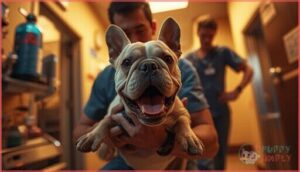
Knowing when your French Bulldog needs emergency care can mean the difference between a manageable situation and a life-threatening crisis.
Some breathing problems escalate quickly and require immediate veterinary attention rather than home management.
Let’s walk through the warning signs that signal it’s time to get help now.
Signs of Respiratory Distress
When breathing difficulties escalate to respiratory distress, your dog’s body sends clear signals. Rapid, labored breathing affects 78% of French Bulldogs with diagnosed airway obstruction, even at rest. Watch for bluish gums or tongue—this cyanosis appears in about 9% of acute episodes and means oxygen levels have dropped dangerously low.
You might also see abdominal muscles working hard with each breath—this grunt-like breathing pattern occurs in 41% of symptomatic French Bulldogs during even mild exertion. Restless panting that won’t stop after five minutes, reported by 52% of owners tracking respiratory issues, signals your dog can’t catch their breath.
| Distress Signal | What You’ll Notice |
|---|---|
| Tachypnea | Rapid breathing during rest (78% of cases) |
| Abdominal effort | Grunt-like breathing under mild activity (41% of dogs) |
| Stertor | Loud snoring sounds while calm (64% of affected dogs) |
| Restlessness | Panting episodes lasting over 5 minutes (52% of owners report) |
These distress signals indicate brachycephalic airway syndrome has progressed beyond home management, and respiratory failure could follow without emergency response.
Emergency Symptoms to Watch
Some breathing difficulties cross into emergency territory fast. If your dog’s gums or tongue turn blue—cyanosis signs appear in 12% of acute respiratory cases—you’re looking at severe oxygen deprivation that demands immediate care.
Sudden collapse during activity affects 9% of dogs with severe brachycephalic airway syndrome.
Labored breathing lasting over 10 minutes, especially during heat or stress, signals potential airway obstructions requiring urgent evaluation.
What to Expect at The Vet
When you arrive for veterinary care, expect your vet to start with a thorough physical exam—67% of initial visits focus on confirming airway obstruction severity through auscultation and direct observation. About half of cases undergo endoscopic grading to assess breathing problems accurately.
Your vet will likely discuss diagnostic tools like imaging or polysomnography, then outline treatment plans customized to your French Bulldog’s respiratory issues.
Frequently Asked Questions (FAQs)
Can humidity levels worsen French bulldog breathing?
Yes, humidity above 60% can worsen your French Bulldog’s breathing problems by increasing airway swelling and irritation. Keeping indoor humidity between 30–50% helps reduce brachycephalic respiratory strain and improves comfort.
Are certain colors more prone to breathing issues?
Coat color genetics don’t directly determine French Bulldog breathing problems, but irresponsible breeding for rare hues like merle or blue often prioritizes appearance over health screening, inadvertently selecting traits that worsen brachycephalic respiratory difficulties.
Do seasonal allergies affect breathing problem severity?
Seasonal allergies can worsen respiratory issues in French Bulldog health. Pollen exposure triggers airway inflammation, increasing nasal obstruction and breathing effort.
Managing allergy triggers during peak seasons helps control breathing patterns in brachycephalic breeds facing existing breathing problems.
Can breathing problems develop suddenly in older dogs?
Breathing problems can develop suddenly in older French Bulldogs due to age-related respiratory decline. Conditions like tracheal collapse and respiratory distress may appear rapidly, requiring emergency interventions to prevent respiratory failure.
Is anesthesia safe for French bulldogs with breathing issues?
Anesthesia carries higher risks for French Bulldogs with breathing problems—complication rates reach 5-9%.
Your vet will use specialized airway management, close monitoring, and extended recovery observation to minimize respiratory issues during surgical intervention.
Conclusion
Your French Bulldog’s breathing doesn’t have to be a compromise you accept. Each labored breath represents an opportunity to intervene—whether through weight management, environmental adjustments, or surgical correction when necessary.
The French Bulldog breathing problems solutions you implement today determine whether your companion thrives or merely survives. Watch for warning signs, act decisively when symptoms escalate, and partner with your veterinarian to build a thorough care plan.
Your dog’s next comfortable breath starts with your commitment to action.
- https://dictionary.cambridge.org/dictionary/english/subtopic
- https://pmc.ncbi.nlm.nih.gov/articles/instance/8407581/bin/pone.0256696.s002.docx
- https://library.fiveable.me/key-terms/reporting-in-depth/subtopics
- https://ghostcultmag.com/how-to-write-subtopic-in-an-essay/
- https://michaelbjorkwrites.com/2019/09/26/story-themes-list-ideas-for-your-novel/