This site is supported by our readers. We may earn a commission, at no cost to you, if you purchase through links.
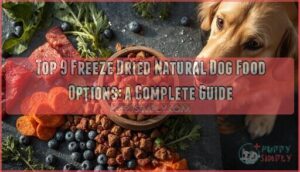
Your dog’s bowl shouldn’t require a chemistry degree to decode, yet most commercial dog foods read like lab experiments gone wrong. Freeze-dried natural dog food options strip away the mystery, preserving whole ingredients through a process that keeps nutrients intact without synthetic additives or fillers.
Unlike traditional kibble that’s cooked at high temperatures—destroying enzymes and vitamins—freeze drying locks in up to 98% of nutritional content while extending shelf life naturally.
The result is food that looks closer to what your dog’s ancestors ate, rehydrates in minutes, and gives you confidence about what’s actually fueling their health.
Table Of Contents
- Key Takeaways
- What is Freeze Dried Natural Dog Food?
- Benefits of Freeze Dried Dog Food
- Choosing The Best Freeze Dried Dog Food
- Top 9 Freeze Dried Natural Dog Food Options
- 1. Stella Chewys Chicken Freeze Dried Food
- 2. Open Farm Grass Fed Beef
- 3. Bixbi Rawbble Freeze Dried Beef Dog
- 4. Beef Bone Broth for Dogs Cats
- 5. Instinct Raw Boost Gut Health Topper
- 6. Halo Freeze Dried Raw Beef Topper
- 7. Sojos Beef Grain Free Dog Food
- 8. Vital Essentials Duck Mini Nibs
- 9. K9 Natural Beef Freeze Dried Food
- Freeze Dried Vs. Other Dog Food Types
- Feeding and Transitioning to Freeze Dried Food
- Frequently Asked Questions (FAQs)
- Are freeze-dried foods good for dogs?
- What is the alternative to freeze-dried dog food?
- Which is better for dogs dehydrated or freeze-dried?
- Is freeze-dried dog food better than kibble?
- How long does freeze-dried dog food last?
- Does freeze dried food help with weight management?
- How does cost compare to raw feeding?
- Are there vegetarian freeze dried dog food options?
- Conclusion
Key Takeaways
- Freeze-dried dog food preserves up to 98% of nutritional content through cold processing instead of heat, maintaining protein integrity and heat-sensitive vitamins that traditional kibble destroys at high temperatures.
- You’ll pay significantly more for freeze-dried options—roughly $9.76 to $14.73 daily for a medium dog compared to $1.93 for kibble—but the trade-off brings higher protein digestibility (up to 99.3% versus kibble’s 79.5%) and fewer fillers or synthetic additives.
- Proper handling matters because pathogens like Salmonella can survive the freeze-drying process, so look for brands using high-pressure processing and always wash your hands after serving raw freeze-dried food.
- Transition gradually over 7-10 days by mixing increasing amounts of freeze-dried food with your dog’s current diet, and always rehydrate complete meals with warm water to prevent digestive upset and support hydration.
What is Freeze Dried Natural Dog Food?
Freeze-dried dog food might sound complicated, but it’s actually a straightforward way to preserve fresh ingredients while keeping nutrients intact. The process uses cold temperatures and vacuum pressure instead of heat, which helps maintain the natural goodness your dog needs.
Let’s break down how this method works, what goes into these foods, and how they stack up against other options you might be considering.
Freeze Drying Process Explained
Freeze-drying starts with pre-freezing methods that drop raw ingredients to around -40°C, locking in nutrients. Primary sublimation then pulls out ice under vacuum pressure—no heat needed—while secondary drying removes the last moisture. This cold process preserves up to 98% of nutritional content, extending shelf life and keeping vitamins intact.
The process helps maintain protein integrity, which is essential for a dog’s muscle development. Quality control checks guarantee safety before packaging.
Key Ingredients and Nutritional Benefits
When you look at the nutritional content of dog food, protein digestibility stands out. Freeze-dried raw dog foods generally pack 35–45% protein from whole meats and organ meats like liver—far more than standard kibble.
You’re also getting essential fatty acids from fish sources, fiber from pumpkin and carrots, and micronutrient density that bolsters your dog’s immune system and coat health naturally.
This is because freeze-drying preserves natural vitamins, ensuring high nutrient retention.
How Freeze Dried Differs From Dehydrated Food
You might wonder what sets freeze-dried apart from dehydrated dog food—it’s all about processing temperatures and moisture removal. Freeze-drying pulls out 98-99% of water at below-freezing temps, keeping nutrient retention above 90%.
Dehydrated food uses heat (120-160°F), removing only 90% moisture and degrading vitamins.
That’s why freeze-dried rehydrates in 2-3 minutes with better nutrient preservation and longer shelf life.
Benefits of Freeze Dried Dog Food

Freeze dried dog food offers several real advantages that go beyond what you’ll find in standard kibble or canned options. From keeping nutrients intact to giving you more flexibility at mealtime, these benefits explain why more pet owners are making the switch.
Let’s look at the key reasons this feeding method might work well for your dog.
Nutrient Retention and Palatability
One of freeze-dried dog food’s biggest strengths? It keeps nutrients intact. Studies show these diets retain over 95% of heat-sensitive vitamins and preserve essential amino acids at digestibility rates above 90%, meaning your dog actually absorbs the nutritional value.
Freeze-dried dog food retains over 95% of heat-sensitive vitamins and achieves above 90% amino acid digestibility, ensuring dogs actually absorb the nutrients
Plus, the concentrated meat flavors and natural fats create strong palatability—dogs often finish their bowls faster than with kibble, especially when you rehydrate the food.
Shelf Life and Storage Advantages
When you open a bag of freeze-dried dog food, you won’t need your freezer—most packages stay fresh for 18 to 24 months unopened, then 3 to 6 months after opening if resealed properly.
The secret is extremely low water activity (below 0.70), which prevents bacteria and mold without chemical preservatives.
This shelf stability means you can stock up, save trips to the store, and skip refrigeration entirely.
Suitability for Sensitive Dogs and Allergies
Because freeze-dried food skips high heat and harsh processing, it preserves single-protein diets that help pinpoint dietary allergens—chicken, turkey, and soy rank among the most common triggers. Novel proteins like duck or hydrolyzed proteins reduce flare-ups, while omega-3s calm inflamed skin.
Higher digestibility also promotes gut health, which plays a key role in managing food sensitivities and allergies in sensitive dogs.
Convenience and Feeding Flexibility
Travel portability transforms feeding freeze-dried dog food into a worry-free routine—no coolers or thawing required. Rehydrating freeze-dried food takes just five to ten minutes with warm water, and you can adjust portions to fit your schedule:
- Use as a complete meal for primary nutrition
- Sprinkle dog food toppers over kibble for added flavor
- Pack dry pieces as treats during hikes or road trips
Multi-use formats support every lifestyle, while the shelf life of raw food stretches months unopened.
Choosing The Best Freeze Dried Dog Food
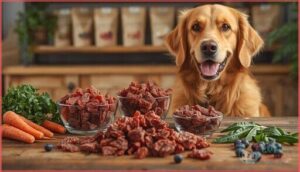
Choosing the right freeze dried dog food isn’t just about picking the fanciest package on the shelf. You’ll want to look closely at what’s actually inside, how it meets nutritional standards, and whether it matches your dog’s specific needs.
Let’s walk through the key factors that’ll help you make a smart, informed choice for your pup.
Evaluating Ingredient Quality and Protein Sources
When you’re reading a freeze-dried dog food label, think of it as a nutrition roadmap. Start with the first ingredient—high-quality animal protein like grass-fed beef or wild-caught fish signals a solid foundation.
Look for protein diversity and novel proteins such as venison or duck, especially if your dog has sensitivities.
Don’t overlook functional fats from marine sources and micronutrients from organs, but stay alert to safety concerns around raw ingredients.
Understanding AAFCO Standards and Labeling
Think of AAFCO standards as your dog’s nutritional safety net—they assure food meets basic requirements for specific life stages. Look for “complete and balanced” statements on labels, which confirm the product passed either feeding trials (tested on real dogs for 26 weeks) or met formulated nutrient profiles.
Here’s what you should verify:
- Life stage label: Growth, maintenance, or all life stages
- Adequacy method: Feeding trials or formulated to meet AAFCO requirements
- “Natural” claims: Limited synthetic additives allowed under dog food standards
- Compliance reality: Some commercial foods still fall short despite labels
- “Supplemental only” warning: Means it’s not nutritionally complete
Remember, meeting AAFCO standards doesn’t guarantee ideal quality—studies show compliance rates vary—but it’s your baseline for pet nutrition safety.
Considering Dog’s Age, Size, and Activity Level
Your dog’s caloric needs shift dramatically across life stages—puppies demand 2 to 3 times more energy than adults for proper puppy nutrition, while senior dogs need 20% to 30% fewer calories.
Breed metabolism matters too: small dogs burn more per pound, requiring adjusted portions.
Match activity factors to your portioning guide, and choose formulas supporting digestive health for your dog’s specific age and energy level.
Top 9 Freeze Dried Natural Dog Food Options
Now that you know what to look for, let’s walk through nine freeze-dried natural dog food options that meet high standards for quality and nutrition. Each one brings something different to the table, whether it’s a complete meal, a topper, or a specialty product like bone broth.
You’ll find options here that work for various budgets, preferences, and your dog’s specific needs.
1. Stella Chewys Chicken Freeze Dried Food
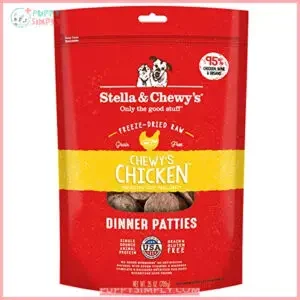
Stella & Chewy’s Chicken Dinner Patties bring cage-free chicken—along with organs and bone—into a recipe that’s 90-95% meat. You’ll find 44-48% protein and 32-35% fat, which powers active dogs while supporting healthy skin and coat.
These patties work as a complete meal, topper, or treat, and rehydrating them is simple: crumble a few, add a quarter cup of water, and watch your dog dig in.
Though the 2015 Listeria recall raised eyebrows, the company’s High-Pressure Processing now targets pathogens without cooking away nutrients.
Best For: Dog owners seeking a high-protein, minimally processed diet for active dogs or picky eaters who benefit from flexible feeding options—whether as a complete meal, kibble topper, or training reward.
- Delivers 44-48% protein from 90-95% cage-free chicken, organs, and bone, supporting muscle maintenance and energy for active dogs
- Versatile feeding: serve dry, rehydrate in minutes, use as a topper, or break into training treats
- Made in Wisconsin with probiotics, taurine, and omega fatty acids for digestive health, heart function, and coat quality
- Premium pricing makes it costly for multi-dog households or larger breeds requiring 15-20 patties daily
- 2015 Listeria recall (though no major incidents since) and occasional customer reports of hard texture or bone fragments
- High fat content (32-35%) may not suit dogs with pancreatitis, sensitive digestion, or weight management needs
2. Open Farm Grass Fed Beef
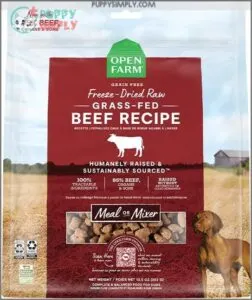
Open Farm’s Grass-Fed Beef Freeze-Dried Raw Dog Food puts 95% beef—muscle, heart, liver, and kidney—into each morsel, hitting 41% protein and 38% fat. This grain-free recipe meets AAFCO standards for all life stages, including large-breed puppies, and you can feed it dry or rehydrate with broth.
Feeding Guidelines suggest about 1 cup daily for a 10-pound dog, though Cost Analysis shows roughly $4.75 per day.
A December 2024 Product Recall withdrew some lots after plastic film appeared in packaging, but no injuries were reported and refunds were offered.
Best For: Dog owners who want high-protein, single-source beef nutrition for any breed or age, especially those willing to pay premium prices for freeze-dried raw convenience.
- 95% beef with 41% protein and 38% fat delivers serious nutrition for active dogs or picky eaters
- Works as a complete meal or high-value topper—just add water or serve dry
- AAFCO-approved for all life stages, including large-breed puppies over 70 pounds
- Daily feeding costs run steep at $4.75 for a 10-pound dog and nearly $20 for a 50-pound dog
- December 2024 withdrawal over plastic film contamination raises quality control questions
- Small bag sizes (13.5 oz) don’t last long for larger dogs, and many customers find it overpriced compared to local options
3. Bixbi Rawbble Freeze Dried Beef Dog
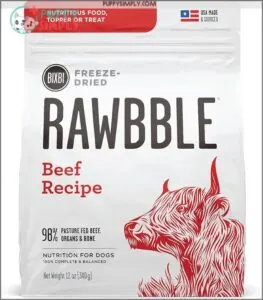
Bixbi’s Rawbble Freeze Dried Beef packs 98% pasture-fed beef, organs, and bone into a recipe delivering 48% protein and 28% fat—perfect for picky eaters or dogs needing concentrated nutrition.
With 96% nutrient digestibility and AAFCO compliance for all life stages, including large-breed puppies, you can trust this grain-free option as a complete meal or topper.
Feed it dry or rehydrate it; either way, your dog gets human-grade, USA-sourced beef with no antibiotics or fillers, though the premium ingredient sourcing means a higher price tag.
Best For: Dog owners seeking a high-protein, minimally processed diet for picky eaters, large-breed puppies, or active dogs who need calorie-dense nutrition without grains or artificial ingredients.
- 98% pasture-fed beef with 96% protein digestibility means your dog actually absorbs and uses nearly all the nutrients, not just passes them through.
- AAFCO-compliant for all life stages including large-breed puppies, so you can feed one food from puppyhood through senior years without switching formulas.
- Versatile feeding options—use it as a complete meal, mix it with kibble as a topper, or rehydrate it for dogs who prefer softer textures.
- Premium pricing at $29.99 for under 12 ounces makes it one of the more expensive options per serving, especially for larger dogs eating multiple cups daily.
- Some customers report inconsistent texture (too hard or crumbly) and quality control issues with stale batches from online orders.
- The 7% maximum moisture and tablet form may not appeal to all dogs, and the high caloric density (4,661 kcal/kg) requires careful portion control to avoid overfeeding.
4. Beef Bone Broth for Dogs Cats
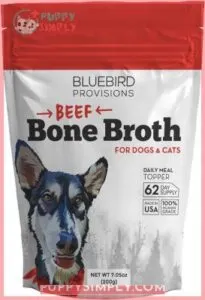
While freeze-dried complete meals dominate the market, Bluebird Provisions’ Beef Bone Broth for Dogs Cats takes a different approach—it’s 100% grass-fed marrow bones powdered for easy mixing.
You’ll get collagen benefits for joints, gut health support through boosted Bifidobacterium (studies show a 1,562% increase), and a palatability boost that helps picky eaters.
Mix it into dog food or create hydration support as a warm broth.
Safety concerns include dissolving challenges and pet food selection—avoid human broths containing toxic onions or excess sodium.
Best For: Pet owners looking for a collagen-rich supplement to support joint health, gut balance, and hydration in dogs or cats—especially helpful for picky eaters or aging animals.
- Delivers measurable gut health benefits with studies showing a 1,562% increase in beneficial Bifidobacterium and improved bacterial diversity in dogs
- Pure grass-fed beef bone broth powder with no fillers, safe for all life stages, and flexible use as a food topper or warm broth
- Supports joint health through collagen and gelatin while encouraging hydration in pets that don’t drink enough water
- Many customers report the powder is difficult to fully dissolve in hot water, leaving clumps and creating a messy preparation process
- Some pets reject the taste or smell outright, making it a gamble for finicky animals despite palatability claims
- Higher price point than competing supplements, and not all owners observe noticeable health improvements in their pets
5. Instinct Raw Boost Gut Health Topper
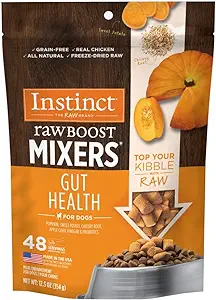
If your dog struggles with digestive upset, Instinct Raw Boost Gut Health Topper brings targeted probiotic benefits through cage-free chicken paired with pumpkin, chicory root, and Bacillus coagulans. This grain-free dog food topper delivers freeze-dried raw nutrition you can sprinkle dry or rehydrate.
Ingredient analysis shows 15% protein and functional fiber for gut support. Customer reviews praise stool improvements within 24 hours, though cost comparison reveals premium pricing at roughly $18.99 for 5.5 oz.
Handling safety remains important—wash hands after serving freeze-dried raw dog food to minimize pathogen risks.
Best For: Dogs with sensitive stomachs or digestive issues who need targeted gut support through a probiotic-rich, grain-free freeze-dried topper.
- Contains live probiotics (Bacillus coagulans) plus fiber-rich ingredients like pumpkin and chicory root that many owners report improve stool quality within 24 hours
- Made with cage-free chicken and freeze-dried raw format that preserves nutrients while boosting palatability for picky eaters
- Grain-free formula with no artificial ingredients, suitable for all life stages and breed sizes as a flexible topper or treat
- Premium pricing at approximately $18.99 for 5.5 oz makes it an expensive daily addition, especially for larger dogs
- Requires careful handling and thorough handwashing after serving due to raw poultry pathogen risks (Salmonella, Listeria)
- Functions as a topper or supplement rather than a complete meal, so you’ll still need to purchase a base dog food
6. Halo Freeze Dried Raw Beef Topper
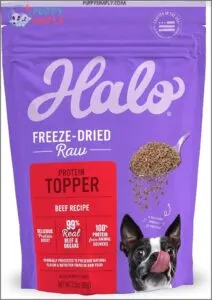
For dogs who turn their noses up at regular meals, this 99% beef topper from Halo delivers pure animal protein—45% crude protein and 30% fat—in a freeze-dried raw dog food format. You’ll sprinkle 2 tablespoons per cup of base food, adding roughly 46 calories and a punch of beef organ meats like liver and heart.
Cost comparison shows $8.39 for 3.5 oz, positioning it mid-range among beef protein source toppers. Feeding guidelines stress the 10% rule to prevent nutrient imbalances, and raw food benefits come with a caveat: wash hands after handling to reduce pathogen exposure.
Best For: Dog owners with picky eaters or pets needing a high-protein boost who don’t mind paying premium prices for a freeze-dried raw topper.
- Delivers 45% crude protein from real beef and organ meats with no fillers, grains, or artificial additives
- Freeze-dried process keeps nutrients intact while staying shelf-stable in a resealable pouch
- Works on both dry and wet food, making it flexible for different feeding routines
- At $8.39 for just 3.5 oz, it gets expensive fast—especially for larger dogs
- Can cause gas or digestive upset in dogs not used to raw food
- Small bag size means frequent repurchasing if you use it regularly
7. Sojos Beef Grain Free Dog Food
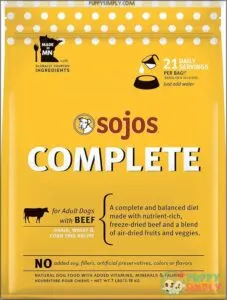
If you want a complete meal rather than a topper, Sojos Complete Dog Food delivers 28% crude protein from beef as the first ingredient, giving you a grain-free dog food that rehydrates at a 1:5 ratio—one pound of freeze-dried dog food yields five pounds of prepared beef dog food.
Ingredient analysis shows sweet potatoes, carrots, and beef liver, meeting AAFCO adult maintenance standards. Its safety record remains clean through November 2025, and market position reflects above-average protein with moderate fat.
Nutritional profile runs roughly 31% protein on a dry-matter basis, offering solid rehydration yield for multi-dog homes.
Best For: Dog owners looking for a complete freeze-dried raw meal that rehydrates easily, especially for dogs with grain sensitivities or those transitioning to a higher-protein diet.
- Beef as the first ingredient with 28% crude protein and a clean safety record through November 2025
- Impressive 1:5 rehydration ratio means one pound stretches to five pounds of prepared food
- Grain-free formula with whole food ingredients like sweet potatoes, carrots, and beef liver that meets AAFCO adult maintenance standards
- Expensive price point that some owners find hard to justify, with reports of 25% price increases
- May cause digestive upset like loose stool or diarrhea in dogs with sensitive stomachs
- No refund policy if your dog refuses to eat it, which is risky given the premium cost
8. Vital Essentials Duck Mini Nibs
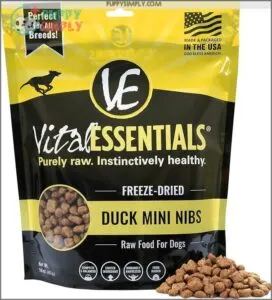
Looking for a limited-ingredient freeze-dried dog food with duck as the sole protein? Essential duck Mini Nibs deliver 45% crude protein from butcher-cut duck meat, organs, and bone—a whole-prey formulation that meets AAFCO standards for all life stages.
Ingredient sourcing emphasizes free-run duck without fillers or artificial additives, while nutritional analysis shows 24% fat and 4,270 kcal/kg.
Feeding applications range from complete meal to topper, with crunchy nibs supporting dogs with food sensitivities. AAFCO compliance confirms balanced nutrition for puppies through seniors.
Best For: Dog owners seeking a high-protein, single-source duck diet for pets with food sensitivities or those wanting a flexible freeze-dried raw option that works as a complete meal or topper.
- Whole-prey formulation with 45% protein from duck meat, organs, and bone provides complete nutrition meeting AAFCO standards for all life stages
- Freeze-dried format preserves raw nutrients and enzymes while offering shelf stability and convenience compared to fresh raw diets
- Limited-ingredient recipe with free-run duck and no fillers makes it ideal for dogs with allergies or sensitivities
- Higher price point compared to conventional kibble or canned foods may not fit all budgets
- Very high protein (45%) and fat (24%) content may not suit senior dogs or those with kidney issues or pancreatitis
- Some dogs may reject the freeze-dried texture or duck flavor, and shipping damage has been reported by users
9. K9 Natural Beef Freeze Dried Food
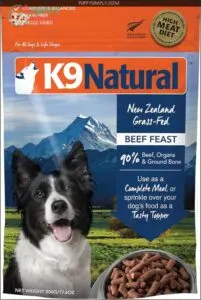
Grass-fed beef from New Zealand pastures forms the foundation of K9 Natural’s freeze-dried formula, delivering 35% crude protein and 37% fat with organs, tripe, and ground bone included. This raw diet alternative provides 5,269 kcal/kg—concentrated nutrition for active dogs.
Nutrient analysis confirms minimal carbohydrates (3.6%) while New Zealand green mussel and kelp add trace minerals. Feeding guidelines accommodate complete meals or kibble toppers across all life stages.
Premium animal protein and specialized processing drive higher costs, yet palatability factors and nutrient density justify the investment for quality-focused dog nutrition.
Best For: Dog owners seeking a high-protein, minimally processed raw diet alternative for active dogs or those with food sensitivities, who can manage the premium price point.
- Grass-fed New Zealand beef with organs and bone provides complete, species-appropriate nutrition at 35% protein and 37% fat with minimal carbs (3.6%)
- Freeze-dried processing preserves nutrients and palatability while offering shelf-stable convenience without refrigeration
- Flexible feeding as complete meal or topper across all life stages, with high energy density (5,269 kcal/kg) ideal for active dogs
- Premium price ($52.99) makes it expensive for large dogs or long-term daily feeding compared to conventional options
- High fat content (62% of calories from fat) may not suit dogs requiring restricted-fat diets despite quality ingredients
- Requires rehydration with warm water for best results, which adds prep time and may not appeal to all dogs
Freeze Dried Vs. Other Dog Food Types
You’ve probably noticed that dog food aisles aren’t what they used to be, with freeze-dried options sitting alongside traditional kibble, canned meals, and raw diets. Each type has different trade-offs regarding convenience, nutrition, cost, and safety.
Let’s break down how freeze-dried food stacks up against the other choices, so you can figure out what works best for your dog’s needs and your lifestyle.
Comparison to Kibble, Canned, and Raw Food
Each type of dog food offers distinct trade-offs you’ll want to weigh carefully. Kibble remains the most affordable option at around $1.93 per day for a medium dog, but freeze-dried raw dog food and raw food for dogs deliver enhanced nutrient digestibility—with protein digestibility reaching up to 99.3% compared to kibble’s 79.5%. Here’s how they stack up:
| Feature | Freeze Dried Raw | Kibble | Canned/Raw Food |
|---|---|---|---|
| Moisture Content | 90% | Protein ~79.5% | High (raw ~99%) |
| Daily Cost (medium dog) | $9.76–$14.73 | $1.93 | $8.93 (canned) |
Freeze-dried raw dog foods preserve nutrients through minimal heat exposure, while kibble processing at 150–200°C degrades vitamins and reduces reactive lysine by up to 80%. Canned food provides excellent moisture and palatability but requires refrigeration once opened. Raw food diet enthusiasts appreciate maximum bioavailability, yet freeze-dried raw dog foods offer comparable nutrient retention with better shelf life and simpler handling—no thawing needed. For caloric density and safety processing, freeze-dried sits between kibble’s convenience and raw’s freshness, giving you flexibility without sacrificing quality.
Pros and Cons for Different Dog Needs

Choosing freeze-dried dog food depends on your dog’s unique health profile. Working dogs thrive on high-protein freeze-dried raw dog foods—some deliver 35–50% protein—while overweight dogs need lower-fat options to avoid excess calories. Senior dogs benefit from freeze-dried food’s palatability and nutrient density, but dogs with medical conditions like pancreatitis often require fat under 10%, making many freeze-dried formulas unsuitable. For food allergies, novel proteins in freeze-dried dog food offer real relief.
| Dog Type | Best Fit | Watch Out For |
|---|---|---|
| Working Dogs | High protein (35–50%), energy-dense | Guarantee adequate hydration |
| Overweight Dogs | Limited portions, low-fat recipes | Calorie-dense formulas |
| Food Allergies | Novel proteins, limited ingredients | Cross-contamination risks |
| Senior Dogs | High protein (28–32%), enhanced palatability | Fat levels if pancreatitis-prone |
| Medical Conditions | Veterinary-approved formulas | High fat (>10% for pancreatitis) |
The benefits of freeze-dried food—nutrient retention, digestibility—shine when matched correctly. Dog food for puppies and dog food for allergies exist in freeze-dried formats, but you’ll want veterinary guidance for complex health needs.
Environmental and Safety Considerations
Beyond nutrition, freeze-dried dog food safety and environmental impact are crucial considerations. Pathogen risks, such as Salmonella, can survive the freeze-drying process, so it’s essential to look for brands that use high-pressure processing (HPP) or are subject to regulatory oversight through recalls.
Manufacturing emissions for freeze-dried dog food are significantly higher, running four to ten times more than kibble production. However, the lightweight packaging reduces transport fuel consumption, partially offsetting the environmental impact. Bacterial contamination and preservatives remain concerns, so proper handling is key to extending the shelf life of dog food while protecting your family.
| Safety Factor | What You Should Know |
|---|---|
| Pathogen Risks | Salmonella survives freeze-drying; choose HPP-treated brands |
| Carbon Footprint | 4–10× more energy than kibble manufacturing |
| Regulatory Oversight | FDA monitors recalls; check recent alerts |
| Packaging Impact | Lightweight reduces transport emissions considerably |
| Manufacturing Emissions | High energy use, but longer shelf life cuts waste |
Feeding and Transitioning to Freeze Dried Food

Switching your dog to freeze-dried food takes a bit of care, but it’s worth doing right. You’ll want to know how to prepare the food properly, ease your dog into the new diet, and store it so it stays fresh.
Let’s walk through the practical steps to make the change smooth and safe for your pup.
Proper Rehydration and Serving Tips
Before serving freeze-dried dog food, proper rehydration ensures your dog gets the nutrients and moisture they need. Most complete meals require about equal parts warm water to food—roughly one cup of each—while toppers may need less liquid depending on how you’re feeding them.
Adding a little extra water aids kidney function and helps dogs who don’t drink enough on their own.
- Water-to-Food Ratio: Start with a 1:1 ratio, adjusting for texture preferences or hydration needs
- Rehydration Time: Let the mixture sit 5–10 minutes until fully softened
- Temperature Considerations: Use warm, not boiling, water to preserve nutrients and boost aroma
- Digestion and Hydration: Always rehydrate complete meals to prevent gastrointestinal discomfort
- Post-Rehydration Handling: Serve immediately and discard leftovers after two hours at room temperature
Transitioning Your Dog’s Diet Safely
Once you’ve figured out the right serving size, you’ll need a gradual adjustment plan to avoid GI effects like loose stools or vomiting. Start by mixing 25% freeze-dried food with 75% of your dog’s current diet for two or three days, then move to half-and-half.
Monitor your dog’s stool consistency and adjust slowly, especially if they’ve allergies or need veterinary guidance for sensitive nutrition needs.
Storage and Handling Best Practices
Once opened, freeze-dried food loses its shelf-stable form quickly without proper handling. Store it in airtight containers in a cool, dry place to control moisture and prevent bacterial contamination.
You’ll preserve nutrients best by using clean scoops to avoid contamination and consuming opened bags within three to six months.
Unlike kibble with preservatives, freeze-dried products rely entirely on low moisture for their shelf life.
Frequently Asked Questions (FAQs)
Are freeze-dried foods good for dogs?
Freeze-dried dog food offers high nutrient retention and strong palatability, making it appealing for many dogs. However, you’ll need to balance these benefits against microbiological risks, higher costs, and specific hydration needs when deciding.
What is the alternative to freeze-dried dog food?
You have several solid dog food alternatives: traditional kibble, canned wet food, gently cooked fresh options, air-dried formulas, or raw diets—frozen or refrigerated—each with unique benefits for your dog’s nutrition and lifestyle needs.
Which is better for dogs dehydrated or freeze-dried?
When you compare freeze-dried vs dehydrated food processing, freeze-dried dog food generally offers better nutrient retention and higher digestibility.
The low-temperature method preserves more heat-sensitive vitamins while delivering enhanced palatability factors that most dogs prefer.
Is freeze-dried dog food better than kibble?
Neither dog food is universally better—each suits different needs. Freeze-dried dog food generally offers better nutrient retention and palatability differences, but kibble remains cost-effective and convenient, making your choice depend on your dog’s unique requirements.
How long does freeze-dried dog food last?
When properly stored, unopened freeze-dried dog food lasts 18 to 24 months. Once opened, use it within 30 days. Rehydrated food should be refrigerated and fed within 48 hours to preserve nutrients.
Does freeze dried food help with weight management?
Yes, freeze-dried dog food can support weight management when you control portions carefully. Its high protein satiety, lower filler content, and calorie density help dogs feel full on smaller servings—if you measure accurately.
How does cost compare to raw feeding?
You’ll notice both freeze-dried dog food and raw diet monthly costs range from $50–$360, depending on your dog’s size.
Freeze-dried saves prep time and storage needs, while raw feeding requires freezer space and ingredient quality consideration.
Are there vegetarian freeze dried dog food options?
Plant-based freeze-drying remains rare in the dog food market. Processing challenges and market availability limit options, though some vegetarian ingredients appear as toppers.
Most brands focus on meat-based formulas for nutritional adequacy.
Conclusion
You might assume switching to freeze dried natural dog food options means sacrificing convenience or breaking the bank, but that’s not the reality most owners discover. The real trade-off is between guesswork and transparency—knowing exactly what your dog eats versus trusting mystery ingredients.
When you rehydrate that bowl, you’re not just feeding dinner; you’re choosing accountability over marketing claims, whole nutrition over factory shortcuts, and your dog’s long-term health over short-term convenience.
- https://www.datainsightsmarket.com/reports/freeze-dried-dog-food-1919459
- https://pmarketresearch.com/hc/home-natural-freeze-dried-pet-food-market/
- https://www.petmd.com/dog/nutrition/freeze-dried-dog-food-pros-and-cons
- https://wefeedraw.com/blog/freeze-dried-raw-dog-food-safety
- https://www.fda.gov/animal-veterinary/animal-health-literacy/get-facts-raw-pet-food-diets-can-be-dangerous-you-and-your-pet