This site is supported by our readers. We may earn a commission, at no cost to you, if you purchase through links.
One grape. That’s all it took for a patient of mine—a two-year-old Labrador named Scout—to end up on an IV drip overnight. His owner had no idea grapes were toxic to dogs. She thought she was sharing a healthy snack. By morning, Scout’s kidneys were struggling.
Food poisoning in dogs moves fast, and the difference between a scary night and a tragic one often comes down to what you do in the first thirty minutes. Knowing the warning signs and the right first aid steps for dog food poisoning can genuinely save your dog’s life.
Table Of Contents
- Key Takeaways
- What Causes Dog Food Poisoning?
- Signs of Food Poisoning in Dogs
- First Aid Steps at Home
- When to Call The Emergency Vet
- Veterinary Treatment and Hospital Care
- Recovery and Prevention After Poisoning
- Frequently Asked Questions (FAQs)
- Can a dog recover from food poisoning?
- How do you treat food poisoning in dogs?
- What first aid should I give my Dog if he is poisoned?
- Can dogs get food poisoning?
- How to flush out food poisoning in dogs?
- How long does it take a dog to heal from food poisoning?
- Can food poisoning spread between dogs?
- How long does recovery typically take?
- Are certain dog breeds more vulnerable?
- Can homemade dog food cause poisoning?
- Conclusion
Key Takeaways
- Grapes, chocolate, onions, and xylitol are common kitchen foods that can seriously harm or kill your dog—even in tiny amounts.
- The first 30 minutes after your dog eats something toxic matters most, so remove the food, keep them calm, and call your vet immediately.
- Never induce vomiting or give human medicines on your own—both can make things dramatically worse depending on what your dog swallowed.
- After treatment, feed a bland diet for 5–7 days, watch for returning symptoms, and lock down trash cans and food storage to prevent it from happening again.
What Causes Dog Food Poisoning?
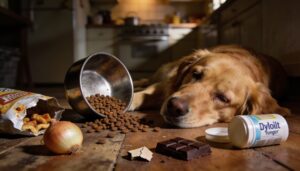
Dog food poisoning can come from more places than you’d expect. It’s not always about something obviously rotten — sometimes the danger is hiding in plain sight.
Some of the biggest culprits are everyday kitchen staples — check out this breakdown of foods that can kill dogs to see just how many surprises are lurking in your pantry.
Here are the most common causes worth knowing.
Spoiled, Moldy, and Contaminated Foods
Spoiled food sneaks up on you. That leftover chicken, the moldy cheese tucked in the back of the fridge, the forgotten bread — your dog doesn’t know the difference.
Mold identification tips matter here: fuzzy patches mean mycotoxins may already be present.
Cross-contamination risks are real too, since spores spread fast. temperature control importance can’t be overstated — refrigeration slows spoilage but doesn’t eliminate it.
Understanding the mycotoxin contamination risk can help you act quickly.
Toxic Human Foods Dogs Should Never Eat
Beyond moldy leftovers, some foods in your kitchen are genuinely dangerous — even in tiny amounts.
- Chocolate toxicity causes vomiting, fast heartbeat, and seizures
- Grapes kidney risk is real; even a few can trigger sudden failure
- Onion anemia develops when garlic or onions destroy red blood cells
- Macadamia neurologic effects include wobbliness and tremors
Xylitol, alcohol — keep all of it far from your dog’s reach. Also, keep cleaning chemicals toxic to dogs out of reach.
Raw Meat, Eggs, and Unsafe Pet Food
Raw meat and old eggs carry real risks — Salmonella, Listeria, and parasites your dog can’t fight off easily. Bacterial contamination spreads fast, reaching countertops, bowls, and your hands through cross‑contamination practices you might not even notice.
Regulatory guidance from the FDA actually warns against raw pet food diets entirely. Nutritional imbalance is another hidden danger, especially for puppies still growing.
Trash, Leftovers, and Kitchen Hazards
minefield for curious dogs.
Unsecured trash cans are a top culprit — dogs tear into bags, swallowing moldy food, grease residue, and packaging scraps without hesitation.
Check packaging integrity regularly, and always secure trash bins tightly.
Even counter grease or drain residue can make a dog sick.
A pet safe kitchen means controlling every surface, not just the obvious ones.
Xylitol and Other Household Toxins
Xylitol hides in plain sight — sugar-free gum, some peanut butter brands, toothpaste, even baked sweets. And for dogs, it’s genuinely dangerous.
Even a small amount triggers a rapid insulin spike, causing hypoglycemia, seizures, or liver failure fast.
Your Label Reading Tips habit matters here. Household Hazard Audit today, store products using smart Toxin Storage Solutions, and keep your pet poison control hotline saved.
Signs of Food Poisoning in Dogs
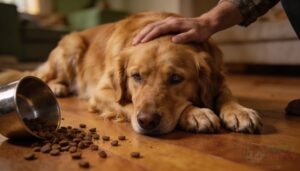
Something’s off with your dog — you can feel it. The tricky part is knowing which signs actually point to food poisoning. Here’s what to look for.
Early Symptoms to Watch For
Your dog can’t tell you something’s wrong — but their body will. Watch for unusual lethargy first; a dog that suddenly won’t get up is a red flag.
Excessive lip smacking, eye redness, and rapid panting at rest are easy to miss early on. Pale gums, loss of appetite, and growing weakness all signal something’s off — and time matters.
Vomiting, Diarrhea, and Drooling
These three symptoms arriving together are a classic toxin symptom cluster — your body’s distress signal firing at once:
- Vomiting: the gut’s first attempt to expel the threat
- Diarrhea: rapid intestinal clearing following close behind
- Drooling: a saliva diagnostic cue tied directly to nausea
That nausea drooling link matters. GI irritation signs like these demand emergency first aid for dog food poisoning immediately.
Dehydration and Abdominal Pain
vomiting and diarrhea drain your dog fast. That fluid loss triggers a dangerous chain reaction — dehydration, electrolyte imbalance, and real abdominal pain.
Watch for dry gums, sunken eyes, and skin that doesn’t spring back. Belly tenderness matters too; if your dog flinches when touched there, that’s a red flag.
Emergency first aid for dog food poisoning means IV fluids and hydration therapy — not waiting it out.
Tremors, Weakness, and Collapse
Some toxins hit the nervous system hard. What starts as wobbly walking can quickly become full collapse.
Watch your dog for:
- Rhythmic, uncontrollable tremors — Tremor Pattern Analysis helps vets pinpoint the cause fast
- Sudden weakness — Weakness Grading Scale guides how urgently treatment begins
- Legs giving way or collapse — Collapse Etiology determines if IV fluids for dog food poisoning are needed immediately
- Seizure-like episodes requiring emergency first aid for dog food poisoning and Neurological Assessment
Severe Symptoms That Signal an Emergency
Some symptoms mean you’re out of time. If your dog shows any of these, skip the wait-and-see approach entirely.
| Warning Sign | What You See | What It Means |
|---|---|---|
| Pale Gums or Blue Tongue | Gray or bluish color inside mouth | Oxygen levels are dangerously low |
| Unresponsive Collapse | Won’t rouse, can’t stand | Circulation or nervous system failing |
| Muscle Twitching or Seizures | Shaking, rigid spasms | Toxin reaching the brain |
Vomiting, diarrhea, and lethargy together with an Elevated Heart Rate signals shock is setting in. Emergency treatment for a poisoned dog starts now — not in the morning.
First Aid Steps at Home
You can’t undo what your dog ate, but you can act fast and stay focused. These first steps won’t replace a vet, but they can make a real difference while you figure out your next move.
Here’s what to do right now.
Remove The Suspected Food Immediately

The moment you suspect something’s wrong, remove the offending food — don’t wait.
Quarantine the food item and preserve the packaging so your vet can check the label quickly.
Label the suspected food clearly and secure trash bins so your dog can’t circle back for more.
Document ingestion details like what was eaten, how much, and when.
These first aid steps for canine poisoning genuinely matter.
Keep Your Dog Calm and Contained

Once the food is gone, your next job is containment. Use crate safety to your advantage — a latched crate limits wandering and reduces stress.
Leash management works too; tether your dog calmly in a quiet recovery area away from noise and other pets.
Position them in a comfort breathing position on their side.
Monitor their symptoms closely — track vomiting frequency, weakness, and balance.
Offer Water Safely

Once your dog is calm, hydration becomes your quiet priority. Offer small sip offerings — not a full bowl — every few minutes.
- Use Clean Bowl Hygiene: wash the bowl before refilling
- Choose Room Temperature Water so it’s easier to swallow
- Practice the Upright Drinking Position to prevent choking
Skip No Additive Fluids — plain water only. Small amounts of water, offered patiently, keep your dog hydrated without overwhelming a stressed stomach.
Do Not Give Human Medicines
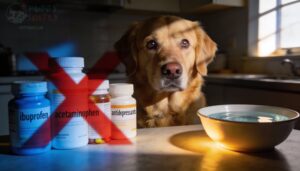
Water helps, but reaching for the medicine cabinet could make things much worse.
Human painkillers carry serious NSAID toxicity risks — ibuprofen alone can destroy a dog’s kidneys. Acetaminophen damages their liver fast. Antidepressant risks, decongestant dangers, and benzodiazepine hazards are equally real.
Human painkillers don’t help a poisoned dog — they destroy it
Even supplements with toxic ingredients like xylitol or iron can cause collapse.
Call your vet first — always.
Do Not Induce Vomiting Unless Told

It feels instinctive to make your dog vomit — but don’t. Unless told by a vet or pet poison control hotline, this first aid step can backfire fast.
Here’s why the Unless Told Rule exists:
- Aspiration Risk — inhaled vomit damages lungs instantly
- Corrosive Substances — acids burn the throat coming back up
- Hydrocarbon Toxicity — petroleum products cause life‑threatening lung damage
- Unconscious Dog Safety — a drowsy dog can’t protect its airway
When to seek veterinary care for poisoned dogs is always sooner than you think.
Record What Was Eaten and When

While you’re keeping your dog calm, grab your phone and start a quick log.
Write down the exact time your dog ate, what the food was — brand, flavor, lot number if you can find it — and roughly how much disappeared. Even "half a can" helps.
This food log details give your vet or pet poison control hotline everything needed to act fast.
When to Call The Emergency Vet

Sometimes home care isn’t enough, and waiting too long can cost your dog its life. Knowing when to make that call is one of the most important things you can do.
Here’s what should send you straight to the emergency vet.
Symptoms That Need Immediate Care
Some symptoms demand an emergency call — no waiting, no second-guessing. If you’re recognizing symptoms of dog food poisoning like seizures, unresponsive behavior, or rapid heartbeat, act immediately.
Pale gums, cold moist skin, and severe dehydration are clinical signs of poisoning that signal shock.
These aren’t watch and see moments. Emergency treatment for a poisoned dog can’t wait — every minute matters.
Blood in Vomit or Stool
Blood in vomit or stool isn’t something to wait on — it’s your dog’s body waving a red flag. Color interpretation matters here:
- Bright red vomit signals fresh, active bleeding
- ""Coffee ground" vomit means blood met stomach acid
- Black, tarry stool (melena) indicates upper GI bleeding
- Bright red stool points to lower bowel bleeding sources
- Any blood warrants severity assessment and emergency treatment for a poisoned dog
Breathing Problems, Seizures, or Tremors
Tremors, seizures, and difficulty breathing are the most terrifying signs of food poisoning. During seizures, central apnea episodes can stop breathing entirely — causing seizure-induced hypoxia before you even notice.
Tachypnea indicators like rapid, shallow breaths signal emergency respiratory support is needed now. Watch for neurologic monitoring tips: shaking that worsens, collapse, or respiratory distress mean emergency veterinary treatment — don’t wait even five minutes.
Puppies, Seniors, and High-Risk Dogs
Puppies, seniors, and dogs with existing health issues don’t get extra time. Metabolic sensitivity means a puppy’s small body absorbs toxins faster — vomiting and diarrhea hit harder, and fluid intake management becomes critical within hours.
Senior dogs face age-related immunity challenges, and medication interactions can complicate things quickly.
Owner vigilance strategies matter most here: if your dog falls into any of these groups, call the vet now, not later.
What Information to Give The Vet
When you call, the vet needs specifics fast. Tell them the food brand, how much your dog ate, and when.
Share your full symptom timeline — first vomit, first diarrhea, any seizures. Mention any medication history too.
The exposure route matters: did they swallow it whole or graze over an hour?
Clear answers help the vet act on symptoms of dog food poisoning immediately.
When to Contact Pet Poison Control
Don’t wait for things to get worse. Pet poison control hotlines are there even when symptoms look mild.
They’ll ask about exposure details — weight dosing, time since ingestion, and packaging identification. Have the wrapper nearby if you can.
Mild symptom monitoring at home is sometimes okay, but only they can tell you that.
Contact veterinarian and toxicology hotline together when unsure.
Veterinary Treatment and Hospital Care

Once your dog is in the vet’s hands, the real work begins. Treatment depends on what they ate and how serious things look.
Here’s what the vet may do to help your dog recover.
IV Fluids for Dehydration
When your dog can’t keep water down, IV fluids become a lifeline. Vets choose fluid type selection carefully — lactated Ringer’s or normal saline — based on your dog’s electrolyte balance and how much they’ve lost.
Intravenous fluid therapy corrects dehydration fast, restoring what vomiting and diarrhea stripped away. Monitoring parameters like gum color and heart rate guide the administration rate throughout hydration therapy for dogs.
Activated Charcoal and Toxin Control
Once fluids are running, your vet may reach for activated charcoal.
Think of it as a toxin magnet — the adsorption mechanism works by trapping poison molecules on its porous surface before they enter the bloodstream.
But the timing window matters: oral activated charcoal treatment works best within one hour.
Dose ratio, contraindications, and non-bound toxins like ethanol all factor into whether your vet uses it at all.
Anti-Nausea and Stomach-Protecting Medications
Once vomiting settles down, your vet will likely introduce antiemetic medication. Cerenia (maropitant) is the go-to choice — it targets the brain’s vomiting center directly.
Antinausea meds like ondansetron or metoclopramide follow specific dosing guidelines based on your dog’s weight and risk factors. Gastro protectants like famotidine then soothe the stomach lining.
Drug interactions and administration routes — oral versus injection — guide every decision.
When Hospitalization or Surgery is Needed
Sometimes, home care just isn’t enough. If your dog hits a toxin dose threshold — especially with xylitol or large amounts of something unknown — emergency veterinary hospitalization becomes necessary.
Watch for unresponsive collapse, neurologic deterioration, persistent vomiting, or abdominal distension. These signal serious danger.
Dog food poisoning hospitalization allows continuous monitoring, IV fluids for dog food poisoning, and fast response if things worsen suddenly.
Typical Treatment Costs and Length of Stay
Costs can catch you off guard when you’re already scared. An emergency triage fee alone runs $75–$150, and the cost of treating dog food poisoning climbs fast once diagnostic fees, IV fluids, and anti-nausea medications stack up.
Emergency veterinary treatment generally totals $250–$2,000. Dog food poisoning hospitalization usually lasts 24–48 hours.
Pet insurance can soften that hit considerably.
Recovery and Prevention After Poisoning

The hardest part is over, but recovery still takes some care. What you do in the next few days matters more than most people realize.
Here’s what to focus on to help your dog heal and stay safe going forward.
Feeding a Bland Diet After Treatment
Think of your dog’s stomach like a bruised muscle — it needs rest before it can work hard again. A bland diet is that rest.
Start here:
- Boiled chicken and rice — Low Fat Proteins paired with Gentle Carbohydrates
- Small, frequent meals — Portion Size Control prevents overloading a tender gut
- Skip butter, sauces, spices — Avoiding Irritants speeds healing
- Gradual Food Change — mix 25% regular food with 75% bland, then slowly shift
- Stay bland 5–7 days — follow recovery diet guidelines for dogs after poisoning before returning to normal
Using bland diets to soothe a dog’s stomach after home recovery care from dog poisoning isn’t complicated — keep it simple, keep it gentle.
Monitoring Hydration, Stool, and Energy
Recovery is detective work. Watch your dog closely — check gum moisture daily, since sticky gums signal dehydration quickly.
Do Skin Tent Test by pinching the scruff; slow return means trouble. Track Urine Output and color — dark amber urine hints at electrolyte imbalance. Stool Consistency Checks matter too: watery or bloody stool needs attention.
Activity Level Monitoring rounds it out — lethargy that lingers calls your vet.
Warning Signs During Recovery
Even improving dogs can backslide fast. Watch for sudden deterioration — returning vomiting, spiking lethargy, or a new refusal to eat.
Persistent neurologic signs like tremors or wobbling mean, call your vet now.
Ongoing dehydration markers — dry gums, sunken eyes — and repeated GI bleeding like dark, tarry stools are emergencies.
Breathing red flags, pale gums, or seizures? Don’t wait.
Safe Food Storage at Home
Once your dog is on the mend, take a hard look at how you store food at home. Use airtight containers in a cool, dry location — heat and moisture invite mold fast.
Practice a FIFO system: oldest food gets used first.
Keep pet food separate from human food, and seal trash tightly.
Smart storage is real pet poison prevention.
Training Dogs to Avoid Dangerous Foods
Storage locks down the kitchen. Training locks down your dog’s choices.
Teaching a solid Leave It Cue is your first move. Pair it with Counterconditioning Techniques and smart Environmental Management, and you’ve built real protection.
Start here:
- Practice Impulse Control daily with dropped food
- Use smart Reward Selection — high-value treats beat temptation
- Supervise closely around common household foods toxic to dogs
Preventing Future Food Poisoning Episodes
Training builds good habits, but prevention is the full picture. Keep a Label Inspection Routine — check dates, seals, and storage instructions every time.
Use Secure Trash Lids, establish Separate Feeding Zones, and practice Regular Food Rotation so nothing sits too long.
Moisture Monitoring stops mold before it starts.
Small, consistent habits are your best defense against accidental toxic ingestion.
Frequently Asked Questions (FAQs)
Can a dog recover from food poisoning?
Most dogs turn the corner quickly — mild cases often resolve within 24 to 48 hours.
Early first aid steps for canine poisoning, plus veterinary supportive care, give your dog the best prognosis factors for a full recovery.
How do you treat food poisoning in dogs?
Start with emergency first aid for dog food poisoning: remove the food, keep your dog calm, and offer small sips of water.
Your vet takes care of the rest — IV fluids, activated charcoal, and electrolyte balance.
What first aid should I give my Dog if he is poisoned?
Act fast, but act smart. Remove your dog from the source, check essential signs, and call the Animal Poison Center immediately. Document exposure details before you rush out the door.
Can dogs get food poisoning?
Yes, dogs can absolutely get food poisoning. Spoiled meat, toxic human foods, and contaminated ingredients are all risk factors.
Symptoms of food poisoning can hit fast — sometimes within hours of eating something harmful.
How to flush out food poisoning in dogs?
You can’t safely "flush" food poisoning at home. Vets use IV fluids, activated charcoal, and rehydration therapy — not home remedies.
Call your vet first. They’ll decide if gastric lavage or electrolyte replacement is needed.
How long does it take a dog to heal from food poisoning?
Mild cases often resolve in 24 to 48 hours. Severe poisoning can take days or weeks. Your dog’s healing timeline depends on what was eaten, how much, and how quickly treatment began.
Can food poisoning spread between dogs?
Not exactly. Food poisoning isn’t contagious like a cold.
But shared bowl contamination and fecal shedding create real cross-dog infection risk. If both dogs ate the same contaminated food, both can get sick.
How long does recovery typically take?
Recovery time depends on severity impact, age influence, and organ recovery speed.
Mild cases resolve in about 24 hours. Severe cases need days to weeks.
Weight factor and treatment length both shape how fast your dog bounces back.
Are certain dog breeds more vulnerable?
Breed absolutely matters. Purebreds carry higher genetic disease risk due to selective breeding impact.
A dachshund’s body structure hazards and medication sensitivity genes differ wildly from a mixed-breed’s.
Know your dog’s breed.
Can homemade dog food cause poisoning?
Yes, homemade dog food can absolutely cause poisoning. Bacterial growth from poor storage temperature, cross-contamination prevention failures, or ingredient shelf life issues can make your dog seriously sick — fast.
Conclusion
A moment’s slip-up with a forgotten snack on the counter—that’s often how danger starts. But your quick action can rewrite the story.
Knowing first aid for dog food poisoning isn’t just helpful; it’s a lifeline when seconds count.
Stay vigilant: secure trash, stash toxins high, and keep the vet’s number close by.
Preparation turns panic into protection, giving you control. And that’s how you turn fear into fierce, unwavering love for years to come.
- https://onlinelibrary.wiley.com/doi/abs/10.1111/vec.12378
- https://pets.webmd.com/dogs/default.htm
- https://advancedfoodintolerancelabs.com/blogs/news/hidden-dangers-common-household-toxins-to-watch-out-for
- https://vetmed.illinois.edu/pet-health-columns/xylitol-toxicity/
- https://www.pethealthnetwork.com/dog-health/dog-toxins-poisons/xylitol-poisoning-dogs-a-deadly-sugar-substitue