This site is supported by our readers. We may earn a commission, at no cost to you, if you purchase through links.
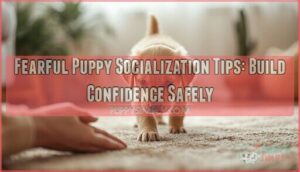
Your puppy flattens their ears, tucks their tail, and backs away from a perfectly friendly stranger—and your heart sinks. That moment when you realize your little one isn’t just cautious but genuinely fearful can feel overwhelming, especially when you know socialization matters so much during these early months.
The good news is that fear doesn’t have to define your puppy’s future. With the right fearful puppy socialization tips, you can help your pup build confidence at their own pace, transforming anxious reactions into curious exploration.
The key isn’t pushing through fear—it’s understanding what your puppy is telling you and responding with patience, strategy, and plenty of well-timed rewards.
Table Of Contents
Key Takeaways
- Fear in puppies shows up through specific body language like tucked tails, flattened ears, and avoidance behaviors that persist across multiple exposures, not just temporary shyness that fades as they warm up.
- Successful socialization happens through gradual exposure at the puppy’s own pace, using high-value treats and keeping sessions brief (5-10 minutes) while maintaining a 60-80% success rate before advancing to harder challenges.
- The environment matters as much as the method—start in quiet, calm spaces with minimal stimuli rather than busy locations, and never force interactions when your puppy shows stress signals like cowering or whale eye.
- Professional help becomes necessary when fear doesn’t improve with consistent training, escalates into aggression or shutdown, or interferes with basic daily activities like walks or vet visits.
Recognizing Fear in Puppies
Before you can help your fearful puppy, you need to recognize what fear actually looks like. Puppies express worry differently than adult dogs, and the signs aren’t always obvious.
Understanding how to handle puppy fear stages gives you the foundation to respond properly when your pup shows these signals.
Let’s look at the key behaviors that signal your puppy is struggling, how fear differs from typical shyness, and why certain developmental stages make puppies more vulnerable.
Understanding the puppy fear imprint stage helps you recognize when normal caution crosses into something that needs gentle intervention.
Common Signs of Fearful Behavior
Recognition is your first line of defense when helping a fearful puppy. You’ll notice behavioral cues like tucked tails, flattened ears, or that telltale whale eye showing the whites. Puppy anxiety during fear periods often manifests through canine stress signals that go beyond normal shyness:
These signs often intensify in group settings, so understanding puppy class interaction techniques helps you manage their comfort level around other dogs.
- Cowering or hiding behind you instead of exploring
- Trembling, lip licking, or excessive yawning in new situations
- Freezing in place when confronted with unfamiliar stimuli
- Whining or growling specifically at fear triggers
Understanding fearful body language helps you intervene before fearful behaviors escalate.
Differentiating Fear From Normal Shyness
Not every hesitant puppy is truly fearful—normal shyness fades as your pup warms up to new situations. Fear signs, however, persist across multiple exposures: consistent avoidance, tucked tails, and elevated stress responses that don’t improve with familiarity.
Social fear also affects puppy anxiety differently than temporary wariness. If your fearful puppy’s reactions escalate rather than diminish during puppy socialization, you’re likely seeing genuine fear that needs careful handling to support puppy confidence.
Understanding Fear Periods in Puppy Development
Fear periods aren’t random—they’re predictable stages in canine development when your puppy’s brain suddenly flags new experiences as potentially dangerous. Most puppies hit these windows around 8–10 weeks, 4 months, and 6–14 months, though breed sensitivities and genetics influence timing.
Understanding canine psychology during these fear stages helps you adjust puppy socialization, building puppy confidence instead of accidentally reinforcing fearful behaviors.
Choosing Safe Socialization Environments

Where you socialize your fearful puppy matters just as much as how you do it. The right environment can make new experiences feel manageable, while the wrong one can set your training back weeks.
Let’s look at how to choose locations that help your puppy feel safe while building confidence.
Quiet Vs. Busy Locations
Think of your puppy socialization environment like choosing a classroom for a nervous student—calm spaces beat crowded ones every time. During the critical socialization period, quiet parks or empty sidewalks help fearful behaviors fade because noise reduction lets your pup focus.
Busy urban planning zones spike stress, making spatial awareness harder. Start with calm spaces where your puppy can build confidence without sensory overload affecting their socialization and confidence-building journey.
Avoiding Overstimulation
Your puppy’s nervous system wasn’t built for three-ring circuses. When you introduce more than three new stimuli at once—say, loud traffic, strangers, and unfamiliar surfaces together—cortisol spikes and fear periods intensify.
Recognizing early warning signs of puppy fear periods helps you adjust training intensity before stress becomes overwhelming.
Watch for overstimulation signs like yawning or lip licking during puppy socialization and confidence sessions. Sensory limits matter: stick to 3–5 minute exposures with gentle exposure techniques for stress reduction and puppy calming, especially when overcoming fear in puppies through careful puppy socialization techniques that respect fearful behaviors.
Selecting Positive First Experiences
Low stress introductions work best when you control the setting. Choose a calm environment—like your backyard or a quiet park corner—for 5–10 minute sessions twice weekly.
Offer safe retreats (a crate or mat) so your puppy can pause when overwhelmed. End each gentle exposure before fear escalates, using positive reinforcement to celebrate small wins.
This approach fosters healthy puppy development during critical fear periods.
Gradual Exposure and Desensitization Techniques
When your puppy shows signs of fear, the best approach is to take things slow and let them set the pace. Gradual exposure works because it helps your puppy learn that new experiences aren’t scary, without overwhelming their nervous system.
Let’s look at how to introduce the most common triggers—people, animals, and environmental stimuli—in a way that builds confidence instead of creating more fear.
Introducing New People and Animals

New faces and furry friends can overwhelm a nervous pup if introductions aren’t handled with care. Watch for calming signals like lip licking or a tucked tail, and let your puppy set the pace. Gentle approaches build trust during this critical socialization period.
- Allow observation from a distance before close contact with people and other dogs.
- Pair each meeting with high-value treats to create positive associations.
- Keep initial sessions brief—just two to five minutes.
- Respect puppy boundaries by never forcing interactions.
These puppy socialization techniques support socialization and confidence building through safe introductions.
Exposure to Noises, Surfaces, and Objects

Your puppy’s world is full of strange sounds and unfamiliar textures—vacuum cleaners, tile floors, and umbrellas can all trigger fear during sensitive socialization periods.
Start noise desensitization at barely audible volumes, pairing each sound with high-value treats. For surface introduction, let your pup explore carpet, grass, and wood at their own pace.
Object familiarization works best when you gradually decrease distance, rewarding calm behavior. This systematic desensitization fosters environmental enrichment while respecting fear periods through gentle sensory stimulation and counterconditioning.
Setting The Right Pace for Your Puppy

How quickly should you introduce new experiences? During fear periods, your puppy’s socialization tips hinge on maintaining a 60–80% success rate with each stimulus—if they’re succeeding less often, you’re moving too fast.
Keep training strategies to 5–10 minute sessions, twice daily, watching for stress signals like yawning or cowering.
Puppy development demands patience, so advance only after three consecutive calm exposures using positive reinforcement.
Building Confidence Through Positive Reinforcement

Positive reinforcement is your most powerful tool for helping a fearful puppy gain confidence. When you celebrate the small wins and make learning feel rewarding, your puppy starts to associate new experiences with good things instead of scary ones.
Here’s how to use treats, praise, and smart session planning to build your puppy’s confidence step by step.
Rewarding Small Successes
Think of confidence building like stacking small wins—each one matters. During fear periods, reward timing is everything: the moment your puppy shows calm behavior near something new, immediately offer positive reinforcement.
These success metrics, even just a relaxed glance toward a stranger, create powerful counterconditioning. Track these tiny victories during puppy socialization, and you’ll watch confidence grow through consistent positive reinforcement techniques.
Using Treats and Praise Effectively
Once you’ve caught those small wins, the magic happens in how you deliver your praise and treats. Positive reinforcement techniques work best when you use high-value treats—think soft, smelly, bite-sized rewards—paired with genuine verbal praise the instant your puppy shows calm behavior.
Here’s your reward system blueprint:
- Match treat value to the challenge level
- Keep reinforcement timing immediate and precise
- Space out rewards to prevent satiation
- Monitor for overwhelm signs like panting or lip licking
This counterconditioning approach builds reliable puppy training responses without creating treat dependency.
Ending Sessions on a Positive Note
Your timing matters as much as your treats—wrap up every session before your puppy shows stress signals. Use a gentle positive cue like “all done” paired with a reward to signal the end.
This puppy training habit creates calm environments where confidence boosters accumulate naturally. Record what worked so your next session builds on real progress, strengthening your reward systems through consistent positive reinforcement training.
Managing Setbacks and Fearful Reactions

Even with careful planning, your puppy will likely have moments when fear takes over, and that’s completely normal. How you respond in these situations can either help your puppy recover quickly or make the fear worse.
Let’s look at practical strategies you can use when setbacks happen, so you’re prepared to support your puppy through tough moments.
What to Do When Fear Occurs
Distance becomes your first safety protocol when your puppy shows a fear response. Move calmly away from the fear trigger until your puppy relaxes—watch for softer body language and normal breathing.
Offer quiet reassurance without overwhelming attention, then give him a calm, predictable space to recover.
During fear periods, these calming techniques help prevent fear aggression and lay groundwork for effective counterconditioning in puppy socialization.
Avoiding Forced Interactions
Once you’ve created that safe space, never push your puppy into contact he’s not ready for. Voluntary engagement is the cornerstone of low-pressure introductions during any fear period—your puppy decides when to approach, and you respect his boundaries completely.
Never force your puppy into interactions—let them choose when to approach, and respect their boundaries completely
Watch for these stress signals that mean “stop right now”:
- Cowering with a tucked tail or flattened body
- Yawning when not tired or excessive lip licking
- Looking away repeatedly or whale eye (showing whites)
- Freezing in place before potential flight
- Pulling backward or actively trying to escape
Forced interactions during puppy socialization create negative associations that counterconditioning can’t easily undo. Instead, let your fearful dog set the pace—this gentle boundary builds trust and forms positive associations with new experiences. Monitoring stress signals protects your pup’s emotional development and prevents setbacks in your socialization strategies.
Counter Conditioning Strategies
Pairing a fear response with something wonderful—that’s the heart of counter conditioning. When your fearful dog sees a scary trigger, immediately offer a high-value treat, creating a positive emotional shift over time.
This puppy socialization guide approach transforms dog anxiety management through strategic, gentle exposure.
| Conditioning Techniques | Reward Systems | Desensitization Methods |
|---|---|---|
| Start at low intensity | Use favorite treats | Increase distance gradually |
| Keep sessions brief | Deliver rewards quickly | Monitor body language |
| Track progress consistently | Maintain calm voice | Practice in familiar spaces |
When to Seek Professional Help

Sometimes, despite your best efforts, a fearful puppy needs more support than you can provide on your own. Recognizing when to bring in an expert can make the difference between a dog who learns to cope and one whose fears intensify over time.
Let’s look at the signs that it’s time to reach out for professional guidance, where to find the right help, and when your veterinarian should be part of the conversation.
Signs Your Puppy Needs Extra Support
If your puppy’s fear isn’t improving despite your best efforts, or if their reactions seem more intense than typical puppy nervousness, it might be time to bring in a professional who can offer specialized guidance.
Watch for these signs that your shy puppy needs extra support:
- Persistent fear triggers that don’t improve with counterconditioning and gradual exposure
- Escalating puppy anxiety like aggression, self-harm, or complete shutdown around people or dogs
- Social fears that interfere with basic activities like walks or vet visits
Finding Qualified Trainers or Behaviorists
When choosing professional support, you’ll want someone who understands canine behavioral development and uses evidence-based methods. Look for trainer certification from accredited organizations like CCPDT or IAABC, which signals expertise in dog behavior and psychology and positive reinforcement techniques.
Ask potential trainers about their approach to puppy training—they should prioritize dog training techniques that build confidence, not force compliance.
| What to Look For | Why It Matters |
|---|---|
| Behavior assessment offered upfront | Shows commitment to understanding your puppy’s specific needs |
| Client testimonials available | Demonstrates track record with fearful puppies |
| Professional ethics clearly outlined | Ensures your puppy’s wellbeing comes first |
Considering Veterinary Guidance
Sometimes fearful dog behavior stems from underlying health issues rather than temperament alone. Your veterinarian plays a vital role in fear diagnosis, conducting a medical evaluation to rule out pain or illness affecting your puppy’s confidence.
After parvodistemper vaccinations and puppy assessment, a veterinary behaviorist can create a customized behavior planning approach tailored to your puppy’s health and wellness needs, integrating dog behavior and psychology with proper puppy care and management.
Frequently Asked Questions (FAQs)
How does breed temperament affect fearfulness levels?
Different breeds show varying genetic predispositions toward fearfulness scores in temperament testing. Heritable traits influence puppy behavior during fear periods, with toy and guarding breeds often displaying heightened fearful dog behavior in canine behavioral development.
What role does diet play in anxiety?
What you feed your puppy directly influences canine behavioral development and anxiety management in dogs. Quality dietary fats, particularly omega benefits from DHA, support stress resilience, while caloric balance and hydration effects shape puppy health and wellness.
Should I use calming supplements for fearful puppies?
Think of calming supplements as a safety net, not the foundation. Before giving any calming aids to your anxious dog, consult your vet—supplement safety matters, and behavior modification often works better than pills alone.
How long does socialization training typically take?
Socialization timeline varies by puppy, but most structured training spans four to six weeks during the critical 3-to-16-week window. Fearful puppies often need months of gradual behavioral progress beyond basic classes.
Proper socialization techniques involve positive reinforcement methods to build confidence in puppies.
Conclusion
Some say fearful puppies never fully recover, but that’s simply not true—with the right approach, they can absolutely thrive. By applying these fearful puppy socialization tips consistently, you’re not just managing anxiety; you’re rewriting your pup’s emotional story one positive experience at a time.
Progress may come in small increments, but every step forward matters. Trust the process, celebrate the victories, and remember: patience paired with strategy creates lasting confidence.
- https://github.com/vinhphunguyen/how-to-write-a-paper/blob/master/how-to-write-paper.brf
- https://elsevier.blog/sub-points-outlining-organization/
- https://www.sciencedirect.com/science/article/pii/S2949916X23000464
- https://akc.org/expert-advice/training/changing-your-dogs-behavior-with-desensitization-and-counter-conditioning/
- https://www.caninecollege.akc.org/class_catalog/category/114997?utm_source=boilerplate&utm_medium=akc_org&utm_campaign=caninecollege_september2025_marketing&utm_id=caninecollege&utm_term=PuppyTraining&utm_content=Everything