
This site is supported by our readers. We may earn a commission, at no cost to you, if you purchase through links.

Your dog’s body can’t manufacture certain nutrients on its own, making what goes into their bowl a matter of biological necessity rather than preference. These essential nutrients—protein, fats, carbohydrates, vitamins, minerals, and water—function as the foundation of canine health, powering everything from muscle repair to immune defense.
When any of these critical components falls short, your dog’s body begins making compromises that can spiral into serious health problems. Understanding which nutrients your dog must get from food, how much they need, and why each one matters gives you the knowledge to make informed decisions about their diet. The difference between a dog that merely survives and one that truly thrives often comes down to nutritional precision.
Table Of Contents
- Key Takeaways
- What Are Essential Nutrients for Dogs?
- Protein: Building Blocks for Dogs
- Fats and Fatty Acids for Energy
- Carbohydrates in Dog Nutrition
- Vitamins Vital for Dogs
- Minerals Dogs Need for Health
- Water: The Forgotten Essential Nutrient
- Frequently Asked Questions (FAQs)
- What nutrients are necessary for dogs?
- What are the 6 essential nutrients for dogs?
- What nutrients should I add to homemade dog food?
- Can dogs safely follow vegetarian or vegan diets?
- How do nutritional needs change with dog breeds?
- What are common food allergies in dogs?
- When should I consult a veterinary nutritionist?
- How should I store my dogs food properly?
- Conclusion
Key Takeaways
- Your dog’s body cannot produce 10 essential amino acids on its own, making complete protein sources from either animal or carefully combined plant proteins a non-negotiable part of their daily diet.
- Omega-3 and omega-6 fatty acids must come from food because dogs can’t manufacture them internally, yet these fats control inflammation, support brain development, and maintain the protective skin barrier that keeps your dog’s coat healthy.
- Water functions as the foundation for nearly every biological process in your dog’s body, with most adults requiring ½ to 1 ounce per pound of body weight daily to maintain proper kidney function, temperature regulation, and joint lubrication.
- Missing even one essential nutrient—whether it’s a trace mineral like zinc or a vitamin like D—triggers a cascade of health compromises ranging from weakened bones and poor immune response to muscle deterioration and impaired metabolism.
What Are Essential Nutrients for Dogs?
Your dog’s body needs specific essential nutrients to function properly, just like yours does. Essential nutrients are the building blocks your dog can’t produce on their own and must get from food to stay healthy.
Just as proper nutrition keeps them energized, understanding whether dogs get cold helps you protect their comfort year-round.
Understanding these six core nutrient categories—protein, fats, carbohydrates, vitamins, minerals, and water—helps you make informed decisions about what goes in your dog’s bowl.
Definition of Essential Nutrients
Essential nutrients are substances your dog’s body can’t make on its own in adequate amounts, so you’ll need to provide them through their diet. These include protein, fats, certain vitamins, minerals, and water—all working together to support nutrient balance and pet wellness.
Without these dietary needs met, your dog can develop serious health problems affecting everything from energy to immunity. Much like in humans, dogs depend on macronutrients and micronutrients to maintain their overall health and well-being.
Importance for Canine Health
When your dog’s dietary needs aren’t met, you’ll see the health benefits slip away quickly. Nutrient balance directly influences immune function, energy levels, and tissue repair—supporting everything from strong bones to a glossy coat.
That’s why proper pet nutrition isn’t optional. Meeting nutritional requirements through protein, fats, vitamins, minerals, and water safeguards canine wellness and prevents deficiencies that compromise your dog’s vitality.
For more information on maintaining regular veterinary check-ups and nutrition, experts advise ongoing monitoring and proactive wellness care.
Overview of Nutrient Categories
Your dog’s dietary needs break down into six nutrient categories that work together to support health.
Macronutrients—protein, fats and fatty acids, and carbohydrates—provide energy sources measured in grams.
Vitamins and minerals deliver micronutrient support for metabolism.
Water keeps everything running smoothly.
Bioactive compounds add nutritional value, though they’re not required for basic nutrient balance.
Protein: Building Blocks for Dogs
Protein stands as the cornerstone of your dog’s diet, responsible for building and maintaining everything from muscle tissue to skin cells.
Protein is the cornerstone of your dog’s diet, building and maintaining muscle tissue, skin cells, and overall health
Your dog needs 22 amino acids to thrive, with 10 of those classified as essential because their body can’t produce them naturally.
Understanding how protein works in your dog’s body helps you make informed choices about the quality and sources of protein you provide.
Role of Protein in Dog Nutrition
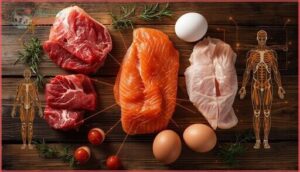
Think of protein as your dog’s construction crew—it builds and repairs everything from muscles to skin cells. This macronutrient provides essential amino acids that drive muscle growth, strengthen immune function, and maintain healthy tissues.
Quality protein sources guarantee your pup gets a nutritionally balanced diet that promotes canine health and wellness through proper nutrient balance and ideal amino acid delivery.
Essential Amino Acids Dogs Need

Your furry friend’s body can’t manufacture ten critical amino acids, making them absolute must-haves in every meal. Protein sources delivering these essential nutrients support everything from muscle repair to immune strength.
Here’s what your dog requires daily for ideal canine health:
- Arginine for ammonia removal and protein synthesis
- Histidine supporting immune function
- Lysine and methionine for growth and metabolism
- Leucine, isoleucine, and valine maintaining muscle mass
- Tryptophan and phenylalanine regulating mood
Without proper amino acid balance, nutrient deficiencies can compromise your dog’s wellness. Complete commercial diets usually meet these nutrient requirements, though puppies need higher amounts during rapid development. Amino acid supplements should only be added with veterinary guidance to prevent imbalances.
Animal Vs. Plant Protein Sources

Animal proteins deliver all essential amino acids your dog needs in one complete package, with higher nutrient bioavailability and faster digestion rates than most plant sources.
Plant proteins can meet nutrient requirements when properly combined, though they usually offer lower protein quality for animal nutrition. Both choices impact environmental footprint differently, with plant-based options generally creating less ecological strain while requiring careful formulation.
Fats and Fatty Acids for Energy

You might think of fat as something to avoid, but it’s actually one of the most important nutrients your dog needs. Fat provides concentrated energy, helps your dog absorb essential vitamins, and plays a critical role in keeping their skin healthy and their coat shiny.
Let’s look at the different types of fats, why certain fatty acids are non-negotiable for your dog’s health, and how these nutrients work to keep their skin and coat in top condition.
Types of Fats in Dog Diets
Your dog’s diet contains two main fat categories: saturated and unsaturated fats. Saturated fats come from animal sources and some dairy, while unsaturated oils—including monounsaturated and polyunsaturated types—are found in fish and plant oils.
These fat sources work together to support energy, skin health, and fatty acid balance. Understanding this distinction helps you choose foods that deliver omega three benefits while maintaining proper nutrition.
Essential Fatty Acids and Their Benefits
Your dog can’t make omega three and omega six fatty acids on its own—that’s where EFA supplements and fatty acid sources come in. These essential nutrients from nutrition science work like tiny messengers, controlling canine inflammation and supporting brain development in puppies.
The right omega benefits include improved joint comfort and heart health, making fatty acid balance a cornerstone of proper dog nutrition alongside protein and amino acids.
Fat’s Role in Skin and Coat Health
Adequate fat intake keeps your dog’s skin barrier intact by supplying the fatty acids that form protective surface lipids. When you balance omega three and omega six levels properly, you’ll notice healthier coat shine and reduced dryness.
Quality fat sources in dog nutrition deliver these benefits:
- EPA and DHA reduce inflammation and itching
- Linoleic acid strengthens skin protection against irritants
- Hair shaft lipids improve softness and gloss
- Balanced fats prevent excessive moisture loss
Carbohydrates in Dog Nutrition

Carbohydrates often get overlooked when you’re thinking about your dog’s diet, but they play a real role in keeping your pet healthy and energized.
Not all carbs are created equal—some provide quick fuel while others support digestion in different ways. Let’s break down how carbohydrates work in your dog’s body and what you need to know about their nutritional value.
Digestible Vs. Non-Digestible Carbohydrates
When you’re evaluating carbohydrates in your dog’s diet, understanding the difference between digestible and non-digestible types is very important for gut health and energy balance. Digestible carbs like starches break down quickly to fuel daily activity, while non-digestible fiber aids stool regularity and a healthy microbiome.
| Carbohydrate Type | Key Benefits |
|---|---|
| Digestible starches | Provide quick energy for activity |
| Soluble fiber | Moderates blood glucose levels |
| Insoluble fiber | Promotes intestinal motility |
| Fermentable fiber | Nourishes beneficial gut bacteria |
Different starch types digest at varying rates—refined grains spike glucose rapidly, whereas whole grains offer steadier fuel. This carb digestion distinction helps you tailor your dog’s nutrition to back both immediate energy needs and long-term canine health.
Energy Contribution of Carbs
Understanding how carbs power your dog’s body helps you make smart feeding choices. Each gram of carbohydrate delivers about 4 calories, fueling everything from brain function to muscle work through glucose metabolism.
- Immediate energy: Circulating glucose fuels daily activity and canine endurance
- Glycogen storage: Liver and muscles stockpile carbs for quick-access fuel
- Sustained performance: Carb energy sources delay fatigue during longer exercise
- Carb quality matters: Complex carbs provide steadier energy than simple sugars
Fiber and Digestive Health
Beyond powering daily activity, carbs deliver fiber benefits that shape gut health and stool quality. Insoluble fiber from vegetables adds bulk and speeds transit, while soluble fiber from oats slows digestion and promotes blood glucose balance.
Fermentable fiber sources feed beneficial bacteria, boosting short-chain fatty acid production. Gradual introduction prevents digestive issues and maintains canine health and wellness.
Vitamins Vital for Dogs

Vitamins play a vital role in supporting your dog’s bones, joints, immune system, and overall metabolic health. These nutrients fall into two main categories—water-soluble and fat-soluble—each working differently in your dog’s body.
Understanding how each vitamin functions and recognizing deficiency signs helps you make certain your dog gets proper nutrition.
Water-Soluble Vs. Fat-Soluble Vitamins
Your dog’s vitamins fall into two camps based on fat solubility and absorption patterns. Water soluble vitamins like B-complex and vitamin C dissolve in water, are absorbed quickly into the bloodstream, and get flushed out through urine within days. This means you’ll need to replenish them regularly through your dog’s diet to maintain proper nutrient balance and prevent deficiency.
- Fat-soluble vitamins (A, D, E, K) require dietary fat for vitamin absorption and are stored in your dog’s liver and fatty tissues for weeks or months
- Water soluble vitamins don’t accumulate in large amounts, so vitamin toxicity risks remain low even with higher intakes
- Storage differences mean fat-soluble vitamins carry greater toxicity potential if overfed, making consultation with a veterinary nutritionist important for supplementation decisions
Key Functions of Each Vitamin
Now that you know the difference between vitamin types, let’s look at what each one actually does for your dog’s body. These biochemical processes power everything from vision to immune support, making vitamins true workhorses in dog nutrition and health.
| Vitamin | Primary Roles |
|---|---|
| A | Powers vision in low light, promotes skin health and immune barriers |
| B Complex | Drives energy metabolism, red blood cell formation, nerve function |
| C | Builds collagen for connective tissue, provides antioxidant benefits |
| D | Regulates calcium balance for bone strength and muscle function |
| E | Protects cell membranes from oxidative damage, boosts immune responses |
| K | Facilitates blood clotting and bone mineralization |
Each vitamin works through specific nutrient interactions—vitamin C helps iron absorption, while vitamin E teams up with other antioxidants to protect cells. Your dog’s body relies on these essential nutrients daily to maintain health, though storage capacity varies between fat-soluble and water-soluble types.
Signs of Vitamin Deficiencies
When your dog isn’t getting enough vitamins, specific warning signs emerge that shouldn’t be ignored. Recognizing these deficiency symptoms helps you address nutrient imbalance before serious health consequences develop.
- Vitamin A deficit causes night blindness and dry, thickened corneas
- B-complex shortage triggers lethargy, poor appetite, and neurological issues
- Vitamin D insufficiency weakens bones and disrupts calcium balance
- Vitamin E depletion leads to muscle weakness and immune problems
- Vitamin K deficiency results in excessive bleeding and poor clotting
Dietary solutions through balanced essential nutrients restore your dog’s nutrition and wellness for pets effectively.
Minerals Dogs Need for Health

Minerals help your dog maintain strong bones and teeth, control body fluids, and convert food into energy. These essential nutrients fall into two categories: major minerals needed in larger amounts and trace minerals required in smaller quantities.
Understanding which minerals your dog needs and how to balance them properly is key to supporting their overall health and preventing deficiencies.
Major and Trace Minerals
Your dog’s body requires two categories of minerals to thrive: major minerals and trace minerals.
Major minerals like calcium, phosphorus, magnesium, potassium, sodium, and chloride are needed in larger amounts for bone health and fluid balance.
Trace minerals—including iron, zinc, iodine, selenium, and copper—support essential functions despite being required in smaller quantities for your canine diet.
Functions of Essential Minerals
Calcium promotes your dog’s bone structure while enabling muscle contraction and nerve transmission. Iron carries oxygen in hemoglobin and facilitates energy production in cells.
Magnesium acts as a cofactor in over 300 enzyme reactions including energy metabolism. Zinc benefits immune function, wound healing, and DNA replication. Selenium function works with proteins to combat oxidative stress and facilitates thyroid hormone metabolism.
Balancing Mineral Intake
Your dog’s mineral balance works like a symphony where every instrument matters. Feed a complete, high-quality diet formulated to meet canine dietary needs and requirements rather than adding supplements.
Calcium levels must align with phosphorus ratio around 1:1 to 1:1.5. Trace elements like zinc and copper interact closely, so excess zinc reduces copper absorption. Nutrient interactions mean high calcium interferes with iron uptake.
Work with a veterinary nutritionist for dogs with special nutritional requirements.
Water: The Forgotten Essential Nutrient

Water often gets overlooked when people think about dog nutrition, but it’s just as essential as protein or vitamins. Your dog’s body depends on water for nearly every biological function, from digestion to temperature regulation.
Let’s look at why hydration matters so much, how much water your dog actually needs, and what happens when they don’t get enough.
Importance of Hydration for Dogs
Water isn’t just another nutrient—it’s the foundation your dog’s body relies on for nearly every function. Proper canine hydration regulates temperature through panting, aids kidney filtration, facilitates digestion, and maintains fluid balance for joint lubrication.
When water intake drops, dehydration signs like tacky gums and lethargy appear quickly. Understanding your dog’s hydration needs protects their overall canine health and prevents serious complications.
Daily Water Requirements
Just like you need that first glass in the morning, your dog’s Daily Consumption of Water is non-negotiable. Most adult dogs thrive with about ½ to 1 ounce per pound of body weight, depending on size and activity.
Reliable Water Quality fosters ideal Hydration Levels, keeps Fluid Balance in check, and anchors Pet Health for true Canine health and nutrition.
Effects of Dehydration in Dogs
When your dog skips the bowl for too long, Dehydration Signs appear fast—dry gums, lethargy, and poor skin turgor warn of Fluid Balance disruption and Electrolyte Imbalance. Veterinary Medicine confirms that water loss can trigger Kidney Damage, Heat Stroke, and even shock.
Key effects include:
- Rapid heart rate from reduced blood volume
- Concentrated, darker urine and low output
- Elevated body temperature and poor cooling
- Firmer stool and decreased appetite
- Confusion, stumbling, or collapse in severe cases
Timely rehydration protects Dog Health and Nutrition.
Frequently Asked Questions (FAQs)
What nutrients are necessary for dogs?
Your dog needs six essential nutrient groups: protein, fats and fatty acids, carbohydrates, vitamins, minerals, and water.
Nutrient balance varies by life stage needs, following AAFCO guidelines for ideal canine health.
What are the 6 essential nutrients for dogs?
Your dog needs six essential nutrients for complete canine health: protein, fat, carbohydrates, vitamins, minerals, and water.
Each plays a critical role in supporting energy metabolism, immune function, and overall nutrient balance.
What nutrients should I add to homemade dog food?
You’ll need to add balanced protein, vitamins, minerals, and fiber through careful recipe formulation.
Ingredient sourcing matters—lean meats, organ tissues, and supplements guarantee nutrient balance while meeting your dog’s supplementation needs effectively.
Can dogs safely follow vegetarian or vegan diets?
Yes, but careful planning is essential. Plant protein sources and meat-free diets require vitamin B12 supplementation plus strategic nutrient balancing to prevent dog nutrient deficiencies affecting vegetarian canine health and protein needs.
How do nutritional needs change with dog breeds?
Your dog’s breed size directly shapes their dietary needs for dogs—small breeds need higher calorie density, while giant breeds require controlled calcium-to-phosphorus ratios to prevent joint issues and support proper metabolic rate.
What are common food allergies in dogs?
Beef tops the list as the most common allergen, followed closely by dairy intolerance and chicken sensitivity.
Wheat reactions and egg allergens also frequently trigger itchy skin, ear infections, and digestive upset in sensitive dogs.
When should I consult a veterinary nutritionist?
You’ll want veterinary guidance when your dog faces chronic health issues, persistent weight changes, food allergies, or if you’re planning homemade diets—nutrition consultation ensures proper diet planning and health monitoring.
How should I store my dogs food properly?
Keep your dog’s kibble in an airtight storage container in a cool, dry spot below 80 degrees—like a well-stocked pantry.
Proper food handling tips help dry food storage preserve nutrients and keeps shelf life management on track.
Conclusion
Think of your dog’s body as a finely tuned machine—it only runs smoothly when every essential nutrient for dogs is present in the right amounts. Missing even one piece can throw the entire system off balance.
By ensuring your dog receives complete nutrition through protein, fats, carbohydrates, vitamins, minerals, and water, you’re not just feeding them—you’re actively protecting their health, vitality, and longevity for years to come.