This site is supported by our readers. We may earn a commission, at no cost to you, if you purchase through links.
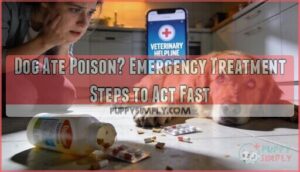
Every ten minutes, a pet in Australia is exposed to something toxic—and most owners freeze at exactly the wrong moment. That split-second hesitation, the frantic Googling, the uncertainty about whether to act or wait—it costs time your dog doesn’t have.
Poison moves fast. Some toxins, like certain rat baits, begin disrupting blood clotting within hours, long before your dog looks sick. Others trigger seizures with almost no warning.
The good news: knowing the right emergency treatment steps when your dog ate poison can mean the difference between a full recovery and an outcome no owner wants to face.
Table Of Contents
- Key Takeaways
- What to Do First
- Common Poisoning Symptoms
- Identify The Poison Source
- Call a Vet or Hotline
- What Not to Do
- Induce Vomiting Only if Directed
- Activated Charcoal and Home Care
- Safe Transport to The Clinic
- Veterinary Treatment for Poisoning
- Recovery and Future Prevention
- Frequently Asked Questions (FAQs)
- What should I do if my dog gets poisoned?
- What should I do if my dog is vomiting?
- What is pet poison helpline®?
- How long does it take for a dog to get poisoned?
- Can a dog survive poisoning without treatment?
- Does pet insurance cover dog poisoning emergencies?
- How much does emergency poisoning treatment cost?
- Can some dogs recover from poisoning without treatment?
- Are certain dog breeds more vulnerable to toxins?
- How long does full recovery from poisoning take?
- Conclusion
Key Takeaways
- The first minutes after your dog gets into something toxic are your most powerful window — remove the poison, stay calm, note the time, and call a vet or poison hotline before symptoms ever appear.
- Never induce vomiting, offer milk, or try home remedies without professional guidance, since some toxins cause more damage on the way back up and DIY fixes can delay real treatment.
- Bring the original packaging, a note of how much was eaten, and any vomit samples to the clinic — that evidence shapes every treatment decision your vet makes.
- Recovery isn’t over when your dog comes home; follow-up bloodwork, a strict medication schedule, and poison-proofing your home and yard are what keep a second emergency from happening.
What to Do First
Finding out your dog got into something toxic is terrifying, but the first few minutes matter more than anything else.
Knowing which foods are toxic to dogs before an emergency happens gives you a real head start when every second counts.
Before you call anyone or reach for anything, there are a few immediate steps that can make a real difference. Here’s what to do right away.
Stay Calm and Secure Your Dog
When your dog may have eaten something toxic, owner calmness isn’t optional — it’s your first immediate first aid step for canine poisoning. Dogs read your energy fast.
A steady voice and gentle handling help keep them still so you can begin focused observation.
Use a leash, crate, or closed room as a secure enclosure.
Clear thinking right now matters more than speed.
If you suspect poisoning, call the Australian Animal Poisons Helpline(https://www.australiawidefirstaid.com.au/resources/how-to-treat-poisoning-in-dogs) for immediate guidance.
Remove Access to The Suspected Poison
Once your dog is secured, your next move is to get the poison out of reach — fast.
- Remove Contaminated Items, like chewed packaging, spilled pills, or scattered bait immediately.
- Seal Trash Bins, and bag any remnants so your dog can’t scavenge again.
- Block Yard Access, if the exposure happened outside.
Secure Storage Containers and locked cabinets prevent repeat contact while you focus on what’s next.
Note When The Exposure Happened
Time is of the essence here. The moment you’ve removed the poison, write down the Exact Ingestion Time — or your best estimate. Vets use your Exposure Timeline Log to decide whether to induce vomiting in dogs or contact a poison control hotline immediately.
| Detail to Record | Why It Matters | How to Capture It |
|---|---|---|
| Start-End Gap | Guides treatment window | Note first and last contact times |
| Symptom Onset Timing | Tracks toxin speed | Log first sign you noticed |
| Amount ingested | Affects dosing decisions | Compare package to what’s left |
| Exposure route | Changes risk level | Ingestion vs. licking vs. skin contact |
| Clock reference used | Confirms accuracy | Phone, oven, or wall clock |
Chronological Evidence Capture doesn’t need to be perfect — just honest.
Check Breathing, Alertness, and Mobility
Once you’ve logged the timeline, take thirty seconds to assess your dog.
Watch for Chest Expansion — breathing should look smooth and even, not labored. Check Mucosal Color; pale or bluish gums signal poor oxygen. Note any Limb Weakness, stumbling, or collapse. Alertness Scoring is simple: does your dog respond to your voice? Neurological Status changes — lethargy, seizures, or confusion — are clinical signs of poisoning that demand immediate action.
Keep Your Dog Quiet While You Act
While you make calls and gather information, your dog needs calm surroundings. Speak in a soft voice, dim the lighting, and limit household noise.
Use gentle restraint — a towel or crate works well — to encourage minimal movement.
Temperature control matters too; keep your dog warm but not overheated.
A quiet space makes monitoring breathing and alertness much easier while you act.
Perform a rapid ABC assessment to make sure airway, breathing, and circulation are stable.
Common Poisoning Symptoms
Poisoning doesn’t always look the same from dog to dog, and symptoms can shift fast. Some signs are hard to miss, while others are easy to brush off as something minor.
Here’s what to watch for.
Vomiting and Diarrhea

Vomiting and diarrhea are often your first warning that something is wrong. These symptoms kick in as your dog’s body tries to expel the toxin, but rapid fluid loss compounds the danger fast.
Stool color indicators like bloody or tarry stool signal serious gut damage.
Vomiting triggers vary by toxin, and delayed reactions are common — so don’t wait to call a vet.
Drooling, Foaming, or Excessive Salivation

Drooling might seem minor, but foaming or excessive salivation is a serious red flag in symptoms and signs of dog poisoning. Neurological triggers can spike saliva production mechanisms, overwhelming your dog’s ability to swallow safely — raising a aspiration pneumonia risk.
Watch for:
- Frothy or bubbly saliva around the mouth
- Constant dripping that won’t stop
- Oral skin irritation or redness developing quickly
- Difficulty swallowing between drool episodes
Call for emergency veterinary care immediately.
Tremors, Twitching, or Seizures

Neurologic toxin mechanisms can turn mild shaking into a full seizure within minutes.
Mycotoxin-induced tremors from moldy food, or amphetamine seizure risk from ingested stimulants, hit fast and hard.
Watch for twitching, a hyperesthesia reaction to touch or sound, and nystagmus — an abnormal eye movement.
These signs demand emergency veterinary care immediately, not a wait-and-see approach.
Lethargy, Weakness, or Collapse

A dog that suddenly can’t get up is telling you something serious. Lethargy, weakness, and collapse are red flags that demand immediate action — not monitoring from the couch.
Watch for these warning signs:
- Lethargy: your dog seems unusually sleepy or hard to rouse
- Weakness: struggling to stand, walk, or respond normally
- Collapse: sudden inability to stay upright
- Muscle tone loss: limbs feel limp during a quick muscle tone evaluation
- Energy level tracking: any sharp drop from normal behavior matters
These signs point to circulation or neurological problems. An emergency veterinary clinic can run cardiovascular monitoring, a blood glucose check, and a neurological assessment fast. Supportive care and fluid therapy are often started immediately.
Breathing Trouble and Pale Gums

Pale gums and labored breathing together are your dog’s version of a silent alarm going off. Gum Pallor Assessment is simple — healthy gums are bubblegum pink. White or gray means trouble.
Anemia Signs and Oxygen Deficiency often go hand in hand, triggering Respiratory Rate Elevation and Cardiac Compensation as the body scrambles to survive.
| Sign | What It Means | Action Needed |
|---|---|---|
| Pale/white gums | Gum Pallor Assessment failure | Call vet immediately |
| Difficulty breathing | Oxygen Deficiency present | Emergency transport now |
| Rapid heart rate | Cardiac Compensation response | Monitor continuously |
| Labored breathing | Severe symptoms escalating | Prepare for hospitalization |
| Weak, fast pulse | Circulation compromised | IV fluids likely needed |
These severe symptoms demand supportive care fast.
How Quickly Symptoms Can Appear

Breathing trouble and pale gums signal a crisis — but don’t assume you’ll always see warning signs right away. Some Rapid Onset Toxicants trigger tremors within minutes, while others cause Delayed Liver Damage with no dog poisoning symptoms for hours. Size-Related Timing matters too — smaller dogs often show signs of poisoning faster. Temperature Influence and dose both shift Dose-Dependent Latency considerably.
- Symptom monitoring starts the moment exposure is suspected, not when symptoms appear.
- Clinical assessment of poisoning should factor in the dog’s size, health, and exactly what was eaten.
- A normal-looking dog in the first hour doesn’t mean you’re safe.
Identify The Poison Source

Figuring out what your dog got into is one of the most important steps you can take right now. The more specific you can be, the better equipped your vet will be to help.
Start by working through these key areas.
Check Foods, Medications, and Chemicals
Start with the food, medications, and common household items your dog had access to. A Label Ingredient Review and Dosage Concentration Check can pinpoint exactly what’s at risk — the strength listed in milligrams or percentages tells you how serious the exposure might be.
Don’t overlook Packaging Hazard Symbols or Expiration Date Verification, since degraded products behave unpredictably.
Food Ingredient Potency varies too — dark chocolate hits harder than milk chocolate, and xylitol concentration differs by brand.
Look for Toxic Plants and Yard Products
Your yard and garden can be just as dangerous as your kitchen. Hydrangea Toxic Parts include bark, flowers, leaves, and stems — the whole plant is a hazard. Bulb Plant Risks are real too; dogs dig, and Jonquil bulbs are poisonous. Watch for:
- Fertilizer Residue on paws after lawn treatment
- Antifreeze Hazards in garages or driveways
- Seasonal Plant Alerts for foxglove, castor bean, and azaleas
- Toxic plants like lily-of-the-valley in ornamental beds
Estimate How Much Was Eaten
Once you’ve scanned the plants and yard chemicals, turn your attention to quantity. Use the Bite Count Method for solids — count missing pieces versus what’s left. For spills, a Liquid Level Change tells you how much is gone. With tablets, count what’s missing.
Then calculate a Weight-Based Dose by dividing the estimated toxin amount by your dog’s weight in kilograms. A Residue Area Estimate works when the container’s gone. Always give your vet a Confidence Rating — low, medium, or high — so they can adjust toxic dose estimation accordingly.
Save Labels, Packaging, and Leftovers
Before anything else, grab the original container. Label Preservation matters more than you’d think — the drug name, concentration, and batch info on a bottle are exactly what the ASPCA Animal Poison Control Center needs fast.
Packaging Documentation and Leftover Container Retention give the pet poison hotline real data for toxic substance identification. Snap a photo for Photo Evidence and capture the Ingredient List for poison source identification and analysis.
Check Vomit or Stool for Clues
What came up — or out — can tell you a lot. Color Interpretation and Texture Assessment of vomit and stool are real diagnostic clues:
- Bright red vomit means fresh bleeding; dark, coffee-ground material means digested blood
- Black, tarry stool signals upper digestive bleeding
- Undigested food in vomit suggests very recent ingestion
- Watery diarrhea speeds up dehydration fast
Timing Patterns and Photo Documentation help your vet make faster decisions.
Call a Vet or Hotline

Once you’ve identified what your dog got into, your next move is picking up the phone. The right call in the first few minutes can shape everything that happens after.
Here’s exactly who to contact, what to say, and why it can’t wait.
Who to Call First
Your first call depends on the situation. If your local vet contact is available, start there — they know your dog.
After hours, go straight to an emergency hospital line or a poison control hotline.
ASPCA’s Animal Poison Control Center (APCC) is reachable at 888-426-4435, and Pet Poison Helpline at 855-764-7661. Keep these numbers on your owner emergency list now, before you ever need them.
Information to Have Ready
When you contact a veterinarian or poison control hotline, the information you share can shape everything that follows.
Have your dog’s breed, age, and weight ready — these Dog Details affect how serious the dose is.
Cover Exposure Facts like the substance name, amount consumed, and time of ingestion.
Note Symptom Notes and gather Toxin Evidence, including labels or packaging.
Why Fast Guidance Matters
Speed is everything with poisoning. The toxin absorption window can close within an hour, meaning activated charcoal or inducing vomiting lose effectiveness quickly. Time-sensitive treatment decisions depend on what your vet knows right now.
- Early antidote efficacy drops sharply after the first hour
- Veterinary triage speed improves when you call before symptoms worsen
- Preventing irreversible damage starts with that first phone call
- poison control hotline guides you away from harmful home steps
- Emergency veterinary care procedures for poisoned dogs work best when started early
Following Instructions Before Home Treatment
Before you do anything at home, wait for the go-ahead.
Contacting poison control hotlines for pets means a trained toxicologist will assess toxin risk specific to your dog’s situation. They’ll confirm dog weight dosing, review medication interactions, and verify owner instructions before recommending any step.
Identifying and managing dog poisoning correctly starts here — not with guesswork. That call is your emergency kit.
What Not to Do

When your dog gets into something toxic, the instinct to do something — anything — can push you toward choices that make the situation worse. Some common go-to responses can actually put your dog in more danger.
Here’s what to avoid.
Never Induce Vomiting Without Advice
Inducing vomiting sounds logical in a panic — but it’s one of the most misused responses to poisoning. Without a guided treatment plan from veterinary professionals, you can make things worse. Some toxins cause more damage coming back up.
A pet poison hotline or veterinarian will assess the specific situation and tell you exactly when to induce vomiting in dogs, or whether to skip it entirely. A Safety first approach means calling before acting.
Avoid Random Home Antidotes
The same caution applies to home remedies. Mixing baking soda, milk, oils, or herbal tinctures won’t neutralize a poison — and some create new problems.
These Home Mix Misconceptions and False Binding Myths can delay real treatment. Unverified Ingredient Toxicity from DIY Antidote Dangers, including so-called natural fixes, is a genuine risk in veterinary toxicology.
Skip the improvising. Call the pet poison hotline instead.
Do Not Give Food or Water Blindly
Food and water seem harmless, but they’re not always safe choices here. Stomach Emptying accelerates when your dog eats, which can push toxins deeper before treatment starts.
There’s also a real Aspiration Risk — a dog showing poor Alertness Assessment signs like tremors or weakness may inhale water while swallowing.
Any Hydration Decision should come from a vet first.
When Milk Can Make Things Worse
Milk feels like a safe, gentle fix — but it usually isn’t.
Most dogs have Lactose Intolerance, so dairy triggers Gastrointestinal Upset that adds Diarrhea Exacerbation to an already stressed system.
If your dog then vomits, there’s a real Aspiration Pneumonia Risk.
Worse, milk delays the treatments that actually work — activated charcoal, induced vomiting with hydrogen peroxide, or a proper antidote — causing Delayed Antidote Treatment when minutes matter.
Why Waiting for Symptoms is Risky
Waiting for visible symptoms is one of the biggest mistakes you can make. Fast Absorption means some poisons are already circulating before your dog looks sick.
By the time your dog looks sick, the poison may already be winning
Delayed Bleeding from rodenticides may not appear for days, while Hidden Organ Damage quietly progresses. Sudden Collapse can arrive with no warning.
Time Sensitive Care — through a pet poison hotline or your vet — works best before symptoms ever start.
Induce Vomiting Only if Directed

Inducing vomiting sounds like an obvious step, but it’s not always the right one — and doing it wrong can make things worse. Whether it helps or hurts depends on what your dog swallowed and how much time has passed.
what you need to know before you act.
When Vomiting May Be Recommended
Inducing vomiting has a narrow window — and timing is everything. A vet or pet poison hotline may recommend it when your dog is alert, showing no neurologic symptoms, and the toxin absorption window is still open, usually within one to two hours of ingestion.
Vomiting induction guidelines also require a gastrointestinal obstruction check first. Always wait for professional direction before using hydrogen peroxide to induce vomiting.
When Vomiting is Dangerous
Sometimes inducing vomiting can hurt more than help. Corrosive ingestions — like bleach or drain cleaner — burn on the way back up, causing severe tissue damage.
Sharp object risks mean needles or glass can lacerate the throat during regurgitation. Neurological contraindications apply when severe symptoms like seizures or collapse are present. Aspiration pneumonia is a real danger if your dog can’t protect its airway.
Timing limits also matter — beyond two hours, it’s rarely useful.
Hydrogen Peroxide Dosing Basics
If a vet gives the green light, only 3% hydrogen peroxide works for inducing vomiting — nothing stronger. Weight-based dosing means 1 teaspoon per 5 pounds, with maximum dose limits capping at 3 tablespoons for larger dogs.
Syringe accuracy matters here. Use an oral syringe for administration technique — measure carefully, place it into the mouth slowly, and watch your dog closely after.
Time Limits After Ingestion
The observation window for vomiting closes fast — usually within two hours of ingestion. After that, most of the toxin has already moved past the stomach.
But don’t assume your dog is safe just because symptoms haven’t appeared yet.
Delayed toxicity is real, and symptom onset variability depends on dose-dependent monitoring factors. Charcoal timing and how much was eaten both shape what vet triage recommends next.
What to Do if Vomiting Fails
If vomiting doesn’t happen, your dog still needs immediate help — don’t wait to see what develops.
- Start hydration assessment: check gums, run a skin tent test, and watch for sunken eyes
- Begin neurological monitoring and seizure watch for tremors or collapse
- Don’t try more induce vomiting attempts without vet direction
- Activated charcoal or IV fluids may be next — only a vet decides
- Head to emergency care now; veterinary treatment options for poisoning include antidote preparation and organ support
Activated Charcoal and Home Care

Once vomiting is handled, the next phase of home care focuses on limiting how much toxin your dog’s body absorbs. Activated charcoal is often part of that process, but it’s not a one-size-fits-all solution.
Here’s what you need to know about using it safely and supporting your dog until you reach the vet.
How Activated Charcoal Helps
Think of activated charcoal as a toxin magnet. Through the adsorption mechanism, it binds poison to its surface inside the gut, blocking it from reaching the bloodstream.
This gastric decontamination approach works best within the first hour.
Dose-dependent efficacy means the right amount matters — your vet calculates it by weight.
For certain dog poisoning cases, repeated doses interrupt enterohepatic recirculation, cutting absorption even further.
When Charcoal Should Not Be Used
Activated charcoal isn’t always the right move. Skip it completely in these situations:
- Corrosive chemicals — acids and alkalis can still damage tissue, and charcoal won’t stop that.
- Heavy metal exposure — it doesn’t bind well to metals like lead.
- Sedated or unconscious dogs — aspiration pneumonia risk becomes very real.
- Seizures or difficulty breathing — severe symptoms mean your dog can’t swallow safely.
- Unknown toxin ingestion — if you don’t know what it was, charcoal may do nothing useful.
Vet-directed Dosing and Timing
When charcoal is appropriate, dosing isn’t guesswork. Weight-based dosing matters here — small dogs need far less than large ones.
Your vet will also factor in symptom onset windows to judge how much toxin may still be in the gut.
repeat dosing intervals are sometimes needed for slow-release substances.
Never self-dose. Antidote timing and charcoal administration must stay coordinated under professional guidance.
Monitoring Hydration and Dehydration Signs
While charcoal does its job, dehydration can quietly take hold. Watch your dog’s gum color — pale or tacky gums signal trouble.
Press a gum until white, then count: capillary refill should return within two seconds.
skin elasticity over the shoulders, monitor urine output for dark color or low volume, and track heart rate.
Offer fresh clean water only if your vet says it’s safe.
Bland Diet After Stabilization
Once your dog is stable, the stomach still needs a break. A bland diet — plain boiled chicken and rice, no seasoning, no extras — gives the gut time to heal without added stress.
Start small and simple:
- Portion Size — feed two to three tablespoons every few hours
- Protein Choice — skinless chicken breast or lean turkey only
- Carbohydrate Selection — white rice, not brown
Maintain hydration alongside fresh, clean water throughout recovery.
Safe Transport to The Clinic

Getting your dog to the clinic quickly is important, but how you transport them matters just as much as how fast you move. A panicked or unsecured dog can hurt itself or make symptoms worse during the ride.
Here’s what to keep in mind before you head out the door.
Using a Carrier or Secure Restraint
Carrier positioning matters more than most people realize during an emergency. Place your dog fully inside the carrier, latch it shut, and secure it with a seat belt using stable anchor points — not the flimsy handle.
Test for movement before driving.
This carrier stability check takes ten seconds but prevents serious injury.
These emergency transport tips for poisoned dogs keep your pet safer when every minute counts.
Keeping Temperature and Airflow Stable
While you’re focused on getting to the clinic, temperature and airflow management can quietly protect your dog’s condition.
- Keep the carrier out of direct sun to prevent heat stress
- Use steady ventilation — open windows slightly rather than blasting air
- Guard against cold surfaces by elevating the carrier slightly
temperature monitoring during transport is simple supportive care that helps a safer veterinary emergency response.
Bringing Toxin Evidence With You
What you bring to the clinic can change everything. Sealed evidence bags containing the original container, leftover tablets, or plant fragments give the vet a head start on poison source identification and analysis. Timestamped documentation tells the full story.
| Bring This | Why It Matters |
|---|---|
| Original packaging | Confirms active ingredients |
| Sample quantity estimation note | Guides dosing calculations |
Residue preservation on the container helps diagnostic testing for toxins move faster. Contact a veterinarian or the Pet Poison Hotline procedures and guidance team at 855-764-7661 before you leave, if possible.
Watching for Seizures or Breathing Changes
Every second counts once symptoms start showing during transport. Watch your dog closely — changes in breathing or sudden seizures can escalate fast.
- Note seizure duration tracking: time each episode from start to finish
- Watch for gum color shifts — pale or blue gums signal poor oxygen
- Monitor respiratory rate fluctuations — slow or labored breathing needs immediate reporting
- Recognize post-seizure confusion as a warning of neurological impact
- Track oxygen saturation indicators like tongue color and response level
Calling Ahead to The Emergency Clinic
One call to the veterinary emergency clinic before you leave can save precious minutes. Give them your dog’s weight, the suspected poison, and how long ago it happened — that’s your phone triage protocol in action.
Share your pre-arrival medication list and estimated arrival time. Staff will verify emergency contact details, pre-stage treatments, and have the team ready when you walk through the door.
Veterinary Treatment for Poisoning

Once your dog is at the clinic, the vet moves quickly to assess what’s happening inside. Treatment depends on the toxin, how much was ingested, and how your dog is responding.
Here’s what that care usually looks like.
Exams, Bloodwork, and Imaging
Right when your dog arrives at the clinic, the vet starts piecing together the full picture. Diagnostic testing for dog poison cases usually includes:
- Gum color assessment and capillary refill to check circulation
- Blood work and urinalysis to catch electrolyte imbalance or organ stress
- ECG monitoring for heart rhythm changes
- Abdominal ultrasound and other imaging to spot internal damage
Lab results guide every next move.
Induced Emesis and Gastric Lavage
Once the diagnostics are in, the vet moves fast. If your dog swallowed the toxin recently, inducing vomiting may still help.
Hydrogen peroxide works at home, but veterinary emetic alternatives like apomorphine act faster and more reliably.
For late-stage cases, gastric lavage clears the stomach under anesthesia safety protocols — though lavage contraindications apply with caustics. Post-lavage monitoring watches for aspiration and relapse.
IV Fluids and Organ Support
After vomiting is managed, IV fluids become the backbone of recovery. Vets use balanced crystalloids to restore circulation, support kidney function, and drive toxins out of the body. Electrolyte correction and acid-base management keep your dog’s chemistry stable while organs recover.
Watch for these signs that fluids are working:
- Gums return to pink
- Your dog becomes more alert
- Breathing steadies and slows
Activated Charcoal and Antidotes
Even after IV fluids stabilize your dog, activated charcoal may still be working quietly in the background. It binds remaining toxins through a process called enterohepatic clearance, pulling poison back out before it recirculates.
Some cases call for multi-dose charcoal to keep that cycle interrupted.
When a direct antidote exists — like vitamin K for rodenticides — antidote synergy with charcoal can sharpen recovery considerably.
Oxygen, ECG, and Seizure Control
When your dog’s body is under toxic stress, three things keep it from crashing: oxygen, heart monitoring, and seizure control.
- High‑Flow Oxygen (up to 100% FiO₂) prevents brain damage during respiratory distress
- Oxygen Humidification protects airways during extended delivery
- ECG Rhythm Analysis and Continuous Cardiac Monitoring catch dangerous arrhythmias early
- Seizure Medication Dosing — diazepam first, phenobarbital if needed — stops convulsions fast
- Supportive care, intravenous fluids, and emergency care work together throughout critical care
Hospitalization for Severe Cases
Severe poisoning cases don’t resolve with a single treatment — they require around-the-clock critical care at a veterinary emergency clinic. Your vet will run Diagnostic Bloodwork, apply Organ Support Therapies, and follow strict Hospitalization Protocols for Critical Canine Poisoning.
| Factor | Mild Cases | Severe Cases |
|---|---|---|
| Hospital Stay Duration | Hours | 1–5 days |
| IV Fluid Protocols | Standard maintenance | 1.5–4× maintenance rate |
| Intensive Monitoring | Every 4 hours | Every 1–2 hours |
Recovery and Future Prevention

Getting through the poisoning scare is a relief, but the work doesn’t stop once your dog is home. Recovery takes consistent follow-through, and preventing it from happening again starts with a few simple changes.
Here’s what to focus on going forward.
Follow-up Visits and Repeat Testing
Recovery doesn’t end when your dog comes home. Follow-up care after canine poisoning treatment often includes blood chemistry rechecks, coagulation panel follow-up, and neurologic reassessment, because some damage shows up days later.
Long-term monitoring after dog poison exposure helps catch organ function problems early. Your vet schedules diagnostic testing for dog poison cases based on how the specific toxin moves through your dog’s body.
Medication Schedules at Home
Your medication schedule at home needs one Single Source of truth — a written chart that lists every drug, dose, and time.
Use a pill organizer for Dose Preparation, and keep a Missed Dose Log to spot gaps.
Practice Side Effect Monitoring after each dose, and maintain Secure Storage so no second accident happens.
Your vet built this plan carefully — follow it exactly.
Monitoring Appetite, Stool, and Energy
Three simple checkpoints tell you how well your dog is healing.
Watch Appetite Trends first — most dogs regain 50% normal intake by day 2 or 3.
Stool Consistency follows, firming up around day 4.
Energy Levels return last, usually by day 5 to 7.
Hydration Monitoring matters throughout; dry gums signal trouble.
These Recovery Milestones confirm the poison is clearing.
Storing Toxins Safely Out of Reach
Once your dog is home safe, think of toxic substances as loaded traps waiting to spring.
Lock every medication — yours and your pet’s — in a cabinet with secure access control. Use high shelf storage for hazardous household chemicals, and add secondary containment trays beneath bleach or drain cleaners.
Label retention matters too — keep original packaging so you can identify any substance instantly. These pet poison prevention strategies protect your dog long-term.
Poison-proofing Your Home and Yard
Beyond locked cabinets, your whole property needs attention.
Pull out toxic plants like daffodils, tulips, and azaleas — replace them with pet-safe varieties. Install proper yard fence barriers to prevent escapes. Secure trash cans with locking lids.
Practice garage hazard control by switching to propylene glycol antifreeze.
For yard chemical safety, skip glyphosate weed killers entirely.
These home safety measures genuinely reduce poisoning risks.
Keeping Emergency Numbers Handy
Once your yard is safer, your phone needs the same attention.
Save the ASPCA Animal Poison Control Center APCC at (888) 426-4435 and Pet Poison Helpline at (855) 764-7661 in your Speed Dial Setup today. Build a Backup Phone List and Digital Contact Card with your emergency vet’s address.
A Printed Emergency Card on the fridge, paired with Location-based Alerts, keeps emergency veterinary protocols within reach when seconds count.
Frequently Asked Questions (FAQs)
What should I do if my dog gets poisoned?
Stay calm, remove your dog from the hazard, and contact a veterinarian or poison control hotline immediately. Don’t wait for symptoms — fast action is what saves lives.
What should I do if my dog is vomiting?
If your dog is vomiting, stay calm, remove food and water immediately, and note the time and frequency. Watch for blood, tremors, or collapse — those need vet emergency services now.
What is pet poison helpline®?
Pet Poison Helpline® is a 24/7 Availability poison control center offering Professional Toxicology Support across the U.S., Canada, and Caribbean.
It connects you with veterinary experts for emergency pet care guidance — anytime, any day.
How long does it take for a dog to get poisoned?
Symptom onset timing depends on the toxin and dose. Fast-acting poisons like antifreeze show signs within 30 minutes.
Chocolate may take 6–12 hours. Delayed toxic effects, like rat poison, can appear 3–5 days later.
Can a dog survive poisoning without treatment?
Some dogs can survive mild poisoning without treatment, but it’s a gamble. The toxin dose threshold, breed susceptibility, and delayed symptom onset all determine whether organ damage risk becomes irreversible.
Does pet insurance cover dog poisoning emergencies?
Most pet insurance plans cover accidental poisoning — but check your policy’s accident definition, waiting period, reimbursement rate, coverage limits, and exclusions, since vet costs for poisoning emergencies can easily reach thousands.
How much does emergency poisoning treatment cost?
Emergency vet costs vary widely. A basic visit runs $100–$250, while hospitalization can reach $4,500 or more.
Hotline fees, diagnostic fees, and antidote pricing add up fast — pet insurance helps offset these costs.
Can some dogs recover from poisoning without treatment?
Some dogs recover from very mild, low-toxicity exposures through natural metabolic clearance alone. But dose thresholds, age sensitivity, and toxin mechanisms make this unpredictable.
Never assume safety — always call your vet first.
Are certain dog breeds more vulnerable to toxins?
Yes.
Herding breeds with the MDR1 Mutation, small dogs facing Body Size Risk, and Greyhound Fat Sensitivity all raise canine poisoning danger.
Breed Metabolism shapes how fast toxins hit — some breeds react far harder.
How long does full recovery from poisoning take?
Recovery timelines vary widely. Mild cases resolve in one to two days, while organ-affecting toxins may need weeks.
Dose-dependent healing, delayed complications, and follow-up monitoring all shape how long full recovery takes.
Conclusion
In the quiet moments with your pet, it’s hard to imagine poison could strike so suddenly. Yet here’s the truth: hesitation becomes your enemy when seconds count.
The emergency treatment steps you’ve learned aren’t just knowledge—they’re a lifeline. Act fast, stay calm, and let preparation outpace panic. Your dog’s survival hinges on your readiness.
Keep this guide close, poison control numbers closer, and remember: love means being ready when the unthinkable happens. Now, breathe. You’ve got this.
- https://www.aspcapro.org/animal-health-toxicology-poison-control/clinic-resources-other-animal-care-hazards
- https://www.furrycritter.com/pages/articles/dogs/aspca_poison_control_hotline.htm
- https://gsvs.org/blog/signs-of-poisoning-in-dogs-urgent-guide/
- https://www.aspca.org/news/what-expect-emergency-veterinarian-after-toxin-exposure
- https://www.australiawidefirstaid.com.au/resources/how-to-treat-poisoning-in-dogs