This site is supported by our readers. We may earn a commission, at no cost to you, if you purchase through links.
Walk down any pet food aisle and you’ll face a wall of choices that can feel more overwhelming than your own grocery shopping. Dry kibble, wet canned food, pouches, rolls—and every bag promises your dog will thrive on it. What most labels won’t tell you is that the format of the food matters as much as the ingredients inside it.
Moisture content, texture, caloric density, and digestibility all shift dramatically between dry and wet options, and those differences can genuinely affect your dog’s health over time. A senior dog with arthritis in his jaw has different needs than a young, athletic breed prone to urinary issues. The right choice isn’t universal—it’s personal.
Understanding the dry dog food vs wet food benefits puts you in control of one of the most important daily decisions you make for your dog.
Table Of Contents
- Key Takeaways
- Dry Dog Food: Key Features and Benefits
- Wet Dog Food: Key Features and Benefits
- Nutritional Differences: Dry Vs Wet Dog Food
- Hydration and Moisture Considerations
- Palatability and Dog Preferences
- Digestibility and Digestive Health
- Dental Health Implications
- Cost and Practical Considerations
- Choosing The Best Option for Your Dog
- Frequently Asked Questions (FAQs)
- Which is better for dogs, dry or wet food?
- What is the 90/10 rule dog?
- Can dogs live on dry food only?
- What do most vets recommend for dog food?
- Can homemade dog food replace commercial options?
- How does dog food affect coat and skin?
- What ingredients should dog owners always avoid?
- How often should feeding schedules be adjusted?
- Does dog food impact energy and behavior levels?
- Conclusion
Key Takeaways
- Wet food’s 70–85% moisture content makes it a meaningful tool for dogs prone to urinary crystals or kidney issues, since hydration built into every meal is far more reliable than hoping your dog drinks enough water.
- Dry kibble’s mechanical crunch does real work against plaque buildup, but wet food’s sticky texture accelerates tartar—so if wet food is your go-to, consistent brushing isn’t optional.
- Labels can mislead you: a wet food showing 10% protein often delivers around 40% on a dry matter basis, which means you can’t compare wet and dry side‑by‑side without accounting for moisture first.
- There’s no single right answer—your dog’s age, health conditions, and budget all shape the best choice, and mixing both formats is often the most flexible approach.
Dry Dog Food: Key Features and Benefits
Dry dog food has a lot going for it, and it’s worth understanding why so many pet owners stick with it.
From longer shelf life to dental benefits, there’s a reason dry food consistently tops the list in wet dog food versus dry comparisons.
From how you store it to how it affects your dog’s teeth, the practical advantages add up quickly.
Here’s a closer look at what makes kibble a smart choice for so many dogs and their owners.
Shelf Life and Storage Advantages
Even when your schedule gets hectic, dry dog food offers superb convenience with its long Unopened Shelf Duration—lasting up to 18 months. Opened Storage Limits stretch to six weeks in airtight containers, and Temperature Control is simple: just keep it below 80°F.
Thanks to Space Efficiency and smart Containment Methods, storing kibble is easy, tidy, and worry‑free for pet food storage. These alternative dry food methods preserve nutrients without refrigeration.
Cost-Effectiveness and Portion Control
With dry dog food, your wallet gets a break thanks to Bulk Buying Savings and Shelf‑Life Economics. Calorie Pricing is far lower than wet food, so you can easily control pet food cost analysis. Meal Pre‑portioning is simple—just use a measuring cup, follow the feeding guide, and minimize Packaging Waste.
Storage life means less spoilage, keeping your costs predictable and manageable.
Consider the higher per‑calorie cost of wet food when budgeting.
Dental Health Support
While you’re counting calories and saving on bulk bags, there’s another perk: kibble’s texture helps with Plaque Reduction and Tartar Control.
Some formulas, especially those with the VOHC Seal, act like gentle brushes, supporting Oral health.
Pairing Dental Chews and a consistent Brushing Routine with Dental Care-focused Dog food textures keeps Plaque and tartar at bay, protecting your dog’s Dental health.
Convenience for Busy Owners
Once you’ve nailed down dental care, convenience of kibble really shines. Quick meal prep means you can measure a day’s food in minutes, and automatic portioning keeps feeding schedules steady.
Portable feeding solutions and travel‑friendly packaging, dry food offers minimal cleanup, reliable storage life, and cost-effective options—ideal for busy owners juggling work, errands, or short trips.
Wet Dog Food: Key Features and Benefits

Wet dog food brings a lot more to the bowl than most people realize. It’s often the better fit for dogs with specific health needs, texture preferences, or trouble chewing.
Here’s what makes it stand out.
High Moisture Content for Hydration
Wet dog food is basically a hydration-boosting meal timing strategy built right into your dog’s bowl.
Most wet foods contain 70 to 85 percent moisture, which directly helps urinary health by keeping urine dilute and reducing crystal formation.
That moisture content also delivers moisture-driven satiety, helping dogs feel fuller on fewer calories — a quiet win for weight-conscious feeding.
Enhanced Palatability and Taste
Few things win over a picky eater like the right smell hitting at the right moment. Wet dog food’s aroma release mechanism works fast — moisture above 70% lets volatile compounds escape immediately, triggering salivation within seconds.
Here’s what makes palatability so powerful:
- Fat-driven flavor coats the tongue longer, delivering savory satisfaction
- Meaty broth mimics fresh meat taste dogs instinctively crave
- Hydrolyzed peptides activate taste receptors more effectively than whole proteins
- Novel protein aromas re-engage dogs with fading taste preferences
Easier Chewing for Senior Dogs
As your dog ages, chewing can quietly become a struggle. Jaw muscle atrophy weakens bite strength, and tooth loss from periodontal disease makes hard kibble genuinely painful.
Switching to softer, age-appropriate food can make a real difference—feeding guidelines for dogs at every life stage explain exactly what to look for as your dog’s needs change.
canned pate texture lets seniors compress each bite with minimal effort. warm broth soak softens dry dog food similarly.
Supporting dental health through texture choices keeps your dog eating comfortably.
Nutritional Density and Protein Levels
Here’s something that surprises many pet owners: a can of wet food labeled 10% protein actually delivers around 40% dry matter protein once you strip out the moisture. That’s more than many kibbles.
A wet food label showing 10% protein can actually deliver 40% dry matter protein once moisture is removed
Wet food usually has higher protein bioavailability and favorable nutrient ratios, making calorie concentration and nutrient density genuinely competitive—especially for dogs with elevated nutritional needs.
Nutritional Differences: Dry Vs Wet Dog Food
Dry and wet dog foods aren’t as nutritionally equal as they might seem on the label.
The differences in protein, fat, and carbohydrate content can actually matter quite a bit for your dog’s health.
Here’s what you need to know about the key nutritional gaps between the two.
Protein and Fat Content Variations
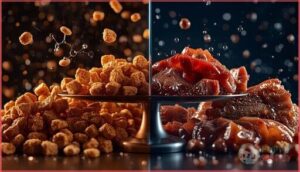
Labels can be misleading. A wet food showing 8% protein looks weaker than dry food at 25%—until you compare them on a dry matter basis. Strip out moisture content, and that canned option often delivers 32% protein.
| Nutrient | Dry Food | Wet Food |
|---|---|---|
| Protein (as-fed) | 18–30% | 7–15% |
| Fat (as-fed) | 8–18% | 3–10% |
Protein source impact matters too—fresh meats in wet food boost palatability, while meat meals concentrate nutrients in kibble. Fat calorie ratio also shifts with moisture, so active dogs may need dry food’s energy density, while kidney‑friendly formulations often use wet food’s lower phosphorus profile. Stage‑specific needs round out the picture.
Carbohydrate Levels and Fillers
Carbohydrates are where the nutritional differences between wet and dry dog food really diverge. Dry dog food usually contains 30–70% carbohydrate content, while wet dog food contains well under 10%.
| Carb Ratio Comparison | Dry Food | Wet Food |
|---|---|---|
| Carbohydrates (as-fed) | 30–70% | 1–10% |
Watch for starchy grain‑free fillers like peas and lentils—they’re still significant starch sources. The filler impact on weight is real, especially in less active dogs. Low‑carb formulas almost always favor wet options.
AAFCO Nutritional Adequacy Standards

Whether you choose wet or dry, the AAFCO Statement on the label tells you if the food truly delivers nutritional balance.
Look for life stage designations—puppy, adult, or all life stages—since each follows different nutrient profiles.
Guaranteed analysis and feeding trials back up those claims.
| Label Element | What It Means | Why It Matters |
|---|---|---|
| AAFCO Statement | Confirms nutritional adequacy | Validates pet nutrition completeness |
| Guaranteed Analysis | Lists protein, fat, fiber, moisture | Allows dog food comparison |
| Life Stage Designation | Targets age-specific nutrient needs | Ensures correct nutrient analysis |
Hydration and Moisture Considerations

Water is just as important as food regarding keeping your dog healthy.
What your dog eats plays a bigger role in their daily hydration than most people realize.
Here’s what you need to know about moisture, water intake, and what happens when your dog doesn’t get enough.
Importance of Water Intake in Dogs
Water is the unsung hero of your dog’s health. Without enough of it, everything from kidney function to digestive efficiency starts to suffer. Here’s what proper hydration actually does:
- Urinary dilution — flushes waste and reduces crystal formation
- Skin elasticity — a quick skin-tent test reveals early dehydration
- Heat stress prevention — panting demands constant fluid replenishment
- Digestive efficiency — keeps gut bacteria balanced and stools healthy
How Wet Food Supports Hydration
Think of wet dog food as a meal and a drink rolled into one. Most canned formulas pack 70–85% moisture content, meaning canine hydration gets a serious boost with every bite.
That high moisture intake promotes urine dilution, which is great for kidney support. It also promotes exercise recovery and seasonal hydration during hot months, keeping your dog balanced naturally.
Risks of Dehydration With Dry Food
Dry dog food only contains about 6–12% moisture content, which leaves your dog’s hydration needs largely unmet at mealtime.
Without enough water intake, low moisture intake leads to urinary concentration, putting real kidney strain on your pup over time.
Watch for subtle skin elasticity signs, sticky gums, or reduced energy levels — these are early clues that dog hydration needs attention.
Palatability and Dog Preferences

Some dogs eat whatever you put in front of them, while others turn their nose up at anything that doesn’t meet their exact standards. Food isn’t just about nutrition — texture, smell, and taste all play a real role in whether your dog actually eats what you serve.
Here’s what to know about palatability and dog preferences.
Taste and Texture Factors
Your dog’s nose makes the first decision at mealtime. Wet food’s high moisture content releases richer aroma intensity, while dry kibble relies on coating flavor sprays to compete.
Mouthfeel contrast matters too — shreds, pate, and gravy textures require almost no bite pressure, whereas kibble’s crunch demands real jaw effort.
This texture variety directly influences palatability, and some dogs have surprisingly strong opinions about it.
Appetite Stimulation in Picky Eaters
simple sensory triggers respond well to stronger aroma enhancement, making wet dog food far more inviting than a cold bowl of dry dog food.
Exercise timing also matters — a walk before meals naturally sharpens appetite.
Puzzle feeders engage hunting instincts, turning eating into a rewarding activity.
Even the feeding environment plays a role, as a quiet, consistent spot noticeably improves palatability and appetite stimulation.
Feeding Challenges and Solutions
Switching foods without a plan is one of the fastest ways to land in digestive trouble. Adjustment Planning matters — moving gradually over 5 to 7 days helps avoid digestive upset and keeps palatability high.
Pair that with smart Hydration Strategies, Portion Control, and Stool Monitoring to catch early signs of Digestive Sensitivities or Food Allergies. dog food slowly really does make all the difference.
Digestibility and Digestive Health

What your dog eats doesn’t just affect their energy or weight — it affects how well their gut processes every meal. Some dogs breeze through any food without a hitch, while others show clear signs when something isn’t sitting right.
Here’s what you need to know about how wet and dry food compare regarding digestibility and keeping your dog’s digestive system happy.
Ease of Digestion in Wet Vs Dry Food
Think of digestion like a highway—wet food takes the express lane.
Thanks to its high moisture content, wet food facilitates faster gastric emptying, usually clearing the stomach in four to six hours compared to eight to ten for kibble.
That moisture content and hydration also ease chewing load, improve nutrient absorption, and offer age‑specific digestive health comfort, especially for seniors.
Impact on Stool Quality
What ends up in the yard tells you a lot about what’s happening inside your dog’s gut.
Dry food’s low moisture content and higher carbohydrate content produce firmer, bulkier stools, while wet food’s high moisture influence generally means softer volume variations.
Protein content matters too—rich wet diets often create smaller but stronger odor characteristics.
Adjustment symptoms like loose stool are common but temporary with gradual changes.
Sensitivities and Food Allergies
Food allergies are more common than most people realize — and finding the culprit takes patience. Beef, chicken, dairy, and wheat top the allergen list, so novel proteins like venison, duck, or rabbit are often safer starting points.
Limited ingredient diets simplify trigger identification by cutting variables down. For persistent reactions, hydrolyzed diets break proteins into fragments your dog’s immune system won’t recognize. Always get veterinary advice before overhauling your dog’s special dietary needs.
Dental Health Implications

dog eats can affect more than just their waistline — it can shape what’s happening inside their mouth, too.
The connection between food type and dental health is something a lot of pet owners overlook, but it’s worth paying attention to. Here’s what you need to know about how dry and wet food each play a role.
Dry Food and Tartar Reduction
Every bite of dry dog food does a little housekeeping in your dog’s mouth. The mechanical abrasion from chewing rubs soft plaque off teeth before it hardens into tartar. Specialized dental kibbles take this further with fiber matrix design, sodium hexametaphosphate coatings, and an oral microbiome shift toward healthier bacteria—earning the VOHC Seal criteria for proven plaque and tartar reduction.
- Regular kibble provides light but consistent daily cleaning
- Dental-specific dry dog food reduces tartar by up to 42%
- Chemical coatings slow plaque mineralization between meals
Wet Food and Oral Hygiene Risks
Dry food’s scrubbing action is a real advantage, but wet food flips that script. Its soft, sticky texture clings to teeth and gumline, letting plaque formation happen quickly. Without brushing, that plaque hardens into tartar within days, triggering gum inflammation and bad breath — and bacteria entering inflamed gums raise systemic infection risk substantially.
| Oral Health Factor | Wet Food Impact | Why It Matters |
|---|---|---|
| Plaque Formation | High — soft texture sticks to enamel | Accelerates tartar buildup |
| Tartar Accumulation | Faster than dry food | Rougher surface traps more bacteria |
| Gum Inflammation | Increased risk | Can progress to periodontitis |
| Bad Breath | Stronger, more persistent | Bacteria thrive on trapped food particles |
| Systemic Infection Risk | Elevated with poor oral hygiene | Bacteria may affect heart, liver, kidneys |
Balancing Dental Health With Food Choice
dry dog food nor wet dog food has to be the villain here.
Dry food’s crunchy texture benefits teeth by scraping plaque, while calcium rich ingredients and phosphorus enamel support help rebuild enamel.
Smart meal timing strategies and hydration oral effects round things out.
Combine both foods, brush regularly, and your dog’s oral health stays in great shape.
Cost and Practical Considerations

Nutrition matters, but so do budget and your daily routine.
The type of food you choose can affect how much you spend, how you store it, and how easy it is to feed your dog on the go. Here’s what to keep in mind before making your decision.
Price Comparison and Value
Cost sneaks up on you faster than you’d think. A calorie cost analysis shows wet food can cost five times more per daily serving than dry kibble — and inflationary price trends between 2020 and 2023 pushed wet formulas up nearly 50%.
Here’s what shapes your pet food cost analysis:
- Dry kibble averages $60–$100 monthly for a 50‑pound dog
- Wet food often runs $120–$180 for the same dog
- Bulk purchase savings drop per‑calorie costs on larger dry food bags
- Subscription service fees add hidden costs to fresh and raw diets
- Value‑based ingredient quality may offset higher upfront costs long‑term
Storage and Waste Management
Storage-wise, kibble wins on simplicity. A 12-kilogram bag fits neatly in a pest-proof container, giving you compact storage solutions and a shelf life of several months at room temperature.
Wet food demands refrigeration lifespan management — opened cans last only 3–5 days. For portion waste reduction and packaging recyclability options, metal cans rinse and recycle easily, while most dry food bags don’t.
Convenience for Travel and Feeding Schedules
For life on the go, dry kibble is hard to beat. Its portability weight advantage is real — a bag fits easily in your pack without needing a travel cooler‑free setup to stay safe.
Room-temperature storage means no refrigeration worries, and quick portioning takes seconds with a standard scoop. Flexible meal timing works even on unpredictable days, making dry food a genuinely convenient choice for busy schedules.
Choosing The Best Option for Your Dog

Picking the right food comes down to knowing your dog — their age, health, and what actually works for their body.
There’s no universal answer, but a few key factors make the decision a lot clearer. Here’s what to think about when narrowing down your best option.
Assessing Your Dog’s Age and Health Needs
Your dog’s age shapes everything about their nutritional needs. Puppies need calorie-dense food to fuel rapid growth and bone development, while senior hydration becomes critical after age seven — wet food’s high moisture content protects kidney function and helps joint health.
Weight monitoring matters at every life stage, so assess your dog’s body condition regularly and adjust portions to match their changing canine nutrition requirements.
Special Diets and Veterinary Guidance
Some health conditions call for more than just a good kibble. When your pup has chronic kidney disease, food allergies, obesity, or digestive disorders, vet prescription protocols become essential tools, not optional extras.
- Renal Nutrition limits phosphorus to protect failing kidneys
- Allergy Elimination diets use hydrolyzed proteins to calm immune reactions
- GI Therapeutics and Weight Management formulas target specific conditions
Always follow vet recommendations closely.
Benefits of Mixing Wet and Dry Foods
Mixing wet and dry food might be the best of both worlds for your pup.
You get Texture Variety that keeps meals interesting, plus natural Kidney Support through the moisture boost — wet food carries 75–78% water, far more than dry’s 10–12%.
It’s a smart Weight Management and Energy Balance strategy, and the Cost Efficiency alone makes it worth trying.
Transitioning Between Food Types
Switching foods too fast is a recipe for tummy trouble. Use Gradual Mixing Ratios — start with 75% old food, then ease toward 100% new over 7–10 days.
Age-Specific Timelines matter too: puppies and seniors need 12–14 days.
During any Wet vs Dry Dog Food Comparison phase, prioritize Hydration Maintenance and Digestive Monitoring, watching for loose stools or appetite loss, adjusting your pace if needed.
Frequently Asked Questions (FAQs)
Which is better for dogs, dry or wet food?
Neither wins outright — it depends on your dog. Both meet AAFCO standards, but your dog’s age, hydration needs, and budget shape the real answer. Your vet’s guidance matters most here.
What is the 90/10 rule dog?
The 90/10 rule means 90 percent of your dog’s daily calories come from complete, balanced food—wet dog food or dry dog food—
while 10 percent covers treats, supporting nutrient balance, portion control, and healthy weight management.
Can dogs live on dry food only?
Yes, dogs can absolutely thrive on dry food only. Quality kibble promotes long-term health, kidney function, energy levels, and weight management — just guarantee veterinary monitoring and fresh water daily.
What do most vets recommend for dog food?
Most vets lean toward a high quality diet customized to your dog’s age and health needs. Nearly 60 percent recommend dry kibble, but vet consultation always wins over guesswork.
Can homemade dog food replace commercial options?
Homemade dog food can theoretically replace commercial options, but veterinary supervision is essential.
Without professional guidance on nutritional adequacy and ingredient sourcing, most homemade diets fall dangerously short of your dog’s complete dietary needs.
How does dog food affect coat and skin?
You’re what you eat applies to dogs too.
Omega Balance, Zinc Levels, Vitamin E, Protein Quality, and Moisture Impact all shape your dog’s coat health and skin condition through daily Nutrition and Diet choices.
What ingredients should dog owners always avoid?
Skip chemical preservatives like BHA, grain fillers like corn, meat byproducts, artificial dyes like Red 40, and legume fillers like peas.
These compromise your dog’s health and signal a low-quality diet fast.
How often should feeding schedules be adjusted?
Adjust pet feeding schedules at every major life stage.
Puppy Growth Stages, Adult Life Events, and Senior Metabolism shifts all demand updates.
Breed Size Differences matter too — large dogs follow different timelines than small ones.
Does dog food impact energy and behavior levels?
Absolutely — what’s in your dog’s bowl shapes everything from energy crashes to mood swings.
Protein Energy Balance, Fat Fuel Stability, and Hydration Behavior link all play real roles in your dog’s daily behavior and dog health.
Conclusion
Take Max, a seven-year-old Labrador with a history of urinary crystals—his vet recommended wet food to boost daily hydration, and his recurrence rate dropped substantially.
That single, informed switch made all the difference.
Understanding dry dog food vs wet food benefits means you’re not just filling a bowl; you’re making a medical decision dressed as a meal.
Know your dog’s needs, trust the evidence, and let that guide every scoop.
- https://natureslogic.com/blog/wet-vs-dry-dog-food/
- https://www.petmd.com/dog/nutrition/dry-dog-food-vs-wet-dog-food-which-better
- https://houndsy.zendesk.com/hc/en-us/articles/38928386047131-How-Much-Wet-Dog-Food-Equals-Dry-Dog-Food-Understanding-Proper-Feeding-Ratios-for-Your-Dog-s-Nutrition
- https://www.houndsy.com/blogs/pupdiet/does-wet-dog-food-have-more-calories-than-dry-understanding-the-nutritional-differences
- https://packer.hms.harvard.edu/15-wet-vs-dry-dog-food-facts-essential-nutrition-tips