
This site is supported by our readers. We may earn a commission, at no cost to you, if you purchase through links.

Most dog owners discover their double-coated breed’s shedding potential the hard way—usually when they pull a couch cushion out from under a golden retriever and find what looks like a second dog living underneath it.
That moment hits differently when you realize the fur is coming from two separate coat layers working against each other without proper maintenance. A double coated dog’s undercoat doesn’t just shed—it compresses, traps, and eventually mats if you’re brushing the surface and calling it done.
The right grooming routine changes everything, from your dog’s comfort through summer heat to how much fur you’re finding in your morning coffee.
Table Of Contents
- Key Takeaways
- What is a Double Coated Dog?
- Essential Grooming Tools for Double Coats
- Step-by-Step Grooming Routine for Double Coats
- Managing Shedding and Matting
- Common Grooming Mistakes to Avoid
- When to Seek Professional Grooming Help
- Frequently Asked Questions (FAQs)
- Can double coated dogs be groomed?
- How often should a double coated dog be groomed?
- How do groomers deshed a dog with a double coat?
- What is the point of a double coat on a dog?
- Can diet affect a double coats health?
- How do allergies impact double-coated dog grooming?
- What age should puppies start grooming routines?
- Do double coats need conditioner after bathing?
- How does climate affect double coat care needs?
- Conclusion
Key Takeaways
- A double coat works as a two-layer system — the soft undercoat regulates temperature while the outer coat shields skin, so skipping regular brushing breaks that system and leaves your dog uncomfortable.
- Never shave a double-coated dog — it doesn’t reduce shedding, it exposes their skin to sunburn and irritation, and the coat damage can take over a year to recover.
- Use a slicker brush first to tackle surface tangles, then follow with an undercoat rake to pull out the dead underlayer — using one tool for everything is one of the most common mistakes owners make.
- During shedding season, bump brushing to daily and bathe every 4–6 weeks with a de-shedding shampoo to stay ahead of the fur before it compacts into painful mats.
What is a Double Coated Dog?
Before you can groom a double-coated dog well, you need to understand what you’re actually working with.
That coat has two very different layers doing very different jobs, so picking the right clippers for double-coated dogs makes a bigger difference than most people expect.
These coats aren’t just “extra fur” — they’re a two-layer system built for a reason. Here’s what makes them unique and why that changes how you care for them.
Double Coat Structure and Function
A double-coated dog’s fur works like a two-layer jacket. The undercoat — soft, dense, woolly — sits close to the skin and regulates thermal balance by trapping air to keep your dog warm in winter and cooler in summer.
The outer coat repels moisture and provides skin shielding from sun, insects, and rough terrain. Together, they manage shedding cycles and coat maintenance year-round.
Common Double Coated Breeds
You’ll find double coated dog breeds across nearly every working group. Northern Breeds like Siberian Huskies and Alaskan Malamutes, Spitz Types like Pomeranians and Samoyeds, Herding Dogs like German Shepherds and Australian Shepherds, and Sporting Breeds like Golden Retrievers all share this coat structure.
Each has unique coat varieties, but they all demand consistent brushing and coat maintenance to manage shedding year-round.
Why Double Coats Need Special Care
That shared coat structure is what makes double coated dog grooming so different from everything else. The two layers work as a system — insulation, skin protection, thermoregulation — and when that system breaks down, your dog feels it.
Three things happen fast without proper coat maintenance:
- Shedding builds up into painful mats
- Moisture gets trapped against the skin
- Insulation benefits drop, leaving your dog too hot or too cold
Essential Grooming Tools for Double Coats
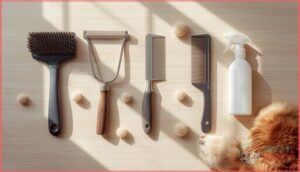
Having the right grooming tools makes grooming a double-coated dog a whole lot easier — and less frustrating for both of you.
Not every brush or comb works the same way, and using the wrong one can do more harm than good. Here are the tools worth having in your kit.
Slicker Brushes and Undercoat Rakes
Two tools do the heavy lifting for any double-coated dog: a slicker brush and an undercoat rake. The slicker brush tackles surface tangles and loose topcoat, while the rake digs deep to pull out dead undercoat for real shedding control.
Brushing while the coat is still damp is just as important—here’s how to prevent matting during drying before tangles even get a chance to set in.
Use the slicker brush first, then follow with the rake. Together, they’re your grooming foundation for coat types like Huskies or Goldens.
Choosing The Right Combs and Shedding Tools
Picking the right comb and shedding tools matters more than most people think. For long-haired double coated dog breeds, you need longer teeth — around 1 to 1.5 inches — to reach through heavy fur down to the skin.
Shorter coats do better with wide-toothed combs and rubber curry tools. Stainless steel combs resist rust and stay smooth, making coat maintenance strategies easier and safer long-term.
Step-by-Step Grooming Routine for Double Coats
Grooming a double-coated dog isn’t complicated once you know the right order of steps. Each part of the routine builds on the last, so skipping ahead usually creates more work.
Here’s exactly what to do, from first brush stroke to finished nails.
Brushing and De-Shedding Techniques
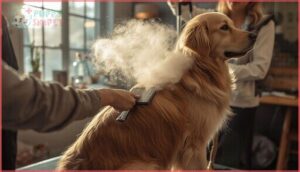
Getting brushing right is the foundation of double coat maintenance. For your double-coated dog, follow this order:
- Line Brushing — part small sections and brush from skin outward
- Slicker Brushing — use short strokes following hair growth
- Undercoat Raking — pull loose undercoat with slow, even passes
- De-Shedding check — follow with a comb to catch hidden tangles
Brush at least three times weekly — daily during shedding season.
Bathing and Proper Drying Methods
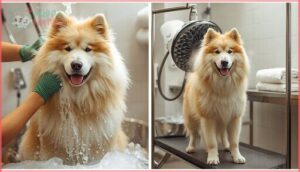
Bathing your double coated dog every six to twelve weeks keeps the coat healthy without stripping its natural oils. Always use warm water — never hot — and saturate the coat down to the skin before applying a canine shampoo.
Rinse thoroughly, then press towels against the fur to absorb moisture. Finish with a high-velocity dryer to fully dry the undercoat and prevent coat moisture buildup.
Trimming, Shaping, and Nail Care
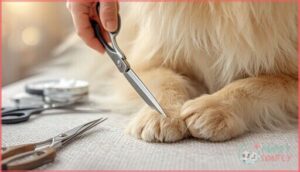
Full body shaving is off the table for a double-coated dog, but targeted trimming keeps things tidy and functional. Focus on these key areas:
- Paw trimming keeps fur between pads short, reducing ice buildup and slipping.
- Sanitary trims every 4–8 weeks prevent hygiene issues without touching the main coat.
- Dewclaw maintenance matters most since they don’t wear naturally and can curl into the skin.
Use proper dog grooming tools and nail care habits—trim nails at a 45-degree angle and keep styptic powder nearby. Coat shaping and grooming techniques like outline trimming preserve coat function while keeping your dog comfortable.
Managing Shedding and Matting
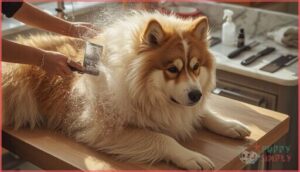
Shedding and matting issues are two of the biggest challenges that come with owning a double-coated dog. How you handle both depends on your dog’s coat type, the time of year, and how consistent you’re with grooming.
Here’s what you need to know to stay ahead of it.
Preventing Mats in Undercoat and Topcoat
Mats don’t appear overnight — they build up quietly, especially in a double coated dog where loose undercoat gets trapped beneath the topcoat. Brushing frequency matters more than most owners realize. Aim for three sessions a week minimum, daily during peak seasons.
| High-Risk Zones | Why They Mat Fast |
|---|---|
| Behind the ears | Constant friction and moisture |
| Armpits and groin | Rubbing from movement |
| Collar and chest area | Saddle pressure traps undercoat |
| Leg feathering | Hidden tangles build undetected |
Always dry completely after baths — damp undercoat felts fast. Nutrition impact is real too: omega-rich food keeps hair shafts smoother, making preventing mats noticeably easier.
Seasonal Shedding (“Blowing Coat”) Tips
Twice a year, your double coated dog basically “resets” their fur — and it’s a lot. Coat Blow Management during these seasonal shedding windows comes down to three essentials:
- Brush 3–5 times weekly to pull loose undercoat before it compacts
- Bathe every 4–6 weeks using a de-shedding shampoo for shedding control
- Support coat health with omega-rich food and fresh water daily
Skin Health Tips matter here too — monitor for hot spots while managing seasonal shedding cycles.
Daily Vs. Weekly Grooming Strategies
Once you’ve got shedding season under control, keeping up a steady rhythm makes everything easier. A quick 5–10 minute daily session takes care of loose surface hair and catches early tangles — especially in friction zones like behind the ears.
Weekly deep grooming, about 20–40 minutes, is when you really work through the undercoat. Together, these Brushing Techniques form a Coat Maintenance and Mat Prevention system that keeps your DoubleCoated Dog comfortable year-round.
Common Grooming Mistakes to Avoid
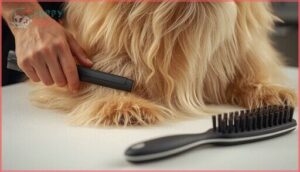
Even with the best intentions, it’s easy to slip into habits that can quietly damage your dog’s coat over time. Some of the most common mistakes are surprisingly simple to make — and just as simple to fix once you know what to watch for.
Here are the key ones to keep on your radar.
Risks of Shaving Double Coated Dogs
Despite good intentions, shaving a double coated dog is one of the most damaging dog grooming techniques you can make. It doesn’t solve shedding problems — it creates them.
Without guard hairs, your dog faces real temperature issues, faster sunburn, and skin irritation from everyday elements. Coat damage after shaving can last over a year, and breed-specific grooming exists for good reason: their coat health depends on it.
Shaving a double-coated dog doesn’t protect them—it exposes them to sunburn, irritation, and lasting coat damage
Overbathing and Skin Health Issues
Shaving damages the coat — but overbathing quietly wrecks the skin underneath.
Your double coated dog’s natural oils are doing real work: Skin pH Balance, Coat Protection, and Dryness Prevention all depend on them. Wash too often and you strip that defense away.
Signs you’re overbathing:
- Flaky, dull fur after baths
- Increased scratching or licking
- Musty smell between washes
- Redness in skin folds or armpits
- Coat feels dry, not clean
Stick to every four to six weeks. Use dog-specific shampoos that support Moisture Control without disrupting canine dermatology. A damp wipe takes care of light dirt just fine between sessions — your dog’s skin health will thank you.
Improper Tool Use and Coat Damage
The wrong tool can quietly ruin a double coated dog’s coat before you notice anything’s wrong.
Blade-style deshedding tools like the Furminator cut guard hairs — that’s a real Deshedding Tool Risk most owners miss.
For Coat Damage Prevention, match your tools to the task.
Rakes lift loose undercoat; slickers smooth the topcoat.
Using one brush for everything is one of the most common Grooming Technique Mistakes.
When to Seek Professional Grooming Help
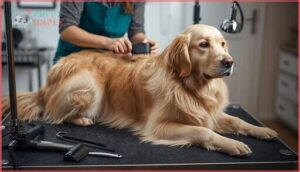
At-home grooming gets you pretty far, but there are times when a professional groomer just makes more sense. Knowing when to hand things off — and how to make those visits count — saves you stress and keeps your dog’s coat in better shape.
Here’s what to watch for and how to make the whole process easier.
Signs Your Dog Needs Professional Care
Some signs are hard to miss. If your double coated dog flinches when you brush, has mats you can’t pull apart by hand, or smells bad right after a bath, it’s time to call a professional groomer.
Matting issues, shedding problems, skin infections, and coat damage don’t fix themselves. A trained eye catches what you might overlook during regular double coated dog care.
Benefits of Regular Groomer Visits
Regular groomer visits do more than clean your dog — they’re a cornerstone of double coated dog care. Here’s what a professional groomer delivers every appointment:
- Coat Health and Shedding Control — High-velocity dryers and undercoat rakes remove compacted fur that home brushing misses.
- Skin Monitoring — Groomers spot rashes, lumps, and parasites hidden under dense fur.
- Nail and Ear Care — Trimming and cleaning prevent painful overgrowth and infections.
Grooming frequency every four to six weeks keeps problems manageable before they escalate.
Preparing Your Dog for Grooming Appointments
A little prep work goes a long way before your double-coated dog’s appointment. Share health details, vaccine records, and any sensitivities with your groomer upfront — it shapes everything from product choices to handling.
| Prep Area | What To Do | Why It Matters |
|---|---|---|
| Vet Requirements | Bring rabies and Bordetella records | Required for salon entry |
| Anxiety Reduction | Take a short walk beforehand | Burns energy, eases tension |
| Health Checks | Note skin issues or sore spots | Guides safe handling |
| Owner Guidance | Share known commands and treat preferences | Helps groomer connect quickly |
| Grooming Prep | Feed a light meal 1–2 hours before | Prevents nausea during bathing |
By following these steps, you can ensure a smooth and safe experience for your dog. Sharing important information and preparing your dog properly will help the groomer provide the best possible care.
Frequently Asked Questions (FAQs)
Can double coated dogs be groomed?
Yes, double coated dogs can absolutely be groomed. Groomed well, groomed often, groomed right — that’s the goal.
Proper brushing techniques and shedding control keep your dog’s undercoat healthy and coat maintenance simple.
How often should a double coated dog be groomed?
Most double coated dogs need brushing 2 to 3 times per week. During shedding seasons, bump that to daily. A professional grooming visit every 4 to 8 weeks keeps the coat in great shape.
How do groomers deshed a dog with a double coat?
Most groomers don’t just grab a brush and start pulling.
Proper deshedding combines coat assessment, high velocity drying, and undercoat removal — turning what feels like a fur avalanche into a manageable, stress-free process.
What is the point of a double coat on a dog?
A dog’s double coat is nature’s all-weather jacket. It provides Insulation Benefits, Temperature Regulation, Skin Protection, and Weather Resistance — keeping your double-coated dog comfortable whether it’s freezing cold or blazing hot outside.
Can diet affect a double coats health?
Absolutely. What your dog eats shows up directly in their coat.
Poor protein intake, low omega balance, or nutrient deficiencies can dull the fur, increase shedding, and weaken both coat layers fast.
How do allergies impact double-coated dog grooming?
Allergies change everything. If your double-coated dog has sensitive skin, standard grooming gets trickier — you’ll need hypoallergenic shampoos, gentler tools, and smarter dander control methods to protect their coat health without triggering flare-ups.
What age should puppies start grooming routines?
Start your puppy’s grooming routine at 8 weeks old. Short, calm sessions build confidence early.
Gentle Early Brushing, Nail Trimming, and a light Bathing Schedule set the foundation for lifelong Puppy Socialization and canine coat health.
Do double coats need conditioner after bathing?
Yes, conditioner after bathing is worth it. It restores coat moisture, promotes skin health, and makes shedding control easier. A light formula keeps the fur hydrated without weighing it down.
How does climate affect double coat care needs?
Climate Control shapes every grooming decision you make. Hot, humid summers demand daily brushing to prevent matting.
Cold winters need less bathing, more detangling. Your regional grooming routine literally determines your dog’s coat health year-round.
Conclusion
A single missed brushing session with a double-coated dog can snowball into weeks of detangling work—that’s not an exaggeration, it’s Tuesday for most owners who skip the undercoat.
Consistent double coated dog grooming isn’t about flawlessness; it’s about staying ahead of the coat before it takes over your schedule, your furniture, and your sanity. Learn your dog’s shedding cycle, use the right tools, and show up regularly. That routine is what separates a thriving coat from a matted mess.
- https://www.whole-dog-journal.com/care/what-is-a-double-coated-dog/
- https://tarheeltotalpetcare.net/double-coated-breed-grooming/
- https://vroomgrooms.com/2024/10/24/how-often-should-double-coated-dogs-be-groomed/
- https://www.riverviewgrooming.com/post/best-brushes-for-double-coated-dogs-groomer-approved-tools-to-keep-the-shed-under-control
- https://www.bubblypaws.com/barkblog/how-do-you-bathe-and-dry-a-double-coated-dog