
This site is supported by our readers. We may earn a commission, at no cost to you, if you purchase through links.

Somewhere between your third lint roller and your second vacuum of the day, you probably started wondering if dog ownership had to feel like managing a small wool factory. It doesn’t.
Dogs that rarely shed fur exist, and they’re not some rare mythological creature—they make up a surprisingly long list of breeds, from pocket-sized Maltese to regal Afghan Hounds.
The secret lies in coat structure: these dogs grow hair with longer growth cycles, meaning less ends up on your couch. Whether you’re dodging allergies, protecting your black wardrobe, or just craving a cleaner home, the right low-shedding breed changes everything.
Table Of Contents
- Key Takeaways
- What Makes a Dog Low-Shedding?
- Are Low-Shedding Dogs Hypoallergenic?
- Essential Grooming for Low-Shedding Breeds
- Top Small Low-Shedding Dog Breeds
- Best Medium Low-Shedding Dog Breeds
- Large Low-Shedding Dog Breeds to Consider
- Benefits of Choosing a Low-Shedding Dog
- Important Considerations Before Adoption
- Frequently Asked Questions (FAQs)
- Conclusion
Key Takeaways
- Low-shedding dogs have hair (not fur) with longer growth cycles, meaning loose strands stay in the coat instead of ending up all over your couch.
- Genes like MC5R and RSPO2 largely control how much a dog sheds, which is why curly and wiry-coated breeds naturally leave far less mess behind.
- No dog is truly hypoallergenic — every breed still produces dander and saliva proteins that can trigger allergies, so spending time with a specific dog before adopting is a smart move.
- Low-shedding doesn’t mean low-maintenance — most of these breeds need brushing 2–4 times a week and professional grooming every 4–8 weeks, which can run $600–$2,000 a year.
What Makes a Dog Low-Shedding?
Not all dogs shed the same way, and there’s actual science behind why some barely leave a hair on your couch.
Genetics, coat type, and growth cycles all play a role — and minimal shedding dog breeds tend to share a few surprising traits in common.
A few key factors work together to determine how much fur your dog drops. Here’s what you need to know.
Hair Vs. Fur in Dogs
Here’s the real difference: dog hair and fur aren’t the same thing. Hair grows continuously, stays longer, and sheds gradually—that’s why NonShedding Dogs leave less mess. Fur has a shorter growth cycle and “blows out” seasonally in big clumps.
Four things separate them:
- Coat Structure — hair is finer, single-layered; fur is dense with a thick undercoat
- Hair Growth — hair keeps growing; fur hits a set length and sheds
- Shedding Patterns — hair releases slowly; fur dumps in seasonal waves
- Dander Production — fur coats scatter more allergens when they shed
For a clear breakdown of hair and fur differences, check expert insights on coat types and care.
Role of Genetics in Shedding
Genetics runs the show in terms of shedding. Two key genes — MC5R and RSPO2 — largely determine your dog’s genetic shedding level. Dogs carrying low-shedding coat variants drop far less hair year-round.
| Gene | Role | Effect on Shedding |
|---|---|---|
| MC5R | Sebum production | Less sebum = less shedding |
| RSPO2 | Furnishings/texture | Wiry coat traps loose hair |
| FGF5 | Coat length | Longer growth phase = less frequent shedding |
If you want to learn more about how MC5R variants impact shedding, you can read about.
Impact of Coat Type on Shedding
Your dog’s coat texture tells you almost everything about what you’ll find on your couch. Curly and wavy coats trap loose hair in the curl, so shedding stays in the brush — not on your floors. Wirehaired coats hold dead fur until grooming day. Single-layer hair coats grow continuously, skipping those dramatic seasonal blowouts entirely.
- Curly coats catch shed hair, making low-shedding breeds feel nearly non-shedding between grooming sessions
- Wirehaired coats hold onto fur density until hand-stripped, reducing daily loose hair
- Single-layer coats skip seasonal shedding patterns, dropping hair steadily and predictably
- Furnished coats (think eyebrows and leg hair) trap loose strands and support matting prevention
- Hair growth cycles in low-shedding hypoallergenic breeds run longer, meaning fewer hairs fall out daily
Are Low-Shedding Dogs Hypoallergenic?

The term hypoallergenic gets thrown around a lot in the dog world, but it’s not the whole story.
Before you pick your perfect low-shedding companion, it helps to understand how allergies actually work and what these breeds can — and can’t — do for you. Here’s what you need to know.
Understanding Pet Allergies
Your immune system, not the fur itself, is the real troublemaker behind dog allergies. The sensitization process begins when your body mistakes harmless dog proteins for threats, triggering immune reactions that release histamine.
Allergy symptoms — sneezing, itchy eyes, congestion — can flare up fast. Allergen testing can confirm pet allergies, helping you understand exactly what you’re dealing with before choosing a breed.
Dander and Allergen Production
Dander is the sneaky culprit behind most dog allergies — not fur itself. When skin renews, it sheds tiny flakes packed with canine allergens like Can f 1, one of the most common triggers.
Regular bathing every 4–8 weeks can seriously cut down on dander buildup, especially with low-shedding dog breeds that produce fewer allergens.
Shedding mechanics matter here: loose hairs carry dander into the air faster. Low-shedding breeds trap it closer to the coat, which can mean less airborne skin flaking overall.
Managing Allergies With Low-Shedding Breeds
Managing symptoms starts with smart choices. Low-shedding breeds help create hypoallergenic homes by keeping pet dander contained in the coat rather than floating around your air. Pair that with allergy testing to pinpoint your triggers — like Can f 1 — and you’re already ahead.
Regular low shed grooming, HEPA filters, and weekly bedding washes make low-shedding dogs genuinely livable as allergy friendly pets.
Essential Grooming for Low-Shedding Breeds
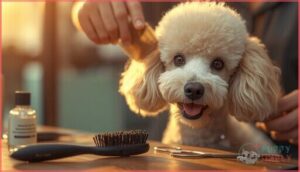
Here’s the thing about low-shedding dogs — less fur on your couch doesn’t mean less work overall.
Their coats actually need more hands-on care to stay healthy and tangle-free.
Here’s what you need to know about keeping that coat in great shape.
Brushing Frequency and Techniques
Think of brushing as your dog’s daily reset button. Most low-shedding breeds need grooming sessions 2–3 times per week, while curly coats like Poodles thrive with light daily brushing.
For coat maintenance, start with a slicker brush, then confirm with a metal comb. Dematting tools handle stubborn knots gently. Good hair care tips make a huge difference — consistency beats marathon grooming every time.
Professional Grooming Needs
Even low-shedding breeds need a pro in their corner. Most dog grooming schedules for hypoallergenic breeds like Poodles and Bichon Frise call for a full salon visit every 4–6 weeks — bath, blowout, trimming techniques, nail care, and ear cleaning included.
Keeping up with coat maintenance on low-shedding breeds prevents overgrowth and keeps your pup comfortable between home sessions.
Preventing Mats and Tangles
Mats don’t show up overnight — they sneak in one missed brushing session at a time. For low-shedding breeds, regular brushing and the right detangling tools aren’t optional; they’re survival gear for your dog’s coat.
- Brush daily in friction zones — armpits, behind ears, under the collar
- Use a slicker brush first, then finish with a metal comb for mat prevention
- Apply detangling spray before grooming techniques on stubborn knots
- Check the coat after outdoor adventures for hidden debris
Top Small Low-Shedding Dog Breeds
Small dogs can pack a serious punch in terms of low-shedding coats. If you want a compact companion that won’t coat your couch in fur, you’ve got some great options.
Here are four small breeds worth putting on your radar.
Bichon Frise

The Bichon Frise is basically a cloud with legs — and one of the best low-shedding breeds you’ll find. Its curly coat traps loose hair before it hits your couch, making it genuinely allergy friendly with minimal dander output.
As ideal companions, their warm Bichon temperament suits apartments beautifully. Just stay consistent with coat care — brushing a few times weekly keeps this hypoallergenic cutie mat-free and happy.
Maltese

If the Bichon is a cloud, the Maltese is pure silk — a tiny, low-shedding lap dog that barely leaves a hair behind. This hypoallergenic breed suits apartment life naturally.
The Maltese exercise needs are light, but dog training and pet insurance matter early. Support canine health with smart Maltese nutrition, and this gentle, loyal companion from the low-shedding breeds club will thrive beautifully.
Havanese

Where the Maltese is silk, the Havanese is sunshine — cheerful, cuddly, and refreshingly low-shedding. This hypoallergenic breed thrives in apartments and city life.
Here’s what makes Havanese stand out among low-shedding breeds:
- Minimal shedding with proper coat maintenance
- Light Havanese exercise needs — short walks work
- Responds beautifully to Havanese training
- Thrives on quality Havanese nutrition
- Regular grooming tips prevent tangles fast
Affenpinscher

If Havanese is sunshine, the Affenpinscher is a tiny storm cloud with a grin. This bold, confident breed rocks a wiry coat that stays surprisingly tidy — perfect for low-shedding breeds lists everywhere. Devoted companions through and through, Affenpinschers pack a bold personality into a small, hypoallergenic-friendly frame.
| Trait | Detail | Why It Matters |
|---|---|---|
| Coat Type | Wiry, rough | Minimal loose hair |
| Shedding Level | Low | Cleaner home |
| Temperament | Confident, comical | Great companion |
Best Medium Low-Shedding Dog Breeds

Medium-sized dogs hit that sweet spot — big enough to keep up with your lifestyle, small enough to fit comfortably in most homes.
And if you want low shedding in that size range, you’ve got some really solid options to choose from. Here are four medium breeds worth knowing about.
Poodle (Miniature and Standard)
If you want brains and a clean couch, the Poodle might be your perfect match. Both Miniature and Standard sizes rank among the best low-shedding breeds, thanks to their dense curly coat that traps loose hair instead of scattering it everywhere.
Poodle training is a breeze — they’re one of the most intelligent breeds around. Just budget for low shed grooming every 4 to 8 weeks.
Portuguese Water Dog
Born to work alongside fishermen, the Portuguese Water Dog is one of those low-shedding breeds that earns every bit of its reputation. Its curly, hypoallergenic coat stays put — no tumbleweeds across your floor. Just commit to daily brushing and monthly grooming.
- Canine exercise needs are high — daily swims or long walks
- Thrives on Portuguese training built on consistency and positive reinforcement
- Dog nutrition matters — active builds need quality protein
- Breed history as a working water dog means serious energy levels
Kerry Blue Terrier
Meet the Kerry Blue Terrier — a bold, blue-coated rebel that barely sheds. This hypoallergenic breed‘s soft, wavy blue coat grows continuously, so loose hair stays put instead of landing on your sofa. Brush regularly and schedule trims every 6–8 weeks.
Kerry Blue Terrier care rewards you with a loyal, alert companion who’s sharp enough to ace dog training with ease.
| Feature | Details | Why It Matters |
|---|---|---|
| Shedding Level | Very low | Less fur cleanup daily |
| Grooming Frequency | Every 6–8 weeks | Keeps blue coat healthy |
| Lifespan | 12–15 years | Long-term loyal companion |
Schnauzer
The Schnauzer is one of those low-shedding breeds that actually earns its reputation. Their wiry double coat sheds minimally indoors, especially with regular hand-stripping or clipping.
Here’s what makes Schnauzer care worth it:
- Brush weekly to maintain coat texture
- Clip or hand-strip every 6–8 weeks
- Strong candidates for dog training — bold and smart
- Breed history traces back to German farms
- Watch for skin-related health issues
Truly a hypoallergenic-friendly choice.
Large Low-Shedding Dog Breeds to Consider
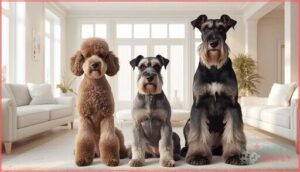
Big dogs can pull off the low-shedding lifestyle just as well as the small ones — sometimes even better.
If you’ve got the space and want a larger companion without the fur storm, you’re in luck. Here are four large breeds worth considering.
Standard Poodle
If you want a big dog that doesn’t coat your couch in fur, the Standard Poodle is your answer. This breed checks every box — low-shedding, hypoallergenic-friendly, and seriously smart. Standing 18–24 inches tall and weighing 45–70 pounds, they’re built for canine exercise and thrive with poodle training.
| Feature | Details |
|---|---|
| Shedding Level | Minimal |
| Weight | 45–70 lbs |
| Grooming | Every 4–8 weeks |
| Energy | High |
Irish Water Spaniel
Think of the Irish Water Spaniel as a water retriever built for people who love adventure. This hypoallergenic, low-shedding breed weighs 45–65 pounds and sports a tight curly coat that barely sheds. For active lifestyle households, it thrives on swimming and outdoor play.
Just commit to these three grooming care basics:
- Weekly brushing to remove trapped curls
- Periodic trimming around ears and tail
- Regular baths to prevent tangles
Giant Schnauzer
Ready for a bold, muscular companion with roots in guarding and droving? The Giant Schnauzer tops the list of LowShedding Breeds—its wiry coat barely sheds if you stick to regular brushing and hand stripping.
Giant Schnauzer Care means serious Training Needs and Exercise Requirements; this breed demands energy, structure, and firm boundaries. Hypoallergenic? Yes, but grooming and health issues need your attention.
Afghan Hound
If the Giant Schnauzer is all muscle and drive, the Afghan Hound is its glamorous, free-spirited cousin. Weighing 50–60 pounds with a silky, flowing coat, this breed sheds less than most — but Silky Coat Management is real work, needing brushing three-plus times weekly.
Afghan Hound Care means respecting their independent streak with patient Large Breed Training and daily runs.
Benefits of Choosing a Low-Shedding Dog

Choosing a low-shedding dog isn’t just about keeping your couch fur-free — it’s a lifestyle upgrade. From cleaner floors to fewer sneezing fits, the perks are pretty hard to ignore.
Here’s why going low-shed might be the best decision you make for your home and your sanity.
Cleaner Homes and Less Fur
One of the best perks of low shedding dog breeds is a noticeably cleaner home — no more fur tumbleweeds rolling across your floors. Fur reduction means less time vacuuming and more time actually enjoying your dog.
- Cleaner floors with every-other-day sweeping instead of daily
- Less pet hair on sofas and cushions
- Curtains and blinds stay fresher longer
- Car seats stay tidy between quick vacuum sessions
- Clothing on open racks collects far less stray fur
Easier Allergy Management
A cleaner home is great, but if allergies have kept you from owning a dog, low-shedding dogs can genuinely change that story. Less fur means less pet dander floating around — and that’s real symptom relief.
| Strategy | What It Does | Best For |
|---|---|---|
| HEPA Air Purification | Cuts airborne allergens up to 89% | Daily relief |
| Weekly bathing | Lowers Can f 1 on coat | Allergen reduction |
| Low-shedding breeds | Less dander released overall | Allergy prevention |
Hypoallergenic dogs aren’t perfect, but paired with smart habits, they make living with allergies surprisingly manageable.
Ideal for Apartment Living
Low-shedding dogs are practically built for apartment life. Their space efficiency shines in small spaces — many compact urban dogs stay well under typical 20–50 pound building limits.
Low noise breeds like French Bulldogs keep neighbors happy, while hypoallergenic dogs mean less fur tracked through shared hallways. For allergy sufferers craving that dog-owner freedom, these low maintenance apartment pets genuinely make city living work.
Important Considerations Before Adoption

Low-shedding dogs can be a great fit, but they’re not a zero-effort commitment.
Before you bring one home, there are a few real-world factors worth thinking through.
Here’s what to keep in mind.
Time Commitment for Grooming
Before you fall in love with that fluffy face, know this: low-shedding dogs aren’t low maintenance. Solid grooming schedules are non-negotiable. Most need brushing techniques applied 3–4 times weekly — about 10–20 minutes per session — to keep coat maintenance on track and mat prevention real.
Skipping daily routines means painful tangles fast. Pet grooming takes real time, but it’s totally worth it.
Costs of Maintenance
Grooming expenses add up faster than you’d think. Professional dog grooming runs $30–$120 per session, and low-shedding dogs often need visits every 4–6 weeks — meaning your annual maintenance budget could hit $600–$2,000.
Add cleaning supplies, vet care costs for mat-related skin issues, and insurance plans, and pet care and grooming becomes a real financial commitment worth planning for.
Managing Expectations for Allergies
Here’s the truth: no dog is 100% hypoallergenic. Even low-shedding dogs release pet dander, saliva, and skin proteins that trigger allergies.
No dog is truly hypoallergenic — even low-shedding breeds release dander, saliva, and skin proteins that trigger allergies
Before adopting, prioritize allergy testing with a specific dog — spend a few hours together. Allergen reduction through HEPA filters and weekly cleaning helps, but symptom management often still requires medication. Dog breeds for allergy sufferers help, but never eliminate the problem entirely.
Frequently Asked Questions (FAQs)
Are there any truly 100% non-shedding dogs?
No dog is truly 100% non-shedding — that’s one of the biggest Shedding Myths out there. Every dog, even hairless breeds, sheds some Pet Dander and hair. Think low-shedding, not NonShedding.
Do low-shedding breeds shed more during certain seasons?
Yes, low-shedding dog breeds can shed slightly more during spring and fall.
Daylight shifts trigger hormonal changes that nudge coat cycles along — but it’s subtle, not the dramatic fur-fest you’d see with heavy shedders.
Are low-shedding dogs suitable for young children?
Many low-shedding dogs are genuinely great family pets.
Breeds like Bichon Frise and Havanese have friendly personalities.
Just supervise young children closely — even the gentlest dog needs space and respect.
How do diet and nutrition affect shedding in dogs?
What your pup eats shows up on your floor. Poor Protein Sources and weak Omega Balance mean more loose hair. Good Dog Nutrition Advice keeps coats strong and shedding manageable.
Conclusion
Picture your old life: a lint roller in every room, dark pants treated like crime scenes, and guests side-eyeing your couch like it bit them.
Now picture life with dogs that rarely shed fur—same love, cleaner everything. You’re not settling for less dog; you’re choosing smarter. The breed you pick shapes your daily reality more than any vacuum ever could. Choose the coat that finally lets your home breathe again.
- https://showsightmagazine.com/dog-breeds/portuguese-water-dog/
- https://www.poodlepethub.com/articles/poodle-coat-types-shedding-guide/
- https://animology.co.uk/blogs/news/9-hypoallergenic-dog-breeds-that-don-t-shed
- https://www.petmd.com/dog/general-health/hypoallergenic-dogs
- https://www.akc.org/dog-breeds/hypoallergenic-dogs/