This site is supported by our readers. We may earn a commission, at no cost to you, if you purchase through links.

About 20% of people live with some form of pet allergy, yet dogs remain one of the most adopted animals worldwide. That gap tells an interesting story. Most allergy sufferers aren’t choosing between dogs and comfort—they’re choosing the wrong dogs.
The real culprit isn’t fur. It’s dander, saliva, and a protein called Can f 1 that certain breeds produce and spread far less of than others. Some coats trap loose hair close to the body instead of scattering it across every surface in your home.
Fifteen breeds consistently earn veterinary approval for allergy-prone households—and a few of them might surprise you.
Table Of Contents
Key Takeaways
- The real allergy trigger isn’t dog fur — it’s dander, saliva, and a protein called Can f 1, so choosing a low-dander breed matters far more than picking a “short-haired” dog.
- Breeds like Poodles, Bichon Frises, and Portuguese Water Dogs trap loose hair in their coats instead of scattering it, which keeps allergens from drifting all over your home.
- No dog is truly 100% hypoallergenic — every breed produces allergen proteins to some degree, so “hypoallergenic” really just means lower-risk, not zero-risk.
- The right breed is only half the equation — weekly baths, regular brushing outdoors, HEPA air filters, and pet-free bedroom zones are what actually keep allergen levels manageable day to day.
Best Dog Breeds for Allergy Sufferers
Finding a dog that won’t send your immune system into overdrive is more possible than you might think.
Some dogs with allergies also have sensitive stomachs, so pairing the right breed with training treats designed for dogs with sensitive stomachs makes the whole journey a lot smoother.
Some breeds shed very little and produce less of the proteins that trigger allergy reactions. Here are 15 that tend to work well for allergy-prone owners.
Poodle (Standard, Miniature, Toy)

Few low shedding dogs rival the Poodle in terms of managing dog allergies. Their single-layer curly coat traps dander instead of scattering it — a genuine win for hypoallergenic pet care.
All three sizes fit different lifestyles:
- Standard Poodles stand 22–27 inches, suiting active homes
- Miniature health needs mirror the Standard but fit smaller spaces
- Toy Poodle care works well in apartments
- Poodle training comes naturally — they’re remarkably quick learners
To understand how Poodles’ coats contribute to their hypoallergenic reputation, see this explanation of the.
Bichon Frise

The Bichon Frise is another crowd-pleaser among hypoallergenic dogs. Weighing just 12 to 18 pounds, their fluffy double coat sheds very little, making them solid low shedding dogs for managing dog allergies.
Bichon temperament is genuinely sunny — cheerful, affectionate, great family companions. Watch for health concerns like skin allergies and patellar luxation. Breed appearance? Think living powder puff.
For more details about their care and grooming needs, regular brushing and attention to their powder-puff coat are essential.
Portuguese Water Dog

If you loved the Bichon’s low-shed coat, the Portuguese Water Dog takes that idea and adds an athletic twist. This allergy friendly breed has a single-layer coat — curly or wavy — that holds loose hair close to the body, keeping dander from drifting freely.
Regular Portuguese grooming every six to eight weeks controls buildup, while consistent Water Dog training channels their sharp, energetic minds beautifully.
Maltese

The Maltese brings a different kind of quiet elegance to hypoallergenic dogs. Weighing under 10 pounds, this ancient breed grows a silky white coat with no undercoat — meaning minimal shedding and less dander circulating your home.
As one of the more allergy friendly breeds, it still requires daily brushing, consistent Maltese exercise, smart Maltese nutrition, and basic dog training to truly thrive.
Chinese Crested

The Chinese Crested turns heads — and suits allergy sufferers surprisingly well. This small breed comes in two varieties: hairless and powderpuff, both considered hypoallergenic dogs with breeds with low dander thanks to minimal shedding.
The Chinese Crested care includes moisturizing bare skin and weekly brushing. Crested training responds best to gentle encouragement. Allergens still exist, but dog allergies are noticeably easier to manage.
Afghan Hound

Few dogs carry themselves quite like the Afghan Hound — regal, silky, and surprisingly manageable for allergy sufferers. Rooted in Afghan Hound history as a hunter from mountainous Afghanistan, this breed offers a low-dander, non-seasonal shedding coat that puts it among allergy-friendly pets worth considering.
- Silky Coat Care: Brush daily to minimize dander buildup
- Afghan Exercise Needs: Daily runs in securely fenced areas only
- Hound Training Tips: Use patience and positive reinforcement consistently
- Hound Health Issues: Watch for bloat, hypothyroidism, and anesthesia sensitivity
Havanese

Cuba’s cheerful little companion, the Havanese, is a standout among hypoallergenic dogs and dog breeds for allergy sufferers. Their long, silky coat sheds minimally — loose hairs stay trapped rather than floating onto your furniture.
Paired with naturally low dander production, these low-shedding dogs are genuinely allergy-friendly pets. Havanese training is easy too, thanks to their enthusiastic, people-oriented canine behavior and bright temperament.
Shih Tzu

Ancient royalty kept Shih Tzus as palace companions — and honestly, they still carry that energy. Their long, low-shedding coat traps loose hair instead of scattering it everywhere, making them solid allergy friendly pets.
Here’s what makes this breed stand out among hypoallergenic dog breeds:
- Minimal shedding reduces airborne allergens noticeably
- Lower dander output compared to heavy-shedding dog breeds for allergy sufferers
- Regular baths wash away allergens, supporting canine health
- Manageable size fits apartment living with modest dog training needs
- Pet insurance covers their common eye and dental issues affordably
Yorkshire Terrier

Don’t let the tiny size fool you — Yorkshire Terriers pack serious appeal for allergy sufferers. Their single, silky coat sheds minimally, keeping dander low and your home calmer. As one of the most reliable hypoallergenic dog breeds, Yorkies weigh just 4–8 pounds and live 12–16 years.
| Feature | Detail | Allergy Benefit |
|---|---|---|
| Coat Type | Single, no undercoat | Less dander spread |
| Shedding Level | Very low | Fewer airborne allergens |
| Size | 4–8 lbs | Easy grooming control |
| Lifespan | 12–16 years | Long-term allergy friendly pets |
Regular brushing aids pet allergy management while Terrier training and small dog care keep this low-shedding dog happy and healthy. Dog health monitoring and smart Yorkie nutrition round out the full picture.
West Highland White Terrier

West Highland White Terriers — “Westies” — are among the more reliable allergy-friendly dog breeds for active households. Their dense white coat sheds minimally, supporting allergen reduction strategies without sacrificing personality.
- Weighs 15–20 lbs; compact and apartment-adaptable
- Low-shedding dogs benefiting from weekly brushing and grooming every 6–8 weeks
- Terrier training works best with consistency and early socialization
- Dog nutrition and pet insurance help manage their known skin sensitivities
Coton De Tulear

The Coton de Tulear is a small, cotton-soft companion weighing 8–15 lbs — and a smart pick for allergen reduction strategies. As one of the friendlier hypoallergenic dogs, Coton care centers on daily brushing to prevent mats.
Tulear training responds well to gentle rewards. For dog breed selection, factor in pet health needs: their low-shedding dogs status still requires regular grooming and balanced dog nutrition.
Giant Schnauzer

If the Coton felt a bit delicate, the Giant Schnauzer is a whole different energy — bold, loyal, and surprisingly allergy-friendly. As low-shedding dogs go, their dense wiry coat traps loose hair rather than scattering it.
- Weighs 55–85 lbs with a lifespan of 10–15 years
- Needs 45–60 minutes of vigorous daily exercise
- Responds well to firm, consistent training methods
Irish Water Spaniel
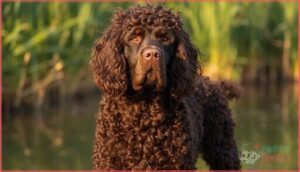
From bold and wiry, meet curly and clever. The Irish Water Spaniel is one of those allergy-friendly dog breeds that surprises people — tall, athletic, and sporting a dense liver-colored coat rated just 1 out of 5 for shedding.
Dead hair stays trapped in the curls, not on your couch. The Irish Water Spaniel is smart, loyal, and worth every brushing session.
Kerry Blue Terrier
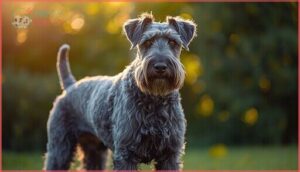
Next up is a breed that surprises most people — the Kerry Blue Terrier. Born black, their blue-gray coat develops by 18 months thanks to fascinating Blue Coat Genetics.
As low-shedding dogs with a single, wavy coat, they rank well among hypoallergenic pets. Kerry Blue Care includes weekly brushing and grooming every six to eight weeks, making them manageable allergy-friendly pets for active families.
Lagotto Romagnolo

Few allergy-friendly dog breeds carry a story quite like the Lagotto Romagnolo. This Italian water retriever turned truffle hunting specialist has a dense, curly coat that traps loose hair instead of scattering it — making it a standout among low-shedding dogs.
Lagotto Training is straightforward thanks to their eager-to-please nature. Regular brushing aids Dog Allergy Management and keeps that iconic curly coat mat-free.
What Makes a Dog Hypoallergenic?

The word “hypoallergenic” gets thrown around a lot, but most people don’t know what it actually means for a dog.
A few key factors determine how much a dog affects your allergies — and coat type is just one piece of the puzzle.
Here’s what’s really going on under the surface.
Understanding Dander and Allergen Production
Most people blame fur, but the real culprit is dander — microscopic flakes of dead skin packed with proteins called canine allergens.
The most common is Can f 1, and even tiny amounts can trigger a serious immune response.
Understanding dander formation and allergen sources helps explain why hypoallergenic dogs exist — and why no dog is completely off the hook.
The Role of Coat Type and Shedding
Your dog’s coat does more than look pretty — it directly controls how much dander drifts through your home.
- Coat Texture matters: curly coats on hypoallergenic dogs trap loose hairs instead of releasing them
- Shedding Patterns differ — single-coated low-shedding dogs shed less dramatically than double-coated breeds
- Fur Length affects allergen spread across furniture and clothing
- Allergen Trapping increases without regular grooming of low-allergen pets
- Dander Reduction improves when canine hypoallergenic coats are clipped consistently
Saliva and Urine as Allergen Sources
Fur isn’t the only troublemaker. Dog saliva carries potent canine allergen proteins — including Can f 1 and Can f 5 — that become airborne particles once dried on fur, furniture, or fabric.
Dog urine proteins behave the same way, soaking into carpets and releasing allergen sources long after cleanup. These saliva allergens and urine proteins cause real allergy symptoms, making allergen transmission a whole-home issue.
Why No Dog is Truly 100% Hypoallergenic
Here’s a hard truth: no dog is entirely off the hook. Every dog produces multiple allergen proteins — scientists have identified at least six, including Can f 1 and Can f 5.
Allergen variability means canine sensitization differs person to person. What triggers your neighbor’s dog allergies may not touch you. So hypoallergenic dogs really means lower-risk, not zero-risk.
No dog is truly hypoallergenic — only lower-risk, because every person’s allergies draw a different line
Essential Grooming Tips for Allergy Control

Even with the right breed, grooming is where allergy control really happens.
How you care for your dog’s coat directly affects how many allergens end up in your home.
Here are the key routines that make the biggest difference.
Regular Brushing and Bathing Routines
Grooming is your first real line of defense against dog dander. Consistent brushing techniques and smart bathing schedules can dramatically cut allergen levels at home. Here’s what actually works:
- Brush 2–3 times weekly using grooming tools like slicker brushes or rubber curry combs for effective shedding control.
- Bathe weekly — studies show this reduces allergens on fur by up to 84%.
- Brush outdoors to keep freed dander out of your indoor air.
Professional Grooming Schedules for Low-shedding Breeds
At-home brushing gets you far, but it’s not the whole picture. For most low-shedding dogs, salon visit frequency matters more than owners expect.
Breed specific timelines vary: Poodles and Bichon Frises need professional grooming every 4 to 6 weeks, while wire-coated breeds like Schnauzers can stretch to 8 to 10 weeks. Allergy focused scheduling keeps dander reduction consistent and your coat management on track.
Best Practices for Trimming and Coat Maintenance
Staying on schedule with coat trimming takes that salon work even further. For hypoallergenic dogs, keeping the body coat at 1 to 2 inches dramatically cuts mat prevention issues and allergen reduction problems at once.
Three things to keep in your routine:
- Use coat-specific grooming tools — slicker brushes for Poodles, wide-tooth combs for Maltese
- Trim paws, ears, and sanitary areas every few weeks with dog hair grooming clippers
- Brush low-shedding dogs 2 to 3 times weekly for consistent shedding control
This simple coat care habit keeps your home noticeably cleaner.
Cleaning Pet Bedding and Accessories
Your dog’s bed is basically a dander trap — and washing it weekly is one of the simplest wins for allergy-friendly pets. Use a fragrance-free, dye-free detergent for safe fabric care and allergen removal.
Warm cycles around 140°F handle sanitizing methods well. Vacuum bedding before washing, then wipe the drum seal after. Small habits like these quietly keep your home hygiene on point.
Home Strategies to Reduce Dog Allergens
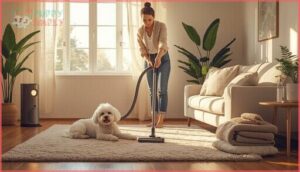
Even with a low-shedding dog, allergens can still settle into your home’s surfaces, air, and fabrics.
The good news is that a few targeted changes to your environment can make a real difference. Here are the home strategies worth putting into practice.
Air Filtration and HEPA Filters
Think of a good HEPA filter as your home’s invisible defense system. True HEPA technology captures 99.97% of particles as small as 0.3 microns — including the dander fragments behind most allergic reactions.
For effective allergen control and dander removal, focus on three things:
- Placement: Position your air purifier near your dog’s favorite spot
- Filter Maintenance: Replace filters on schedule — clogged media cuts air purification efficiency substantially
- Runtime: Run it continuously, not just when symptoms flare
Removing Carpeting and Cleaning Surfaces
Carpets hold up to 100 times more allergens than hard floors — making carpet removal one of the smartest flooring options for allergy-prone households.
When pulling up old carpet, wear an N95 mask to avoid breathing released pet dander. After removal, damp-mop with microfiber weekly. For surface sanitizing, bio-enzymatic cleaning products break down dog allergens effectively without harsh chemicals.
Creating Pet-free Zones in The Home
Even one allergen-free room can make a real difference in your home environment. Bedrooms are the best place to start — you spend 6 to 8 hours there nightly, so keeping pet dander out protects your sleep and recovery.
Build your allergenfree sanctuary with these steps:
- Keep doors closed consistently, even when the room sits empty
- Run a HEPA air purifier near the doorway to catch drifting dander
- Choose smooth furniture surfaces over fabric to support easy home hygiene
Laundry and Fabric Care for Allergen Control
Your laundry routine is one of the quietest defenses against pet dander at home. Wash dog bedding weekly at 130°F to 140°F using a full allergen cycle and fragrance-free detergent — it’s a simple laundry routine that genuinely works.
Choose smooth fabrics over fleece or corduroy for throws and slipcovers. Smart fabric choices and consistent allergen removal habits make living with allergy-friendly dog breeds much more comfortable.
Top Products for Managing Dog Allergies
Even the best breed choice won’t do all the heavy lifting on its own.
The right tools can make a real difference in keeping allergens under control day to day.
Here are four products worth having in your corner.
1. Eureka Powerful Upright Vacuum Cleaner
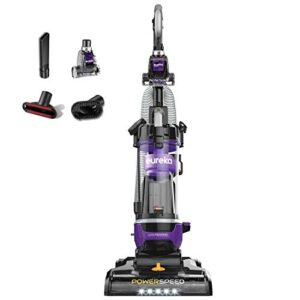
Pet dander doesn’t just sit on the floor — it clings to carpets and rooms, drifts through rooms, and settles on everything.
The Eureka PowerSpeed Upright addresses that problem directly. Its 960-watt motor pulls embedded hair and debris from both carpet and hardwood, while the 2.1-liter dust cup means fewer interruptions mid-clean. It’s lightweight enough to carry between floors without a struggle.
Toss in the included pet tool and crevice attachments, and you’ve got a practical daily weapon against airborne allergens.
| Best For | Pet owners and allergy-prone households who need a reliable everyday vacuum that handles multiple floor types without constant maintenance interruptions. |
|---|---|
| Pet Hair Removal | Yes, powerful suction |
| Allergen Reduction | Captures dust and dander |
| Ease of Use | Lightweight, auto cord rewind |
| Multi-Surface Use | All floor types |
| Maintenance Required | Clean roller brush regularly |
| Power Source | Corded electric |
| Additional Features |
|
- The 960-watt motor digs deep into carpet and hardwood, pulling out pet hair and debris that weaker vacuums leave behind.
- A 2.1-liter dust cup is genuinely large — you won’t be stopping every few minutes to empty it.
- Comes loaded with attachments (pet tool, crevice tool, dusting brush, upholstery tool) so you’re covered for more than just floors.
- At 88 decibels, it’s on the louder side — not great if you’ve got sleeping kids, pets that panic at noise, or thin walls.
- The cord rewind sounds convenient but has a reputation for being more annoying than helpful in practice.
- The roller brush and belt need regular cleaning to stay functional, which adds a bit of upkeep most people don’t expect.
2. Afloia Air Purifier For Pets
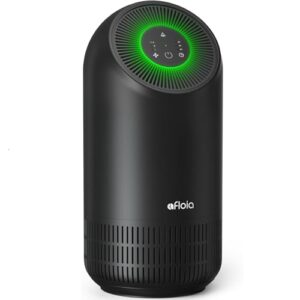
Air doesn’t stay still — and neither does pet dander. The Afloia Air Purifier for Pets addresses that reality with a 3-stage filtration system that captures 99.99% of airborne particles, including the fine dander that slips past most defenses.
Its H13 HEPA layer traps particles as small as 0.3 microns, while activated carbon mitigates lingering pet odors. With coverage up to 880 square feet, it works in large living spaces.
At roughly 22 decibels in sleep mode, it won’t keep you — or your dog — up at night.
| Best For | Pet owners dealing with allergies, asthma, or stubborn pet odors in large rooms or open-concept apartments. |
|---|---|
| Pet Hair Removal | Yes, via air filtration |
| Allergen Reduction | Removes 99.99% allergens |
| Ease of Use | Simple controls, timer |
| Multi-Surface Use | Rooms up to 880 sq ft |
| Maintenance Required | Replace filter every 4-6 months |
| Power Source | AC powered |
| Additional Features |
|
- Captures 99.99% of airborne particles — dander, dust, pollen, smoke, and mold included — thanks to a solid 3-stage filtration system
- Covers up to 880 square feet, so it holds its own in bigger living spaces without needing a second unit
- Quiet enough for overnight use, with adjustable fan speeds and a timer to set it and forget it
- No handle makes it awkward to move around the house, which is a shame given the decent coverage range
- Buttons are silent with no click feedback, so it’s easy to second-guess whether your input actually registered
- Filter replacements every 4–6 months add up, and a few buyers have reported receiving units that arrived used or damaged
3. GoPets Self Cleaning Slicker Brush
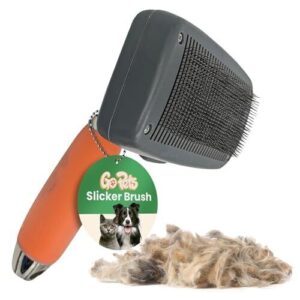
Grooming an allergy-prone household gets a lot easier when the brush does half the cleanup for you. The GoPets Self Cleaning Slicker Brush uses 672 fine bent metal bristles to pull loose fur, dander, and debris from the coat before it hits your furniture.
One press of the back button retracts the bristles and releases collected hair in one clean sheet — no hand-pulling required. The gel-filled handle reduces wrist fatigue during longer sessions, and it works on curly and long coats alike.
| Best For | Pet owners in allergy-prone homes who want a low-mess grooming routine for cats or dogs of any coat type. |
|---|---|
| Pet Hair Removal | Yes, via deshedding |
| Allergen Reduction | Reduces loose dander |
| Ease of Use | Self-cleaning retractable bristles |
| Multi-Surface Use | All coats and breeds |
| Maintenance Required | Clean bristles after use |
| Power Source | Manual (no power) |
| Additional Features |
|
- The self-cleaning button releases collected fur in one sheet — no picking hair off the brush by hand
- Fine bent bristles work through curly and long coats without much effort
- The gel-filled handle takes some strain off your wrist during longer grooming sessions
- The ergonomic handle doesn’t work for everyone — some users found it awkward to grip
- Won’t cut through tough mats, just combs them out, so heavy matting may need extra tools
- A few buyers felt the quality didn’t quite match the price
4. Oneisall Dog Grooming Clipper Set
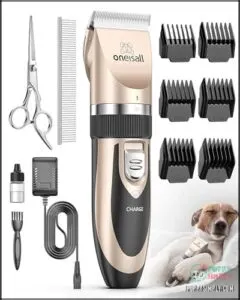
Once the loose fur is off the coat, you still need to manage length — and that’s where the Oneisall Dog Grooming Clipper Set earns its place in your routine. Running at under 55 decibels, it’s quiet enough that anxious dogs barely flinch.
The cordless design lets you groom anywhere, and six guide combs give you control over cut length. Sharp stainless steel blades handle thick coats cleanly, so less hair — and less dander — ends up floating around your home.
| Best For | Pet owners who want to groom anxious or noise-sensitive dogs and cats at home without the stress of a salon visit. |
|---|---|
| Pet Hair Removal | Yes, via grooming |
| Allergen Reduction | Reduces dander via grooming |
| Ease of Use | Cordless, beginner-friendly |
| Multi-Surface Use | All coat types |
| Maintenance Required | Regular oiling and cleaning |
| Power Source | Rechargeable battery |
| Additional Features |
|
- Runs under 50 dB, so most pets stay calm and cooperative during grooming
- Cordless and comes with six guide combs, giving you real flexibility wherever you groom
- Sharp stainless steel blades cut through thick, matted coats without a lot of tugging or passes
- Needs regular oiling and cleaning to stay effective — skip that and it’ll clog up fast
- Might struggle with extremely thick or long coats unless you do some prep work first
- Not a great fit for grooming small animals like angora rabbits with very dense fur
Frequently Asked Questions (FAQs)
Are there dogs that don’t trigger allergies?
Not quite. No dog is completely allergen-free. Even hairless breeds still produce proteins in their saliva, urine, and skin that can trigger reactions.
Some dogs simply cause fewer symptoms than others.
What is the calmest hypoallergenic dog?
The Shih Tzu and Maltese are two of the calmest hypoallergenic breeds. Both are gentle lapdogs that prefer quiet cuddle sessions over intense activity, making them ideal for allergy-sensitive households.
Can diet affect how much dander a dog produces?
Yes, diet can affect dander levels. Dogs fed omega-3-rich foods tend to have healthier, better-hydrated skin that sheds fewer dry flakes — meaning less dander floating around your home.
Are hypoallergenic dogs safer for children with allergies?
Hypoallergenic dogs can be easier on allergic kids, but they’re not a guaranteed fix.
Around 10–15% of children are allergic to dogs, and even low-shedding breeds still produce dander and saliva proteins.
How do I test my allergy response before adopting?
Before committing, why not test the waters first? Spend 30 minutes with the specific dog at a shelter, monitor symptoms for 24 hours, and consider a foster-to-adopt trial at home.
Conclusion
Like finding the right key for a lock you’ve been struggling with for years, choosing dogs that don’t trigger allergies changes everything about how you share your home.
The right breed, combined with consistent grooming and smart indoor habits, genuinely tips the odds in your favor. Dander doesn’t have to be the deciding vote.
With the right dog beside you and the right routine behind you, breathing easy isn’t just possible—it’s likely.
- https://acaai.org/allergies/allergic-conditions/pet-allergies/
- https://www.aaaai.org/tools-for-the-public/conditions-library/allergies/dog-myths
- https://vcahospitals.com/know-your-pet/hypoallergenic-dog-breeds-is-there-such-a-thing
- https://www.petmd.com/dog/general-health/hypoallergenic-dogs
- https://www.metlifepetinsurance.com/blog/breed-spotlights/hypoallergenic-dogs-breeds-good-for-people-with-allergies/